Tag: pharisees

  • Interrupting Jesus 3 – interrupted by academia

    Interrupting Jesus 3 – interrupted by academia

    We’ve all met them: the academicians, professors, learned men of logic with indisputable researched proofs of their position; the Doctors of Divinity and PhD’s of wisdom: we’ve all met them.

    If you have not read the books of wisdom in the Bible, notably Proverbs and Ecclesiastes, you have neglected your own education by God. Of course Bibles were not printed in the days of Jesus of Nazareth and such wisdom was only to be gained from the scholars and academicians of the Temple and synagogues who had access to the scrolls of the written word. Young Jesus was not schooled by such learned men, but held his own in their eyes.

    You may be familiar with this story from a parental perspective, yet take a look at this young lad through the eyes of some of the Pharisees present:

    Luke 2:

    41 Now his parents went to Jerusalem every year at the Feast of the Passover.42 And when he was twelve years old, they went up according to custom. 43 And when the feast was ended, as they were returning, the boy Jesus stayed behind in Jerusalem. His parents did not know it…

    46 After three days they found him in the temple, sitting among the teachers, listening to them and asking them questions. 47 And all who heard him were amazed at his understanding and his answers. 48 And when his parents saw him, they were astonished…

    52 And Jesus increased in wisdom and in stature and in favor with God and man.

    Jesus’ mission from his youth was interrupted by the trappings of everyday life.

    Again, another story so familiar for the importance of Jesus’ teachings to a teacher of Israel that we may have missed sight of the person who was the interruption in Jesus’s journeys. Nicodemus is part of the inner circle of Bible scholars. His knowledge of God’s word, Hebrew history and influence is comparable to Saul of Tarsus (Paul) who will follow in just a few years. Jesus is sitting with a VIP of the highest caliber, once again more than holding his own.

    John 3:

    Now there was a man of the Pharisees named Nicodemus, a ruler of the Jews. This man came to Jesus by night.

    “Rabbi, we know that you are a teacher come from God, for no one can do these signs that you do unless God is with him.”

     “Truly, truly, I say to you, unless one is born again he cannot see the kingdom of God.”

    “How can a man be born when he is old? Can he enter a second time into his mother’s womb and be born?”

    “Truly, truly, I say to you, unless one is born of water and the Spirit, he cannot enter the kingdom of God. That which is born of the flesh is flesh, and that which is born of the Spirit is spirit.

    Do not marvel that I said to you, ‘You must be born again.’ The wind blows where it wishes, and you hear its sound, but you do not know where it comes from or where it goes. So it is with everyone who is born of the Spirit.”

    “How can these things be?”

    10 Jesus answered him,“Are you the teacher of Israel and yet you do not understand these things?

    11 Truly, truly, I say to you, we speak of what we know, and bear witness to what we have seen, but you do not receive our testimony. 12 If I have told you earthly things and you do not believe, how can you believe if I tell you heavenly things? 13 No one has ascended into heaven except he who descended from heaven, the Son of Man. 14 And as Moses lifted up the serpent in the wilderness, so must the Son of Man be lifted up, 15 that whoever believes in him may have eternal life.

    Even unbelievers have heard Jesus’ statement to Nicodemus, the reason God our Father sent the Messiah to the world in the flesh.

    Jesus is sitting in the room with Nicodemus, a VIP Jew of Jews, who wants to do what God wants him to do. Nicodemus has come to the Son of Man at night, to where our Lord is resting. Nicodemus, a leader of the Jews, does not invite Jesus Christ to his home; rather Nicodemus interrupts him privately.

    Jesus tells the respected leader of the Temple:

    • You must be born of water and the Spirit. (Purified by repentance and receive the Holy Spirit of God as Counselor to your eternal soul.)
    • No one has ascended into heaven except he who descended from heaven, the Son of Man. (Jesus is saying to Nicodemus, ‘I AM the Messiah.’)
    • 16 “For God so loved the world, that he gave his only Son, that whoever believes in him should not perish but have eternal life. 17 For God did not send his Son into the world to condemn the world, but in order that the world might be saved through him. 18 Whoever believes in him is not condemned, but whoever does not believe is condemned already, because he has not believed in the name of the only Son of God.

    Imagine that you think you have learned all there is to know about God from the Bible, historical books and prayer. You walk into the home of a man at night to learn more. Then Jesus tells you: I AM the Son of God, sent as the Messiah of Israel and Savior of the world! You have interrupted God Almighty the Person of the Son, who tells you:

    God loves you. Believe in the Son, Christ Jesus, and you will have eternal life.

    Nicodemus and the Pharisees believed in the resurrection. Some like him met Christ and believed.

    How old was Nicodemus when he met Jesus?

    I could speculate that as a leader of the Sanhedrin, Nicodemus may have been in his fifty’s or sixty’s, while Jesus is a relatively young man of thirty. It is not inconceivable that Nicodemus could have been one of the up and coming young men of the Temple twenty years earlier when Jesus as a boy interrupted His parent’s pilgrimage with a three-day schooling in ‘His Father’s House.’ At the very least, Nicodemus undoubtedly would have known of the encounter, not to mention the recent teachings of John the Baptizer.

    John 1:

    In the beginning was the Word, and the Word was with God, and the Word was God.

    The Testimony of John the Baptist

    19 And this is the testimony of John, when the Jews sent priests and Levites from Jerusalem to ask him, “Who are you?” 20 He confessed, and did not deny, but confessed, “I am not the Christ.”

    24 (Now they had been sent from the Pharisees.) 25 They asked him, “Then why are you baptizing, if you are neither the Christ, nor Elijah, nor the Prophet?”26 John answered them, “I baptize with water, but among you stands one you do not know, 27 even he who comes after me, the strap of whose sandal I am not worthy to untie.”

    Nicodemus knew the Messiah (the Christ) of God was coming and wanted to confirm His identity.

    Nicodemus may have been waiting for the Son of God to give him a command of what to do as a leader of the Temple. Rather than taking His rightful authoritative position over the Temple and Jerusalem, the Son of Man chose to humbly obey the purpose of Sacrifice for which He was sent.

    Jesus has a mission of love for those who will believe. All evidence points to the fact that Nicodemus believed.

    Faith does not dispute knowledge, but confirms truth beyond the limits of its proof.

    Nicodemus would argue that Jesus should be given a fair trial. [John 7:50-51] Nicodemus obtained permission for the crucified Christ Jesus to be buried and contributed to the costs. [John 19:38-40] Nicodemus may have even been one of the many to whom Christ appeared after His resurrection. [1 Corinthians 15:6]

    Suppose a VIP comes to you unexpectedly and asks if Jesus is the Christ. Are you prepared for that interruption?

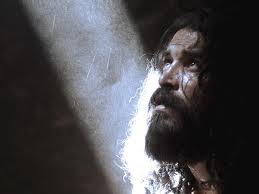


  • Are You the One?

    Are You the One?

    Luke 7

    English Standard Version (ESV)

    Messengers from John the Baptist

    18 The disciples of John reported all these things to him. And John, 19 calling two of his disciples to him, sent them to the Lord, saying, “Are you the one who is to come, or shall we look for another?”

     “Are you the one…?”

    It seems like an odd question for John the Baptizer to send to Jesus, upon whom he has witnessed the Holy Spirit descend.

    john the baptist in prisonLet’s put it into the context of John’s imprisonment by Herod for a moment (and erase from our 21st c. prejudices all images from movies, children’s Bible story books, stained glass windows and emotion-filled preaching seeking new Christians for baptism). What was John thinking?

    First (and presently, in this context of Luke 7), John has already baptized Jesus and like everyone else is waiting for His Kingdom to come. John is under threat of his own life from the ‘vipers’ of the Temple, Pharisees teaching each jot and tittle of the Law properly in the synagogues, and (or course) King Herod II.

    Recall also that some of John’s own disciples are now disciples of Jesus. At the peril of the threats of the King, officials of the Temple, officials of the synagogues, Roman army, Temple guards, palace guards and possibly others; John sends a message to Jesus.

    John must have thought, ‘You have been out there teaching for a while. My time is very short, I am certain. Please let me know (before they kill me) what I must die for. What are you going to do? Are you the One?’

    The Priesthood of Herod’s Temple is illegitimate; therefore the Nazirites have separated themselves to worship God legitimately, even in the wilderness, if they must. This is the place of worship for John and his disciples. It is the place of worship for other Nazarites until the Temple of God is restored. John’s vow as a Nazarite is not unfamiliar to those who know well the Law of Moses from Numbers 6. John is separated and consecrated to God.

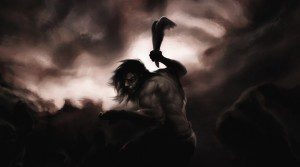
    No picture of John the Baptizer can do him justice, but look to scripture and you will discover the depth of commitment to the purity of worship to God of these men (in the tradition of Samson).

    samson-jawbone

    John is not a powerful man, as was Samson; but a man with the power of the word of God spoken with fire. John wears camel-hair clothes (not linen or anything even comfortable like the clothes of ordinary Galileans) and subsists on the food of locusts and the honey of the bees of the wilderness.

    Unlike Samson, John would likely appear skinny, yet also quite wild by the coarseness of his weather-exposed skin and the long uncut hair of a Nazirite.

    Briefly, the story of Samson:

    Numbers 13: And the people of Israel again did what was evil in the sight of the Lord, so the Lord gave them into the hand of the Philistines for forty years.

    2 There was a certain man… Manoah. And his wife was barren and had no children. 3 And the angel of the Lord appeared to the woman and said to her, “Behold, you are barren and have not borne children, but you shall conceive and bear a son.4 Therefore be careful and drink no wine or strong drink, and eat nothing unclean, 5 for behold, you shall conceive and bear a son. No razor shall come upon his head, for the child shall be a Nazirite to God from the womb, and he shall begin to save Israel from the hand of the Philistines.”

    24 And the woman bore a son and called his name Samson. And the young man grew, and the Lord blessed him. 25 And the Spirit of the Lord began to stir him in Mahaneh-dan, between Zorah and Eshtaol.


    John, who has come to God’s people when they had ‘done what was evil in the sight of the Lord (even by placing Priests not from God in God’s Temple), warns of the coming Messiah and now sends to Jesus, knowing how Samson’s death had also glorified the Lord.  John asks Jesus the question heavy on his heart. You might even call it a final request from an imprisoned and condemned man.

    [Continuing from the eyewitness of Luke 7:]

    20 And when the men had come to him, they said, “John the Baptist has sent us to you, saying, ‘Are you the one who is to come, or shall we look for another?’”

    What do true messengers witness and what do true witnesses report?

    Truth.

    John is not doubting.  John’s heart longs to witness truth.

    Dr. Luke’s Gospel records the truth of witnesses to Jesus this time:

    21 In that hour he healed many people of diseases and plagues and evil spirits, and on many who were blind he bestowed sight.

    22 And he answered them, “Go and tell John what you have seen and heard: the blind receive their sight, the lame walk, lepers are cleansed, and the deaf hear, the dead are raised up, the poor have good news preached to them. 23 And blessed is the one who is not offended by me.”

    Jesus’ answer to John’s message asking for proof of witness is not only what Jesus replies, but also the fruit of Jesus’ work. The messengers of John have seen this miracles with their own eyes.

    See v.21 once more with your own eyes (this time from the KJV.) And in that same hour he cured many of their infirmities and plagues, and of evil spirits; and unto many that were blind he gave sight.


    24 When John’s messengers had gone, Jesus began to speak to the crowds concerning John: “What did you go out into the wilderness to see?”

    Picture this wild-looking Prophet, John the Baptizer, Nazirite of the wilderness in camel-hair with a loud and stirring gospel of urgency for your souls: “Repent! And be baptized.”

    (Jesus answers for the multitudes:) “… A reed shaken by the wind? 25 What then did you go out to see? A man dressed in soft clothing?”

    Again, Jesus answers for the multitudes, some who follow Him now who once followed John:

    herods court

    “… Behold, those who are dressed in splendid clothing and live in luxury are in kings’ courts. 26 What then did you go out to see? A prophet? Yes, I tell you, and more than a prophet. 27 This is he of whom it is written,

    “‘Behold, I send my messenger before your face,
    who will prepare your way before you.’

    28 I tell you, among those born of women none is greater than John. Yet the one who is least in the kingdom of God is greater than he.”

    29 (When all the people heard this, and the tax collectors too, they declared God just, having been baptized with the baptism of John,

    30 but the Pharisees and the lawyers rejected the purpose of God for themselves, not having been baptized by him.)


    To be continued

  • Samekh

    Samekh

    Depart from me…

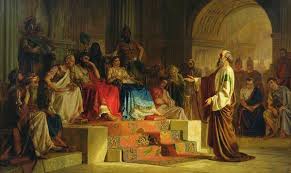
    Picture the stoic traditionalist teachers of the Bible venturing out from the mega-cathedral to a far from urban valley of the Jordan and encountering a crowd that should be in church.  They are listening to an unkempt man with uncut hair and rags of animal skins and leather. As they descend the dirty hillside toward the river in their custom-made finery, he acknowledges their addition to the crowds.

    “You brood of vipers! Who warned you to flee from the wrath to come? 8 Bear fruit in keeping with repentance…  Matthew 3:

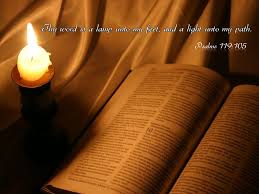
    Pretty bold talk from a Nazarite to esteemed teachers of the Law from the Temple. Could John have had Psalm 119 in mind?

     Psalm 119 – English Standard Version (ESV)

    Your Word Is a Lamp to My Feet

    Samekh

    113 I hate the double-minded,
    but I love your law.
    114 You are my hiding place and my shield;
    I hope in your word.
    115 Depart from me, you evildoers,
    that I may keep the commandments of my God.

    Although the EST statement ‘I hate the double-minded,’ brings hated hypocrites like the Pharisees, Sadducees, certain preachers and christians to mind, the KJV stated: ‘I hate vain thoughts.’

    Indeed, the Psalmist is not condemning (yet) those with double-minded thoughts.  John, as he baptized and cleansed into repentance those in the crowds with ears to hear was not hiding in the Jordan valley; rather his hiding place was in the Lord and in the hope of God’s word.

    All of us must take heed to vain thoughts and ideas of our own (not of God). Vain thoughts are ambivalent, divided and half-hearted. Of course we are to love the Lord our God with all our mind (not just some of it). Hypocrisy, like that frequently demonstrated by the Pharisees is the intentional action of a double-minded believer.

    John continues his warnings to his audience:

    10 Even now the axe is laid to the root of the trees. Every tree therefore that does not bear good fruit is cut down and thrown into the fire.

    This same double-minded, half-hearted faith comes to mind in Jesus parable in Matthew 7:

    17 So, every healthy tree bears good fruit, but the diseased tree bears bad fruit. 18 A healthy tree cannot bear bad fruit, nor can a diseased tree bear good fruit. 19 Every tree that does not bear good fruit is cut down and thrown into the fire.

    Christ Jesus was also most critical of this half-attitude of belief. In these last days, the axe is at the root of the tree of the church.

    The Psalmist continues his plea to God:

    116 Uphold me according to your promise, that I may live,
    and let me not be put to shame in my hope!
    117 Hold me up, that I may be safe
    and have regard for your statutes continually!
    118 You spurn all who go astray from your statutes,
    for their cunning is in vain.

    119 All the wicked of the earth you discard like dross,
    therefore I love your testimonies.
    120 My flesh trembles for fear of you,
    and I am afraid of your judgments.

    Again, we did not receive the baptism of repentance and the cleansing of the Cross of Christ to appear as dross to a world that looks to the church and christians for every defect and impurity.

    “Be holy, as I am holy,” says the Lord.