Tag: Philip

  • Philip: Evangelizing Christ’s Sheep Beyond Gaza

    Philip: Evangelizing Christ’s Sheep Beyond Gaza

    How important is Gaza to Philip’s Evangelizing Mission?

    What does Gaza have to do with,

    “Go into all the world and preach the gospel to all creation.” and evangelizing Christ Jesus?

    Quote of Jesus from the Gospel of Mark 16:15

    We’ll talk of JESUS’ evangelism model begun in the Apostles and now a command to Philip, one of Jerusalem’s first seven deacons in a moment. But first let’s review the setting of this semi-familiar scene of Philip baptizing an Ethiopian eunuch in (of all places), Gaza.
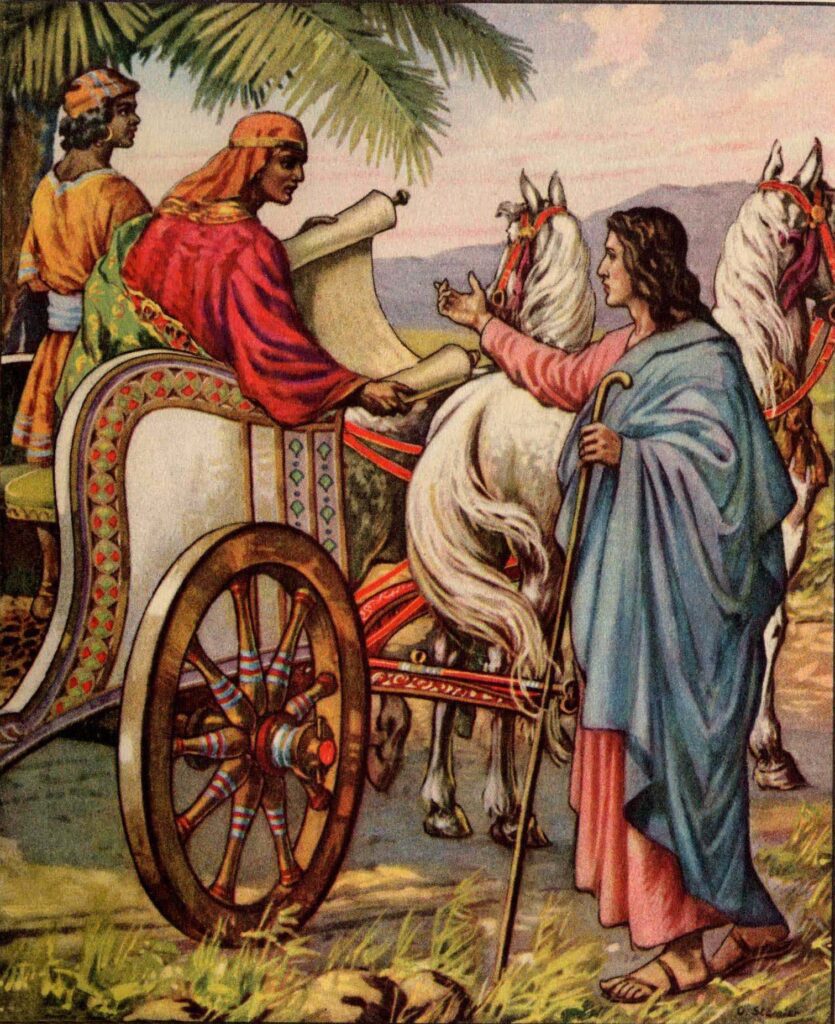
    Philip and the Ethiopian official in his chariot on the road from Jerusalem in Gaza, reading the scroll of Isaiah

    Acts of Evangelism by Christ’s disciples from Jerusalem’s Church

    8: At that time a great persecution arose against the church which was at Jerusalem; and they were all scattered throughout the regions of Judea and Samaria, except the apostles.

    This is Philip who served with Stephen in Jerusalem
    • 4 Therefore those who were scattered went everywhere preaching the word.
    • 5 Then Philip went down to the city of Samaria and preached Christ to them. And the multitudes with one accord heeded the things spoken by Philip, hearing and seeing the miracles which he did.
      • (We will get back to the contrast between Samaria and Gaza in a moment.)
    • The Apostles in Jerusalem sent Peter and John to those evangelizing the towns of Samaria.
    • .. they [Peter & John] returned to Jerusalem, preaching the gospel in many villages of the Samaritans.

    An Angel of the Lord commands Philip: GO to Gaza

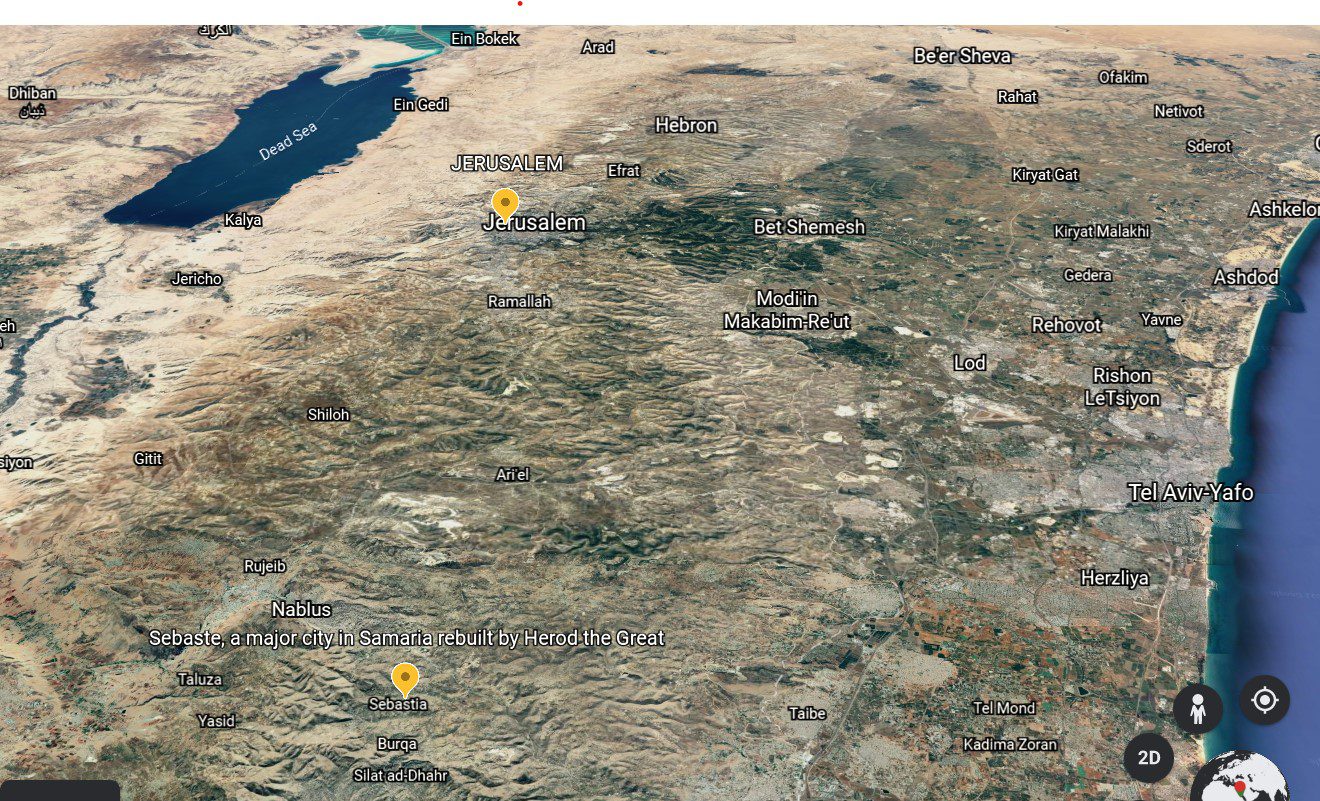
    We don’t want to dismiss too quickly who sends Philip on his way from the big city of Samaria (then called, Sebastia (when rebuilt by Herod the Great) with its six thousand souls, to an uninhabited Gaza along the road from Jerusalem.
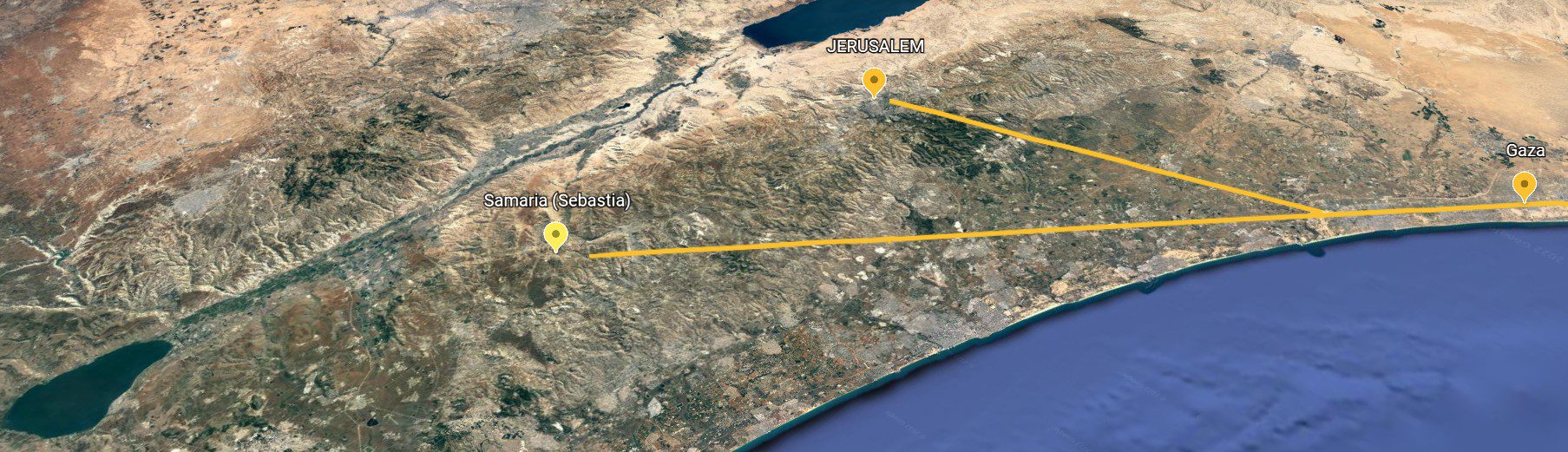
    Google Earth view of Gaza and terrain from the mountains of Judea and Jerusalem
    Two routes to the Gaza road along the Mediterranean shore

    Luke does not use this description of just anyone.

    • Now an angel of the Lord appeared to him, standing to the right of the altar of incense. Zechariah [Priest of the LORD and father of John the Baptist] was troubled when he saw the angel, and fear gripped him. – Gospel of Luke 1:11-12
    • And an angel of the Lord suddenly stood near them, and the glory of the Lord shone around them; and they were terribly frightened. – Gospel of Luke 2:9 – from the nativity of the shepherds near Bethlehem .. (also not too far from here)

    We know these instances well; however in Luke’s second account of the Acts of the Apostles the Angel of the Lord initiates some important ACTS of disciples of the Risen Christ Jesus.

    Previously, our history of the Apostles imprisoned in Jerusalem has already witnessed one of these appearances of the Angel of the Lord. A praying church is astounded to see Peter and John released from prison and then returning to the Temple to preach the Gospel.

    They laid hands on the apostles and put them in a public prison. But during the night an angel of the Lord opened the gates of the prison, and leading them out, he said, “Go, stand and speak to the people in the temple area the whole message of this Life.”

    Acts of the Apostles 5:18-20 NASB20

    Philip Goes to Gaza – ACTS 8

    But an angel of the Lord spoke to Philip, saying,

    “Get ready and go south to the road that descends from Jerusalem to Gaza.” (This is a desert road.)

    Acts of Philip, disciple of the Apostles, 8:26 NASB20

    27 So he started out, and he met the treasurer of Ethiopia, a eunuch of great authority under the Kandake, the queen of Ethiopia. The eunuch had gone to Jerusalem to worship, and he was now returning.

    Seated in his carriage, he was reading aloud from the book of the prophet Isaiah.

    The Kandake, Queen of Ethiopia
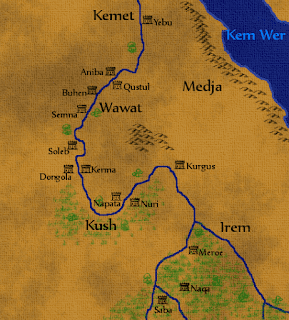
    Nubia is a region along the Nile river encompassing the area between Aswan in southern Egypt and Khartoum in central Sudan. It was the seat of one of the earliest civilizations of ancient Africa, with a history that can be traced from at least 2500 BC onward, Kerma culture, and was home to several empires, most prominently the kingdom of Kush, which for a while even ruled over Egypt.

    Amanitaraqide appears to be the subject of a brief reference in the New Testament (Acts 8:27)

    Amanitaraqide held the title of Kandake in the Kingdom of Kush during the years 21-41

    Source – Wikipedia

    Nubia is a region along the Nile river encompassing the area between Aswan in southern Egypt and Khartoum in central Sudan. It was the seat of one of the earliest civilizations of ancient Africa, with a history that can be traced from at least 2500 BC onward, Kerma culture, and was home to several empires, most prominently the kingdom of Kush, which for a while even ruled over Egypt. 
    
    Before the 4th century, and throughout classical antiquity, Nubia was known as Kush, or, in Classical Greek usage, included under the name Ethiopia (Aithiopia).
    
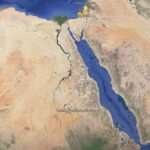
    [MAP above of this region along the Nile & descriptions: Source] 

    Αἰθίοψ – Ethiopian = “black”


    The eunuch, wearing expensive robes of a court official, rides in a royal chariot (reserved for only the highest officials of Rome and independent powerful kingdoms), would seem unapproachable by an ordinary man like Philip. For it seems this royal official would have been in Jerusalem on some important diplomatic mission as the queen’s personal representative.

    If you think back to the status of Daniel in Babylon or even further back to this region of the Nile and the earned status of Joseph serving Pharaoh, you will get a good picture of the importance of this man to the highest leaders of his country.

    Even in this A.D. 21st century most men like Philip (and you) would know very little about this distant country in Africa far from Jerusalem and further from Rome and the new world beyond the great ocean.
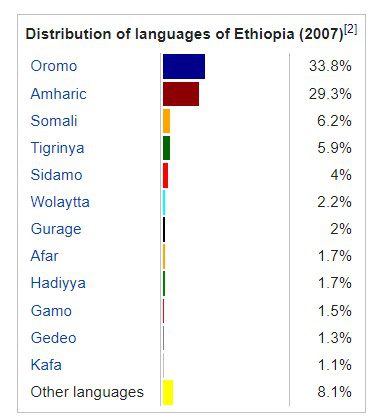
    Ethiopia, like many lands, must hear the Gospel in many languages.

    Graphic source: Oromo Bible Society
    O land, land, land, hear the word of the LORD!


    No, the Ethiopian court official is not like Philip.

    As a diplomat with power to travel the world on behalf of his queen, he will play an important role in the spreading of the Gospel. So after Philip obediently travels to Gaza, he discovers that this man is a brother, a Jew who studies Scripture! And here in Gaza he is returning home to Kush from worship of the LORD in Jerusalem.

    (That’s right, the same Jerusalem from which Philip has fled; initially north to the city of Samaria, but now southwest of Jerusalem into the desert lands of Gaza.)

    Studying Isaiah with a ‘missionary’ to Gaza

    ACTS 8:

    29 Then the Spirit said to Philip, “Go near and overtake this chariot.”

    (Philip is on foot and has walked this distance from Samaria, but this is now a second command of the Spirit as he reaches the Gaza road.)

    30 So Philip ran to him, and heard him reading the prophet Isaiah

    30 وَعِنْدَمَا رَكَضَ فِيلِبُّسُ إلَى العَرَبَةِ، سَمِعَ الرَّجُلَ يَقْرَأُ كِتَابَ النَّبِيِّ إشَعْيَاءَ. فَقَالَ لَهُ فِيلِبُّسُ:

    ﻋﻤﺎﻝ ﺍﻟﺮﺳﻞ 8:30
    Arabic Bible: Easy-to-Read Version

    “Do you understand what you are reading?”

    31 The man replied, “How can I, unless someone instructs me?” And he urged Philip to come up into the carriage and sit with him.
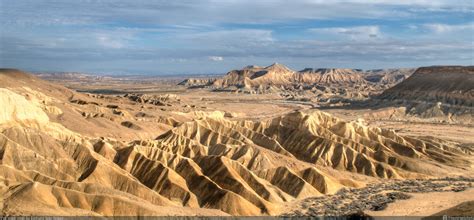
    Negev in southern Israel, Gaza and some areas near the Dead Sea are very barren places away from the towns and settlements

    Philip traveled in style for a while as they read.

    Now the passage of Scripture which he was reading was this:

    Isaiah

    נִגַּשׂ וְהוּא נַעֲנֶה וְלֹא יִפְתַּח־פִּיו כַּשֶּׂה לַטֶּבַח יוּבָל וּכְרָחֵל לִפְנֵי גֹזְזֶיהָ נֶאֱלָמָה וְלֹא יִפְתַּח פִּֽיו׃

    מֵעֹצֶר וּמִמִּשְׁפָּט לֻקָּח וְאֶת־דּוֹרוֹ מִי יְשׂוֹחֵחַ כִּי נִגְזַר מֵאֶרֶץ חַיִּים מִפֶּשַׁע עַמִּי נֶגַע לָֽמוֹ׃

    Masoretic Text Isaiah 53:7-8, quoted in ACTS 8:32-33
    Or perhaps the Ethiopian official traveling from Jerusalem through Gaza back to Egypt would have held a Septuagint translation of the Hebrew Bible into Greek. ..dated to the reign of Ptolemy II of Egypt (285-246 BC).. 
    (READ more about ancient Egypt and Ethiopia from Source link: biblearchaeology.org)

    πάντες ὡς πρόβατα ἐπλανήθημεν ἄνθρωπος τῇ ὁδῷ αὐτοῦ ἐπλανήθη καὶ κύριος παρέδωκεν αὐτὸν ταῗς ἁμαρτίαις ἡμῶν

    Yeshaiya (Isaiah) 53:6 :: Septuagint (LXX)

    In reading all of Isaiah 53 he would have just read in verse 6:

    All we like sheep have gone astray; 
    we have turned every one to his own way; 
    and the LORD hath laid on him the iniquity of us all. [KJV]

    34 So the eunuch answered Philip and said, “I ask you, of whom does the prophet say this, of himself or of some other man?”

    35 Then Philip opened his mouth, and beginning at this Scripture, preached Jesus to him.


    Our chariot journey with Philip and the Ethiopian eunuch, to be continued..
  • Philip: Preaching to Good and Bad Samaritans

    Philip: Preaching to Good and Bad Samaritans

    ACTS of Philip the Evangelist

    Φίλιππος Philip who?

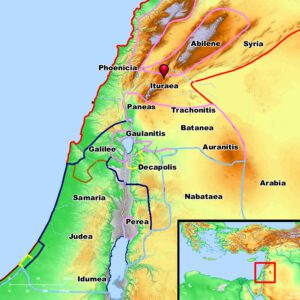
    Luke 3:1 Now in the fifteenth year of the reign of Tiberius Caesar, when Pontius Pilate was governor of Judea, and Herod [Antipas] was tetrarch of Galilee and his brother Philip was tetrarch of the region of Ituraea and Trachonitis ..

    • (No, not that Philip, whose wife Herodias his brother Herod Antipas took as his own wife.)
    Philip was tetrarch of the region of Ituraea and Trachonitis

    Jesus chose Twelve Apostles at the beginning His ministry in Galilee. The Apostle Philip was one of the Twelve.

    Philip has been an Apostle for about five years now.
    The year c. A.D. 32 or 33.
    • (But it’s not that Philip, either. Don’t get confused like I did.)

    When Simon Peter healed a lame man and spoke at Solomon’s Portico just two years ago, Philip would have observed the entire miracle. (Actually, two men named Philip may have been present.)

    Our other brother Philip 🙂

    As we learned in An Apostolic Model: Administration of a Growing Church from Acts 6:

    As the church grew rapidly, the twelve summoned the multitude of the disciples, asking them to choose seven men of good reputation, full of the Holy Spirit and wisdom to lead in ministering to the Church: Steven, Philip and five others.

    • (Yes, this other brother Philip, a leading deacon of the Church, second in the list of seven, is known as Philip the Evangelist.)

    So now after Stephen’s trial, the Church in Jerusalem faces imminent persecution.

    Philip heads back north through the mountains of Judea, traveling one of their usual routes to Galilee through Samaria.

    mountains between Jerusalem and Samaria
    Samaria was destroyed by Alexander the Great in 331 BCE, and again by the Hasmonean king John Hyrcanus in 108 B.C. The city was rebuilt by Herod the Great between the years 30–27 B.C. According to Josephus, Herod expanded and renovated the city, bringing in 6,000 new inhabitants, and renamed it “Sebastia” in the emperor’s honor (translating the Latin epithet Augustus to Greek Sebastos, “venerable”). – Source: Wikipedia

    Acts 8:

    We will return to Luke's chronology shortly, but lets begin with a parallel timeline from his account of events in *Sebastia from the perspective of its people.

    The ‘not so good’ *Samaritan

    ..there was a certain man called Simon, who previously practiced sorcery [μαγεύω] in the city and astonished the people of *Samaria, claiming that he was someone great, to whom they all gave heed, from the least to the greatest, saying, “This man is the great power of God.”

    μάγος – magus
    • the name given by the Babylonians (Chaldeans), Medes, Persians, and others, to the wise men, teachers, priests, physicians, astrologers, seers, interpreters of dreams, augers, soothsayers, sorcerers etc.
    • the oriental wise men (astrologers) who, having discovered by the rising of a remarkable star that the Messiah had just been born, came to Jerusalem to worship him
    • a false prophet and sorcerer

    Luke had begun his account with Philip's departure from Jerusalem following the execution of Stephen.

    Philip went down to the city of Samaria
    and began proclaiming the [Messiah] Christ to them.

    ACTS of the Apostles 8:5 NASB20
    Philip leaves for *Samaria fully aware its reputation. He's been there before and passed through the town many times. And Jesus had illustrated general Jewish thought about this city and these northern tribes in the Parable of the Good Samaritan.

    Miracles and Signs by Philip

    6 And the multitudes with one accord heeded the things spoken by Philip, hearing and seeing the miracles which he did. For unclean spirits, crying with a loud voice, came out of many who were possessed;

    Philip, along with the Apostles and many other disciples following the Lord had witnessed Jesus’ power to command evil spirits. Peter healed a lame man in Jerusalem, just one of several Apostolic signs of power. Now we learn of Philip’s miracles by the power of the Holy Spirit.

    and many who were paralyzed and lame were healed.

    ACTS (of the Apostle philip) 8:7b – NKJV

    GOOD vs. EVIL!

    Scripture records several contests similar to Philip’s opposition. Some of these contests between God (good) and evil have taken place on this very mountain where Philip encounters Simon Magus.

    False prophets and idolaters deceive others by spirits (i.e. demons, devils, angels) from all that is evil.

    Our 21st century Christian minds easily dismiss powers we cannot explain.

    • Do you really believe in such powers of the spiritual realms?

    Acts reveals the Power of the Holy Spirit [πνεῦμα].

    • “You men who are stiff-necked and uncircumcised in heart and ears are always resisting the Holy Spirit G4151; you are doing just as your fathers did. – Acts 7:51
    • But he, being full of the Holy Spirit G4151, looked intently into heaven and saw the glory of God, and Jesus standing at the right hand of God – Acts 7:55
    • They went on stoning Stephen as he called on the Lord and said, “Lord Jesus, receive my spirit G4151!” – Acts 7:59
    The HOLY SPIRIT of the ONE GOD, WHO IS One with God the Father and the One begotten Son Christ Jesus, works for good in the hearts and lives of sinful men and women like us once we turn to Jesus as our Lord and Savior.
    • Acts of the Apostles is a first century account of a continuing battle between Good and Evil.
    • The Good News (Gospel) of the Lord’s death and resurrection is that JESUS will win this war.

    Simon Covets Philip’s Power

    Of course this power is not from Philip, but from the Holy Spirit.

    11 They [the Samaritans] were attentive to him {Simon] because he had amazed them with his sorceries for a long time. But when they believed Philip, as he proclaimed the good news about the kingdom of God and the name of Jesus Christ, both men and women were baptized.

    13 Even Simon himself believed. And after he was baptized, he followed Philip everywhere and was amazed as he observed the signs and great miracles that were being performed.

    • Philip’s signs are more powerful than the power of Simon Magus, who the Samaritans called, ‘the great power of God!’
      • Was Simon’s baptism a complete turning from evil and a permanent cleansing?
      • Did Simon receive the Holy Spirit
        • (even as Ananias and Saphira had claimed, yet sought to deceive the Holy Spirit and other believers)?
      • Luke tell us: 16 ‘They had only been baptized in the name of the Lord Jesus.
        • Baptism alone does not make you any more faithful to Jesus than Ananias and Saphira OR Judas.
    Philip continues teaching of new believers in Samaria with great success.
    

    Meanwhile, back in Jerusalem..

    14 When the apostles who were at Jerusalem heard that Samaria had received the word of God, they sent Peter and John to them.

    Why Peter and John?

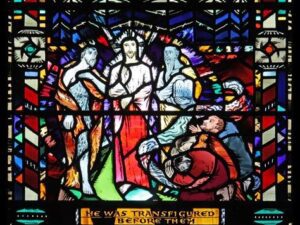
    About eight days after these sayings, He took along PeterJohn, and James, and went up on the mountain to pray.

    Luke 9:28 NASB20
    Stained glass window of Jesus with James, John and Peter at the transfiguration

    Peter, James and John know the Person of Jesus more intimately than the other nine Apostles.

    1. These three comprised an inner-circle of leadership for the Lord Jesus.
    2. The Twelve in turn lead other disciples (hundreds of them at times), so that now these Apostles lead a growing Church.

    The Lord Jesus Christ ascended into heaven! (At the conclusion of Luke’s Gospel and opening of ACTS of the Apostles, leadership passes to them.)

    Simon Peter leads this inner circle of the Apostles, all of the Twelve (including Mathias), Jerusalem’s seven deacons (including Stephen and Philip); and NOW [c. A.D. 33] many disciples of Jesus beyond Jerusalem as they, ‘Go into all the world and proclaim the Gospel.’


    Peter and John join Philip in Samaria

    ACTS 8:15 After they went down there, they prayed for them so that the Samaritans might receive the Holy Spirit because he had not yet come down on any of them..

    Then Peter and John laid their hands on them, and they received the Holy Spirit.

    • Apparently Simon is not of one accord with these new believers in Samaria. So the magician has missed out on the blessings of the Holy Spirit;
      • But the powerful always covet more power.

    18 And when Simon saw that through the laying on of the apostles’ hands the Holy Spirit was given, he offered them money, saying,

    “Give me this power also, that anyone on whom I lay hands may receive the Holy Spirit.”

    If Simon’s story had ended here

    • Would you recognize this false prophet, a teacher with power?
      • Do you realize that such a man must bow down to the LORD God or face judgment with eternal consequence?
    • Does Scripture not warn us how to handle such sheep in the designer clothing of wolves?

    ACTS of the First Century Church

    Stephen had just called out such false leaders in Jerusalem! For two years now the Apostles have demonstrated signs from God to Jerusalem’s leaders. Revenge and persecution fill its political streets.

    These leaders of the Great City of religion misused Scripture. AND false accusation meant to silence opposition to the Truth of the Gospel, resulted in their false leadership condemning Stephen to death!

    The Lord Jesus Christ had warned of others to come. Simon Magnus could have been one of the first.

    “And many false prophets will rise up and mislead many people.

    Gospel of Matthew 24:11 NASB20

    Jerusalem

    Peter’s Reaction to Simon

    YOU want such power, right? To make a lame man stand? Heal someone’s cancer? Help someone paralyzed with pain to get up and walk once more? Even to save a young man or woman from death? (Stephen was just thirty years old)

    So did Simon, who like so many just offered to pay Peter for such POWER.

    “Give me also this ability so that everyone on whom I lay my hands may receive the Holy Spirit.”

    ACTS 8:19 NIV – Simon’s request to Peter

    PETER would have none of it.

    20 But Peter replied,

    “May your money be destroyed with you for thinking God’s gift can be bought! You can have no part in this, for your heart is not right with God.

    Acts of the Apostles 8:20-21 NLT

    Is YOUR heart right with God?

    8:21 οὐκ ἔστιν σοι μερὶς οὐδὲ κλῆρος ἐν τῷ λόγῳ τούτῳ ἡ γὰρ καρδία σου οὐκ ἔστιν εὐθεῖα ἔναντι τοῦ θεοῦ

    21 وَلَيْسَ لَكَ حِصَّةٌ أوْ نَصِيبٌ فِي هَذَا الأمْرِ، لِأنَّ قَلْبَكَ لَيْسَ سَلِيمًا أمَامَ اللهِ. 22 فَتُبْ عَنْ شَرِّكَ هَذَا وَصَلِّ إلَى الرَّبِّ، لَعَلَّهُ يُسَامِحُكَ عَلَى الفِكرَةِ الآثِمَةِ الَّتِي فِي قَلْبِكَ. 23 فَأنَا أرَاكَ مُمتَلِئًا مَرَارَةً وَعَبدًا لِلخَطِيَّةِ.»

    ACTS of Repentance

    “Therefore, repent of this wickedness of yours,
    and pray to the Lord that, if possible, the intention of your heart will be forgiven you.

    Acts of the Apostles 8:22 NASB20 Peter’s admonition to Simon Magnus

    23 for I can see that you are full of bitter jealousy and are held captive by sin.”

    24 “Pray to the Lord for me,” Simon exclaimed, “that these terrible things you’ve said won’t happen to me!”

    Returning to the scene of the crimes against Christ and His Church:

    Acts Apostolos - Acts of the Apostles - the chronicles of Christ's Apostles - a history of Christ's Church including early leaders like Stephen, Philip the Evangelist, Paul, Barnabas and many others

    25 After testifying and preaching the word of the Lord in Samaria, Peter and John returned to Jerusalem. And they stopped in many Samaritan villages along the way to preach the Good News.


    ACTS of Philip (the Deacon Evangelist): TO BE CONTINUED...
  • Kings, Governors, Politicians & Priests – Power in the Palaces of Justice

    Kings, Governors, Politicians & Priests – Power in the Palaces of Justice

    Then led they Jesus from Caiaphas unto the hall of judgment: and it was early; and they themselves went not into the judgment hall, lest they should be defiled; but that they might eat the passover.

    John 18:28 KJV

    the Praetorium – in the Palace of Power

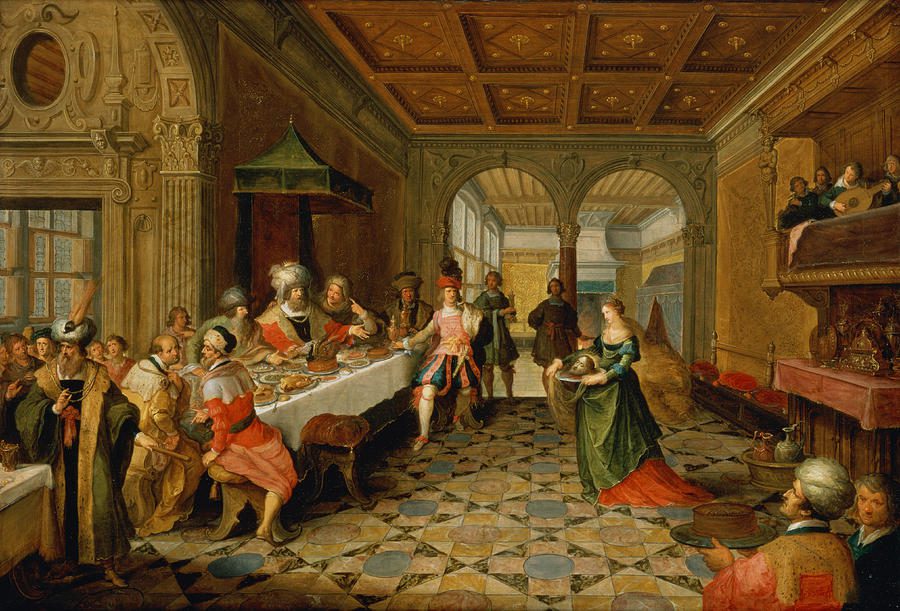
    painting of scene of banquet table of Herod with Salome presenting head of John the Baptist
    Herod’s Palace – Salome presents head of John the Baptist to Herod

    I don’t know about you, but the rapid-fire events of the conviction of the Messiah Jesus in so brief a time in the early hours of the day confuses me concerning the places these trials took place.

    If you have a comment of clarification please add it to this post.

    IF, unlike those present at the Lord’s first century trials you do not understand who is in charge, the venues of Jesus’ trials can get a little confusing.

    You may ask, ‘What does this banquet hall of Herod..’ (where King Herod had been presented the head of John the Baptist) ‘.. have to do with the Messiah Jesus on this morning following the betrayal of Judas?’

    The Praetorium is a semi-public place where Jesus has been sent — this place is on the grounds of the palace of King Herod.

    Let’s look back briefly at the history of the keys players in this developing drama which convicts the Messiah Jesus at night.

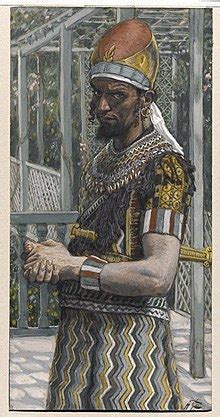
    King Herod

    Briefly, the history of the Herod’s gets complicated at times, but remember here that we are not talking about Herod the Great who navigated the complex politics of Rome with great agility.

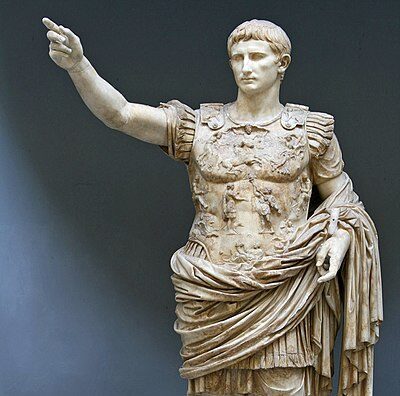
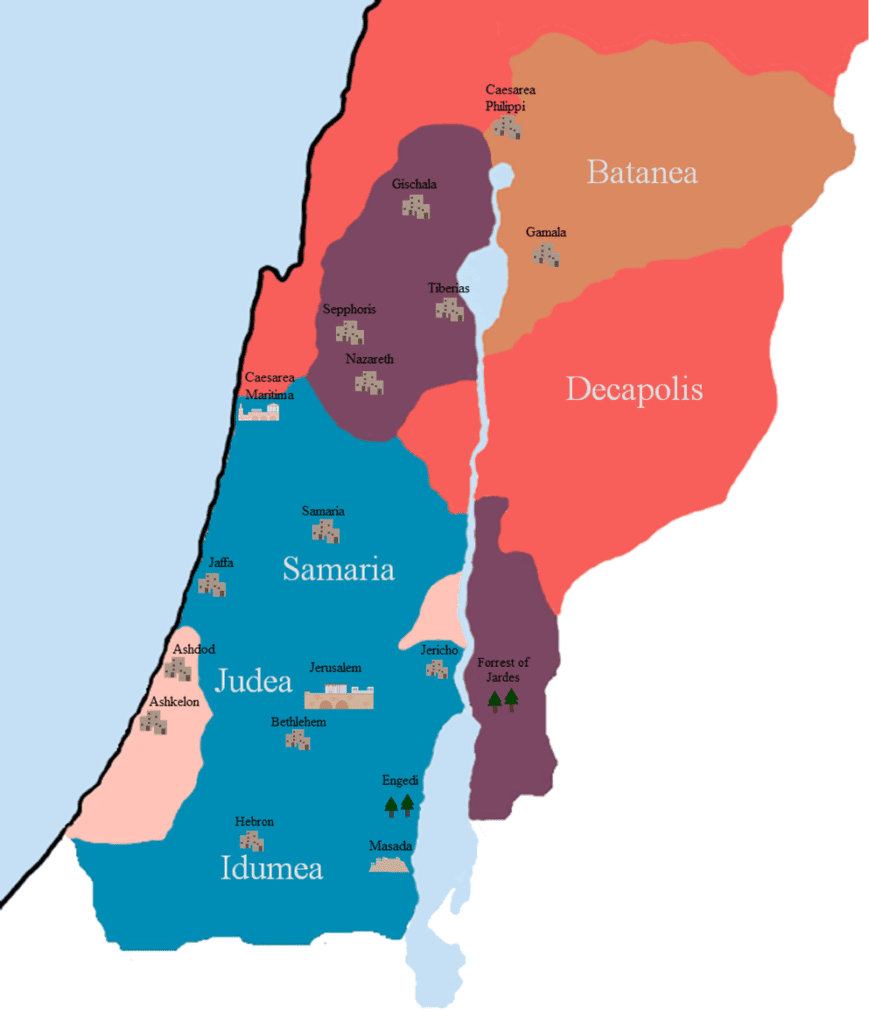
    After Herod’s death, Augustus Caesar ratified the wishes of his client king, Herod, to divide this eastern territory of Rome into three parts.

    Source: Herodian Tetrarchy
    From Wikipedia, the free encyclopedia
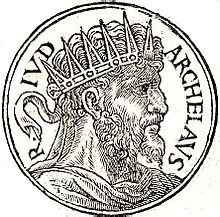
    1. Herod Archelaus was appointed Ethnarch (a governor & not king) of Idumaea, Judea (including Jerusalem) and Samaria.
    2. Herod Antipas (simply, Antipas to the Romans & his subjects, but described as ‘Herod‘ in the Gospels) became Tetrarch of Galilee (including Nazareth and Capernaum) and Perea.
    3. Philip I, son of Herod the Great and Cleopatra of Jerusalem, became Tetrarch of the northern part of Herod’s kingdom (area in modern Lebanon & Syria).

    ‘Governor Herod

    You've never heard Herod called that, have you?

    This is no longer the Jerusalem of Herod the Great! Jews are now considered merely as an ethnic people and Judeans an ‘ethnic group’ similar to nearby client Roman states. They are now governed as a regional people rather than as a small kingdom allied to Rome for mutual military advantage.

    Ethnarch (technically) is a Roman rank just a little higher than Tetrarch. (Kind of like Arch-Bishop is to Bishop in the church.)

    Judean Governors (like Herod) sometimes appear politically and practically to be more Roman than like traditional sons of David.

    IF these Herod’s were officially governors of their respective Roman regions, i.e. Judea, Galilee, Ituria, etc., — who then governed the governors?

    Who governs these Jews?

    John now addresses the question of who’s in charge in Jerusalem, who’s in charge of Judea, which Tetrarch governor of which ethnic region has authority in what was once the Kingdom of Israel.

    As Jesus is dragged from place to place for trial the quiestions mount:

    Is He a Judean? A Galilean? A Jew with authority in Jerusalem? A would-be King? Who IS this Man?

    Other Gospel writers have hinted earlier how this delicate duality of rule in first century Jerusalem provided opportunity of great hypocrisy among the rulers of the Jews and their religious political parties, i.e. Sadducees, Pharisees, etc..

    The scribes and the chief priests tried to lay hands on Him…

    So they watched Him, and sent spies who pretended to be righteous, in order that they might catch Him in some statement, so that they could deliver Him to the rule and the authority of the governor.

    Luke 20:19a,20 NASB

    “Is it lawful for us to pay taxes to Caesar, or not?”

    But He detected their trickery and said to them,

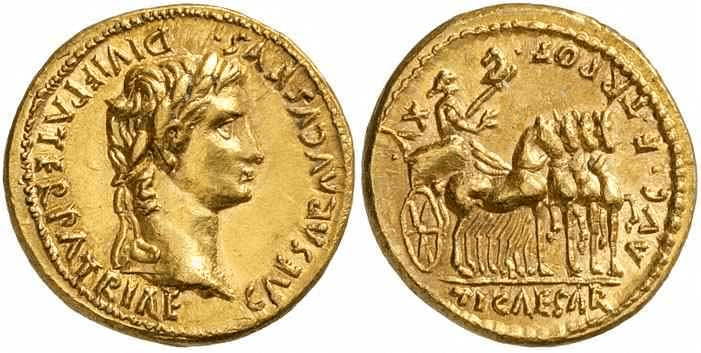
    “Show Me a denarius. Whose likeness and inscription does it have?”

    They said, “Caesar’s.” – Luke 20:22-24 NASB

    John 18:

    28 Then they led Jesus from Caiaphas into the Praetorium, and it was early; and they themselves did not enter into the Praetorium so that they would not be defiled, but might eat the Passover.

    29 Therefore Pilate went out to them and said,

    “What accusation do you bring against this Man?”

    the Praetorium – palace of the Governor

    WAIT! Even knowing something of the political intrigue and complexity of the Herod’s, I’m still confused.

    Again, please comment if you can help or have a question.

    Note that the King James Version {at beginning of this post} states:

    ‘Then led they Jesus from Caiaphas unto the hall of judgment…’

    I get that a hall of judgment could be a large room in the palace.


    Note now in the NASB translation,

    ‘.. into the [a]Praetorium..’

    AND by definition:

    πραιτώριον = Praetorium [note a]

    ‘John 18:28 i.e. governor’s official residence’

    Why is Pilate there?

    Why does Pilate emerge from the Governor’s palace to greet the religious police who have taken the Messiah Jesus into custody?

    The CSB clearly calls it 'the governor’s headquarters.'

    Wasn’t Pilate’s headquarters outside Jerusalem’s walls with the Roman Legion he commanded?

    NO!

    When Rome moved into a captured land they ‘civilized’ its remaining residents to become supporting (taxed) residents (not citizens) under Roman rule. As long as they paid their taxes and did not rebel against Roman authority these local Jews could do what they want with their own ethnic people.

    What accusation?

    Roman custom is such that some public judgments are made from the court of the Governor in charge. Pilate asks the local Jewish leaders who have led a prisoner to him the reasonable question of a Governor and Judge:

    https://www.blueletterbible.org/nasb/jhn/18/1/t_concf_1015029Τίνα κατηγορίαν φέρετε κατὰ τοῦ ἀνθρώπου τούτου

    “Tis katēgoria pherō kata ho anthrōpos hoytos?

    John 18:29 – question of Pilate to the Jews who brought Jesus before him

    These Jewish leaders of Jerusalem have brought a prisoner to Pilate in the earliest hours of the morning. Pilatos, the sixth Roman procurator of Judah and Samaria, addresses them in the universal language of the vast Empire, Greek not his native Latin, the religious Hebrew tongue of these Jews or a local Aramaic language.

    Their prisoner bound for trial appears to be Jesus, who had led thousands of followers to Jerusalem’s gates just a few days ago. Pilate would already know that the Man has not caused any trouble, except one minor incident within the courts of the Jews own Temple.

    The Governor has plenty to be concerned about for the upcoming day in monitoring the massive multitudes here for the Jewish holiday Pesach.

    painting of pontius pilate

    Imagine the thoughts of Pilatos:

    You’ve brought a prisoner to the governor in these early hours of this busy day?

    What does your warrant accuse that I should imprison the Man now?

    I have more important things to do than trifle with such matters of your religious concern.

    So Pilate, the governor, went out to them and asked,

    “What is your charge against this man?”

    John 18:29 NLT
    To be continued...