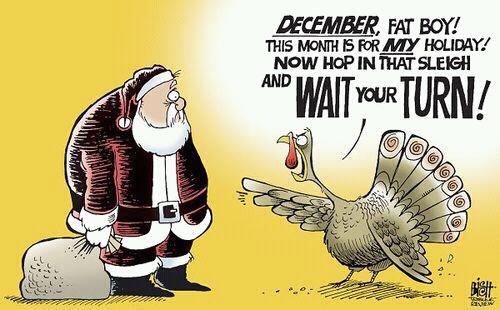
I don’t know about you, but once again Thanksgiving seems to be upon us as a prerequisite observance preceding the rush of the Christmas holidays. Some would observe in political correctness, ‘the holiday season,’ which promoted for lights in darkness and gifts seemingly endures forever.
Puritans forbade Christmas, considering it too pagan. Governor Bradford actually threatened New Englanders with work, jail or fines if they were caught observing Christmas.
Christianity.com
Perhaps our 17th century Puritan forefathers, who celebrated on this uniquely American Thanksgiving holiday, weren’t so far from the truth of this holiday season. For these brief days provide little rest and even less thanks.
Thanks giving in two Psalms
Set aside your devices and distractions for a moment as you gather together with family and you will see much bounty, a recurring theme for America and also Israel of the Psalms and Scripture.
Who will you thank?
Your host and hostess? Sure. Or maybe family who have made this gathering possible? Perhaps. Yet the thanks giving of those faithful to the Lord is always to God.
No book better expresses our worship, our praises, and singing with joy to the LORD than Psalms, which is the hymnal of Jewish and Christian worship.
One simple form of praising God for the worshipers is to simply repeat a single phrase, when the worship leader praises the LORD. One example of several with thanksgiving of the worshipers for God is Psalm 136.
You could give thanksgiving to God right now simply by repeating your response out loud after reading every praise of the Psalm [linked below].
1 Come, let us shout joyfully to the Lord, shout triumphantly to the rock of our salvation!
2 Let us enter his presence with thanksgiving; let us shout triumphantly to him in song.
Psalm 95 CSB
3 For the Lord is a great God, a great King above all gods.
If the LORD is God, then as worshipers giving God thanks, what must we do?
Hear this caution from the Psalm, that we might not give our thanks lightly, forgetting the worship of Almighty God our Creator.
6 Come, let us worship and bow down; let us kneel before the Lord our Maker. 7 For he is our God, and we are the people of his pasture, the sheep under his care.
The Psalmist then reminds worshipers of those who had previously turned from the Lord.
Warning
Today, if you hear his voice: 8 Do not harden your hearts as at Meribah, as on that day at Massah in the wilderness 9 where your fathers tested me; they tried me, though they had seen what I did.
Psalm 95, referring to exodus 17:17
Wilderness of the Negev
Meribah מְרִיבָה means testing and is the place where the Hebrews escaping Egypt tested the Lord, rather than giving thanks to the Lord. And Massah מַסָּה means quarreling, the politics of an ungrateful saved people in the wilderness.
The Lord saved many who had fled to the New World from persecution and death in the seventeenth century. The Pilgrims and others gave God thanks for this. Yet the Psalmist reminds worshipers to not harden our hearts.
Those escaping to a new land had far to go and much to learn of community, about authority and of thankfulness. Because of their testing and quarreling, the promise of the Lord would not be fulfilled in their generation.
Therefore let us heed these cautions of the Psalmist in our attitude of thanks to the Lord. Even today, if you hear His voice, do not harden your hearts.
10 For forty years I was disgusted with that generation;
I said, “They are a people whose hearts go astray;
they do not know my ways.”
11 So I swore in my anger,
“They will not enter my rest.”
Would you enter the eternal rest of the Lord? Do you thank the Lord this day?
We will have more to say of this rest in our Lord after this holiday of Thanks giving.
“How long will you judge unjustly and show partiality to the wicked?
The LORD God Most High! Among other gods?
What can it mean to speak of a divine assembly? Who can judge? Who are these judges of men and women?
We cannot know or face Almighty God in this life. Man knows not the judgment of the Most High, justice which makes right all that is wrong. The plea of this Psalm cries out to the Judge of all, to his appointed rulers.
God takes His stand in His own congregation; He judges in the midst of the rulers.
Psalm 82:1 NASB
The NASB translation of Psalm 82 may help clarify, referring to the other gods as the congregation of God, rulers over the judged who He also judges.
Almighty God has all Authority! He sits among other gods, rulers of that which the Lord delegates.
Justice required of other gods
3 Provide justice for the needy and the fatherless;
uphold the rights of the oppressed and the destitute.
4 Rescue the poor and needy;
save them from the power of the wicked.”
5 They do not know or understand; they wander in darkness. All the foundations of the earth are shaken.
Our earthly judges, rulers seated in the thrones of justice, must judge rightly, helping their own subjects. These other gods in our earthly congregations owe obedience to the God above all gods.
6 I said, “You are gods; you are all sons of the Most High. 7 However, you will die like humans and fall like any other ruler.”
I say: to the President, the Premier, the Prime Minister; to the King and Prince, the Queen and Empress: You are gods – rulers over men and women under your dominion. Yet know your Authority comes down from the Most High God of Creation.
He IS God! above all men, above all spirits, above all rulers of heaven and earth! Our Father God rules over the congregation of the other gods. We can ask for justice and we may ask for mercy. Yet in true humility and obedience all will bow down.
8 Rise up, God, judge the earth, for all the nations belong to you.
The Lord will judge the earth and nations.
Until that Day, He appoints judges, gods among us, men and women subservient to Almighty God.
He IS a God among the gods of the earth, even in the council of the rulers of the heavens and the earth.
The gods and idols of the heathen, other nations who do not judge righteously must bow down to the LORD God, for He will give the rulers of the lands true and just council.
God among other gods
Many men and women of many nations worship gods of many names. God appoints other gods, rulers and judges, over the heathen and over the faithful. These will bow down to the Lord God, as will all men of dust and angels worship at His Throne.
And thou shalt love the LORD thy God with all thine heart, and with all thy soul, and with all thy might.
Jesus, Shepherd of Israel, Son of God
Controversy erupts in Jerusalem among religious and political leaders – controversy even to this day. The Messiah Jesus comes before us as Redeemer and Sacrifice for our sins.
He was and IS and will be God, Judge of all souls.
Yet in this incident Jesus stands accused as a Son of Man, a god among other gods appointed to rule over the Jews.
11 “I am the good shepherd. The good shepherd lays down his life for the sheep.
Jesus then refers to the rulers of the Jews, as “hired hands,” judges who do not care for the lives of their flock. It’s no small insult to the leading religious authorities, who later will convict Jesus wrongly before their own court. This God will become the Perfect Sacrifice for the sin of the world.
Solomon’s Porch overlooking the Temple courtyard
God among the appointed gods
23 Jesus was walking in the temple in Solomon’s Colonnade. 24 The Jews surrounded him and asked, “How long are you going to keep us in suspense? If you are the Messiah, tell us plainly.”
25 “I did tell you and you don’t believe,” Jesus answered them. “The works that I do in my Father’s name testify about me. 26 But you don’t believe because you are not of my sheep…
“I and the Father are one.”
John 10:30 CSB – words of the Messiah Jesus
The religious officials answer:
33 “We aren’t stoning you for a good work,” the Jews answered, “but for blasphemy, because you—being a man—make yourself God.”
34 Jesus answered them,
“Isn’t it written in your law, I said, you are gods?
If he called those whom the word of God came to ‘gods’—and the Scripture cannot be broken— do you say,
‘You are blaspheming’
to the one the Father set apart and sent into the world,
because I said: I am the Son of God?
John 10:34-36 CSB
Jesus escapes their stoning during the Festival of Lights to become the Sacrifice of Most Holiness during the Passover.
He IS the body and blood, shed for our sin.
Let us worship and bow down only to Christ, our Lord and Savior. He IS a God among other gods and He will judge their righteousness and ours.
.. so that everyone who believes in him will not perish but have eternal life.
John 3:16 b
The Bible’s best known verse
John 3:16 KJV – For God so loved the world, that he gave his only begotten Son, that whosoever believeth
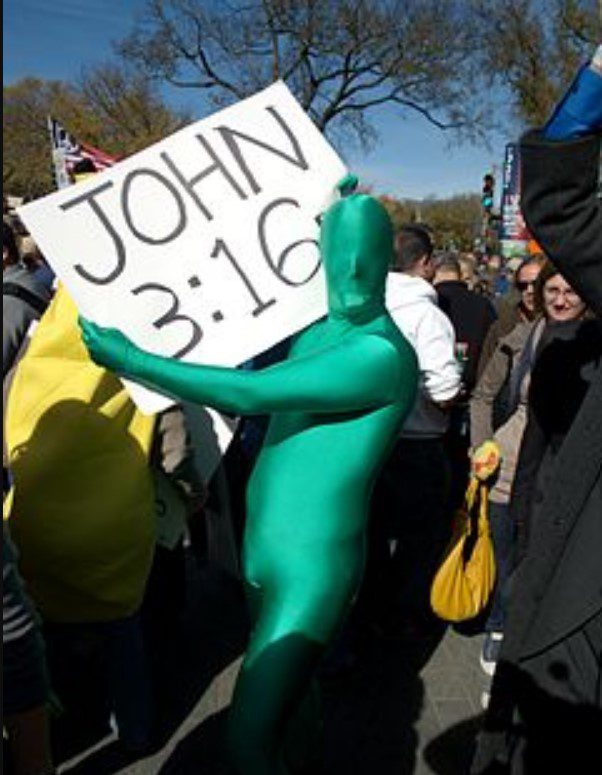
STOP! You lost them on “whosoever and believeth.” (No one talks like that anymore except fanatics and crazy people with signs.)
Nearly everyone has heard it. God so loved the world. – John 3:16
“So what?” think all the worldly viewers of your very public witness.
And you want everyone to know the same love of our savior you have experienced (and they are so worldly). Yet every time they give you that “so what?” look.
You may have even memorized John 3:16 as a child, but do you even get it as one mature in Christ?
As I mentioned in the previous post, Jesus’ dialogue with Nicodemus about Spirit continues past John 3:16. Nicodemus, a faithful Jew, would have listened and considered every word of the Messiah of Israel.
Let’s step back from witnessing to the world for just a moment of personal reflection in the Spirit.
A Contemporary Conversation
Even Christians fail to consider that Jesus spoke every word of witness fully aware that the end of His earthly mission was death — even death on a Cross.
And so is your end, son or daughter of dust – your end is death and your destiny an awakening to the Judgment.
Yet only in God’s Son will you have eternal life, mercy to save your soul from damnation you deserve, penalty for the sins of this mortal life.
Those you have wronged cry out for justice. Almighty God, ‘el Shadday, from whom you walked away, grieves as a Father over the hardness of your heart.
Why, just as Satan and your enemies have accused, you deserve no mercy.
Has your unconverted friend or estranged family member given weight and consideration that we will perish? Do they see in Jesus eternal life in the Light of His love?
This challenging dialogue from John’s Gospel confronts every mortal with a life or death decision: accountability to facing the LORD, with … or without repentance.
Jesus’ Dialogue with Nicodemus, Good News for the world witnessed by John
Now there was a Pharisee, a man named Nicodemus who was a member of the Jewish ruling council.
Visit of Nicodemus to Christ
The Apostle John certainly records this dialogue with Nicodemus as a witness. John would have been present. His understanding at the time would not have been as complete as after the Resurrection, but John records a remarkable conversation.
This learned Jewish official refers to Jesus as his teacher – a Master instructing him.
And in the room with Jesus sit John, Nicodemus, and perhaps others seeking to learn more from their Messiah.
You should join them.
In this dialogue with Jesus, you should listen to Jesus’ answers to informed questions of this learned ruler of Israel, who acknowledges his own place at the foot of the living Son of Man.
And be certain to set aside what you think you know about Jesus and listen.
Nicodemus: “Rabbi, we know that you are a teacher who has come from God…
Jesus: “.. no one can see the kingdom of God unless they are born again.
Nicodemus: “How can a man be born when he is old? ..
Jesus: “Truly I tell you, unless someone is born of water and the Spirit, he cannot enter the kingdom of God. Whatever is born of the flesh is flesh, and whatever is born of the Spirit is spirit.
Do not be amazed that I told you that you must be born again. The wind blows where it pleases, and you hear its sound, but you don’t know where it comes from or where it is going. So it is with everyone born of the Spirit.”
Nicodemus: “How can these things be?
Jesus: “Art thou a master of Israel, and knowest not these things?
“Truly I tell you, we speak what we know and we testify to what we have seen,
“and you receive not our witness.
Jesus confronts us with truth!
Do you receive it? Or do you need to hear more from the Spirit to be convinced?
Beloved listener, now witness to this dialogue with Nicodemus, a ruler of the Jews at the feet of Jesus for His teaching, what further proof do you need?
Jesus: “I have spoken to you of earthly things and you do not believe; how then will you believe if I speak of heavenly things?
“No one has ascended into heaven…
except the one who descended from heaven —the Son of Man.
So Jesus’ truth and question to the listener is:
Do you believe that Jesus IS the Son of Man, the Messiah of God, descended from heaven – in the flesh?
“We sinned when we spoke against the Lord and against you. – Numbers 21:7
The LORD intercedes for sinners… repentant sinners.
“so that everyone who believes in him may have eternal life.
Nicodemus and every religious ruler of the Jews since Moses understand. Sin must be punished! A remedy for sin requires not only repentance, but sacrifice זֶבַח.
Silence in the Presence of the Lord
The leader of the Pharisees also remains silent in the presence of Jesus.
Perhaps one scripture or another of response to hearing God’s Word comes to mind for Nicodemus, such as these words of the Prophet Isaiah.
Then I said:

Woe is me for I am ruined

because I am a man of unclean lips

and live among a people of unclean lips,

and because my eyes have seen the King,

the LORD of Armies.
John 3:16
We have listened with expectation to Jesus’ dialogue with Nicodemus, wondering along with the Apostle John what the Messiah will reveal next. In these most beloved words Jesus reveals the reason for His own Sacrifice at a time still unknown to them.
“For God loved the world in this way:
or “God loves the world this much:
John’s Gospel would have been completed perhaps three decades after this conversation with Nicodemus. The world would be those to whom it is written at the time, a Greco-Roman world, believers in Greece, Asia-minor or modern-day Turkey. These gentile believers, along with Jews who accept Jesus as the Messiah, know that we are the worldκόσμοςkosmos to whom Jesus speaks.
Nicodemus and Jews wondering if John the Baptist or Jesus could be their Messiah would have considered Scripture as Jesus speaks these words.
And he shall judge the world in righteousness, he shall minister judgment to the people in uprightness.
Judge of the World
You want someone to judge righteousness, don’t you?
Yet who can judge the sins of others? Certainly not christians, as we often do. This is just one of the reasons the world hates Christ, but it is not the only reason.
Who do you want to judge your own sin? Can you stand before the Judge of the world (whoever He may be)?
He gave his one and only Son,
Healing of the Serpent, Healing by the Cross
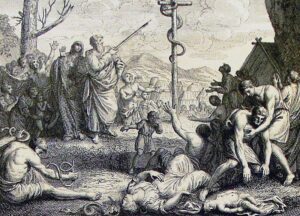
John Wesley makes the connection of the Serpent lifted up in the wilderness [v.15] and the healing for believers by gazing upon Christ.
He must be lifted up, that hereby he may purchase salvation for all believers: all those who look to him by faith recover spiritual health, even as all that looked at that serpent recovered bodily health.
Yea, and this was the very design of God’s love in sending him into the world.
God so loved the world – That is, all men under heaven: even those that despise his love, and will for that cause finally perish.
John Wesley
Eternal Life or Judgment?
… so that everyone who believes in him will not perish,but have eternal life.
Yes, all believers: Jews (Messianic Jews, as we know know them), Gentiles (the rest of the world), Greeks and Romans.
You do not want to think of eternal life, but only this waning existence we call life. It is in the flesh and all realize it will end. But eternal life? That would be something else to consider, especially if it could contain the just punishment of our considerable sin and unrighteousness.
17 For God did not send his Son into the world to condemn the world, but to save the world through him.
So Jesus was not sent to condemn the world. This the Lord confirms to Nicodemus and those of you listening intently to the Messiah. Jesus came to save the world through him. Substitution for a required sacrifice, justification required for acquittal from our deserved sentence for sin.
18 Anyone who believes in him is not condemned,
Good News!
This is Good News to the Pharisee Nicodemus, who by his knowledge of Scripture believes in the resurrection.
And it is Good News to and who listen to the Messiah, the Son of God our Father in Heaven.
Yet Jesus adds something here christian-sounding false preachers reject. In fact, as much as we would like for this Good News to apply to all of our loved ones and friends, it does not.
… but anyone who does not believe is already condemned, because he has not believed in the name of the one and only Son of God.
Sorry … your mom or your dad, your brother, sister or friend, your misleading ‘good’ religious teacher – all are condemned, if they do not substitute this God-sent Sacrifice, Christ Jesus, for their own sin.
19 This is the judgment:
And why? Why does a loving God accept some for eternal life, yet punish others for not accepting the Messiah Jesus as their Lord?
Darkness or Light?
The light has come into the world,
Jesus IS the Light of Almighty God!
“In him was life; and the life was the light of men,” John testifies.
John 1:4
… and people loved darkness rather than the light because their deeds were evil.
It’s true. We would hide our sin in the shadows.
Yet in the Judgment hiding sin is not an option. In the Light of Christ, the Messiah of the Lord God, we have life eternal only because He paid this dear price and severe penalty for our sin.
Here we sit listening to Jesus, along with Nicodemus. Or here we now sit reading the truth of the Word.
To which mortal souls of the world will you run?
20 For everyone who does evil hates the light and avoids it, so that his deeds may not be exposed.
21 But anyone who lives bythe truth comes to the light, so that his works may be shown to be accomplished by God.”
We must believe in Jesus to have eternal life.
Nicodemus, now in his later life, will leave the meeting in darkness to come to the light and practice the truth, true religion in his later life. John is the only Disciple who will not lose his life for his witness of Christ Jesus.
Shortly after this conversation between Jesus and Nicodemus, John the Baptist will be beheaded for his witness that Jesus is the promised Messiah of God.
The Invitation of John 3:16
And what of your witness and mine in these last days?
What has the Spirit put on your heart as you have listened with Nicodemus to the only begotten Son of God?
Jesus would love you! o mortal of dust, wonderfully formed with water and spirit.
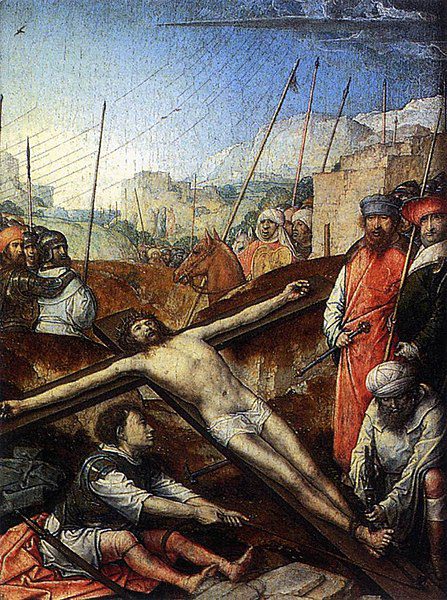
Yet will you love the Son who came down, born like you to be crucified on a Cross?
Just to save your sinful soul? Just to save your sinful soul.
Jesus So Loves the World
Jesus would love you!
Roger@talkofJesus.com
God's Love Through John
to be continued...
Cookie Consent
We use cookies to improve your experience on our site. By using our site, you consent to cookies.
Used to monitor number of Google Analytics server requests
10 minutes
__utmb
Used to distinguish new sessions and visits. This cookie is set when the GA.js javascript library is loaded and there is no existing __utmb cookie. The cookie is updated every time data is sent to the Google Analytics server.
30 minutes after last activity
__utmc
Used only with old Urchin versions of Google Analytics and not with GA.js. Was used to distinguish between new sessions and visits at the end of a session.
End of session (browser)
__utmz
Contains information about the traffic source or campaign that directed user to the website. The cookie is set when the GA.js javascript is loaded and updated when data is sent to the Google Anaytics server
6 months after last activity
__utmv
Contains custom information set by the web developer via the _setCustomVar method in Google Analytics. This cookie is updated every time new data is sent to the Google Analytics server.
2 years after last activity
__utmx
Used to determine whether a user is included in an A / B or Multivariate test.
18 months
_ga
ID used to identify users
2 years
_gali
Used by Google Analytics to determine which links on a page are being clicked
30 seconds
_ga_
ID used to identify users
2 years
_gid
ID used to identify users for 24 hours after last activity
24 hours
_gat
Used to monitor number of Google Analytics server requests when using Google Tag Manager
1 minute
_gac_
Contains information related to marketing campaigns of the user. These are shared with Google AdWords / Google Ads when the Google Ads and Google Analytics accounts are linked together.


![By original version: SuperJewderivative work: Rabanus Flavus [CC BY-SA 3.0 (https://creativecommons.org/licenses/by-sa/3.0)], from Wikimedia Commons](https://talkofjesus.com/wp-content/uploads/2018/11/Knesset_Menorah_Shema_Inscription.jpg)

![John La Farge [Public domain], via Wikimedia Commons](https://talkofjesus.com/wp-content/uploads/2018/10/Nicodemus-with-Jesus-John-3-246x300.jpg)