Hear what so many witnesses to the Resurrection have to say about Jesus.
The following first person accounts of the resurrection of Christ Jesus are not literal, but taken from the testimony of the Holy Gospels.
The Gospel of John
This is the disciple who testifies to these things and who wrote them down. We know that his testimony is true.
John 21:24
John
I was not first to see our Lord Jesus risen. She came running to us with the Good News.
Μαγδαληνή – Mary Magdalene
We had been at the foot of the Cross where they crucified Jesus; three of us, all named Mary. (They alway called me, Magdalēnē, after my hometown by the seashore of Galilee). I heard the Lord cry out, “teleō (it is finished),” as His Spirit left Him.
Later we wailed as a centurion pierced His already dead and lifeless torn flesh hanging on the Cross. Other disciples came to the skull beyond the gate where they gathered His body into a clean shroud and gently carried it to a nearby tomb.
We followed Jesus’ body and the men carrying it to a newly carved tomb. Uniformed guards rolled a stone in front of the cave and they made us leave. As darkness fell upon us we knew it our duty to somehow complete His preparation once the daylight after the Sabbath allowed us to return.
I returned on the first day of the week even before dawn. When I arrived at the tomb, expecting to ask the Roman guards to remove the stone at the entrance, I was amazed to see it had already been rolled away.
What could I do? I ran back to tell Peter about the empty tomb.
Mary returns to the tomb
Peter and John had left after running to the empty tomb and examining it briefly. I returned to find them looking inside. They didn’t know what to make of the empty tomb and went back to town talking to each other. There I was alone, I thought.
I cried as I fell to my knees. What had happened, I wondered? Then through my tears I looked into the darkness of the tomb and thought I saw the two guards sitting where Jesus’ body had been laid on the day before the Sabbath.
“Woman, why are you crying,” one of them asked?
“Because they’ve taken away my Lord,” I told them, “and I don’t know where they’ve put him.” I was about to tell them how I had to prepare His body for burial, how Joseph and Nicodemus had only brought the shroud and the myrrh, but we had to finish the preparation of our Lord for burial.
The First Witness
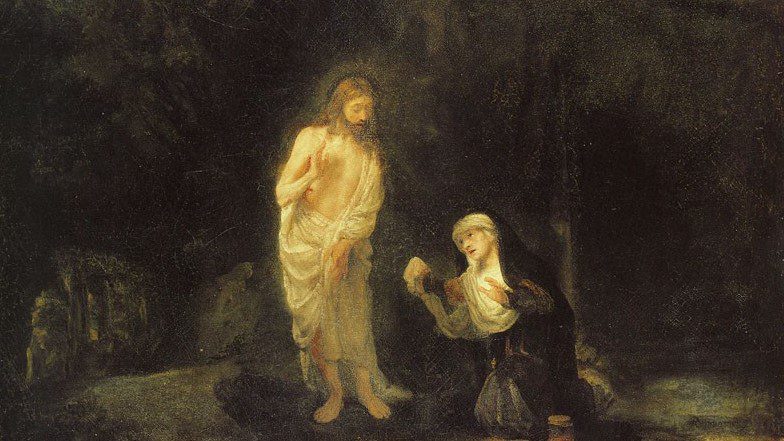
Then I turned to look beyond the door of the cave. It was brighter outside and there stood another man I had not seen before. He spoke to me as men always addressed women with work to do.
15 “Woman, why are you crying? Who is it that you’re seeking?”
This man probably also has work to do, I thought. But I continued to plea for my Lord’s body which was not there.
“Sir, if you’ve carried him away, tell me where you’ve put him, and I will take him away.”
Then I recognized His gentle smile and loving voice.
“Mary.”
I turned to embrace Him as I poured out my joy at the sight of Him:
““Rabboni!”
“Don’t cling to me,” Jesus cautioned after I called Him teacher, “since I have not yet ascended to the Father…”
It took every bit of obedience to restrain my joy to listen, but not to touch the Lord. As I struggled with my emotions, He continued:
“… But go to my brothers and tell them that I am ascending to my Father and your Father, to my God and your God.”
Of course, I ran back to town and announced it to the Disciples. Jesus always called them His brothers and all of us His family.
“I have seen the Lord!”
John 20:18b CSB
As quickly as I could I told them all I had seen, then Peter ran out the door followed by John.
Σίμων Πέτρος – Simon Peter

I am Simon, son of John the fisherman, owner of the fishing fleet on the Sea of Tiberias. Jesus calls me Cephas or Peter, but I denied knowing Him when the soldiers took Him away. It was just as He had said.
The trial was no trial at all and they convicted Him of nothing. But they tortured and killed Him anyway, mocking Him before the crowds. I was afraid. We were all afraid and we hid from the authorities.
On the first day of the week after His execution Mary Magdalene comes bursting in the door. “They’ve taken the Lord out of the tomb, and we don’t know where they’ve put him!”
I took the lead, not waiting for anyone, and darted out the door. John followed closely, the young man running a bit quicker than me. When I arrived he was stooping down looking into the empty tomb. He was looking at something.
I stooped down and went on in and saw the linen cloths lying there. 7 The wrapping that had been on his head was not lying with the linen cloths but was folded up in a separate place by itself.
This makes no sense, I thought. John stepped in behind me and also saw the neatly folded linen cloths and the wrapping that Joseph had placed around Jesus’ head as we had carefully held His lifeless body.
We left and went back to town.
Ἰάκωβος – James, Son of Zebedee
James, chosen randomly for this post-resurrection witness, represents any of the unnamed Disciples in the locked room where the Lord appeared.
I am James the elder or the greater, as I am sometimes called so as not to confuse me with Jesus’ younger half-brother, son of Joseph. John, my younger brother and I were followers of John the Baptist until we met the Lord.
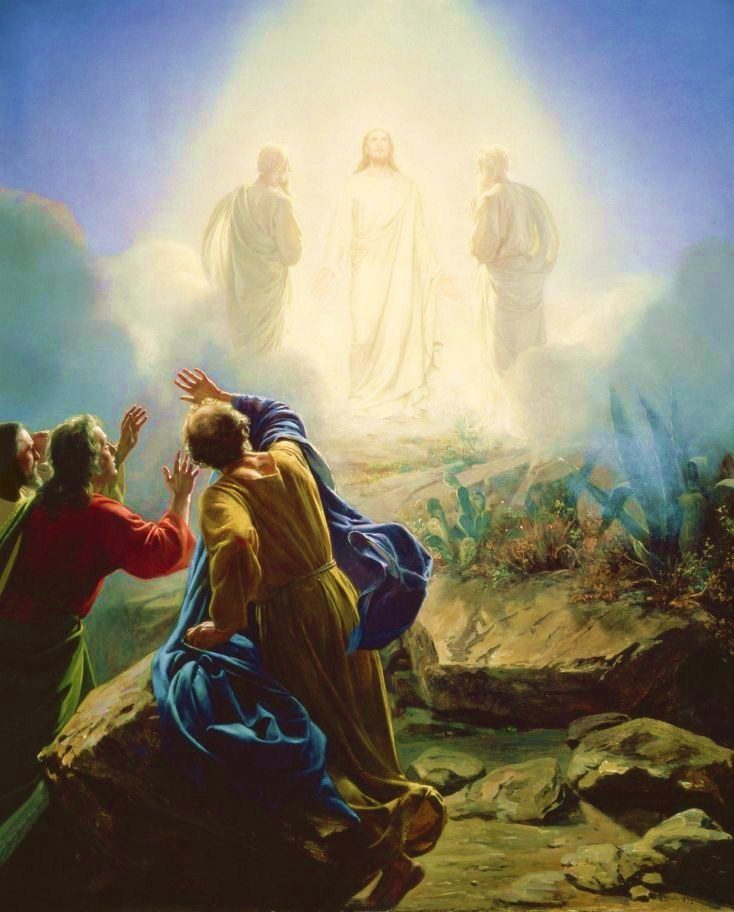
John, Peter and I had all witnessed the transfiguration of our Lord when He appeared with Moses and Elijah. We knew He IS the Messiah of God.
But I feared for my own life after Peter cut off the ear of a centurion arresting Jesus in Gethsemane. Even then He healed the man as if it had never happened. It was like so many miracles of Jesus we had witnessed the last three years.
Most of us had gone back into town to the room where our Lord had washed our feet. And we kept the doors locked.
On the first day of the week Peter and John had answered an early and urgent knock at the door. They left hastily, following Mary. When they returned my brother John told us he was certain the Lord was alive. Peter agreed and confirmed the evidence of all they had seen at the empty grave.
We all discussed it, all, that is, except Thomas who was not there. But we once again began to hope and thought hard about scripture Jesus had so often discussed with us. Then in the evening an amazing thing happened, and as I said, the door was locked.
Jesus came, stood among us and said, shä·lōm, that is, “Peace be with you.”
Having said this, he showed us his hands and his side. I shed tears of joy, but also of sorrow as I looked upon the Lord’s hands and the place where the nails had been driven through. He also showed us his spear-pierced side. How was it possible? Yet there our Lord stood among us.
And ever so briefly as we were all still rejoicing the Lord left, disappearing instantly as He had appeared in our room with the locked door.
Θωμᾶς Δίδυμος – Thomas
Jesus and the others called me Thomas or Didymos, which means, ‘the twin.’ My given name is Judas, but they call me Thomas so as to not confuse me with Judas, half-brother of Jesus or Judas Iscariot, who betrayed our Lord.
Word had reached me that Jesus IS alive and had appeared to the others. I hurried back to Jerusalem to the room where we had celebrated the Passover feast before our Lord’s suffering and death. The door was locked, of course. I knocked and announced myself, ‘it is Didymos.’
‘Thomas,” Peter replied as he opened the door and quickly locked it once more. “Last week the Lord appeared to us here.” “Thank you for sending the messenger with the good news to me,” I responded.
“We’ve seen the Lord!” all the Disciples were telling me.
Yet even though I had come back with my heart full of hope I replied,
“If I don’t see the mark of the nails in his hands, put my finger into the mark of the nails, and put my hand into his side, I will never believe.”
For they had all told me how they had seen the scars of His crucifixion.
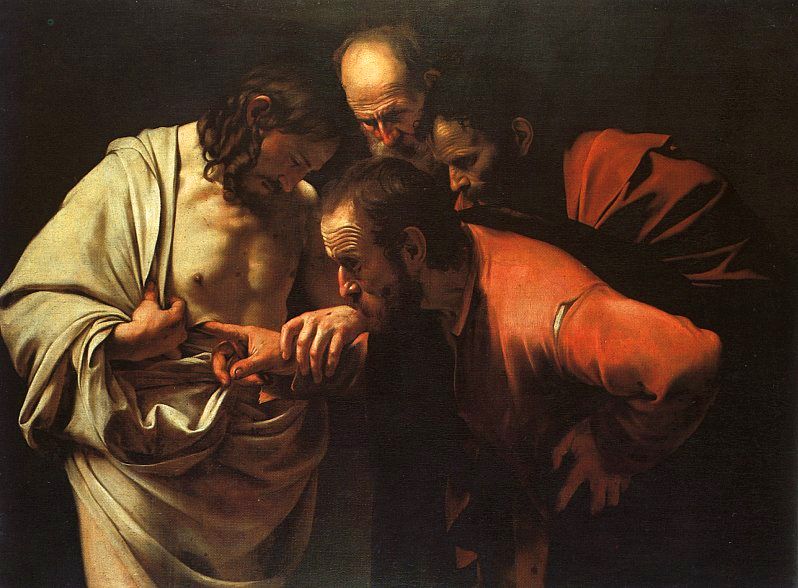
Suddenly, the Lord also appeared in the locked upper room to me. The Lord greeted us all, “Peace be with you.” Then He turned to me.
“Put your finger here and look at my hands. Reach out your hand and put it into my side. Don’t be faithless, but believe.”
I touched the bloodless indentation in the Lord’s right hand, buckled to my knees, weeping and looking into His familiar loving eyes.
“My Lord and my God!”
Jesus’ look accepted my belated worship. Then He said to all of us:
“Because you have seen me, you have believed.”
“Blessed are those who have not seen and yet believe.”
John 20:29B CSB – words of the risen Christ Jesus
Μαθθαῖος לֵוִי – Matthew Levi
The Gospel of Matthew
The Hebrews know me by Levi and I collected the Roman tax for their leaders. But once the Lord called on me to follow Him, I was mostly called by my Greek name, Matthew.
Besides John, I am one of the twelve witnesses to the incarnate life of the Messiah Jesus. We were all, of course, Jews, who spoke Aramaic and Greek with the Romans. My Gospel adds other detail to John’s Gospel.
The Gospels of Mark and Luke
You would probably call us second generation disciples of Jesus. Just a short time after the resurrection of the Lord Jesus, Peter came to us after Herod executed James, John’s brother with the sword. John Mark began recording all that Peter witnessed and then interviewed other Apostles as well.
The physician Luke also wrote a detailed Gospel of the events in Jesus’ life and a second scroll of the Acts of the Apostles, where Luke faithfully records the events of Pentecost. John also recorded the receiving of the Holy Spirit, as the Lord Jesus had promised.
John – Much more to say
The Apostle John closes his Gospel and resurrection account in this way:
The Purpose of This Gospel
Jesus performed many other signs in the presence of his disciples that are not written in this book. But these are written so that you may believe that Jesus is the Messiah, the Son of God, and that by believing you may have life in his name.
John 20:30-31 CSB
The young Apostle John would be the only Disciple to live to old age. (All others sacrificed their own lives for the sake of the Good News of Christ Jesus).
John wrote three letters to the church as well as the closing book of the Bible about the apocalypse of the close of the age, Revelation.
Παῦλος שָׁאוּל – Paul [Saul of Tarsus]
Our witness of the risen Christ would not be complete without that of a zealous Jewish scholar and Pharisee once opposed to the Lord Jesus and a murderer of followers of The Way, Paul, known as Saul.
Luke records Paul’s own witness in Acts 9:
3 As he traveled and was nearing Damascus, a light from heaven suddenly flashed around him. Falling to the ground, he heard a voice saying to him, “Saul, Saul, why are you persecuting me? ” “Who are you, Lord? ” Saul said. “I am Jesus, the one you are persecuting,” he replied.
Paul’s later letter to the church at Corinth speaks to us about the all-important witness of the resurrection of Christ.
1 Corinthians 15
Resurrection Essential to the Gospel
Now I want to make clear for you, brothers and sisters, the gospel I preached to you, which you received, on which you have taken your stand.
.. that Christ died for our sins according to the Scriptures,
- 4 that he was buried,
- that he was raised on the third day according to the Scriptures,
- 5 and that he appeared to Cephas [Peter]
- then to the Twelve)
Then he [the risen Christ Jesus] appeared to over five hundred brothers and sisters at one time; most of them are still alive, but some have fallen asleep.
1 Corinthians 15:6
- 7 Then he appeared to James,
- then to all the apostles.
- 8 Last of all, as to one born at the wrong time,a he also appeared to me.
Resurrection Essential to the Faith
13 If there is no resurrection of the dead, then not even Christ has been raised… 17 And if Christ has not been raised, your faith is worthless; you are still in your sins…
If we have put our hope in Christ for this life only, we should be pitied more than anyone.
1 Corinthians 15:19
Christ’s Resurrection Guarantees Ours
20 But as it is, Christ has been raised from the dead, the firstfruits of those who have fallen asleep… If the dead are not raised, Let us eat and drink, for tomorrow we die.
Note that he does not call on us to party (as the world misquotes), but warns that to live in this way is fruitless, since we believe in the resurrection. Our certainty of eternal life in Christ guarantees that the fruit of this life becomes our reward for eternity.
A closing thought for Easter
John has told us that he could have told us many more convincing things to convince us that Jesus IS the Messiah. Many witnesses, even historians outside the Bible testify to Jesus.
Paul continues his eloquent witness for Christ and the resurrection of Jesus, which I commend to your prayer and study.
Question is: Do you believe in the Lord, Christ Jesus?
I will close with Paul’s own further witness, which I pray you will take to heart for the sake of your eternal soul.
Death has been swallowed up in victory.
55 Where, death, is your victory?
Where, death, is your sting?
56 The sting of death is sin, and the power of sin is the law.
57 But thanks be to God, who gives us the victory through our Lord Jesus Christ!