“Bethphage; in Aramaic “place of young figs”): Near the Mount of Olives and to the road from Jerusalem to Jericho; mentioned together with Bethany – source
The road to and from Jerusalem goes something like this:
It descends east from the Temple, crosses the Kidron valley, past the Mount of Olives & Gethsemane [five furlongs], continues east through Bethphage [2000 cubits/1000 paces] to Bethany [a Sabbath Day's journey from Jerusalem].
I addressed the significant imagery of this journey of Jesus in an earlier SERIES
A.D. 30 - 2024 C.E. - The Controversial Place of God
RETURN to JERUSALEM along the ancient hillside roads from Bethany on this day prior to the Passover Sacrifice with JESUS ‘of Nazareth’ observing several controversies.
Controversies BEFORE CHRIST!
Opposition to the Lord God goes back BEFORE DAVID – yes, even before Moses and Abraham.
AND opposition to the One Living God of Scripture continues even NOW in these last days of 2024 of the COMMON ERA!
JERUSALEM, THE LAW & GOD’S BREATHED-OUT WORD all remain at the center of every opposition of twisted Truth, false prophets and stiff-necked resistance to God’s grace.
No Son of Man would ever be so controversial to a sinful world than Christ Jesus our Lord and Savior!
Now in the morning, as He returned to the city, He was hungry.
And seeing a fig tree by the road, He came to it and found nothing on it but leaves, and said to it,
“Let no fruit grow on you ever again.”
Is this curse on Jerusalem for 'Good' Friday's Cross?
..
or perhaps Anno Domini 70 when Rome will destroy it?
..
or even some last day soon in the Common Era of 2024?
Before we look at an extraordinary sign in Troas suggesting that Paul is also a Prophet of Almighty God, let’s look at other true Prophets of the past.
~A.D. 56 – Previously in an upper room at midnight in the port of Troas..
The gospel points to JESUS and not to the Apostle Paul or some other Old Testament prophet.
WHO does a prophet speak for and what does he say?
Is it the message and work of ALMIGHTY GOD or that of rebellion against the LORD?
The Lord Jesus Christ
~ A.D. 28 - the year being less important than the short time of two decades before this present miracle by Paul
Luke 7:
.. behold, a man who had died was being carried out, the only son of his mother..
And he said, “Young man, I say to you, arise.” And the dead man sat up and began to speak, and Jesus gave him to his mother.
Fear seized them all, and they glorified God, saying, “A great prophet has arisen among us!” and “God has visited his people!”
And this report about him spread through the whole of Judea and all the surrounding country.
.. for Jesus’ name had become known. Some said, “John the Baptist has been raised from the dead. That is why these miraculous powers are at work in him.” But others said, “He is Elijah.” And others said, “He is a prophet, like one of the prophets of old.”
About 860 Before Christ - the sign from GOD being more important than the year.
Then the word of the Lord came to him, 9 “Arise, go to Zarephath, which belongs to Sidon, and dwell there. Behold, I have commanded a widow there to feed you.”
God speaks to him and also commands the response of one (or more) to whom he is sent. Paul has already experienced this as have Peter and other Apostles sent out with the Gospel by the resurrected Jesus Christ.
14 For thus says the Lord, the God of Israel, ‘The jar of flour shall not be spent, and the jug of oil shall not be empty, until the day that the Lord sends rain upon the earth.’” 15 And she went and did as Elijah said. And she and he and her household ate for many days.
1 Kings 17:14-15 ESV
All are obedient to God for an extended time. They continue to witness a miracle but a greater sign will soon prove the power of God and truth of his prophecy through Elijah.
After this the son of the woman, the mistress of the house, became ill. And his illness was so severe that there was no breath left in him..
19 And he said to her, “Give me your son.” And he took him from her arms and carried him up into the upper chamber where he lodged, and laid him on his own bed.
.. Then he stretched himself upon the child three times and cried to the Lord,
“O Lord my God, let this child’s life come into him again.”
.. And the life of the child came into him again, and he revived. 23 And Elijah took the child and brought him down from the upper chamber into the house and delivered him to his mother. And Elijah said, “See, your son lives.”
24 And the woman said to Elijah, “Now I know that you are a man of God, and that the word of the Lord in your mouth is truth.”
Resurrection of a body which has fallen from life into the valley of death is nothing new to the Apostles. To Peter another resurrection would be completely possible IF it is the will of the Lord.
And she opened her eyes, and when she saw Peter she sat up.
41 Then he gave her his hand and lifted her up; and when he had called the saints and widows, he presented her alive. 42 And it became known throughout all Joppa, and many believed on the Lord.
WHAT FURTHER SIGN DO YOU NEED THAT THE HAND OF THE LORD IS ON A MAN THAN A RESURRECTION OF THE DEAD?
The Apostle Paul
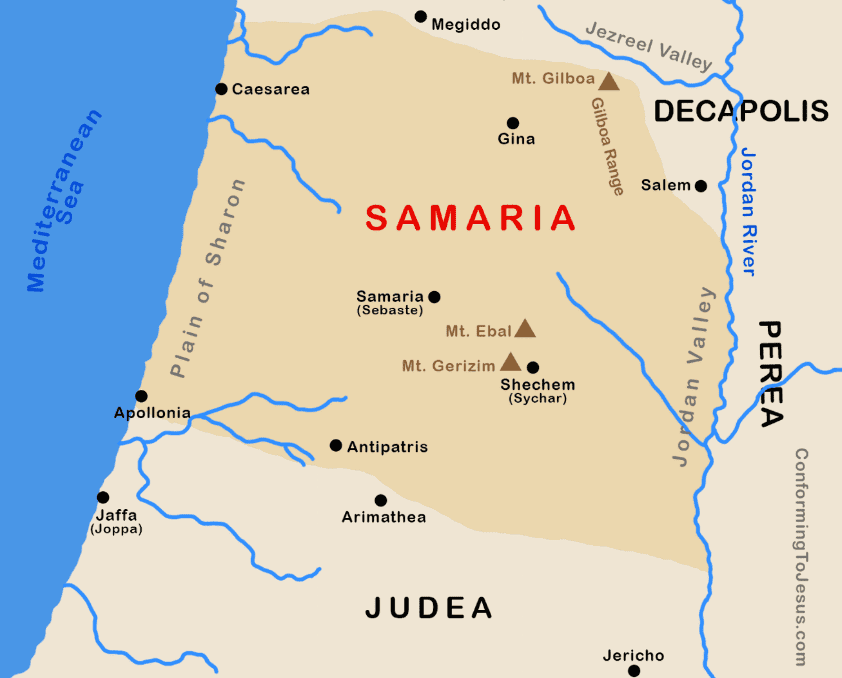
Troas – important 1st C. A.D. Roman port
Returning now to the mid- A.D. 50's about a dozen years after the resurrection of Tabitha or Dorcas in Joppa by Peter, a couple of dozen years after many witnessed the signs of multiple resurrections by the Lord Jesus AND more than nine centuries since the sign of the Prophet Ezekiel for a widow in Zarephath.
after the 3-story fall of Eutychus from an upper room window to his death
But Paul went down and bent over him, and taking him in his arms, said, “Do not be alarmed, for his life is in him.”
11 And when Paul had gone up and had broken bread and eaten, he conversed with them a long while, until daybreak, and so departed.
12 And they took the youth away alive, and were not a little comforted.
Acts of the Apostles 20:12 ESV
WHAT THEN?
Paul’s preaching, worship and discussion with the believers in Troas had gone until midnight. (WHAT A LONG EVENING SERVICE!)
But then AFTER the SIGN of the Lord through PAUL raising the dead youth, the faithful returned to WORSHIP (and no doubt thankfulness) until the break of the very day. The Apostle would then continue to sail into the rest of the world with the Gospel of JESUS Christ.
JOY of the Gospel of Jesus Christ continues not only in Troas and back into Macedonia and Greece, but in other ports along the Apostle Paul’s third missionary journey.
12 And they took the youth away alive, and were not a little comforted.
13 But going ahead to the ship, we set sail for Assos, intending to take Paul aboard there, for so he had arranged, intending himself to go by land.
Prophets and Signs
A false prophet shows NO SIGNS other than deception and ambition against Almighty God.
Saul of Tarsus had been a great aggressor of Zion without regard for the mercy of God and ears to hear the warning of Israel’s Prophets predicting a servant Messiah who would not ‘break a bruised reed’.
YET the LORD had bruised Paul’s zeal near Damascus and confronted his heart with the Gospel of His Own RESURRECTION!
NO SIGN of a Prophet proves his message true more than a resurrection of a body and restoration of a soul.
THE LORD had provided proof of His Word through Moses and through Elijah who have now appeared to Jesus’ Apostles Peter, James and John. The Word provides a sign to Saul by once more appearing to the apostle then prophesying the most difficult journey ahead as JESUS would send Paul out to the Gentiles as His chosen instrument.
For he has set a day when he will judge the world with justice by the man he has appointed. He has given proof of this to everyone by raising him from the dead.”
.. but now he commands all people everywhere to repent– Acts 17:30 ESV
Had this been the 20th century you might have expected an altar call at Mars Hill as public witness of the Apostle’s anointed mission. But that’s not what he did.
In fact, Paul left town and headed for a new province of Achia and the larger city of Corinth (for Athens was now but a rebuilt remnant of its former ancient glory).
AND as often happens, once Paul proclaims Christ at the risen Son of the Living God the Apostle’s preaching this Good News to the intelligentsia of Athens yields mixed results. The truth of the Gospel sows more seeds of controversy into the hearts of sinners who must confront our own mortality, death and judgment.
Now when they heard of the resurrection of the dead, some mocked.
But others said, “We will hear you again about this.”
The philosophers among the learned men of Athens had already chosen sides in their entrenched idolatries of self. These men suggesting a willingness to hear more from Paul only sought to use this preacher of foreign gods to support their own unending philosophical debates.
The Apostle must have also wondered if the Jews of Athens might soon provoke discord in the crowds as had happened recently as the Paul and Silas had fled Thessalonica then Berea?
(Many of the Jews did not believe in resurrection or apply the prophesies of their own Scriptures to the leaven of culture in their daily 'better-than-thou' lives.)
To the Jew who does NOT believe in resurrection death is the end of life — the end of a brief mortal time God gives to Jews and Gentiles alike. DEATH may come as a penalty of righteous men to put an END to the unrighteous. But even the righteous will expire once the LORD has blessed their mortal days.
The pagan Greeks and pagan Romans, however, worshipped idols of their own making and mythology, molded by the manifold desires of their creatively sinful flesh and guiltless justification of their wicked minds.
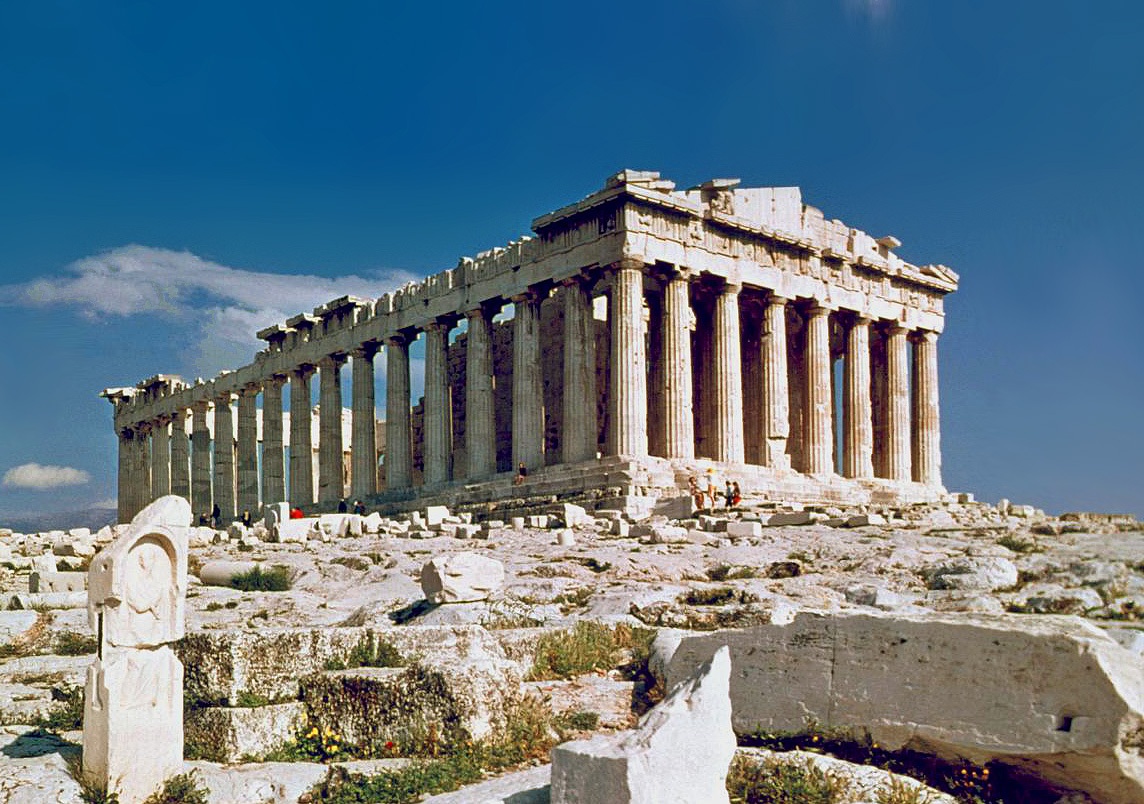
The GREEK and ROMAN gods were DEAD monuments of STONE with no authority over the living worshipers of the temples who willfully indulgenced in wickedness.
So Paul went out from their midst.
But some men joined him and believed, among whom also were Dionysius the Areopagite and a woman named Damaris and others with them.
At Tarsus, Paul certainly had opportunities for hearing Stoic lectures on philosophy. .. Although not a Stoic technical term, syneidēsis, which Paul used as “conscience,” was generally employed by Stoic philosophers. In 1 Corinthians 13 and in the report of Paul’s speech at Athens (Acts 17), there is much that is Hellenistic, more than a little tinged by Stoic elements—e.g., the arguments concerning the natural belief in God and the belief that human existence is in God.
And as we know well from his persecution by the Jews, Paul’s Gospel was not seen as good news to many Jews to whom the Apostle to the gentiles generally sought to convince first in a new town that Jesus is the Messiah or Christ predicted by Scripture.
The JEWS know God’s LAW and read the Prophets who warned them in the past to REPENT.
NOW, the Apostle provides the same proof of the LORD’s COMMAND to Jew and Gentile alike.
Proof of Judgment (and the One to Judge)
The Apostle Paul has no reason to return to the centuries-extended debates of Greek philosophers or Jewish parties to traditions formed when God kept silent after speaking through His Prophets.
πίστις
Pistis – a word Paul uses here translated in the English Standard Version of the Bible as PROOF – provides an insight into his closing of a logical argument stated before his listeners in the areopagus.
The same Greek word is translated in the New Testament (King James Version) can also be translated as assurance or belief, even as fidelity; but beyond our limited English understanding most times [239x in KJV] pistis is translated as faith.
Our 21st century faith seems to lack assurance and proof, let along fidelity to the One God our Lord. Never-the-less, study from Strong's definition Lexicon :: Strong's G4102 - pistis
the better understanding of Paul's audience of first century philosophers.
conviction of the truth of anything, belief; in the NT of a conviction or belief respecting man’s relationship to God and divine things, generally with the included idea of trust and holy fervour born of faith and joined with it
fidelity, faithfulness – A. the character of one who can be relied on
And Paul, looking intently at him [a man lame from birth] and seeing that he had faith to be made well, 10 said in a loud voice, “Stand upright on your feet.” And he sprang up and began walking. 11 And when the crowds saw what Paul had done, they lifted up their voices, saying in Lycaonian, “The gods have come down to us in the likeness of men!”
19 But Jews came from Antioch and Iconium, and having persuaded the crowds, they stoned Paul and dragged him out of the city, supposing that he was dead.
This incident of PROOF had occurred on the Apostles' first missionary journey and Paul had returned to them on this current mission.
Same word -- and just after this listen to how Paul uses it in witnessing the PROOF of the Gentiles receiving the Holy Spirit to the church.
27 And when they arrived [returned to the church in Antioch Syria] and gathered the church together, they declared all that God had done with them, and how he had opened a door of faith to the Gentiles.
in the NT of a conviction or belief respecting man’s relationship to God and divine things
relating to God
the conviction that God exists and is the creator and ruler of all things, the provider and bestower of eternal salvation through Christ
relating to Christ
a strong and welcome conviction or belief that Jesus is the Messiah, through whom we obtain eternal salvation in the kingdom of God
NOW, Paul uses this same word [pistis] referring to Jesus Christ as PROOF even to the Greeks. And how is CHRIST PROOF?
In act and deed GOD has provided the PROOF by the resurrection of Jesus — an act of FAITH proven which NO MAN could do (who is not God). AND by this PROOF men must believe the command of GOD TO REPENT.
because He has fixed a day in which He will judge the world in righteousness through a Man whom He determined, having furnished proof to all by raising Him from the dead.”
Now when they heard of the resurrection of the dead..
God IS.
God excused your ignorance (as your philosophers sought to argue for or against the Him who created the heavens and the earth and all mankind.
God now commands all men to repent, for He as set a day to judge the world in righteousness. (Of course NO man is righteous, no not one.)
God appointed a righteous JUDGE to judge YOU and the world.
(NOT by condemning you to death which is inevitable for moral beings, but after YOU die! (No human EVER escapes DEATH! — that is, except the One Man anointed by God to JUDGE our faith in Him.)
Paul could have returned to Mars Hill to debate with philosophers who continuously look for a new argument about life, death, resurrection, God or gods and how we should live in some semblance of righteousness. Even twenty-one centuries later the debates of the philosophers still seek their own new truths.
Some will respond to the GOOD NEWS of God. MANY will continue the debate in unbelief.
The Apostle, therefore, journeys on to ACHAIA and Corinth where they will nurture and build yet another church for more than a year before Paul’s return to SYRIA.
ACTS of the Apostles [18] – To Be Continued… in Corinth
Comment on Scripture – Share the Gospel

Cookie Consent
We use cookies to improve your experience on our site. By using our site, you consent to cookies.
Used to monitor number of Google Analytics server requests
10 minutes
__utmb
Used to distinguish new sessions and visits. This cookie is set when the GA.js javascript library is loaded and there is no existing __utmb cookie. The cookie is updated every time data is sent to the Google Analytics server.
30 minutes after last activity
__utmc
Used only with old Urchin versions of Google Analytics and not with GA.js. Was used to distinguish between new sessions and visits at the end of a session.
End of session (browser)
__utmz
Contains information about the traffic source or campaign that directed user to the website. The cookie is set when the GA.js javascript is loaded and updated when data is sent to the Google Anaytics server
6 months after last activity
__utmv
Contains custom information set by the web developer via the _setCustomVar method in Google Analytics. This cookie is updated every time new data is sent to the Google Analytics server.
2 years after last activity
__utmx
Used to determine whether a user is included in an A / B or Multivariate test.
18 months
_ga
ID used to identify users
2 years
_gali
Used by Google Analytics to determine which links on a page are being clicked
30 seconds
_ga_
ID used to identify users
2 years
_gid
ID used to identify users for 24 hours after last activity
24 hours
_gat
Used to monitor number of Google Analytics server requests when using Google Tag Manager
1 minute
_gac_
Contains information related to marketing campaigns of the user. These are shared with Google AdWords / Google Ads when the Google Ads and Google Analytics accounts are linked together.
90 days
__utma
ID used to identify users and sessions
2 years after last activity
Marketing cookies are used to follow visitors to websites. The intention is to show ads that are relevant and engaging to the individual user.