Tag: roman

  • Acts 13.4 Sailing to Salamis Cypress

    Acts 13.4 Sailing to Salamis Cypress

    Sailing from Antioch to Cypress

    Acts of the Apostles 13:

    4 So, being sent out by the Holy Spirit, they went down to Seleucia and from there they sailed to Cyprus.

    A.D. 47

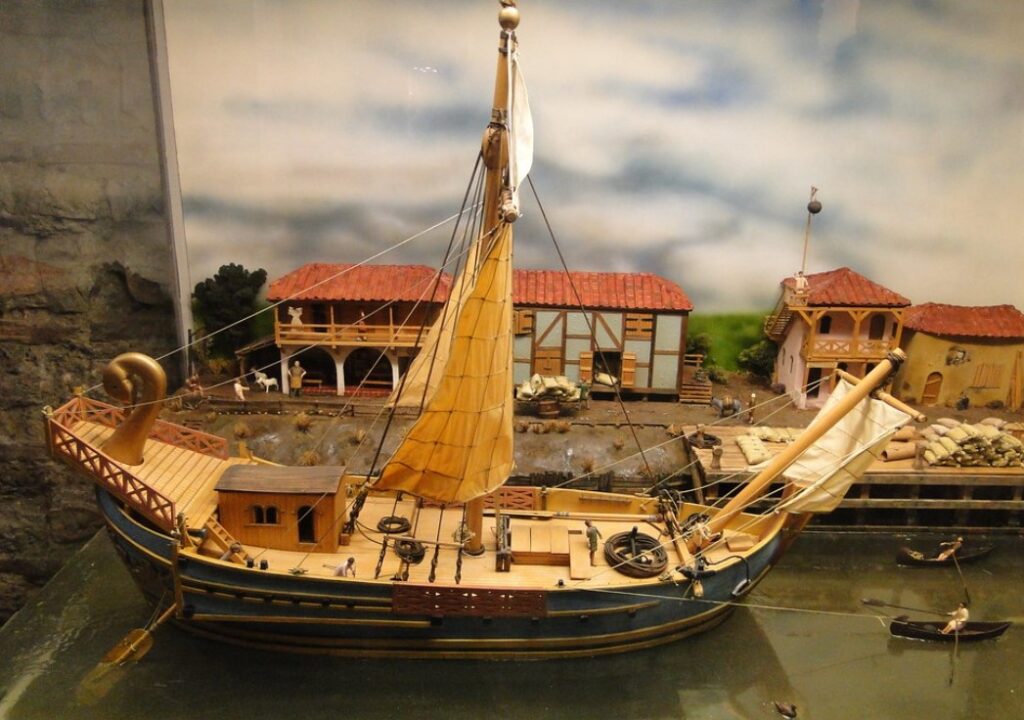
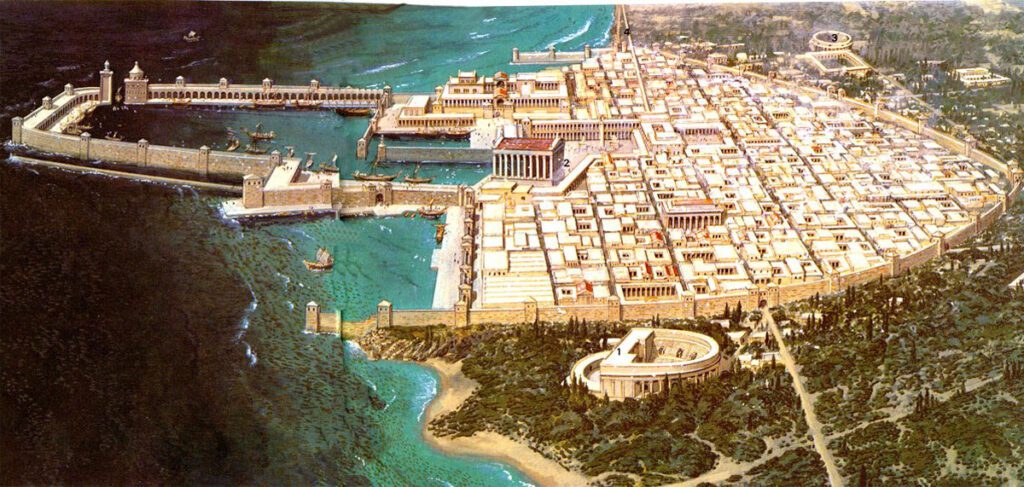
    A Roman merchant ship sails from Seleucia

    Photo source

    Sailing Journeys in the Roman Empire

    I don’t know about you, but I didn’t really know very much about sailing around in the Mediterranean in the first century A.D. And when I read later in Acts about wintering in some ort or about ship wrecks I had no idea what that was all about.

    So here is a little I’ve learned about Paul’s journeys by ship in the first century Mediterranean Sea.


    How did the ancient Romans travel?

    [Like Paul and Barnabas]

    • There were no passenger ships per say in first century Rome. No luxury cruise lines or anything similar.
    • People willing to travel by ship had to board a merchant ship.
    • They would first have to find a ship, it could be almost any kind of ship and then they would have to get the captain’s approval. The price would also be negotiated with the captain.
    • Most of the times passengers would bring their own food supplies, covers, mattresses, even a tent and sleep on deck!
    • Sometimes there would be hundreds of people on the deck.
    • There were no restaurants or any of the luxuries of today’s ships but passengers could use the ship’s facilities to cook their meals. People would often play games, gamble, read or just drink wine.

    OR perhaps a fellow passenger might ask two men like Paul and Barnabas,

    “What brings you to Cypress?”

    VITA ROMAE

    .. Romans were not traditionally seafaring people. They were mostly land-based people who learned to build military and merchant ships from the people that they conquered. Sailing the seas was often considered un-Roman.

    Romans had very few warships [BUT]

    Rome managed to defeat the world’s most powerful navy to become the dominant naval power in the Mediterranean or as the Romans called it Mare Nostrum (“our sea”).

    Sailing the Roman Sea

    Another function of Roman military ships was to patrol the Mediterranean sea and to sometimes escort merchant ships.

    • Most ships had a cargo capacity of 100 to 150 tons
    • The largest ships, with a capacity of 600 tons, were 150 ft (46m) long.
    • Merchant ships mainly used mainly wind power. They had from one to three masts with large square sails and a small triangular sail called the supparum at the bow.
    • They also had oarsmen (usually slaves). [Roman military ships used free Roman soldiers on the oars.]

    The time of travel along the many shipping lanes could vary widely. Roman ships would usually ply the waters of the Mediterranean at average speeds of 4 or 5 knots.

    VITAE ROME

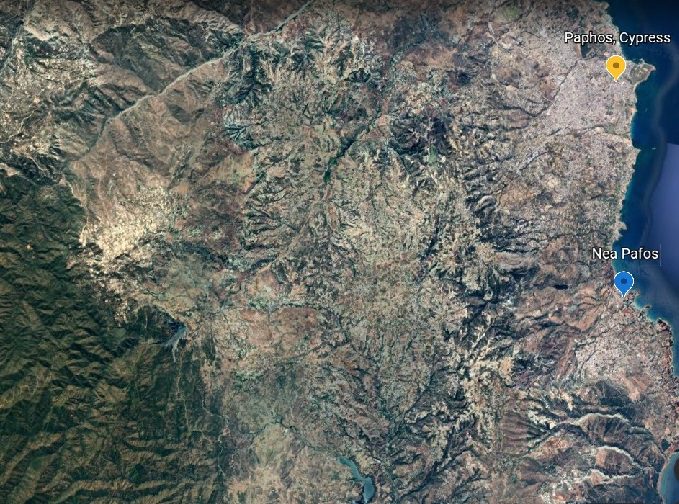
    Salamis, Cypress

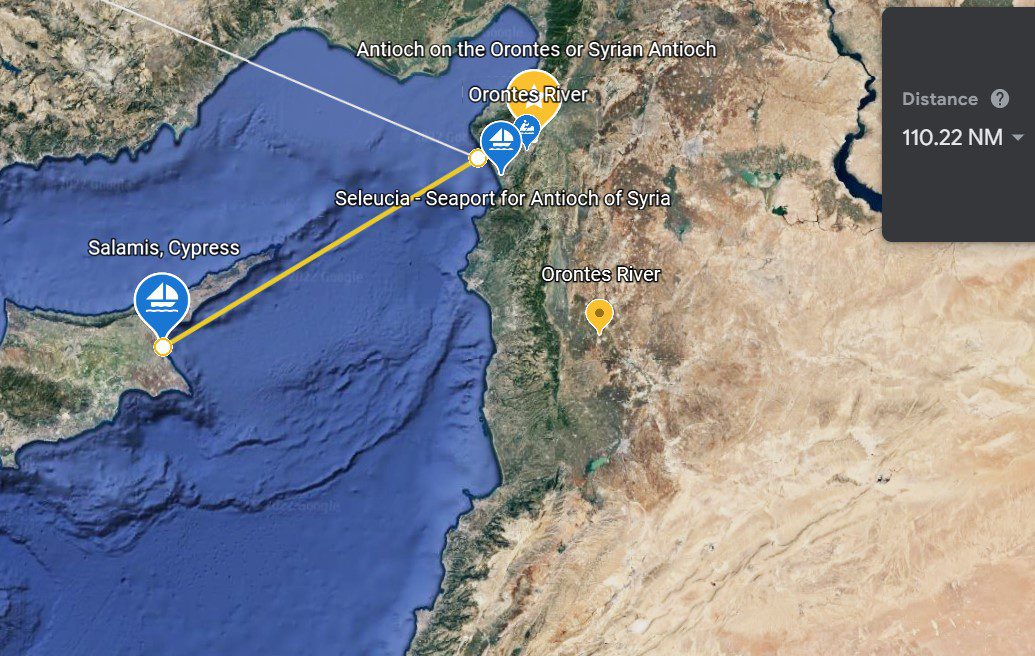
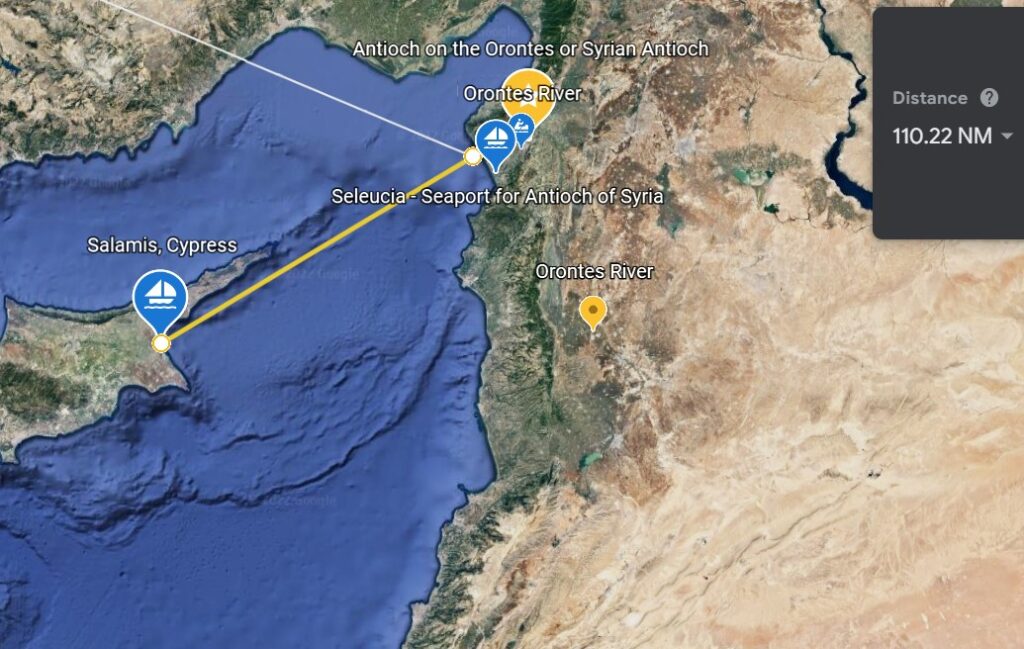
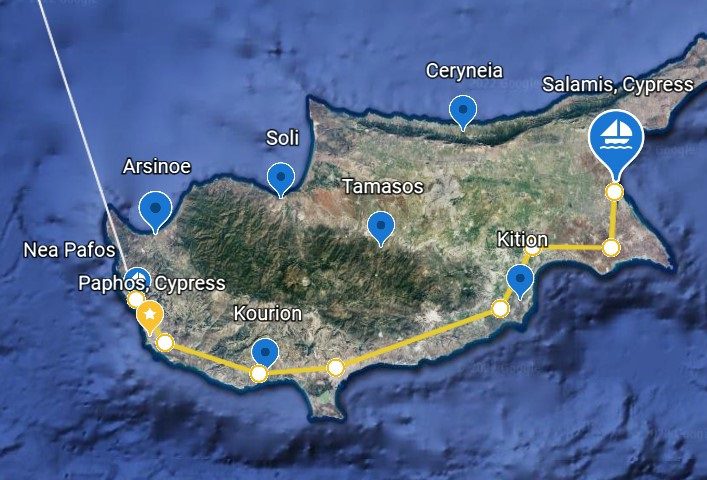
    Seleucia Syria (1st c) to Salamis Cypress

    IF we do the math, allowing for the additional time in Seleucia while the cargo is loaded on their ship.. waiting in the boarding line where the captain’s representative makes certain all passengers have paid their fare.. boarding time… casting off WHEN the tide and winds seem right…

    once weighing anchor, navigating the ship with new weight in the hold carefully out of the harbor…

    AT 4-5 knots per hour (eventually) & depending on prevailing winds..

    for perhaps 20-25 hours.. at least overnight (for this short voyage_) and timing of the tides and navigating Salamis…

    [Don't you just love all that waiting before departure and docking even on a short journey?]
    

    IF you would like to catch up to the LATEST post from our SERIES from ACTS of the Apostles CLICK HERE


    So Joseph, you say you were born here?

    See Acts 4:36

    A Levite.

    And you brought Saul here from Tarsus? (I’ve been there.)

    What’s this ‘Good News’ you are bringing here?


    One additional passenger

    DO YOU RECALL:

    Five years earlier in Jerusalem [~AD 42}: Peter amazingly appears at the gate of John Mark’s home after being freed from Herod’s prison by an angel.

    Peter goes to the home of Mary mother of Mark

    AFTER Herod Agrippa died [A.D. 44]:

    Barnabas and Saul returned to Jerusalem, fulfilling their ministry, taking along with them John, who was also called Mark. – Acts of the Apostles 12:25

    NOW, nearly three years later [~A.D.47]:

    Seleucia Syria (1st c) to Salamis Cypress

    FIRST PORT of the FIRST Missionary Journey – Salamis

    • It possessed a good harbor and was the most populous and flourishing town of Cyprus
    • in the Hellenic and Roman periods, carrying on a vigorous trade with the ports of Cilicia and Syria.
    • Its population was mixed, consisting of Greek and Phoenician elements.
      • The former, however, gave its tone and color to the city, and the chief cult and temple were those of Salaminian Zeus.
    • There they preached the gospel in the “synagogues of the Jews” (Acts 13:5);
      • the phrase is worth noting as pointing to the existence of several synagogues and thus of a large Jewish community in Salamis.
      • Of work among the Gentiles we hear nothing,
      • nor is any indication given either of the duration of the apostles’ visit or of the success of their mission;
      • but it would seem that after a short stay they proceeded “through the whole island”

    And when they reached Salamis, they began to proclaim the word of God in the synagogues of the Jews, and they also had John as their helper.

    Acts of the Apostles Paul & Barnabas 13:5 on Cypress

    WE see here just a brief first stop of Apostles sent out by the Holy Spirit with the Gospel, which Paul and Joseph of Cypress proclaim in the synagogue of Salamis to fellow Jews who have not yet heard the Good News of Jesus, the Christ promised by the Lord God.

    With them, a servant helper, John Mark, who observingly will record his first Gospel published about ten years later [in the A.D. 50’s].


    ACTS of the Apostles 13 on Cypress
    
    TO BE CONTINUED...
    
    Seleucia Syria (1st c) to Salamis Cypress

    Talk of JESUS . com

    Comment on Scripture – Share the Gospel

  • Acts 13.2 – Sailing from Antioch

    Acts 13.2 – Sailing from Antioch

    ON OUR JOURNEY AHEAD from Antioch I’ll show you a 21st century view of Paul’s missionary journey from GOOGLE EARTH guided by brief scripture for each part of Paul’s first missionary journey.

    What do you know about Antioch?

    https://talkofjesus.com/an-antioch-blueprint-of-church-evangelism/
    Did any of you cartographers catch my wrong label for Antioch on this map?

    In my introduction to the first missionary journey of Paul we introduced you to some representative faces of the culture in Antioch, the most notable church outside of Jerusalem.

    In the year of our Lord [A.D.] 47 + about 14 years after the Crucifixion, Resurrection & Ascension of JESUS.

    About Antioch

    Rather than taking a traditional approach to Paul’s missions from a first-century view culturally rooted in Jerusalem, it may help us to think about Antioch and Paul’s departure from this IMPORTANT ROMAN CITY more like a Roman Citizen.

    After all, Saul of Tarsus (Paul), is not only a Jew, but a Roman Citizen who becomes somewhat of an ambassador between cultures, a man of learning and understanding of Romans, Jews and Greeks or Hellenists.

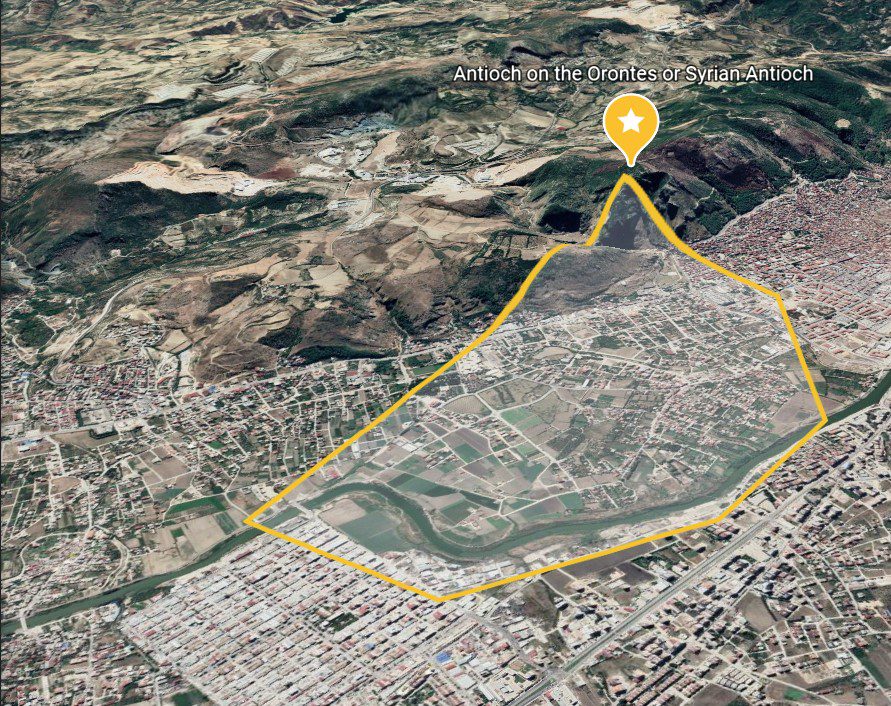
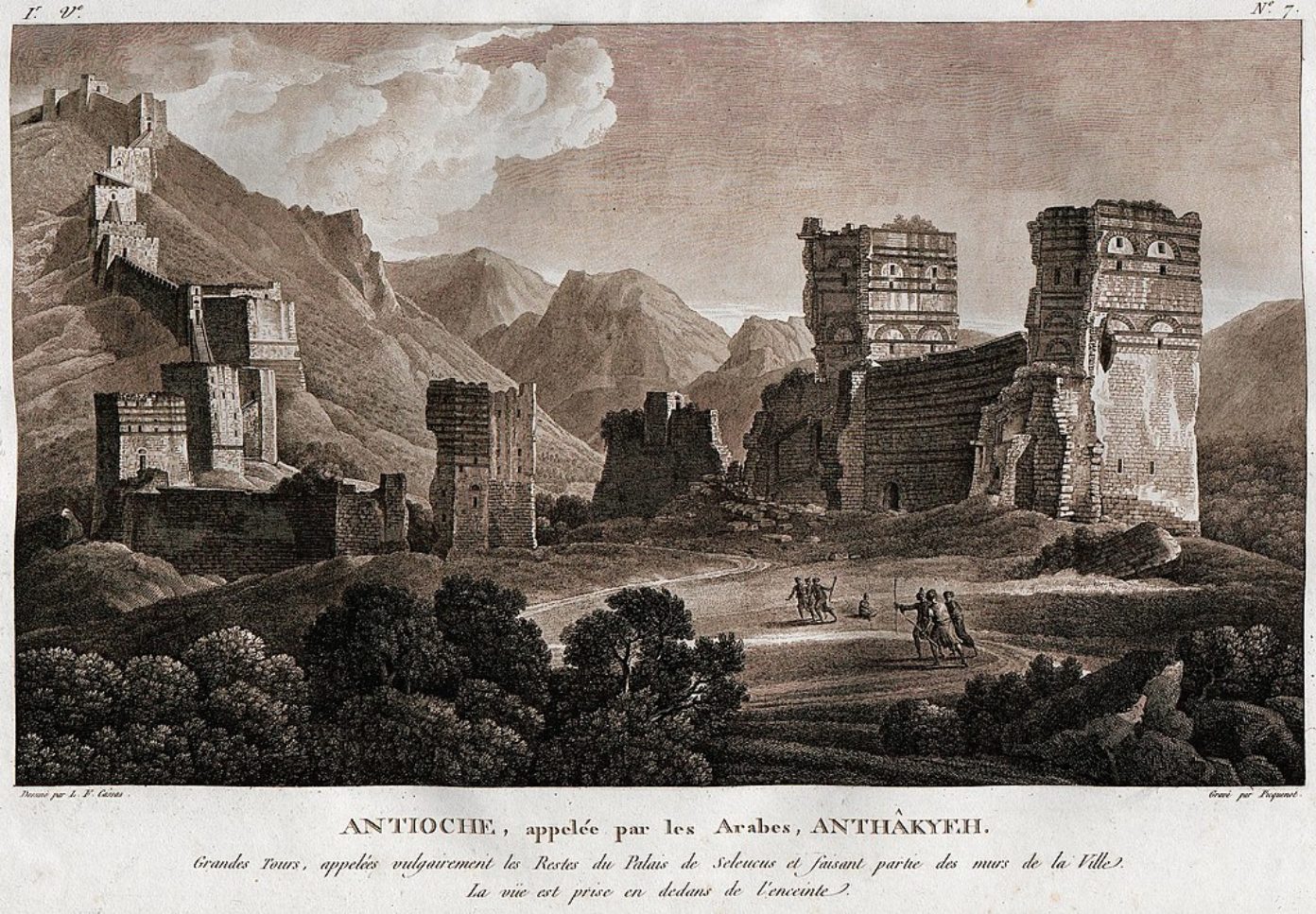
    Antioch on the Orontes source
    • What you see above is a painting of ruins of the ancient wall of Antioch.
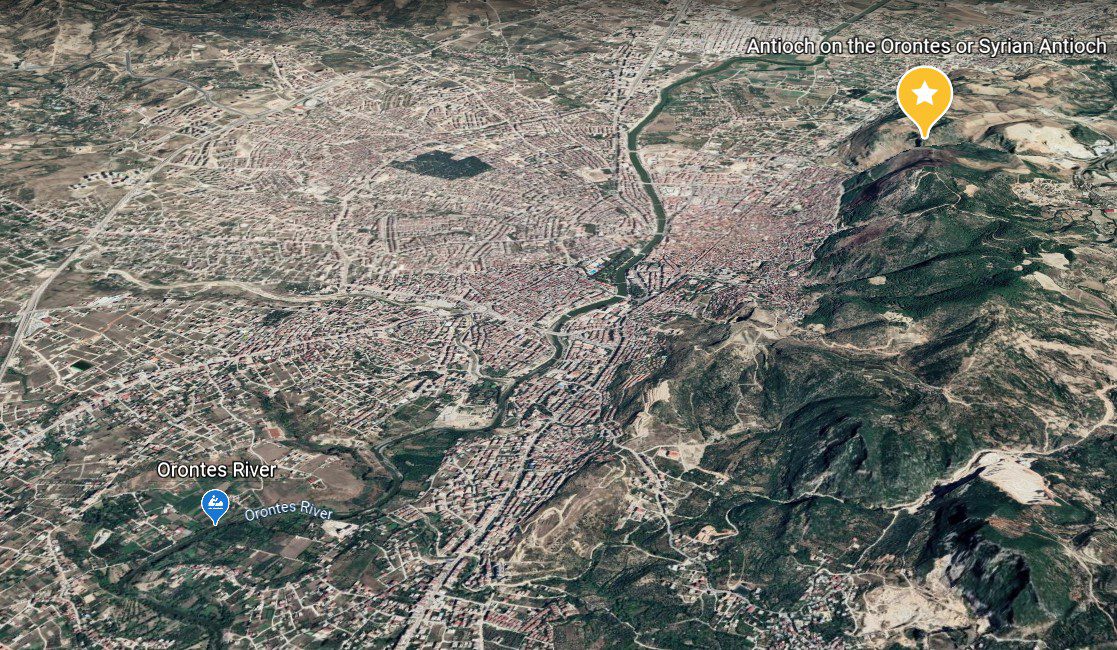
      • (I’ll show you an aerial view of this same area of the city [below]).

    About Antioch: a little before Paul, but NOT before ROME:

    The Great Commission – from Antioch

    Three hundred miles (480 km) north of Jerusalem, the Seleucids urged Jews to move to Antioch, their western capital, and granted them full rights as citizens upon doing so. In 64 BC, Pompey made the city capital over the Roman province of Syria. By AD 165, it was the third largest city of the empire.

    source
    21st c. comparison: FROM CINCINNATI OH to CHICAGO or Ashtabula OH 
    WE might FLY to Chicago or DRIVE 400-500 km across Ohio, the same as from Jerusalem to Antioch {Syria, not Ohio}.
    Jerusalem is a long walk from MOST of the Roman World!  
    So Jerusalem in many ways is NOT such a great place to "go into all the world.'
    
    TRAVEL: FLYING or even DRIVING 50+ mph for a day is NOT a first century option (obviously).
    OUR DEPARTURE is for MOSTLY ROMAN destinations. 
    And in fact, ANTIOCH is mostly Roman; therefore the Holy Spirit brings Paul, Barnabas and many others to establish the CHURCH in Antioch and from there, to proclaim the Gospel of the Lord JESUS." 
    antioch on the Orontes in Syria
    Orontes River flows north along modern-day Lebanon and Syria toward Antakya, Turkey then SW to the Mediterranean.

    Antioch on the Orontes, an ancient Greek city on the eastern side of the Orontes River, was one of the most glorious of all the Greek cities in the world.

    Home to hundreds of thousands of people in its golden age, it was known as “The Second Rome” and subsequently “the Cradle of Christianity” before it experienced so many cataclysmic earthquakes and military conquests that it was reduced to a backwater.

    source

    ~A.D. 47

    ACTS of the Apostles 13:

    Now there were at Antioch, in the church that was there, prophets and teachers: Barnabas, and Simeon who was called Niger, and Lucius of Cyrene, and Manaen who had been brought up with Herod the tetrarch, and Saul. And while they were ministering to the Lord and fasting, the Holy Spirit said, “Set apart for Me Barnabas and Saul for the work to which I have called them.”

    Then, when they had fasted and prayed and laid their hands on them, they sent them away.

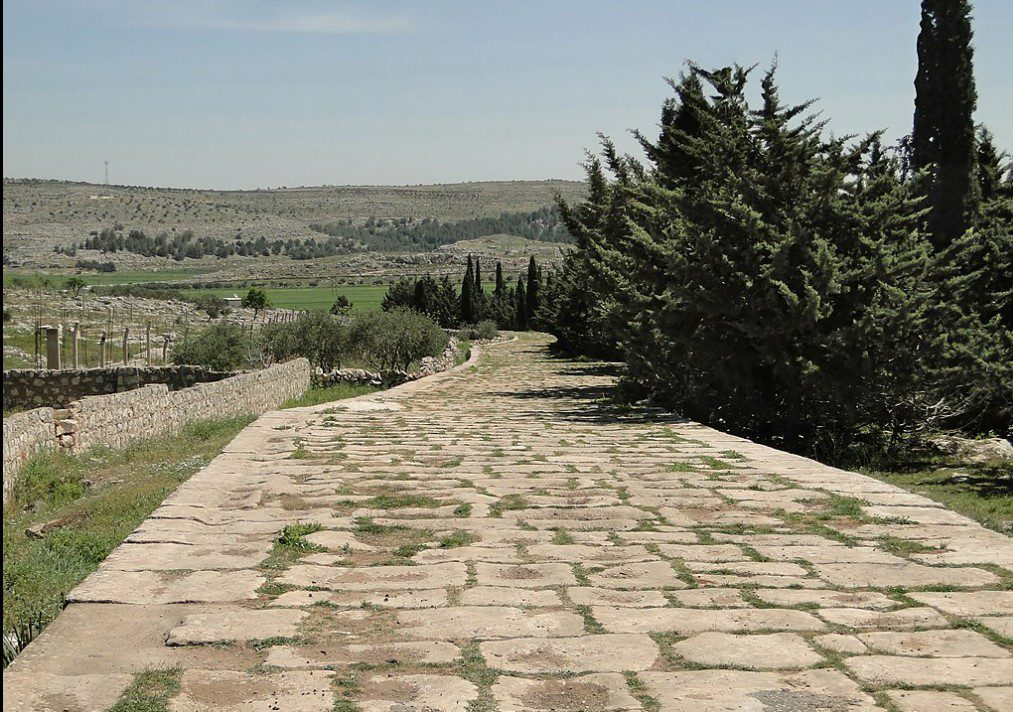
    This Ancient Roman road connected Antioch and Chalcis.

    So, being sent out by the Holy Spirit, they went down to Seleucia…

    Acts of the Apostles 13:4a

    Caesarea! a model of Roman incursion into all the world of the Mediterranean - a key port for Romans, a city where Cornelius, Philip, Peter, Paul and others brought the gospel
    The Roman city is not unlike a more familiar Caesarea [a model pictured here], Jerusalem's Roman port also built by Herod the Great AND built even better for Rome by Herod Agrippa.
    
    ..and from there they sailed to Cyprus. – Acts 13:4b LSB

    ACTS 13 of the Apostles on Mission TO BE CONTINUED…

  • Caesar’s Palace East welcomes PETRUS

    Caesar’s Palace East welcomes PETRUS

    Caesar's Palace 21st c Las Vegas, Nevada, US
    Caesar’s Palace

    Peter in Roman Sin City

    A background behind Caesar’s Palace in Judea

    Initially, a few decades before..

    Caesarea is sixty some miles northwest of Jerusalem. Herod had expanded it to become one of the most important cities in the Roman Empire, which would later serve Rome as Judea’s capital. (Yes, it would later have a grande Caesar’s Palace intended for the Herodian rulers of Judea.)

    Herod the Great had sold his political soul to an alliance with the great Caesar Augustus (title first claimed by Herod’s ally, Octavian). But Herod’s alliance accomplished only a brief stay of execution of Roman dominance over Judea, even as he began many magnificent building projects. These included an incomplete Temple in Jerusalem where Jesus would preach and an opulent port of Caesarea Maritima (one of several Caesar’s Palaces of these times).

    Romans, Egyptians and the Greeks before them under the dominance of Alexander’s world empire worshiped MANY gods. Jerusalem’s differing parties of Jews argued constantly over such forced relationships with their pagan overseers. A Caesar or Cleopatra as one of these gods was common occurrence in the A.D. first century world where Jews mostly traded liberally with other cultures.

    Caesar’s, Ptolemy’s & Herod’s

    You probably know about the whoredom of Cleopatra (glamorized by Hollywood) from when the Queen of Egypt willingly made her bed with the power of Rome in order to hold onto her kingdom. (It’s a complex plot of military/political/religious drama of real life at its best.)

    In fact, Jews recognized that the ruling party of the Herod’s was no less in bed with Rome than had been Cleopatra.

    She had commanded a personal fleet of 60 ships and sent 200 ships to Antony at Actium [33 B.C.]. This Egyptian Pharaoh also appointed her own governors of conquered regions like Syria and Cypress.

    Cleopatra had incited a war against Herod. Octavian later takes power as Caesar Augustus. [See more linked to the quote below.]

    Herod, who had personally advised Antony after the Battle of Actium that he should betray Cleopatra, traveled to Rhodes to meet Octavian and resign his kingship out of loyalty to Antony. Octavian was impressed by his speech and sense of loyalty, so he allowed him to maintain his position in Judea, further isolating Antony and Cleopatra.

    Wikipedia.org – citing additional sources

    Herod’s new harbor of Caesarea was forty acres and could accommodate 300 ships. According to the historian Josephus, he built a “most magnificent palace” on a promontory jutting out into the waters of Caesarea and lengthy aqueduct to bring water from springs at the base of Mount Carmel nearly ten miles away.

    Read more & see additional photos: https://www.bibleplaces.com/caesarea/

    Enter Peter encountering Rome in Caesarea

    In ~ the year of our Lord, 40

    Your additions or corrections to this approximate scenario of A.D. 40'ish from various sources are welcome as a COMMENT to this post. - RH
    • Joseph ben Caiaphas, who had condemned the Messiah JESUS to a Cross and unsuccessfully tried Peter and John remains powerful in Jerusalem.
    • Pontius Pilate had been recalled from office as governor by Tiberius Caesar three years earlier after Pilate had ordered great violence to suppress a Samaritan rebelion.
    • Tiberius Caesar Augustus died that same year and was succeeded by his son Caligula, who declared himself a god.
    • Caligula ordered a statue of himself is to be erected in the temple at Jerusalem, but Herod delays implementation long enough to prevent widespread revolt in Judaea and prior to Caligula’s assassination by men of a succeeding Emperor, Claudius.
    • Herod Antipas, son of Herod the Great & Tetrarch of Galilee and Perea, whose wife Herodias had incited him to behead John the Baptist, has also died just a year earlier.

    • AND NOW, The Lord has summoned Simon Peter to accompany three Roman men sent from Caesarea by a Roman military leader to find Peter in Joppa.

    ACTS 10: of PETER in Caesarea

    CLICK ACTS 10 [above] to view:  New American Standard Bible; Conferenza Episcopale Italiana; Orthodox Jewish Bible; SBL Greek New Testament 
    + consider the significance of this crucial cross-cultural visit by Simon Peter to a Roman in Caesarea.

    Now on the next day he got ready and went away with them, and some of the brothers from Joppa accompanied him. On the following day he entered Caesarea.

    ACTS 10:23b-24a NASB

    Now Cornelius was expecting them and had called together his relatives and close friends.

    • Peter has brought fellow followers of Christ, fellow jews from Joppa [v.23].
    • Cornelius is A devout man, &–an uncircumcised Gentile proselyte to the Jewish faith, of whom there were a very great number at this time; a distinguished proselyte, who had brought his whole household establishment under the hallowing influence of the Jewish faith and the regular observance of its principal seasons of worship. – source

    When Peter entered, Cornelius met him, and fell at his feet and worshiped him.


    This is more than respect and above customary honor of one man to a delegate coming to him from another place or as a representative of the true faith he seeks.

    Cornelius, a Roman Jew in every way except birth and circumcision, recognizes that Peter, is ambassador of the Messiah Jesus, a man of miracles.

    Faithful and reliable men have even told him about Peter and his miracles in Jerusalem confirming the Messiah AND Jesus’ anointing of this Apostle who has now come into his presence in his Roman city of Caesarea.

    Just like the healed lame man who clung to Peter at the Temple, Cornelius meets a man with the Power of the Lord who gives all credit to the Lord Jesus Christ.

    26 But Peter helped him up, saying,

    “Stand up; I, too, am just a man.”

    27 As he talked with him, he entered and found many people assembled. And he said to them,

    “You yourselves know that it is forbidden for a Jewish man to associate with or visit a foreigner;


    Just let this sink in for a moment, as Peter’s Roman listeners in Caesarea certainly must have done:

    Cornelius may have instructed the men in his command in this manner:

    These JEWISH subjects of our Roman legions are NOT at all like the tolerant Hellenists we meet throughout Caesar’s Empire! So avoid them when possible.

    Peter continues with words of comfort to these gentiles:

    and yet God has shown me that I am not to call any person unholy or unclean.

    That is why I came without even raising any objection when I was sent for.


    NEXT:

    Cornelius recounts his own ‘coming to Jesus’ experience at Caesar’s Palace East in Caesarea.

    To be continued...