Tag: roman

  • A Light of Revelation to the Gentiles

    A Light of Revelation to the Gentiles

    Birth of John the Baptist Foretold

    Luke 1:5 In the days of Herod, king of Judea, there was a priest named Zechariah, of the division of Abijah. And he had a wife from the daughters of Aaron, and her name was Elizabeth. 6 And they were both righteous before God, walking blamelessly in all the commandments and statutes of the Lord…

    The Birth of John the Baptist

    57 Now the time came for Elizabeth to give birth, and she bore a son. 58 And her neighbors and relatives heard that the Lord had shown great mercy to her, and they rejoiced with her. 59 And on the eighth day they came to circumcise the child. And they would have called him Zechariah after his father, 60 but his mother answered, “No; he shall be called John.”

    (a few months later in Jerusalem, which is near to Bethlehem)

    Jesus Presented at the Temple

    22 And when the time came for their purification according to the Law of Moses, they brought him up to Jerusalem to present him to the Lord…

    25 Now there was a man in Jerusalem, whose name was Simeon, and this man was righteous and devout, waiting for the consolation of Israel, and the Holy Spirit was upon him. 26 And it had been revealed to him by the Holy Spirit that he would not see death before he had seen the Lord’s Christ. 27 And he came in the Spirit into the temple, and when the parents brought in the child Jesus, to do for him according to the custom of the Law, 28 he took him up in his arms and blessed God and said,

    29 “Lord, now you are letting your servant depart in peace,
    according to your word;
    30 for my eyes have seen your salvation
    31     that you have prepared in the presence of all peoples,
    32 a light for revelation to the Gentiles,
    and for glory to your people Israel.”

    33 And his father and his mother marveled at what was said about him. 34 And Simeon blessed them and said to Mary his mother, “Behold, this child is appointed for the fall and rising of many in Israel, and for a sign that is opposed 35 (and a sword will pierce through your own soul also), so that thoughts from many hearts may be revealed.”

    (Jesus was eight days old; then Joseph fled from the wrath of Herod to Egypt.)

    We have picked up the story of Jesus’ early ministry 30 years later.

    He is filled by the Holy Spirit, baptized by John, faced Satan for 40 days in the wilderness and returned to Nazareth and the surrounding towns to preach repentance.

    Jesus has been rejected by his own brothers and neighbors of Nazareth. The people of Nazareth try to stone Him!

    Jesus moves to Capernaum. He teaches and performs miracles on the Galilean hillsides. All the time, of course, Galilee is under the administration and watchful eye of Rome. A Roman army could occupy any town at any time if they perceived a threat from its people or a charismatic leader with thousands of followers listening to his teaching. Of course, watchful Roman ears would have the intelligence to hear what such a Galilean would be saying to his followers. Rome and the gentile solders certainly knew Jesus prior to His triumphal entry into Jerusalem which would occur just three short years from now.

    Christ Jesus is not only a teacher and friend of the Jews. Jesus IS a light and salvation to the gentile Romans.

    The Prophesy of Luke 1:

    30 …for my eyes have seen your salvation
    31     that you have prepared in the presence of all peoples,
    32 a light for revelation to the Gentiles,
    and for glory to your people Israel.”

    (Next we continue Jesus’ journey and witness to Capernaum and Nain in Galilee.)
  • Conquered and the Conquerers

    Conquered and the Conquerers

    Jesus, Son of Man, comes among us with a perspective of history of another dimension we can scarcely comprehend: time.

    I am the Alpha and the Omega, the beginning and the end.

    Before Abraham was, I AM.

    Remarkable statements! A perspective of history which can only be viewed outside of our dimension of time.

    Never-the-less, let us view some of the maps of the nations (gentiles) over the times preceding the incarnation of the Son of Man.

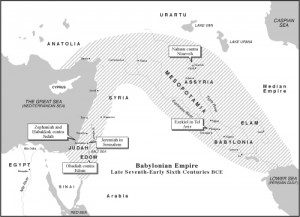
    Babalonian Empire Israel has fallen. God has pronounced judgment on Israel for her unfaithfulness. God sends his Prophets to unfaithful Judah (her sister of whoredom) and to the gentile nations as well.
    Judah is small. Assyria, Babylonia, Mesopotamia, Syria and Egypt are large and powerful, opposing each other with God giving victory to varied enemies of Judah in the times of the Prophets and the times of His silence before a newer map at a later time.

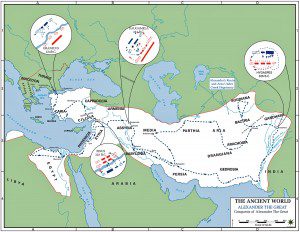
    alexander_the_great_conquestsIn the fourth century B.C. comes another conqueror from the west: Alexander the Great. He defeats the eastern empires and spreads Greek culture throughout the Mediterranean. The map again differs and the language and culture from the time after Alexander’s death is called Hellenism. Greek becomes the common language of the empire, including Jerusalem and the former areas of defeated Israel and fallen Judah (now called Phoenicia). Don’t think of it as small Greece, islands of the Mediterranean, but Empire Greece, as in Asia (or most of what we now call Asia) as far as India in the East.
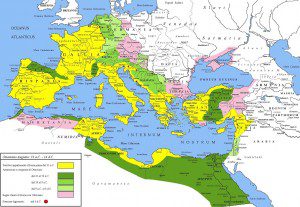
    Now, much nearer the time of Jesus, 62 B.c.- 14 A.D., we read of the Incarnate Son of God in Luke 2. (No doubt all are familiar with the story, yet few are familiar with the map.)

    The Birth of Jesus Christ

    2 In those days a decree went out from Caesar Augustus that all the world should be registered. 2 This was the first registration when Quirinius was governor of Syria. 3 And all went to be registered, each to his own town. 4 And Joseph also went up from Galilee, from the town of Nazareth, to Judea, to the city of David, which is called Bethlehem, because he was of the house and lineage of David, 5 to be registered with Mary, his betrothed, who was with child.

    Augusto_Roman empireAgain in our timeline under Rome, again we must view the map not as a place of Israel or Judah. Rome conquered Jerusalem, Tyre and Sidon (of Syria), Nazareth and all the rest. The map is of Rome and every town in every land is a crossroads that leads to Rome.
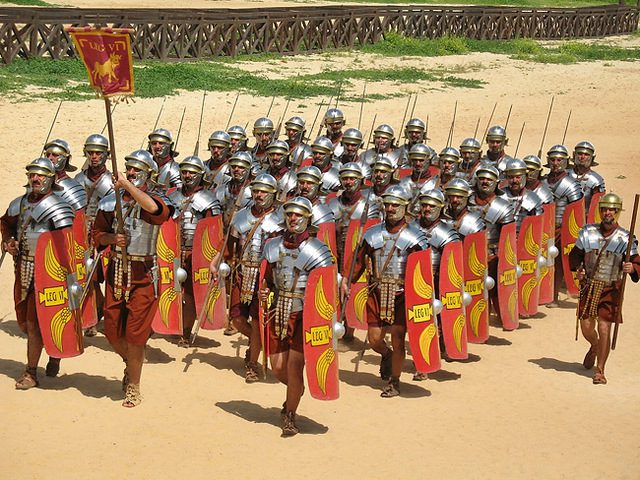
    Judea is nothing more than a minor province in a key expansion of Rome, extending south from Tyre and Damascus beyond Jerusalem. The military control of Rome over the conquered provinces involves an infusion of Roman military control and government and taxes, along with the sharing of a common culture of Hellenistic roots in the Greek language and culture.

    The power of Rome is not its politics or religion, but it’s army. The success of Rome is due, in part, to the integration of a common language (Greek) and culture with the local customs and religions and trade (including taxes to pay the army, administrative costs of Rome). Pay your taxes and keep your local customs.

    The religions of the gentiles of Rome, the gentiles of Greece, and the gentiles of the conquering Babylonians, and other conquering nations like Assyria and Egypt have one thing in common: many gods. The “god of the current time” is often the current ruler, a Pharaoh, a Caesar or worshiped human king.  The Asians worship idols. The Greeks and Romans worship idols. Only the Jews have One God and no idols.

    This same Caesar Augustus of Luke 2 had (for political reasons) declared himself a god. Later, the local Jewish politicians seek to draw Jesus into this controversial debate.

    Want to start a controversy among lovers of Greek mythology (yes, myths as origins of various gods and the ways they serve man)? Just ask how many. Answer? Thousands!

    And Rome cared more for her power and politics than culture. However Rome’s idols and gods also explained which gods served man in which ways. How many?  Again, a countless number of gods to serve the Roman citizen and the slaves of Roman rule.

    Another fact of Roman life overlooked is that the population of Rome had many slaves  It was the culture, discipline organization and administration of the Roman army that best modeled any success of Rome. A conquered people in the days of Jesus, like in the days of the Prophets, could be taken away from their cities and towns and homes to any foreign town or province and sold as slaves. The Roman army used this as leverage to have local leaders do as they wanted under a local administration of Rome.

    Into this environment comes the family of the Herod’s who chose their sides with the right Roman generals and were rewarded for their efforts.

    (Why all this background? NEXT we continue with Jesus’ early encounters with Romans in His travels…)


  • The Beatitudes and the Multitudes – Introduction

    The Beatitudes and the Multitudes – Introduction

    You may not have thought of the beatitudes as a teaching related to preparation for Christmas (Advent), but by intention of the Spirit that is exactly what is on my heart.

    The usual Christmas liturgy of church begins just after the following genealogy of Jesus Christ (which we tend to skip over, just like those in Numbers, Kings and other historical Old Testament Books of the Bible).

    After you skip through the generations of Joseph, Jesus’ step-father, we will look back just a little at the historical time preceding the coming of the Messiah to a lowly manger in Bethlehem of Judea, before proceeding to the early teachings of Jesus on true blessings (Beatitudes, as we call them).

    Matthew 1

    English Standard Version (ESV)

    The Genealogy of Jesus Christ

    1 The book of the genealogy of Jesus Christ, the son of David, the son of Abraham.

    2 Abraham was the father of Isaac, and Isaac the father of Jacob, and Jacob the father of Judah and his brothers, 3 and Judah the father of Perez and Zerah by Tamar, and Perez the father of Hezron, and Hezron the father of Ram, 4 and Ram the father of Amminadab, and Amminadab the father of Nahshon, and Nahshon the father of Salmon, 5 and Salmon the father of Boaz by Rahab, and Boaz the father of Obed by Ruth, and Obed the father of Jesse, 6 and Jesse the father of David the king.

    And David was the father of Solomon by the wife of Uriah, 7 and Solomon the father of Rehoboam, and Rehoboam the father of Abijah, and Abijah the father of Asaph, 8 and Asaph the father of Jehoshaphat, and Jehoshaphat the father of Joram, and Joram the father of Uzziah, 9 and Uzziah the father of Jotham, and Jotham the father of Ahaz, and Ahaz the father of Hezekiah, 10 and Hezekiah the father of Manasseh, and Manasseh the father of Amos, and Amos the father of Josiah, 11 and Josiah the father of Jechoniah and his brothers, at the time of the deportation to Babylon.

    12 And after the deportation to Babylon: Jechoniah was the father of Shealtiel, and Shealtiel the father of Zerubbabel, 13 and Zerubbabel the father of Abiud, and Abiud the father of Eliakim, and Eliakim the father of Azor, 14 and Azor the father of Zadok, and Zadok the father of Achim, and Achim the father of Eliud, 15 and Eliud the father of Eleazar, and Eleazar the father of Matthan, and Matthan the father of Jacob, 16 and Jacob the father of Joseph the husband of Mary, of whom Jesus was born, who is called Christ.

    17 So all the generations from Abraham to David were fourteen generations, and from David to the deportation to Babylon fourteen generations, and from the deportation to Babylon to the Christ fourteen generations.

    Now look back some to the generations between the destruction of Solomon’s Temple (9th c. B.C.) and the building of Herod’s Temple.

    David had united Israel and Judah. Solomon’s sons divided the Kingdom of God’s chosen people into Israel (under Jeroboam) and Judah (under Rehoboam, Matthew 1:7). Without going into the many historical details of these nations over the centuries, Israel eventually came under the influence of Samaria, which fell in 721 B.C., and Judah, which fell in 587 B.C. The walls were destroyed my Nebuchadnezzar and rebuilt by Nehemiah in the mid 5th century B.C. Several accounts of these times are recorded in Ezra-Nehemiah and Daniel.

    Alexander the Great conquered much of the known world in the 3rd c. B.C. from Greece west to India, spreading the eventual Greek language of the New Testament throughout the middle east. For some 400 years, Parthia was the largest organized state on the eastern frontier of the Roman Empire until it was later captured by Rome later in A.D. 113 (during the days of early Christianity; but the unifying language of Judea and most of the Roman Empire was Greek (not Latin or local languages).

    Two groups of Jews locked in civil war when Pompey captured Jerusalem (106-48 B.c.) Herod (who was a half-Jew) chose the right side in the Roman conflict and was appointed King of Judea in 40 B.c. Herod conquered ‘his Kingdom’ with the ‘help’ of the Roman army. {Much of the preceding source information from: Historical Atlas of the Bible, by Dr. Ian Barnes}

    Into this often contested arena of Nations and Kings and Emperors and gods of every imagination and evil inclination of man is born Christ Jesus, Son of the Living God, conceived by the Holy Spirit; born of a virgin in Bethlehem of Judea. For thirty years Jesus, Emmanuel (God With Us), lives among the poor and downtrodden men of Galilee.

    Into this scene, Jesus is anointed for His fulfillment of prophesy and sacrifice of the Cross, filled with the Holy Spirit and living a life of sinlessness, teaching man (adam”) how God has intended us to live. Into a difficult time and place, where a people of God thought they lived lives cursed by God, Jesus comes to a mountainside teaching with the Authority of God Almighty and the power of the Holy Spirit.

    To be continued…