I was in the Spirit on the Lord’s day, and I heard behind me a loud voice like a trumpet. – Revelation of Jesus Christ to the Apostle John [1:10]
We interrupt our series on Psalm 119 for a message about prayer, the Holy Spirit and hearing from God. God willing we will continue tomorrow, 28 January, in the year of our Lord 2014.
Romans 8
Life in the Spirit
8:1 There is therefore now no condemnation for those who are in Christ Jesus…
26 Likewise the Spirit helps us in our weakness. For we do not know what to pray for as we ought, but the Spirit himself intercedes for us with groanings too deep for words. 27 And he who searches hearts knows what is the mind of the Spirit, because the Spirit intercedes for the saints according to the will of God. 28 And we know that for those who love God all things work together for good, for those who are called according to his purpose.
Luke 12:12 “… for the Holy Spirit will teach you in that very hour what you ought to say.”
John 4:24 “God is spirit, and those who worship him must worship in spirit and truth.”
IF you attended church on Sunday, good for you; yet consider that not all who attend church are part of Christ’s church. Some are not yet saved (in our mortal timetable) and others will turn back to their hearts of stone forever until Judgment. We must consider the witness of our corporate worship and our prayer in church.
Lord, I want to thank you and praise you for your salvation: for saving me, for Your own sacrifice for my own sinfulness. I thank you for the Cross of Christ Jesus and the Spirit of your Presence, which does comfort me from time to time (for I do not always listen, as I ought).
IF I pray the prayer I have just prayed in private, it is my prayer to God – my part of a conversation in the Spirit with the Living God. IF I utter this same prayer in the company of believers (church), it becomes my corporate prayer of witness.
Is it the same prayer?
It is the same words, but not the same prayer; for my own life and soul stand before my brothers and sisters in the Lord and also non-believers among us as witness of the sincerity of my words (known only to God) or the motive of my proclaiming loudly in the company of believers the same.
Personal prayer is an intimate conversation between you and God. Corporate prayer is a public proclamation to God before witnesses.
Jesus tells a story of two men who went up to the church to pray. One prayed most publicly, as if his prayer thanked God that he was not like those who were not saved. His teachings were that he showed concern for others and for God, but his witness was that his only concern was to be seen at church. Another prayed so humbly he would not even look up to God from the holy place where he worshiped.
Paul often prays for individuals both individually and corporately as a specific church (a named group of real people with real and specific needs for prayer and supplication). Paul’s corporate prayers have no hint of self-aggrandizement like the Pharisees. (‘See how I pray as I should and how you likely do not pray?) Paul frequently asks for prayer for himself and his companions, but for the sake of Christ and for the Church. You can read more of Paul’s heart and example by guidance in almost any of his letters to the churches (the epistles).
Paul gives further instruction to the church as to corporate worship and corporate prayer. Some of our 21st century worldly ways have accepted as proper that which is non-scriptural and causes controversies unhelpful in building up each church and body of believers. Some christians will stand firmly on the shaky foundation of just a single verse of scripture (or two). I will not do that. Let the Spirit instruct you as to what is right for you and for your particular church.
Some often heard in church ought to keep silent and others not heard in church ought to be heard from.
I speak of the gibberish of prayer in tongues without interpretation, prayer for the stranger rather than for the near brother or sister in the Lord, and prayer for proud example of your personal witness (as if evangelizing the faithful in the place of worship). Again, I will leave it to you and the instruction of the Holy Spirit to help you in this (excerpted below).
1 Timothy 2
Pray for All People
First of all, then, I urge that supplications, prayers, intercessions, and thanksgivings be made for all people…
1 Timothy 2:1 alone is worthy of much more of your consideration and that of the worship leaders of our churches.
8 I desire then that in every place the men should pray, lifting holy hands without anger or quarreling…
11 Let a woman learn quietly with all submissiveness. 12 I do not permit a woman to teach or to exercise authority over a man; rather, she is to remain quiet.
The proper culture of the centuries has been that a man is the head of the woman. Some use this to oppose women preaching and some to oppose women speaking in church or being part of church leadership. My observation is that too many wives are the heads of their christian husbands; some because they insist, but most because their husbands with not step up to bold witness in Christ as we ought. For Jesus said: “I tell you, if these were silent, the very stones would cry out.” [Luke 19:40]
I, myself, have been guilty of both not speaking when I ought and more often guilty of speaking when I ought not. I have done what I ought not to have done and said what I ought not to have said. (Who is not guilty in these things?) I am poor example to any of one led always by the Spirit, failing in humility to Christ Jesus as our Lord (even IF I lift up my hands as if I am humble unto the Lord). Even now I find I must leave my gift at the altar because of unforgiveness, because I am not humble enough before the Lord to ask a sister for forgiveness seven times seven. [Matthew 5:23-24]
Yet if I am led by the Spirit to pray or to speak or to sing or to raise hands or to kneel or to exhort or to teach or to preach, I will by the grace of Christ Jesus do what God would have over the will of every man or woman, mostly over my own will in obedience to His.
- Let us not say, “Thus says the Lord,” when it is not the Lord who has said it.
- Let us not presume to pray for unknown others as if we are priests and intercessors for the church; as if all do not have the intimacy of the Spirit near at hand and within the body of the Church.
- And let us not cry out of our own need so much as we plea for it in private and as a church we plead for our beloved brothers and sisters near to us, drawing all nearer to the Lord God by prayer.
I do not know, but the Spirit knows, what will build you up and what scripture may lift higher your corporate worship of Christ Jesus, our Lord. I leave it between you and the Lord.
1 Corinthians 14
Prophecy and Tongues
14 Pursue love, and earnestly desire the spiritual gifts, especially that you may prophesy. 2 For one who speaks in a tongue speaks not to men but to God; for no one understands him, but he utters mysteries in the Spirit…
4 The one who speaks in a tongue builds up himself, but the one who prophesies builds up the church…
9 So with yourselves, if with your tongue you utter speech that is not intelligible, how will anyone know what is said? For you will be speaking into the air. 10 There are doubtless many different languages in the world, and none is without meaning, 11 but if I do not know the meaning of the language, I will be a foreigner to the speaker and the speaker a foreigner to me. 12 So with yourselves, since you are eager for manifestations of the Spirit, strive to excel in building up the church.
13 Therefore, one who speaks in a tongue should pray that he may interpret. 14 For if I pray in a tongue, my spirit prays but my mind is unfruitful. 15 What am I to do? I will pray with my spirit, but I will pray with my mind also; I will sing praise with my spirit, but I will sing with my mind also.
I will pray with my spirit, but I will pray with my mind also; I will sing praise with my spirit, but I will sing with my mind also. – 1 Cor. 14:15b
19 Nevertheless, in church I would rather speak five words with my mind in order to instruct others, than ten thousand words in a tongue.
Therefore, beloved fellow believers and worshipers, let up worship the Lord in holiness. Let us pray and sing and worship corporately as just one stone next to others of the same Temple, singing and praying in thankfulness for the Cornerstone of our faith. Let us build up one another in Christ’s abiding love, faithful to those who will wait upon Him, praying without ceasing, and loving one another in the certain hope of our community of living faith to the witness of all the Lord leads into the church and all who gaze upon Christ’s Temple of His Church from the darkness of this world.
I was in the Spirit on the Lord’s day and so I was grieved over our many sins and especially my own. But thanks be to Christ Jesus for His righteousness and for the Holy Spirit of the Living God, Who comforts and guides. He hears our heartfelt prayers.
Pray also for me, that the Lord would lift me up in the Spirit in loving witness to His way, His truth, and His most holy Life, given for us by His Blood of the Cross.
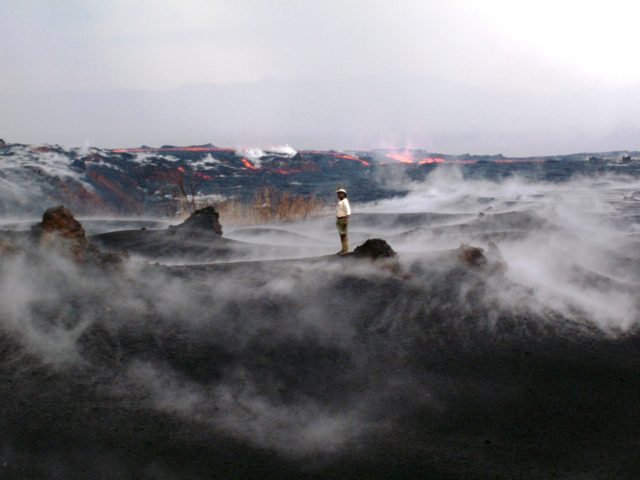
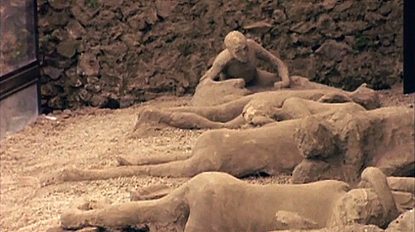

 Why do christians so easily return to our chains of addictions to the sins of our worldly past? — a life of slavery? — before Christ Jesus freed us by His Blood of the Cross?