Tag: romans

  • Circumcision < Saul's Extreme Cultural Cut of Timothy

    Circumcision < Saul's Extreme Cultural Cut of Timothy

    Why does circumcision of Timothy now seem to be a necessity if he is to continue with Paul and Silas on this second missionary journey?


    After parting ways with Barnabas, Paul has chosen Silas and departed, having been commended by the brothers to the grace of the Lord. 

    And he went through Syria and Cilicia, strengthening the churches.

    Acts of the Apostles 15:41 ESV
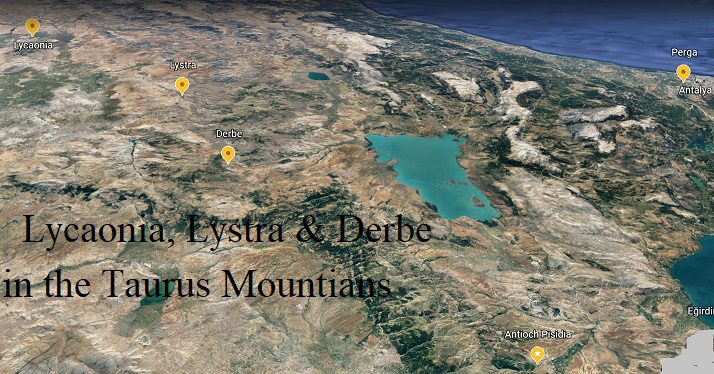
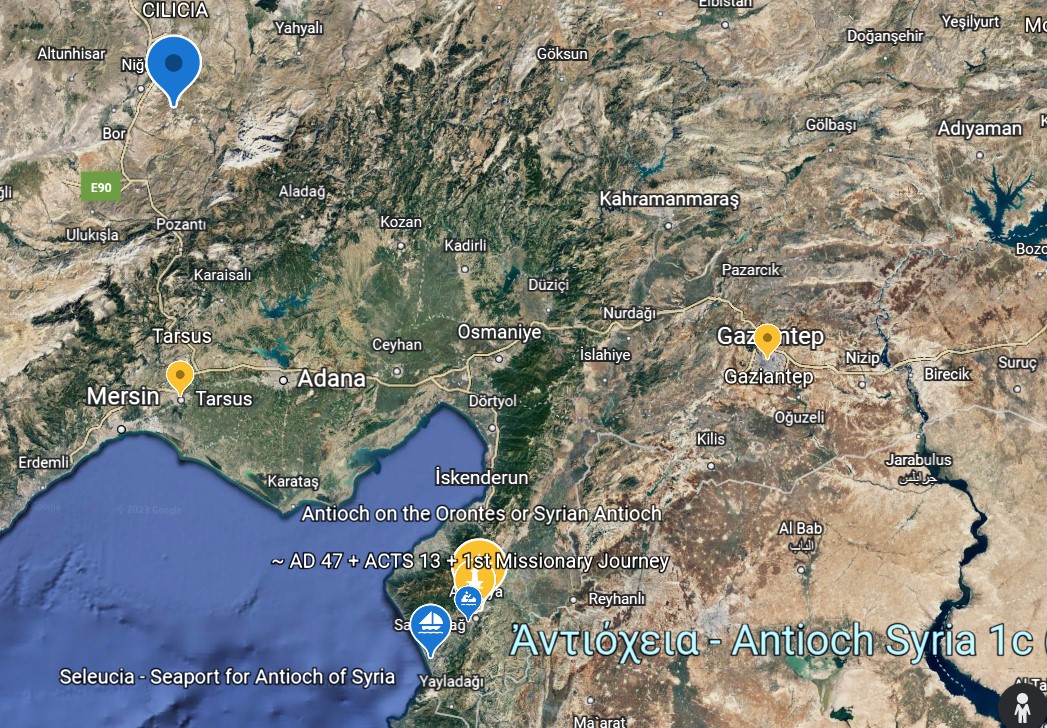
    Lystra and Derbe in the Taurus Mountains of Turkey
    view of the Taurus mountains looking Southeast back toward roads from Syria

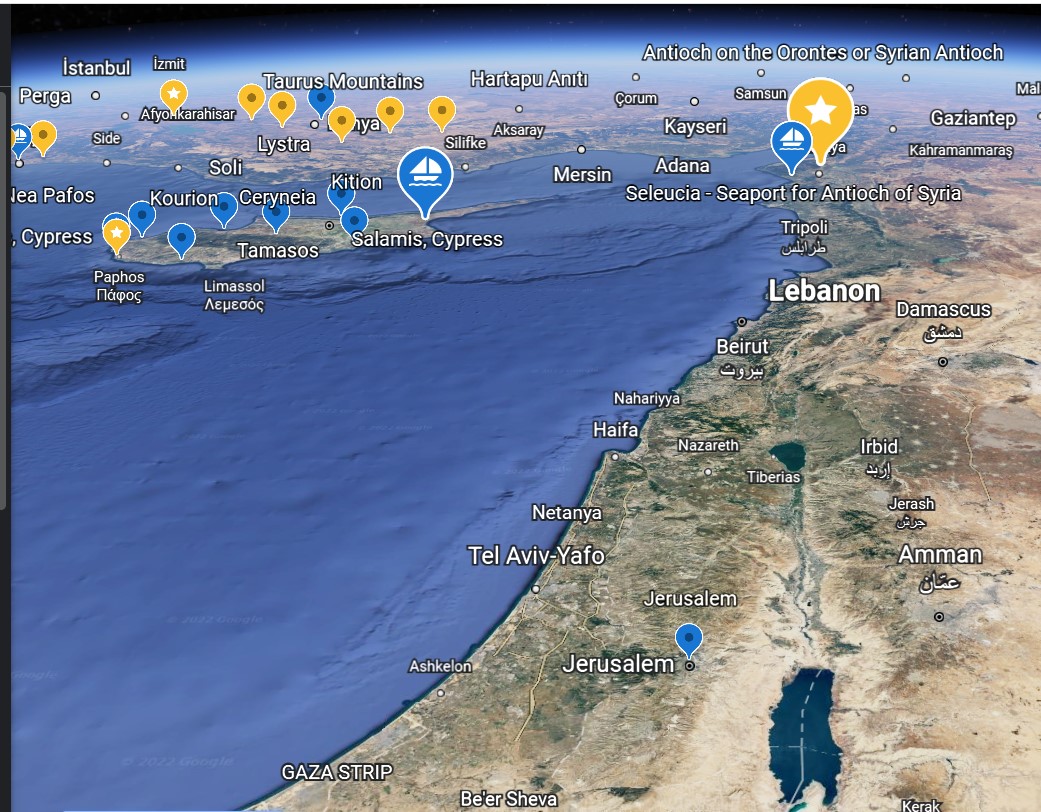
    Paul, on this second missionary journey began via a land route from the church in Antioch, rather than by sea and then proceeding north from Perga as he and Barnabas had traveled before after walking across Cypress to its coastal towns.

    Acts 16:

    Paul came also to Derbe and to Lystra.

    A disciple was there, named Timothy, the son of a Jewish woman who was a believer, but his father was a Greek.

    2 He was well spoken of by the brothers at Lystra and Iconium.

    Lystra, Derbe and Iconium in the Taurus mountains.

    3 Paul wanted Timothy to accompany him, and he took him and circumcised him because of the Jews who were in those places, for they all knew that his father was a Greek.


    But wait! I thought that we had settled those issues of circumcision at the Council in Jerusalem?

    Since we have heard that some persons have gone out from us and troubled you with words, unsettling your minds, although we gave them no instructions, it has seemed good to us, having come to one accord, to choose men and send them to you with our beloved Barnabas and Paul, men who have risked their lives for the name of our Lord Jesus Christ. – Acts 15:24-25 ESV

    Cultural clashes between Greeks and Jews

    In fact, Saul of Tarsus continues to preach Christ to the Jews at great cost as the apostle returns once more to their local synagogues along with others.

    Do you recall the issue which had led Paul and Barnabas to return to Jerusalem?

    Circumcision.


    Many gentiles had come to follow Christ and worshiped as brothers alongside converted Jews of The Way. Young Timothy is the son of one such believer.

    Saul of Tarsus had been equally zealous for the Mosaic traditions before his encounter with Christ some years ago.

    Joseph of Cypress (Barnabas) had sought out Saul in Tarsus where Paul had mostly stayed out of sight of zealous Judaizers for ten years. This is not dissimilar to Joseph bringing Mary and the child Jesus out of Egypt more than forty years before after the death of Herod’s grandfather.

    Yet Zealots for the Law and traditions had recently caused trouble on Saul’s first missionary journey with Barnabas.

    Apostles sent out into ever-changing political landscapes of Rome, Judea and a Hellenist world in between journeyed on frequently-shifting tectonic plates of clashing cultures.


    Some men had come down to Antioch from Judea saying,

    “Unless you are circumcised according to the custom of Moses, you cannot be saved.”

    Acts 15:1b ESV

    This incident in Iconium, one of many, had threatened the apostles sent out by the Church.

    On his second missionary journey Paul seeks out these new believers once more, including a young man named Timothy who had been raised by his Jewish grandmother and mother.

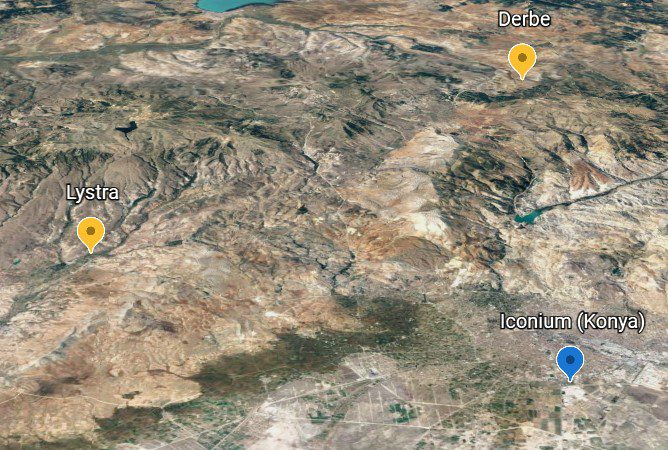
    Lystra, Derbe and Iconium in the Taurus mountains.

    16:2 He was well spoken of by the brothers at Lystra and Iconium.

    Luke mentions [16:1] that Paul and Silas travel to Lystra and Derbe even before now mentioning ‘brothers‘ in Iconium. What had happened in Iconium last time?

    Now at Iconium they entered together into the Jewish synagogue and spoke in such a way that a great number of both Jews and Greeks believed.- Acts of the Apostles 14:1 ESV

    At Iconium as in Antioch Pisidia the apostles received a divided (and sometimes violent) reception to the Gospel.

    The Jews of Cilicia held to their Jewishness in opposition to rampant cultural sin in the customs and ceremonies of an idolatrous Hellenistic majority of their own towns. Saul of Tarsus returns to these Christian brothers trying to convince other Jewish brothers that Jesus is the Christ.


    How could these apostles of the risen Jesus reach even more Jews in theirs journeys?

    In order to do this the Apostle Paul and his company of men must seem most Jewish in order to proclaim Christ in their synagogues.

    BUT the issue of bringing Timothy to other towns is that his father is Greek and of course had not circumcised his son eight days after his birth — in the manner and custom of Hebrew fathers.


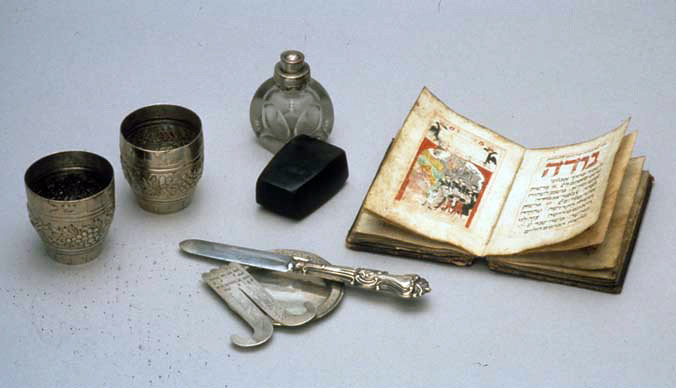
    Circumcision set (18th c.)

    חֲתַן דָּמִים לַמּוּלֹֽת׃

    Circumcision

    At that time she said, “You are a bridegroom of blood” with reference to the circumcision.

    Exodus 4:26b – Proclamation of Zipporah after she completed this sign of the covenant of the LORD on Moses’ son.

    We read and the Hellenists read of the signs that the Lord God had confirmed His solemn promises to Abraham.

    And he gave him the covenant of circumcision. And so Abraham became the father of Isaac, and circumcised him on the eighth day, and Isaac became the father of Jacob, and Jacob of the twelve patriarchs.

    ACTS of the Apostles 7:8 – from the preaching of Stephen to the Sanhedrin (most likely with Saul of Tarsus nearby)

    Let’s be clear that in the διαθήκη covenant of περιτομή circumcision that our solemn agreement cut with the LORD is paramount to any sign or evidence of the flesh.


    And likewise the cup after they had eaten, saying,

    “This cup that is poured out for you is the new covenant in my blood.

    Gospel of Luke 22:20 – the words of the Lord Jesus to the Twelve at the meal of the last Passover

    WE are not Jews or Christians — true followers of the LORD (as was Moses) — true disciples of Jesus the Christ of the New Covenant — by signs of baptism, communion, ceremony or any other claim of grace separate from God’s covenant in Scripture.

    The Apostle Peter had also been confronted with this same issue after reporting back to the Church in Jerusalem of the signs of the Holy Spirit also given to the gentiles.

    Peter, John, Phillip, Paul, Barnabas and all the evangelists of the Gospel must continue to convince Jews as well as gentiles concerning God’s mercy and new covenant of the heart.

    Paul’s later letter begins by addressing circumcision.

    Epistle of Paul to the Romans

    For I am not ashamed of the gospel, for it is the power of God for salvation to everyone who believes, to the Jew first and also to the Greek.

    Romans 1:16 ESV

    To the Jew FIRSTApostolic approach of taking the Gospel into all of the 1st century world.

    Paul mentions the culture of so many idolaters among whom the Jews and Christians live. This idolatry is a legitimate concern, more so than a sign of circumcision.


    Romans 1:22 Claiming to be wise, they became fools, and exchanged the glory of the immortal God for images resembling mortal man and birds and animals and creeping things.

    24 Therefore God gave them up in the lusts of their hearts to impurity, to the dishonoring of their bodies among themselves, because they exchanged the truth about God for a lie and worshiped and served the creature rather than the Creator, who is blessed forever!

    Amen.


    These Hellenists to whom the LORD made the Jews a light living among them are citizens of many towns to which Paul now will bring this Greek disciple named Timothy.

    BUT the Jews have been rightly cautious about now allowing the leaven of their idol worship come near the worship of the Living God — most especially at their own Passover feasts.

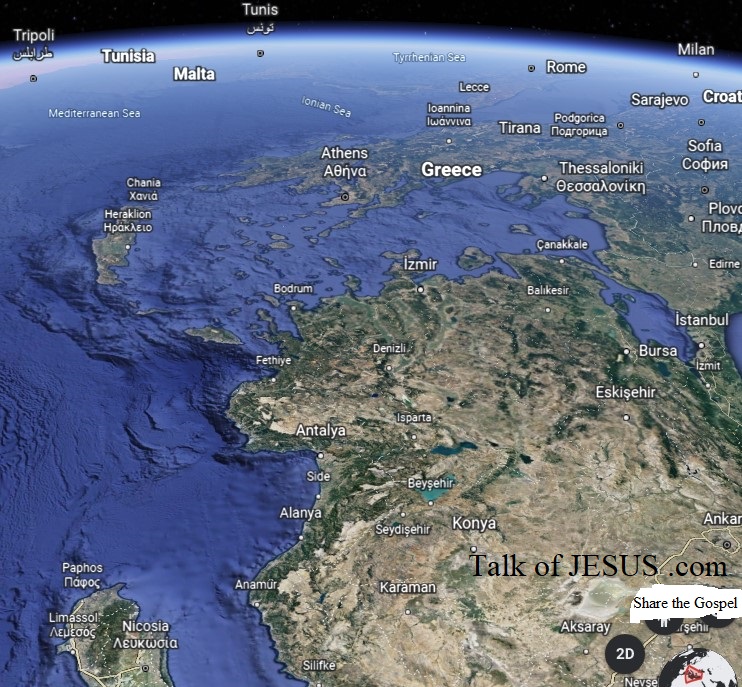
    2023 Google Earth view of Greece, next stop on Paul's second missionary Journey in Acts 16.
    Note: Konya (Iconium near Derbe & Lystra) in foreground – source: Google Earth AD2023

    For circumcision indeed is of value if you obey the law, but if you break the law, your circumcision becomes uncircumcision.
    So, if a man who is uncircumcised keeps the precepts of the law, will not his uncircumcision be regarded as circumcision?

    Paul’s letter to the Romans 2:25-26 ESV

    Festivals of Pagan Idolatry

    I have only to mention recent, current and highly anticipated pagan festivals of the 21st century to paint a glace of the idolatry of first century — idol worship including parades, drinking, ritual sex, raucous celebrations and porneia in the public places — which Jews and Christians recognize as abhorrent to Almighty God.


    The Hellenes to which Paul, Silas and Timothy would soon travel lived NOT in a unified Greece under Roman occupation similar to the religiously-united Judea of the Jews throughout the Empire, but in numerous culturally divergent city-states conquered separately by Roman centurions advancing from ports of the Mediterranean and Aegean seas.

    Idolatries of the Hellenes worshipping gods of each city, similar to god idols of Roman myths allowed for a tolerant Roman peace. Romans simply viewed idol worship as harmless and practical public parties of a cultural nature, even a religious duty.

    These frequent festivals sometimes celebrated each year may have been out of obligation, but culturally they generally were celebrations influential men of the city used to maintain their hold on the women, boys, slaves and money they controlled.

    Remember, in most of the Roman Empire and most Hellenist cities MOST men served other men of means in charge of various aspects of their everyday lives. Many captive slaves worked for local land owners and the Roman army as well, including young boys who served their masters in ways NOT acceptable to any faithful Jew.

    On the further mission beyond Derbe, Lystra and Iconium (modern-day Kona, Turkiye) Silas and Saul of Tarsus would certainly NOT want any fellow Jew to mistake this faithful young man and disciple, Timothy, as a Greek (because of his uncircumcision by his non-Jewish Greek father) as some Jews who traveled like Saul already knew.


    Acts 16 continued (with Timothy)..

    4 As they went on their way through the cities, they delivered to them for observance the decisions that had been reached by the apostles and elders who were in Jerusalem.


    Acts 15 Decisions of the Council in Jerusalem (last year)
    .. For it has seemed good to the Holy Spirit and to us to lay on you no greater burden than these requirements:
     that you abstain from what has been sacrificed to idols, and from blood, and from what has been strangled, and from sexual immorality. 
    If you keep yourselves from these, you will do well. 
    
    Farewell.”

    So the churches were strengthened in the faith, and they increased in numbers daily.

    Acts of the Apostles 16:5 ESV

    ACTS of the apostles Silas, Paul and Timothy .. To Be Continued…


  • Apostles Sent to the Gentiles with a Letter of the Council

    Apostles Sent to the Gentiles with a Letter of the Council

    Will any of the Twelve travel to Antioch Syria from Jerusalem? Or will the Apostles send their Epistle to the Gentiles with other reliable messengers?

    A.D. 49 – Jerusalem Judea in Roman occupied Syria

    Who are these Apostles to the Gentiles?

    Recall that the current crisis of the Church involves both Jews and Gentiles and that the Church at Antioch sent Paul and Barnabas to Jerusalem to clarify the Law of Moses.

    A Council of Church Leaders meets under leadership of the Apostles of Jesus, the risen Christ witnessed my the Twelve and many leading men of Jerusalem.

    Acts 15:19-20a – James: Therefore my judgment is that we should not trouble those of the Gentiles who turn to God, but should write to them..

    Acts 15:

    22 Then it seemed good to the apostles and the elders, with the whole church, to choose men from among them and send them to Antioch with Paul and Barnabas. They sent Judas called Barsabbas, and Silas, leading men among the brothers..


    ἀπόστολος – apostolos – apostle

    a delegate, messenger, one sent forth with orders

    This is exactly what the Council of Jerusalem has ordered.

    in a broader sense applied to other eminent Christian teachers

    • of Barnabas
    • of Timothy
    • and Silvanus

    They SEND these apostles with their epistle of encouragement and specific instructions to the Church and its other leading men in Antioch, obeying Christ’s command to go into all the world — theirs, a gentile world — with the Gospel.

    • ἀπόστολος – Apostle
    • a delegate, messenger, one sent forth with orders
      • specifically applied to the twelve apostles of Christ
    • ἀπόστολος apóstolos, ap-os’-tol-os; from G649; a delegate; specially, an ambassador of the Gospel; officially a commissioner of Christ (“apostle”) (with miraculous powers):—apostle, messenger, he that is sent.

      ἔθνος – ethnos

      The KJV translates Strong’s G1484 in the following manner: Gentiles (93x), nation (64x), heathen (5x), people (2x).

      We have recently spent time on this on Paul’s first missionary journey, but for clarity definitions which apply here:

      • in the OT, foreign nations not worshipping the true God, pagans, Gentiles
      • Paul uses the term for Gentile Christians
      Acts of the Apostles Missions trips of Paul, Barnabas, Silas and several others
      ACTS on Mission

      Paul

      The Church is already quite familiar with Saul of Tarsus or Paul; who following his first mission from Antioch to the Gentiles along with Joseph of Cypress (Barnabas) has precipitated this Council in Jerusalem.

      In a later Epistle of Paul to the Romans he writes:

      Now I am speaking to you Gentiles. Inasmuch then as I am an apostle to the Gentiles, I magnify my ministry in order somehow to make my fellow Jews jealous, and thus save some of them.

      Letter of Paul to the Romans 11:13-14 ESV

      Think about it, my fellow gentile brothers and sisters in Christ.

      1. Paul identifies himself as an apostle. The Council sent both Paul and Barnabas as apostles for this next mission to the Gentiles.
      2. The Apostle Paul also magnifies his mission is to the Gentiles (although a remnant of Jews will be saved).

      On their first missionary journey the Apostle Paul had proclaimed Christ to the Jews first and then preached the Gospel to the Gentiles.


      Barnabas

      Acts 9 Joseph of Cypress aka Barnabas 'son of encouragement' meets Saul of Tarsus

      Thus Joseph, who was also called by the apostles Barnabas (which means son of encouragement), a Levite, a native of Cyprus, sold a field that belonged to him and brought the money and laid it at the apostles’ feet.

      – Acts 4:36-37 ESV

      It was Barnabas, a trusted Jew of the priestly line, who brought Paul to the Apostles after his encounter with the risen Christ (and having heard their former nemesis preach Christ crucified and risen to the Jews in Damascus).

      When a report came to the ears of the church in Jerusalem after some men of Cyprus and Cyrene spoke to the Hellenists in Antioch (and a great number turned to the Lord), they sent Barnabas to Antioch. – from Acts 11:20

      Judas called Barsabbas

      Βαρσαβᾶς – Lexicon :: Strong’s G923 – barsabas

      Barsabas [or Barsabbas] (i. e. son of Saba)

      (Not to be confused with another important disciple and deacon of the church in Jerusalem * possibly also present with its leading men of the Council, Joseph called Barsabbas, who was also called Justus [Acts 1:23] put forth along with Mathias as a candidate to replace Judas Iscariot in the Twelve Apostles.)

      2. the surname of a certain Judas: Acts 15:22, (B. D. under the word Judas Barsabas].

      * Could Luke’s wording indicate that both were present & this Barsabbas is Judas son of Saba rather than Joseph son of Saba? (And might they even be biological brothers? [again, my speculation])

      Silas

      Σιλᾶν – Lexicon :: Strong’s G4609 – silas

      Contraction for Σιλουανός (G4610) – Silvanus, the same man who in Acts is called Σιλᾶς (which see): 2 Corinthians 1:19; 1 Thessalonians 1:1; 2 Thessalonians 1:1; 1 Peter 5:12.

      Silas or Silvanus is a Roman Citizen (as is Paul) sent with the Apostle to the Gentiles on this second mission and other journeys to preach the Gospel to all the world of the Roman Empire.

      A.D. 49 – 51 Secondary Missionary Journey with Paul

      The Council Adjourns

      Acts 15:22b-29 Text of the Council’s Epistle

      They sent Judas called Barsabbas, and Silas, leading men among the brothers,

      23 with the following letter:

      “The brothers, both the apostles and the elders,

      to the brothers who are of the Gentiles in Antioch and Syria and Cilicia, greetings.

      Since we have heard that some persons have gone out from us and troubled you with words, unsettling your minds, although we gave them no instructions, it has seemed good to us, having come to one accord, to choose men and send them to you with our beloved Barnabas and Paul, men who have risked their lives for the name of our Lord Jesus Christ.

      We have therefore sent Judas and Silas, who themselves will tell you the same things by word of mouth. For it has seemed good to the Holy Spirit and to us to lay on you no greater burden than these requirements:

      that you abstain from what has been sacrificed to idols, and from blood, and from what has been strangled, and from sexual immorality. If you keep yourselves from these, you will do well. Farewell.”

      30 So when they were sent off, they went down to Antioch…


      ACTS of the Apostles TO BE CONTINUED…

      in Antioch Syria…

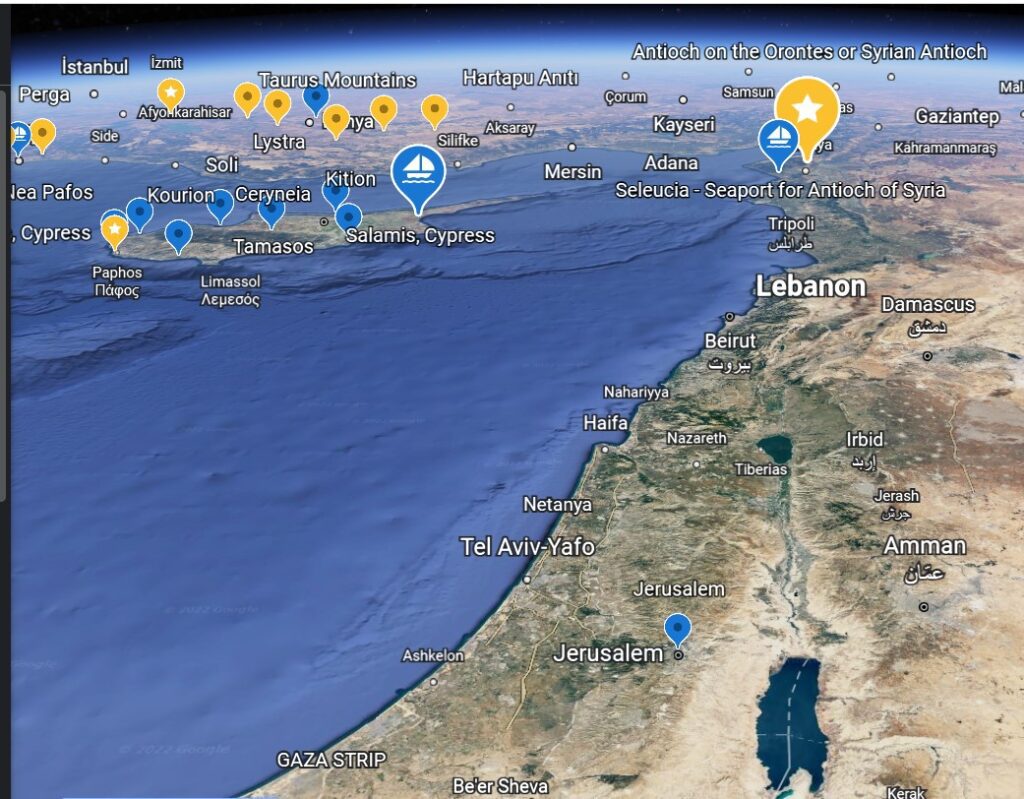
      map of route between Jerusalem and Antioch where apostles sent missionaries into all the world of the gentiles

      Comment on Scripture – Share the Gospel

    • Who has believed our message?

      Who has believed our message?

      יְשַׁעְיָהוּ (Isaiah) 53 ::  מִי הֶאֱמִין לִשְׁמֻעָתֵנוּ וּזְרוֹעַ יְהוָה עַל־מִי נִגְלָֽתָה׃

      and to whom has the arm of the LORD been revealed?

      Paul and Barnabas SENT with the Gospel

      Now in the church that was at Antioch [Syria]..

      .. the Holy Spirit said,

      “Now separate to Me Barnabas and Saul for the work to which I have called them.”

      ACTS of the Apostles Paul and Barnabas 13:1a,2b NKJV

      Saulos of Tarsus has just completed an exhortation in the synagogue of Pisidian Antioch.

      Who is asking to hear more of the Gospel?

      The response of the brothers gathered for worship on the Sabbath will determine who has believed the Gospel of Jesus, the Christ (Χριστός Greek) of the Jews.

      Many proselytes also sought the message of God in this Hellenist-Roman city near Pisidia Antioch.

      Who has heard these messengers of Good News?

      Acts of the Apostles 13:

      “Beware therefore, lest what has been spoken in the prophets come upon you:

      ‘Behold, you despisers,
      Marvel and perish!
      For I work a work in your days,
      A work which you will by no means believe,
      Though one were to declare it to you.’ ”

      Acts 13:40-41 NKJV
      Born: Saul of Tarsus, c. 5 AD, Tarsus, Cilicia, Roman Empire (in 21st-century Turkey) Died: c. 64/65 AD, Rome, Italia, Roman Empire

      ACTS 13:42 So when the Jews went out of the synagogue, the Gentiles begged that these words might be preached to them the next Sabbath.

      Although some Bibles translate from the Greek, ‘the people,’ Luke clearly points to the Goyim or gentiles [ethnos] included in the Sabbath, many who are proselytes seeking the true God.

      Now when the congregation had broken up, many of the Jews and devout proselytes followed Paul and Barnabas,

      who, speaking to them, persuaded them to continue in the grace of God.

      Acts of the Apostles 13:43 New King James Version

      The physician and gospel-writer Luke has included some details in his account of their response:

      • πολύς Ἰουδαῖος
        • MANY of the Jews
      • AND of the
      • σέβω προσήλυτος
        • God-fearing proselytes

      Mission accomplished?

      So it would seem..

      One week later:

      On the next Sabbath almost the whole city came together to hear the word of God.

      We might speculate from Luke’s account that too many gentiles in this capitol city of Galatia, Antioch (with most of the citizens either Roman or Greek) may have shown up to hear Paul at this little local Jewish synagogue.

      So it may have been surrounded by much bigger crowds than a small synagogue could hold.

      • “MANY JEWS,” but also many “God-fearing” Greek and Roman citizens of Antioch
      • PLUS crowds from nearby towns.

      What should the Jews expect?

      Judean or Hellenist, the Jews knew their Scriptures.

      Each Sabbath the Law and the Prophets were read not only in the Temple of Roman-occupied Jerusalem, but read in every synagogue throughout the Roman Empire.

      Context of this time of Paul's first mission;
      A.D. 47-49, the years of this mission trip:
      Claudius is Emperor of Rome.
      Claudius had intended to bestow Judea to his family friend Herod Agrippa but instead appointed a Prefect or Governor.
      Tiberius Julius Alexander, a Roman general born of a Jewish father became Judea's Governor
      
      (And closer to Cypress, Asia and Pisidian Antioch)
      
      Sergius Paulus may have been the first of several successive senators named Lucius Sergius Paullus, of Antioch, Pisidia - 
      source
      Could the Roman Governor of Galatia have been one in the same as we just convinced of the Gospel in Paphos?

      The renowned Saul of Tarsus has just proclaimed that those in Jerusalem

      .. had fulfilled all that was written concerning a savior iēsous..

      “But God raised Him from the dead.

      Last Sabbath the Jews of Antioch heard Saul proclaim the gospel of Christ crucified and risen! We are now more than a decade after this fulfillment of Scripture. Furthermore, by now many more must have heard the gospel of Jesus Christ of Nazareth.

      Those who seek God MUST know more!

      So they go to Antioch to hear Paul’s Gospel.

      What did the Gentiles expect?

      What rumors and witness had circulated among these Romans of Galatia and Greeks seeking Good News of the One God?

      (For these Gentiles had formerly worshiped many gods.)

      • .. the gift of the Holy Spirit had been poured out on the Gentiles also.
        • Acts 10:45
      • Some Jews in Jerusalem had said, “Then God has also granted to the Gentiles repentance to life.”
        • Acts 11:18
      • Several years ago a Roman Centurion in Capernaum had met Jesus, who healed his paralyzed servant by only His word.
        • Matthew 8
      • Other Roman Centurions had followed The Way once they had witnessed Jesus’ crucifixion personally.
      • Many Romans knew the witness of Cornelius of the Italian Regiment from not so long ago:

      .. I prayed in my house, and behold, a man stood before me in bright clothing [and Jesus’ Apostle Simon Peter proclaimed to me and my family in Caesarea] “In truth I perceive that God shows no partiality. But in every nation whoever fears Him and works righteousness is accepted by Him.

      Witness of the Roman Centurion Cornelius, excerpts from ACTS 10

      So the Crowds converged in Antioch to hear the Gospel

      Acts in Pisidian Antioch continued:

      The next Shabbat almost the whole city was gathered together to hear the word of God.

      But when the Yehudim saw the multitudes, they were filled with jealousy, and contradicted the things which were spoken by Sha’ul, and blasphemed.

      Acts of the Apostles 13:[44,]45 Hebrew Names Version

      No Second Sermon in the Synagogue

      Now what?


      ACTS of the Apostles 13 of Saul of Tarsus and Joseph of Cypress in Pisidian Antioch: To be continued…