Tag: rome

  • Hebrews – Benediction

    What is a benediction? Where did it originate and why is it the most appropriate closing to this or any letter?

    Perhaps you have heard a benediction or two, in Latin or another language, words sung closing a worship service.

    “So they shall invoke My name on the sons of Israel, and I then will bless them.”

    Numbers 6:22 NASB

    Benedictus Dominus Deus Israel
    Canticle of Zechariah
    Benedictus also known as the Canticle of Zechariah, is one of the hymns for Maundy Thursday in Holy Week. It was sung by the Jewish priest Zechariah, father of St. John the Baptist, in thanks for the son bestowed upon him by God. source:
    Benedictus Dominus Deus Israel:

    Definition: Benediction

    From the earliest times the records bear testimony that pronouncing the benediction or giving the blessing was a common practice. In the temple service, this duty was assigned to the Aaronites and was made an impressive part of the service. The form of the benediction used is given in Nu 6:22-27. References to this practice may be found in Le 9:22; De 10:8; 2Ch 30:27. After a time, minute directions were given concerning it and careful preparation was made for this part of the service. source: International Standard Bible Encyclopaedia

    The Priestly Blessing

    “The Lord bless you and keep you;
    The Lord make His face shine upon you,
    And be gracious to you;
    The Lord lift up His countenance upon you,
    And give you peace.” ’

    The blessing of worship given by the one who stands between the congregation and the Lord. Go in peace.

    Although an appropriate closing for a letter to be read to the congregation of a church, not all letters to the churches ended with such a benediction.

    Other Closings of Letters to the Church

    I have linked some benedictions of Paul above. Some letters such as James offer no benediction, while others close briefly.

    Peace to all of you who are in Christ. – First Letter of Peter 4:14B

    Some combine it with a closing caution and others offer just the exhortation.

    Little children, guard yourselves from idols. – 1 John 5:21

    While his last letter, the Revelation of Jesus Christ to John closes:

    Ἡ χάρις τοῦ κυρίου ἡμῶν Ἰησοῦ Χριστοῦ μετὰ πάντων ὑμῶν Ἀμήν

    The grace of our Lord Jesus Christ be with you all. Amen.

    Hebrews

    Before we conclude Hebrews 13 which begins, ‘Let love of the brethren continue’ and ends with a benediction, let’s take a brief look at the focus of the author’s letter.

    האגרת אל-העברים 1 Habrit Hakhadasha/Haderekh (HHH)
    א לפני שנים רבות דיבר אלוהים אל אבותינו באמצעות הנביאים בדרכים שונות, וסיפר להם, שלב אחרי שלב, על תוכניותיו.
    2 אך עתה, באחרית הימים, דיבר אלינו אלוהים באמצעות בנו, אשר בידו הפקיד את הכול ועל-ידו ברא את העולם ואת כל אשר בו.

    God, after He spoke long ago to the fathers in the prophets in many portions and in many ways, in these last days has spoken to us in His Son, whom He appointed heir of all things, through whom also He made the world.

    Hebrews 1:1-2 NASB

    The author of Hebrews’ point of scripture: God speaks to us in various ways. And now the Son, Jesus, heir and creator of the world, has spoken.

    3 The Son is the radiance of God’s glory and the exact expression of his nature, sustaining all things by his powerful word.

    Hebrews 1:3 CSB

    Jesus, the Son IS exactly, God’s own glory! Quite a statement. Because we are human, the Father became human in the flesh of the Son.

    3: Therefore, holy brethren, partakers of the heavenly calling, consider the Apostle and High Priest of our confession, Christ Jesus, who was faithful to Him who appointed Him, as Moses also was faithful in all His house.

    Note that the Apostle is ‘one sent with orders’ and so was the Son to us. The writer refers to us as holy partakers of the heavenly calling. For this same calling Christ Jesus is our High Priest.

    8:6 Jesus has now obtained a superior ministry, and to that degree he is the mediator of a better covenant, which has been established on better promises.

    But Christ came as High Priest of the good things to come, with the greater and more perfect tabernacle not made with hands, that is, not of this creation.

    Hebrews 9:11 NKJV

    15 Therefore, he is the mediator of a new covenant… Jesus secured a promised eternal inheritance, because of His Perfect Sacrifice for our sins.

    10:19 Therefore … enter the Holiest by the blood of Jesus, 20 by a new and living way which He consecrated for us, through the veil, that is, His flesh..

    Persecuted believers in Rome and beyond

    The persecution of Christians in Rome had likely already begun and these Hebrews likely faced severe social suffering, starvation, banishment and even death. So the writer of Hebrews encourages these prior to his closing.

    Endure the race of faith and persecution for His sake. Continue to love each other and continually praise God.

    17 Obey your leaders and submit to them, for they keep watch over your souls as those who will give an account.

    Pray also for me. This familiar theme of connection between leaders of the church separated from those they love. The author suggests that their prayer could lead him to be returned to them sooner. (Perhaps he is imprisoned or hiding elsewhere due to cautious fear for his life.)

    Benediction of the letter of Hebrews

    Now may the God of peace, who brought up from the dead our Lord Jesus—the great Shepherd of the sheep—through the blood of the everlasting covenant, equip you with everything good to do his will, working in us what is pleasing in his sight, through Jesus Christ, to whom be glory forever and ever. Amen.

    Hebrews 13:20-21 CSB

    God IS a God of peace, even when peace seems nowhere near.

    Jesus, Shepherd of the church, was brought up from the dead; therefore we honor Him as Lord. Do His will. All glory to Christ Jesus! Amen.

    This lesser shepherd of the church then encourages them with some additional timely good news of others they know. The author then closes:

    13:25 ἡ χάρις μετὰ πάντων ὑμῶν

    Grace be with you all.

    Philippine Madrigal Singers

    For by His Blood we have grace and peace.

  • Sanctuary

    Sanctuary

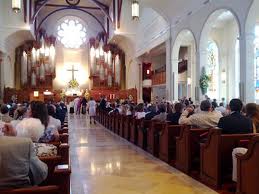
    Some refer to the ‘place’ where the church shares in corporate worship as family of Christ Jesus as “the sanctuary.” (Of course, the “church” is the worshipers.) 

    Exodus 25:8 KJV And let them make me a sanctuary; that I may dwell among them.

    The place may be worthy of the grandeur of the Living God or the place may be so humble as a servant’s living room; never-the less, where two or more are gathered in Jesus’ Name, we gather together in His sanctuary.

    Let the worshipers of Jesus our Lord come to the sanctuary of His Holy Presence.


    Sanctuary is a peaceful word for souls distracted by sin, hearts gathering safely into the worship of our Savior, Christ Jesus.

    Sometimes (like Jesus: in the wilderness… in a place away from the crowds… in a garden or olive grove… in Gethsemane…) we must get away from ALL of the DISTRACTION and noise of the world.

    Let the faithful enter into the sanctuary of our Father’s rest.

    It may be an empty sanctuary; perhaps a prayer closet; maybe a place in the woods where few feet tread. Maybe you just drive to a place where the lights and noise of the city fade from your rear view mirror into unending scene of mountain or seashore, stream or meadow.

    Peace. Sanctuary. A place and a time with God alone: we must find it. We much make a place for it. We must take time for it.

    Some crave the sanctuary and relationship of this time with God.

    It is more than just meditation. It is more than just talking to yourself. It is more than memories and more than planning ahead. It is much more than just asking what… or asking ‘WHY?’

    Sanctuary is our place of PRAYER.

    Sanctuary is that HOLY PLACE where God’s Presence hears and answers our prayers of faith. 

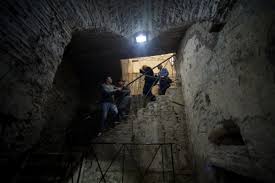
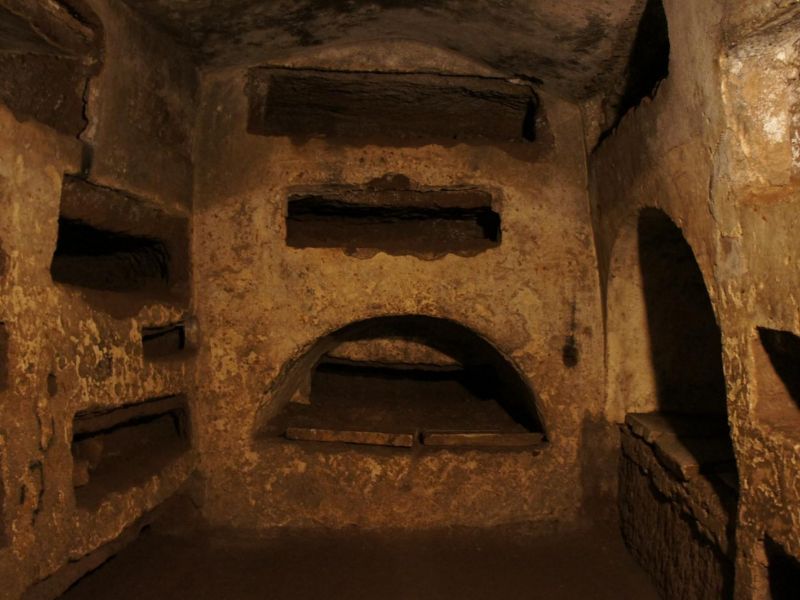
    Catacombs of Priscilla in Rome
    I was once one of many Christian tourists surprised to discover that many first century Christians in Rome worshiped in the sanctuary of the catacombs, burial places of the dead.

    catacomb tombs

    There they could not only meet safely out of sight of their persecutors, but there too (when corporate worship was no longer safe in their homes, as is the case in MANY places in 21st century China, most Arab countries and much of the continents of Africa and Asia), no doubt Christians found in this place to where our dust does return: a sanctuary.

    After having spent some hours of several days for many years praying to God in the ‘memorial gardens’ we call the ‘cemetery,’ I find sanctuary and peace in knowing that this is NOT the place where our soul will reside, but a time of rest for our wearied flesh.

    Will the dust of your wearied soul bow down to worship the Lord? Will your aching bones and soiled flesh be cleansed in His overflowing love?

    Will you invite His peace to dwell in your heart?

    Would you have sanctuary in Christ Jesus, our Lord and Savior?

    I pray for this: for you and for others of His dear loved ones.

    Turn from our distractions of the flesh and embrace the peace of Christ Jesus.


    “I am the resurrection and the life. Whoever believes in me, though he die, yet shall he live, and everyone who lives and believes in me shall never die. Do you believe this?”

    John 11:25-26


  • Judea of Herod

    Judea of Herod

    (Just a bit more Roman history before we continue in Luke 7)

    Prior to Roman Rule:

    • Judah in path of invading armies crossing eastern Mediterranean shores
    – Judah controlled by Syrians, Greeks, Romans, others over the years
    • Syrians took over in 198 B.C., introduced Greek culture to Jews
    – Jews allowed to keep religion, but some adopted Greek culture, gods
    • In 175 B.C., Syrians insisted Jews worship Greek gods; Jews refused
    – Jewish religion was outlawed; some fled to hills, prepared to fight
    Rebels Fight Syria
    • Jewish priest and five sons led fight to drive out Syrians
    – son Judah Maccabeus led revolt with his force, the Maccabees
    • Tiny Jewish force faced larger, better equipped Syrian army
    – rebels knew countryside and defeated Syrians in many battles
    Maccabees regained Jerusalem by 164 B.C.

    Rome Conquers Judea
    • Romans conquered Judah (Judea) in 63 B.C.
    • Roman rulers kept strict control over Judea
    • Jewish kings, religious leaders appointed by Rome

    Leader(s) of the Maccabees Timeline
    167 BC: Mattathias, the Hasmonean
    166 – 161 BC: Judas Maccabaeus, the Hammer of the LORD
    161 – 143 BC: Jonathan Apphus, the Wary
    143 – 135 BC: Simon Thassi, the Zealous Guide

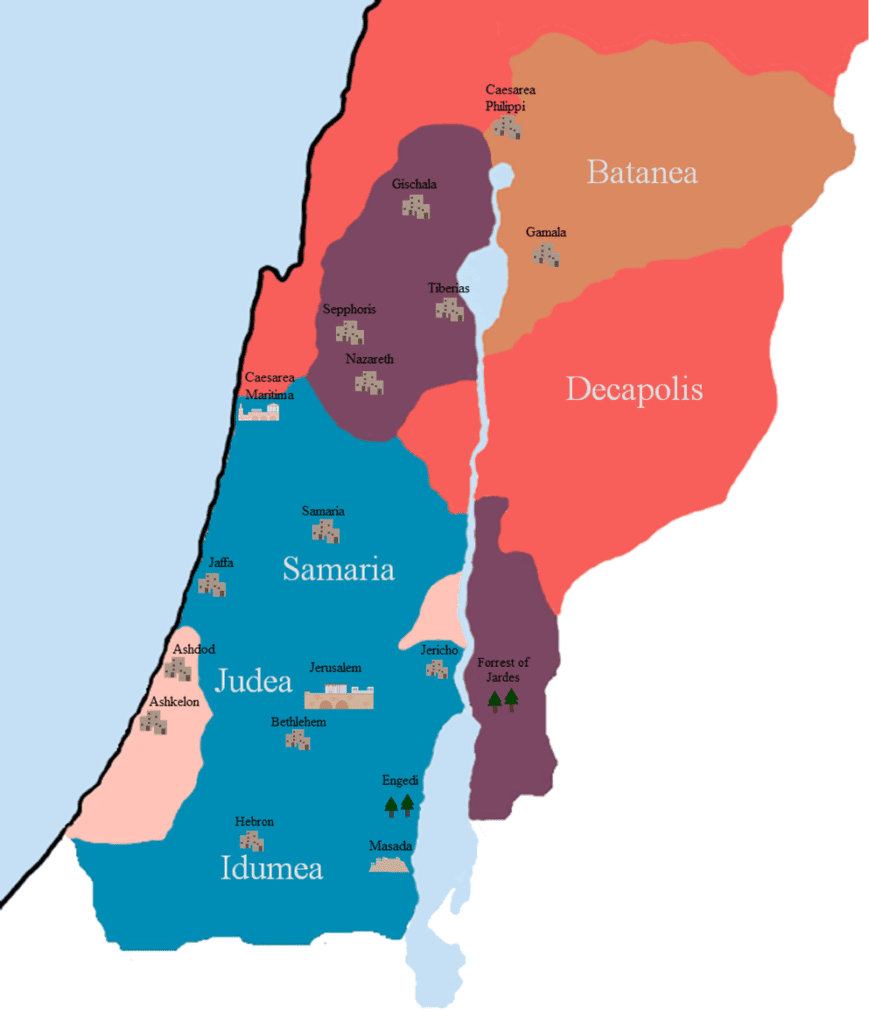
    Although the Maccabees, and later their descendants, the Hasmoneans, managed to keep Israel free from foreign oppression for almost 150 years, this abruptly ended with King Herod who was not a Hasmonean at all.

    The Hasmonean dynasty, which leaped onto the stage of history with such dramatic heroism, disappeared from that same stage with cruel suddenness. The despot Herod, whose régime was forced upon the unwilling Jewish populace by his Romans overlords, was fully aware that the aura of Hasmonean charisma would constitute a continual threat to his power, and hence he undertook to ruthlessly murder all the remaining descendants of that family, including his beloved wife Mariamne, granddaughter of the Hasmonean ruler Hyrcanus II. Herod executed her on trumped-up charges of disloyalty, as he did afterwards to the two sons she had borne him, Alexander and Aristobulus. – Wikipedia

    Herod builds another Temple in Jerusalem and many buildings throughout Judea with the support of Rome.

    Herod the First of Judaea, known to history as Herod the Great

    • Alexander died in 76 B.C. and Salome ruled alone until her death in 67 B.C. Upon the death of the queen a civil war broke out between her two sons. Herod’s father Antipater II sided with Hyrcanus…
    • Rome had intervened in Syria and ousted their King and posted Legions in Syria.
    • Caesar and Pompey were also in a Roman civil war for power. Herod’s father had supported Caesar and was made Procurator of Judea.
    • Herod loyally supported Antony against Octavian until 31 B.C.  Octavian defeated Antony, but had no one to replace Herod and gave him some of Antony’s territories given by Antony of Rome to Cleopatra of Egypt.
    • Near the time of Herod’s death (just prior to the birth of Jesus) Herod feared a coup from his own sons as more civil unrest broke out in his Kingdom of Judea (given to his family as political compromise by Rome).

    HEROD’S PERSECUTIONS

    Herod’s persecutions were infamous and they even extended to his own family.

    Herod, knowing that his Jewish credentials were suspect, had married Miriam—the granddaughter of Hyrcanus and therefore a Hasmonean princess—largely to gain legitimacy among the Jewish people. But he also loved her madly. As Josephus relates:

    Of the five children which Herod had by Miriam, two of them were daughters and three were sons. The youngest of these sons was educated in Rome and died there but the two eldest he treated as those of royal blood on account of the nobility of their mother and because they were not born until he was king. But what was stronger than all this was his love he bore for Miriam which inflamed him every day to a great degree.

    The problem was that Miriam hated him as much as he loved her, largely because of what he had done to her brother, Aristobulus.

    Herod had made Aristobulus High Priest at the age of 17, and watched with trepidation as the young man became hugely popular. This was not surprising as Aristobulus was a Hasmonean with a legitimate right to be High Priest – a genuine Jew and a genuine cohen.

    But this threatened Herod too much and he had him drowned.

    • Luke does not retell the story of Joseph and Mary fleeing from Bethlehem to Egypt before returning to Nazareth after Herod’s death. We do, however get a flavor of the controversy of the Herod’s vs. the Jews in the story of John the Baptist.

    Although we have looked past the calls of John the Baptist to the people and the King for repentance to the call of Jesus to the multitudes for repentance, Luke also reports more of John’s relationship with Jesus in chapter 7.

    To be continued in Luke 7.