Tag: salvation

  • Hebrews – 2 – Pioneer of Perfect Salvation

    In bringing many sons and daughters to glory, it was fitting that God, for whom and through whom everything exists, should make the pioneer of their salvation perfect through what he suffered.

    Hebrews 2:10 NIV

    But we see Jesus… Hebrews 2:9a

    The author begins his letter to his Jewish brothers stating that G_d’s final word is through the Son, not angels or prophets.

    Previously the author of Hebrews has made a case through scripture that Jesus, the Son of God, is higher than the angels.

    Heir of all things

    Who has ascended into heaven and descended?
    Who has gathered the wind in His fists?
    Who has wrapped the waters in His garment?
    Who has established all the ends of the earth?
    What is His name or His son’s name?
    Surely you know!

    Proverbs 30:4 NASB

    Continuing in our study of Hebrews, a letter authored to first century Jews, we now continue the second chapter after what we covered previously in the beginning verses 1-9 in Hebrew 2 – Pay Attention.

    Fitting and proper perfection

    Are you a perfect Jew?

    Or more to a personal point, am I a perfect Christian?

    Of course not.

    So how do we have any chutzpah outside of the Messiah Jesus to say that we may be accepted into eternal life by the Lord? This is the issue of salvation the writer of Hebrews takes on here.

    Hebrews 2:

    For it was bekavod (fitting, proper) for him, for whom are all things and through whom are all things, in bringing banim rabbim (many sons) to kavod, to bring to shleimut (perfection, completion) the Rosh (Head) and Mekhonen (Founder) of their Yeshua’at Hashem through yissurim (suffering).

    Hebrews 2:10 Orthodox Jewish Bible

    Most Christians lack a full understanding of many terms of Hebrew origin like perfection, author, purification and redemption. I am neither a Torah trained Rabbi nor Messianic Jew, but further readings of Paul‘s letters will help you to understand an academic Jewish approach to some of these terms.

    10 – It was fitting for Him

    Various translations of πρέπω read: it became Him, it was bekavod, it was fitting, it was entirely appropriate – the concept that God does what is right and perfect. Jews and Christians must agree that man has a tendency to weigh perfection incorrectly.

    כָּֽל־דֶּרֶךְ־אִישׁ יָשָׁר בְּעֵינָיו וְתֹכֵן לִבֹּות יְהוָֽה׃

    עֲשֹׂה צְדָקָה וּמִשְׁפָּט נִבְחָר לַיהוָה מִזָּֽבַח׃

    Proverbs 21:2,3

    in bringing many sons

    “Many sons – πολύς υἱός speaks of multitudes and not specifically men (as opposed to women) or of a specific son. Think of the beneficiary as humanity, rather than all creation or even the Creator Himself. And what is the benefit – what is our reward?

    unto glory

    “εἰςδόξα – eis doxa – To glory or toward glory.
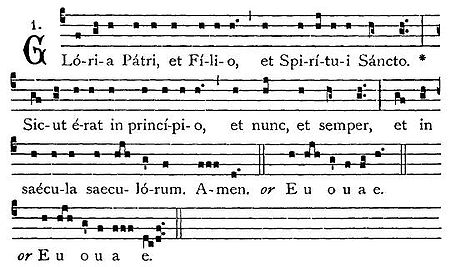
    Gloria Patri

    Now glory means many things to different people, so let’s be clear in our completed understanding of doxa, as in ‘doxology.’ Yes, praise of God or of a man.

    Glory becomes a Biblical description of the brightness of God, or of the sun, moon, stars, angels or an object; implying magnificence, excellence, preeminence, dignity, grace and majesty.

    God is unsurpassed glory! A higher indescribable brightness. Yet the glory of God has a contrasting glory of which we seldom speak.

    Doxa in Greek translates as an opinion, judgment, view; therefore our human opinion or estimate of someone or something, whether good or bad, is a glory or judgement – Biblically of God, a Most High Glory.

    to perfect

    τελειόω – to complete (perfect), to bring to the end (goal) proposed, to accomplish or bring to a close, a fulfillment by event of the prophecies of the scriptures.

    לָכֵן אֲחַלֶּק־לֹו בָרַבִּים וְאֶת־עֲצוּמִים יְחַלֵּק שָׁלָל תַּחַת אֲשֶׁר הֶעֱרָה לַמָּוֶת נַפְשֹׁו וְאֶת־פֹּשְׁעִים נִמְנָה וְהוּא חֵטְא־רַבִּים נָשָׂא וְלַפֹּשְׁעִים יַפְגִּֽיעַ׃ ס

    Isaiah 53:12

    their head and founder

    We must, at some point in our lives, confess that some have authority over us. (This is assumed in a Biblical-based Hebrew culture.) Current authority, previous authority and a succession of authority all come into play.

    Abraham, Israel, Moses, David and family patriarchs may all be mentioned as a head or founding father of Jews. The Lord granted both His Authority and succession through them. Here the author of Hebrews points to their Higher Authority.

    ἀρχηγός – archēgos implies one that takes the lead in any thing and thus affords an example, a predecessor in a matter, pioneer. Jesus, therefore, becomes a captain or founder, a chief leader or Prince over these who followed.

    Within the same verse His origin was established as ‘Him, for whom are all things, and through whom are all things’… or other translations read: ‘God—for whom and through whom all things exist—...’ Clearly, the Son of God IS God! Jesus IS before all founders and over all authority.

    of their salvation

    Two questions come immediately to mind:

    1. What is salvation?
    2. Whose salvation? (Or who can be saved?)

    σωτηρία sōtēria –Salvation, in Greek, the common language of first century Judea and much of the Roman Empire, refers to deliverance, preservation, safety, even from molestation by one’s enemies. A Roman understanding of sōtēria could have viewed a “savior” as a threat to their own authority.

    In an ethical sense, that which concludes to the soul’s safety, of Messianic salvation.

    יָשַׁע – yasha` is the Hebrew concept. Isaiah asks,

    פָּגַ֤עְתָּ אֶת־שָׂשׂ֙ וְעֹ֣שֵׂה צֶ֔דֶק בִּדְרָכֶ֖יךָ יִזְכְּר֑וּךָ הֵן־אַתָּ֤ה קָצַ֨פְתָּ֙ וַֽנֶּחֱטָ֔א בָּהֶ֥ם עֹולָ֖ם וְנִוָּשֵֽׁעַ׃

    How can we be saved if we remain in our sins?

    Isaiah 64:5 CSB

    The question of who can be saved is one of some debate, which we will not take on today. Since the writer of Hebrews refers to the Son, the Messiah, as God in this introductory passage, we will briefly examine His own answer to this question.

    When the disciples heard this, they were utterly astonished and asked, “Then who can be saved? ”

    Matthew 19:25 CSB

    The Jewish Apostle and tax collector relates consecutive stories about money, the rich and salvation, asking the Messiah who can be saved. Hear His answer:

    26 Jesus looked at them and said, “With man this is impossible, but with God all things are possible.”

    Matthew 19:26 CSB

    Not even an Apostle or rich ruler can earn salvation or buy perfection. Yet God the Father has made a way for the completion of sinful man.

    through sufferings.

    διά dia πάθημα pathēma

    We hesitate here, even that the Messiah must suffer, let alone that we must in death. Yet the meaning is clear: that which one suffers or has suffered. We shrink from some of the descriptions of sufferings: misfortune, calamity, evil, affliction.

    Many of us have experienced some of the afflictions which Christians must undergo. And we know we cannot endure that with the Messiah suffered for our sins as a Sacrifice painfully crucified on the Cross.

    Hebrews and gentiles know that in perfection a price must be paid for sin.

    Sanctification – ἁγιάζω

    To sanctify is to purify, separating from the profane and dedicating or consecrating to a Holy God.

    How can a sinner be consecrated to the Lord God?

    The author of Hebrews continues by assuring us that the Messiah Jesus completed our sanctification and He, the crucified Son of Man calls us brothers (or sisters). What undue grace and love of those of the world. And grace for both Jew and gentile, grace for those of the first century and sinners of this twenty-first century.

    Once again the writer of Hebrews quotes familiar scripture, even the very song
    from Psalm 22 יְהוֹשׁוּעַ Yĕhowshuwa` cried out from the cross! He also quotes the historical record of Samuel and the prophet Isaiah.

    Again, I will trust in him. And again, Here I am with the children God gave me.

    Hebrews 2:13 CSB

    The Lord God has become a personal God on the Cross!

    וְה֥וּא כֹהֵ֖ן לְאֵ֥ל עֶלְיֹֽון׃

    a Priest of G_d Most High

    The writer of Hebrews closes this section about Jesus becoming our Pioneer of Perfection with explanation why the Son of Man became a High Priest for us.

    17 Therefore, he had to be like his brothers and sisters in every way, so that he could become a merciful and faithful high priest in matters pertaining to God, to make atonement for the sins of the people.

    More about atonement and our need for this Priest in Hebrews 3.

    To be continued...
  • Interrupting Jesus 11 – a last supper in Jericho

    Interrupting Jesus 11 – a last supper in Jericho

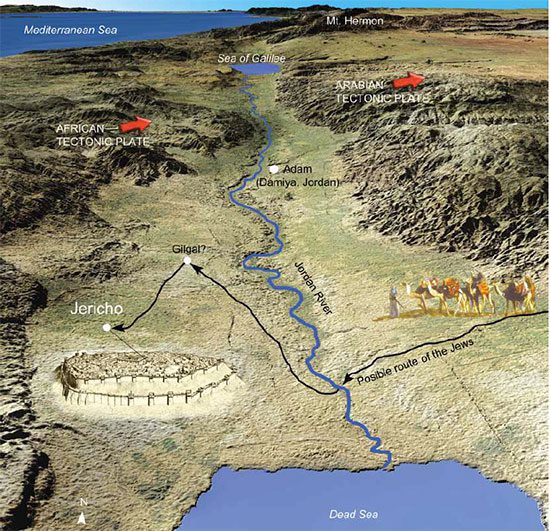
    jericho-mapJericho, best known as the place where the Hebrew nation, led by Joshua, began their conquest of Canaan with a march around the walls of Jericho, strategically central to inland trade routes to the Mediterranean. old road jerusalem-jericho
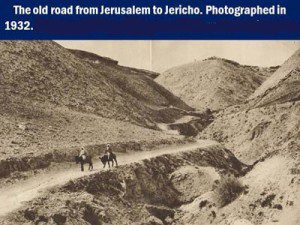
    Along a barren highway to the west, about a 15 mile walk to Jerusalem after an ascent from the small town of Bethel. Galileans, Judeans, Samaritans and of course, Roman soldiers, traveled these highways through Jericho. It would be the path to the festival of the Passover, this one the time of the Sacrifice of Jesus.

    The crowds have traveled with the popular Rabbi, Jesus of Nazareth. In just days they would lay palms before His triumphal entry into the gates of Jerusalem. Like Joshua, His Hebrew Name means: “Jehovah is salvation.” 

    Jesus IS the Christ, the Messiah.

    Into the town of Jericho crowds enter. People allign the streets as if awaiting a King with riches or celebrity you must see once in your mortal life. One of the town’s lesser citizens is a resented tax collector. (Perhaps you have heard how the Jews hated the men who collected taxes for Rome.) In fact, one of the purported followers of Jesus used to be a tax collector. Perhaps you have read his Gospel.

    Luke 5:

    After this he went out and saw a tax collector named Levi, sitting at the tax booth. And he said to him, “Follow me.” And leaving everything, he rose and followed him.

    And Levi made him a great feast in his house, and there was a large company of tax collectors and others reclining at table with them. And the Pharisees and their scribes grumbled at his disciples, saying, “Why do you eat and drink with tax collectors and sinners?” And Jesus answered them, “Those who are well have no need of a physician, but those who are sick. I have not come to call the righteous but sinners to repentance.”

    The Messiah came to save sinners: seductive women, adulterous men, liars, thiefs and even tax collectors.

    Jesus did not come to save the regular attenders of church (synagogue). Jesus has tax collectors and sinners following Him as Disciples and as part of the crowds – sinners like you and me – sinners like Zacchaeus.

    In fact, Luke reports a parable Jesus had told about a Pharisee and a tax collector. Here is a story we can relate to about good ‘church’ people and the corrupt public official in their midst:

    Luke 18:

    The Pharisee and the Tax Collector

    He also told this parable to some who trusted in themselves that they were righteous, and treated others with contempt: 10 “Two men went up into the temple to pray, one a Pharisee and the other a tax collector. 11 The Pharisee,standing by himself, prayed thus:

    ‘God, I thank you that I am not like other men, extortioners, unjust, adulterers, or even like this tax collector.

    12 I fast twice a week; I give tithes of all that I get.’

    13 But the tax collector, standing far off, would not even lift up his eyes to heaven, but beat his breast, saying,

    ‘God,be merciful to me, a sinner!’

    14 I tell you, this man went down to his house justified, rather than the other. For everyone who exalts himself will be humbled, but the one who humbles himself will be exalted.”

    Do you, dear claimant of Christ, good observer of God’s ordinances, come to the LORD pleading for mercy while showing no mercy for your fellow sinners?

    Matthew, the tax collector who quit to follow Jesus, and the other repentant sinners of the crowds knew that the Messiah, the Christ, Jesus, was a merciful teacher. Not only the Gospel of His miracles preceded Jesus as He entered Jericho, but also the wisdom and compassion of His teaching of scripture. A tax collector like Zacchaeus might just have a chance to see this man of mercy traveling to Jerusalem through his town of Jericho.

    Luke 19:

    He entered Jericho and was passing through. And behold, there was a man named Zacchaeus. He was a chief tax collector and was rich. And he was seeking to see who Jesus was, but on account of the crowd he could not, because he was small in stature. So he ran on ahead and climbed up into a sycamore tree to see him, for he was about to pass that way.

    And when Jesus came to the place, he looked up and said to him, “Zacchaeus, hurry and come down, for I must stay at your house today.”

    Imagine, the leading teacher and prophet comes through town with crowds of followers. Jesus pauses where you are and looks up to you! He calls you by name. Further, this well-known teacher boldly tells you (in front of all of the witnesses around Him) that He has to come to your house for dinner. Unthinkable! Nobody wants to associate with tax collectors and corrupt politicians, let alone have dinner.

    Have you ever been looked down on by others, rejected by everyone of importance?

    Jesus did not think himself to be so important as to not interrupt His journey to Jerusalem to have dinner with a sinner. Zaccheaus

    So he hurried and came down and received him joyfully.

    And when they saw it, they all grumbled, “He has gone in to be the guest of a man who is a sinner.”

    And Zacchaeus stood and said to the Lord, “Behold, Lord, the half of my goods I give to the poor. And if I have defrauded anyone of anything, I restore it fourfold.”

    And Jesus said to him, “Today salvation has come to this house, since he also is a son of Abraham.

    10 For the Son of Man came to seek and to save the lost.”

    Jehovah is salvation: Jesus has interrupted the journey of His high sacrifice about to take place at the Passover. The Lamb of God, who takes away the sins of the world, has come to the house of a sinner for a feast.

    What is your response to Christ Jesus? Have you repented of your sins and accepted the grace of God?

    Lord have mercy on us. Christ have mercy on us.

    Therefore, let us keep the feast, beloved fellow forgiven sinner.


  • Your ATTN: required

    Your ATTN: required

    20 Jan, 2015, In the US, President Obama, the most powerful man in this world, gave the President’s annual State of the Union address to the US congress and a worldwide audience. (I have neither heard it nor previewed it, but rest assured his priorities are not mine or yours.)

    1 January, 2015, You were likely one of millions to make at least one or a list of New Year’s resolutions. (You’ve had three weeks. How are you doing with that?)

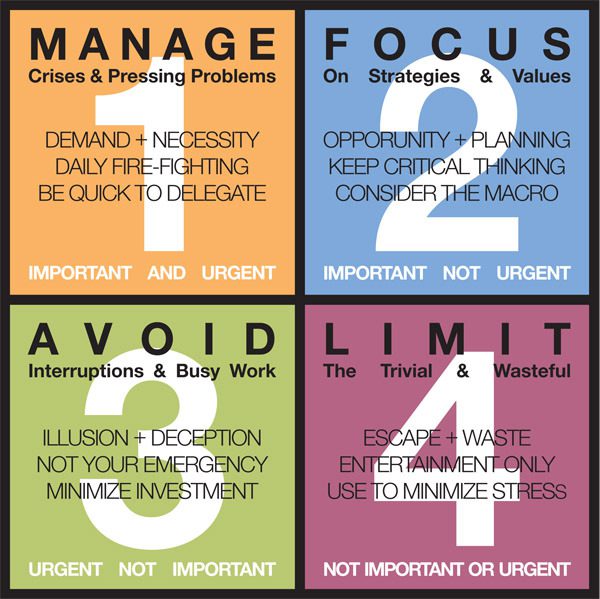
    10 July, 2007, We were on our honeymoon in beautiful St. Lucia. I wanted to establish some important priorities for our new marriage, concepts borrowed from “The 7 Habits of Highly Organized People” by Steven Covey, from which the graphic for this post is taken. My bride was recuperating from another chemo-therapy treatment (not your usual honeymoon activity) and wanted nothing to do with it. I trashed the book.

    Plan all you want; some things are important and some are not.

    Some events become urgent, most do not.

    As a good manager of my life I want to always plan for the important things and important people of my future.

    As the poor manager of my time and relationships (as all-to-frequently I am), I gravitate from the important to the unimportant (as Covey warns) and neglect the inevitable importance of those life events and people which will surly come without warning. (No, I still have not updated my will… for instance.)

    And who would ever think to plan so poorly to have a honeymoon right after a cancer treatment. My urgency and reasons failed to stand in the importance of time.

    I have led a successful and fruitful life in past times in more than one career. (I cannot claim that in this particular fleeting moment of eternal time).

    A man like me (perhaps like you) came to Jesus right when he was on top.

    What can you do for my portfolio, Jesus? Does your new mega-church need some money? I know you have the power here.

    Can you help me out here? What can you do for me?  (Everybody wants me to be part of their church boards and leadership, you know.) How can I help you, Jesus? I know you could do just this one thing for me, please.

    Now you may claim to have never seen this man in the Gospel and that he never said that. Yet look closer to this familiar story (remembering how rich almost ALL Americans and Europeans are (along with a select, exclusive group of the rich in nearly every country throughout the world).

    Consider that you are the RICH man coming up to Jesus. Later we will reconsider our priorities: their urgency and their importance.

    Luke 12:

    The Parable of the Rich Fool

    13 Someone in the crowd said to him, “Teacher, tell my brother to divide the inheritance with me.”

    14 But he [Jesus] said to him, “Man, who made me a judge or arbitrator over you?”

    Now this is NOT the answer we rich women and rich men expect as an answer from Jesus, is it?

    My father is currently blessed with long life. He is 91. My mother went to be with the Lord in 2007. I have three siblings. (As I mentioned, I have not even updated my own will. {Shame on me..}) For me, this scenario of the rich man could well take place at anytime in the next decade. So easily could I come to Jesus and ask Him to be an arbitrator over my inheritance of earthly riches.

    I’ve had some tough times the past few years… been taken advantage of… lost much. (Nobody bailed me out. No one replaced my income or market losses.) I once had extra storage and extra accounts for all my wealth! But not now.

    Can Jesus help me?

    Listen to our Lord’s reply:

    15 And he said to them, “Take care, and be on your guard against all covetousness, for one’s life does not consist in the abundance of his possessions.” 16 And he told them a parable, saying,

    “The land of a rich man produced plentifully, 17 and he thought to himself, ‘What shall I do, for I have nowhere to store my crops?’ 18 And he said, ‘I will do this: I will tear down my barns and build larger ones, and there I will store all my grain and my goods.

    19 And I will say to my soul, “Soul, you have ample goods laid up for many years; relax, eat, drink, be merry.”’

    “Eat, drink and be merry.” You have heard it quoted back to you out of context that this is straight from the Bible from the teaching of Jesus.

    But the rest of the expression, “for tomorrow you die,” though true, is not the application of Jesus’ teaching.

    20 But God said to him, ‘Fool! This night your soul is required of you, and the things you have prepared, whose will they be?’ 21 So is the one who lays up treasure for himself and is not rich toward God.”

    “God said to him, ‘Fool!’

    Jesus is not warning us to party now, because one day you will die (and it could be as soon as tomorrow). He is not telling the man not to save some of his wealth, either. Jesus is telling the man that he is saving up for the wrong priorities and possibly a wrong day (of his life) for which he is planning, but does not expect.

    Do Not Be Anxious

    22 And he said to his disciples, “Therefore I tell you, do not be anxious about your life, what you will eat, nor about your body, what you will put on.

    Jesus does not tell the man not to plan his barns. Jesus does not tell the man not to save his money for a future need. Jesus does not even tell the man to give some money to his church so that God will bless him. What a ludicrous call to an offering; but it is so often the hope of the rich man who wants and covets even more. (I’ll listen to this preacher and give him a little, because he promises that God will give me even more if I give to his church.)

    What was important to Jesus, then? What did Jesus think the rich man should plan. What does Jesus think you should plan? For after all, tomorrow may be the day your soul is required of you.

    Eternity is a long time. How close our entrance into the rest before judgment! By comparison even to the urgency of life’s every day trials and the importance of this mortal life’s focus on a lifetime; how near we stand each God-given day to the treasure of heaven, or how near we teeter toward the precipice of sin’s backsliding into a long punishment of Hell!

    Does God say to you, “Fool!?”

    Do you think that any investment of your time and money will keep the steep cliff of sin upon which you stand from the collapse of landsliding time? Do you have any hope of surviving the fall without the Savior of the fallen to lift you toward light?

    Jesus Christ has promised us an inheritance in heaven. He has guaranteed our reward by His sacrifice for our sins – and these are many – on the bloody Cross.

    Focus on your eternal future. Manage your earthly time and money. Invest in Christ’s righteousness. This, of course, in addition to worshiping God and giving some of your time and money to the church, means that like Christ Jesus, our Lord (so we claim), we must always love God, always love people (and so many of us are so hard to love – really).

    Do not be deceived by your dreams and desires for a bigger barn on earth. Do not be swayed to avoid the thought that you are mortal and a God-appointed day for the end of this life awaits you.

    Do you think its enough to spend a little time and a pittance of pocket change at church once a week? Is that your storage barn of heaven?

    Let us plan for eternal life by our investment in our daily life. Let it be for Christ Jesus, who sacrificed everything for you and for me.

    Jesus paid the price for your soul. Yet if you do not follow Him as lord of your life, you will not have the ransom for your soul, required to pay for your sin.

    Dearly beloved, mortal sister, mortal brother of this failing flesh: please do not be the rich fool. Repent! Turn back to bow down to Jesus as your Lord, our only Saviour, while it is yet today.

    For all we know, tomorrow! – your soul may be required of you.