Tag: sanctified

  • Confront and Correct with a Clear Conscience

    Confront and Correct with a Clear Conscience

    Are you afraid of CONFRONTATION?

    (the Apostle Paul seems to imply by asking Timothy to be strong…)

    Remind them of these things:

    2 Timothy 2:14a

    Paul builds up Timothy and other pastors true to following the Way of Jesus Christ. And further, the Apostle would confront false teachers by binding them with an oath.

    .. and solemnly charge them in the presence of God

    2 Timothy 2:14b NASB

    Warn them before God against quarreling about words;

    2 Timothy 2:14b NIV

    and charge them before the Lord [God or theos] to avoid disputing about words, which does no good, but only ruins the hearers.

    2 Timothy 2:14b RSV

    It’s serious business, this work of pastors leading their church!

    Various Bible translations head this section:

    • An Unashamed Workman
    • A Worker Approved by God
    • Dealing With False Teachers
    • Approved and Disapproved Workers

    Which type of worker are you?


    Accurately Handle the Word of Truth

    Legacy Standard Bible

    Confronting the World

    Believe it or not, MOST Common Era christians do NOT like confrontation concerning the truth of the Gospel of Jesus Christ.

    WE THE PEOPLE of our certain JESUS-worshiping church don’t even talk about the Way OR the Truth .. even to each other.

    OR do most churches challenge the community we include in our worship: to confess our own sins, accept forgiveness in Christ and walk in a new and narrow way.

    THE WORLD, on the other hand, speaks sharp words against christians, seeking our conciliation to include their sins and gods of self as acceptable to God and the Lord Jesus Christ.

    But to borrow a frequent response of the Apostle to such an argument, I answer:

    “BY NO MEANS.”

    AND, as Jesus said, it is not you, beloved believer, that the world hates: 

    “The world cannot hate you, but it hates Me because I bear witness about it, that its deeds are evil.

    Gospel of John 7:7 LSB


    Therefore the Apostle Paul instructs Timothy and pastors:

    Be strong in the grace that is in Christ Jesus.

    2 Timothy 2:1a LSB

    Be diligent to present yourself
    approved to God as a workman
    who does not need to be ashamed,
    accurately handling the word of truth.

    Second Letter of of the Apostle Paul to Timothy 2:15 LSB

    Now the Apostle Paul instructs Timothy HOW and WHO to confront, making certain that his (or our) motives are pure since cleansed in Christ.


    But avoid worldly and empty chatter

    Paul begins by warning who NOT to debate. For the Apostle has already instructed this in his previous epistle.

    O Timothy, guard what has been entrusted to you, turning aside from godless and empty G2757 chatter G2757 and the opposing arguments of what is falsely called knowledge—

    1 Timothy 6:20 LSB – Strong’s G2757 – kenophōnia

    YES, the FALSE teachers seeking to challenge the purity of TRUTH in your church always claim knowledge that goes against God.

    So Paul begins again in this letter:

    Avoid godless chatter, because those who indulge in it will become more and more ungodly.

    2 Timothy 2:16 NIV

    Empty disputing, worthless babble. From a presumed compound of kenos and phone; empty sounding, i.e. Fruitless discussion.

    source: G2757 BibleHub.org

    Have you ever encountered anyone in a Bible study or Church gathering who always seems to go on about something that has nothing to do with you, what you are discussion or what a selection of Scripture says? 

    “and their talk will spread like gangrene, Paul warns, citing two men, Hymenaeus and Philetus.

    What truth do they challenge?

    This is an important question of discernment for the pastor up against false teaching. And the Apostle points to a common false teaching of these two men with knowledge spreading into Ephesus and beyond like gangrene.

    They have strayed from the truth by saying that the resurrection has already occurred, and they are undermining some people’s faith.

    2 Timothy 2:18 NET

    How does the Apostle assure us?

    19 Nevertheless, God’s solid foundation stands firm, sealed with this inscription:

    “The Lord knows those who are his,” and

    “Everyone who confesses the name of the Lord must turn away from wickedness.”

    2 Tim 2:19 NIV

    quoting Scripture: Numbers 16:5, Joel 2:23

    Paul and pastors encountering FALSE knowledge quote Scripture, God’s written word — accurately.

    Now the Apostle to the gentiles speaks to our own accountability, specifically that of Timothy as the pastor who must confront such patently false teaching.

    Sanctifying the saints

    Now in a great house there are not only vessels of gold and silver but also of wood and clay, some for honorable use, some for dishonorable.

    2 Timothy 2:20 ESV

    Common or Sanctified Honorable Vessels
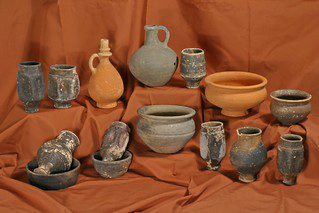
    In his epistle to the Romans, Paul points to God – owner of the great house – as maker of every vessel formed regardless of its common use or honorable gilded gloss of silver or gold.

    Paul’s letter to the Romans 9:21 KJV

    Hath not the potter power over the clay, of the same lump to make one vessel unto honour, and another unto dishonour?

    Although the saints and servants of the Lord Jesus Christ understood a vessel as an implement made for household use, the Apostle uses the familiar metaphor for σκεῦος [skeuos] for a man of quality, as a chosen instrument (honorable) or ‘in a bad sense, an assistant in accomplishing an evil deed’ [dishonorable, as a false teacher would choose].

    Jesus remarks, as Paul and Timothy would well know:

    No man can enter into a strong man’s house, and spoil his goods, [G4632 – vessels]

    except he will first bind the strong man;

    and then he will spoil his house.

    Gospel of Mark 3:27 KJV

    The STRONG pastor, as the Apostle encourages Timothy, will CONFRONT any intruder with false truth

    AND as an honorable vessel sanctified by the Lord of the House, CORRECT his (or her) false teaching.


    But first, purify yourself

    What’s a church to do when a false teacher steps into the spotlight of doctrine and truth?
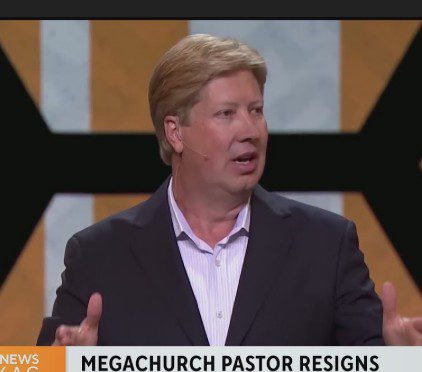
    Imagine Timothy making the NEWS..

    Or suppose that your church wants you to tolerate some leader’s unrepentant sin?

    The Apostle Paul points first to sanctification of yourself.

    DON’T be a common vessel, but an honorable one for Christ.


    Therefore, if anyone cleanses himself from these things, he will be a vessel for honor,

    sanctified, useful to the Master,

    having been prepared for every good work.

    Now flee from youthful lusts

    and pursue righteousness, faith, love, and peace, with those who call on the Lord from a pure heart.

    Paul’s Second Pastoral Epistle to Timothy 2:2:21-22 LSB


    9 Characteristics of a Faithful Believer

    In verses 21-26, Paul sets forth nine characteristics that mark a faithful, godly believer who is a vessel of honor.

    Source: MACARTHUR COMMENTARY ON 2 Timothy, p.88

    1. a cleansed life
    2. a sanctified soul
    3. be useful to God
    4. be prepared for service
    5. have a pure heart
    6. and have a discerning mind
    7. a gentle manner
    8. a humble spirit
    9. and a compassionate attitude.

    How’d you do?

    How many of these 9 honorable traits Paul suggests fit you as a ‘workman‘ in the large house with various vessels for use?

    Do YOU have a clear conscience?


    The clear conscience of a sanctified saint (believer).

    a good conscience and an unhypocritical faith

    The Apostle had already challenged Timothy and leaders of the Ephesian church in his first epistle:

    But the goal of our command is love from a pure heart and a good conscience and an unhypocritical faith.

    (later urging Timothy) 

    .. that by them you may fight the good fight, keeping faith and a good conscience, which some, having rejected, suffered shipwreck in regard to the faith.

    1 Timothy 1:5, 18c-19 LSB

    Now, after making certain that church leaders (some who have strayed from the faith), the Apostle commands them HOW to deal with those false teachers in their midst.

    When and How to Correct Them

    John MacArthur points to these leadership decisions as requiring A DISCERNING MIND.

    Paul instructs Timothy in this face-to-face conversational combat a strong Pastor faces.


    But reject foolish and ignorant disputes, knowing that they breed quarrels.

    2 Timothy 2:23 HCSB

    Foolish, an accusative plural adjective, Probably from the base of musterion; dull or stupid, i.e. Heedless, blockhead, absurd.

    Although we know what ignorant means, accusative adjective – Untrained, uneducated, showing a want of training or education, ignorant. Uninstructed, i.e. stupid.

    source:

    Why mention it?

    The Apostle warns, DON”T engage them.

    In fact, because of the conflicts such debates cause, leaders must refuse speculations that restart old battles.

    The Apostle reminds Timothy and church leaders that a slave (of the Lord’s household) not only must not quarrel, but also must be kind toward everyone.

    Have any trouble with that one?
    Does this sound familiar?

    Blessed are the meek:

    for they shall inherit the earth.

    Gospel of Matthew 5:5 KJV from the teaching of Jesus


    Teaching, rather than debating the ignorant

    but be kind to all, able to teach, patient when wronged, with gentleness correcting those who are in opposition..

    2 Timothy 2:24b-25a LSB

    The King James Version translates πραότης – praotēs, as meekness (rather than gentleness, or humility NKJV). And why not teach as the Master, the Teacher and Truth of those who may believe, as Paul suggests:

    .. if perhaps God may give them repentance leading to the full knowledge of the truth, and they may come to their senses and escape from the snare of the devil, having been held captive by him to do his will.

    2 Timothy 2:25b-26


    Was it not lasting Truth and forgiveness spoken by Stephen that began bringing a senseless Saul from the snare of the devil?
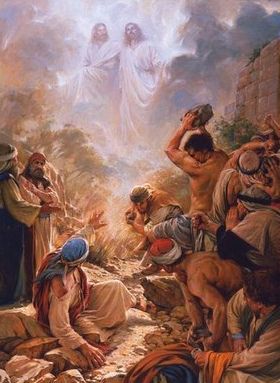
    the acts of Saul begin as witness of the stoning of Stephen in Jerusalem .. and a young man Saul of Tarsus held the cloaks of the men who stoned him
    And they stoned Stephen, calling upon God, and saying, Lord Jesus, receive my spirit.

    The Apostle Paul encourages Timothy to remain strong in the Truth and to teach with a gentleness of words from his humble sanctified spirit.


    NEXT: Danger Within during Difficult Times


    Comment on Scripture – Share the Gospel

  • A First Letter to the Corinthians Intro

    A First Letter to the Corinthians Intro

    in the year of our Lord ano Domini 55 [A.D. 55]

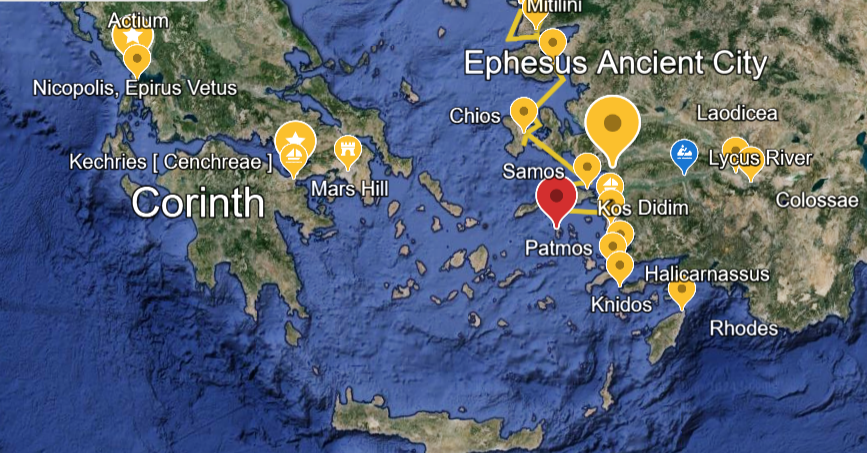
    & in the context of the culture of Corinth


    Intro

    PREVIOUSLY in this Talk of Jesus series from CHURCH LETTERS - IS HE WRITING TO ME? we have glanced at a few of Paul's LETTERS (Epistles) to the Church written during his just completed missionary journeys. 

    TODAY we continue with a brief look back at more letters already sent to the churches.
    And God wrought special miracles by the hands of Paul: Acts 19:11 ASV graphic map of Third Missionary Journey of Paul

    WHAT THE CHURCH HAS READ SO FAR:

    Just a reminder that all dates from reliable sources may vary but are used for chronological context only.
    • A.D. 49 – JAMES, the half-brother of Jesus and leader of the church in Jerusalem writes his LETTER
      • James also sends out a letter to the churches concerning gentiles from the Council in Jerusalem.
    • A.D. 49 – Paul writes his letter to the Galatians (actually, several new churches in Galatia)
    • A.D. 50 – 1 THESSALONIANS
    • A.D. 51 – 2 THESSALONIANS

    • during the A.D. 50’s or A.D. 60’s (actual date unknown) – The GOSPEL OF MARK

    1:1 Ἀρχὴ τοῦ εὐαγγελίου Ἰησοῦ Χριστοῦ υἱοῦ τοῦ θεοῦ

    The beginning of the gospel of Jesus Christ, the Son of God – Mark 1:1

    Consider the possibility that parts of the Gospel of John Mark, who had accompanied his uncle Barnabas and the Apostle Paul to Cypress, MAY HAVE been known even in Corinth where Paul has already travelled and whose FIRST LETTER we are about to examine.

    The GREAT COMMISSION of JESUS CHRIST to the CHURCH is recorded in the Gospel of Mark 16:15

    view of earth from moon

    1 Corinthians:

    This epistle was most likely written in the first half of A.D. 55 from Ephesus (16:8, 9, 19) while Paul was on his third missionary journey. The apostle intended to remain on at Ephesus to complete his 3 year stay (Acts 20:31) until Pentecost (May/June) A.D. 55 (16:8). Then he hoped to winter (A.D. 55–56) at Corinth (16:6; Acts 20:2). His departure for Corinth was anticipated even as he wrote (4:19; 11:34; 16:8).

    John MacArthur :: Bible Introductions – 1 Corinthians

    Paulus vocatus apostolus Christi Iesu per voluntatem Dei et Sosthenes frater

    1 Corinthios (1 Corinthians) 1 :: Latin Vulgate (VUL)

    in the context of the culture of Corinth

    CORINTH, ACHAIA is ROMAN; not Macedonian (as in the former Empire of Alexander the Great).

    Neither is the large city of Corinth simply Greek, as in ‘ancient Greece’ with ancient Athens whose glory had long ago been reduced to ruins.

    In 146 BC, the battle of Corinth signified a defining moment in the history of ancient Greece. Situated on the narrow strip of land connecting the Peloponnese to the mainland of Greece, Corinth was a city-state with a significant strategic and economic position.

    source:

    The language of Greek (thanks to the Great Macedonian Alexander) has become the international language of the Roman Empire.

    So in Corinth, Philippi, Ephesus, Antioch and even in Jerusalem the GOOD NEWS and Epistles [Letters] typically were written and read in GREEK.

    Παῦλος κλητὸς ἀπόστολος Ἰησοῦ Χριστοῦ διὰ θελήματος θεοῦ καὶ Σωσθένης ὁ ἀδελφός

    Α΄ Κορινθίους (1 Corinthians) 1 :: Textus Receptus (TR)

    Paulos klētos apostolos Jēsous Christos dia thelēma theos kai Sōsthenēs ho adelphos;

    To the church of God which is at Corinth,

    to those who are sanctified in Christ Jesus, called to be saints,

    with all who in every place call on the name of Jesus Christ our Lord, both theirs and ours:

    1 Corinthians 1:2 NKJV

    Here in CORINTH we immediately read the opening of Paul’s Epistle written in Greek to the CHURCH, beginning with the Apostle’s universal greeting to ALL and specifically to the saints separated to the calling of Christ Jesus our Lord.

    Paul had been there and wrote back to encourage these Christians in Corinth.

    See if this A.D. first century city of CORINTH sounds vaguely familiar to any city of destruction in our 21st century the Common Era.


    Once again, the commentary of John Macarthur on the culture of Corinth.

    Even by the pagan standards of its own culture, Corinth became so morally corrupt that its very name became synonymous with debauchery and moral depravity.

    To “corinthianize” came to represent gross immorality and drunken debauchery. In 6:9, 10, Paul lists some of the specific sins for which the city was noted and which formerly had characterized many believers in the church there.

    Tragically, some of the worst sins were still found among some church members.

    John Macarthur Commentary – the Background and Setting of Corinth

    Here the Apostle writes to a chosen few SAVED from the surrounding sinful culture of CORINTH (and most every other city in their culturally correct Roman Empire) in a CHURCH separated in worship yet living and working with all of those destined to the wrath of God’s punishment.

    These Corinthian Christians were taught and sought to live in complete contrast to sinful lifestyles hopefully left behind. 

    Later in his letter Paul will describe their love [ ἀγάπη ] more fully.

    1 Corinthians 13:4-8a on LOVE of the Christian who follows Jesus Christ

    Although some contemporary Christians include parts of Paul’s list of LOVE in ceremonies of Christian marriage, the love of which Paul writes is not romantic or specifically marital in any way.

    These CORINTHIANS were recognized in the city for their uniquely personal LOVE –

    ἀγάπη – agapē love,

    sometimes translated as CHARITY for each other and for others.


    Their agapē LOVE stood against a CULTURE OF SIN characterized in acorinthianizedcity, fallen nation or evil empire.


    Paul later writes what he knows of their Corinthian challenges warning:

    Or do you not know that the unrighteous will not inherit the kingdom of God?

    Do not be deceived; 

    .. neither the sexually immoral, nor idolaters, nor adulterers, nor effeminate, nor homosexuals, nor thieves, nor the greedy, nor drunkards, nor revilers, nor swindlers, will inherit the kingdom of God.

    And such were some of you…

    1 Corinthians 6:9-11 excerpt LSB

    Starting with Encouragement

    Paul begins his Epistle with an agape-rooted encouragement.

    Grace to you and peace from God our Father and the Lord Jesus Christ.

    Grace, for which Christians should be so well recognized, written χάρις in Greek charis is:

    • that which affords joy, pleasure, delight, sweetness, charm, loveliness: grace of speech
    • good will, loving-kindness, favour
    • of the merciful kindness by which God, exerting his holy influence upon souls, turns them to Christ, keeps, strengthens, increases them in Christian faith, knowledge, affection, and kindles them to the exercise of the Christian virtues
    CAN YOU THINK OF ANY GREETING WHICH ENCOURAGES MORE THAN 'GRACE?'

    I thank my God always concerning you for the grace of God which was given you in Christ Jesus, that in everything you were enriched in Him, in all word and all knowledge,
    even as the witness about Christ was confirmed in you, so that you are not lacking in any gift, eagerly awaiting the revelation of our Lord Jesus Christ, who will also confirm you to the end, beyond reproach in the day of our Lord Jesus Christ.

    Paul practically embraces these Corinthian believers in a personal prayer written for them.

    Could any introduction of LOVE and Grace be more encouraging?

    God is faithful, through whom you were called into fellowship with His Son, Jesus Christ our Lord.

    Paul’s first letter to the Corinthians 1:9 LSB [in context of 1:3-9]
    Theos is faithful, through Whom you were kaleō into koinōnia with His Son Ἰησοῦς Χριστός [iēsous christos] our kyrios.

    *Linked definitions of GREEK words from 1 Corinthians 1:9 from BlueLetterBible.org

    Reintroducing our Lord

    Paul begins his letter to a beloved church in a city caught-up in the sins of SELF and worshipping multiple gods of ME with encouragement in the Lord Jesus Christ.

    In the Apostle Paul’s two Epistles to the Corinthians he uses:

    • iēsous – 45x
    • christos – 111x
    • kyrios – 95x
    • θεόςtheos – an amazing 185x
    - king - only once in his second letter & not referring to Jesus
    - prophet - prophētēs - only once but referring to gifts of the saints
    - priest not at all in writing to the Corinthians

    TO:

    THOSE WHO HAVE BEEN SANCTIFIED ἁγιάζω – hagiazō – Paul uses this four times in this letter.

    Are YOU sanctified?

    ἅγιοςagios – sacred (physically, pure, morally blameless or religious, ceremonially, consecrated):—(most) holy (one, thing), saint.

    That’s what the apostle of Jesus Christ by the will of God asks the church of God which is at Corinth.

    (It's a good question for those claiming Jesus Christ facing a refining and sanctification of our sinful mortal flesh.)

    The Apostle Paul refers to the church as SAINTS, a most holy thing, TWENTY TIMES in his epistles to the Corinthians including his encouragement of the church in this introduction.

    To the church of God in Corinth, to those sanctified in Christ Jesus and called to be his holy people, together with all those everywhere who call on the name of our Lord Jesus Christ—their Lord and ours:

    τῇ ἐκκλησίᾳ τοῦ θεοῦ τῇ οὔσῃ ἐν Κορίνθῳ ἡγιασμένοις ἐν Χριστῷ Ἰησοῦ κλητοῖς ἁγίοις σὺν πᾶσιν τοῖς ἐπικαλουμένοις τὸ ὄνομα τοῦ κυρίου ἡμῶν Ἰησοῦ Χριστοῦ ἐν παντὶ τόπῳ αὐτῶν τε καὶ ἡμῶν·
    1 Corinthians 1:2 NIV, TR –

    The Apostle Paul has many more things to write to the Corinthians (and to you, God-willing).

    To be continued…

    Talk of JESUS . com

    Comment on Scripture – Share the Gospel

  • Hebrews – 2 – Pioneer of Perfect Salvation

    In bringing many sons and daughters to glory, it was fitting that God, for whom and through whom everything exists, should make the pioneer of their salvation perfect through what he suffered.

    Hebrews 2:10 NIV

    But we see Jesus… Hebrews 2:9a

    The author begins his letter to his Jewish brothers stating that G_d’s final word is through the Son, not angels or prophets.

    Previously the author of Hebrews has made a case through scripture that Jesus, the Son of God, is higher than the angels.

    Heir of all things

    Who has ascended into heaven and descended?
    Who has gathered the wind in His fists?
    Who has wrapped the waters in His garment?
    Who has established all the ends of the earth?
    What is His name or His son’s name?
    Surely you know!

    Proverbs 30:4 NASB

    Continuing in our study of Hebrews, a letter authored to first century Jews, we now continue the second chapter after what we covered previously in the beginning verses 1-9 in Hebrew 2 – Pay Attention.

    Fitting and proper perfection

    Are you a perfect Jew?

    Or more to a personal point, am I a perfect Christian?

    Of course not.

    So how do we have any chutzpah outside of the Messiah Jesus to say that we may be accepted into eternal life by the Lord? This is the issue of salvation the writer of Hebrews takes on here.

    Hebrews 2:

    For it was bekavod (fitting, proper) for him, for whom are all things and through whom are all things, in bringing banim rabbim (many sons) to kavod, to bring to shleimut (perfection, completion) the Rosh (Head) and Mekhonen (Founder) of their Yeshua’at Hashem through yissurim (suffering).

    Hebrews 2:10 Orthodox Jewish Bible

    Most Christians lack a full understanding of many terms of Hebrew origin like perfection, author, purification and redemption. I am neither a Torah trained Rabbi nor Messianic Jew, but further readings of Paul‘s letters will help you to understand an academic Jewish approach to some of these terms.

    10 – It was fitting for Him

    Various translations of πρέπω read: it became Him, it was bekavod, it was fitting, it was entirely appropriate – the concept that God does what is right and perfect. Jews and Christians must agree that man has a tendency to weigh perfection incorrectly.

    כָּֽל־דֶּרֶךְ־אִישׁ יָשָׁר בְּעֵינָיו וְתֹכֵן לִבֹּות יְהוָֽה׃

    עֲשֹׂה צְדָקָה וּמִשְׁפָּט נִבְחָר לַיהוָה מִזָּֽבַח׃

    Proverbs 21:2,3

    in bringing many sons

    “Many sons – πολύς υἱός speaks of multitudes and not specifically men (as opposed to women) or of a specific son. Think of the beneficiary as humanity, rather than all creation or even the Creator Himself. And what is the benefit – what is our reward?

    unto glory

    “εἰςδόξα – eis doxa – To glory or toward glory.

    Gloria Patri

    Now glory means many things to different people, so let’s be clear in our completed understanding of doxa, as in ‘doxology.’ Yes, praise of God or of a man.

    Glory becomes a Biblical description of the brightness of God, or of the sun, moon, stars, angels or an object; implying magnificence, excellence, preeminence, dignity, grace and majesty.

    God is unsurpassed glory! A higher indescribable brightness. Yet the glory of God has a contrasting glory of which we seldom speak.

    Doxa in Greek translates as an opinion, judgment, view; therefore our human opinion or estimate of someone or something, whether good or bad, is a glory or judgement – Biblically of God, a Most High Glory.

    to perfect

    τελειόω – to complete (perfect), to bring to the end (goal) proposed, to accomplish or bring to a close, a fulfillment by event of the prophecies of the scriptures.

    לָכֵן אֲחַלֶּק־לֹו בָרַבִּים וְאֶת־עֲצוּמִים יְחַלֵּק שָׁלָל תַּחַת אֲשֶׁר הֶעֱרָה לַמָּוֶת נַפְשֹׁו וְאֶת־פֹּשְׁעִים נִמְנָה וְהוּא חֵטְא־רַבִּים נָשָׂא וְלַפֹּשְׁעִים יַפְגִּֽיעַ׃ ס

    Isaiah 53:12

    their head and founder

    We must, at some point in our lives, confess that some have authority over us. (This is assumed in a Biblical-based Hebrew culture.) Current authority, previous authority and a succession of authority all come into play.

    Abraham, Israel, Moses, David and family patriarchs may all be mentioned as a head or founding father of Jews. The Lord granted both His Authority and succession through them. Here the author of Hebrews points to their Higher Authority.

    ἀρχηγός – archēgos implies one that takes the lead in any thing and thus affords an example, a predecessor in a matter, pioneer. Jesus, therefore, becomes a captain or founder, a chief leader or Prince over these who followed.

    Within the same verse His origin was established as ‘Him, for whom are all things, and through whom are all things’… or other translations read: ‘God—for whom and through whom all things exist—...’ Clearly, the Son of God IS God! Jesus IS before all founders and over all authority.

    of their salvation

    Two questions come immediately to mind:

    1. What is salvation?
    2. Whose salvation? (Or who can be saved?)

    σωτηρία sōtēria –Salvation, in Greek, the common language of first century Judea and much of the Roman Empire, refers to deliverance, preservation, safety, even from molestation by one’s enemies. A Roman understanding of sōtēria could have viewed a “savior” as a threat to their own authority.

    In an ethical sense, that which concludes to the soul’s safety, of Messianic salvation.

    יָשַׁע – yasha` is the Hebrew concept. Isaiah asks,

    פָּגַ֤עְתָּ אֶת־שָׂשׂ֙ וְעֹ֣שֵׂה צֶ֔דֶק בִּדְרָכֶ֖יךָ יִזְכְּר֑וּךָ הֵן־אַתָּ֤ה קָצַ֨פְתָּ֙ וַֽנֶּחֱטָ֔א בָּהֶ֥ם עֹולָ֖ם וְנִוָּשֵֽׁעַ׃

    How can we be saved if we remain in our sins?

    Isaiah 64:5 CSB

    The question of who can be saved is one of some debate, which we will not take on today. Since the writer of Hebrews refers to the Son, the Messiah, as God in this introductory passage, we will briefly examine His own answer to this question.

    When the disciples heard this, they were utterly astonished and asked, “Then who can be saved? ”

    Matthew 19:25 CSB

    The Jewish Apostle and tax collector relates consecutive stories about money, the rich and salvation, asking the Messiah who can be saved. Hear His answer:

    26 Jesus looked at them and said, “With man this is impossible, but with God all things are possible.”

    Matthew 19:26 CSB

    Not even an Apostle or rich ruler can earn salvation or buy perfection. Yet God the Father has made a way for the completion of sinful man.

    through sufferings.

    διά dia πάθημα pathēma

    We hesitate here, even that the Messiah must suffer, let alone that we must in death. Yet the meaning is clear: that which one suffers or has suffered. We shrink from some of the descriptions of sufferings: misfortune, calamity, evil, affliction.

    Many of us have experienced some of the afflictions which Christians must undergo. And we know we cannot endure that with the Messiah suffered for our sins as a Sacrifice painfully crucified on the Cross.

    Hebrews and gentiles know that in perfection a price must be paid for sin.

    Sanctification – ἁγιάζω

    To sanctify is to purify, separating from the profane and dedicating or consecrating to a Holy God.

    How can a sinner be consecrated to the Lord God?

    The author of Hebrews continues by assuring us that the Messiah Jesus completed our sanctification and He, the crucified Son of Man calls us brothers (or sisters). What undue grace and love of those of the world. And grace for both Jew and gentile, grace for those of the first century and sinners of this twenty-first century.

    Once again the writer of Hebrews quotes familiar scripture, even the very song
    from Psalm 22 יְהוֹשׁוּעַ Yĕhowshuwa` cried out from the cross! He also quotes the historical record of Samuel and the prophet Isaiah.

    Again, I will trust in him. And again, Here I am with the children God gave me.

    Hebrews 2:13 CSB

    The Lord God has become a personal God on the Cross!

    וְה֥וּא כֹהֵ֖ן לְאֵ֥ל עֶלְיֹֽון׃

    a Priest of G_d Most High

    The writer of Hebrews closes this section about Jesus becoming our Pioneer of Perfection with explanation why the Son of Man became a High Priest for us.

    17 Therefore, he had to be like his brothers and sisters in every way, so that he could become a merciful and faithful high priest in matters pertaining to God, to make atonement for the sins of the people.

    More about atonement and our need for this Priest in Hebrews 3.

    To be continued...