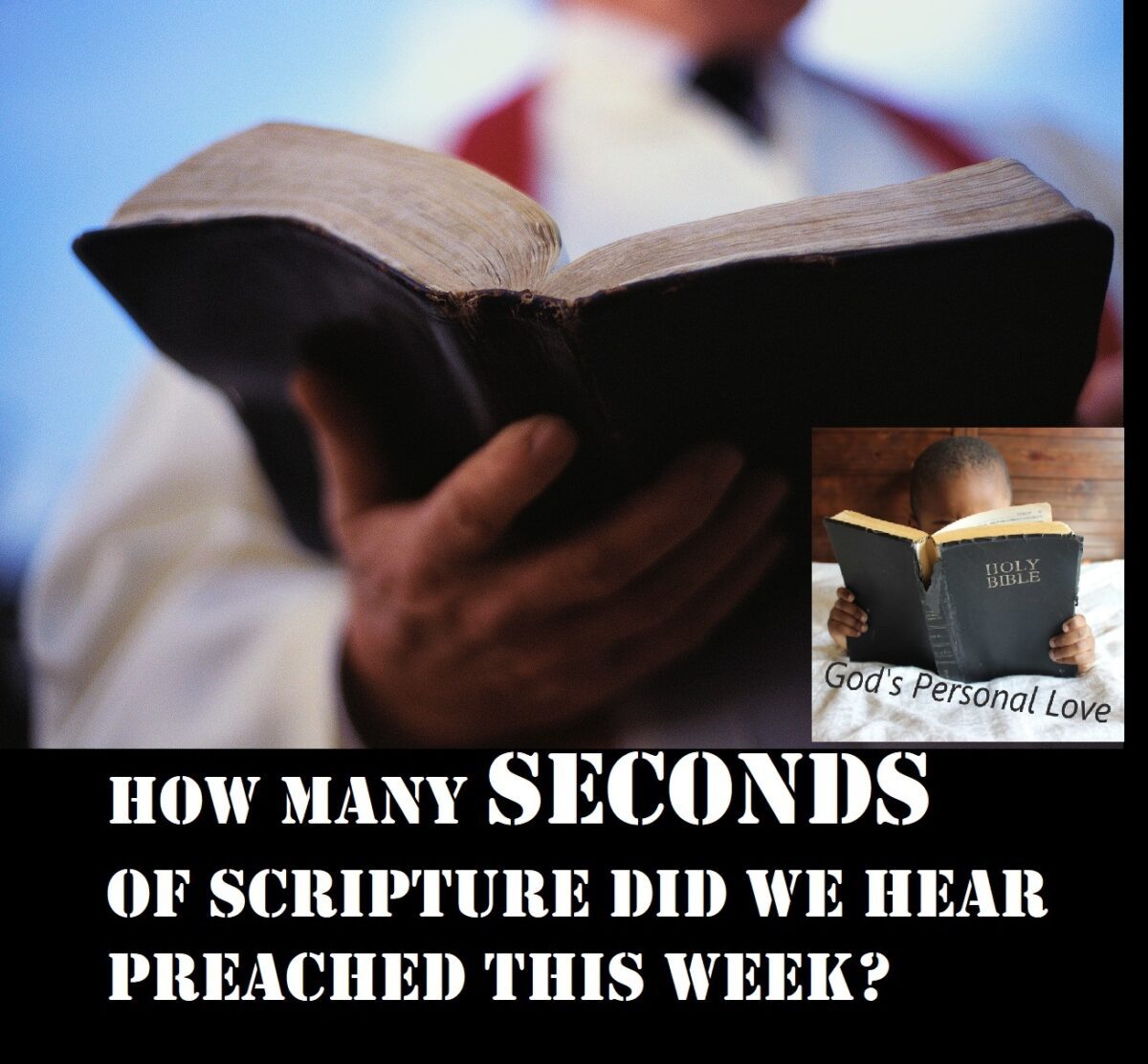
What is perhaps the most divisive issue of the ages? THE AUTHORITY OF SCRIPTURE! – ONLY Scripture.
And GOD SAID..!
Who said, God said this or that?
Must we consult the authority of a man? Dare we follow such a teacher? How can I know IF God really said it and where can I find the TRUTH of what I must do?
“It is written: ‘MAN SHALL NOT LIVE ON BREAD ALONE, BUT ON EVERY WORD THAT COMES OUT OF THE MOUTH OF GOD.’”
Gospel of Matthew 4:4b +Response of the Messiah (Christ) Jesus to satan.
EVERY written WORD! Trouble is (and was) that MOST could not read OR would not read what is written.
So our dilemma becomes faith in the authority of a man reciting AND teaching the WORD OF GOD; that is, SCRIPTURE.
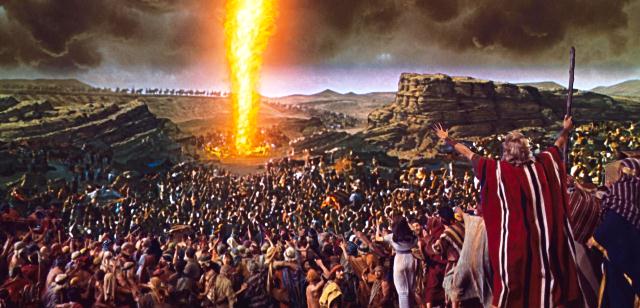
“Assemble the people, the men, the women, the children, and the stranger who is in your town, so that they may hear and learn H3925 [לָמַד ] and fear the LORD your God, and be careful to follow all the words of this Law And their children, who have not known, will hear and learn to fear the LORD your God, as long as you live on the land..
Deuteronomy 31:12-13a NASB20 – The teaching of Moses
Our Lord Jesus Christ raises a crucial question of interpretation by even the highest of religious authorities who study Scripture.
Jesus said to them, “Is this not the reason you are mistaken, that you do not understand the Scriptures nor the power of God?
Gospel of Mark 12:24 NASB20
Do we trust that a man interprets the TRUTH of SCRIPTURE from what is written?
Could it be that YOU do NOT understand the Scriptures? (Do you overlook the power of God in what YOU have misinterpreted from Scripture?)
‘Words [logos egō, λόγος ἐγώ – gk] of Mine’
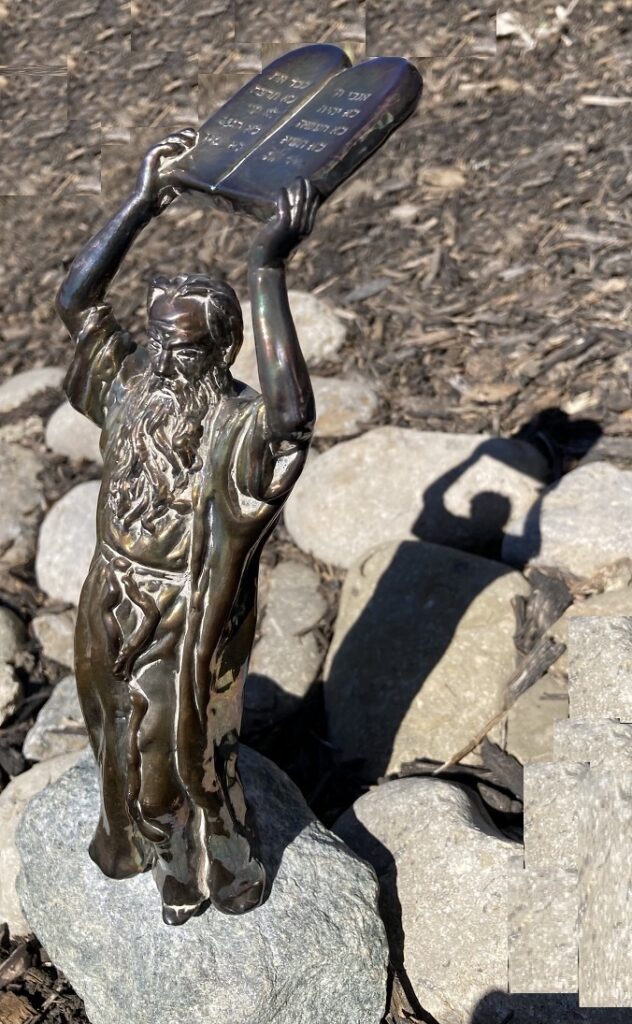
“You shall therefore take these words of mine to heart and to soul; and you shall tie them as a sign on your hand, and they shall be as frontlets on your forehead. – Moses
“And everyone who hears these words of Mine, and does not act on them, will be like a foolish man who built his house on the sand. – Jesus – Parable of the wise and foolish builder
Deuteronomy 11:18; Matthew 7:26 NASB20
Christ Jesus taught His Apostles to build a foundation of the church grounded in Scripture. These disciples of the Teacher recorded in writing the truth of Jesus’ authority.
And it happened when Jesus had finished these words, the crowds were amazed at His teaching, for He was teaching them as one who had authority, and not as their scribes.
Gospels of Matthew [7:28-29 NASB20] and Luke
After His resurrection Scripture records:
And Jesus came up and spoke to them, saying, “All authority in heaven and on earth has been given to Me.
Matthew 28:18 NASB20 – authority
The Apostle John even begins his Gospel by connecting the Written Word {logos} with a Higher Authority of Christ Jesus, Son of Man, the Only Son of God!
In the beginning was the Word, and the Word was with God, and the Word was God.
Gospel of John 1:1 – logos theos – THE HIGHEST AUTHORITY OF SCRIPTURE
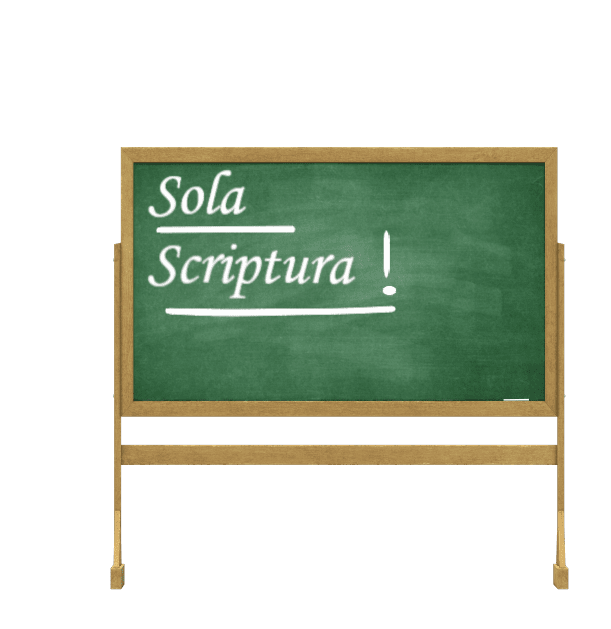
ONLY SCRIPTURE
Along with so many others, I am grateful to God for the teaching ministry of our beloved brother R. C. Sproul and his ongoing work through Ligonier Ministries, without whom this witness of Doctrine would not have been possible. RH

Source: R. C. SPROUL - A life
by STEPHEN J. NICHOLS
(whose 5 Minutes in Church History I also recommend highly)
γραφή – graphē – a thing written
What happens when authoritative men (Shepherds of God’s flock), fail to reiterate SCRIPTURE accurately or teach God’s Holy Word of TRUTH fully?
Jesus IS the Higher Authority who challenged the Scribes and other Shepherds of Israel for this very reason. A remnant of the LORD’s leaders recognized their Messiah from the written word of Scripture. The flocks of the lost sheep of Israel heard the Higher Authority of Jesus and followed Him.
Christ’s resurrection of the true word of God became veiled once more by errant teachings of the Church. As in the days of Ezra the written word of Scripture would be forgotten and men once more had to trust the teachings of religious leaders for centuries. Scripture would once again be discovered by the lost sheep of Christ’s flock with the good news of the printing press.
Then the faithful of the flock protested. The saints of the Church read Scripture for their own understanding through the Holy Spirit as given to them.
The Westminster Confession of Faith (1647)
https://www.ligonier.org/learn/articles/westminster-confession-faith/
IV. The authority of the Holy Scripture, for which it ought to be believed and obeyed, dependeth not upon the testimony of any man, or Church; but wholly upon God (who is truth itself) the author thereof: and therefore it is to be received because it is the Word of God.(i)
(i) II Pet. 1:19, 21; II Tim. 3:16; I John 5:9; I Thess. 2:13.
VI. The whole counsel of God concerning all things necessary for His own glory, man’s salvation, faith, and life, is either expressly set down in Scripture, or by good and necessary consequence may be deduced from Scripture: unto which nothing at any time is to be added, whether by new revelations of the Spirit, or traditions of men.(m)
(m) II Tim. 3:15, 16, 17; Gal. 1:8, 9; II Thess. 2:2.
The Apostle Paul’s Second Letter of instruction to Timothy
and that from childhood you have known the sacred writings which are able to give you the wisdom that leads to salvation through faith which is in Christ Jesus
2 Timothy 3:15
All Scripture is inspired by God and beneficial for teaching, for rebuke, for correction, for training in righteousness so that the man or woman of God may be fully capable, equipped for every good work.
2 Timothy 3:16-17 NASB20
The infallible rule of interpretation of Scripture is the Scripture itself
IX. The infallible rule of interpretation of Scripture is the Scripture itself: and therefore, when there is a question about the true and full sense of any Scripture (which is not manifold, but one), it must be searched and known by other places that speak more clearly.(y)
(y) II Pet. 1:20, 21; Acts 15:15, 16.
X. The supreme judge by which all controversies of religion are to be determined, and all decrees of councils, opinions of ancient writers, doctrines of men, and private spirits, are to be examined; and in whose sentence we are to rest; can be no other but the Holy Spirit speaking in the Scripture.(z)
(z) Matt. 22:29, 31; Eph. 2:20 with Acts 28:25.
Scripture is therefore the perfect and only standard of spiritual truth, revealing infallibly all that we must believe in order to be saved and all that we must do in order to glorify God. That—no more, no less—is what sola Scriptura means. – John MacArthur
“The whole counsel of God, concerning all things necessary for his own glory, man’s salvation, faith, and life, is either expressly set down in scripture, or by good and necessary consequence may be deduced from scripture: unto which nothing at any time is to be added, whether by new revelations of the Spirit, or traditions of men.” —Westminster Confession of Faith
This excerpt is taken from John MacArthur’s contribution in Sola Scriptura: The Protestant Position on the Bible.
Sola Scriptura – Only Scripture
Only Scripture. So what must I do?
Since WE trust the absolute truth of God in ‘what is written,’ and acknowledge that Jesus Christ IS God, we must trust the very Word of God — in writing — and revealed through the Holy Spirit ONLY in SCRIPTURE.
AND the interpretation of Scripture?
- Can a group of learned Christian leaders provide the ONLY interpretation of the word of God?
- Will one High Shepherd of the Church give the ONLY valid application of ‘what is written’ in the Bible?
- And might the Holy Spirit reveal any unseen truth of the Lord Jesus Christ which will overturn ‘what is written’ in Holy Scripture?
According to Christ Jesus and Holy Scripture, CERTAINLY NOT!
For this reason we must pay much closer attention to the things that have been heard, so that we do not drift away from it..
God also testifying with them, both by signs and wonders, and by various works of power and by distributions of the Holy Spirit according to His own will.
Hebrews 2:1 NASB20 READ Heb. 1-4
Who can say what God really said?
Can you? May I?
Leaders of men appointed by God certainly must know better than we how to interpret Scripture (perhaps).
Will encyclical instruction of a Pope or clerical council confirm any new TRUTH of Scripture? Does a mere man enter a place of mystery to contradict what Scripture has already said? Has some new Prophet come along who claimed to unveil ‘what God said?’
OR
Does SCRIPTURE ALONE interpret Scripture?
“The one who believes in Me, as the Scripture said, ‘From his innermost being will flow rivers of living water.’”
But this He said in reference to the Spirit, whom those who believed in Him were to receive..
Gospel of John 7:38039a NASB – Promise of the Christ, Jesus.
And born again believers will receive the Holy Spirit to interpret Scripture. According to Christ Jesus the HOLY SPIRIT will interpret Scripture to ‘those who believe.’
Therefore, once more the Doctrine of Scripture, in order to teach the HIGHEST Authority of God leaves no other choice for one in Christ.
SOLA SCRIPTURA & the Reformation
Do you recognize my DOCTRINE of the BIBLE topic today as Sola Scriptura, one of the Five Solas of the Protestant Reformation? I cannot address the remaining crucial doctrines of the church today, but I will introduce them here.
Five Solas of the Protestant Reformation
"Sola" is Latin meaning "alone" or "only" and the corresponding phrases are:
- Perhaps first in importance is: Sola Fide, by faith alone
- Sola Scriptura, by Scripture alone
- Solus Christus, through Christ alone
- Sola Gratia, by grace alone
- Soli Deo Gloria, glory to God alone
THE Church AND Scripture
Doctrine of the BIBLE
The BIBLE IS HOLY – Spoken by God, Written by Men and confirmed by the Holy Spirit.
SCRIPTURE ONLY interprets Scripture.
The line in the sand delineates two choices:
- SCRIPTURE OR the Authority of the Church
- Scripture AND an AUTHORITY of the church.
NOT any earthly ‘authority‘ AND Scripture
IN the 15th and 16th centuries, Ulrich Zwingli, Martin Luther, Thomas Cranmer, John Calvin and many other faithful saints of the Church sought to reform Roman catholic [καθολικός katholikos ‘universal’] worship and traditions which had become corrupted over the centuries.
As Good News from Gutenberg’s printing press [c. A.D.1440] spread throughout Europe and the world, many saints of the Church could read the BIBLE. The Protestant Reformers, who had hoped to renew the faith of the ‘catholic’ Church, consequently drew their line in the sand on the side of SCRIPTURE ALONE and stood their ground.
Corrupted ‘christian’ churches of recent centuries (Protestant by denomination, but not by DOCTRINE) preach many heresies directly opposed to the ‘written Word of God’ in Scripture.
Conclusion: Only Scripture conveys God’s Highest Authority
The BIBLE IS HOLY! The LORD GOD IS HOLY! God speaks. “It is written..”
Only Scripture – Sola Scriptura, as the Protestant reformers reminded, can assure an accommodating 21st century ‘christian‘ church which struggles to go in to all the world without a Doctrine of the Bible.
No other authority will convince perishing flesh of God’s great mercy on mankind for those who love and worship Him by the grace of our Lord Jesus Christ. For many false teachers and false prophets do mislead the faithful away from God’s word.
The early Creeds of the Church and Confessions of faith all confirm this from Scripture, but only Scripture through the Holy Spirit can reveal God’s will for those who believe.
Only Scripture speaks the very Word of God through the Holy Spirit directly into the hearts of those who the Lord chooses. Believers, Christians – Bible believing Christians who confess Christ crucified, buried, risen in the body and ascended into heaven.
IT IS WRITTEN.. in SCRIPTURE –
WE have it on THE HIGHEST AUTHORITY: The Bible speaks God’s word through the men who authored its Holy Books.
For we did not follow cleverly devised tales when we made known to you the power and coming of our Lord Jesus Christ, but we were eyewitnesses of His majesty...
And so we have the prophetic word made more sure, to which you do well to pay attention as to a lamp shining in a dark place, until the day dawns and the morning star arises in your hearts.
20 But know this first of all, that no prophecy of Scripture becomes a matter of someone’s own interpretation, for no prophecy was ever made by an act of human will, but men moved by the Holy Spirit spoke from God.
Excerpt from the Second Letter of the Apostle Peter to the Church
THE BIBLE IS HOLY – ONLY Scripture – The Highest Authority of GOD!
Let the Christian with ears to hear hear the word of the LORD.
Will a fellow saint say, AMEN?