Tag: Scripture

Scripture is the word commonly used for the Written Word of the Old Testament or Hebrew Bible.

TalkofJESUS.com would like to hear from you via your comments and questions on a NEW Series of brief posts in A.D. 2022.

Short Takes on Scripture – Tell us your thoughts about this brief quote from the Bible.

Sola Scriptura ! written on a blackboard (Latin for ''only scripture'
ONLY Scripture

talkofjesus.com share scripture

  • Hebrews 5- Christ a High Priest

    וְהַכֹּהֵן֩ הַגָּדֹ֨ול מֵאֶחָ֜יו אֲֽשֶׁר־יוּצַ֥ק עַל־רֹאשֹׁ֣ו שֶׁ֤מֶן הַמִּשְׁחָה֙ וּמִלֵּ֣א אֶת־יָדֹ֔ו לִלְבֹּ֖שׁ אֶת־הַבְּגָדִ֑ים אֶת־רֹאשֹׁו֙ לֹ֣א יִפְרָ֔ע וּבְגָדָ֖יו לֹ֥א יִפְרֹֽם׃

    “‘The high priest – who is greater than his brothers, on whose head the anointing oil is poured, who has been ordained to wear the priestly garments – must neither dishevel the hair of his head nor tear his garments.

    Leviticus 21:10 WLC NET

    The High Priest – a greater man

    If you have been following this series on the book of Hebrews you may already be thinking, ‘he just talked about the high priest in Hebrews 3.’ It’s obviously an office of great importance, but what more can be said by the author of Hebrews?

    https://mymorningmeditations.com/2014/07/30/sermon-review-of-the-holy-epistle-to-the-hebrews-the-bypass/
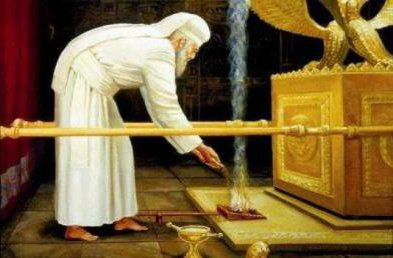
    High Priest in Holy of Holies

    In fact, even though we don’t necessarily revere an anointed priest above priests (or a bishop above bishops) as any more relevant to religion than any man, the LORD established an authority to come closer to Him on behalf of the congregation.

    Therefore the writer continues to make a connection between the high priest and Christ not only here, but also later in Hebrews 7 and 8. The priest and high priest are more than just anointed offices of the Temple and church.

    Hebrews 5 :

    For every high priest taken from among men is appointed in matters pertaining to God for the people, to offer both gifts and sacrifices for sins.

    Hebrews 5:1 CSB

    We don’t really think of a priest in this way anymore, do we?

    Yet if we are not able to stand before the Living God, who can?

    And, in fact, if the Lord anoints a man to ‘offer both gifts and sacrifices’ for our sins, who should he be?

    So why do we need a priest? The writer of Hebrews reminds us:

    2 He is able to deal gently with those who are ignorant and are going astray, since he is also clothed with weakness.

    Think of one of your many sins. Would you want someone who will deal with your punishment and correction gently? And do you hope this intercessor between you and Almighty God in his own weakness will have compassion for you?

    Of course. And he continues:

    3 Because of this, he must make an offering for his own sins as well as for the people.

    Therefore any intercessor for our sins must also offer a personal sacrifice for his own sins. We cannot hide our sins from God. Perhaps the priest and high priest will be even more fearful coming before the judgement seat than you or me.

    4 No one takes this honor on himself; instead, a person is called by God, just as Aaron was.

    Scripture points to Christ as our High Priest

    5 In the same way, Christ did not exalt himself to become a high priest, but God who said to him,

    You are my Son;
    today I have become your Father,

    Hebrews 5:5, Psalm 2

    The writer of Hebrews adds:

    You are a priest forever
    according to the order of Melchizedek.

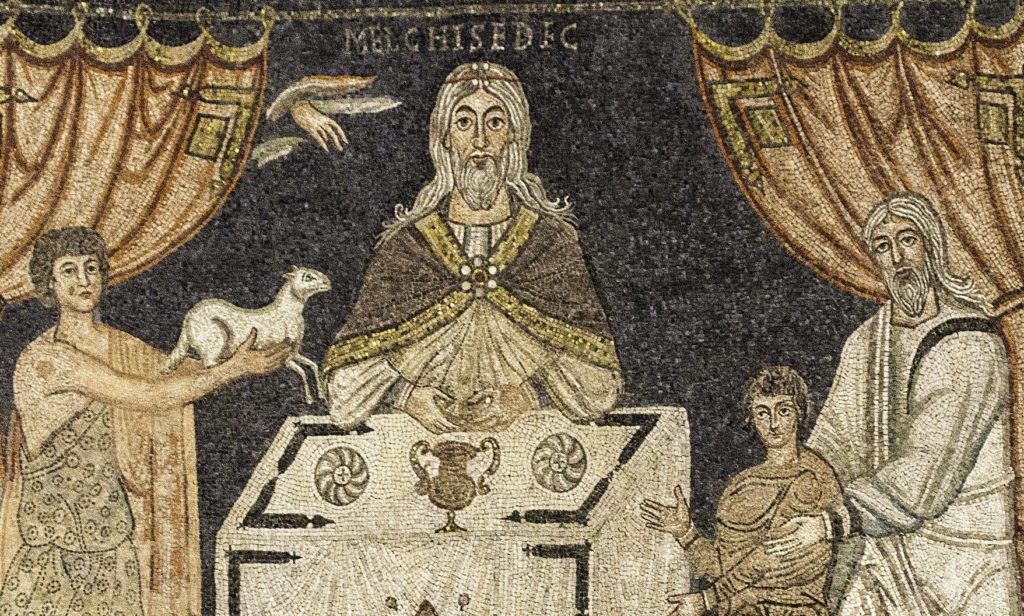
    He speaks not only of the high priest anointed for an appointed time, but of an order of priests before Levi, referring to Melchizedek to whom Abraham gave sacrifices to present to the LORD. (He will elaborate in later chapters.) The priests descended from Israel’s son, Levi, are only human.

    “Bring the tribe of Levi near and present them to the priest Aaron to assist him.

    Numbers 3:6

    The Son Intercessor

    Scriptural reference to Biblical quotes from Genesis and Psalms point to the Messiah, the Son of the Living God, as a first born Priest, even Most High above every High Priest.

    Who is this Son?

    His praises are sung by King David in Psalm 110, where His heart is revealed to those who know scripture.

    Psalm 110:

    110 לְדָוִ֗ד מִ֫זְמ֥וֹר נְאֻ֤ם יְהוָ֨ה׀ לַֽאדֹנִ֗י שֵׁ֥ב לִֽימִינִ֑י עַד־אָשִׁ֥ית אֹ֝יְבֶ֗יךָ הֲדֹ֣ם לְרַגְלֶֽיךָ׃

    This is the declaration of the Lord
    to my Lord:
    “Sit at my right hand
    until I make your enemies your footstool.”

    Examine part of verse 3: רֶחֶם rechem מִשְׁחָר mishchar; from the womb of the dawn. 

    The root word of womb, רָחַם, means to love, to have compassion or be compassionate.

    Can you find any better description of the Son of the Living God?

    And to say from the womb of the dawn may be metaphorical for the dawn of time, the beginning of light, but also derives from another Hebrew root, שָׁחַר, ‘to seek, seek early or earnestly, look early or diligently for.’ Is this not what the Messiah has done for sinful, yet faithful followers?

    He was with God in the beginning. In him was life, and that life was the light of men. He came to his own, and his own people did not receive him. The Word became flesh and dwelt among us. We observed his glory, the glory as the one and only Son from the Father, full of grace and truth.

    John 1:2,4,11, 14 CSB

    The writer refers to Jesus in Hebrews 5:7-10 speaking of His earthly life, yet comparing Him to Melchizedek.

    Our immaturity in Scripture

    Then a challenge. Do you know your Bible?

    Essentially, this is our consideration of the remainder of Hebrews 5.

    “…you have become too lazy to understand. 12 Although by this time you ought to be teachers, you need someone to teach you the basic principles of God’s revelation again. You need milk, not solid food. “

    Of course, this may not apply to all, yet he chastens most of the congregation. And doesn’t it sound so much like our 21st century ‘too long, but not too deep’ sermons?

    Now everyone who lives on milk is inexperienced with the message about righteousness, because he is an infant.

    But solid food is for the mature—for those whose senses have been trained to distinguish between good and evil.

    Hebrews 5:13-14

    Now which are you, beloved brother or sister in Christ, dear friend and heir of our Hebrew heritage?

    Are you lazy for milk or hungry for the mature nourishment of Scripture and the holiness of the LORD?

    To be continued...
  • Disaster From Disobedience, A Savior From Before Eden – 8

    A Savior From Before Eden

    I introduced this series about a savior, Christ Jesus, who had confirmed to the religious authorities: “Before Abraham was, I AM!” Our evidence in Disaster From Disobedience, A Savior From Before Eden – points back toward Jesus, our personal savior, who was here before the first adam. 

    We then examined Adam’s relationship with God both before and after original sin. Disobedience and consequence of sin follows. Brief glances at scripture will confirm man’s disobedience to the Lord God. Just from part 1 of our series scriptures about disobedience include: Exodus, Isaiah, Jeremiah, Daniel and the Gospels of Luke and John.

    Scripture – Reading, Study & Application

    We have spent nearly a month [June 2018] just scratching the surface of man’s disobedience to God. Although I have touched on topics preceding the narrative of Genesis, we have much more to consider.

    Our most recent look at Noah brings us only to Genesis 9, on page 15 of 1804 in my HCSBI could easily envision a ‘Disaster from Disobedience – 30,’ but this is neither a novel nor exhaustive commentary. Today our brief attention spans require both an end to this series and connection to the next. 

    I trust the Lord will lead you deeper into scripture, revealing personal application of good and evil. I encourage you to study books of the New and Old Testaments in depth. To remain obedient to the Lord, we must apply the truth of scripture to our daily lives. Pray for the guidance of the Holy Spirit.

    These serial scriptural posts designed to incite specific study contain frequent links to Bible verses and study. Take a look as you read.

    Before Israel, Before Abraham and After Noah

    Moses’ five books do not and cannot explain everything. Yet in addition to creation, good and evil, sin, law and some subsequent history, parts of the Pentateuch  provide God-given foundation to scripture’s purposeful truth. I would point you to a handful of concepts not to be missed in these scriptures.

    Noah demonstrates one principle on dry land related to knowing good and evil, after the Lord’s cleansing and recreation of mankind. Although related to worship by Abel and Cain, this principle of good remains more important than any historical detail of the flood.

    The rainbow becomes symbol of the Lord’s agreement. Sacrifice by Noah to the Lord is man’s continuing evidence of faithfulness, gratitude and obedience. Worship of the Lord always requires sacrifice. And right relationship with the Lord becomes a most-personal committed relationship.

    The principle of this solemn agreement is known as covenant.

    Covenant, consequential promise to inviolable truth.

    We cannot study it in any detail here, but covenant always connects a sacrifice to an action with a sealed approval. 

    There is no good without God and no disobedience without disbelief.

    Therefore, inviolable truth always relates both to the Lord and our relationship to others of mankind.

    Truth has no foundation without God and human life no purpose without relationship to both our loving Creator and our fellow man.

    Israel, Abraham, Joseph and other Jews

    One concept important to our understanding of the Lord and promise involves the who, what, where and why of God’s chosen. It is a promised land, you  are a chosen people. Again, concepts too important to slight, yet this series’ focus is on broken promises, followed by inclusion of others in the Lord’s redemptive plan.

    (You can learn much more about God’s redemptive plan by study of adoption;  an inclusive personal demonstration of God’s love we will not explore here.)


    Moses explains nations and outlines their genealogies. Israel had been redeemed by the Lord from Egypt, where Joseph became powerful in the land. Understand that Joseph’s father Jacob holds promise of the Lord’s inheritance for his twelve sons. 

    Genesis 28:

    Isaac summoned Jacob, blessed him, and commanded him: “Don’t take a wife from the Canaanite women… 

    3 May God Almighty bless you and make you fruitful and multiply you so that you become an assembly of peoples. 4 May God give you and your offspring the blessing of Abraham so that you may possess the land where you live as a foreigner, the land God gave to Abraham.”

    Doesn’t this blessing sound somewhat familiar, like the Lord’s command to Adam and also to Noah?

    ‘Be fruitful and multiply…

    But Jacob is a liar and a deceiver. For he has purchased the blessing of the firstborn, Esau, who had no regard for the Lord. Now Jacob fears the fate of Abel, murdered at the hands of his brother.

    Although the Lord will drive his descendants into Egypt from the promised land, Jacob will receive an inheritance. 

    10 Jacob left Beer-sheba and went toward Haran. 11 He reached a certain place and spent the night there because the sun had set. He took one of the stones from the place, put it there at his head, and lay down in that place…

    “I am Yahweh, the God of your father Abraham and the God of Isaac. I will give you and your offspring the land that you are now sleeping on. 14 Your offspring will be like the dust of the earth, and you will spread out toward the west, the east, the north, and the south. All the peoples on earth will be blessed through you and your offspring. 15 Look, I am with you and will watch over you wherever you go. I will bring you back to this land, for I will not leave you until I have done what I have promised you.”

    There it is: God’s promise, as Jacob flees this ‘promised land,‘ an oft-repeated scenario in Israel’s history.

    Does it seem a familiar story, a middle-east refugee fleeing danger in one land and living as an alien in another?

    Israel’s Serial Soap Opera

    So Jacob’s story gains in complexity (once again, not examined here) and the drama continues. He has four wives (not recommended) and twelve sons. (Daughters receive no inheritance and seldom receive mentions in these genealogies).

    Many years pass and a married Jacob with children hears of and fears Esau’s approach. Once again Jacob hears from the Lord. In fact, he wrestles with the Lord (a most personal encounter).

    Genesis 32:

    Here is first mention of “Israel,” because the LORD makes Israel Jacob’s new name.

    27 “What is your name?” the man asked.

    “Jacob,” he replied.

    32:28 וַיֹּאמֶר לֹא יַעֲקֹב יֵאָמֵר עֹוד שִׁמְךָ כִּי אִם־יִשְׂרָאֵל כִּֽי־שָׂרִיתָ עִם־אֱלֹהִים וְעִם־אֲנָשִׁים וַתּוּכָֽל׃

    28 “Your name will no longer be Jacob,” He said. “It will be Israel because you have struggled with God and with men and have prevailed.”

    29 Then Jacob asked Him, “Please tell me Your name.”

    But He answered, “Why do you ask My name?” And He blessed him there.

    Before Israel, God Prevails

    Jesus the Messiah proclaimed, “before Abraham was, I AM!” His reference means more than genealogy, place, Law, leadership or religion, per se. 

    Israel’s father was Isaac,  יִצְחָק Yitschaq (laughter), given by the Lord when a childless old couple doubted any possibility of fulfillment of a promise in their old age.  In fact, controversy yet remains about the first born of Abraham and Hagar, the Egyptian. 

    The continuing drama of Genesis 17 could warrant much more study; but let us concede the meaning of Israel’s name. God prevails. Yes, God prevails even when life drives us in a direction away from God’s promises.


    The Lord’s covenant though Abraham is confirmed:

    18 So Abraham said to God, “If only Ishmael were acceptable to You!”

    19 But God said, “No. Your wife Sarah will bear you a son, and you will name him Isaac. I will confirm My covenant with him as an everlasting covenant for his future offspring.

    Before Abraham, many descendants of Noah’s sons, Shem, Ham, and Japheth chose between good and evil as they populated God’s creation. And we will see in our next series a continuing theme of disobedience to God by Israel’s descendants as well.

    Why would the Lord choose Israel as a people led by Him? Remember Jacob’s new name means, God prevails.

    Joseph and Israel’s Eleven Other Sons

    We have not yet spoken of the Law of Moses and its defining choices of good and evil. The sojourn of Israel into Egypt and back is yet another story and illustration that God prevails. 

    If you have never noticed a connection between Genesis and Exodus, you may want to focus on Joseph. We tend to see Israel (Jacob) and then Moses and later David as most important to Israel’s history. Yet we often overlook the role and connection of Israel’s preeminent son, Joseph.

    A continuing theme of man since Adam has been disobedience, a theme which we will continue. Moses will give us God’s Law and Joseph will demonstrate God’s goodness. 


    May the Lord walk with you in the wilderness of your heart.

    To be continued in our next series, God willing…


  • That you may have Certainty – 5 – A King of the Jews

    That you may have Certainty – 5 – A King of the Jews

    King of the Jews

    Herodian coin from Judea with palm branch (right) and wreath (left), 34 AD.

    And Pilate asked him, “Are you the King of the Jews?” And he answered him, “You have said so.” – Luke 23:3

    They had remembered  hearing the indictment of this gentile governor 

    while hiding their faces from his Roman judgment seat. Although complicit in Jesus’ prosecution, an illegitimate half-jew Herodian sat powerless while Roman troops ruled the streets of Jerusalem.

    While Jesus was not the kind of Messiah King they had expected, He did acknowledge the title bestowed by Jews accusing Jesus of treason against Judah and Rome.

    Most amazingly, Jesus has now appeared to these disciples after His resurrection! He continues to appear to hundreds of disciples; here and there, even in the locked rooms of Jerusalem.

    Herod’s rule as tetrarch of Galilee and Peraea, holds no authority over Judea, ruled by Marcus Pontius Pilatus, Roman prefect (governor) under the emperor Tiberius.

    Captive Israel, now named Judea, Samaria, Galilee and Perea had no king, only legions of Rome. Most  people lamented for the days of their strong kings, David and Solomon. Occasionally some rebelled against Rome, led by misguided ambitious young lions in hope of glory.

    Judge or King?

    From the day Israel crossed the Jordan its people encountered many kings of surrounding kingdoms. The Hebrew people had followed the Lord, but judges would become unable to rule this stiff-necked and proud people.

    1 Samuel 7:

    15 Samuel judged Israel all the days of his life. 16 And he went on a circuit year by year to Bethel, Gilgal, and Mizpah. And he judged Israel in all these places. 17 Then he would return to Ramah, for his home was there, and there also he judged Israel. And he built there an altar to the Lord.

    1 Samuel 8:

    “… Now appoint for us a king to judge us like all the nations.”

    More than a thousand years before Pilate judged Judea, here marks the beginning of kings of the Jews.  Samuel was no more inclined to accept a king of the Jews than the Roman governor Pilate.

    6 But the thing displeased Samuel when they said, “Give us a king to judge us.” And Samuel prayed to the Lord. 7 And the Lord said to Samuel,

    “Obey the voice of the people in all that they say to you, for they have not rejected you, but they have rejected me from being king over them.

    8 According to all the deeds that they have done, from the day I brought them up out of Egypt even to this day, forsaking me and serving other gods, so they are also doing to you. 9 Now then, obey their voice; only you shall solemnly warn them and show them the ways of the king who shall reign over them.”

    A King to rule over Israel

    A risen Christ Jesus must have reminded disciples of the Lord’s anointing of their kings. Its truth had not been as their traditions recalled, but rather a concession to the desires of their forefathers.

    1 Samuel 9:

    … “Behold, there is a man of God in this city, and he is a man who is held in honor; all that he says comes true. So now let us go there. Perhaps he can tell us the way we should go.” …

    5 Now the day before Saul came, the Lord had revealed to Samuel: 16 “Tomorrow about this time I will send to you a man from the land of Benjamin, and you shall anoint him to be prince over my people Israel. He shall save my people from the hand of the Philistines. For I have seen my people, because their cry has come to me.” 17 When Samuel saw Saul, the Lord told him, “Here is the man of whom I spoke to you! He it is who shall restrain my people.”

    A Humble King and Triumphant Return

    What was it worshipers near Jerusalem had sung while laying palm branches before Jesus?

    “As for me, I have set my King
    on Zion, my holy hill.” 

    I will tell of the decree:
    The LORD said to me, “You are my Son;
    today I have begotten you.

    Ask of me, and I will make the nations your heritage,
    and the ends of the earth your possession.

    You shall break them with a rod of iron
    and dash them in pieces like a potter’s vessel.”

    Psalm 2:6-9


    It had been a week of anointing for the King of the Jews.

    The Cross had not been the anticipated breaking of Israel’s oppressors, but the Lord’s embracing forgiveness for mankind.

    And now with a resurrection begins the ascent to His Kingdom of righteousness and everlasting reign. Jesus certainly must have repeated stories of the kings and predictions of the Prophets. For the Gospels retell those very scriptures.

    His disciples hear their beloved friend, the risen Messiah, tell why He had to be crucified on a cross and sacrificed for our sins.


    Zechariah 9:9

    Rejoice greatly, O daughter of Zion!
    Shout aloud, O daughter of Jerusalem!
    Behold, your king is coming to you;
    righteous and having salvation is he,
    humble and mounted on a donkey,
    on a colt, the foal of a donkey.


    Come, Lord Jesus. 


    To be continued…