God saw that the light was good; and God separated the light from the darkness.
And God called the dry land “earth,” and the gathering of the waters He called “seas”; and God saw that it was good.
The earth produced vegetation .. according to their kind; and God saw that it was good.
.. day and the night, and to separate the light from the darkness; and God saw that it was good.
And God created the great sea creatures and every living creature that moves.. and every winged bird according to its kind; and God saw that it was good.
God made the animals of the earth according to their kind.. and God saw that it was good.
And God saw all that He had made, and behold, it was very good. ..
Out of the ground the LORD God caused every tree to grow that is pleasing to the sight and good for food; the tree of life was also in the midst of the garden, and the tree of the knowledge of good and evil.
Genesis 2:9 NASB20
The LORD God commanded the man, saying, “From any tree of the garden you may freely eat; but from the tree of the knowledge of good and evil you shall not eat, for on the day that you eat from it you will certainly die.”
Genesis 2:16-17 – Command of the LORD God to the man Adam (which he would disobey)
Is the idea of a good man(or woman) any different in the New Testament?
But Jesus said to him, “Why do you call Me good? No one is good except God alone.
Gospels of Mark 10:18 & Luke 18:19 NASB20
What is your short take on the questions of good and evil?

ASK your question in the Comments below OR give us your short take on how to be good.

ALL COMMENTS ARE WELCOME, but MODERATED. And all links provided for your further study are secure.

Roger@TalkofJESUS.COM
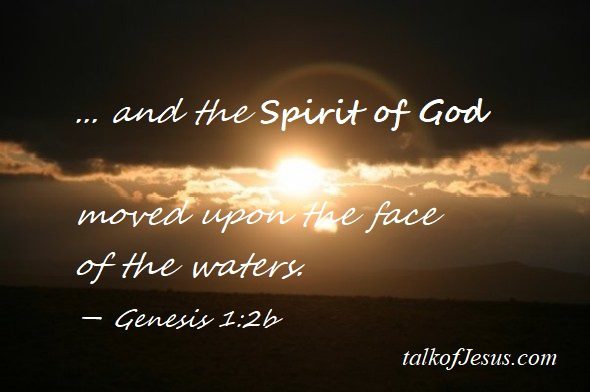
And the earth was a [waste] formless and desolate emptiness, and darkness was over the [primeval ocean] surface of the deep, and the Spirit of God was hovering over the surface of the waters.
Do you believe in God? – אֱלֹהִים
Is your god or are your gods the God of Scripture?
IF SO (even if not), DO YOU FEAR THE ONE WHO IS AND WAS, THE ALMIGHTY THE ETERNAL ONE?
OR do you, a mere MORTAL & created one create a god you DO NOT FEAR?
What if your theory of creation is wrong?
Then might your concept of LIFE, DEATH AND JUDGMENT also be suspect?
Will you bet your ETERAL soul on this failing flesh?
What is your short take on Genesis 1:1-2 and the God (according to Scripture) who caused the biggest bang in the cosmos and created man from the dust of creation?
ASK your question in the Comments below OR give us your short take on the God of Creation.
ALL COMMENTS ARE WELCOME, but MODERATED.And all links provided for your further study are secure.Roger@TalkofJESUS.COM
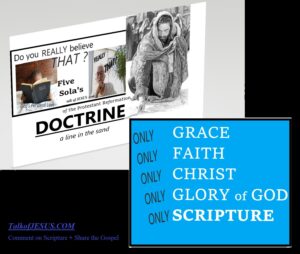
ONLY FIVE – 5 Sola’s of the Protestant Reformation
You likely understand something of the history of the Church, especially if you’ve followed my previous Saturday posts on Doctrine or our current series in ACTS. Sola in celebration of ‘Reformation Day’ of the Protestant Church, I’ll ask: ‘Do you know what Protestants were protesting about the ‘Catholic Church?’
Jesus changes how sinners give glory to God.
The Apostles then set out on the sola journey of the faith grounded in Scripture and in Christ.
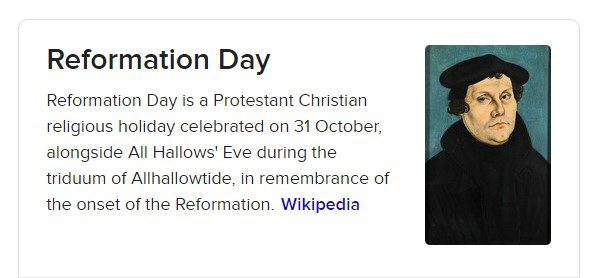
You may know about The Great Schism and certainly know something about a doctrinal line in the sand which marked the beginning of the Protestant Reformation when Martin Luther nailed his 95 Thesesto the church door at Wittenberg, on 31 October, A.D. 1517.
Today, however, I will nail just two doctrinal questions about the teaching of your ‘church’to the door of your thinking:
Do you know the 5 Sola’s of the Protestant Reformation?
How have these five doctrines defined differences even today betweenthose professing other faiths (including Roman Catholics) andProtestants?
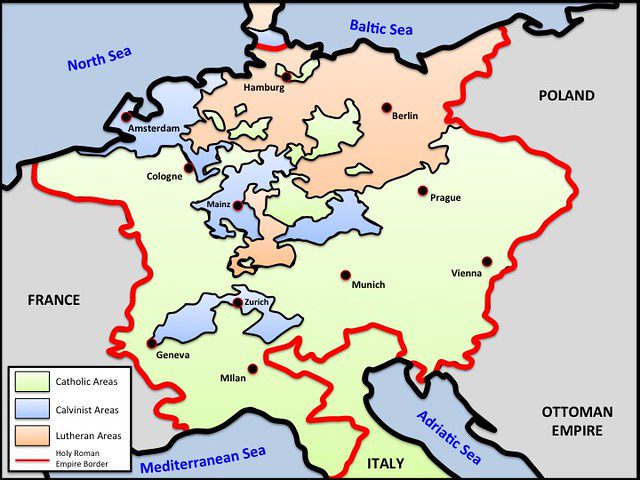
HERE is a bit of researched HISTORY about October 31, in the year of our Lord 1517 AND events leading up to the PROTEST against the authority of 'The Church' from Rome.
Luther
Luther originally had no intention of breaking from the Catholic church, assuming that his call for theological and ecclesiastical reform would be heard, and ordinarily his theses would have been of interest only to professional theologians. However, various political and religious situations of the time, and the fact that printing had been invented, combined to make the theses known throughout Germany within a few weeks. Luther did not give them to the people, although he did send copies to the archbishop of Mainz and to the bishop of Brandenburg. Others, however, translated them into German and had them printed and circulated. Thus, they became a manifesto that turned a protest about an indulgence scandal into the greatest crisis in the history of the Western Christian church, and ultimately Luther and his followers were excommunicated.
Luther’s 95 complaints to the Church concerned indulgences and other imperfections of a politically-driven Papacy. He was by no means the only cleric who objected to Church corruption, defects in doctrine and cardinal crimes.
The Roman Catholic Church survived the fifth century fall of Rome by an authoritarian political intervention of an aristocratic league of bishops led by the Bishop of Rome.
In fact, by the fifteenth century the common people of Europe no longer had to rely on certain corrupt church officials who intentionally misinterpreted the Holy Bible.
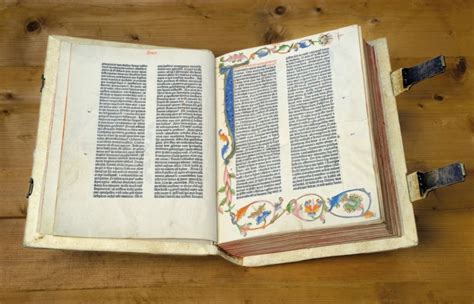
The movable type of Gutenberg’s printing press lit the light of the Renaissance with its rebirth of Scripture in the hands of everyday saints, written in their everyday vernacular rather than ancient Latin.
The Protestant Reformation
“The Reformers did not see themselves as inventors, discoverers, or creators,” according to historian Stephen Nichols. “Instead, they saw their efforts as rediscovery. They weren’t making something from scratch but were reviving what had become dead. They looked back to the Bible and to the apostolic era, as well as to early church fathers such as Augustine (354–430) for the mold by which they could shape the church and re-form it. The Reformers had a saying, ‘Ecclesia reformata, semper reformanda,’ meaning ‘the church reformed, always reforming.’”
It is translated by English refugees and published by John Calvin’s brother-in-law, William Whittingham. The Geneva Bible is the first English Bible to add numbered verses to the chapters. It becomes the Bible of the Protestant Reformation, more popular than the 1611 King James Version for decades after its original release.
To answer my first question to name five solas,first you must know what a sola is.
from Latin:– solus, sola, solum – alone, only, unique.. (similar to ‘solo,’ meaning one);
plural: solas or solae (similar to soli, i.e. multiple soloists)
consequently, each of the five ‘Solas’ has a singular focus.
Sola – a Singular focus
In time, the message of the Reformers became encapsulated in five slogans known as the solas of the Reformation: sola Scriptura (“Scripture alone”), solus Christus (“Christ alone”), sola gratia (“grace alone”), sola fide (“faith alone“), and soli Deo gloria (“the glory of God alone”).
You may encounter the five solas in different orders, but keep in mind the equal importance of EACH singular issue to the reformers of the Church we now call 'Protestants.' - RH
I can only speak briefly to each of these five solas; therefore we will address EACH as part of an ANSWER to my more difficult second question:
How do these five doctrines define differences even today between those professing other faiths and Protestants?
email your answers and questions to Roger@talkofJESUS.com or comment on this post as you share it.
by Scripture alone
Scripture of the HOLY BIBLE:
All Scripture is [God-breathed] inspired by God and beneficial for teaching, for [reprimand or proof] rebuke, for correction, for training in righteousness;
The short answer of Luther and the reformers is that IF HOLY SCRIPTURE is “God-breathed,” THEN it contains the final and only (sola) Authority of what God says; THEREFORE
NO Pope, Bishop, Priest or Preacher may cling to ANY authority to over-rule the Written Word of God.
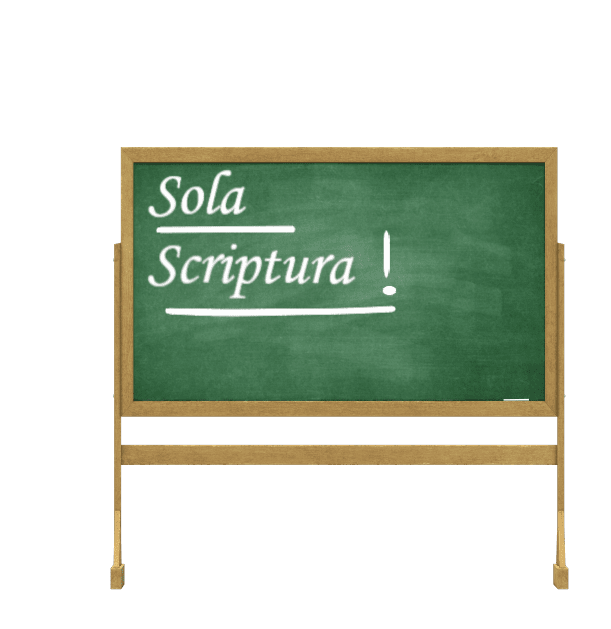
sola Scriptura – ONLY Scripture, by the Holy Spirit of Almighty God can interpret Holy Scripture.
Learn more from my earlier post linked here: sola scriptura = ONLY SCRIPTURE: The Highest Authority of GOD!
* NOTE: For each of the 5 Sola's I will provide secure links for your further study to both the Hebrew & Greek roots containing additional Biblical references using the same word, as well as definitions.
For the LORD God is a sun and a shield. The LORD will give grace and glory. He withholds no good thing from those who walk blamelessly.
Tehillim 84:12 WLC; Psalm 84:11 HNV
Using this same Hebrew word for favor Zechariah prophesies:
“And I will pour out on the house of David and on the inhabitants of Jerusalem the Spirit of grace and of pleading, so that they will look at Me whom they pierced; and they will mourn for Him, like one mourning for an only son, and they will weep bitterly over Him like the bitter weeping over a firstborn.
Christians, of course, bring the Good News [Gospel] of grace through Jesus Christ to the world primarily from the (Greek) writings of the New Testament.
For of His fullness we have all received, and graceG5485 upon graceG5485. For the Law was given through Moses; graceG5485and truth were realized through Jesus Christ.
Gospel of John 1:16-17 NASB20 – His emphasis on grace
The KJV translates Strong’s G5485 in the following manner: GRACE(130x), FAVOR favour (6x), THANKS (4x), THANK (4x), thank (with G2192) (3x)[*quoted below], PLEASURE (2x), miscellaneous (7x).
And I thank [καί echō g2192 – {to have, i.e. to hold} charis G5485 {with grace}] Christ Jesus our Lord [christos iēsous hēmōn kyrios], who hath enabled me, for that he counted me faithful, putting me into the ministry
1 Timothy 1:12KJVΚαὶ Χάριν ἔχω τῷ ἐνδυναμώσαντί με Χριστῷ Ἰησοῦ τῷ κυρίῳ ἡμῶν ὅτι πιστόν με ἡγήσατο θέμενος εἰς διακονίαν – Greek Textus Receptus with Strong’s links from blueletterbible.org
through Faith Alone
Faith is NOT just an unfounded belief, as some would accuse God’s faithful.
conviction of the truth of anything, belief; in the NT of a conviction or belief respecting man’s relationship to God and divine things, generally with the included idea of trust and holy fervour born of faith and joined with it
relating to God, relating to Christ, the religious beliefs of Christians, belief with the predominate idea of trust (or confidence) whether in God or in Christ, springing from faith in the same
fidelity, faithfulness
the character of one who can be relied on
Biblical faith was not changed from the Old Testament to the New or by challenges from faithful Protestant Reformers.
Roger@TalkofJESUS.com
Faithful Roman Catholic clerics like Martin Luther struggled with this.
Old Testament Prophet like Habakkuk and New Testament letters to Rome, Galatia and to the Hebrews (throughout the Roman world)ALL pointed through Scripture that the righteous will live by FAITH!
Even though Catholic Bishops with their emphasis on works (to fund their great cathedrals of worship) may have quoted James as Jesus’ brother writes to the church:
You see that a person is justified by works and not by faith alone.
As a Catholic cleric Luther had a Bible. He recognized that by taking Scripture out of context, FAITH can be discounted to the unread saints of the church in order that ALL will believe the Overseers of Church Authority.
Yet Luther and many more who READ and studied SCRIPTURE understood James’ context and a critical connection between FAITH and works.
For James wrote to saints under persecution, just as the Protestant reformers would soon suffer.
Consider it all joy, my brothers and sisters, when you encounter various trials, knowing that the testing of your faithG4102produces [steadfastness] endurance. And let endurance have its perfect [Lit work] result, so that you may be [mature] perfect and complete, lacking in nothing.
James 1:2-4 NASB20 – Jesus’ half-brother & ‘bond-servant of God and of the Lord Jesus Christ,’ leader of the Jerusalem church
The gloryH3519 of the LORD settled on Mount Sinai, and the cloud covered it for six days; and on the seventh day He called to Moses from the midst of the cloud. And to the eyes of the sons of Israel, the appearance of the gloryH3519 of the LORD was like a consuming fire on the mountain top.
“Has a nation changed gods, When they were not gods? But My people have exchanged their glory For that which is of no benefit. Yermiyahu (Jeremiah) 2:11
primarily denotes “an opinion, estimation, repute;” in the NT, always “good opinion, praise, honor, glory, an appearance commanding respect, magnificence, excellence, manifestation of glory;” hence, of angelic powers, in respect of their state as commanding recognition, “dignities,” 2Pe 2:10; Jud 1:8. See GLORY, HONOR, PRAISE, WORSHIP.
SHALL GLORY be given to a mere man in the pulpit?
To a Bishop over Bishops — a Shepherd of this world — a Saint long gone?
SHALL GLORY be given to a Father confessor —
Or as worship of a mortal mother who served the Son of God?
THESE are the questions of the Protesters and Reformers who asked for Soli Deo gloria – GLORY to GOD ALONE!
“anointed,” translates, in the Sept., the word “Messiah,” a term applied to the priests who were anointed with the hol for today in the city of David, oil, particularly the High Priest, e.g., Lev 4:3, 5, 16.
The prophets are called hoi christoi Theou, "the anointed of God," ..
The title ho Christos, "the Christ," is not used of Christ in the Sept. version of the Inspired Books of the OT. In the NT the word is frequently used with the article, of the Lord Jesus, as an appellative rather than a title, e.g., Mat 2:4; Act 2:31; without the article, Luk 2:11; 23:2; Jhn 1:41. Three times the title was expressly accepted by the Lord Himself, Mat 16:17; Mar 14:61, 62; Jhn 4:26.
It is added as an appellative to the proper name “Jesus,” e.g., Jhn 17:3, the only time when the Lord so spoke of Himself; Act 9:34; 1Cr 3:11; 1Jo 5:6.
It is distinctly a proper name in many passages, whether with the article, e.g., Mat 1:17; 11:2; Rom 7:4; 9:5; 15:19; 1Cr 1:6, or without the article, Mar 9:41; Rom 6:4; 8:9, 17; 1Cr 1:12; Gal 2:16.
The single title Christos is sometimes used without the article to signify the One who by His Holy Spirit and power indwells believers and molds their character in conformity to His likeness, Rom 8:10; Gal 2:20; 4:19; Eph 3:17.
As to the use or absence of the article,
the title with the article specifies the Lord Jesus as “the Christ;”
the title without the article stresses His character and His relationship with believers.
Again, speaking generally, when the title is the subject of a sentence it has the article; when it forms part of the predicate the article is absent. See also JESUS.
These things Jesus spake, and when he had cast up his eyes into heaven [and the eyes lifted up to heaven], he said, Father, the hour cometh, clarify thy Son, that thy Son clarify thee.
John 17:1 Wycliffe Bible
As thou hast given him power over all flesh, that he should give eternal life to all them that thou hast given him.
John 17:2 + 1599 Geneva Bible
And this is life eternal, that they might know thee the only true God, and Jesus Christ, whom thou hast sent.
Excerpts from Scripture in the letter from Paul, an apostle of Christ Jesus, and Timothy,


Note the small 's' in saints, the faithful worshipers in Christ Jesus who are His Church. - RH
To the saints and faithful brothers and sisters in Christ who are at Colossae:
We give thanks to God, the Father of our Lord Jesus Christ, praying always for you, since we heard of your faith in Christ Jesus and the love which you have for all the saints; because of the hope reserved for you in heaven, of which you previously heard in the word of truth, the gospel..
For He rescued us from the domain of darkness, and transferred us to the kingdom of His beloved Son, in whom we have redemption, the forgiveness of sins.
He is the image of the invisible God, the firstborn of all creation:
.. He is before all things, and in Him all things hold together.
Colossians 1:15,17 NASB20
He is also the head of the body, the church;
and He is the beginning,
the firstborn from the dead, so that He Himself will come to have first place in everything.
.. I was made a minister of this church according to the commission from God granted to me for your benefit,
so that I might fully carry out the preaching of the word of God,
that is, the mystery which had been hidden from the past ages and generations,
but now has been revealed to His saints,
to whom God willed to make known what the wealth of the glory of this mystery among the Gentiles is, the mystery that is Christ in you, the hope of glory.
.. Therefore, as you have received Christ Jesus the Lord, so walk in Him, having been firmly rooted and now being built up in Him and established in your faith, just as you were instructed, and overflowing with gratitude.
For in Him all the fullness of Deity dwells in bodily form, and in Him you have been made complete, and He is the head over every ruler and authority..
Therefore, if you have been raised with Christ, keep seeking the things that are above, where Christ is, seated at the right hand of God.. When Christ, who is our life, is revealed, then you also will be revealed with Him in glory.
Let the peace of Christ, to which you were indeed called in one body, rule in your hearts; and be thankful. Let the word of Christ richly dwell within you, with all wisdom teaching and admonishing one another with psalms, hymns, and spiritual songs, singing with thankfulness in your hearts to God.
Colossians 3:15-16 NASB20
“.. specifically seen in Colossians 3 when Paul commands the Church to let the word of Christ dwell in us richly when we meet together, singing psalms, hymns, and spiritual songs.” – Keith Getty
Whatever you do in word or deed, do everything in the name of the Lord Jesus, giving thanks through Him to God the Father.
from the letter to the saints at Collosae 3:17
sola: + by Scripture alone + by Grace Alone + through Faith Alone + to the glory of God Alone + in Christ Alone
The TEACHING & solaDOCTRINES OF GOD, CHRIST, GRACE, FAITH and SCRIPTURE as taught by JESUS and the APOSTLES remain foundational for THE CHURCH.
Amen.
Cookie Consent
We use cookies to improve your experience on our site. By using our site, you consent to cookies.
Used to monitor number of Google Analytics server requests
10 minutes
__utmb
Used to distinguish new sessions and visits. This cookie is set when the GA.js javascript library is loaded and there is no existing __utmb cookie. The cookie is updated every time data is sent to the Google Analytics server.
30 minutes after last activity
__utmc
Used only with old Urchin versions of Google Analytics and not with GA.js. Was used to distinguish between new sessions and visits at the end of a session.
End of session (browser)
__utmz
Contains information about the traffic source or campaign that directed user to the website. The cookie is set when the GA.js javascript is loaded and updated when data is sent to the Google Anaytics server
6 months after last activity
__utmv
Contains custom information set by the web developer via the _setCustomVar method in Google Analytics. This cookie is updated every time new data is sent to the Google Analytics server.
2 years after last activity
__utmx
Used to determine whether a user is included in an A / B or Multivariate test.
18 months
_ga
ID used to identify users
2 years
_gali
Used by Google Analytics to determine which links on a page are being clicked
30 seconds
_ga_
ID used to identify users
2 years
_gid
ID used to identify users for 24 hours after last activity
24 hours
_gat
Used to monitor number of Google Analytics server requests when using Google Tag Manager
1 minute
_gac_
Contains information related to marketing campaigns of the user. These are shared with Google AdWords / Google Ads when the Google Ads and Google Analytics accounts are linked together.