Tag: sea of galilee

  • Reintroducing John – a Biography and Background

    Reintroducing John – a Biography and Background

    Biography of a Man

    I wrestle with my own autobiography, let alone writing about the ancestry of such an important man of God as John.

    We struggle to understand anyone once we read such titles or relational roles of JESUS or any of the Lord’s Apostles.

    For instance, who do you see when I refer to:

    • ‘Jesus’ DISCIPLE John’ or
    • ‘John, one the the TWELVE‘, or
    • even including John with Peter and his older brother James as one of just three disciples in JESUS’ inner circle?
    And that only covers three years of John's life during Jesus' incarnation, overlooking John's earlier time as a disciple of John the Baptist. 

    Call him: SAINT John or John the Elder — give John reverence for receiving the very word of God in the Gospel — look at this man in awe, who later on Patmos was given the Revelation of Jesus Christ as an Elder of the first century Church.

    But when all is said (or even little) about John, he was just a man like us, a man chosen by JESUS CHRIST, the Son of God.

    Picturing John accurately – Painting a True Portrait

    I have searched endlessly for a painting of the Apostle John more truly representing the one Jesus loved at various important times in his long life.

    Of course we have no photo or ‘selfie’ of John from any time.


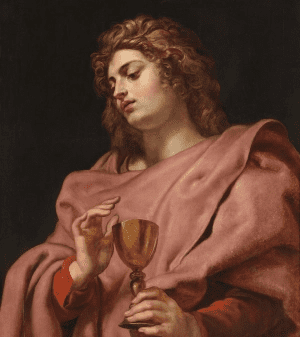
    Some renaissance depictions (often commissioned by the Roman Catholic Church) depict a very young John (even holding a cup of communion) making him appear similar to a French altar boy.

    The Apostle John
    Peter Paul Rubens, 1610-12 A.D.
    Jesus’ description of James and John as, ‘sons of thunder’ suggests two tough Galilean fisherman, tenaciously seeking the Messiah of captive Israel — two disciples of an Elijah-like prophet John the Baptist, who instructed these sons of thunder in the Judean wilderness.

    The young Apostle John, who accompanied Peter to preach in the Temple just after Christ’s ascension, certainly was not so silent as to be overlooked by powerful Jewish leaders, who included this young Disciple ofJesus with Peter in their summons to defend their public witness (or rather be silent about Jesus).

    Both Apostles would be imprisoned for the Gospel and then released by an angel to once again proclaim Jesus as the Messiah to the Jews and the all the world.

    IF YOU can suggest any painting or art which paints a true picture of JOHN at any stage of his life, how about letting us know in a COMMENT following this post. - RH 

    So in order to get a better picture of John, let’s look back at a few brief biographical facts mixed in with some scholarly speculation, hoping to see into the heart and life of the one Jesus loved.’

    Family and Ancestry

    John grew up in a small village (as it happened I did too). Everybody typically knows everyone (and much of everyone’s business). Family, of course, was important to the Jews as our families tend to identify ‘who we are’ to our own neighbors.

    When I was a young man my dad was a volunteer fireman and one of the older firemen always addressed me as, “Chief.” Our family name was attached to the business of Dad and his brother. John was in business with his brother James, both known to all as the sons of Zebedee, head of his family fishing business.

    Ancestry and Connection of Names

    Chief,’ immediately connected me to my dad, our volunteer fire chief and to his father whose name identified Dad’s family business.

    Certainly John’s vocation, faith and identity were rooted in his upbringing and like me, growing up as John the Son of Zebedee would identify Jesus’ Disciple into his early manhood.

    In fact, the younger of Zebedee’s sons probably felt more like ‘the brother of James , son of Zebedee;’ similar to an earlier unnoticed, Son of Jesse not even introduced to an important man such as Samuel.


    About Zebedee:

    Let's connect these family names: 
    • Ζεβεδαῖος – Zebedee
      • From זֶבֶד (H2065) – endowment (or my gift)
    • Ἰάκωβον τὸν τοῦ Ζεβεδαίου – James (son of Zebedee)
      • The same as Ἰακώβ (G2384), Jacob (meaning ‘supplanter’)
    • Ἰωάννης
      • pronounced: ee-o-an’-nace {original Greek doesn’t really sound at all like, “John,” in English}
      • from Hebrew: יוֹחָנָן Yôwchânân, yo-khaw-nawn’; a form of H3076; Jochanan, the name of nine Israelites:—Johanan.
      • John = “Jehovah is a gracious giver”
        • Same name as John son of Zacharias, ‘the Baptist’
        • root meaning: “Jehovah has graced”

    Source: Strong’s Concordance / BlueLetterBible.org


    Later we’ll connect some other Biblical names, but first let’s learn more about the fisherman father of James and John.
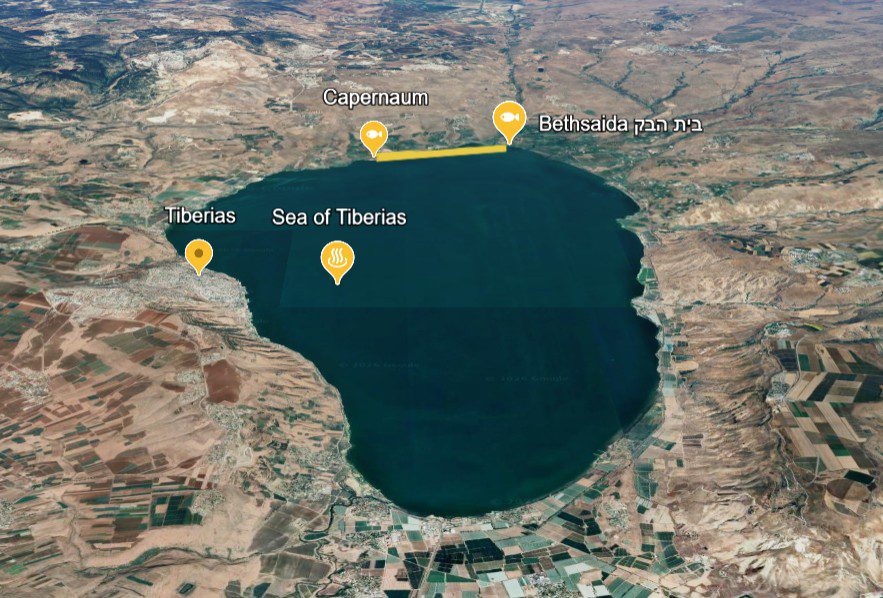
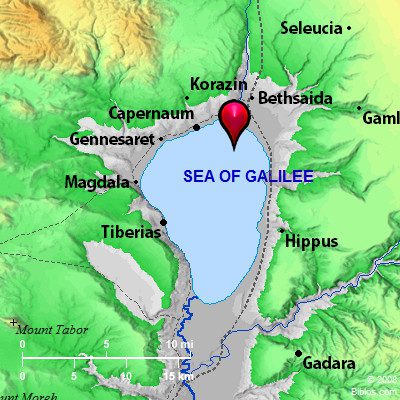
    the ‘Sea of Galilee’

    The Sea of Galilee provided a livelihood for many families, and fishing was a respected trade. Zebedee’s ability to employ hired men suggests a level of affluence and stability, which may have afforded his sons the opportunity to leave and follow Jesus without jeopardizing the family’s welfare.

    source: Biblehub.com

    Sometimes landmarks in the Bible can be as confusing as names, because in context over time the names change.

    Let’s zoom in on the home and livelihood of Zebedee —

    (James and John, Andrew and Simon, hired servants – local carpenters, boat builders, sail and tent makers, and more).

    Many families lived just north of Galilee’s most important body of water where the Jordan River flowed down from inland hills.
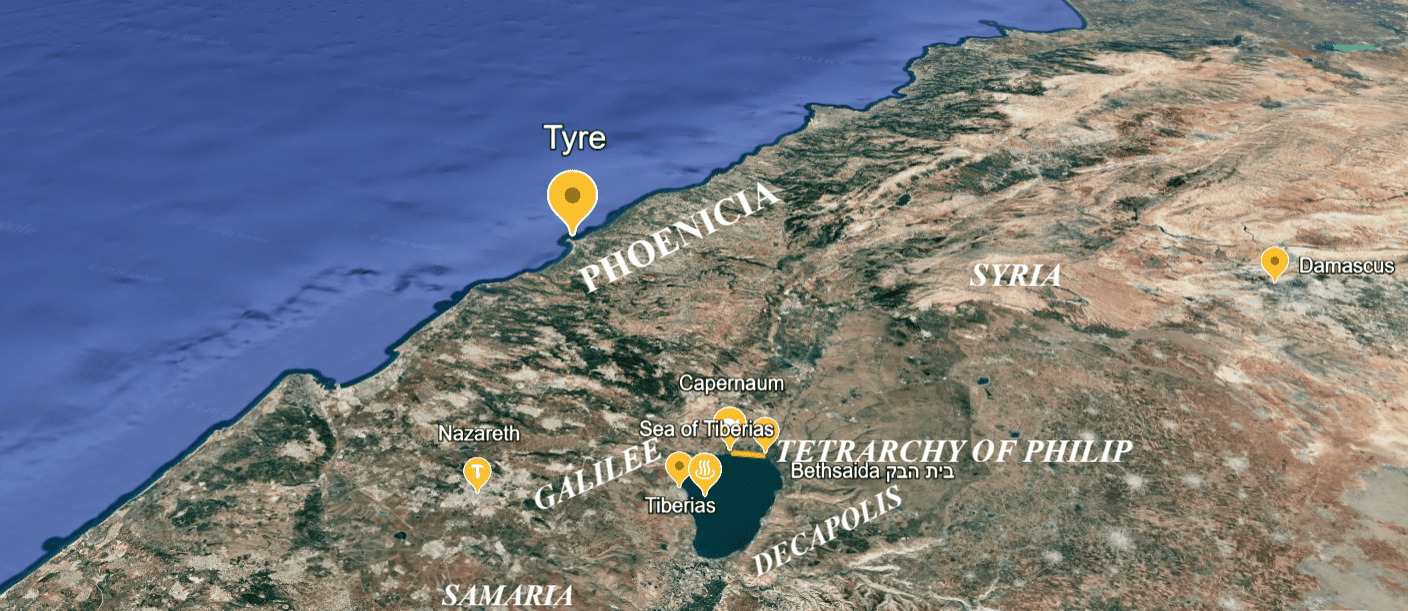
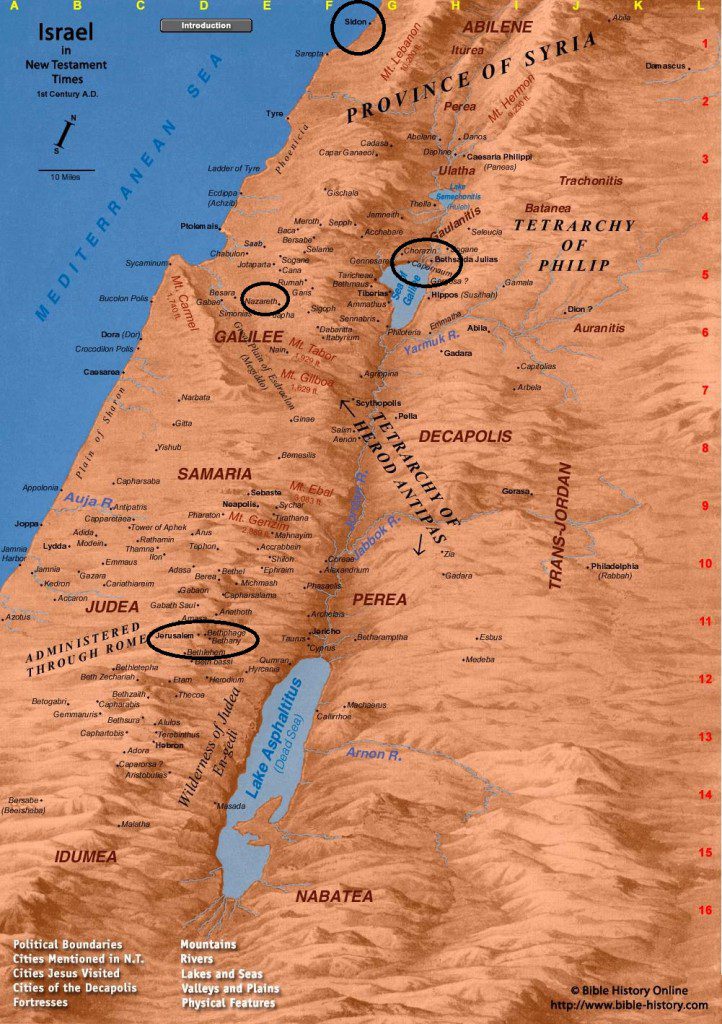
    Note some names of the inland body of water on our map.

    • ‘The sea of Chinnereth,’ Numbers 34:11,
    • ‘The sea of Genesar’
    • ‘The sea of Tiberiah.’
      • Source: BibleHub.com

    Herod Antipas, wanting to make a big name for himself, named this body of water the “Sea of Tiberius” after the Roman Emperor Tiberius Caesar.

    Once it was renamed, it was considered treason against Caesar for a Roman citizen to call the lake anything else.

    Non-Romans, however, were not held to that standard. Because the Jews hated Rome and their occupation of Israel they were not in any hurry to call their lake the Sea of Tiberius. So they continued calling the lake by the name most familiar to them and already widely accepted among the people who lived in the region of Galilee:

    “The Sea of Galilee.”

    source: NTBCStafford.org

    Rome controlled the coasts of the Mediterranean Sea and inland commerce. The strategic importance of the Sea of Galilee held military importance, perhaps even more than Jerusalem.

    Although sudden storms from winds sweeping down upon the sea could make it dangerous even for seasoned fishermen, in fact two other names more accurately described it:

    • Genezareth or Kineret Lake

    The lake has a surface area of 64 square miles .. Extending 13 miles (21 km) from north to south and 7 miles (11 km) from east to west, it is pear-shaped. Its surface elevation was long given as 686 feet (209 metres) below sea level..

    Source: Britannica

    The Sea of Galilee is a FRESH WATER LAKE, the largest in Israel, fed by the Jordan River and undground springs, with its surface ~700 feet below sea level making it the lowest fresh water lake on earth. From this important lake the lower Jordan flows south into the lowest body of water on earth - the Dead Sea. 

    Successful fishing businesses such as Zebedee’s were vital to the Roman army, even Jerusalem in the hills above the Jordan, as well as locally in villages of the rural Galilean hills.

    map of Jordan River and Bethany where John baptized Jesus

    James and John Sons of Zebedee

    When John followed his older brother James to become a disciple of John the Baptist it seems not to have affected the larger merchant enterprise of their father’s fishing business. They may have even traveled to Jerusalem previously with their father to deliver and sell fish to some of Jerusalem’s ruling families.

    Zebedee employed servants in his fishing enterprise and likely worked with other fishing families. Capernaum and Bethsaida are situated strategically (for fishing) less than three miles apart on the north shore of the lake.

    Sons and servants of other fishing enterprises, such as that of Jonah (also: Jonas or John), father of Andrew, who also had followed John the Baptist before becoming Jesus’ first Disciple, certainly all knew each other (as those in small towns tend to do).

    Sons of Salome

    Zebedee was married to Salome, who is believed to have been a follower of Jesus and possibly one of the women who supported His ministry.

    Source: BibleHub.com

    The Gospels of Matthew and Mark mention Salome’s presence along with others at the Cross of Jesus.

    Some commentators speculate that Salome may have been the sister of Mary, mother of Jesus.

    Therefore the soldiers did these things.
    But standing by the cross of Jesus were His mother, and His mother’s sister, Mary the wife of Clopas, and Mary Magdalene.

    Gospel of John 19:25 LSB

    It would be consist with the Apostle’s humility of not mention his own name in his Gospel for John to not mention his own mother by name.

    The Gospels reveal further evidence that Salome (wife of Zebedee) accompanied her sons.

    Then the mother of the sons of Zebedee came to Him with her sons, bowing down and making a request of Him.

    And He said to her, “What do you wish?” She said to Him, “Command that in Your kingdom these two sons of mine may sit one on Your right and one on Your left.”

    Gospel of Matthew 20:20-21 LSB

    John’s early days

    He was possibly born around 6 A.D. in the city of Bethsaida.

    If this is true, he would have been about twenty years old when he and Jesus met for the first time in late 26 A.D. .. What few realize is that Salome and Jesus’ mother Mary were likely sisters.

    “This means that Christ and John were first cousins as far as legal matters were concerned among the Jewish people” (Restoring the Original Bible, pg. 313).

    John’s possible bloodline relationship to Jesus also means that he and is older brother James the Greater (Matthew 4:21) were full cousins to the Lord’s half-brothers James and Jude. Both James and Jude wrote New Testament books and were leaders in the early New Testament church (see Acts 1:14, 15:13).

    source: BibleStudy.org


    John in his 20’s and 30’s

    Everything we read in the Gospels about John, beloved Disciple of Jesus, takes place when John is in his early twenties. Most of what we witness about John from Acts of the Apostles takes place when the Apostle is still in his late twenties or thirties.

    NEXT - We will observe Jesus' young Disciple John from the witness of all four Gospel writers, followed by observations of an Apostle sent out by the risen Christ in ACTS of the Apostles. 

    TalkofJESUS.com earth from space

  • Witnesses to Jesus Risen! – Mary Magdalene

    Witnesses to Jesus Risen! – Mary Magdalene

    John’s Gospel – Witnesses to Jesus’ Resurrection!

    Understanding John’s Good News

    of Christ Crucified, Risen, Ascended & Returning

    Without dwelling on detail, note that:

    • Jesus was crucified around the year AD 30
    • The last surviving Apostle John lives until about AD 90
    • John writes his Gospel to the churches in about AD 85

    Some who witnessed the risen Jesus fifty years earlier still lived! Many more had confirmed the truth of Jesus’ crucifixion and resurrection to their families and nearly everyone else they encountered (the beginning of the great commissionMark 16:15).

    Many of these persecuted saints insistently witnessed Christ Crucified and risen in Body and Spirit to all until their own deaths.

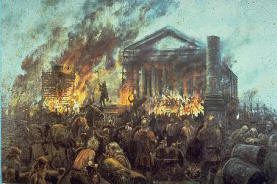
    They too suffered and died, either by the hand of Roman rule or result of persecution by zealous leaders of Jerusalem (until Rome sacked it in AD 70), a major event which had already taken place when John wrote his Gospel, letters and the Revelation of Jesus Christ.

    Fall of Jerusalem

    Today we begin John’s accounts of the Resurrection not chronologically (for the events had already taken place a half-century before), but from the witness of individuals, beginning with Mary Magdalene.

    “..we know not where they have laid him.”

    John 20:

    Now on the first day of the week Mary Magdalene came early to the tomb, while it was still dark, and saw the stone already removed from the tomb.

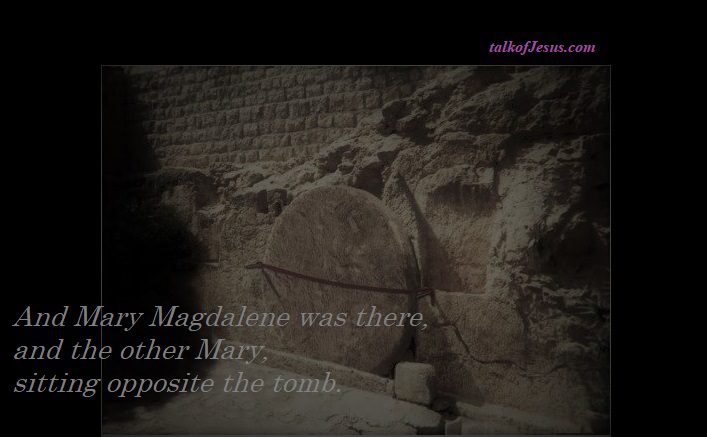
    Recall from before the day of preparation for the Sabbath that Joseph had sealed the tomb. Matthew tells us that as Joseph walked away:

    ‘And there was Mary Magdalene, and the other Mary, sitting over against the sepulcher.’

    sealed tomb of Jesus

    Now, early on the first day of the week, John and Peter first hear Mary’s alarm.

    So she ran and came to Simon Peter and to the other disciple whom Jesus loved, and said to them, 

    They have taken away the Lord out of the sepulchre, and we know not where they have laid him.

    John 20:2b KJV

    Mary the mother of James and John was likely with her once again hoping to finally complete their task of embalming Jesus’ corpse.

    We will forego the likely familiar account of Simon Peter and John for the moment and focus on the witness of Mary Magdalene.

    10 Then the disciples went away again unto their own home.

    Mary Magdalene

    Μαρία Μαγδαληνὴ 

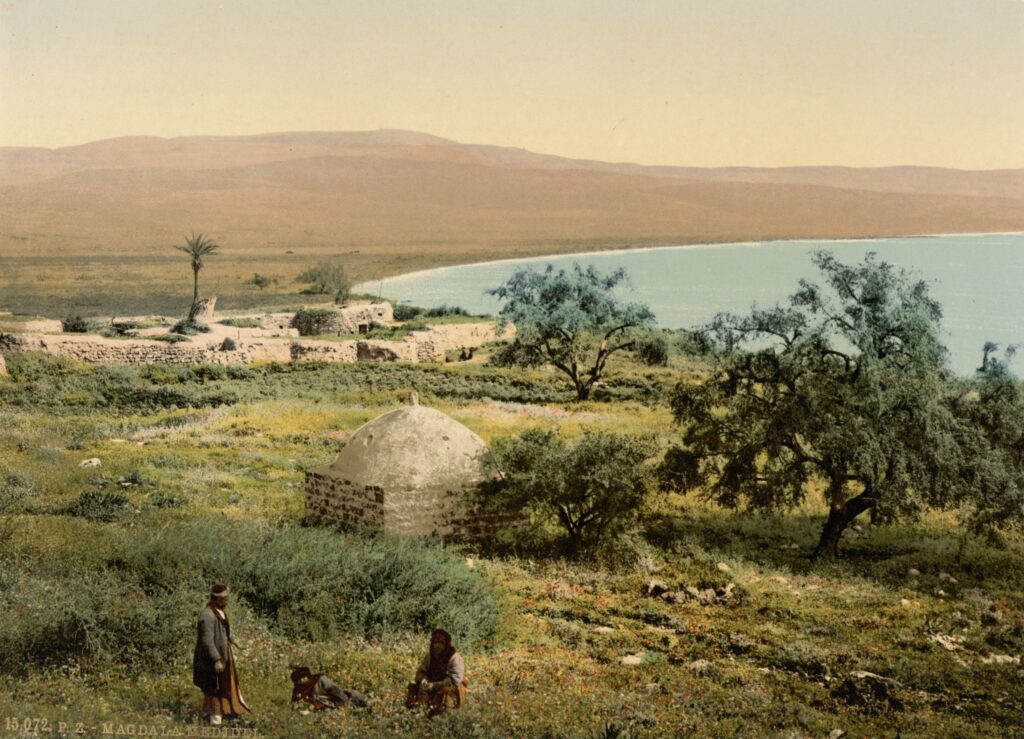
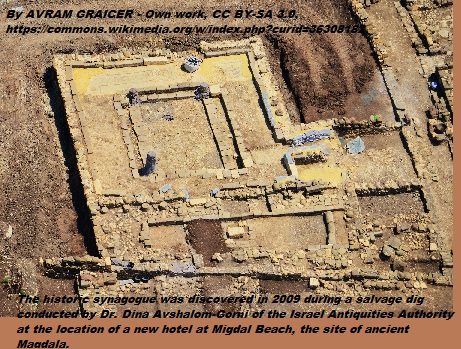
    Mary Magdalene is from the town of Magdala, a fishing town on the western shore of the Sea of Tiberias (Galilee). She is known by several names and sometimes confused with many other Mary’s of the Bible. Here are her common names:

    • Mary of Magdala
    • Miryam from Magdala
    • Maria Magdalene (even Saint Mary, which is not proper)
    • Μαρία ἡ Μαγδαληνὴ
    • also, the “apostle to the apostles,” which inappropriately elevates these important women who followed Christ to ‘Saints.’

    Jesus first encountered her during His teaching in Galilee.

    Luke 7:

    1 When He had completed all His discourse in the hearing of the people, He went to Capernaum.

    (We know it as Jesus’ Sermon on the Mount and Capernaum became Jesus home.)

    And a centurion’s slave, who was highly regarded by him, was sick and about to die. (A local Roman Centurion’s personal servant, perhaps a Jew.)

    When he heard about Jesus, he sent some Jewish elders asking Him to come and save the life of his slave.

    (Here is a Roman Centurion sending an envoy, a sort of ambassador sent from him to Jesus, comprising of Jewish officials of a local synagogue.) We’ll get to the local connection to Mary in a moment.

    7:11 Soon afterwards He went to a city called Nain; and His disciples were going along with Him, accompanied by a large crowd. Now as He approached the gate of the city, a dead man was being carried out, the only son of his mother, and she was a widow; and a sizeable crowd from the city was with her…

    And He came up and touched the coffin; and the bearers came to a halt. And He said, “Young man, I say to you, arise!” The dead man sat up and began to speak. And Jesus gave him back to his mother.

    Fear gripped them all, and they began glorifying God, saying,

    “A great prophet has arisen among us!” and,

    “God has visited His people!”

    Luke 7:16 NASB – reaction of the crowds in Nain after Jesus raised a young man from death

    This report concerning Him went out all over Judea and in all the surrounding district.

    (Reports on into Judea, even though Nain lies in Galilee, north of Samaria, some 144 km or about 90 miles by road from Jerusalem.)

    At that very time He cured many people of diseases and afflictions and evil spirits; and He gave sight to many who were blind.

    Luke 7:21 NASB

    From Magdala to Jerusalem

    Luke 8:1-3

    Soon afterwards, He began going around from one city and village to another, proclaiming and preaching the kingdom of God.

    The twelve were with Him, and also some women who had been healed of evil spirits and sicknesses:

    topical map of Israel from sea of Galilee, valley of the Jordan

    Mary who was called Magdalene, from whom seven demons had gone out, and Joanna the wife of Chuza, Herod’s steward, and Susanna, and many others who were contributing to their support out of their private means.

    .. she brought an alabaster vial of perfume, and standing behind Him at His feet, weeping, she began to wet His feet with her tears, and kept wiping them with the hair of her head, and kissing His feet and anointing them with the perfume.

    Those who were reclining at the table with Him began to say to themselves, “Who is this man who even forgives sins?”Luke 7:49

    John 20:

    10 So the disciples went back again to their homes.

    This continuation in John 20 uses language from multiple versions or translations linked above. - RH

    Jesus’ Resurrection Appearance

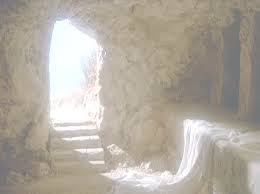
    11 but Miryam stood outside crying. As she cried, she bent down, peered into the tomb, and saw two angels in white sitting where the body of Yeshua had been, one at the head and one at the feet.

    “Why are you crying?” they asked her.

    She said to them, “Because they have taken away my Lord, and I do not know where they put Him.” As she said this, she turned around and saw Yeshua standing there, but she didn’t know it was he.

    15 Jesus said to her, “Woman, why are you weeping? Whom are you seeking?”

    Supposing he was the gardener, she replied, “Sir, if you’ve carried him away, tell me where you’ve put him, and I will take him away.”

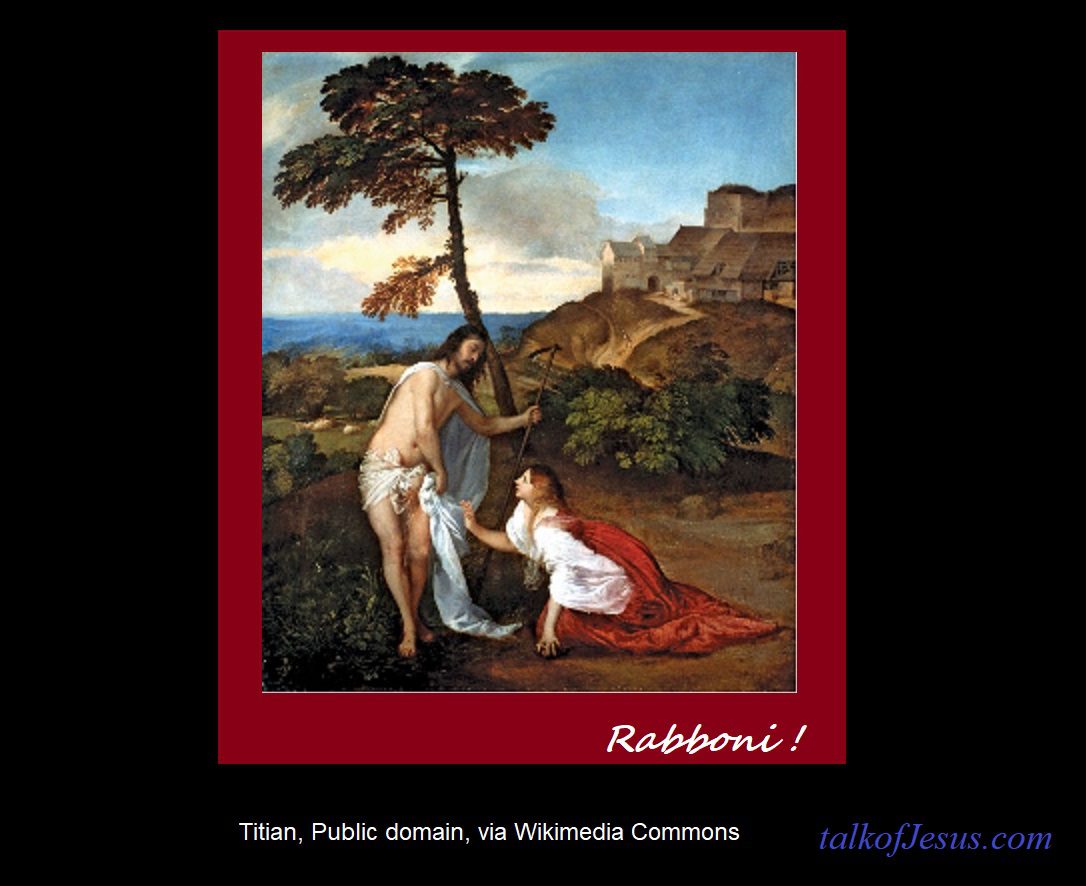
    16 Jesus said to her, “Mary!”

    Turning, she cried out to him in Hebrew, “Rabbani!” (that is, “Teacher!”).

    17 Jesus saith unto her, “Touch me not; for I am not yet ascended to my Father: but go to my brethren, and say unto them, I ascend unto my Father, and your Father; and to my God, and your God.”

    To be continued...
    
  • The Glory of Christ Jesus – 2

    The Glory of Christ Jesus – 2

    John 1:14 And the Word became flesh and dwelt among us, and we have seen his glory, glory as of the only Son from the Father, full of grace and truth.

    Christ Jesus! The Very Glory of God – in the flesh: a son of man, the Son of God!

    And the man, Jesus, was witnessed by many men and women from all walks of this temporal life; yet in some places the glory of God was witnessed personally by a few and written as the good news of the Gospel for the generations of these last days.

    The glory of God and of Christ is recorded in the Gospels.

    John 2:

    On the third day there was a wedding at Cana in Galilee, and the mother of Jesus was there. 2 Jesus also was invited to the wedding with his disciples. 3 When the wine ran out, the mother of Jesus said to him, “They have no wine.”

    … 11 This, the first of his signs, Jesus did at Cana in Galilee, and manifested his glory. And his disciples believed in him.

    Certainly every miracle, healing, casting out of evil spirits from the flesh of men, and many other acts of Jesus could only be attributed to the power and glory of God.

    The Disciples, after having witnessed many of these public miracles, would also witness Jesus on more than two occasions from fishing boats. They could not fathom the glory of God as they would see  in their friend and Teacher, Jesus.

     Matthew 8:

    18 Now when Jesus saw a crowd around him, he gave orders to go over to the other side.

    19 And a scribe came up and said to him, “Teacher, I will follow you wherever you go.”

    20 And Jesus said to him, “Foxes have holes, and birds of the air have nests, but the Son of Man has nowhere to lay his head.” 21 Another of the disciples said to him, “Lord, let me first go and bury my father.” 22 And Jesus said to him, “Follow me, and leave the dead to bury their own dead.”
    23 And when he got into the boat, his disciples followed him.

    Here is witness after Jesus has healed many. Crowds… Paparazzi… amazed spectators, witnesses of the glory and power of God in this Son of Man.

    Jesus gets into a boat to escape the spotlight. His Disciples join our Lord in the boat and they depart for another place without crowds; where, by the way, Jesus will cast out evil spirits from a man under the power of Satan.

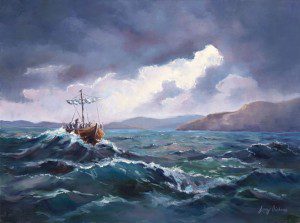
    24 And behold, there arose a great storm on the sea, so that the boat was being swamped by the waves; but he was asleep. 25 And they went and woke him, saying, “Save us, Lord; we are perishing.” 26 And he said to them, “Why are you afraid, O you of little faith?”

    StormBeforeTheCalm_sRGBThen he rose and rebuked the winds and the sea, and there was a great calm. 27 And the men marveled, saying, “What sort of man is this, that even winds and sea obey him?”


    Jesus’ Disciples witnessed a glory of God from a wind-battered boat on the Sea of Galilee and they could only marvel that even the winds and the sea obey the Command of Christ Jesus.

    In another time on the troubled sea their witness was of another even more glorious appearance of God in the Person of their friend, Jesus. But first, just a reminder from Scripture the Apostles would know well:

     Genesis 1:  In the beginning,

    God created the heavens and the earth. 2 The earth was without form and void, and darkness was over the face of the deep. And the Spirit of God was hovering over the face of the waters…

    6 And God said, “Let there be an expanse in the midst of the waters, and let it separate the waters from the waters.” 7 And God made the expanse and separated the waters that were under the expanse from the waters that were above the expanse. And it was so…

    9 And God said, “Let the waters under the heavens be gathered together into one place, and let the dry land appear.” And it was so. 10 God called the dry land Earth, and the waters that were gathered together he called Seas. And God saw that it was good…

    26 Then God said, “Let us make man in our image, after our likeness. And let them have dominion over the fish of the sea…

    And Jesus’ Disciples wondered in awe: ““What sort of man is this, that even winds and sea obey him?”

    Genesis 3: 8 And they heard the sound of the Lord God walking in the garden in the cool of the day…

    Who IS this God who walks with man as a friend? Who IS this Jesus who commands creation?

    Yet another witness of the glory of Christ Jesus:

    Matthew 14:

    3 Now when Jesus heard this [of the beheading of John the Baptist], he withdrew from there in a boat to a desolate place by himself. But when the crowds heard it, they followed him on foot from the towns. 14 When he went ashore he saw a great crowd, and he had compassion on them and healed their sick…

    22 Immediately he made the disciples get into the boat and go before him to the other side, while he dismissed the crowds. 23 And after he had dismissed the crowds, he went up on the mountain by himself to pray…

    Time passes. The Disciples again are in a boat on the Sea of Galilee, a familiar place for these fishermen. Jesus goes to a quiet mountain place to be with God the Father in prayer, a familiar place for the Son.

    When evening came, he was there alone, 24 but the boat by this time was a long way from the land, beaten by the waves, for the wind was against them. 25 And in the fourth watch of the night [between 3 a.m. and dawn] he came to them, walking on the sea. 26 But when the disciples saw him walking on the sea, they were terrified, and said, “It is a ghost!” and they cried out in fear.

    27 But immediately Jesus spoke to them, saying, “Take heart; it is I. Do not be afraid.”

    … 32 And when they [Peter and Jesus] got into the boat, the wind ceased.

    33 And those in the boat worshiped him, saying, “Truly you are the Son of God.”

    To be continued…