
Joel 1:
Has such a thing happened in your days,
or in the days of your fathers?
3 Tell your children of it,
and let your children tell their children,
and their children to another generation.
While disasters loom and chaos rules, talking heads debate over who said what about the rein of evil isolated in time or place.
I’m outraged!
(But it's not what you think.)
One death causes lingering debate, then a couple dozen again across the sea.

Yet what of a crisis in a hospital in India where 68 children died because of a financial dispute over who would pay for oxygen?
What of 250 dead, lost to floods in Nepal, India and Bangladesh?
Would a press so entertained over a single firing dare mention 28 deaths from a national election controversy in a poor country like Kenya?
These acts of violence by evil men of many races and differing religion are not news. Extreme political positions and taunting of opposing opinion are nothing new under the sun.
Hidden in the headlines of Shiite Islam vs. Sunni Islam in Iraq (along with Syria, another war no one has won) we see starving children, victims of war’s atrocities, malnourished and wounded, gleaning fields for a few bites to eat. Least of all world-wide entertaining news would never herald the passing of 100 souls from hunger each and every hour!

Could self-defining generations of sexually active ‘single’ women ever be chastised for their ‘right’ to end the lives of more than 25 million babies so far this year?!
[ctt title=”Could the two most populous countries in the world ever be held accountable for all the babies and young children who have died? ” tweet=”https://ctt.ec/j1nfg+” coverup=”j1nfg”]
When will the LORD finally say, enough is enough?
Genesis 6:
5 The Lord saw that the wickedness of man was great in the earth, and that every intention of the thoughts of his heart was only evil continually. 6 And the Lord regretted that he had made man on the earth, and it grieved him to his heart. 7 So the Lord said, “I will blot out man whom I have created from the face of the land, man and animals and creeping things and birds of the heavens, for I am sorry that I have made them.”
Exodus 12:29
At midnight the LORD struck down all the firstborn in the land of Egypt, from the firstborn of Pharaoh who sat on his throne to the firstborn of the captive who was in the dungeon, and all the firstborn of the livestock.
The Lord intervenes
You may not have read from scripture of the great power of the Lord, though you witness the magnificence of His Almighty hand every day. Recall (or read for the first time) how a prayer reached the hearing of the Lord and the Lord saved Israel.
2 Kings 19:
5 When the servants of King Hezekiah came to Isaiah, 6 Isaiah said to them, “Say to your master, ‘Thus says the Lord: Do not be afraid because of the words that you have heard, with which the servants of the king of Assyria have reviled me…
15 And Hezekiah prayed before the Lord and said:
[ctt title=”“O Lord, the God of Israel, enthroned above the cherubim, you are the God, you alone, of all the kingdoms of the earth; you have made heaven and earth.” tweet=”“Whom have you mocked and reviled? Against whom have you raised your voice and lifted your eyes to the heights? Against the Holy One of Israel! 2Kings19:” coverup=”iFGf9″]
16 Incline your ear, O Lord, and hear; open your eyes, O Lord, and see; and hear the words of Sennacherib, which he has sent to mock the living God. 17 Truly, O Lord, the kings of Assyria have laid waste the nations and their lands 18 and have cast their gods into the fire, for they were not gods, but the work of men’s hands, wood and stone. Therefore they were destroyed. 19 So now, O Lord our God, save us, please, from his hand, that all the kingdoms of the earth may know that you, O Lord, are God alone.”
35 And that night the angel of the Lord went out and struck down 185,000 in the camp of the Assyrians.
And when people arose early in the morning, behold, these were all dead bodies. 36 Then Sennacherib king of Assyria departed and went home and lived at Nineveh.
Judgment of the Lord
Not so remarkable that the Lord of all the heavens and earth, the Lord who makes the sun and moon and stars to move; not so awesome that 185,000 men or all the first born of Egypt should unexpectedly be struck down.
Have you heard of the Lord’s covenant to never destroy all mankind by flood? Do you believe that? You who cannot gaze upon the brilliance of the sun the Lord has placed in the heavens, uncover your ears to hear his warnings to repent!
His patience withholds fire and brimstone from the destruction of evil, yet their judgment will come. In the Person of Christ Jesus the Lord has come to man and He will return.
Cover your eyes and open your heart. Look only to Jesus and no false man, dead or in power, mortals who cannot save your eternal soul.
Joel 1:
15 Alas for the day!
For the day of the Lord is near,
and as destruction from the Almighty it comes.
Joel 2:
Let all the inhabitants of the land tremble,
for the day of the Lord is coming; it is near,
2 a day of darkness and gloom,
a day of clouds and thick darkness!
Return to the Lord
12 “Yet even now,” declares the Lord,
“return to me with all your heart,
with fasting, with weeping, and with mourning;
13 and rend your hearts and not your garments.”
Return to the Lord your God,
for he is gracious and merciful,
slow to anger, and abounding in steadfast love;
and he relents over disaster.
The Lord Will Pour Out His Spirit
28 “And it shall come to pass afterward,
that I will pour out my Spirit on all flesh;
your sons and your daughters shall prophesy,
your old men shall dream dreams,
and your young men shall see visions.
29 Even on the male and female servants
in those days I will pour out my Spirit.
30 “And I will show wonders in the heavens and on the earth, blood and fire and columns of smoke. 31
The sun shall be turned to darkness, and the moon to blood, before the great and awesome day of the Lord comes.
32 [ctt title=”And it shall come to pass that everyone who calls on the name of the Lord shall be saved. ” tweet=”Christ Jesus is Lord! A new heavens and a new earth await the Lord’s return.” coverup=”W2wAz”]
To be continued…

 In two scenes related by Matthew we see Jesus and the Apostles and learn of what Matthew would know later about the leaders of the Temple.
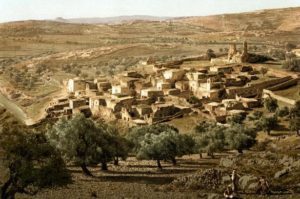 In Bethany, near Jerusalem, notice first the anointing honoring Jesus takes place. Then discontent and criticism from those present, opposition no different than in Jerusalem from those who seek to crucify the Lord. As always, Jesus cuts to the quick with the truth.