Tag: series

  • for it was not the season for figs – prologue

    for it was not the season for figs – prologue

    Lost in the glory of the entrance of Jesus into Jerusalem on Palm Sunday we find a brief story much overlooked. The story of Jesus cursing a fig tree not only seems much out of character for the Lord, but relatively insignificant. I cannot recall ever hearing it preached simply on its own merits.

    In a brief series (for a single post does not give this story its due) we will examine in more depth the significance of the fig tree. As an introduction let’s begin with one telling of the story by the Gospel writer, John Mark, a disciple introduced in Acts.

    Mark 11: [ESV]

    Jesus Curses the Fig Tree

    12 On the following day, when they came from Bethany, he was hungry.13 And seeing in the distance a fig tree in leaf, he went to see if he could find anything on it. When he came to it, he found nothing but leaves, for it was not the season for figs. 14 And he said to it, “May no one ever eat fruit from you again.” And his disciples heard it.

    Gospel of Mark 11:12-14 ESV

    That’s it.

    Prior to this Mark records:

    And many spread their cloaks on the road, and others spread leafy branches that they had cut from the fields.And those who went before and those who followed were shouting, “Hosanna! Blessed is he who comes in the name of the Lord! 10 Blessed is the coming kingdom of our father David! Hosanna in the highest!”

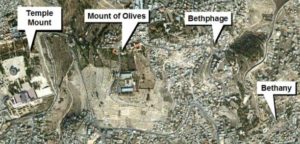
    11 And he entered Jerusalem and went into the temple. And when he had looked around at everything, as it was already late, he went out to Bethany with the twelve.


    The story of Palm Sunday, as we have become so familiar, nearly too familiar.

    Jesus comes riding up the road to Jerusalem, received like a King and Messiah, followed and worshiped by hundreds. He takes a look at the Temple, it’s late, they head to a local town to stay the night.

    The fig tree encounter takes place the next day. Yet like the Apostles  and hundreds of followers who would fall away before the trial and crucifixion of Jesus, we miss the point of the fig tree.

    Mark continues the commentary of the next day with actions of Jesus from another, most-familiar story:

    Jesus Cleanses the Temple

    15 And they came to Jerusalem. And he entered the temple and began to drive out those who sold and those who bought in the temple, and he overturned the tables of the money-changers and the seats of those who sold pigeons. 16 And he would not allow anyone to carry anything through the temple. 17 And he was teaching them and saying to them, “Is it not written, ‘My house shall be called a house of prayer for all the nations’? But you have made it a den of robbers.” 18 And the chief priests and the scribes heard it and were seeking a way to destroy him, for they feared him, because all the crowd was astonished at his teaching.

    Gospel of Mark 11:15-18 ESV

    But what of the fig tree?

    To be continued…


  • Balaam – Inauguration of a Politician’s Prophet – 3

    Balaam – Inauguration of a Politician’s Prophet – 3

    Journey to an Inauguration Interrupted

    [In case you missed Part 1 or Part 2 of our long journey] We heard Balaam’s inaugural address in part in Numbers 24:3-9, first introduced in Part 1. Now we return to his journey toward the ceremonies of that momentous occasion.

    [ctt title=”Then the Lord opened the eyes of Balaam, and he saw the angel of the Lord standing in the way, with his drawn sword in his hand. And he bowed down and fell on his face.” tweet=”Numbers 22:31 after an ass had to tell a prophet to see the angel of the Lord.” coverup=”8dHCr”]

    Numbers 22:

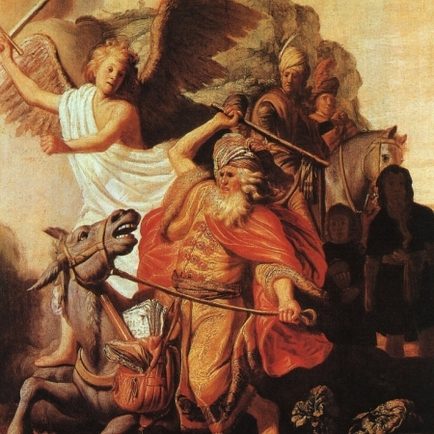
    32 And the angel of the Lord said to him, “Why have you struck your donkey these three times? Behold, I have come out to oppose you because your way is perverse before me. 33 The donkey saw me and turned aside before me these three times.


    How about this: your way is ‘perverse’ יָרַט [yarat] before the Lord!  Your self-driven actions precipitate, push headlong and drive recklessly. You oppose the LORD! In fact, even your ass [אָתוֹן] saw the Angel of the Lord, but you did not.

    Can you imagine the reaction of the prophet Balaam? First, his ass rebukes him, and now he finally sees the Angel of the Lord with a drawn sword asking why he struck his faithful donkey.

    “… If she had not turned aside from me, surely just now I would have killed you and let her live.”

    34 Then Balaam said to the angel of the Lord, “I have sinned, for I did not know that you stood in the road against me. Now therefore, if it is evil in your sight, I will turn back.”


    Awoken from Sin

    35 And the angel of the Lord said to Balaam, “Go with the men, but speak only the word that I tell you.” So Balaam went on with the princes of Balak.

    [At the end of their long 400 mile journey a King prepares for the Inauguration of a new era with the great prophet of God on his side, so he thinks.]

    38 Balaam said to Balak, “Behold, I have come to you! Have I now any power of my own to speak anything? The word that God puts in my mouth, that must I speak.”

    [Indeed, what can a man or woman belonging to the Lord say, except the word of the Lord?]

    41 And in the morning Balak took Balaam and brought him up to Bamoth-baal, and from there he saw a fraction of the people.

    Numbers 23:

    Next, we see ceremonies of the high event planned by Balaak. Seven altars become the focus of Inauguration events. But Balaam does the unexpected and blesses Israel.

    “From Aram Balak has brought me,
    the king of Moab from the eastern mountains:
    ‘Come, curse Jacob for me,
    and come, denounce Israel!’
    8 How can I curse whom God has not cursed?
    How can I denounce whom the Lord has not denounced?

    … 11 And Balak said to Balaam, “What have you done to me? I took you to curse my enemies, and behold, you have done nothing but bless them.” …

    18 And Balaam took up his discourse and said,

    “Rise, Balak, and hear;
    give ear to me, O son of Zippor:

    19 [ctt title=”God is not man, that he should lie, or a son of man, that he should change his mind. ” tweet=”Has he said, and will he not do it? Or has he spoken, and will he not fulfill it? – Numbers 23:19″ coverup=”97P9C”]

    Balak objects once more and desperately takes Balaam to a third place to worship and proclaim the ‘good omen’ of inauguration of a new era where Israel will not prevail. If you recall Balaam’s inaugural address from the beginning of our story, the speech follows from the third mountain ahead.

    Numbers 24:

    When Balaam saw that it pleased the Lord to bless Israel, he did not go, as at other times, to look for omens, but set his face toward the wilderness. 2 And Balaam lifted up his eyes and saw Israel camping tribe by tribe. And the Spirit of God came upon him, 3 and he took up his discourse and said,

    “The oracle of Balaam the son of Beor,
    the oracle of the man whose eye is opened…

    … 14 And now, behold, I am going to my people. Come, I will let you know what this people will do to your people in the latter days.”

    Prophesy of the latter days

    15 And he took up his discourse and said,

    “The oracle of Balaam the son of Beor,
    the oracle of the man whose eye is opened,
    16 the oracle of him who hears the words of God,
    and knows the knowledge of the Most High,
    who sees the vision of the Almighty,
    falling down with his eyes uncovered:


    Balaam will now speak of things to come.

    I would like to turn to the King James translation, revealing from the original Hebrew much more than a clashing of kings. My conclusion and image from the wilderness of this parable may challenge your perspective of this inauguration. Here I will share links to the scripture for your further Bible study.

    Numbers 24:17b KJV
    and a Sceptre shall rise out of Israel, and shall smite the corners of Moab

    I shall see him, but not now: I shall behold him, but not nigh: there shall come a Star [ כּוֹכָב ] out of Jacob [יַעֲקֹב], and a Sceptre [שֵׁבֶט] shall rise [קוּם] out of Israel [יִשְׂרָאֵל], and shall smite the corners of Moab, and destroy all the children of Sheth.

    An apocalypse spoken for the land of Moab and all the descendants of Sheth [שֵׁת ]. The land of Moab destroyed; but who are these ‘children of Sheth?’

    Let those with ears to hear hear the parable of Balaam, a parable of veiled meaning. שֵׁת [pronounced, shāth] means, “compensation,” but you will recognize the proper Hebrew name for which שֵׁת is used, “Seth,” third son of Adam.

    Consider the destruction of all the sons of Seth!

    [ctt title=”Could another inauguration of evil in the high places bring about completion of these last days? For even brash sons of perdition and a prophet turned from God would not heed the warnings of an ass.” tweet=”Hear the parable of Balaam for another unexpected inauguration.” coverup=”Fos4Z”]


    Let us pray that leaders of powerful countries heed the Word of the Lord.

    “I am the Son of David, the Lion of Judah, Redeemer of Israel, Savior of the nations.

    Glory to the Father and to the Son and to the Holy Ghost. Amen.

    +


  • A Word to the Cunning – 3

    God’s plans change hearts

    We have been examining the wisdom of Proverbs and advice to the cunning. An evil man or woman has two choices: continue in cunning evil or turn to the wisdom of the Lord. One such repentant man was Simon the magician. Several men and women never turn back to the Lord. The fool believes that God will not have advice for our own good and an evil person remains adamant in their evil.

    Proverbs 3:

    Trust in the LORD with all your heart,
    and do not lean on your own understanding. – Pro 3:5

    In all your ways acknowledge him,
        and he will make straight your paths.
    Be not wise in your own eyes;
        fear the Lord, and turn away from evil.
    It will be healing to your flesh
        and refreshment to your bones.


    • What makes a difference in the heart of a cunning man or woman set on a path of evil?
    • Is craftiness and cunning limited to plans of evil?

    In Egypt a powerful man once rejected by his family and sold as a slave confronted these same brothers when unwittingly they had no more cunning plans to supplant his favor in their family and with God. Joseph revealed the intentions of God to his brothers.

    The other sons of Israel (Jacob) had used cunning deceit in perpetuating the lie of Joseph’s death. Now after knowing both Joseph’s identity and power, the devise another cunning lie to save themselves from the potential retaliation of Joseph after Jacob’s death.

    Genesis 50:

    16 So they sent a message to Joseph, saying, “Your father gave this command before he died: 17 ‘Say to Joseph, “Please forgive the transgression of your brothers and their sin, because they did evil to you.”’ And now, please forgive the transgression of the servants of the God of your father.” Joseph wept when they spoke to him. 18 His brothers also came and fell down before him and said, “Behold, we are your servants.”

    What to we see here?

    Both fear of Joseph on their part and contrition; not only fulfillment of a dream Joseph had told them in Canaan, but true acceptance of their youngest brother as their leader. Repentance, finally.

    And Joseph, servant of the Lord, reveals the same heart of the Lord that gave him such cunning dreams of greatness in his early years.

    19 But Joseph said to them, “Do not fear, for am I in the place of God?

    Gen 50:20 As for you, you meant evil against me, but God meant it for good, to bring it about that many people should be kept alive, as they are today.

    21 So do not fear; I will provide for you and your little ones.” Thus he comforted them and spoke kindly to them.


    A Cunning Turn from Self to the Lord

    Ahab and Jezebel and Jehoshaphat all meant evil against Elijah. They used every bit of cunning to do evil against the Lord. Unlike Joseph’s brothers, they never did repent.

    The Lord has used many cunning sinners as great evangelists of the Word once they repented. Saul of Tarsus, who cunningly persecuted followers of Jesus stood at the feet of the stoning of Stephen. He repented and turned to the Lord, preaching Christ crucified and risen to his fellow jews and championing the Way to the Gentiles.

    Acts 8:

    But there was a man named Simon, who had previously practiced magic in the city and amazed the people of Samaria, saying that he himself was somebody great. 10 They all paid attention to him, from the least to the greatest, saying, “This man is the power of God that is called Great.” 11 And they paid attention to him because for a long time he had amazed them with his magic.

    wolfWe’ve seen the great teachers built up in the slight-of-hand powerful ministry for God. (We don’t really hear much about Jesus other than how He will make us great and powerful and rich and healed.. and all for just sending in your donation or giving a large blessing to the magic of his ministry here in this bright megachurch.

    An egotistical preacher  meets a Spirit-filled Apostle

    12 But when they believed Philip as he preached good news about the kingdom of God and the name of Jesus Christ, they were baptized, both men and women. 13 Even Simon himself believed, and after being baptized he continued with Philip. And seeing signs and great miracles performed, he was amazed.

    What’s different here? A once-renowned magician-preacher repented and turned back to the Lord Christ in humility. When a leader is no longer ashamed to have a cross in his church, he can become a follower dependent on the Lord Jesus Christ.

    Is that you?

    How cunning are you, dear friend? What is the Lord’s intention for you? Do you suppose your cunning you intended for evil could now be turned by the Lord for good?

    It’s not such a tough choice.

    It would take a fool, not one so wise as you, to choose hell for eternity over the blessings of God in Christ Jesus forever.


    Proverbs 3:

    33 The Lord‘s curse is on the house of the wicked,
        but he blesses the dwelling of the righteous.
    34 Toward the scorners he is scornful,
        but to the humble he gives favor.
    35 The wise will inherit honor,
        but fools get disgrace.