Tag: series

  • Abram – Sheikh of Ur – 2

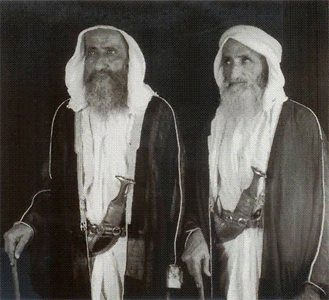
    Sheikh – شيخ‎‎

    Shekh— is an honorific title in the Arabic language. It commonly designates the ruler of a tribe, who inherited the title from his father. “Sheikh” is given to a royal male at birth.

    It is a question of leadership, is it not?

    Who leads your journey? Who leads your family? Who leads your city, your nation – who leads the people who are part of your everyday mortal life?

    You may associate Abraham with an unknown area of Haran or a city of Jerusalem. You may look to Abraham as a father of your religion: Judaism, Christianity or Islam, yet questions remain.

    Is Abram the authority behind your claims to a land? Is Abram the authority behind your claim to a Holy city? Is Abram your claim to authoritarian rule over a people you would send to conquer shattered stones, broken bricks and blood-stained dust of city streets?

    God intervenes in His story. God intervenes in real lives of individuals of His creation. God intervenes in places where evil would take hold. God preserves the faithful who choose the authority of the LORD over the leadership of sinful men.

    The Call of Abram

    Now the Lord said to Abram, “Go from your country and your kindred and your father’s house to the land that I will show you. – Genesis 12:1

    Here is a story familiar to many, yet a circumstance unfamiliar to casual readers of scripture. Once again, by contrast let us look back to Abram’s father. In fact, first let’s look back as far as Noah, father of all civilization after the great flood.

    Genesis 10:

    These are the generations of the sons of Noah, Shem, Ham, and Japheth. Sons were born to them after the flood…

    2 The sons of Japheth: … 6 The sons of Ham: Cush, Egypt, Put, and Canaan… 8 Cush fathered Nimrod; he was the first on earth to be a mighty man. 9 He was a mighty hunter before the Lord. Therefore it is said, “Like Nimrod a mighty hunter before the Lord.” 10 The beginning of his kingdom was Babel… 22 The sons of Shem: …

    Gen 10-nationsSheiks all – rulers of their respective tribes in areas far from the settling of the Ark on a mountain after a year of the flood. Shem, Ham and Japheth, all sons of Noah, all of their sons princes or sheiks of a tribe or state or nation (depending how you would define their area of influence) – Sheiks, honorable rulers of each family.

    Noah had worshiped the LORD first opportunity on dry land after more than a year aboard the Ark. The blessing of the LORD had been:

    “And you, be fruitful and multiply, increase greatly on the earth and multiply in it.” – Genesis 9:7

    You will recognize the names of some of Noah’s descendants as the names of lands, areas where these Sheiks of later generations ruled lands settled by their forefathers: Egypt, Canaan and others. In parts of lands over the generations we have given to other areas administered, conquered or ruled by other Sheiks from these generations, perhaps names less familiar to our ears than the sight of a town on an ancient map. And I remind us from Noah’s blessings and curses that in all of this the LORD has intervened with His plan.

    Genesis 9: 

    “Cursed be Canaan;
    a servant of servants shall he be to his brothers.”
    26 He also said,

    “Blessed be the Lord, the God of Shem;
    and let Canaan be his servant.
    27 May God enlarge Japheth,
    and let him dwell in the tents of Shem,
    and let Canaan be his servant.”

    Genesis 10:

    19 And the territory of the Canaanites extended from Sidon in the direction of Gerar as far as Gaza, and in the direction of Sodom, Gomorrah, Admah, and Zeboiim, as far as Lasha.

    Familiar cities? And further research will reveal that other tribes, descendants of Canaan, are those the LORD would order destroyed. (Perhaps you recognize two cities still associated with unbridled sin.)

    Stepping ahead some generations to just before Abram, let us recall what Genesis reveals of the hearts of men under the command of the LORD to “be fruitful and multiply.”

    Genesis 11:

    4 Then they said, “Come, let us build ourselves a city and a tower with its top in the heavens, and let us make a name for ourselves, lest we be dispersed over the face of the whole earth.” 5 And the Lord came down to see the city and the tower, which the children of man had built.

    Once again, man had a plan of disobedience to the Lord. The Lord intervened, as we know He would during the days of Abraham and Lot in the cities of Sodom and Gomorrah.

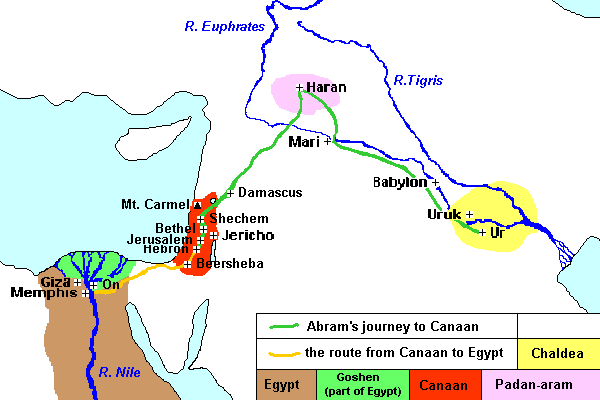
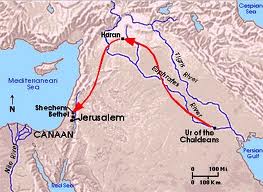
    31 Terah took Abram his son and Lot the son of Haran, his grandson, and Sarai his daughter-in-law, his son Abram’s wife, and they went forth together from Ur of the Chaldeans to go into the land of Canaan, but when they came to Haran, they settled there.

    I want to go back to something Jesus had said to the religious authorities questioning His authority in the introduction to this series: {Sons of Tradition)

    John 8:

    37 I know that you are offspring of Abraham; yet you seek to kill me because my word finds no place in you. 38 I speak of what I have seen with my Father, and you do what you have heard from your father.”

    Isn’t that how it is? We do certain things as traditions we have learned from our families. Some of the tradition of Abram’s fathers were that they raised livestock for a living, a trade which necessitated many family members to reside mostly outside the gates of the city. Certainly Ur had been their principle city of life, but the fields beyond the gates became frequency itinerate homes for these Sheiks.

    One final question: Why would Abram move from Haran to a life in lands of others, a refugee Sheik with no palace of his own?

    Once again, we find a portion of the answer in his own history in Genesis 11:

    31 Terah took Abram his son and Lot the son of Haran, his grandson, and Sarai his daughter-in-law, his son Abram’s wife, and they went forth together from Ur of the Chaldeans to go into the land of Canaan, but when they came to Haran, they settled there.

    Abram’s grandfather ‘went forth together from Ur of the Chaldeans to go into the land of Canaan…’

    Terah did not continue to Canaan. By his obedience to God, Abraham continued a journey to the Promised Land to which the LORD had already sent his Tribe.

    To be continued…
     

  • Abram:  Sheikh of Ur

    Abram: Sheikh of Ur

    Why would I call Abram a Sheikh? (That’s probably not how you think of the Abraham of the Bible account.)

    Terah took Abram his son … and they went forth together from Ur of the Chaldeans to go into the land of Canaan, but when they came to Haran, they settled there. – Genesis 11:31 excerpt

    Unless you are an archaeologist, ancient history enthusiast or Old Testament scholar you likely have never looked at Abram, Ur, Haran and the history surrounding God’s calling of Abraham to the Promised Land in any light of factual life at that time.

    Let’s back up just a little bit. (& in case you missed the introduction to this: Sons of Tradition)

    Genesis 11:

    24 When Nahor had lived 29 years, he fathered Terah. And Nahor lived after he fathered Terah 119 years and had other sons and daughters.

    26 When Terah had lived 70 years, he fathered Abram, Nahor, and Haran. Now these are the generations of Terah. Terah fathered Abram, Nahor, and Haran; and Haran fathered Lot. Haran died in the presence of his father Terah in the land of his kindred, in Ur of the Chaldeans.

    Why did Terah leave Ur? Moses’ account of Genesis does not tell us.

    We do know this however; Abram would have been a man of stature in his tribe, already married and also responsible for the son of a younger brother who had died after fathering Lot.

    29 And Abram and Nahor took wives… 31 Terah took Abram his son and Lot the son of Haran, his grandson, and Sarai his daughter-in-law, his son Abram’s wife, and they went forth together from Ur of the Chaldeans to go into the land of Canaan, but when they came to Haran, they settled there.

    Ur, the city they left was a kingdom.

    The paragraphs which the author of the “Cave Treasures” devotes to the history of Terah and Abraham throw new light upon the lives of these patriarchs and the conditions under which they lived in the city of Ur, and they contain many interesting details which are not recorded in the Book of Genesis, and some new information concerning the overthrow of the city of Ur by the “Wind Flood.” It is quite clear that Terah and Abraham were great, powerful and wealthy shêkhs, and their large flocks of sheep and goats and herds of camels suggest that they were owners and breeders of cattle on a large scale, and masters of caravans.  Source. 

    … recent excavations at Ur have brought to light  that in Abraham’s day the inhabitants of the city were given up wholly to idolatry, their chief object of worship being Nannar, the Moon-god.

    Further research suggests a possible extra-Biblical motive for Terah’s move of his family to Haran.

    … the moon’s crescent was Nannar / Sin / El’s symbol. He was patron god over the city of Ur. Nannar’s temple in Ur was Egishnugal “House of the Seed of the Throne”  Biblical Terah, Abraham’s father was one of its high-priests.

    Just like the Biblical account of God’s intervention at the Tower of Babel, it would seem from other ancient texts that God was involved in the “wind flood” which devastated Ur during the days of Terah.

    The powerful prince moved his caravans and his households northwest along the Euphrates until Teran and Abram settled into Haran, where they were still rich and powerful Sheiks.

    One last word of definition before we continue on Abraham’s long journey:

    Sheikh – شيخ‎‎

    Shekh— is an honorific title in the Arabic language. It commonly designates the ruler of a tribe, who inherited the title from his father. “Sheikh” is given to a royal male at birth.

    To be continued…

  • Follow After Me -10 – Take Heed

    Psalm 2:

    Why do the nations rage
        and the peoples plot in vain?
    The kings of the earth set themselves,
        and the rulers take counsel together,
        against the Lord and against his Anointed…

    I will tell of the decree:
    The Lord said to me, “You are my Son;
        today I have begotten you.
    Ask of me, and I will make the nations your heritage,
        and the ends of the earth your possession.
    You shall break them with a rod of iron
        and dash them in pieces like a potter’s vessel.”

    10 Now therefore, O kings, be wise;
        be warned, O rulers of the earth.

    [ctt title=” Serve the Lord with fear, and rejoice with trembling.” tweet=”Serve the Lord with fear, and rejoice with trembling. Ps 2:11 ” coverup=”e5hT_”]

    12 Kiss the Son,
        lest he be angry, and you perish in the way,
        for his wrath is quickly kindled.
    Blessed are all who take refuge in him.


    Have you considered the justice of Jehovah? For the LORD will judge the unrighteous who will not bow down to the SON, He who IS and for our sake was sacrificed on the Cross.

    The Son “בַּר bar, bar; borrowed (as a title) from H1247; the heir (apparent to the throne):—son.

    Christ Jesus is heir apparent to the Throne of the Father. Hear what Jesus tells us. Take heed to some of the cautions Jesus sets before Christians seeking the His Kingdom of heaven.

    Matthew 7:

    13 “Enter by the narrow gate. For the gate is wide and the way is easy that leads to destruction, and those who enter by it are many. 14 For the gate is narrow and the way is hard that leads to life, and those who find it are few.

    21 “Not everyone who says to me, ‘Lord, Lord,’ will enter the kingdom of heaven, but the one who does the will of my Father who is in heaven.22 On that day many will say to me, ‘Lord, Lord, did we not prophesy in your name, and cast out demons in your name, and do many mighty works in your name?’ 23 And then will I declare to them, ‘I never knew you; depart from me, you workers of lawlessness.’

    Luke 13:

    Repent or Perish

    There were some present at that very time who told him about the Galileans whose blood Pilate had mingled with their sacrifices. 2 And he answered them, “Do you think that these Galileans were worse sinners than all the other Galileans, because they suffered in this way? 3 No, I tell you; but unless you repent, you will all likewise perish…

    23 And someone said to him, “Lord, will those who are saved be few?”

    And he said to them, 24 “Strive to enter through the narrow door. For many, I tell you, will seek to enter and will not be able. 25 When once the master of the house has risen and shut the door, and you begin to stand outside and to knock at the door, saying, ‘Lord, open to us,’ then he will answer you, ‘I do not know where you come from.’ 26 Then you will begin to say, ‘We ate and drank in your presence, and you taught in our streets.’ 27 But he will say, ‘I tell you, I do not know where you come from. Depart from me, all you workers of evil!’ 28 In that place there will be weeping and gnashing of teeth, when you see Abraham and Isaac and Jacob and all the prophets in the kingdom of God but you yourselves cast out.


    Sobering isn’t it, to think that you might claim to be a ‘christian’ and not be accepted at the Throne of Jesus?

    “Follow me,” Jesus said; or by context you could translate the Lord’s calling into at expected action of a disciple, a true follower, into the words of the Master, Teacher and Rabbi, “Follow after me.”

    You must take up your cross. You must obey.

    You must trust the risen Christ with your eternal and present life!

    In Christ we are no longer bound to the Law, yet by His will we are obliged to adherence to the narrow path of righteousness. In Christ we are not excused to pursue false prophets nor covered by the sheep’s skin of cheap grace.

    Jesus IS a most high and perfect standard for those seeking to follow after Him. We are drawn to Christ by the Spirit of truth and the Way of love, redemption offered at no cost only to sinners like you… to sinners like me.

    Take heed, that you do not offend the Son of Man. The Biblical caution, ‘take heed‘ of the old covenant still applies here.

    to be on one’s guard, take heed, take care, beware
    to keep oneself, refrain, abstain
    to be kept, be guarded

    Jesus uses the expression, ‘take heed’ in many examples for our consideration. (Some versions of the Bible use other less impactful expressions than the KJV or NKJV which follows:)

    “Take heed that you do not do your charitable deeds before men, to be seen by them. Otherwise you have no reward from your Father in heaven. – Mat. 6:1

    “Take heed that no one deceives you. – Mat. 24:4

    “Therefore take heed that the light which is in you is not darkness. Luke 11:35

    Take heed and beware of covetousness, for one’s life does not consist in the abundance of the things he possesses.” – Luke 12:15

    Are you following after Jesus? Every day? Unto eternity?

    [ctt title=”And he who does not take his cross and follow after Me is not worthy of Me – Mat. 10:38″ tweet=”Jesus said: “And he who does not take his cross and follow after Me is not worthy of Me. Mat. 10:38″ coverup=”65FL0″]

    Luke 21  (NKJV)

    The Signs of the Times and the End of the Age

    So they asked Him, saying, “Teacher, but when will these things be? And what sign will there be when these things are about to take place?”

    And He said: “Take heed that you not be deceived. For many will come in My name, saying, ‘I am He,’ and, ‘The time has drawn near.’ Therefore do not go after them.

    But when you hear of wars and commotions, do not be terrified; for these things must come to pass first, but the end will not come immediately.”

    10 Then He said to them, “Nation will rise against nation, and kingdom against kingdom. 11 And there will be great earthquakes in various places, and famines and pestilences; and there will be fearful sights and great signs from heaven…


    The persecuted preacher, John Bunyan, probably summed it up best in “The Pilgrim’s Progress.” Through Evangelist he cautions Christian, who was briefly misled by false men of religion. Evangelist also offers the love of Jesus, the Son of Man for mankind, this same Anointed who will judge the world and every soul (living or dead).

    Thy sin is very great, for by it thou hast committed two evils: thou hast forsaken the way that is good, to tread in forbidden paths. Yet will the man at the gate receive thee, for he has good-will for men; only, said he,

    take heed

    that thou turn not aside again,

    lest thou “perish from the way, when his wrath is kindled but a little.”

    +