Tag: ship

  • Tossed About in a Sinking Ship

    Tossed About in a Sinking Ship

    Acts of the Apostles 27

    Sailing so slowly into a billowing whirlwind of destruction.

    That’s how it must have felt for the Roman Centurion Julian, various guards and now others aboard a large Greek merchant ship hauling grain into a storm.

    How did we arrive at these last days of a failed voyage to Rome?

    AD 59 - Acts [27] of the Apostle Paul
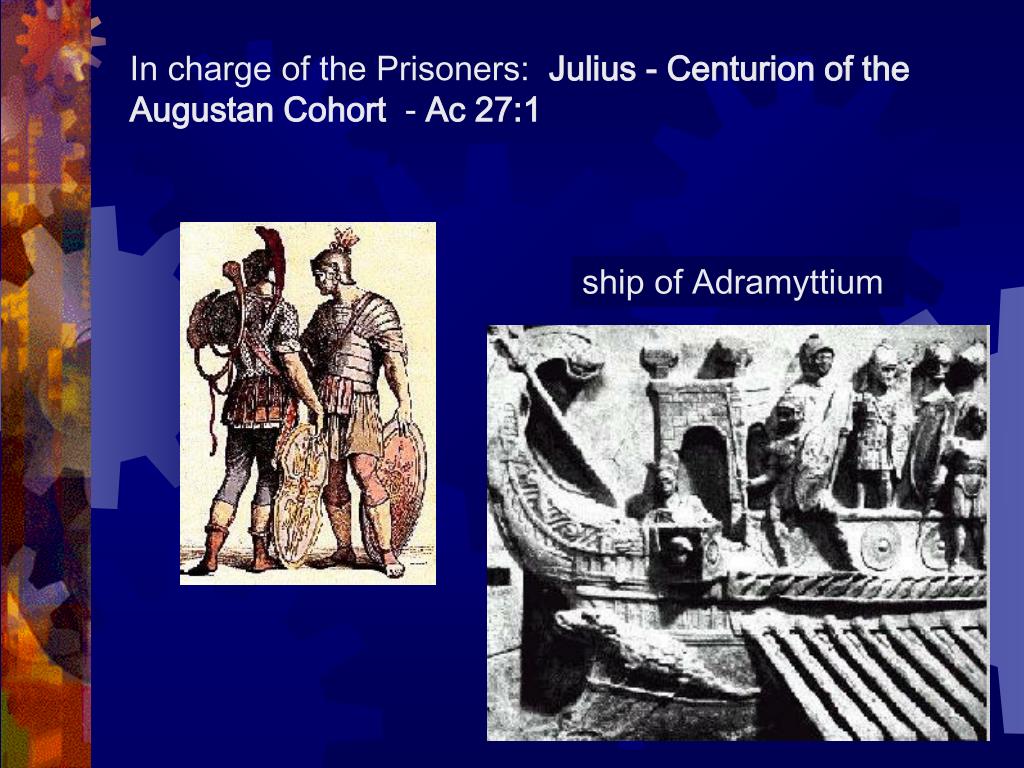
    • v.3 entering a (small) ship of Adramyttium, sailing only to nearby Tyre
    • v.4-6 crawling along the coasts of Pamphylia and Asia to board this large ship hauling grain to Rome
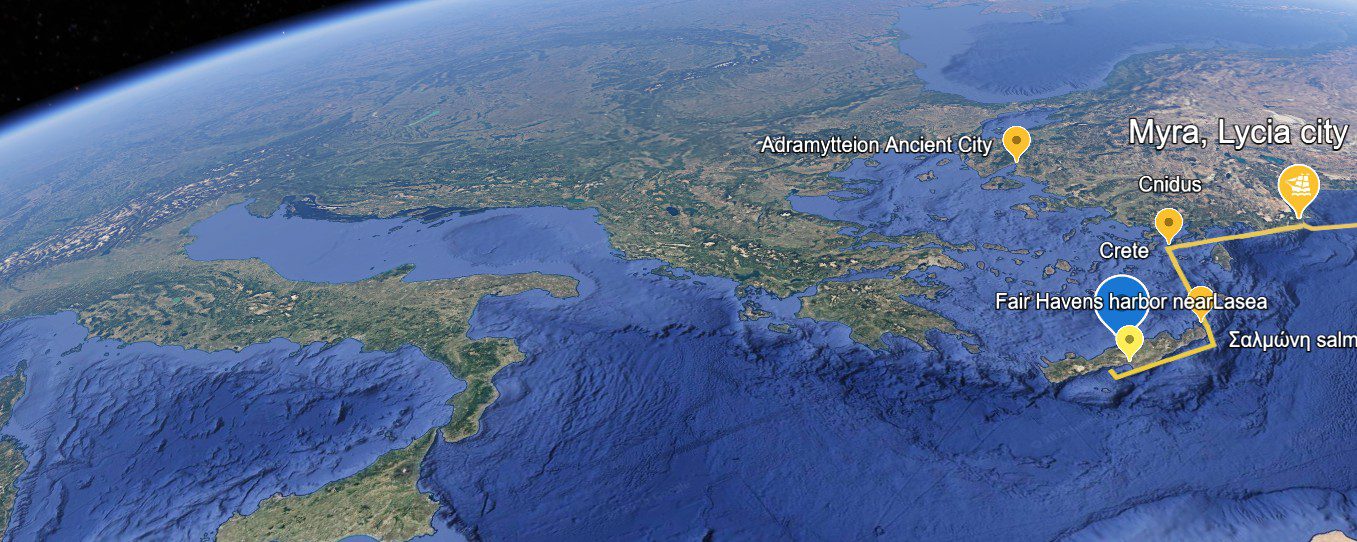
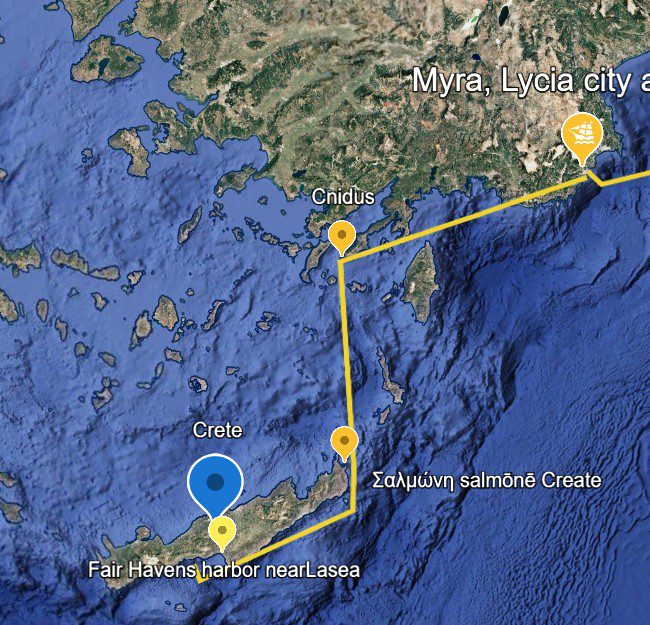
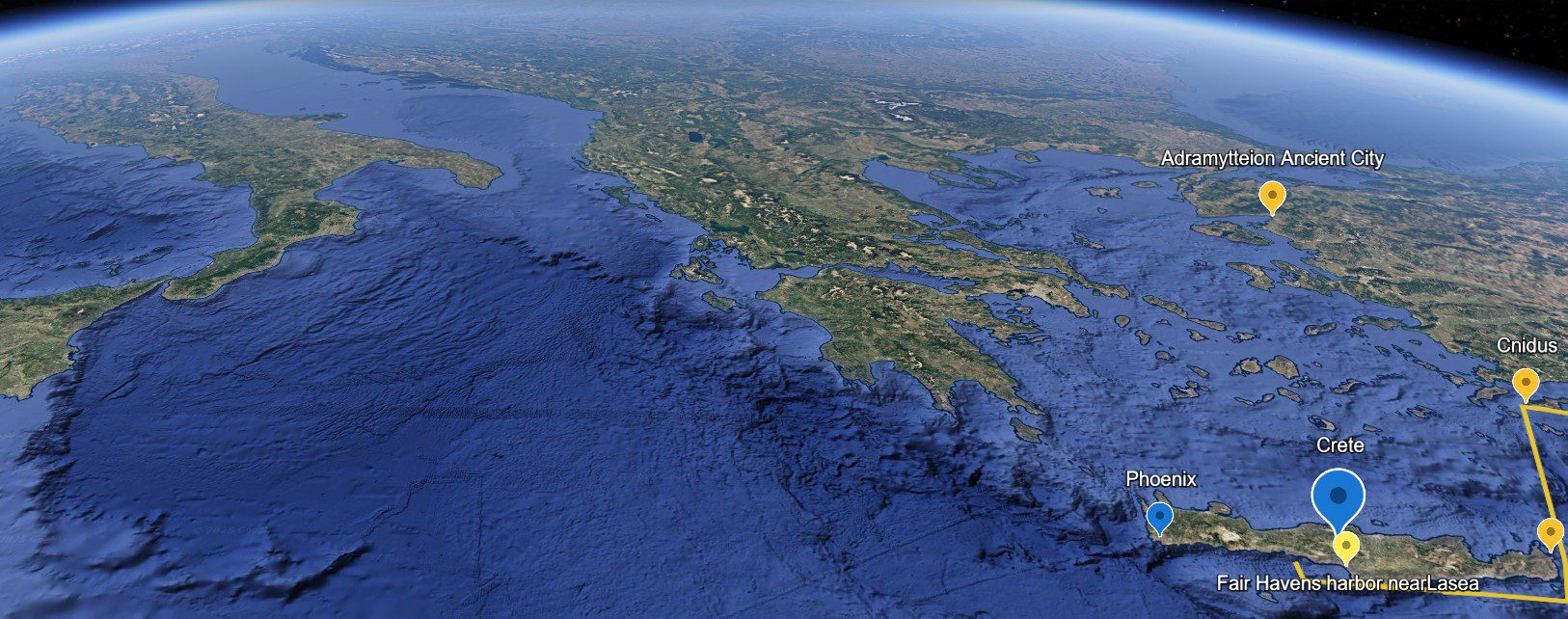
    • v.7  we had sailed slowly many days, and arrived with difficulty off Cnidus [still only along the coast of Asia {Minor} at the Southeast edge of the Aegean Sea], the wind not permitting us to proceed.
    • Their ship had drifted on gentle waters into harbors along Crete. Barely had their voyage into the Mediterranean begun.
    • The winds of winter near upon them now, their only hope a sheltered harbor away from which they were suddenly swept into the tempest. [v.7-17]
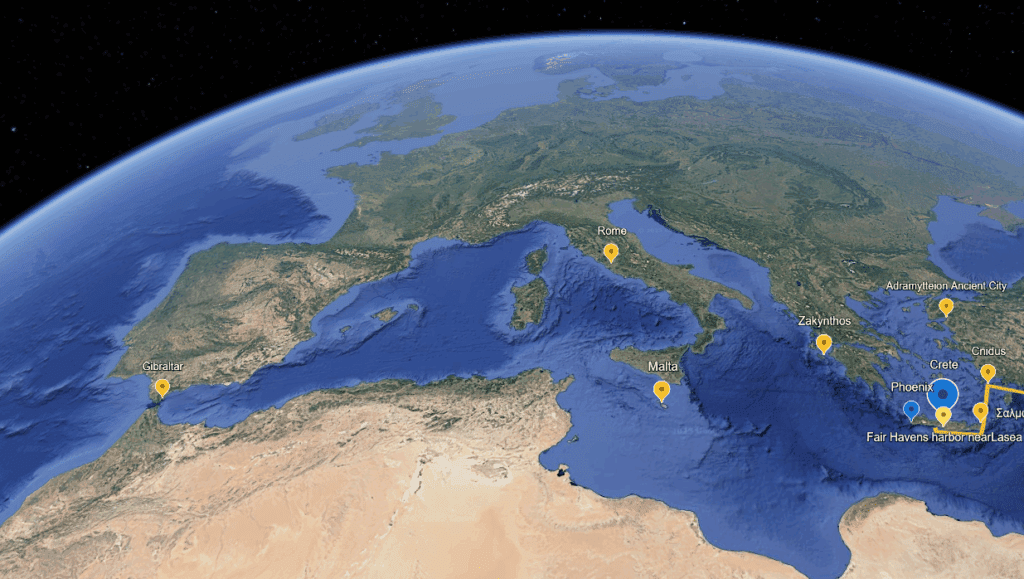
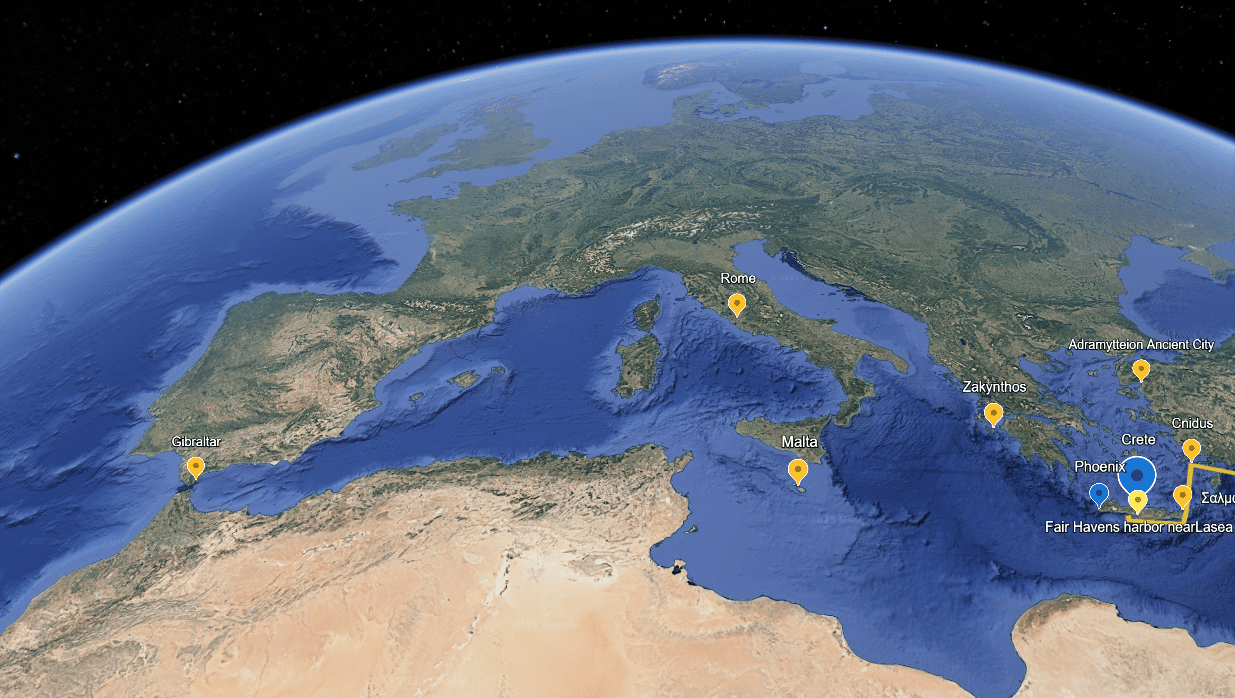
    Mediterranean Gibraltar to Crete - winter Tempests

    “Men, I perceive that this voyage will end with disaster and much loss, not only of the cargo and ship, but also our lives.”

    Acts of the Apostles 27:10 NKJV – Paul, addressing the men onboard their grain ship

    Paul — Shipwrecked

    276 souls on a sinking ship

    Acts 27:18-21 excerpt CSB

    Message of an Angel to Paul and all souls aboard

    We have not heard from the Apostle for several days now since his warning to the Centurian Julian had been ignored. As would have been his regular practice, no doubt Paul and Aristarchus had been praying. 

    Now the Apostle appears with a new messenge of hope from an angelic messenger of God.

    “You men should have followed my advice not to sail from Crete and sustain this damage and loss. Now I urge you to take courage, because there will be no loss of any of your lives, but only of the ship.

    Acts 27:21b-22 CSB

    'Preposterous,' these hungry men on a sinking ship laden with grain must have thought - Roman men and Greek sailors who would have been weak from fighting for their lives.

    'YOU told us we would die and now that we're almost sinking into the sea you say that we will not.'

    “For last night an angel of the God I belong to and serve stood by me and said, ‘Don’t be afraid, Paul. It is necessary for you to appear before Caesar. And indeed, God has graciously given you all those who are sailing with you.’

    Acts 27:23-24

    The crew must still be skeptical.
    'Your god has graciously given you all of us sailing with you?' Many of these sailors and guards must have thought, 'You're the prisoner, not us!'

    Paul has already established his credibility as a Roman citizen with Julian, the Centurion officer charged with delivering the Apostle to Caesar.

    And we are about to learn that in the protocol of the Roman Empire, it is the Centurion who is in charge of ALL of these men — NOT a captain or pilot of the ship or enlisted Roman guard.

    The Apostle continues by prophesying what is about to take place (rather than drowning in the depths of the sea as their ship sinks into the depths of the sea). 
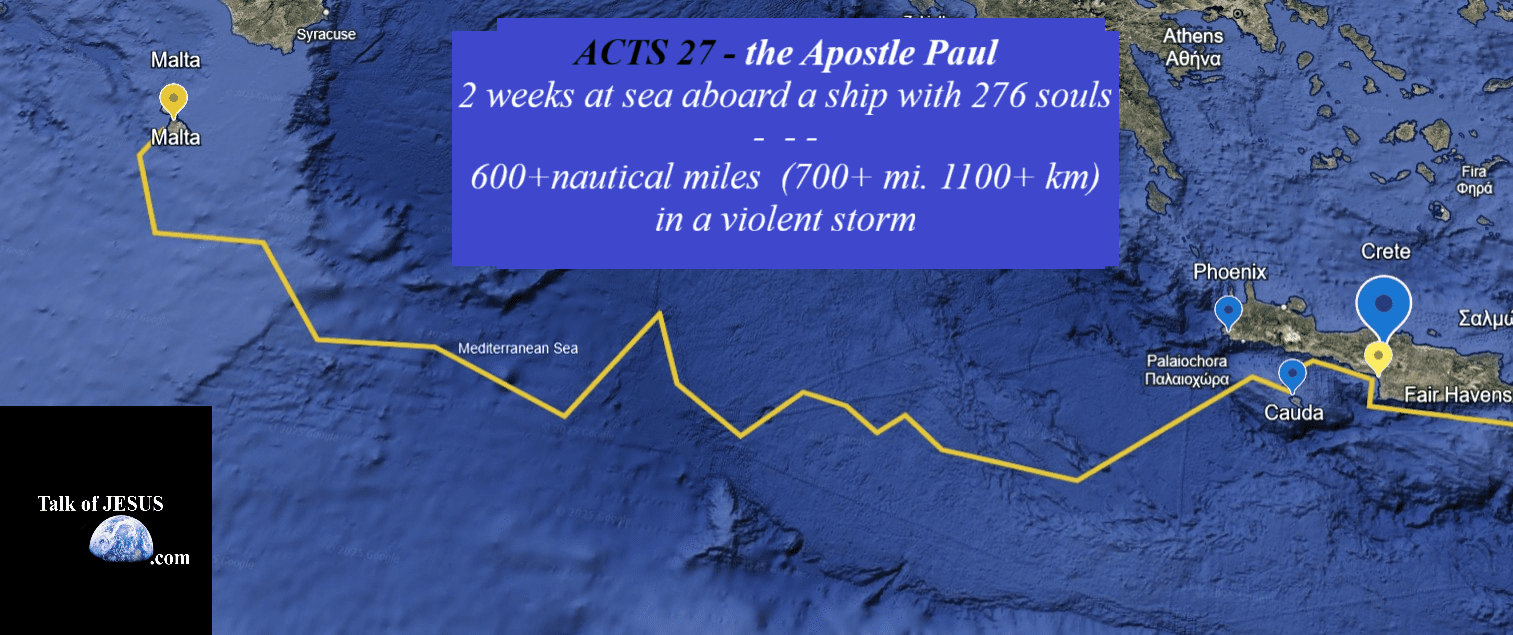
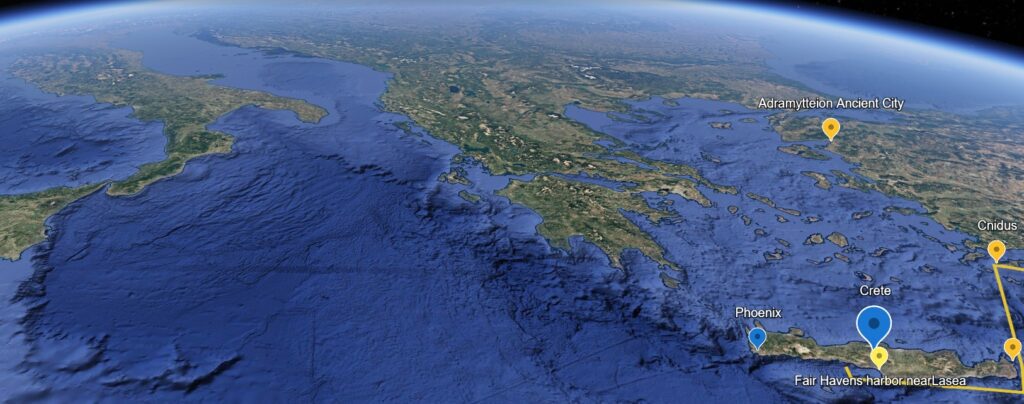
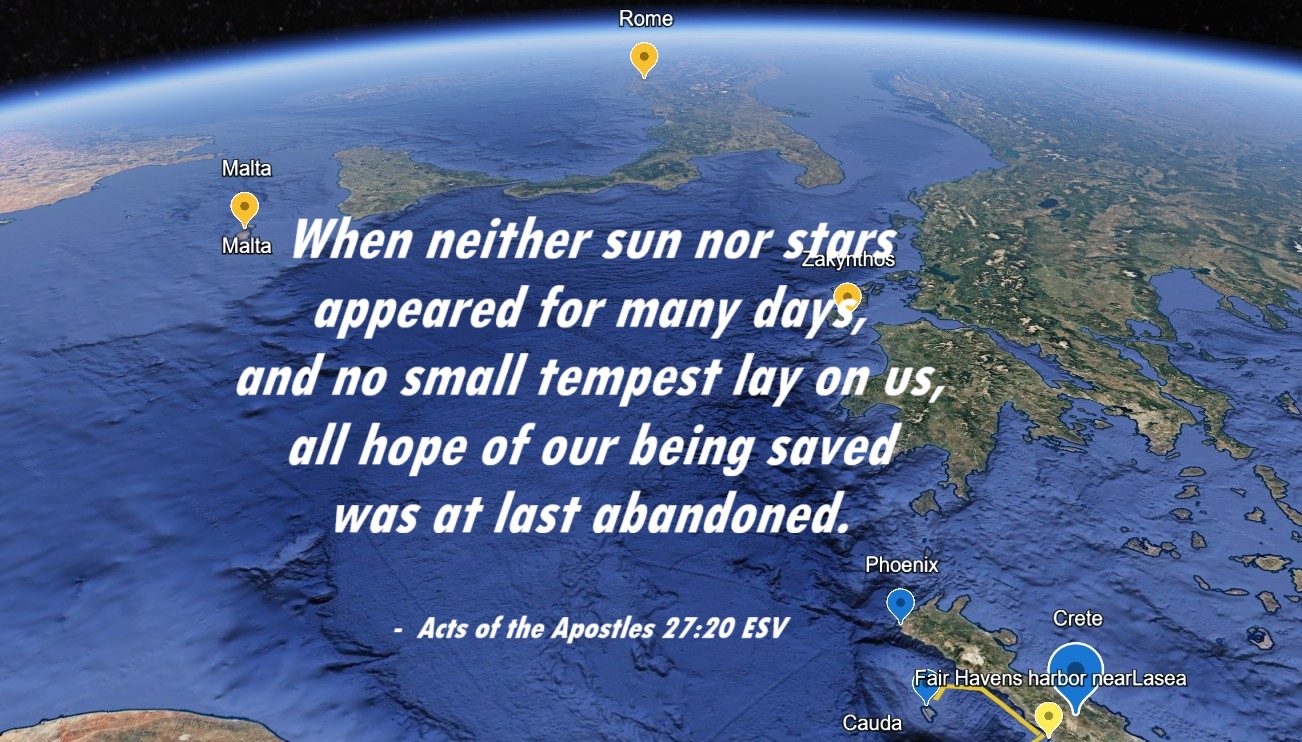
    Google Earth approximation of Paul's sailing route toward Malta in a storm - Acts 27

    “So take courage, men, because I believe God that it will be just the way it was told to me. But we have to run aground on some island.”

    Acts 27:25-26
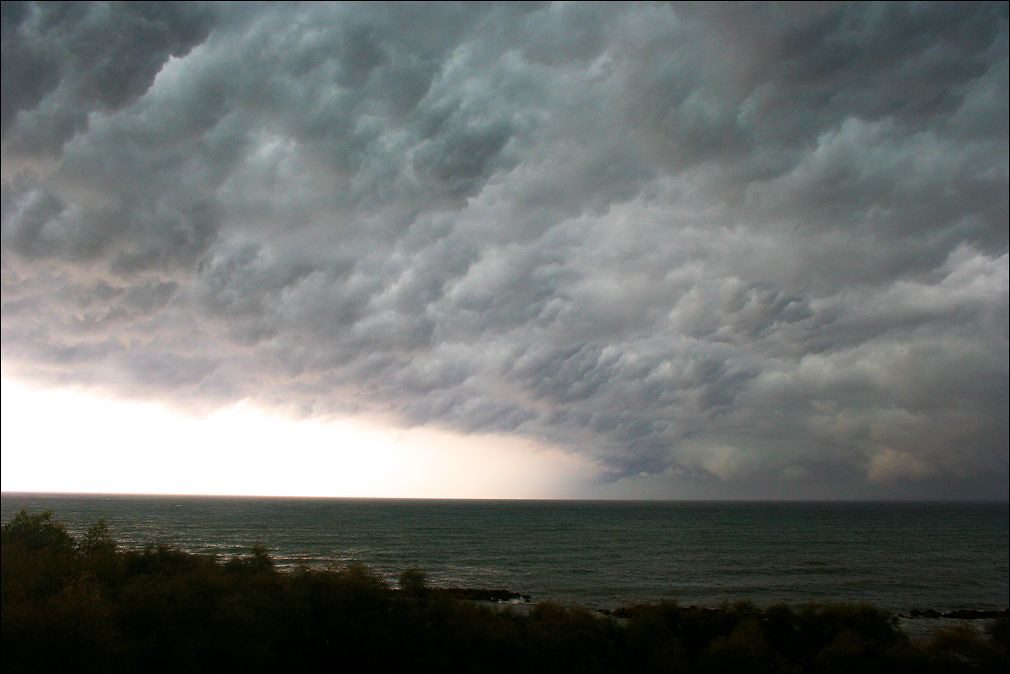
    Adriatic Sea with storm clouds

    drifting in the Adriatic Sea

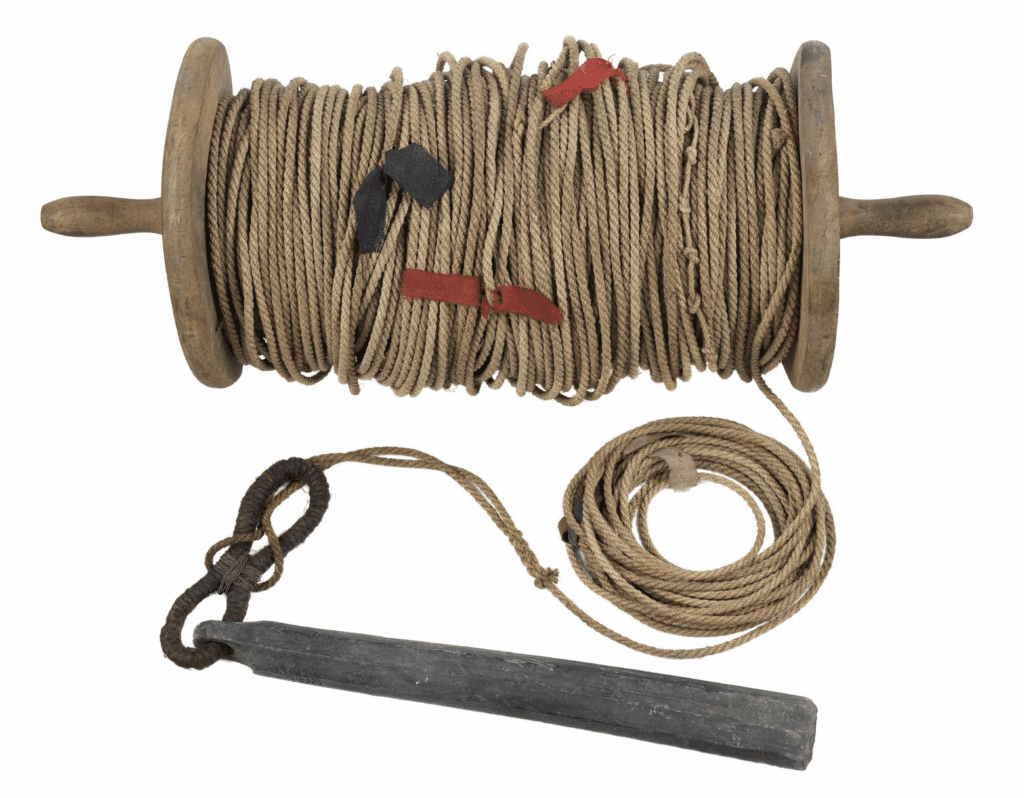
    βολίζω – bolizō

    • to heave the lead, take a sounding
      • a line and plummet with which mariners sound the depth of the sea

    ὀργυιά – fathom

    • the distance across the breast from the tip of one middle finger to the tip of the other when the arms are outstretched, 5 to 6 feet (2 m)

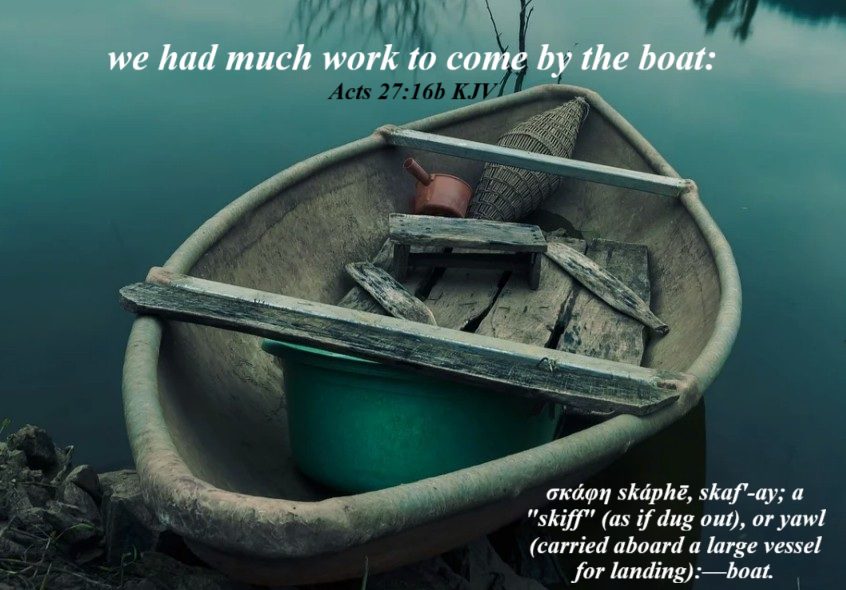
    Some sailors tried to escape from the ship;

    they had let down the skiff into the sea, pretending that they were going to put out anchors from the bow.

    Julian the Centurion in COMMAND

    “Today is the fourteenth day that you have been waiting and going without food, having eaten nothing. So I urge you to take some food. For this is for your survival, since none of you will lose a hair from your head.”

    Acts 27:33b-34 CSB – encouragement of the Apostle Paul to the men of the ship

    Recall that Paul has this prophesy first hand from an Angel of God. 

    Breaking the Bread of Thanks

    After he said these things and had taken some bread, he gave thanks to God in the presence of all of them, and after he broke it, he began to eat.

    They all were encouraged and took food themselves.

    Acts 27:35-36 CSB

    And we were in all in the ship two hundred threescore and sixteen souls.

    ACTS 27:37 KJV

    And when they had eaten enough, they lightened the ship, and cast out the wheat into the sea.


    Fleeing a Sinking Ship
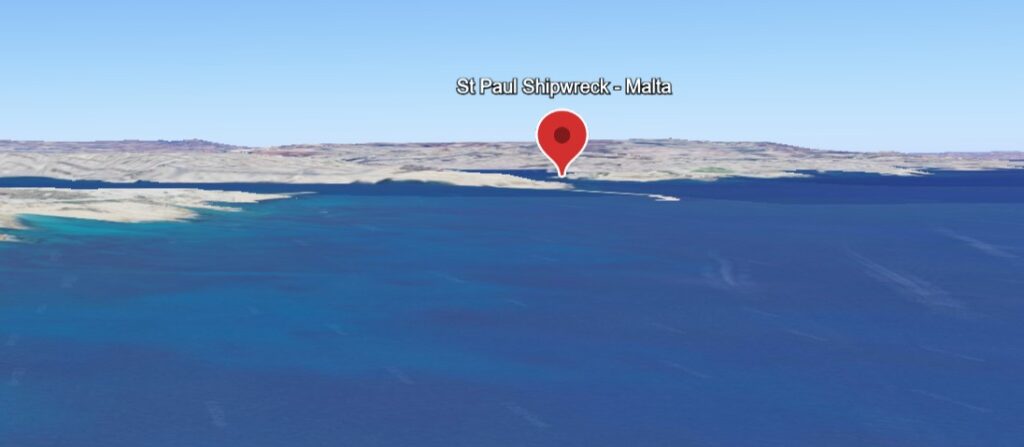
    Island of Malta - St Paul shipwreck Acts 27=78

    When daylight came, they did not recognize the land but sighted a bay with a beach. They planned to run the ship ashore if they could.

    After cutting loose the anchors, they left them in the sea, at the same time loosening the ropes that held the rudders.
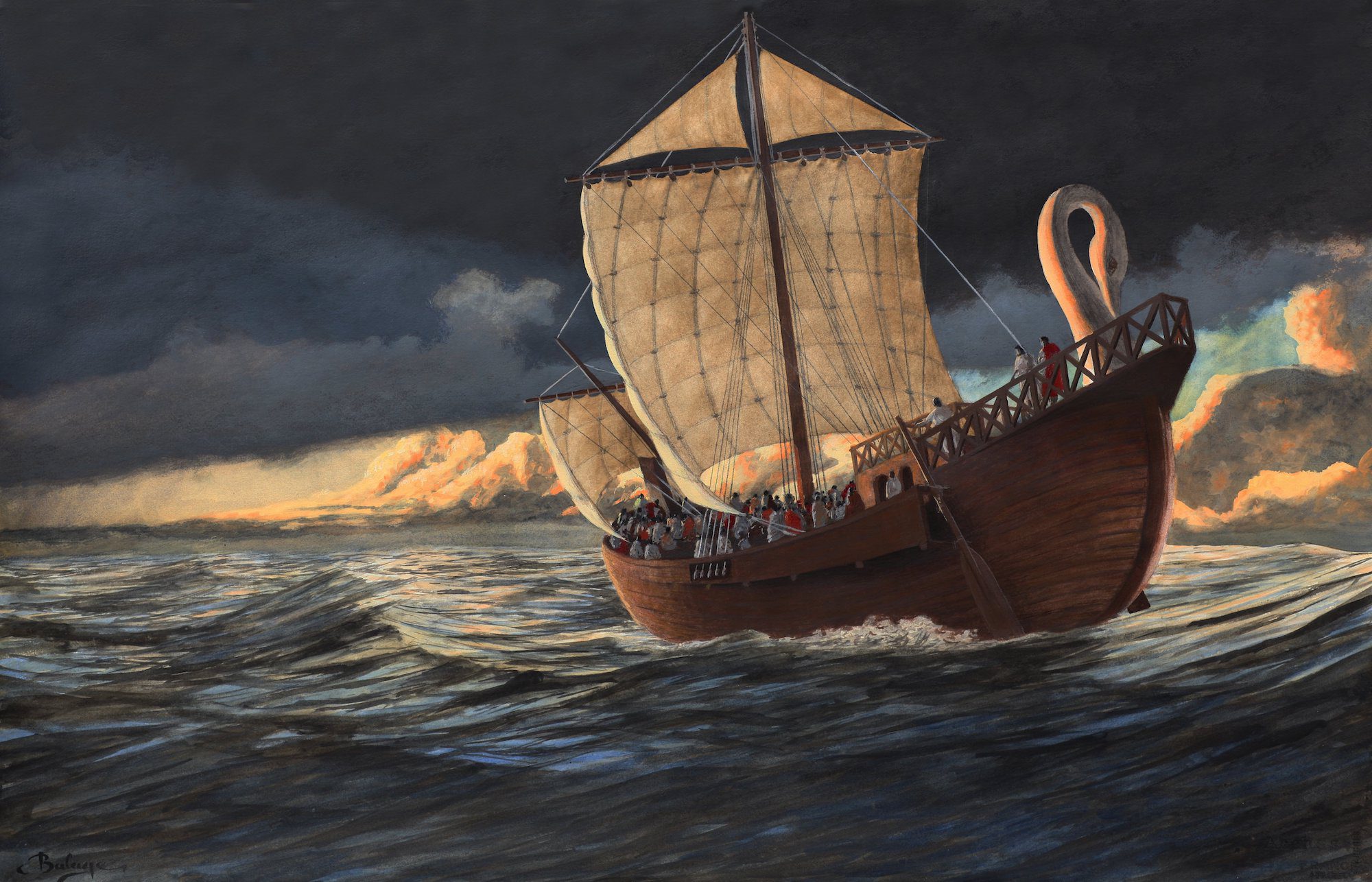
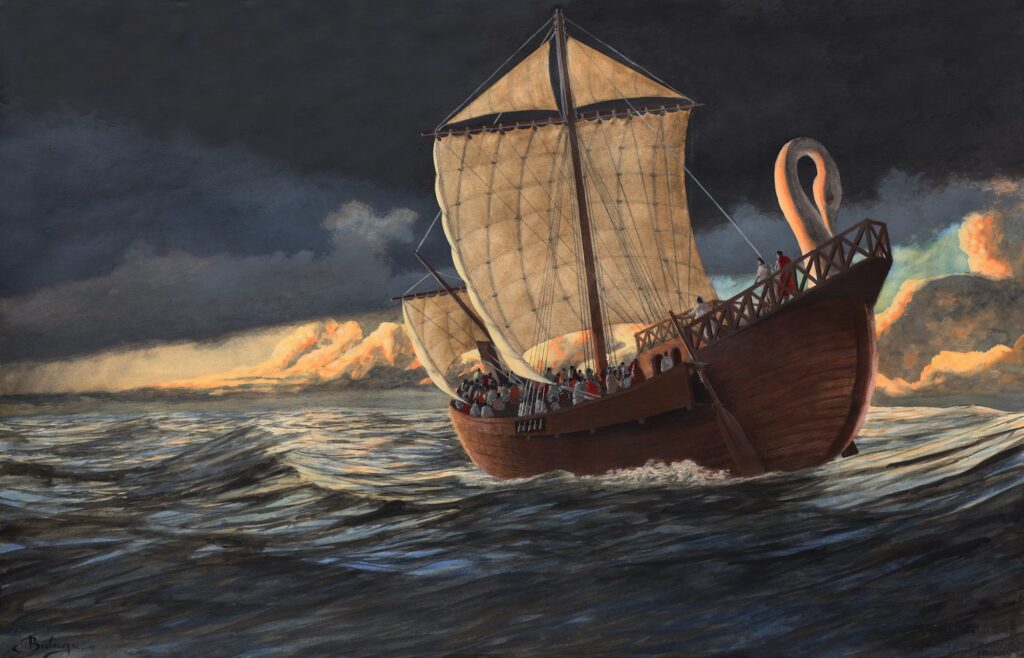
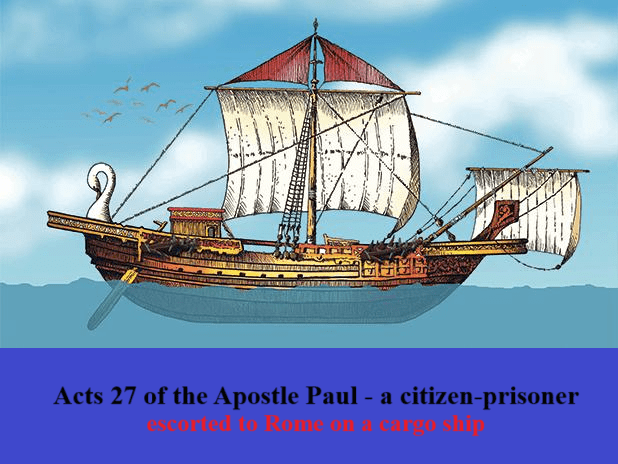
    Roman grain ship

    Then they hoisted the foresail to the wind and headed for the beach.
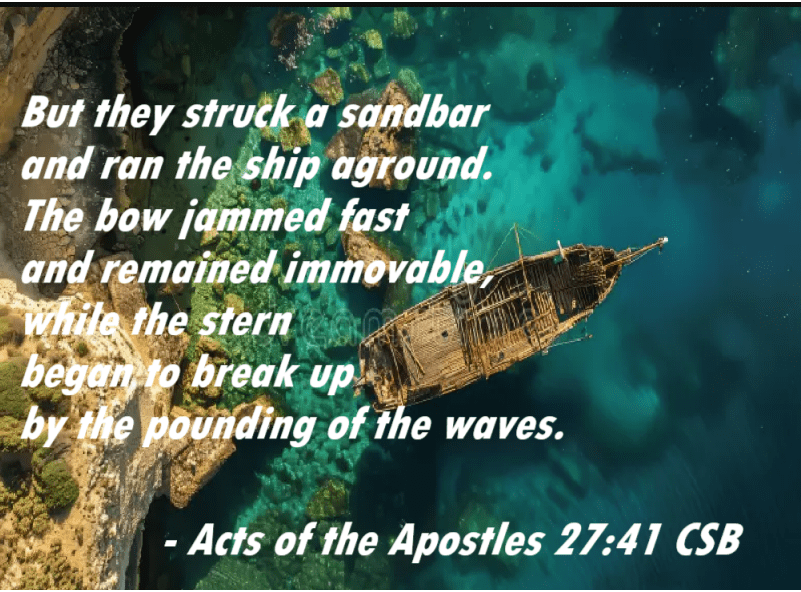
    But they struck a sandbar and ran the ship aground. The bow jammed fast and remained immovable, while the stern began to break up by the pounding of the waves. Acts 27:41 CSB rendering of shipwreck of the Apostle Paul

    Julian – Responsible for all men

    The soldiers’ plan was to kill the prisoners so that no one could swim away and escape. But the centurion kept them from carrying out their plan because he wanted to save Paul,

    and so he ordered those who could swim to jump overboard first and get to land.
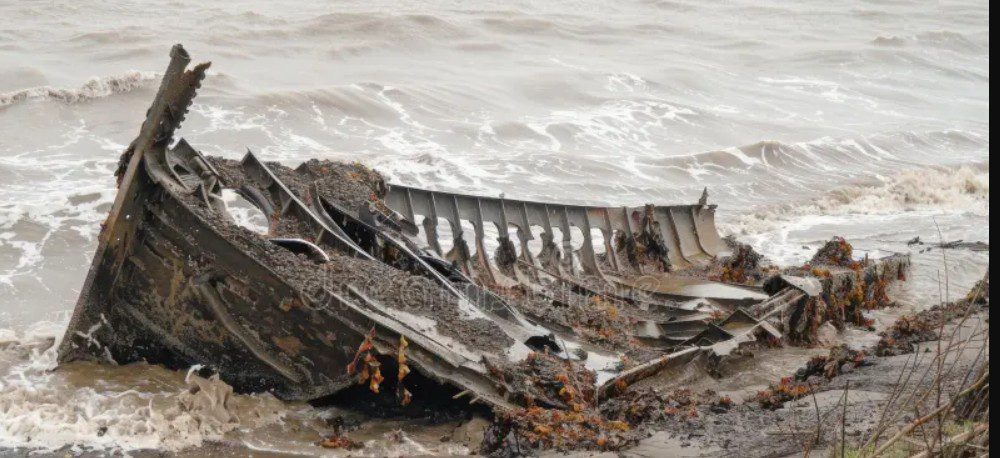
    The rest were to follow, some on planks and some on debris from the ship.

    In this way, everyone safely reached the shore.

    Acts of the Apostles 27:44 CSB
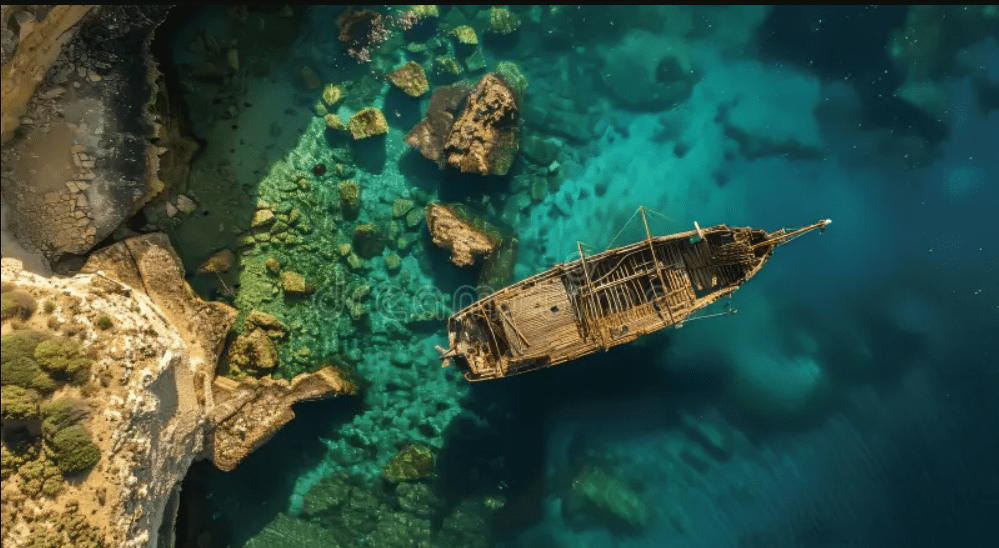
    Once safely ashore, we then learned that the island was called Malta.

    Acts of the Apostles 28:1

    To be continued…

  • Swept asunder by the Tempest of a Euroclydon

    Swept asunder by the Tempest of a Euroclydon

    “Men, I perceive that this voyage will end with disaster and much loss, not only of the cargo and ship, but also our lives.”

    Acts of the Apostles 27:10 NKJV

    Paul’s prediction of the Tempest

    Certainly the Apostle to the Hellenist gentiles knew much about the waters of the Aegean and Mediterranean. He had sailed on various ships many times during missionary journeys of the past dozen years.

    And from what we know of Paul, certainly the Apostle (who knew Scripture well) would have been praying as the Greek grain ship set sail along the coast of Crete seeking cover during the tempestuous autumn and winter months.

    Roman grain ship

    Perhaps Prophets such as Isaiah, who had predicted Christ as well as the new Jerusalem, would have come to mind in the Spirit calming the spirit of the Apostle Paul in comforting Scripture.

    At some point in the early itinerary of this voyage: Julius and the Roman guards; Paul and Aristarchus; and the experience captain, pilot and professional sailors — ALL certainly have realized the peril of the approaching storm.

    The Euroclydon – Winter Tempest of the Mediterranean

    Acts 27 – a short voyage swept into a billowing sea

    When the south wind blew softly, supposing that they had obtained their desire, putting out to sea, they sailed close by Crete.

    Mediterranean Sea near Phoenix Cypress

    But not long after, a tempestuous head wind arose, called Euroclydon.

    Winter winds of the Mediterranean

    Euroclydon is a term found in the New Testament, specifically in the Book of Acts, referring to a tempestuous wind that played a significant role in the Apostle Paul’s journey to Rome. The term is derived from the Greek “Eurakulōn,” which is believed to be a compound of “euros” (east wind) and “aklyōn” (north wind)

    Bible Hub

    Gregale, strong and cold wind that blows from the northeast in the western and central Mediterranean region, mainly in winter. Most pronounced on the island of Malta, the gregale sometimes approaches hurricane force and endangers shipping there

    Britannica

    Levanter, strong wind of the western Mediterranean Sea.. most common in spring and fall. Its name is derived from Levant, the land at the eastern end of the Mediterranean, and refers to the wind’s easterly direction.

    The levanter reaches its maximum intensities in the Strait of Gibraltar, where it sometimes brings eastward-flying airplanes almost to a standstill… results from a merging of the clockwise winds of a high-pressure centre over central Europe with the counterclockwise winds of a low-pressure centre over the southwestern Mediterranean.

    Britannica

    Mediterranean Gibraltar to Crete - winter Tempests, Levanters, Gregale and Euroclydon or Eurakulon

    So when the ship was caught, and could not head into the wind, we let her drive.

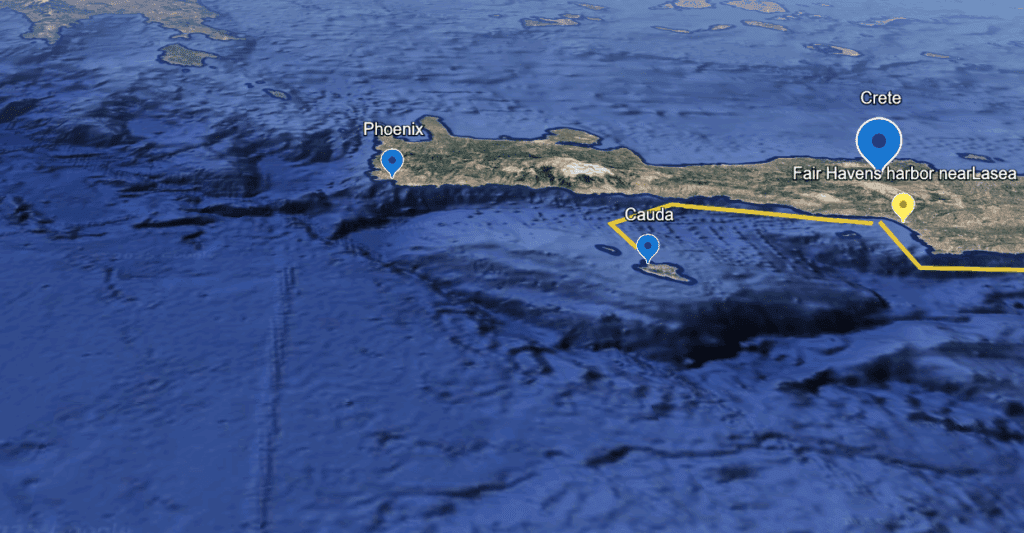
    Καῦδα – a small island nearly due west of Cape Malta on the south coast of Crete, and nearly due south of Phoenice.

    And running under the shelter of an island called Clauda,we secured the skiff with difficulty.

    When they had taken it on board, they used cables to undergird the ship;

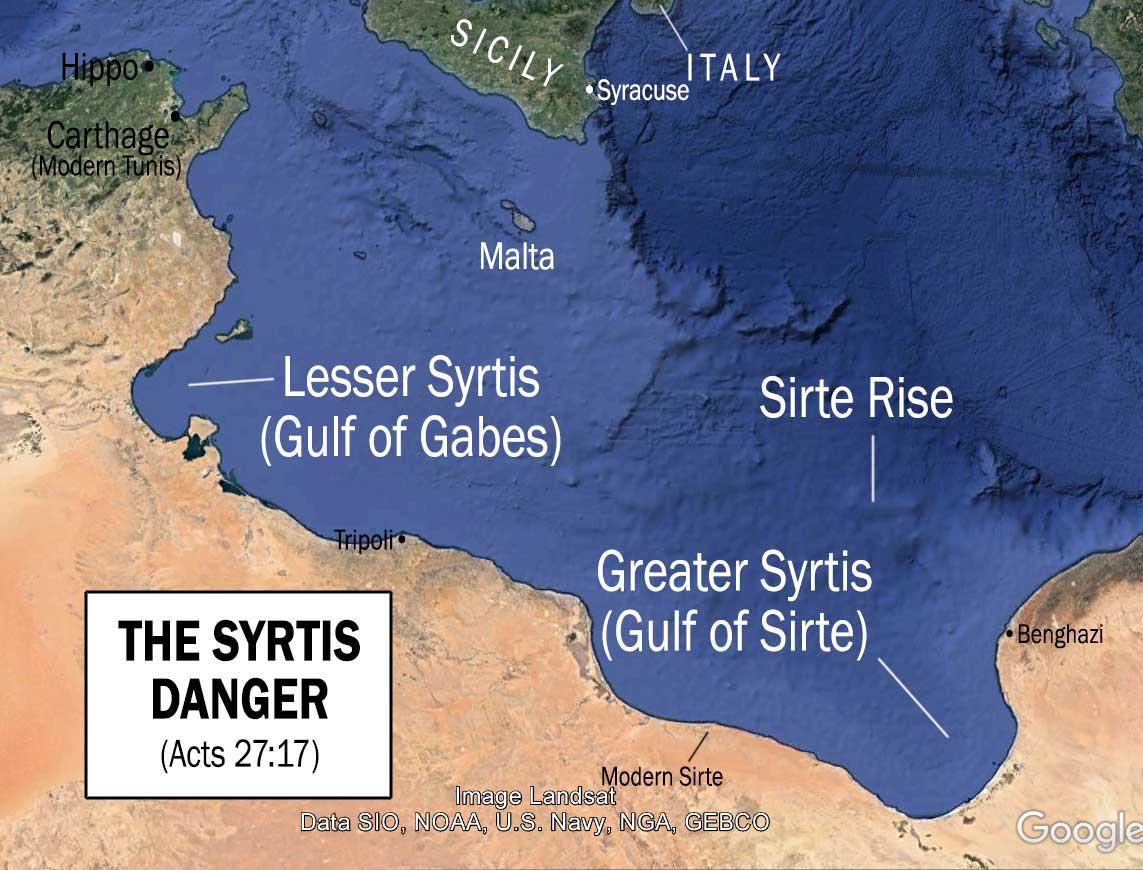
    and fearing lest they should run aground on the Syrtis Sands [quicksands],

    they struck sail and so were driven.


    The Tempest toward Malta

    The voyagers knew that the gale was bearing them in that direction, and did not dare to let the ship sail on full before the wind any longer.

    Strake sail.—The English fails to give the sense of the original. Had they struck sail altogether the ship would simply have drifted in the very direction which they were anxious to avoid. Some sail was absolutely necessary to keep the ship steady. What is meant is that they “lowered the ship’s gear,” the spars and rigging, and especially, perhaps, the heavy yard and ropes which the ancient ships carried, and which would, in such a gale, make the ship top-heavy.

    And so were driven.—Better, thus—i.e., in this state, undergirded and with storm-sails set.

    They aimed at sailing as close as possible to the wind, making for the north-west, so as to avoid the Syrtes.

    EXPOSITORY (ENGLISH BIBLE)
    Ellicott’s Commentary for English Readers

    Roman grain ship
    a new NW heading driven by the Tempest of the NorEaster
    A Reflection of the lost…
    For the LORD is our judge, 
    the LORD is our lawgiver,
    the LORD is our king;
    he will save us.


    Thy tacklings are loosed;
    they could not well strengthen their mast,

    they could not spread the sail:
    then is the prey of a great spoil divided; the lame take the prey.

    O thou afflicted,
    tossed with tempest,
    and not comforted..

    Isaiah 33:22-23;54:11a KJV :

    Will we be tossed into the sea?

    ACTS of the Apostle Paul

    – To Be Continued…

    Comment on Scripture – Share the Gospel

  • Julian and Paul: Passengers on a grain-laden slow-sailing ship

    Julian and Paul: Passengers on a grain-laden slow-sailing ship

    When we last left Paul beginning his long journey to Rome, the Apostle had boarded a small ship of Adramyttian sailing from Caesarea along the coast north of Cypress to Myra in Lycia.

    There the centurion found an Alexandrian ship sailing for Italy, and he put us aboard it.

    Acts of the Apostles 27:6 LSB

    Now the Roman Centurion Julian boards a larger Alexandrian ship with Paul and other passengers in the Lycian port setting sail for Crete and the open Mediterranean beyond.

    Acts 27:1 prisoners of Roman Centurion Julius include the Apostle Paul

    Roman Sailing Ships

    Thus far, the Centurion Julian has sailed a little less than 500 nautical miles away from Judea with many more miles to sail across the Mediterranean. The next ship is a cargo ship designed to transport grain long distances to Rome.

    Rome, with a population of about a million, required about 800 shiploads of grain each year.

    The Romans built and operated a variety of cargo ships (naves onerariae, literally “ships of burden”). A typical Roman merchant vessel was a broad, sturdy sailing ship with one to three masts carrying large square sails. These ships relied almost entirely on wind power; unlike war galleys, they had no banks of oars (at most a few oars or sweeps for maneuvering in harbors).

    If the wind died, crews might resort to warping – rowing a small boat out with an anchor and then hauling the ship forward by capstan – or else wait for a tow.

    Ancient history sites .com Roman Cargo Ships

    Acts of the Apostles 27:

    And when we had sailed slowly for a good many days, and with difficulty had arrived off Cnidus, since the wind did not permit us to go farther, we sailed under the shelter of Crete, off Salmone; and with difficulty, we sailed past it and came to a place called Fair Havens, near which was the city of Lasea.

    Acts of the Apostles 27:7-8 LSB

    Paul notes the headings of this ship loaded with grain still quite distant from Rome. Thus far they had sailed a mere 350 nautical miles in windless waters .

    More about Roman ships

    In sum, the Roman Empire,, had no interest in vertical integration of the supply chain .. its principal interest was the incorporation of private shipping activities deemed useful to the public good into the mechanisms of control exercised by the state.

    By contracting out the transport of grain, the Roman Empire also ensured quality service by experienced seafaring professionals, and an avoidance of the costly maintenance, staffing costs and continual provision of suitable vessels – ancient ships, owing to their ‘shell-first’ construction were presumably more expensive to build than later ‘frame-first’ vessels.

    source: Ancient Ports Antiques .com THE ROMAN EMPIRE AND THE GRAIN FLEETS:


    Waiting for fair winds

    And when considerable time had passed and the voyage was now dangerous, since even the Day of Atonement Fast [late September or October] was already over, Paul began to advise them..

    Acts of the Apostles 27:9 LSB

    What’s going on here?

    Julian, a Roman centurion in charge of Paul and any additional prisoners, is an ARMY man.

    Roman grain ship

    The Roman Army contracts professional sailors to man and navigate their ships (which could be commandeered, if required, for transport of Roman troops). These professional sailors are NOT in any sense like a unified Roman Navy.

    The Centurian Julius has had plenty of time to get to know Paul – a Roman citizen.

    Aristarchus (a Macedonian likely of the ruling class of Thessalonica) also accompanies this imfamous Apostle as he had recently on Paul’s third missionary jouney.

    Julius had actually allowed them to briefly meet with other Christians at an earlier stop in Sidon.

    In a sense, Julius is in charge, but cannot take full responsibility for this grain-hauling merchant ship.

    His citizen prisoner Paul, like the grain, is manifested for Caesar in Rome. An entrepreneurial owner of this or any cargo ship would have much at stake, consequently commissioning himself (or a trusted family member) as captain of his ships.


    Paul addresses the leaders of his voyage

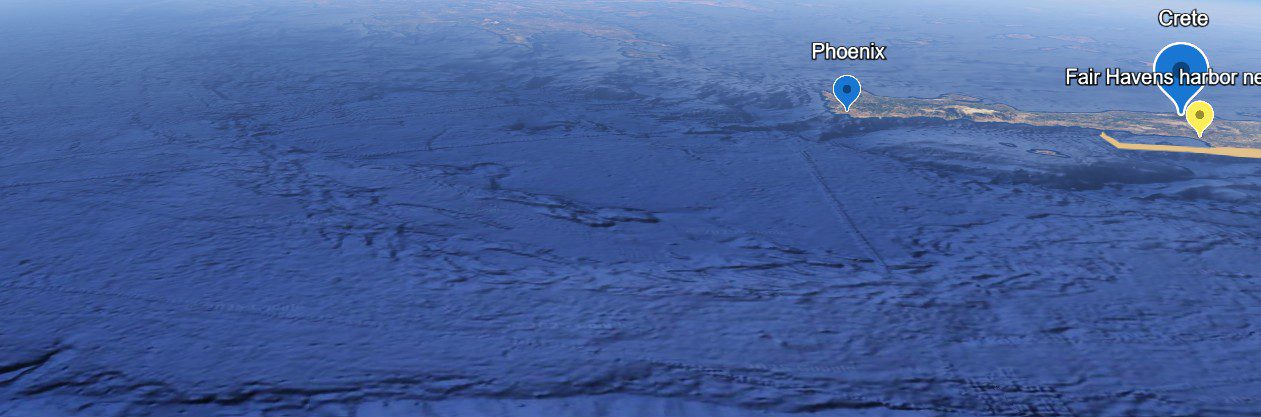
    But the centurion {Julius} was being more persuaded by the pilot and the captain of the ship than by what was being said by Paul. And because the harbor [Fair Havens] was not suitable for wintering, the majority reached a decision to set sail from there, if somehow they could arrive at Phoenix, a harbor of Crete facing southwest and northwest, to spend the winter there.

    Acts of the Apostles 27:11-12 LSB

    south shore of Crete between Fair Havens and Phoenix

    When a gentle south wind began to blow, they saw their opportunity; so they weighed anchor and sailed along the shore of Crete.

    Acts of the Apostles 27:13 NIV


    Mediterranean Sea near Phoenix Cypress

    Voyage of the Apostle Paul to Rome — To be continued…

    Talk of JESUS . com

    Comment on Scripture – Share the Gospel