Tag: sin

  • Are we children of Ephraim? – Psalm 78

    Are we children of Ephraim? – Psalm 78

    A child of blessing

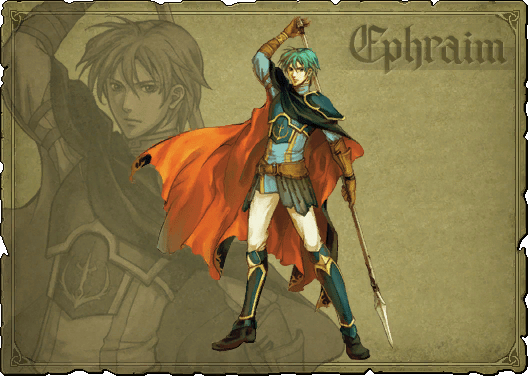
    Ephraim was the second child of Zaphnath-Paaneah and Asenath. His father’s high position second only to Pharaoh gave Ephraim every advantage as he was brought up with all the riches of the palace.

    You may recognize him as brother of Manasseh and both brothers known as sons of Joseph, son of Israel (Jacob).

    He was much like the church we know in the US now. These sons and their families grew up with practically everything a man could desire. But one change in leadership would relegate them to lesser roles before they lost faith in the wilderness.

    Even though they had followed the Lord when Moses returned to save Israel from slavery, during forty years in the wilderness each year of yearning for former days turned their hearts from the Lord.

    Think about their roles as followers of God in the way Asaph contemplates years later. Think also closer to home, considering your own push-back from faithfulness from the Lord who would save you.

    Psalm 78

     God’s Kindness to Rebellious Israel
     A Contemplation of Asaph.

    9 The children of Ephraim, being armed and carrying bows,
    Turned back in the day of battle.
    10 They did not keep the covenant of God;
    They refused to walk in His law,
    11 And forgot His works
    And His wonders that He had shown them.

    How like US

    Forget for a moment your own heritage.

    Perhaps your forefathers came to a land of promise or a home of the free. They may have bought passage to new hope in a land of milk and honey, a hopeful homeland of riches.

    Or perhaps they fled in huddled masses from persecution, slavery and imminent death. Oh, the hope of our poor and tired aliens embarking on a pilgrimage of promise.

    Who will you trust if not the Lord?

    Of Ephraim’s blessing

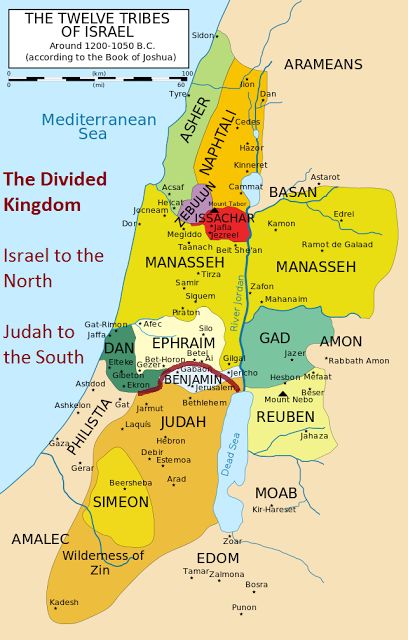
    Note centrality of Ephraim & Manasseh, Joseph’s sons to the promised land and a divided people of the LORD

    12 Marvelous things He did in the sight of their fathers,
    In the land of Egypt, in the field of Zoan.

    Do you, even in your days of difficulty, remember what the Lord has done for you and your fathers in days past, how the Lord has saved you?

    13 He divided the sea and caused them to pass through;
    And He made the waters stand up like a heap.
    14 In the daytime also He led them with the cloud,
    And all the night with a light of fire.
    15 He split the rocks in the wilderness,
    And gave them drink in abundance like the depths.
    16 He also brought streams out of the rock,
    And caused waters to run down like rivers.

    Here is Asaph’s embrace of the Lord’s blessing many years prior to his own life in the Kingdom of David.

    How like the blessings thousands of years later of the ‘new world,’ a new land to conquer and colonize. Ephraim was one blessed by the Lord, but the promise of the Lord was long forgotten.

    Sin and Rebellion

    Egypt or England will call it rebellion, or course. But your journey of hope from oppression must remain in the hand of the Lord.

    We know in your heart that our forefathers were not without sin. The cause of our exodus from a former existence was not so righteous as our national celebrations would have us believe.

    Though Asaph laments of his founding fathers, we could well apply their rebellion to our own hearts.

    But they sinned even more against Him
    By rebelling against the Most High in the wilderness.

    Psalm 78:17 NKJV

    18 And they tested God in their heart
    By asking for the food of their fancy.
    19 Yes, they spoke against God:
    They said, “Can God prepare a table in the wilderness?
    20 Behold, He struck the rock,
    So that the waters gushed out,
    And the streams overflowed.
    Can He give bread also?
    Can He provide meat for His people?”

    The PERSON of GOD

    If God IS a Person, then how does He feel about your sin?

    How does God the Father react to the sin of His child?

    Roger Harned – talkofJesus.com on Psalm 78

    21 Therefore the Lord heard this and was furious;

    So a fire was kindled against Jacob,
    And anger also came up against Israel,
    22 Because they did not believe in God,
    And did not trust in His salvation.

    I’ll own it – I’m a rebel like Ephraim. Lord forgive me.

    And remember this, along with His many blessings to our forefathers, your own faithful or rebellious children, and what the Lord does for you.

    23 Yet He had commanded the clouds above,
    And opened the doors of heaven,
    24 Had rained down manna on them to eat,
    And given them of the bread of heaven.
    25 Men ate angels’ food;
    He sent them food to the full.

    Do you remember the miracles of the Lord’s blessings?

    Here we are so blessed more than most, yet craving the past and coveting the riches of others. Are we not like Joseph’s sons – Ephraim, the most blessed, whose rebellion failed to trust in the Lord?

    The Father’s wrath

    29 So they ate and were well filled,
    For He gave them their own desire.
    30 They were not deprived of their craving;

    But while their food was still in their mouths,
    31 The wrath of God came against them,
    And slew the stoutest of them,
    And struck down the choice men of Israel.

    How like the children of Ephraim we are!

    We plea to the Lord our God, ‘Father, give us this one thing we must have.’ Then, we think, because our Father has blessed us we will tell him of our next desire for blessing.

    32 In spite of this they still sinned,
    And did not believe in His wondrous works.

    33 Therefore their days He consumed in futility,
    And their years in fear.

    34 When He slew them, then they sought Him;
    And they returned and sought earnestly for God.

    Have you taught your children?

    SPOILED CHILDREN
    A meditation of J.C. Ryle 4 min. 23 sec.
    John Charles Ryle was born of well-to-do parents at Macclesfield England, 10 May 1816, appointed first Bishop of Liverpool. "His successor in Liverpool described him as ‘the man of granite with the heart of a child.’ - source

    Have you told your children of blessing that God our Father, the Lord, must be their Lord or they will suffer His wrath?

    Do you fear death and judgment (or even judgment, then death)?

    In fear have you promised God one thing, then in your comfort forgotten your Father?

    Psalm 78: (cont.)

    35 Then they remembered that God was their rock,
    And the Most High God their Redeemer.

    36 Nevertheless they flattered Him with their mouth,
    And they lied to Him with their tongue;
    37 For their heart was not steadfast with Him,
    Nor were they faithful in His covenant.

    A Father’s love

    Exodus 34:6 Then the LORD passed in front of Moses and called out:
    “The LORD, the LORD God,
    is compassionate and gracious,
    slow to anger,
    abounding in loving devotion and faithfulness,
    7 maintaining loving devotion to a thousand generations,
    forgiving iniquity, transgression, and sin.

    Yet He will by no means excuse the guilty;
    He will visit the iniquity of the fathers
    on their children and grandchildren
    to the third and fourth generations.”

    Do you, forgetful unfaithful claimant of the Lord, remember your repentance?

    Have you returned to the way of your sin, though your fathers repented and told you the faithfulness of the Lord?

    The Father’s compassion

    וְ֭לִבָּם לֹא־נָכֹ֣ון עִמֹּ֑ו וְלֹ֥א נֶ֝אֶמְנ֗וּ בִּבְרִיתֹֽו׃

    Psalm 78:37 WLC

    But he, being full of compassion, forgave their iniquity, and destroyed them not: yea, many a time turned he his anger away, and did not stir up all his wrath.

    For he remembered that they were but flesh; a wind that passeth away, and cometh not again.

    Psalm 78: (continued)

    52 But he brought his people out like a flock;
    he led them like sheep through the wilderness.
    53 He guided them safely, so they were unafraid;
    but the sea engulfed their enemies.
    54 And so he brought them to the border of his holy land,
    to the hill country his right hand had taken.
    55 He drove out nations before them
    and allotted their lands to them as an inheritance;
    he settled the tribes of Israel in their homes.

    Testing the Lord

    56 But they put God to the test
    and rebelled against the Most High;
    they did not keep his statutes.
    57 Like their ancestors they were disloyal and faithless,
    as unreliable as a faulty bow.
    58 They angered him with their high places;
    they aroused his jealousy with their idols.

    Does any sin of ours deserve the wrath of God our Father more than our worship of idol after lifeless idol, while we fail to remember our Father and Shepherd?

    Consequence of the Sin of Ephraim

    When God heard this, he was wroth, and greatly abhorred Israel:

    So that he forsook the tabernacle of Shiloh, the tent which he placed among men..

    Psalm 78:59-60 KJV

    The Very Presence of God left the Tabernacle of worship for Israel, because of their rebellion.

    Psalm 78: (CSB)

    67 He also rejected the tent of Joseph,
    And did not choose the tribe of Ephraim,
    68 But chose the tribe of Judah,
    Mount Zion which He loved.
    69 And He built His sanctuary like the heights,
    Like the earth which He has founded forever.

    God then chose Judah

    70 He also chose David His servant
    And took him from the sheepfolds…

    … He brought him
    To shepherd Jacob His people,
    And Israel His inheritance.
    72 So he shepherded them according to the integrity of his heart,
    And guided them with his skillful hands.

    • Are we children of Ephraim?
    • Children of Moses or of David?

    WHO HAS THE LORD CHOSEN?

    Abraham, Isaac and Jacob: yes Israel was chosen and blessed.

    Joseph, who came to be known in Egypt as Zaphnath-Paaneah, was blessed over his eleven brothers who finally bowed down to him.

    Then the LORD through a final blessing by Joseph’s father Israel blessed his sons, Manasseh the eldest, but giving the greater blessing to Ephraim.

    Yet through disobedience of the sons of Ephraim Israel’s blessing fell upon Judah.

    God’s Guidance of His People in Spite of Their Unfaithfulness – Psalm 78

    And after this all of Israel and its ten tribes were given over to their enemies Judah remained.

    But in time by their own wickedness, refusal to hear the Lord’s Prophets and turning against the Lord their God, the LORD also gave Judah over to its enemies.

    A Lament over the Destruction of Jerusalem, and Prayer for Help – Psalm 79

    Another Psalm of Asaph – a short reading of 13 verses

    Then the Lord brought back a remnant to Judah. They again discovered the Law of Moses in the Temple the Lord had abandoned.

    Yet again after a short time they again turned against the Lord their God. And for a time no word of the Lord was heard in all Israel. Again as Israel, Judah failed to listen to the Lord’s Prophets.

    “Your own eyes will see this, and you yourselves will say, ‘The LORD is great, even beyond the borders of Israel.’

    “A son honors his father, and a servant his master. But if I am a father, where is my honor? And if I am a master, where is your fear of me? says the LORD of Armies to you priests, who despise my name.”

    Malachi 1:5-6a CSB

    1:6 בֵּן יְכַבֵּד אָב וְעֶבֶד אֲדֹנָיו וְאִם־אָב אָנִי אַיֵּה כְבֹודִי וְאִם־אֲדֹונִים אָנִי אַיֵּה מֹורָאִי אָמַר יְהוָה צְבָאֹות לָכֶם הַכֹּֽהֲנִים בֹּוזֵי שְׁמִי וַאֲמַרְתֶּם בַּמֶּה בָזִינוּ אֶת־שְׁמֶֽךָ׃

    Masoretic text of Malachi 1:6

    The Son before Abraham

    The Good News of the Son – John 3:

    “For God loved the world in this way:

    He gave his one and only Son, so that everyone who believes in him will not perish but have eternal life. For God did not send his Son into the world to condemn the world, but to save the world through him.

    The one who believes in the Son has eternal life, but the one who rejects the Son will not see life; instead, the wrath of God remains on him.

    Do you, sons and daughters of blessing, sons and daughters of great blessings through the Lord our God, believe in the Son of the Father, the Messiah Jesus, the Son of Man and only Son of God in whom you have eternal life rather than God’s wrath, as we well deserve?

    What must you do?

  • Jesus – Disaster & Sin – Tower of Siloam

    Jesus – Disaster & Sin – Tower of Siloam

    “I tell you, no! But …

    What day’s NEWS doesn’t HEADLINE: DISASTER? The world asks why God would allow this. Were those killed worse sinners than others, so God punished them by death?

    This is how we think. Even if we acknowledge sin (in others) we want to blame God for punishment, especially in providential ‘acts of God’ which end lives unexpectedly.

    The Good News of Luke briefly describes two such incidents.

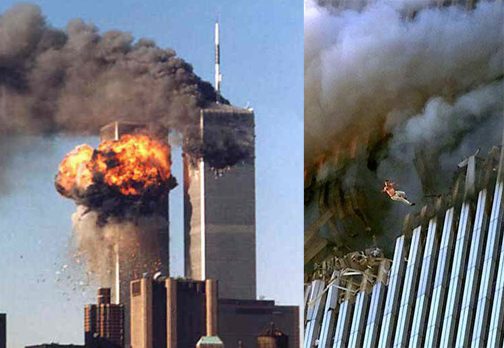
    world trade center towers burning on 9-11-2001

    Such disasters do imprint our memories for a time, for example in this 21st century just mention of NINE-ELEVEN.

    Like the unexpected question, Who Sinned? , here Jesus gives a similar answer to disaster similar to the “WHY” about a man born blind from birth.

    This time the crowds had complained of persecution of Galileans by the Roman Prefect of Judea Pontius Pilate. Jesus responds to the crowds with a rhetorical question about sin. (You need to think about what the Lord tells us here about the nature of sin and how we must approach it.)

    Unless you repent …

    Luke 13:

    2 Jesus answered, “Do you think that these Galileans were worse sinners than all the other Galileans because they suffered this way? 3 I tell you, no!

    But unless you repent, you too will all perish.”

    Were these who died at the hand of Pilate worse sinners? NO.

    The Messiah then addresses a local disaster, a recent act of God well-known to Jerusalem.

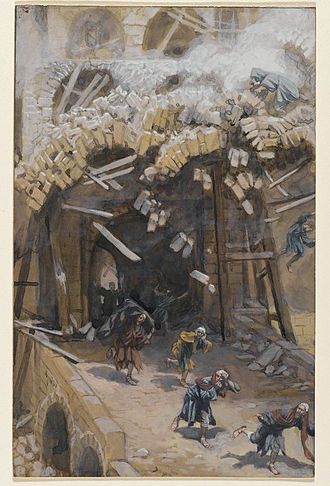
    painting of tower of Siloam crumbling on men of Jerusalem

    4 Or those eighteen who died when the tower in Siloam fell on them—do you think they were more guilty than all the others living in Jerusalem?

    5 I tell you, no!

    But unless you repent, you too will all perish.”

    ‘Unless WE REPENT,’ the Messiah’s listeners must have thought? This rabbi preaches the same message as John the Baptizer and the Prophets of old.

    Then in typical His typical teaching technique, Jesus tells a symbolic parable to illustrate his point that we must repent or we will also perish.

    The fig tree, an ancient symbol of life in Israel and the middle east, represents prosperity, peace and righteousness throughout the Bible.

    Parable of the Fig Tree

    6 Then he told this parable:

    “A man had a fig tree growing in his vineyard, and he went to look for fruit on it but did not find any.

    No life in the tree, no prosperity for the owner of the vineyard, no peace here in Jerusalem where fig trees blossom and bear fruit.

    7 Then he said to the keeper of his vineyard,

    ‘Look, for three years I have come seeking fruit on this fig tree and find none. Cut it down; why does it use up the ground?’

    The Son of Man, the Messiah has been sowing righteousness in the land for three years. Does Jesus ask this crowd of Jews (keeper of God’s vineyard), ‘Why has your faith not yielded fruit?’

    Some Jews have believed and followed their Messiah. A faithful servant in God’s vineyard would plea for mercy for the vine. So his repentant answer would ask the Owner of the vineyard for mercy. He will promise to do his Lord’s work of righteousness once more.

    8 “‘Sir,’ the man replied, ‘leave it alone for one more year, and I’ll dig around it and fertilize it. 9 If it bears fruit next year, fine! If not, then cut it down.’”

    You too will all perish

    There’s something about disaster and death which gets demands our attention: our own mortality.

    Any story of suffering and sudden death of others reminds us of our own helpless before Almighty God. And some will recall their own past sins and immediacy of repentance.

    One recent story of annual flooding in Jerusalem reminds us of the suddenness of the expected. These events often reveal the heritage of our past in addition to the mortality of its victims.

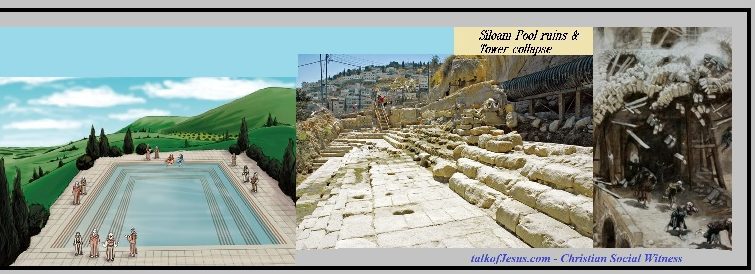
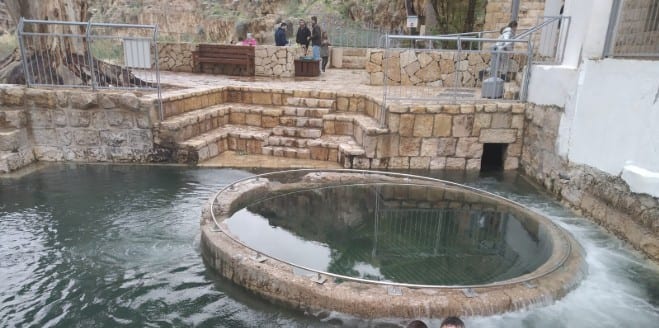
    Siloam was an area just outside the walls of Jerusalem on the southeast side of the city. A spring-fed pool was there, which was the scene of one of Christ’s miracles (John 9). The tower of Siloam may have been part of an aqueduct system or a construction project that Pilate had begun. In any case, the tower fell, and eighteen people were killed in the catastrophe.

    Why did Jesus mention the tower of Siloam in Luke 13:4?

    Why mention a recent disaster?

    Second COVID-19 death sparks fears, lockdown in Italian towns – Agence France-Presse
    Posted at Feb 22 2020 08:08 PM [local time]

    I could have chosen pictures & NEWS from just this month, February 2020, even from contemporary Jerusalem where Jesus addressed sin and disaster in speaking of both the tower and pool of Siloam.

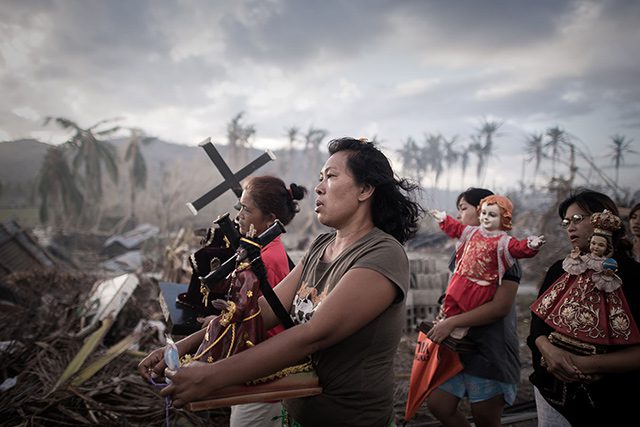
    Refugees of natural disasters, even so common as annual hurricanes or typhoons (as pictured here from 2013 in the Philippines) remind us that our earthly home is temporary. The displaced ships in Luzon Philippines (above) are part of a witness by Pastor BERMIE DIZON who lived there at the time. He witnesses comparison to Jesus’ teachings about the tower and pool of Siloam.

    “I was only a few miles away from the volcano, Mt. Pinatubo when it exploded in 1991. At that very moment of explosion, I really thought my family and I will die buried like those in the ancient city of Pompeii.

    Pastor Bermie Dizon of GCI Ministries, Luzon Philippines bermiedizon.com/disasters/

    I ask the same question of Jesus of those who perished in the fall of the Tower of Siloam:

    Contemporary application by paraphrase of Jesus’ questions

    “Do you think that these FILIPINOS were more sinful than all the other FILIPINOS because they suffered these things?

    3 No, I tell you; but unless you repent, you will all perish as well.

    COVID-19 tally: 76,785 cases, 2,249 deaths, 34 cases in the U.S.
    Published: Feb 21, 2020 2:50 p.m. ET

    “Or those two thousand killed by the #Coronavirus —do you think they were more sinful than all the other people who live in China and other places in this world?

    5 No, I tell you; but unless you repent, you will all perish as well.”

    Therefore, feed your faith

    “‘… Perhaps it will produce fruit next year, but if not, you can cut it down.’”

    Luke 13:9 CSB – Jesus’ Parable of the Barren Fig Tree
    God-willing we will return to the pool of Siloam in John 9.
    To be continued... 
  • Who May Judge SIN?

    Who May Judge SIN?

    Continuing in the Gospel of John

    ‘Who made you judge and jury,’ some ask the Christian who applies the Law? “Don’t judge sin,” some even preach deceptively. Many a sinner will quote Jesus to you: “Judge not, that you be not judged. Matthew 7:1

    We have been following the Good News of the Messiah Jesus told by John, only surviving disciple after all others had died for their witness of Truth, rather than recant the only Way to heaven, Christ Jesus. His Good News is explanation and not necessarily chronological.

    Previously in John 7 at the Jewish Festival of Booths Jesus shouted out an invitation to the crowds:

    “He who believes in Me, as the Scripture has said, out of his heart will flow rivers of living water.”

    Now we move on to a discussion the following day about authority in the Law. Religious authorities who love to judge sin confront the Messiah with one of their favorites, adultery.

    John 8:

    2 At dawn he went to the temple again, and all the people were coming to him. He sat down and began to teach them.

    Let’s not miss that Jesus had been teaching on the Holy Spirit of God the previous day.

    He said this about the Spirit. Those who believed in Jesus were going to receive the Spirit, for the Spirit had not yet been given because Jesus had not yet been glorified.

    John 7:39 CSB

    Jesus said this about the Holy Spirit as witness to Himself as the Messiah of the Living God!

    Wouldn’t you want to know more about this Man claiming the very power of the One Lord and God? So the crowds came, along with those who claimed earthly authority over the Law of Moses.

    How do YOU judge sin?

    3 Then the scribes and the Pharisees brought a woman caught in adultery, making her stand in the center. 4 “Teacher,” they said to him, “this woman was caught in the act of committing adultery.

    Now, dear christian in this twenty-first century crowd, you think very little of the seriousness of her first century indiscretion with a man to whom she was not married. In fact, in all likelihood many of you commited a different and similar sin when you first loved the significant other of your own life. We are oh so ready to condemn any man who claims the authority of God over our own less severe way to judge sin.

    5 In the law Moses commanded us to stone such women. So what do you say?”

    So does Jesus believe in capital punishment?

    How dare she sleep with another man! After all, she is married.

    6 They asked this to trap him, in order that they might have evidence to accuse him.

    You know the old (not so funny, really) question of the lawyer: “When did you stop beating your wife?” No right answer to the prosecuting question as stated. There’s more to her story than the evidence presented.

    By the way, have you already answered without having had additional evidence presented – facts which perhaps only God may know?

    Is accusation not guilty until proven innocent in these last days?

    So here we look to the Messiah confronted an accusation of adultery in a court having already judged sin of the accused woman.

    Jesus as Judge

    The crowds look on. Religious officials have stated the Law clearly and ask for sentence confirming their judgment of this accused violator. Surly the Messiah who claims that every jot and tiddle of the Law must be fulfilled will not show mercy to this woman who sinned.

    Yet Jesus does not speak a sentence to judge sin clearly accused of this woman.

    7 When they persisted in questioning him, he stood up and said to them,

    “The one without sin among you should be the first to throw a stone at her.”

    8 Then he stooped down again and continued writing on the ground.

    How does the Messiah of God judge sin?

    Jesus has already witnessed the standard by which the Lord will judge sin.

    “I can do nothing on my own. I judge only as I hear, and my judgment is just, because I do not seek my own will, but the will of him who sent me.

    John 5:30

    “Stop judging according to outward appearances; rather judge according to righteous judgment.”

    John 7:24

    One reason the Pharisees confront Jesus rather than having arrested Him at that time is continuation from a previous confrontation.

    John 7:50 Nicodemus—the one who came to him previously and who was one of them [the Pharisees] —said to them,

    51 “Our law doesn’t judge a man before it hears from him and knows what he’s doing, does it?”

    Neither does the Lord Jesus judge this woman accused of adultery without full evidence of what she has done. In His judgment Jesus shows mercy.

    God is Light and Life – Sin is Darkness & Death

    Do you, man or woman of flesh, judge sin?

    Jesus stood to render His decision as Judge:

    “He that is without sin among you, let him first cast a stone at her.

    John 8:7b KJV

    8 Then he stooped down again and continued writing on the ground. 9 When they heard this, they left one by one, starting with the older men. Only he was left, with the woman in the center.

    Justice?

    Was the full justice of the Law served here? Certainly not.

    Did Jesus grant mercy to the woman who sinned against her husband and the Law of the land? Yes, mercy and grace where penalty could have been demanded.

    Would He judge sin at a later time? (Perhaps you had not thought of His temporary grace calling this sinner to repentance.)

    Will Jesus judge sin – adultery, dishonesty, failure to show mercy to the poor or unjustly accused, victims of hateful vengeance?

    • “Put boundaries for the people all around the mountain and say: Be careful that you don’t go up on the mountain or touch its base. Anyone who touches the mountain must be put to death. – Exodus 19:12
    • “Whoever strikes a person so that he dies must be put to death. – Exodus 21:12
    • “If a person schemes and willfully acts against his neighbor to murder him, you must take him from my altar to be put to death. – Exodus 21:14
    • “Whoever strikes his father or his mother must be put to death. – Exodus 21:15
    • “Whoever kidnaps a person must be put to death, whether he sells him or the person is found in his possession. – Exodus 21:16
    • “Whoever curses his father or his mother must be put to death. – Exodus 21:17
    • “Whoever has sexual intercourse with an animal must be put to death. Exodus 22:19

    “Observe the Sabbath, for it is holy to you. Whoever profanes it must be put to death. If anyone does work on it, that person must be cut off from his people. Work may be done for six days, but on the seventh day there must be a Sabbath of complete rest, holy to the LORD. Anyone who does work on the Sabbath day must be put to death.

    Exodus 31:14-15

    His Merciful Sentence

    “He who is without sin among you, let him be the first to throw a stone at her.” –

    Jesus’ question to accusers who would judge sin – John 8:7 NASB

    “I am the light of the world.

    You judge by human standards. I judge no one. And if I do judge, my judgment is true, because it is not I alone who judge, but I and the Father who sent me.

    Jesus’ standard to judge sin – John 8:15-16 CSB

    Is Jesus the Messiah?

    If Jesus was, IS, and will always be the Lord God, the Messiah, then He IS Light itself. Jesus is the very image of Light of the Father God our Creator, sustainer and Judge.

    12 Jesus spoke to them again: “I am the light of the world. Anyone who follows me will never walk in the darkness but will have the light of life.”

    13 So the Pharisees said to him, “You are testifying about yourself. Your testimony is not valid.”

    14 “Even if I testify about myself,” Jesus replied, “My testimony is true, because I know where I came from and where I’m going. But you don’t know where I come from or where I’m going. 15 You judge by human standards…

    Is this not true of every man or woman who must judge another man or woman?

    Therefore what is our standard of temporal justice, prior to the judgment of our souls?

    Leviticus 19: Laws of Holiness – Separation to the LORD

    לֹא־תַעֲשׂ֥וּ עָ֨וֶל֙ בַּמִּשְׁפָּ֔ט לֹא־תִשָּׂ֣א פְנֵי־דָ֔ל וְלֹ֥א תֶהְדַּ֖ר פְּנֵ֣י גָדֹ֑ול בְּצֶ֖דֶק תִּשְׁפֹּ֥ט עֲמִיתֶֽךָ׃

    John does not present every proof of witness that Jesus is the Messiah of Israel, but closes his Gospel written after many proofs of the resurrection of Jesus with this:

    But these are written so that you may believe that Jesus is the Messiah, the Son of God, and that by believing you may have life in his name.

    John 20:31 CSB

    Light of Life from beyond the grave

    12 Jesus spoke to them again: “I am the light of the world. Anyone who follows me will never walk in the darkness but will have the light of life.”

    … “You know neither me nor my Father,” Jesus answered. “If you knew me, you would also know my Father.”

    20 He spoke these words by the treasury, while teaching in the temple. But no one seized him, because his hour had not yet come.

    … and you will die in your sin. Where I’m going, you cannot come.”

    … You are of this world; I am not of this world. 24 Therefore I told you that you will die in your sins. For if you do not believe that I am he, you will die in your sins.”

    25 “Who are you?” they questioned.

    “Exactly what I’ve been telling you from the very beginning,” Jesus told them.

    Do you believe the Light or hide in the darkness of death?

    26 “I have many things to say and to judge about you, but the one who sent me is true, and what I have heard from him—these things I tell the world.”

    To be continued...