Tag: spirit

  • Death Put Under the Authority of God —Resurrection — in Order

    Death Put Under the Authority of God —Resurrection — in Order

    For God has put everything under his feet.

    1 Corinthians 15:27a CSB

    How can this include DEATH?

    Is death not the antithesis of LIFE —decay into deep darkness the defeat of created man?

    How can the resurrection of the dead — even those martyred in Christ — take place?

    The Apostle Paul continues to address the concerns of the Corinthian church putting all things in order and now addressing THE END.


    The Order of Resurrection

    The apostle to the gentiles (Hellenists, that is, Greeks including Corinthians) began his logical argument with
    The Fact of Christ’s Resurrection and logically continued to connect those facts.

    LAST TIME, we ended with Paul’s astounding opening statement about death and resurrection about an ORDER of the Resurrection:

    Then comes the end…

    1 Corinthians 15:24a CSB


    I stumbled over it. Do you?

    THE END…

    Isn’t DEATH, after all, the end?

    And in the end
    The love you take
    Is equal to the love
    You make…

    “1,2,3,4,5,6,7,
    All good children go to heaven…
    Everybody’s laughing
    Everybody’s happy
    Here come the Sun King…

    Of course, we all have much anti-Christ philosophy replaying in the mortal minds of our imaginings (it isn’t hard to do..).


    The cultural challenges of the resurrection were no less for Paul and the Corinthians than the Promethean philosophical objections of the 20th century and this Common Era.


    AGAIN, as we first addressed in the Facts: 

    Cultural ‘science‘ of Promethean Logic

    Prometheus, in Greek religion, one of the Titans, the supreme trickster, and a god of fire. His intellectual side was emphasized by the apparent meaning of his name, Forethinker. In common belief he developed into a master craftsman, and in this connection he was associated with fire and the creation of mortals.

    Source: Britannica

    Perhaps they also hope against hope that these things aren’t really so..

    in a self-deceived way..

    the problem here is not merely cognitive..

    but.. Promethean…

    from WARRANTED CHRISTIAN BELIEF PP290-294

    NO – Death is NOT ‘The End.’

    The Apostle Paul will address this — DEATH and its threats did not phase him and should not prevent those possibly facing martyrdom for claiming Jesus Christ and the resurrection to the crowds of Corinth.

    What do I gain if, humanly speaking, I fought with beasts at Ephesus?

    If the dead are not raised, “Let us eat and drink, for tomorrow we die.”

    1 Corinthians 15:32 ESV

    Paul has emphasized order in worship and now, the Apostle even presents an order in the resurrection of the dead, rather than random godless chaos without form.


    1 Corinthians 15:

    King James Version 

    For I delivered unto you first of all that which I also received, how that Christ died for our sins according to the scriptures; And that he was buried, and that he rose again the third day according to the scriptures:

    1 Cor 15:3-4 KJV

    But now is Christ risen from the dead, and become the firstfruits of them that slept.

    v. 20

    AND what were the instructions of our Lord Jesus Christ to the Twelve sent to some with the Gospel?


    The Fruit of Faith (an illustration from a parable of Jesus)

    And I will say to my soul, Soul, thou hast much goods laid up for many years; take thine ease, eat, drink, and be merry.

    But God said unto him, Thou fool, this night thy soul shall be required of thee: then whose shall those things be, which thou hast provided?

    from Gospel of Luke 12:19-20 KJV

    And I say unto you my friends, Be not afraid of them that kill the body, and after that have no more that they can do. But I will forewarn you whom ye shall fear:

    Fear him, which after he hath killed hath power to cast into hell; yea, I say unto you, Fear him.

    Gospel of Luke 12:4-5 KJV – Jesus on death and judgment

    Some foreboding in our Lord's call to stand up to death — is there not?

    Saul of Tarsus & the fearless witness of Paul

    When Paul had met the risen Jesus on the road to Damascus, Christ’s new apostle to the gentiles came to understand the reality of WHY those Saul had previously persecuted and killed had not changed their testimony — even as these saints of Ephesus or Corinth faced mortal death.

    (And remember Stephen as he was stoned to death in Jerusalem?)

    Just three or four years after he writes to the Corinthians, Paul also will witness the resurrection to King Herod Agrippa II, hearing his case brought by the Jews until Paul appeals to Caesar.

    Therefore, having obtained help from God, to this day I stand, witnessing both to small and great, saying no other things than those which the prophets and Moses said would come— that the Christ would suffer, that He would be the first to rise from the dead, and would proclaim light to the Jewish people and to the Gentiles.”

    Acts of the Apostles 26:22-23 NKJV


    Christ the firstfruits of Resurrection

    For as in Adam all die, even so 

    in Christ shall all be made alive.

    But every man in his own order: Christ the firstfruits; afterward they that are Christ’s at his coming.

    1 Corinthians 15:22-23 KJV


    WHAT AN ILLUSTRATON! — āḏām [man – אָדָם] — made in the image of God — now mortal and re-destined to dust — in Christ (and Christ alone) redeemed and revived from DEATH — death, common to every creature made alive for a time by God.

    Let me explain the REIGN of Christ, Paul reasons:

    Once again, in the more AUTHORITIVE-sounding King James Version, let's examine Paul's text in words provoking push-back from Christians unaccustomed to such absolute authority of a most-powerful King. 

    Then cometh the end, when he shall have delivered up the kingdom to God, even the Father;

    when he shall have put down all rule and all authority and power.

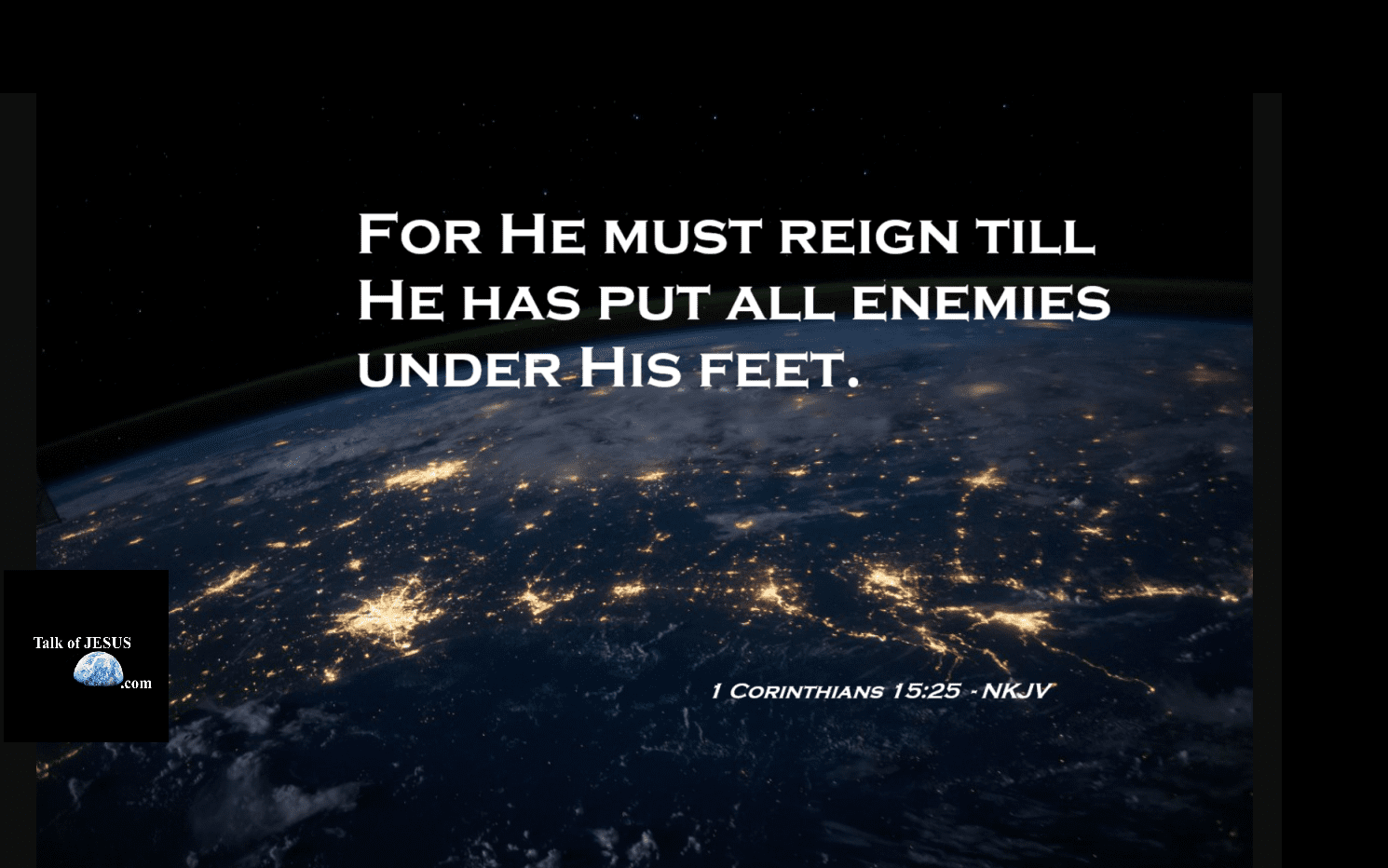
    For he must reign, till he hath put all enemies under his feet.

    1 Corinthians 15:24-25 KJV


    IS this the JESUS we know?

    Afterward —The Whole Harvest

    At the same time the wicked shall rise also. But they are not taken here into the account.

    v. 23

    Then — After the resurrection and the general judgment. Cometh the end — Of the world..

    When he shall have delivered up the kingdom to the Father, and he (the Father) shall have abolished all adverse rule, authority and power — Not that the Father will then begin to reign without the Son, nor will the Son then cease to reign…

    But this is spoken of the Son’s mediatorial kingdom.. which will then commence.

    John Wesley; Parallel Commentary on the NEW TESTAMENT, p.580

    John Wesley provides explanation and delineation of the roles of the Father and of the Son — in the time between the resurrection of ALL the dead and prior to the Judgment — and until the end.


    The King James Bible Commentary provides additional insight into Paul's explanation to the Corinthians of the end time.

    ” The logic is inescapable.

    KJB Commentary on 1 COR 15:14 , p.1496

    If Christ be not risen, then is our preaching vain.

    The proclamation of the Gospel (vs.1-11) is hollow. Not only that, but your faith is .. ‘groundless.’

    Faith in a dead saviour is both preposterous and pathetic.

    ibid.

    Much in the way Wesley's explanation of 'Who does what?' helps us, the KJB commentary also guides our understanding of the order of THE END [vs.23-26]. 

    The end refers to he end of the kingdom of God. At that time he will have put down all rule.

    27-28 .. However two facts must be accounted for here:

    • First, when Paul say s that the Son is subject to the Father he is not speaking of the Son in terms of his essence, but in terms of his function, or ministry, as the incarnate Son.
    • Second.. At this present time the administration of the messianic kingdom is given to the Son.
      • However, at the conclusion of the messianic kingdom this function will be returned to the triune God that God may be all in all.

    ibid.


    WE don’t trust God, because of many who have claimed God — or Christ Jesus — in ways worthy of our suspicion.

    Roger@TalkofJesus.com

    The Apostle Paul is trying to show the Corinthians (and us) something about the order of God we do not understand, as well as the Authority all flesh tends to resist.


    ὑποτάσσω – ‘Put under’ (in order)

    Believe only Scripture and an order of the resurrection makes sense in the redemptive providential plan of God.

    Misapply portions of the Gospel or add an oversimplified imagined LIFE after death without consequence for opposing God and your gospel claims will prove false — Promethean in the sense that you know that it can NOT be true (but you continue to hope that it is).

    Take a look at the Biblical use of the word — hypotassō — primarily a military term that Paul uses NINE TIMES here IN TWO VERSES:

    1 Corinthians 15:25-28 For He must reign…

    v.26 The last enemy that shall be destroyed is death.

    For he hath put G5293 all things under his feet. But when he saith all things are put under G5293 him, it is manifest that he is excepted, which did put G5293 all things under G5293 him.

    And when all things shall be subdued G5293 unto him, then shall G5293 the Son also himself be subject G5293 unto him that put G5293 all things under G5293 him, that God may be all in all.

    1 Corinthians 15:27-28 KJV — Lexicon :: Strong’s G5293 – hypotassō


    How does New Testament Scripture use this term [ὑποτάσσω]?

    • to arrange under, to subordinate
    • to subject, put in subjection
    • to subject one’s self, obey
    • to submit to one’s control
    • to yield to one’s admonition or advice
    • to obey, be subject
    Personally, most of us (including Christians) do not like any part of this kind of order. 

    Let every soul be subject G5293 unto the higher powers. For there is no power but of God: the powers that be are ordained of God.

    Romans 13:1 KJV

    How are YOU, dear saint of Christ, doing with that?

    YES, the Apostle Paul — put under Christ — obediently presents the resurrection of the body in order.

    NEXT, he will talk about the resurrection body. And shortly Paul will urge the saints of Corinth to submit to those who have labored with the Apostle bringing forth the firstfruits of Achaia [16:15-16].


    What do you think?

    (logically and Biblically, of course) about the order of DEATH and the Resurrection?

    Are you prepared to die daily (along with Paul) for the Lord Christ Jesus?

    Comment on Scripture – Share the Gospel
  • Spiritualities – ‘I would not have you ignorant’

    Spiritualities – ‘I would not have you ignorant’

    Spiritualities – πνευματικός

    Spiritual:

    always connotes the ideas of invisibility and of power. ..it is in fact an after-Pentecost word.

    the activities Godward of regenerate men are ‘spiritual sacrifices,’ 1Pe 2:5; their appointed activities in the churches are also called ‘spiritual gifts,’ lit., ‘spiritualities,’ 1Cr 12:1; 14:1;

    Vine’s Expository Dictionary of New Testament Words Adjective Strong’s Number: g4152 Greek: pneumatikos

    Now concerning spiritual gifts, brethren, I would not have you ignorant.

    First Epistle of the Apostle Paul to the Corinthians 12:1 King James Version

    I want to begin HERE by proceeding with the Apostle’s letter to the church in Corinth because SPIRITUAL GIFTS seem not only mysterious, but frequently misused in preaching and therefore confusing to Christians growing in our faith.

    So in addition to working our way through 1 Corinthians 12 we will also examine and hopefully clarify the context of these spiritualities of which the Apostle writes throughout his epistle.


    The Corinthian connection of Spiritualities

    Now concerning spiritual gifts, brothers, I do not want you to be ignorant.

    You know that when you were pagans, to mute idols you were led, as being carried away.

    Therefore I make known to you that no one speaking in the Spirit of God says, “Jesus is accursed,”

    and no one is able to say, “Jesus is Lord,” if not in the Holy Spirit.


    Ignorant?

    21st century Common Era christians don't use such offensive self-evaluation of ANYONE in our church, do we? Yet the Apostle Paul did in asking church members to examine themselves.

    ἀγνοέω – agnoeō – verb

    • to be ignorant, not to know
    • not to understand, unknown
    • to err or sin through mistake, to be wrong
    We may eventually acknowledge what we formerly did not know or did not understand. But how we avoid confession of current err and continuing sin.

    Yet the Apostle consistently corrects the Corinthian church in these things pointing to Christ in a Spiritual sense:

    For I do not want you to be unaware, brothers, that our fathers were all under the cloud and all passed through the sea; and all were baptized into Moses in the cloud and in the sea; and all ate the same spiritual food; and all drank the same spiritual drink, for they were drinking from a spiritual rock which followed them, and the rock was Christ.

    1 Corinthians 10:1-4 :: Legacy Standard Bible (LSB)

    In 1 Corinthians 10 Paul outlines the SIN and ERR of IDOLATRY

    Soon the Apostle warns the Corinthians that God may not recognize some worshippers gathering for their communions:

    But if anyone remains G50 ignorant G50 about this, he is ignored G50 by God.

    1 Corinthians 14:38 LSB

    Spiritual Gifts

    Let’s clear this up FIRST through basic and ROOT definitions of this important adjective.

    REMINDER that an adjective describes a person (you, me, a fellow saint).

    pneumatikos

    relating to the human spirit, or rational soul, as the part of man which is akin to God and serves as his instrument or organ

    • opposed to ἡ ψυχή: hence, τό πνευματικόν, that which possesses the nature of the rational soul, opposed to τό ψυχικόν,

    The spiritual did not come first, but the natural, and after that the spiritual.

    1 Corinthians 15:46

    • The Apostle Paul uses pneumatikos 15 times in his first letter to the Corinthians.

    Root Word (Etymology)
    From πνεῦμα (G4151)

    pneuma – spirit

    neuter noun From πνέω (G4154)

    The KJV translates Strong’s G4151 in the following manner: Spirit (111x), Holy Ghost (89x), Spirit (of God) (13x), [more]

    “See My hands and My feet, that it is I Myself; touch Me and see, for a spirit G4151 does not have flesh and bones as you see that I have.”

    Gospel of Luke 24:39 LSB

    What? know ye not that your body is the temple of the Holy Ghost G4151 which is in you, which ye have of God, and ye are not your own?

    1 Corinthians 6:19 KJV

    Paul uses the Greek πνεῦμα (pneuma) 41 times in 33 verses in 1 Corinthians, pointing to the spirit in the body and also referring to the Holy Ghost.

    Now there are diversities G1243

    1 Cor 12:4a KJV

    And there are differences G1243

    1 Cor 12:5a KJV

    And there are diversities G1243

    1 Cor 6a KJV

    What distinctions?

    1. gifts
    2. administrations
    3. operations

    1 Cor 12: 4b,5b,6b KJV

    OR perhaps less formally:
    • spiritual gifts
    • ministries or service
    • effects or workings

    And the Paul’s connection of these three outlined?

    1. but the same Spirit [G4151] pneuma
    2. but the same Lord. [G2962] kyrios
      • Root Word (Etymology)
      • masculine noun
      • From kuros (supremacy)
    3. but the same God [G2316] theos is working all things in everyone.

    No matter which English translation or version of Paul’s first epistle to the Corinthians you prefer note the frequency of applying this

    Higher Authority over the Church.:

    πνευματικός

    pneumatikos – pnyoo-mat-ik-os’

    • relating to the human spirit, or rational soul, as part of the man which is akin to God and serves as his instrument or organ
    • belonging to a spirit, or a being higher than man but inferior to God
    • belonging to the Divine Spirit
      • of God the Holy Spirit
      • one who is filled with and governed by the Spirit of God
    • pertaining to the wind or breath; windy, exposed to the wind, blowing

    πνεῦμα – pneuma – Spirit

    occurs 40 times in 32 verses in ‘1Co’ in the MGNT Greek.

    1 Corinthians 12:7- 11 BSB

    Now to each is given the manifestation of the Spirit, for the common profiting.

    For truly, to one is given a word of wisdom by the Spirit, and to another a word of knowledge according to the same Spirit, and to a different one faith by the same Spirit, and to another gifts of healing by the one Spirit, and to another working of miracles, and to another prophecy, and to another distinguishing of spirits, and to a different one various kinds of tongues, and to another interpretation of tongues.

    Now one and the same the Spirit works all these things, apportioning individually to each as He wills.

    1 Corinthians 12:11 BSB Spirit,
    Πνεῦμα (Pneuma)
    Noun – Nominative Neuter Singular
    Strong’s 4151: Wind, breath, spirit.

    spiritualities (or spiritual gifts)

    The Apostle assures that these spiritualities (or spiritual gifts) are just that: GIFTS of the Holy Spirit of God.

    Therefore the Lord chooses which saint may receive what gift,


    θεός – theos – God

    occurs 106 times in 86 verses in ‘1Co’ in the TR Greek.

    And where in the Apostle's first letter to the Corinthians did Paul first point to the Highest Authority of God?

    Paulcalled to be an apostle of Jesus  Christ through the will of God, G2316 …

    1 Corinthians 1:1a

    From his call by Jesus Christ after the Lord's resurrection and consequent authority 'through the will of God' the Apostle Paul will proceed to instruct Christ's body (the Church, as he will illustrate) in the humility and nature of the gifts of their spiritualities. 

    And God G2316 hath set some in the church, first apostles, secondarily prophets, thirdly teachers, after that miracles, then gifts of healings, helps, governments, diversities of tongues.

    1 Corinthians 12:28 KJV

    MORE on that NEXT time... 

    κύριος – kyrios – Lord, lord and master

    From kuros (supremacy)

    occurs 69 times in 59 verses in ‘1Co’ in the TR Greek.

    he to whom a person or thing belongs, about which he has power of deciding; master, lord

    Lexicon :: Strong’s G2962 – kyrios

    And when does Paul first mention the Lord and at the same time extend the line of His authority and mission to Corinth?  

    To the church of God in Corinth,

    to those sanctified in Christ Jesus and called to be holy,

    together with all those everywhere who call on the name of our Lord Jesus Christ, their Lord and ours:

    Salutation of the Apostle Paul’s first epistle to the Corinthians 1:2 BSB

    Throughout his letter Paul reveals the unseen unfolding mysteries of Christ through the Spirit of the Triune God.

    The Corinthian saints are no more like the communities in which they live who have spiritualities of their own.

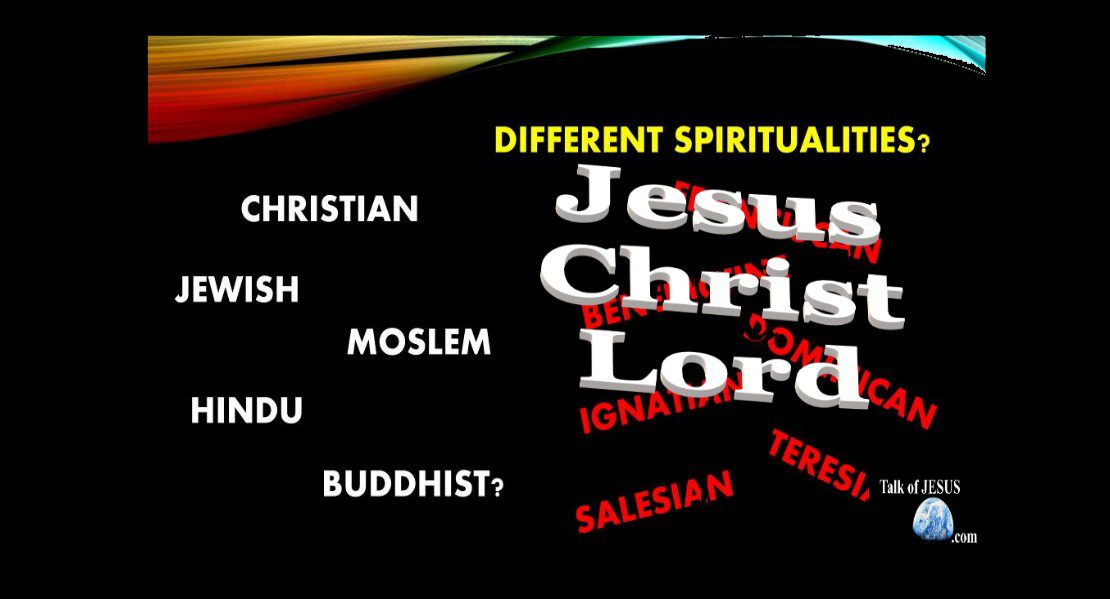
    different spiritualities ?

    Were the communities and spiritualities of Corinth so different from our own 21st century C.E. gatherings and communions which include all with great diversity, yet with considerable ignorance of the Spirit?

    And there are differences of administrations, but the same Lord.

    1 Corinthians 12:5 KJV


    NEXT: Members in Christ's body 

    Talk of JESUS . com

    Comment on Scripture – Share the Gospel

  • The Holy Spirit IS that I AM

    The Holy Spirit IS that I AM

    The Holy Spirit IS.
    I am the Spirit of God.
    I am the LORD.


    The HOLY SPIRIT of Trinity

    Glory be to God the Father the Son and the Holy Spirit

    Who IS God?

    It’s a question we all ask and a familiar question asked by many souls before us.

    Moses said to God,

    “If I go to the Israelites and tell them,

    The God of your fathers has sent me to you,’

    and they ask me, What is his name?’ – what should I say to them?”


    JESUS asked His Apostles a rhetorically similar question:

    And He said to them, “But who do you say that I am?”

    τὸν Χριστὸν τοῦ θεοῦ

    And Peter answered and said, “The [Messiah] Christ of God.”


    The Apostle Matthew’s Gospel witnesses this same relational answer of his fellow Apostle Peter:

    God our Father and Lord

    Trinity = God the Father + God the Son Jesus Christ + God the Holy Spirit

    We get it humanly – the relationship of a son (or daughter) to a father (or to our mother).

    Human AND ever-existing SON

    Mortal men and women can relate to a Son of THE FATHER.

    We understand, in part, that JESUS was flesh and blood, body and brain a perfect human son of man (Mary, actually: ‘man‘ as in human like all of us).

    John, the Apostle who speaks so well relationally in the witness of his Gospel tells us:

    But these [signs, proofs or miracles] are recorded so that you may believe that Jesus is the Christ, the Son of God, and that by believing you may have life in his name.

    The Twelve, having loved their friend and Master whom they followed willingly, understood a relational link between JESUS and each of His disciples personally.

    When the Lord in so many ways showed His Disciples His ever-existing relationship to Almighty God our Father — HIS Father from before the beginning — they could not have been more awe struck that GOD stood in their human presence.

    My sheep hear my voice, and I know them, and they follow me: And I give unto them eternal life; and they shall never perish, neither shall any man pluck them out of my hand.

    My Father, which gave them me, is greater than all; and no man is able to pluck them out of my Father’s hand.

    I and my Father are one.

    We get that - in a human sense of relationship.

    Jesus and Spirit

    Yet think from the witness of any of the Twelve of the impact of JESUS, the living Christ they follow, telling His disciples: “I and the Father are One.”

    Just like all faithful Jews, these disciples had recited the Sh'ma since their childhood:

    Sh’ma Yisrael Adonai Eloheinu Adonai Eḥad

    שְׁמַע יִשְׂרָאֵל יְהוָה אֱלֹהֵינוּ יְהוָה אֶחָד׃

    Hear, O Israel: The LORD our God is one LORD:


    Even so, the Disciples had heard their Master instruct Nicodemus, a leader of the Sanhedrin:

    Jesus answered, “Truly, truly, I say to you, unless one is born of water and the Spirit, he cannot enter the kingdom of God.

    That which is born of the flesh is flesh, and that which is born of the Spirit is spirit.

    John’s Gospel continues with Jesus’ further explanation of the Spirit:

    • Although mankind is flesh and blood, created from dust and water,
    • and Man is created in God’s image;
    • Man, LIKE GOD, is also spirit.

    What is Spirit?

    John begins his Gospel with Jesus (the Word) and the Spirit.

    John’s clear reference is the beginning written in the word of Moses:

    בְּרֵאשִׁית בָּרָא אֱלֹהִים אֵת הַשָּׁמַיִם וְאֵת הָאָרֶץ׃

    וְהָאָרֶץ הָיְתָה תֹהוּ וָבֹהוּ וְחֹשֶׁךְ עַל־פְּנֵי תְהֹום וְרוּחַ אֱלֹהִים מְרַחֶפֶת עַל־פְּנֵי הַמָּיִם׃

    JESUS, THE WORD, WAS WITH GOD AND WAS GOD — ‘hovering over ‘a waste and emptiness,’ in the darkness over a face of the deep


    Spirit [spirit] – rûaḥ – רוּח

    • The KJV translates Strong’s H7307 in the following manner: Spirit or spirit (232x), wind (92x), breath (27x), (various additional)
    • Two additional uses in Genesis show both the Spirit of God and His quickening spirit in His creatures, including mankind:
      • And the LORD said, “My Spirit shall not strive with man forever, for he is indeed flesh; – Gen. 6:3a NKJV
      • And they went into the ark to Noah, two by two, of all flesh in which is the breath of life.. All in whose nostrils was the breath of the spirit of life, all that was on the dry land, died. – Gen. 7:15,22 NKJV

    COMMENTARY


    Man cannot grasp the whirlwind or the unseen breath of God, yet JESUS, who IS One with the Father tells us:

    God is spirit, and those who worship him must worship in Spirit and in truth.”


    πνεῦμα – pneuma in the New Testament

    Spirit in the New Testament – basically has the same meaning AND is just as mysterious, illusive as the breath of angels. – RH

    spirit in a living soul
    • the spirit, i.e. the vital principal by which the body is animated
      • the rational spirit, the power by which the human being feels, thinks, decides
      • the soul
    How do you think of your own spirit? 

    “Blessed are the poor in spirit,

    for theirs is the kingdom of heaven.

    Gospel of Matthew 5:3 LSB from the Beatitudes of Jesus Christ

    Consider a mysterious ethereal truth: observable, yet beyond measure of man's contemporary thought. 
    
    spirits apart from your own mortal soul
    • a spirit, i.e. a simple essence, devoid of all or at least all grosser matter, and possessed of the power of knowing, desiring, deciding, and acting
      • a life giving spirit
      • a human soul that has left the body
      • a spirit higher than man but lower than God, i.e. an angel
        • used of demons, or evil spirits, who were conceived as inhabiting the bodies of men
        • the spiritual nature of Christ, higher than the highest angels and equal to God, the divine nature of Christ

    spirit and soul alike, yet distinct

    Before proceeding to the more powerful and most mysterious Holy Spirit of God, 

    consider beyond flesh and blood, mind and spirit --
    that which is the same in Old and New Testaments, yet having subtle ungraspable distinction: spirit and soul.

    We hear it also in the heart of Isaiah, a Prophet of God:

    With my soul [nep̄eš] I have desired You in the night,
    Yes, by my spirit [rûaḥ] within me I will seek You early;
    For when Your judgments are in the earth,
    The inhabitants of the world will learn righteousness.

    • soul – psychē – NT Greek
    • soul – nep̄eš – נֶפֶשׁ – OT Hebrew

    the HOLY Spirit

    Although related to spirit, we cannot examine the soul today as part of our brief topic of the Trinity and Holy Spirit.

    Spirit – rûaḥ or pneuma

    Spirit of God, the third person of the triune God, the Holy Spirit, coequal, coeternal with the Father and the Son

    1. as inspiring ecstatic state of prophecy
    2. as impelling prophet to utter instruction or warning
    3. imparting warlike energy and executive and administrative power
    4. as endowing men with various gifts
    5. as energy of life
    6. as manifest in the Shekinah glory
    7. never referred to as a depersonalised force

    Gospel of Matthew 1:18 NKJV

    Simply the human beginning of the son of man (Mary, a virgin, that is; bearing a second adam in the line of God’s created ones).

    Certainly mysterious, controversial to this day to the psyches and spirits of mortal men and women who resist the Spirit of God.


    πνεῦμα – pneuma – spirit OR ghost


    As mysterious as Ghost or the Spirit may be to mankind, its root word [Strong’s G4154 – pneō] directs our thoughts

    • to breathe hard, i.e. breeze:—blow (of the wind)

    Jesus answered, “Truly, truly, I tell you, no one can enter the kingdom of God unless he is born of water and the Spirit.

    Flesh is born of flesh, but spirit is born of the Spirit. Do not be amazed that I said, ‘You must be born again.’

    The wind blows where it wishes. You hear its sound, but you do not know where it comes from or where it is going. So it is with everyone born of the Spirit.”

    The HOLINESS of God

    GOD IS HOLY text of Deuteronomy 6:13

    NO mention of Trinity is absent the key concept of HOLY in reference to the HOLY GHOST or the HOLY SPIRIT.

    We have examined the doctrines of Holiness previously:

    DOCTRINE: GOD IS HOLY

    I encourage you in the spirit to pray with ears to hear the Holy Spirit of the Lord God, who IS ONE with the Father and the Son our savior Jesus Christ.


    Cast me not away from your presence,
    and take not your Holy Spirit from me.

    God has raised this Jesus to life, to which we are all witnesses.

    Exalted, then, to the right hand of God, He has received from the Father the promised Holy Spirit and has poured out what you now see and hear.

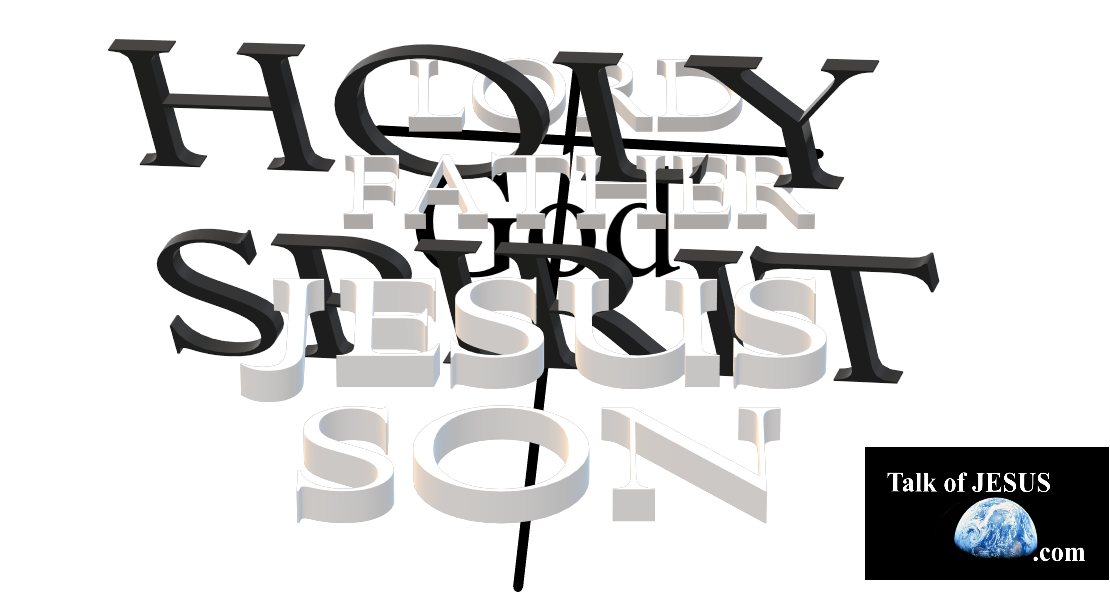
    God LORD Father JESUS Son Holy Spirit