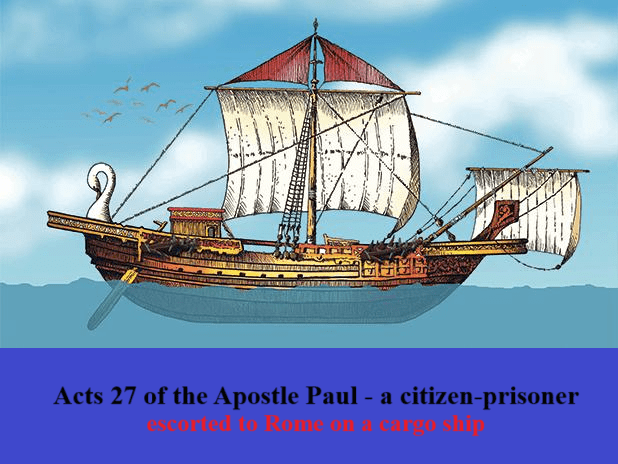
“O you afflicted one,
Tossed with tempest, and not comforted,
Behold, I will lay your stones with colorful gems,
And lay your foundations with sapphires.In righteousness you shall be established;
You shall be far from oppression, for you shall not fear;
And from terror, for it shall not come near you.Isaiah 54:11,14 NKJV
“Men, I perceive that this voyage will end with disaster and much loss, not only of the cargo and ship, but also our lives.”
Acts of the Apostles 27:10 NKJV
Paul’s prediction of the Tempest
Certainly the Apostle to the Hellenist gentiles knew much about the waters of the Aegean and Mediterranean. He had sailed on various ships many times during missionary journeys of the past dozen years.
And from what we know of Paul, certainly the Apostle (who knew Scripture well) would have been praying as the Greek grain ship set sail along the coast of Crete seeking cover during the tempestuous autumn and winter months.
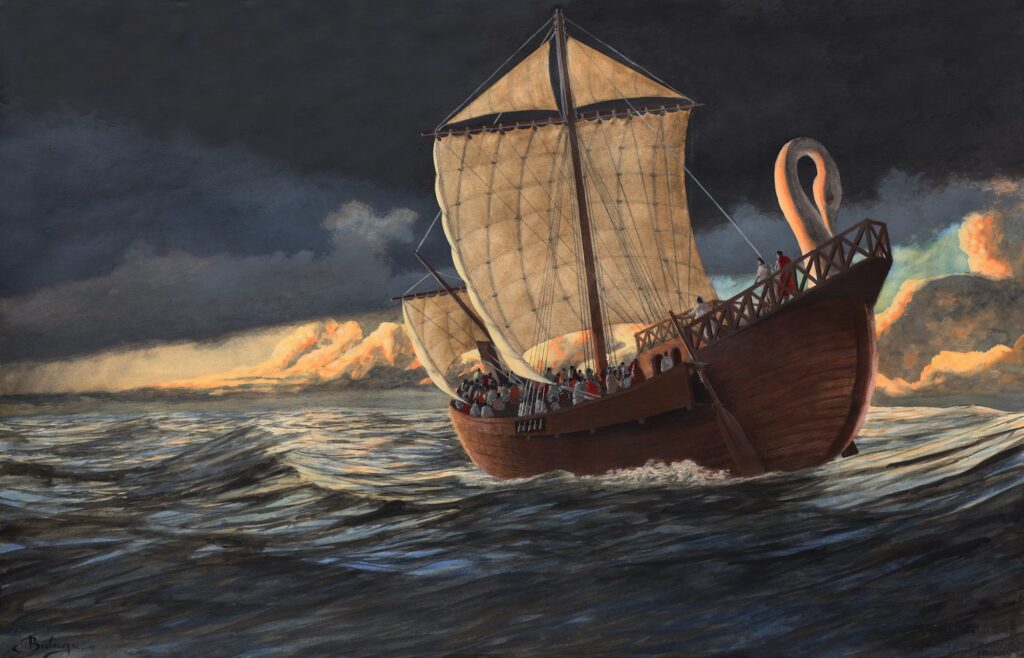
Perhaps Prophets such as Isaiah, who had predicted Christ as well as the new Jerusalem, would have come to mind in the Spirit calming the spirit of the Apostle Paul in comforting Scripture.
At some point in the early itinerary of this voyage: Julius and the Roman guards; Paul and Aristarchus; and the experience captain, pilot and professional sailors — ALL certainly have realized the peril of the approaching storm.
The Euroclydon – Winter Tempest of the Mediterranean
Acts 27 – a short voyage swept into a billowing sea
When the south wind blew softly, supposing that they had obtained their desire, putting out to sea, they sailed close by Crete.
But not long after, a tempestuous head wind arose, called Euroclydon.
Winter winds of the Mediterranean
Euroclydon is a term found in the New Testament, specifically in the Book of Acts, referring to a tempestuous wind that played a significant role in the Apostle Paul’s journey to Rome. The term is derived from the Greek “Eurakulōn,” which is believed to be a compound of “euros” (east wind) and “aklyōn” (north wind)
Bible Hub
Gregale, strong and cold wind that blows from the northeast in the western and central Mediterranean region, mainly in winter. Most pronounced on the island of Malta, the gregale sometimes approaches hurricane force and endangers shipping there
Britannica
Levanter, strong wind of the western Mediterranean Sea.. most common in spring and fall. Its name is derived from Levant, the land at the eastern end of the Mediterranean, and refers to the wind’s easterly direction.
The levanter reaches its maximum intensities in the Strait of Gibraltar, where it sometimes brings eastward-flying airplanes almost to a standstill… results from a merging of the clockwise winds of a high-pressure centre over central Europe with the counterclockwise winds of a low-pressure centre over the southwestern Mediterranean.
Britannica
So when the ship was caught, and could not head into the wind, we let her drive.
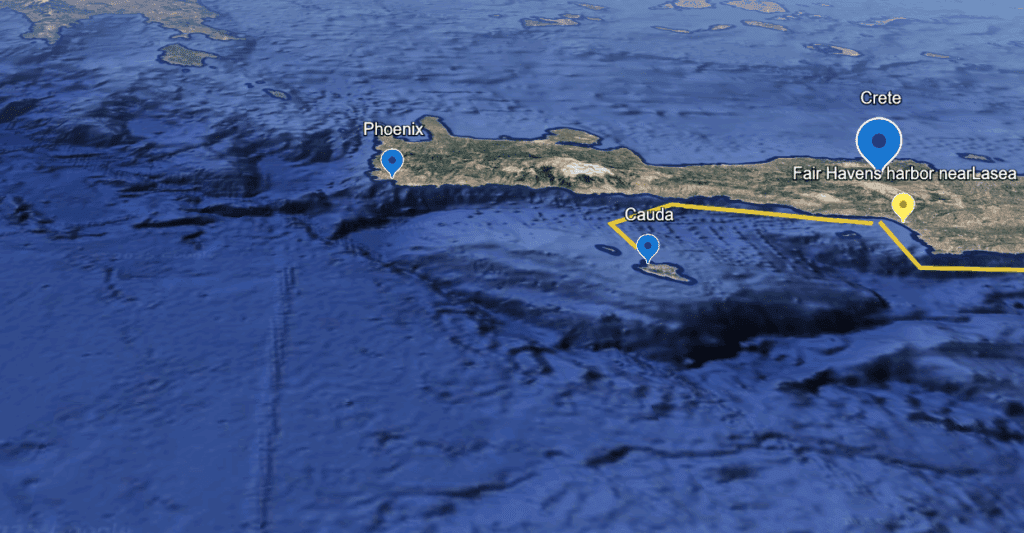
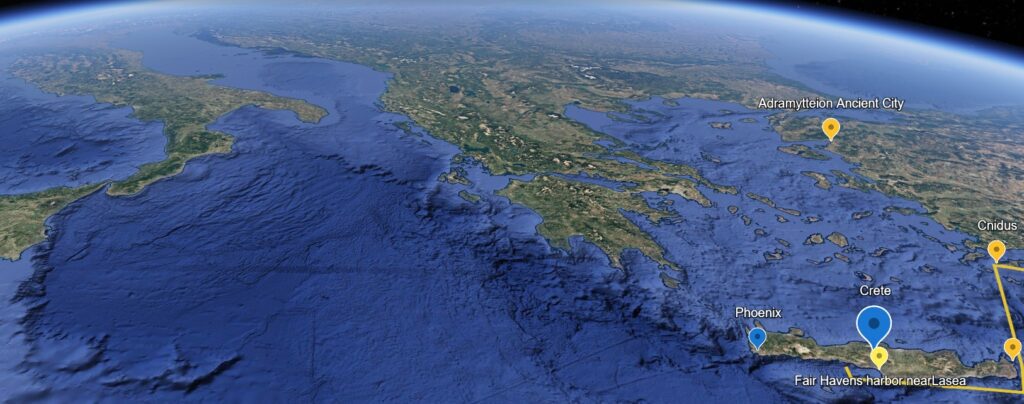
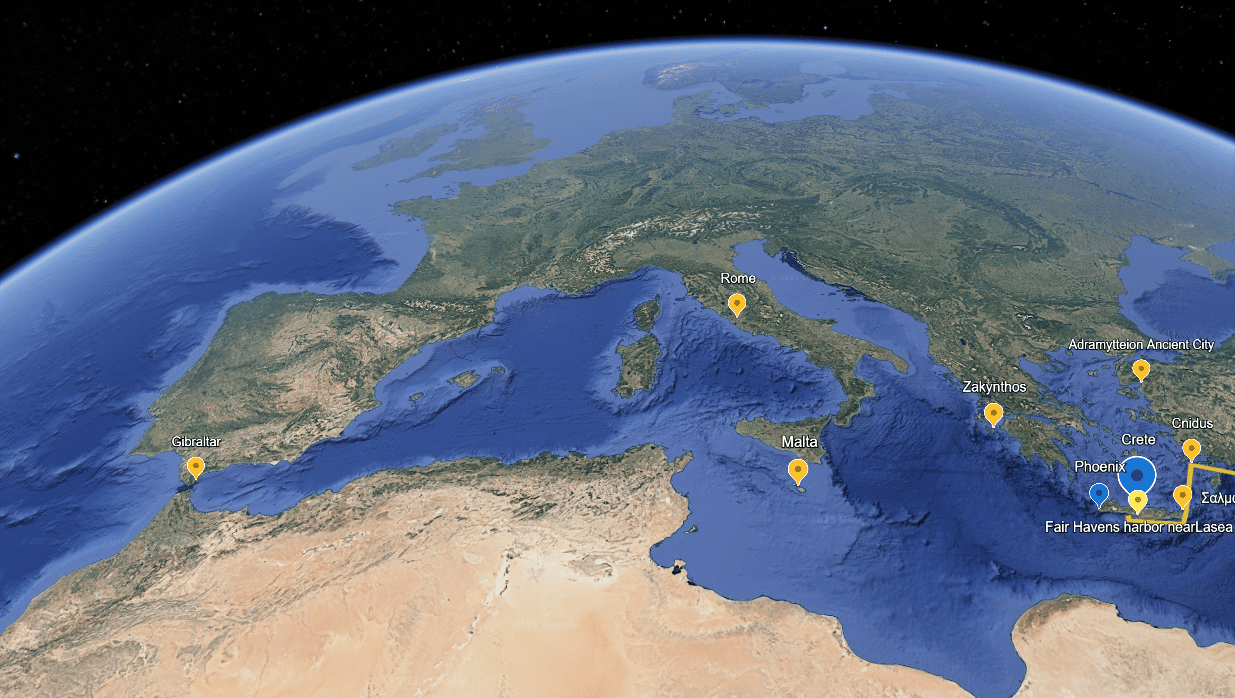
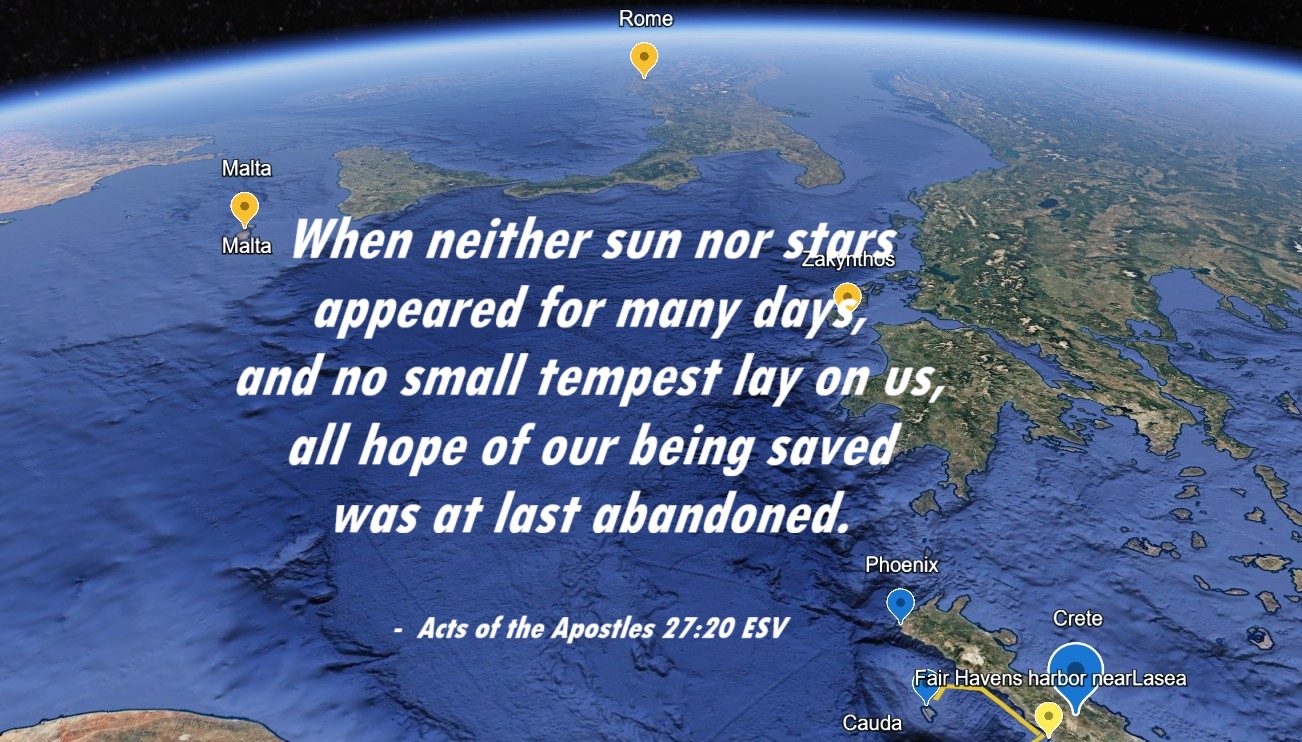
Καῦδα – a small island nearly due west of Cape Malta on the south coast of Crete, and nearly due south of Phoenice.
And running under the shelter of an island called Clauda,we secured the skiff with difficulty.
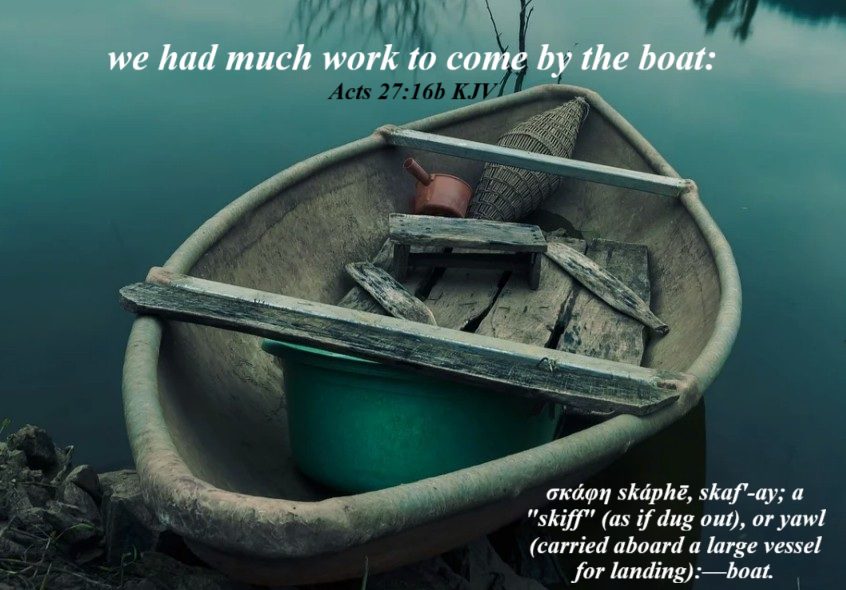
When they had taken it on board, they used cables to undergird the ship;
and fearing lest they should run aground on the Syrtis Sands [quicksands],
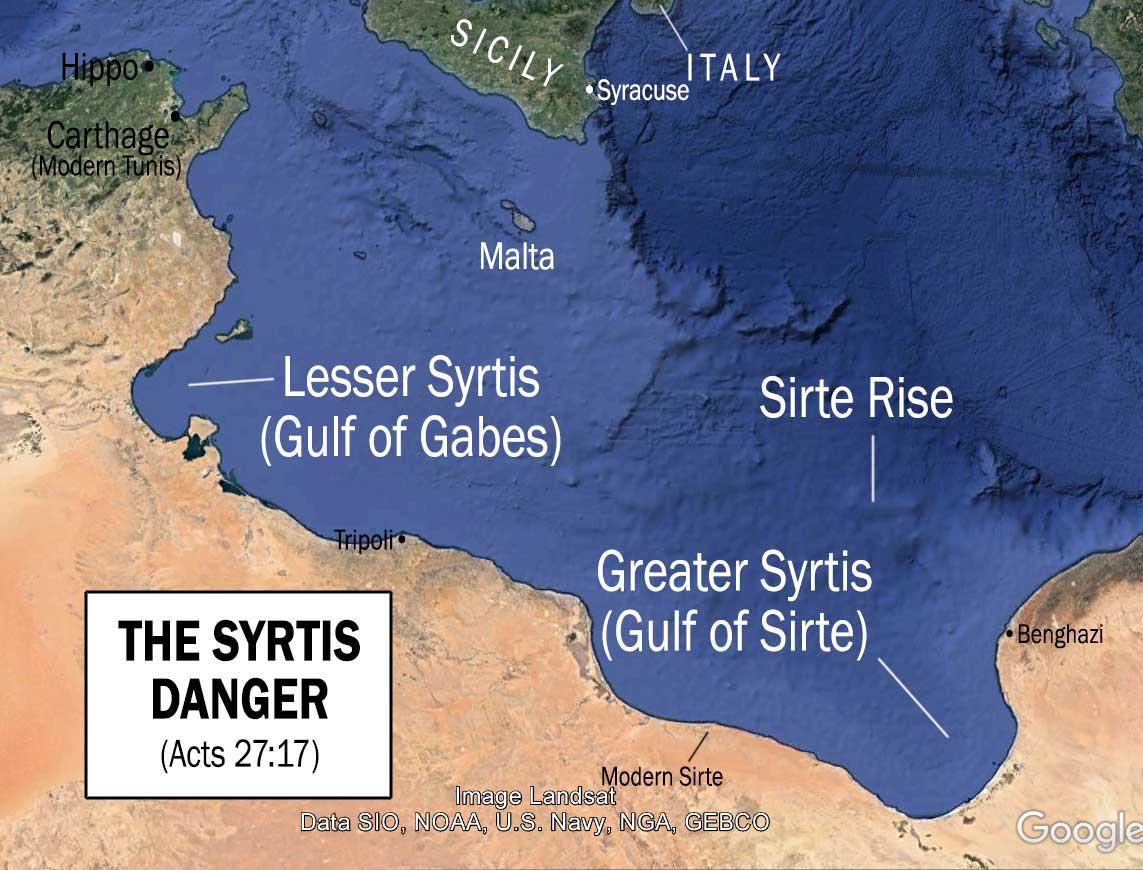
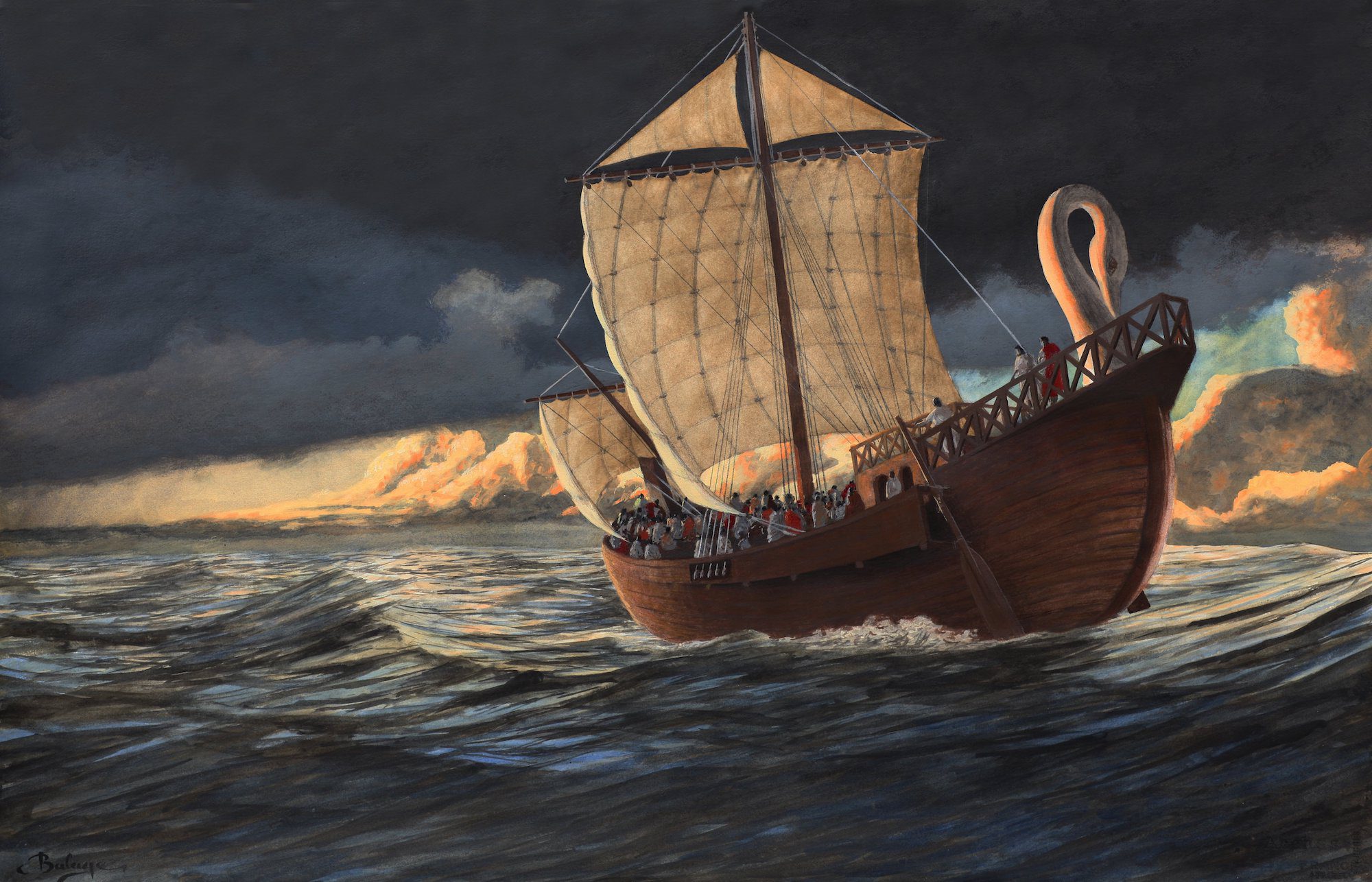
they struck sail and so were driven.
The Tempest toward Malta
The voyagers knew that the gale was bearing them in that direction, and did not dare to let the ship sail on full before the wind any longer.
Strake sail.—The English fails to give the sense of the original. Had they struck sail altogether the ship would simply have drifted in the very direction which they were anxious to avoid. Some sail was absolutely necessary to keep the ship steady. What is meant is that they “lowered the ship’s gear,” the spars and rigging, and especially, perhaps, the heavy yard and ropes which the ancient ships carried, and which would, in such a gale, make the ship top-heavy.
And so were driven.—Better, thus—i.e., in this state, undergirded and with storm-sails set.
They aimed at sailing as close as possible to the wind, making for the north-west, so as to avoid the Syrtes.
EXPOSITORY (ENGLISH BIBLE)
Ellicott’s Commentary for English Readers
a new NW heading driven by the Tempest of the NorEaster
And we being exceedingly tossed with a tempest, the next day they lightened the ship;
Acts of the Apostles 27:18-19 KJV
And the third day
we cast out with our own hands the tackling of the ship.
A Reflection of the lost…
For the LORD is our judge,
the LORD is our lawgiver,
the LORD is our king;
he will save us.

Thy tacklings are loosed;
they could not well strengthen their mast,
they could not spread the sail:
then is the prey of a great spoil divided; the lame take the prey.

O thou afflicted,
tossed with tempest,
and not comforted..
Isaiah 33:22-23;54:11a KJV :
Will we be tossed into the sea?
ACTS of the Apostle Paul
– To Be Continued…

Comment on Scripture – Share the Gospel
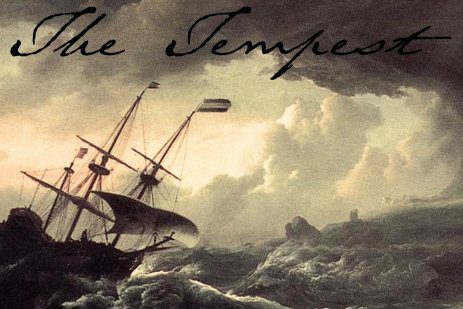
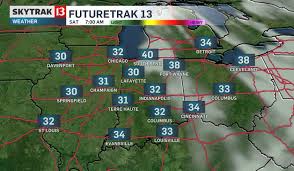 It seems the winds of change come upon us suddenly and violently.
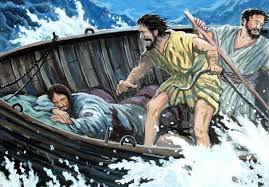 The peaceful Savior, asleep in the boat, unafraid of the tempest; Christ Jesus will become your rudder in the storm of these last days, if only you will follow Him.
 Mark 16:15 And he said to them, “Go into all the world and proclaim the gospel to the whole creation.