Tag: temple

  • for it was not the season for figs – 7

    for it was not the season for figs – 7

    The Lord Christ Jesus preaches the Prophets as well as the Law.

    Read Habakkuk or any prophet and see the Lord predicted in days & centuries Before Christ.

    Jesus shares scripture in ways few understand. Application may well apply to these last days as well. RH

    Roger@TalkofJesus.com
    This series from summer 2017 began here.
    https://talkofjesus.com/not-season-figs-prologue/ 

    The Lord warns of the tree and it’s fruit

    In the early preaching of Jesus (right after the golden rule) Jesus offers this warning.


    A Tree and Its Fruit

    15 “Beware of false prophets, who come to you in sheep’s clothing but inwardly are ravenous wolves. 16 You will recognize them by their fruits. 

    Are grapes gathered from thornbushes, or figs from thistles?

    17 So, every healthy tree bears good fruit, but the diseased tree bears bad fruit. 18 A healthy tree cannot bear bad fruit, nor can a diseased tree bear good fruit.

    19 Every tree that does not bear good fruit is cut down and thrown into the fire. 20 Thus you will recognize them by their fruits.


    Though the fig tree does not blossom

    What shall we do?

    “We live thistle-bound lives in lands of lost promise.”

    “For the nations are led astray by men and women who seek not the will of the Lord.”


    The garden of the Lord seems long lost to sin.

    Leaders listening to the Lord’s command are no more.

    Judges enact rules of unrighteousness.

    Kings conquer, covet and divide.

    Prophets no longer warn of God displeasure of even ‘christians‘ living this ‘life’ and the Lord’s silence disheartens the generations.


    In the first century A.D. during Jesus’ ministry:

    The head of John the Baptist has passed on a platter and crowds of Jerusalem under Rome look for a Messiah and King. 

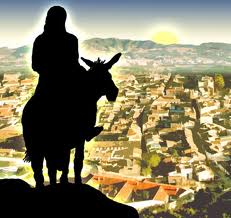
    A prophet seven centuries earlier had cursed a fig tree on their behalf echoing the hearts of this Passover procession with Palms – our Palm Sunday multitude.


    Habakkuk 1: NKJV

    O Lord, how long shall I cry,
    And You will not hear?

    Why do You look on those who deal treacherously,
    And hold Your tongue when the wicked devours
    A person more righteous than he?

    O, faithless fig tree, dear dried up vine; do you believe that you alone have cried out to the Lord for mercy?

    Habakkuk 3:

    O Lord, I have heard Your speech and was afraid;
    O Lord, revive Your work in the midst of the years!
    In the midst of the years make it known;
    In wrath remember mercy.

    A Hymn of Faith

    17 Though the fig tree should not blossom,
        nor fruit be on the vines,
    the produce of the olive fail
        and the fields yield no food,
    the flock be cut off from the fold
        and there be no herd in the stalls,
    18 yet I will rejoice in the Lord;
        I will take joy in the God of my salvation.
    19 God, the Lord, is my strength;
        he makes my feet like the deer's;
        he makes me tread on my high places.
    

    A second look at a triumphal entry
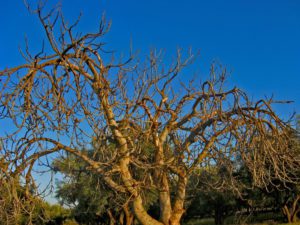
    17 Though the fig tree may not blossom,
    Nor fruit be on the vines;
    Though the labor of the olive may fail,
    And the fields yield no food;
    Though the flock may be cut off from the fold,
    And there be no herd in the stalls—
    18 Yet I will rejoice in the Lord,
    I will joy in the God of my salvation.


    Matthew 21:
    4 This took place to fulfill what was spoken by the prophet, saying,

    5 “Say to the daughter of Zion,
    ‘Behold, your king is coming to you,
    humble, and mounted on a donkey,
    on a colt, the foal of a beast of burden.’”

    9 And the crowds that went before him and that followed him were shouting, “Hosanna to the Son of David! Blessed is he who comes in the name of the Lord! Hosanna in the highest!”

    10 And when he entered Jerusalem, the whole city was stirred up, saying, “Who is this?”

    11 And the crowds said, “This is the prophet Jesus, from Nazareth of Galilee.”

    12 And Jesus entered the temple and drove out all who sold and bought in the temple, and he overturned the tables of the money-changers and the seats of those who sold pigeons. 13 He said to them, “It is written, ‘My house shall be called a house of prayer,’ but you make it a den of robbers.”

    14 And the blind and the lame came to him in the temple, and he healed them.

    17 And leaving them, he went out of the city to Bethany and lodged there.


    To be continued…
  • for it was not the season for figs – 2

    for it was not the season for figs – 2

    … and I will remove the iniquity of this land in a single day.

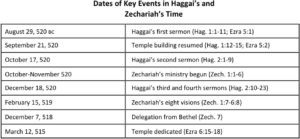
    In that day, declares the LORD of hosts, every one of you will invite his neighbor to come under his vine and under his fig tree.” – Zechariah 3:9b-10 [circa 519 B.C.]

    Looking Back to the Prophets

    From Moses to the late Prophets at the time of Zechariah and Haggai, the LORD spoke to the faithful of Jacob. (Call them: Israel, Judah, Judea, Galilee, even Samaria at the time of Jesus.) 

    They were divided after David, captured after Solomon, conquered by foreign lands and driven into distant empires. Even after rebuilding Jerusalem and the Temple, Israel would never be the same.

    Prophets spoke judgment of evil nations, cities and leaders.

    Prophesy during the times of the first dispersion accomplished the Lord’s purpose. Jerusalem and the Temple were rebuilt, then rebuilt again by Herod and Rome. Between the time of these two Temples, no word from above – generations of silence. 


    Surely those hearing of the miracles of the great Prophet approaching Jerusalem for the Passover festival had high expectations of this greatest Prophet, Jesus.

    He is the Messiah of God!

    The crowds cover the road with palms and shout:

    “Son of David,”  

    as the King of the Jews (Jesus) rode victoriously up to the gates of Jerusalem.

    ‘Hosanna!’ ‘Blessed be the Lord.’ ‘Savior!’


    And what had the prophet Zechariah written?

    “and I will remove the iniquity of this land in a single day..

    .. In that day, declares the LORD of hosts, every one of you will invite his neighbor to come under his vine and under his fig tree.”


    The Sacrifice of the Lamb of God accomplished the removal of sin; yes, in a single day: Good Friday.

    What did Jerusalem expect?

    The Judeans, Galileans, Samaritans, even Jews on faithful pilgrimage to the Passover festival from other lands followed Jesus with different high expectations from nearly forgotten writings of  Zechariah and others.

    Zechariah 9:

    The oracle of the word of the Lord is against the land of Hadrach (Syria) and Damascus is its resting place.

    [Of course, Rome would control all of these Mediterranean lands 500 years later, not just Judah, Galilee and Samaria.]

    The Coming King of Zion

    Rejoice greatly, O daughter of Zion!
        Shout aloud, O daughter of Jerusalem!
    Behold, your king is coming to you;
        righteous and having salvation is he,
    humble and mounted on a donkey,
        on a colt, the foal of a donkey.
    10 I will cut off the chariot from Ephraim
        and the war horse from Jerusalem;
    and the battle bow shall be cut off,
        and he shall speak peace to the nations;
    his rule shall be from sea to sea,
        and from the River A Powerful Professed King

    The crowds, some who had followed Jesus for three years, knew the Son of Man riding victoriously into Jerusalem on a donkey had all power to defeat Rome in a day!


    But it was not the Lord’s will to save Jerusalem in a day, but sinners.

    “I have not come to call the righteous but sinners to repentance.”

    Luke 5:32

    For it was not the season for figs and those who will not repent remain cursed and will wither to be burned.


    To be continued…

  • Ordinary Men -2

    Ordinary Men -2

    Acts 4:5-7

    On the next day their rulers and elders and scribes gathered together in Jerusalem, with Annas the high priest and Caiaphas and John and Alexander, and all who were of the high-priestly family. And when they had set them in the midst, they inquired, “By what power or by what name did you do this?”

    Synopsis

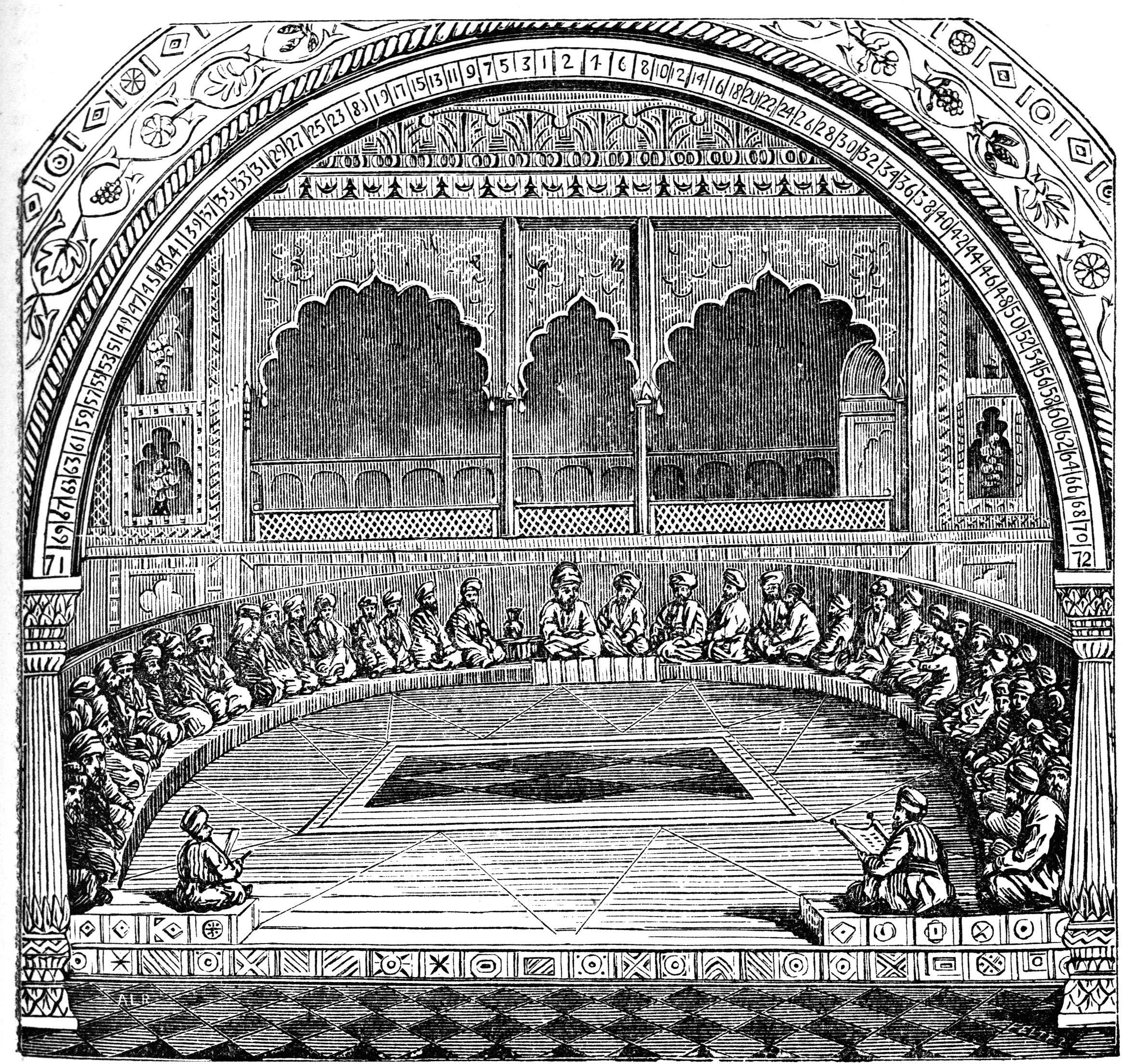
    Annas and Caiaphas and John and Alexander sit here esteemed high above ordinary men, even the highest of aristocrats sitting in the Sanhedrin.

    Annas and Caiaphas and John and Alexander sit here esteemed high above ordinary men, even the highest of aristocrats sitting in the Sanhedrin. We have examined an incident of healing a lame man [Acts 3] in the Temple the previous day. We have also examined the high calling of some of the Temple court officials mentioned above. These not-so-ordinary men mentioned here will examine Peter and John, But first let’s take a look at one additional more common official of the Sanhedrin.

    Jewish Stratification (continued from Ordinary Men – part 1)

    The chief sects among the Jews were the Pharisees, the Sadducees and the Essenes, who may be described respectively as the Formalists, the Freethinkers and the Puritans.

    Pharisees

    The fundamental principle all of the of the Pharisees, common to them with all orthodox modern Jews, is that by the side of the written law regarded as a summary of the principles and general laws of the Hebrew people there was on oral law to complete and to explain the written law, given to Moses on Mount Sinai and transmitted by him by word of mouth.

    The Pharisees at an early day secured the popular favor and thereby acquired considerable political influence. This influence was greatly increased by the extension of the Pharisees over the whole land and the majority which they obtained in the Sanhedrin. Their number reached more than six thousand under the Herods.

    Josephus compared the Pharisees to the sect of the Stoics. He says that they lived frugally, in no respect giving in to luxury. We are not to suppose that there were not many individuals among them who were upright and pure, for there were such men as Nicodemus, Gamaliel, Joseph of Arimathea and Paul.

    The Defense

    Acts 4:6-12

    Then Peter, filled with the Holy Spirit, said to them, “Rulers of the people and elders, if we are being examined today concerning a good deed done to a crippled man, by what means this man has been healed,  let it be known to all of you and to all the people of Israel that by the name of Jesus Christ of Nazareth, whom you crucified, whom God raised from the dead—by him this man is standing before you well. This Jesus is the stone that was rejected by you, the builders, which has become the cornerstone. And there is salvation in no one else, for there is no other name under heaven given among men by which we must be saved.”

    How should the high court respond?

    You might think by their defense in naming Jesus that Peter is claiming personal innocence in the manor of the man’s healing. After all, why were they arrested; what is their crime? No charge of the supreme court of the Temple (Sanhedrin) was made against them for preaching in the courtyard at church. “By what power or by what name did you do this?”  (referring to the miraculous healing witnessed by many) was their only question to Peter.

    No charges here and the evidence to be presented witnesses a miracle. These Levitical Priests, aristocratic scribes and sadducees, and politically powerful Pharisees sit in judgment of a miracle. ‘How did the Lord use men like these and not a Priest or Temple official to do this?’ they must have thought. The witness of their preaching the previous day had quoted scripture referring to the prophets, the Messiah, Moses, Samuel and Abraham. What could the court say of this a day after the miracle in the courtyard of the Temple?

    [ctt title=”But many of those who had heard the word believed, and the number of the men came to about five thousand. – Acts 4:4″ tweet=”Arrested because the Lord performed a miracle and their preaching is true.” coverup=”cTU1O”]

    Who can preach like this?

    Acts 4:13

    Now when they saw the boldness of Peter and John, and perceived that they were uneducated, common men, they were astonished. And they recognized that they had been with Jesus.

    14 But seeing the man who was healed standing beside them, they had nothing to say in opposition. 15 But when they had commanded them to leave the council, they conferred with one another, 16 saying, “What shall we do with these men? For that a notable sign has been performed through them is evident to all the inhabitants of Jerusalem, and we cannot deny it…

    21 And when they had further threatened them, they let them go, finding no way to punish them, because of the people, for all were praising God for what had happened.

    Witness, Our Only Choice

    [ctt title=”“I have no silver and gold, but what I do have I give to you. In the name of Jesus Christ of Nazareth, rise up and walk!”” tweet=”Acts 3:6 Peter’s witness before one of many arrests.” coverup=”V5egz”]

    But Peter and John answered them, “Whether it is right in the sight of God to listen to you rather than to God, you must judge, for we cannot but speak of what we have seen and heard.” Acts 4:19-20

    29 And now, Lord, look upon their threats and grant to your servants to continue to speak your word with all boldness, 30 while you stretch out your hand to heal, and signs and wonders are performed through the name of your holy servant Jesus.”

    31 And when they had prayed, the place in which they were gathered together was shaken, and they were all filled with the Holy Spirit and continued to speak the word of God with boldness.