Tag: timothy

  • II Timothy i beloved son of Paul

    II Timothy i beloved son of Paul

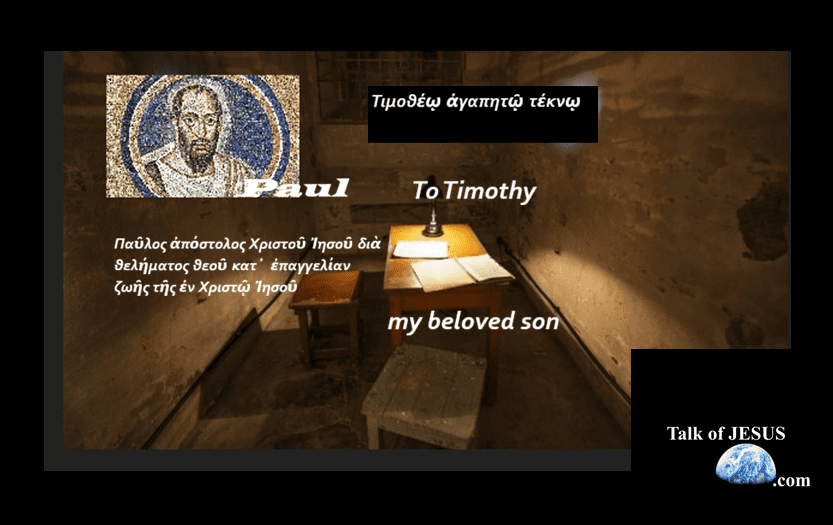
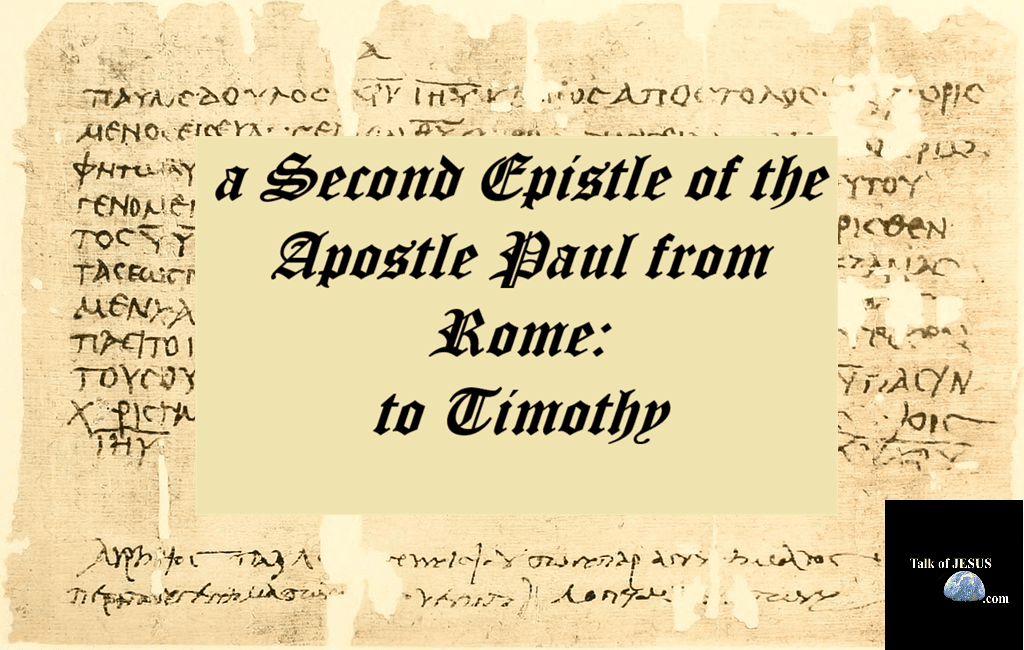
    a second epistle of the Apostle Paul from Rome: to Timothy

    Τιμοθέῳ ἀγαπητῷ τέκνῳ

    χάρις ἔλεος εἰρήνη ἀπὸ θεοῦ πατρὸς καὶ Χριστοῦ Ἰησοῦ τοῦ κυρίου ἡμῶν

    To Timothy, my dearly beloved son:

    Grace, mercy, and peace, from God the Father and Christ Jesus our Lord.

    2 Timothy 1:2 KJV


    Timothy, beloved son of an Apostle

    Paul is about to send Timothy out as his continued Apostolic voice to a next generation of faithful believers.

    Last Will and Testament of Simon Peter - Talk of Jesus

    “Dearly BELOVED..”

    Do any recognize the greeting of such intimately connected believers so joined in Christ Jesus? 

    This is how Paulos, a Jew of Cilicia, addresses his Galatian gentile protege Timotheus


    Greek by heritage of his father (apparently deceased or absent) and raised Jewish by the faith of his Grandmother Lois and convert mother, Eunice (as we detailed in our Introduction)


    as his SON, a beloved and chosen adoptive son — not just an exceptional student and faithful follower.

    τέκνον – teknon – child or son

    • Strong’s G5043 – teknon – “a child” (akin to tikto, “to beget, bear”), is used in both the natural and the figurative senses. In contrast to huios, “son” (see below), it gives prominence to the fact of birth, whereas huios stresses the dignity and character of the relationship. Figuratively, teknon is used of “children” of
    • (a) God, Jhn 1:12;
    • (b) light, Eph 5:8;
    • (c) obedience, 1Pe 1:14;
    • (d) a promise, Rom 9:8; Gal 4:28;
    • (e) the Devil, 1Jo 3:10;
    • (f) wrath, Eph 2:3;
    • (g) cursing, 2Pe 2:14;
    • (h) spiritual relationship, 2Ti 2:1; Phm 1:10.
      • (2X from the Pastoral Epistles of Paul)
    • See DAUGHTER, SON.

    Vine’s Expository Dictionary of New Testament Words

    As mentioned in our introduction to Timothy, the Apostle Paul has adopted this young man of Galatia and mentored him along with others as trusted servants, sons and companions in his apostolic mission to the Gentiles.


    Historical Context:

    2 Timothy was likely written around AD 67, during Paul’s second imprisonment in Rome, shortly before his martyrdom. This period was marked by intense persecution of Christians under Emperor Nero. Paul, aware of his impending death, writes with a sense of urgency and finality.

    Audience and Purpose:

    Paul’s second letter to Timothy, left in Ephesus to oversee the church, guides both him and the broader Christian community. It encourages church leaders and believers in the face of persecution. Paul urges Timothy to protect the gospel, endure hardships, and teach sound doctrine.

    source: BibleHub.org

    As to the role of Timothy to the Church, we might in a later era address this esteemed son of the Apostle to the Gentiles as Bishop Timothy of Ephesus,
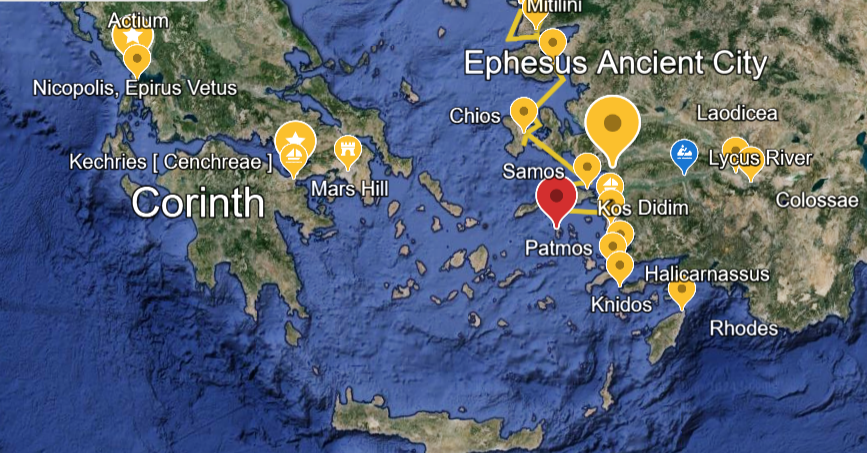
    The Apostle Paul most likely sent his first letter to the Corinthians from Ephesus

    or possibly Arch-Bishop Timotheus of Asia.
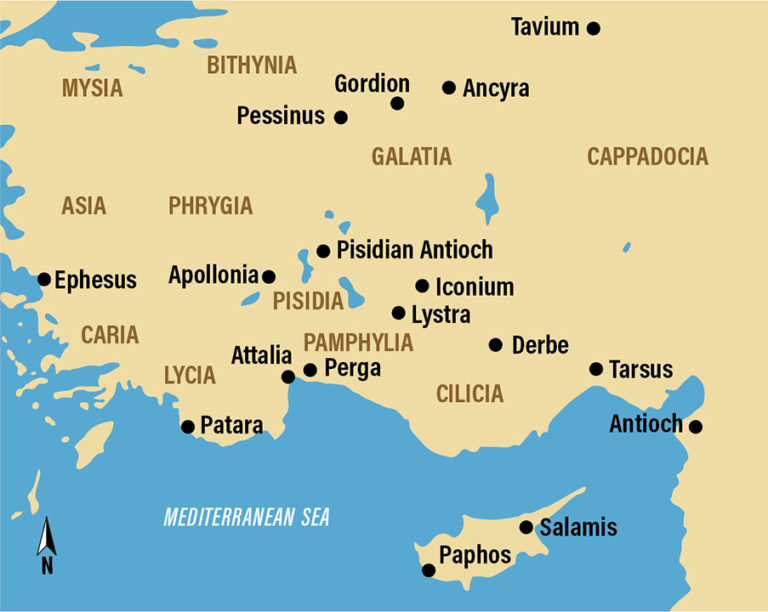
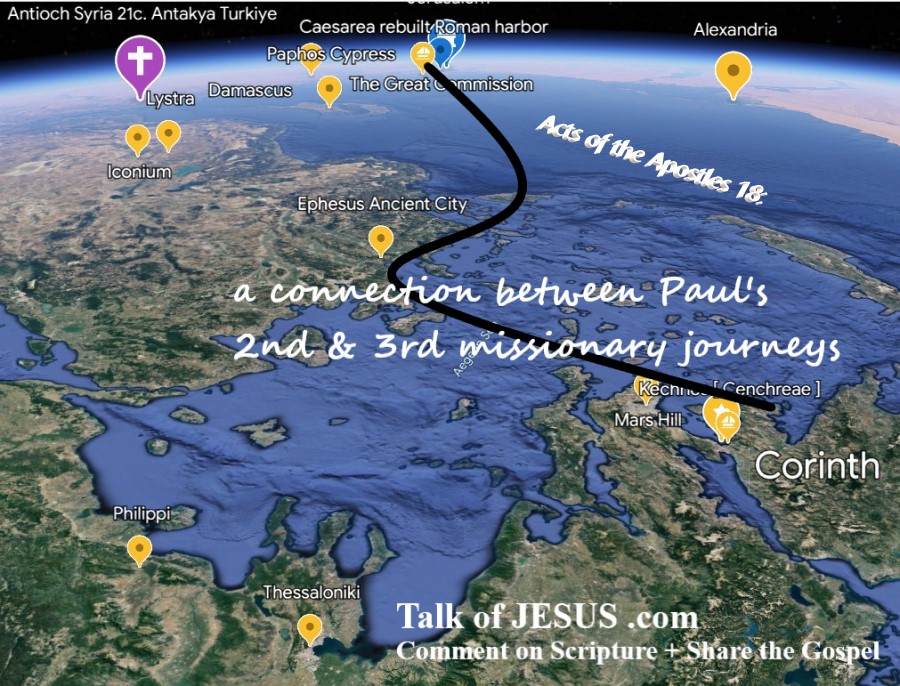
    the Apostle Paul begins his 3rd missionary journey by land traveling from Antioch Syria to Ephesus in Asia Minor

    But regardless of Timothy’s personal importance to Paul as a fellow servant of Christ and the Gospel, you can see from the definition of son above that his spiritual relationship to the Apostle and Christ’s Church stand foremost to any role of administrative authority (which he had, as did the Apostle Paul) or imaginative royal-like religious title.
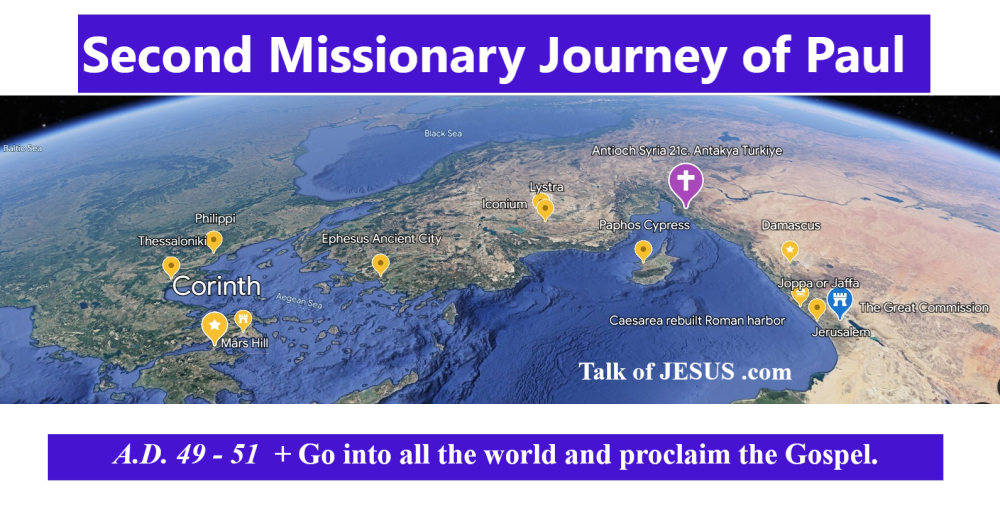
    But on taking leave of them he said, “I will return to you if God wills,” and he set sail from Ephesus. Conclusion of the second missionary journey of Paul from Acts 18
    and he set sail from Ephesus.

    From Personal Sonship to Apostolic Responsibility for the Gospel

    In the fifteen or so years since Timothy as a young man had first followed and served Paul, he has proven himself faithful, and a capable pastor (or shepherd trusted with local flocks of followers of The Way, loyal to Paul and true to the Gospel of Jesus Christ.

    Hence I remind you to rekindle the gift of God that is within you through the laying on of my hands;

    2 Timothy 1:6 RSV

    “.. rekindle the gift of God that is within you..” – the word Paul uses here in this introduction of his pastoral epistle is: anazōpyreō

    – stir up that by which the fire is kindled anew or lighted up, a pair of bellows);

    Don’t you love Paul’s imagery of a fire of holiness, perhaps neglected and cooling to Christ as its last embers of your faith — REKINDLING through the Holy Spirit (received by the Apostle’s laying on of hands)?

    Of course you know Paul’s word for ‘the gift of God’ – the charisma of Theos.

    Paul reminds by building up in the power of the faith already well-known in and to Timothy: 

    for God did not give us a spirit of timidity

    that is, fearfulness of cowardice 

    but a spirit of power and love and self-control.

    THREE gifts of the Spirit required of pastors and the faithful of the flock of every church.

    • dynamis – strength power and ability
    • agapē – (not just any love, but agapē love) – affection, benevolence, good will, charity, love for the brothers and sisters of the church
    • sōphronismos – The KJV translates as sound mind (1x).
      • (this you may not know and in this the saints so often find ourselves lacking)
      • an admonishing or calling to soundness of mind, to moderation and self-control

    Power in the Spirit, Agape Love and a yielding of the mind to God
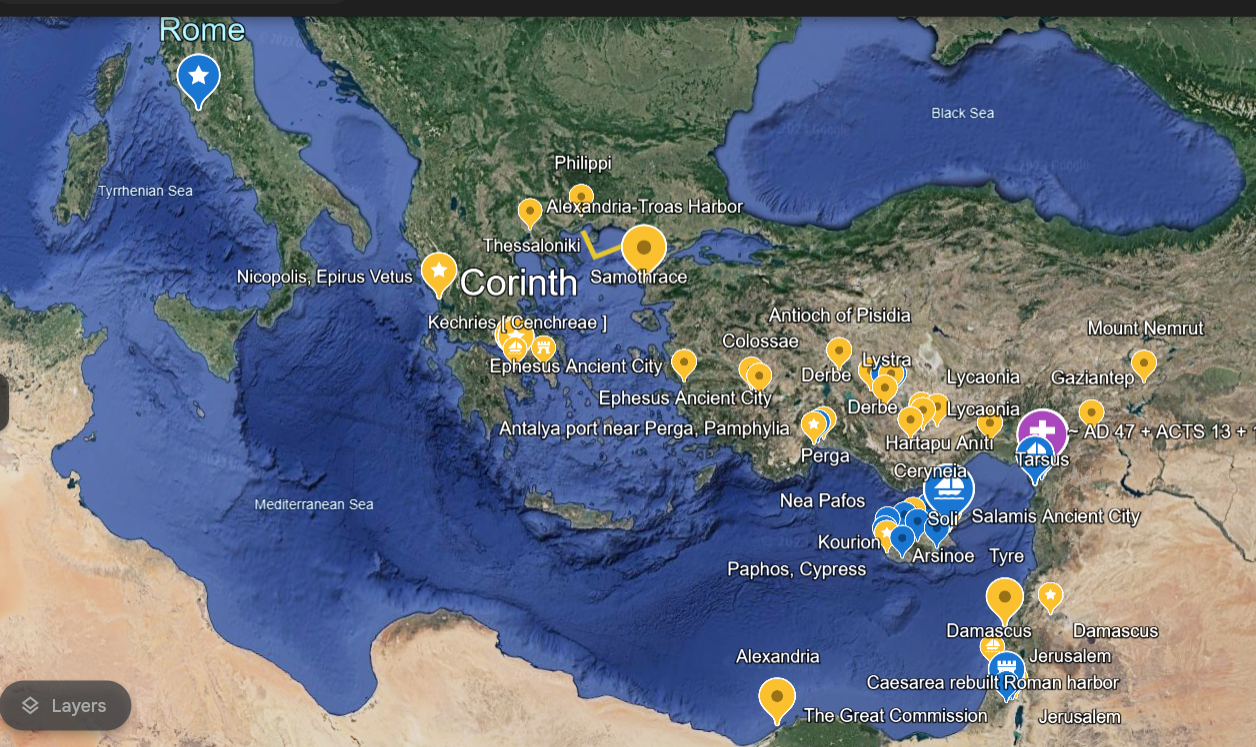
    Several missionary stops of the apostle Paul before going to Rome - Acts of the Apostles

    Paul could have easily been forgotten in his prison cell in Rome, even more distant in Europe across the Aegean — than Derbe and Antioch from Ephesus, all in Asia where Timothy remains pastoring the church.

    Therefore, be not ashamed

    So the Apostle writes:

    Do not be ashamed then of testifying to our Lord, nor of me his prisoner, but share in suffering for the gospel in the power of God, who saved us and called us with a holy calling,

    not in virtue of our works but in virtue of his own purpose and the grace which he gave us in Christ Jesus ages ago, and now has manifested through the appearing of our Savior Christ Jesus, who abolished death and brought life and immortality to light through the gospel.

    2 Timothy 1:8-10 RSV


    The faithful and unfaithful to Paul and Apostolic faith

    Paul is about to begin an important point and reason for this second epistle (which we will study more next time), but here he lists some remembered for their works. 
    Coasts of Asia Minor along the Aegean Sea

    This you know, that all those in Asia have turned away from me,

    among whom are Phygellus and Hermogenes.


    The Lord grant mercy to the household of Onesiphorus, for he often refreshed me, and was not ashamed of my chain;

    Circus Maximus - Rome and model of surrounding city of Rome

    but when he arrived in Rome, he sought me out very zealously and found me.

    The Lord grant to him that he may find mercy from the Lord in that Day—and you know very well how many ways he ministered to me at Ephesus.

    2 Timothy 1:15-18 NKJV


    NEXT: For this Gospel I was appointed


    Comment on Scripture – Share the Gospel


  • Consecration, Ceremonies and Rites

    Consecration, Ceremonies and Rites

    Two weeks ago in my Saturday Post SERIES addressing the jargon of the church I asked, “Can you picture a process of ‘consecration?’

    • You probably picture consecration as a rite of sorts, most specifically a public religious rite.

    That’s right and an important view of occasions of consecration.


    We also defined anointing, but today I'm not quite ready for  'sanctification' without first briefly examining what some view as consecration in this Common Era.

    Even though some rites seem Biblical, some Common Era christians claim their rights in place of observing a religious consecration to God.

    And thou shalt put them upon Aaron thy brother, and his sons with him; and shalt anoint them, and consecrate them, and sanctify them, that they may minister unto me in the priest’s office.

    Exodus 28:41 KJV


    Consecration a Public Picture

    What do you see here?

    Short answer:

    • Two religious ceremonies,
      • one Jewish and
      • one (perhaps) christian.

    Consecration, whether Jewish, Christian, Islamic, Hindu, Buddhist — Orthodox, Reformed, unaffiliated — Roman Catholic, Anglican, Baptist, Presbyterian or evangelical — atheist or naturist — – consecration is part of a public proclamation of faith — a religious rite.


    Who is consecrated?

    The answer here seems simple enough. In this instance, the priests who are exclusive Aaron and his sons.

    And by extension into an Old Testament context, the Levites are the ONLY Priests anointed and consecrated to serve the LORD on behalf of the church (that is, the Hebrew chosen) as a separate and holy people to God our Father of all creation.

    The LORD will judge some Priest and strike them down to death in some instances. The Priest of God and especially the one High Priest bear a weight of accountability for the entire congregation of the Hebrew people.

    What is consecrated?

    The garments of the priests – the linen cloths and holy garments.

    On certain occasions the priest must consecrate all the people and everything in the place of worship.

    Even certain times carry an obligation of consecration to the Lord our God:

    The LORD instructed Moses, “Speak to the Israelites and tell them: When a man or woman makes a special vow, a Nazirite vow, to consecrate himself to the LORD..

    “He is holy to the LORD during the time of consecration.

    Numbers 6:1-2 ,6 CSB

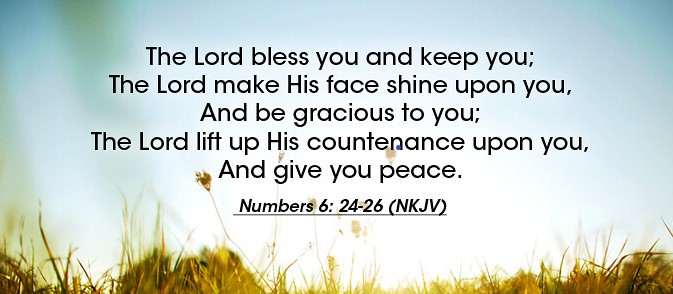
    Many Christians speak the priestly blessing of Numbers


    More than simply a benediction

    The LORD said to Moses,
    Say to Aaron and his sons, Thus you shall bless the people of Israel: you shall say to them,

    Numbers 6:22-23 RSV
    the LORD bless you and keep you.. AND be gracious to you - a highest grace of God

    SAY to Aaron and his sons (the Priests)” — “SAY to them (the people of Israel)” receiving the blessing of the LORD through HIS command!

    DO NOT MISS the weight what the LORD says here. 

    דָבַר dâbar, daw-bar’; a primitive root; perhaps properly, to arrange; but used figuratively (of words), to speak; rarely (in a destructive sense) to subdue:—answer, appoint, bid, command, commune, declare, destroy, give, name, promise, pronounce, rehearse, say, speak, be spokesman, subdue, talk, teach, tell, think, use (entreaties), utter


    Now you may have recited this COVENANTAL BLESSING in your earlier days; perhaps in English, Latin, some other language, or even in its original Hebrew of the Torah: 

    יְבָרֶכְךָ יְהוָה וְיִשְׁמְרֶךָ׃ ס

    יָאֵר יְהוָה פָּנָיו אֵלֶיךָ וִיחֻנֶּךָּ׃ ס

    יִשָּׂא יְהוָה פָּנָיו אֵלֶיךָ וְיָשֵׂם לְךָ שָׁלוֹם׃ ס

    Yᵊhōvâ bāraḵ šāmar

    Yᵊhōvâ ‘ôr pānîm ‘ôr ‘ēl ḥānan

    Yᵊhōvâ nāśā’ pānîm ‘ēl śûm šālôm

    Source: BlueLetterBible.org 

    a New Covenantal Relationship between God and His Church

    And likewise the cup after supper, saying, “This cup which is poured out for you is the new covenant in my blood.

    Gospel of Luke 22:20 RSV

    But you are not to be called rabbi, for you have one teacher, and you are all brethren.

    And call no man your father on earth, for you have one Father, who is in heaven.

    Gospel of Matthew 23:8-9 RSV

    Instructions of the One Son of God, our only Lord and Savior Christ Jesus

    a Catholic conversation

    “I think a lot of people have a problem with consecration to Mary.

    Fr. H. She’s not Jesus. Gender neutral language, okay, she’s not Jesus-

    we don’t want to be gender neutral with the mother of God.

    Fr. H. No we don’t.

    It’s not directed apparently at least when we say consecration to Mary, maybe you’re going to straighten that out. But the other thing is we have no idea what the word consecration means. What does that mean concentration to?

    Fr. H. Well, this is an important topic. And of course, but that’s not the most important aspect of the topic… The term consecration comes in mostly in the 17th century… All right. So that means giving everything over to someone else.

    But the word consecration in Catholic theology, and I really don’t like to question what has become a term in popular devotion. And I’m perfectly happy to say consecrate yourself to Mary, it’s a perfectly good expression, but probably the word entrustment is more precise.

    “Consecration has an expression that is meant for such things which are given over to God, in the service of God, liturgically especially in him only…

    Father‘ H. – Roman Catholic theologian

    Is every consecration ‘Holy?’

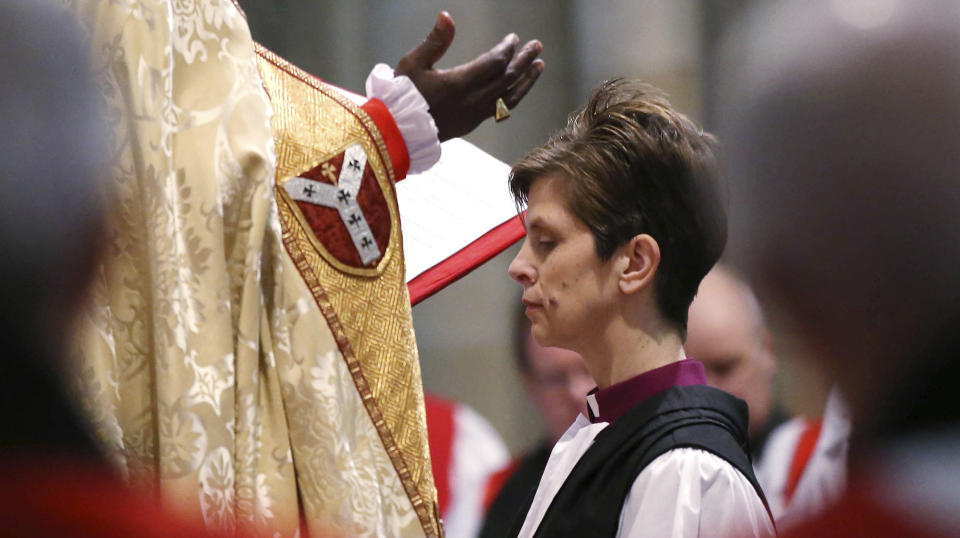
    CONSECRATION of Priests according to Scripture, consecration to holiness in ceremonial rites of the Church, leadership of Christ’s flock — like with the Levites, NONE to be taken lightly.

    Numbers 16 Korah's rebellion picture of pit

    Convocations of Bishops

    Error by many Bishops of Rome.

    Many Priests and Pastors of all Common Era christian churches have worn the shepherd’s robes of heresy with cunning common rebellion against Jesus Christ, Who IS and WAS and WILL be.

    Do we not commonly witness these in everyday culture? 

    Who so quickly dismisses Scripture and twists the Lord’s instruction?

    ἐπίσκοπος – episkopos – masculine noun

    A woman must learn in quietness and full submissiveness. I do not permit a woman to teach or to exercise authority over a man; she is to remain quiet.

    1 Timothy 2:11-12 BSB

    rite of consecration of Bishop in the Anglican Church

    Now a bishop must be above reproach, the husband of one wife, temperate, sensible, dignified, hospitable, an apt teacher.. He must manage his own household well.. He must not be a recent convert, or he may be puffed up with conceit and fall into the condemnation of the devil…

    excerpt from the First Epistle of Paul to Timothy 3: RSV

    Pronouns: this, these, etc.
    Yet Christ's Apostle is clear in his instruction concerning consecration of leadership of the Church.

    God's word is clear as to the humble roles of Christ's servants, both husbands (of a woman) and wives (of a man). NO adultery. NO divorce. NO fornication. NO sinful flesh usurping God-given roles.

    NO idolatry of Rite (or of no rite). NO worship of Saint (capital 'S') or Angel. NO idolatry of self or knowledge or earth or sea or tree. NO following of prophet, for the false proclaim false gods.

    JESUS CHRIST IS LORD!

    OUR CONSECRATION to GOD is to HOLINESS! And in the Father, Son and Holy Spirit we worship ONLY HIM.


    Comment on Scripture – Share the Gospel
  • Ministers of Christ: Faithful Stewards – 1 Corinthians 4

    Ministers of Christ: Faithful Stewards – 1 Corinthians 4

    4 Let a man so account us as the ministers of Christ, and stewards of the mysteries of God.

    1 Corinthians 4:1 21stCenturyKJV

    The Apostle Paul has been making his case as the architect of the Corinthian church.


    The Need for Unity

    .. you ought to regard us as servants of Christ and as those entrusted with the mysteries God has revealed. [NIV]

    Now Paul moves forward by pointing to the ministry of Corinthian Christians and make a few points as example.

    Moreover it is required of stewards that they be found trustworthy.

    1 Corinthians 4:2 RSV

    ἀνακρίνω – anakrinō – examined

    • it is a very small thing that I may be examined (by you or any)
    • In fact, I do not even examine myself.
    • No charges against me
    • Yet I am not acquitted
    • But the one who examines me is the Lord.
    Consider personally the definition of Paul's topic:

    Do YOU examine or judge? interrogate? examine the accused or witnesses?

    Does your investigation examine, enquire into, scrutinize, sift, and question?

    As the Corinthian church’s leading architect the Apostle challenges its leaders and members to be judges of and estimate or determine (the excellence or defects of any person or thing) ALL who build Christ’s church in Corinth.

    Contrary to our Common Era cop-out by evangelicals avoiding examination of our own inconsistencies within the church, the Apostle Paul has already established the architecture for Christians to account for each other.

    But he who is spiritual examines G350 all things, yet he himself is examined G350 by no one.

    1 Corinthians 2:15 LSB – : Strong’s G350 – anakrinō

    IT’S A HIGH STANDARD.

    Now the Apostle writes in response to the Corinthian church (some translations use JUDGED in place of examined):

    I care very little if I am judged by you or by any human court; indeed, I do not even judge myself.

    My conscience is clear, but that does not make me innocent.

    It is the Lord who judges me. Therefore judge nothing before the appointed time; wait until the Lord comes.

    1 Corinthians 4:3-5a New International Version

    He will bring to light what is hidden in darkness and will expose the motives of the heart. At that time each will receive their praise from God. – 1 Cor 4:5b

    Later in this letter Paul instructs further:

    Therefore if.. an unbeliever or an uninformed man enters, he is convicted by all, he is called to account by all; the secrets of his heart are disclosed; and so he will fall on his face and worship God, declaring that SURELY GOD IS AMONG YOU. 1Co 14:24 LSB excerpt; 1Co 14:25

    The Nature of True Apostleship

    FIRST, a reminder of who are apostles AND what defines a true apostle?

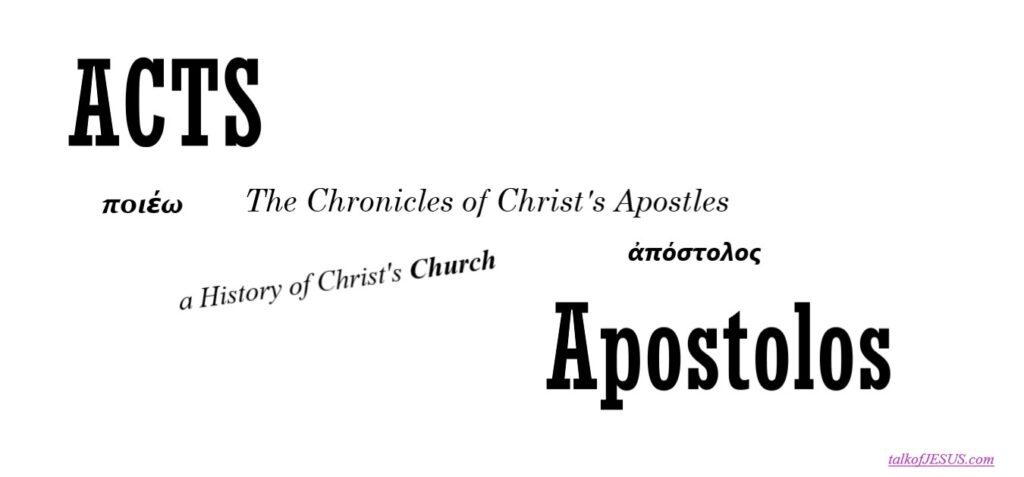
    Acts Apostolos - Acts 1 of the Apostles begins a 28 chapter account of the chronicles of Christ's Apostles - a history of Christ's Church

    ἀπόστολος

    a delegate; specially, an ambassador of the Gospel; officially a commissioner of Christ (“apostle”) (with miraculous powers):—apostle, messenger, he that is sent.

    Strong’s G652 – apostolos

    Paulos apostolos iēsous christos [Paul, an apostle of Jesus Christ] will further define his anointing as an apostle just a bit further into his epistle [letter] to the Corinthians.

    If to others I am not an apostle G652, at least I am to you, for you are the seal of my apostleship in the Lord.

    1 Corinthians 9:2 LSB

    Paul moves forward to an alleged controversary perceived between his leadership and teaching and that of Apollos, who had also ministered to the Corinthian church with great power.

    (in case you missed this from Luke’s historical Account of the Apostles of the 1st c. church)

    Brothers, I have applied these things to myself and Apollos for your benefit, so that you may learn from us not to go beyond what is written. Then you will not take pride in one man over another. –1 Corinthians 4:6 BSB

    NOW the Apostle’s accounting of leaders of the Corinthian church:

    • For who makes you so superior?
    • What do you have that you did not receive?
    • And if you did receive it, why do you boast as though you did not?
    Paul answers his own rhetorical questions:

    Servants of Christ

    8 Already you have all you want.

    Already you have become rich.

    Without us, you have become kings.

    How I wish you really were kings, so that we might be kings with you!

    9 For it seems to me that God has displayed us apostles at the end of the procession, like prisoners appointed for death.

    We have become a spectacle to the whole world, to angels as well as to men.


    WHAT EXACTLY DOES THE APOSTLE OBSERVE OF THIS CHURCH?

    This judgment from these verses of Paul’s epistle translates from the Greek to English with words perhaps more telling:

    You are already full! You are already rich! You have reigned as kings without us— NKJV

    You have begun to reign in God’s kingdom without us! – NLT


    Fools for Christ

    SO YOU think that you are smart enough to lead YOUR church without listening to apostles sent to guide you in building Christ's church?

    We are fools on account of Christ, but you are wise in Christ; we are weak, but you are strong; You are honored, but we are without honor.

    1 Corinthians 4:10 BLB

    Now listen to Paul's circumstance at the very time the Apostle writes to the Corinthians:

    11 As far as the present hour, we both hunger and thirst, and are poorly clad, and are buffeted [harshly treated], and wander homeless, and we toil, working with our own hands. Being reviled, we bless; being persecuted, we endure; being slandered, we entreat [endure].

    We have become as the residue of the world, the refuse of all, until now.

    – 1 Corinthians 4:11-15 BLB

    – IS PAUL CONDEMNING THE CORINTHIAN PASTORS?

    – Does PAUL understate his own challenges by comparison to the Corinthians?

    WHY would this architect of the Corinthian Church write to them with such severity?

    Apostolic Fatherhood

    Paul restates his case for continuing his own guidance of the leadership of the Corinthian leadership.

    The New King James Version of Paul’s epistle heads this section of Scripture given in his first letter to the Corinthians: Paul’s Paternal Care.

    Leading young Pastors and guiding their sheep

    14 I do not write these things to shame you, but as my beloved children I warn you.

    How do YOU take fatherly warnings such as these?

    Do you LISTEN as an obedient child of the Lord?

    OR might you, beloved child of God, insist on a life with Jesus YOUR own way?

    I write not these things to shame you, but as my beloved sons I warn you. – KJV

    I WARN you. – to put in mind, i.e. (by implication) to caution or reprove gently:—admonish, warn.

    Of course some are ashamed, convicted in their hearts by nature of our guilt. Some translations use admonish, correction, advise — but don’t miss the Apostle’s intent as a father of his flock in the Way of Christ Jesus as our Lord.

    15 For though you might have ten thousand instructors in Christ, yet you do not have many fathers; for in Christ Jesus I have begotten you through the gospel. 16 Therefore I urge you, imitate me.


    Paul, of course, has fathered or mentored others -- several others throughout his three Apostolic missions proclaiming the Gospel into all the world; none more faithful and true than Timothy, his young protege in Ephesus.

    It is Timothy who brings Paul's Epistle to Corinth. And the Apostle expresses complete confidence in this young pastor who he sent to the Corinthians.

    The ESV states this well:

    I urge you, then, be imitators of me.

    That is why I sent you Timothy, my beloved and faithful child in the Lord,

    to remind you of my ways in Christ, as I teach them everywhere in every church.

    Paul’s first letter to the Corinthians 4:16-17 ESV

    Some of you have become arrogant, as if I were not coming to you.

    NIV

    But I will come to you very soon, if the Lord is willing, and then I will find out not only how these arrogant people are talking, but what power they have.

    the Kingdom of God

    - Who has authority in the Kingdom of Christ Jesus?

    The Apostle challenges the Corinthian believers and leaders to show the true fruit of humility in Christ.


    For the Kingdom of God is not just a lot of talk; it is living by God’s power.

    1 Corinthians 4:20 NLT

    Which do you choose? 

    • Should I come with a rod to punish you,
    • or should I come with love and a gentle spirit?

    NEXT: The Apostle Paul will take on an enduring common challenge of the Church: