Tag: trinity

  • 2 Timothy – Apostolic Faith and Pastoral Oversight by Paul

    2 Timothy – Apostolic Faith and Pastoral Oversight by Paul

    Introduction

    God and Christ became incarnate in order to restore Their personal relationship with sinful man.

    Roger@TallkofJesus.com


    God and Apostles, Disciples of men

    Our purpose in introducing Paul’s final epistle to a pastor is:

    1. to reintroduce you to the Apostle Paul and

    2. to reacquaint you with Timothy, a disciple of Paul who served him in varying roles,

    BOTH whom we’ve met in Acts of the Apostles and other epistles.


    Let us begin with God

    (says the teacher to his class). 

    God — YHWH the LORD — Is One.

    One in Being. One in Essence. One in Substance.

    There IS no other god.

    God IS the Creator of all things and of all mankind.

    He had a relationship in the beginning of time — before which He Exists and after which He Exists — the LORD’s relationships are perfectly personal.

    God IS: Father, Son — Jesus Christ, and the Holy Spirit.


    Christ, Apostles and Disciples

    The Apostle Paul writes to Timothy in his first epistle:

    This is a faithful saying and worthy of all acceptance, that Christ Jesus came into the world to save sinners, of whom I am chief.

    First letter of the Apostle Paul to Timothy

    Jesus, the incarnate Son of God the Father, taught the Gospel with all perfection to men for three years.

    The Twelve Disciples (which included neither Paul nor Timothy) followed the Lord, ate and slept with Jesus — they all knew the incarnate Son of God personally.


    Consider the interpersonal relationships connecting each of these roles as defined by Scripture and what the Lord Jesus, our Teacher, instructs:

    Disciple (follower), Master (teacher), Servant (slave) and Lord

    The Disciples Matthew, John and Peter were all present with the incarnate Christ Jesus personally when the Lord said this:

    The disciple is not above his master, nor the servant above his lord.

    Gospel of Matthew 24:14 – Jesus’ to The Twelve Disciples; Instructions for Service & meaning of discipleship – KJV

    μαθητής – mathētēs – disciple (268x) – a learner, pupil, one who follows one’s teaching:

    The Twelve followed JESUS for three years, discipleship at its most personal.

    Furthermore, many others would follow JESUS’s teachings as ‘Christians’ chosen by God for the Way of eternal life.


    Apostles to the Jews and Gentiles

    Of course from the beginning Jesus knew that Judas would betray Him and that a disciple Mathias would be chosen to replace the betrayer of Christ as a twelfth Apostle to the Jews.

    Christ had taught and trained the Twelve how they would become Apostles — primarily, but not exclusively, to their fellow Jews —after His death, resurrection and ascension.
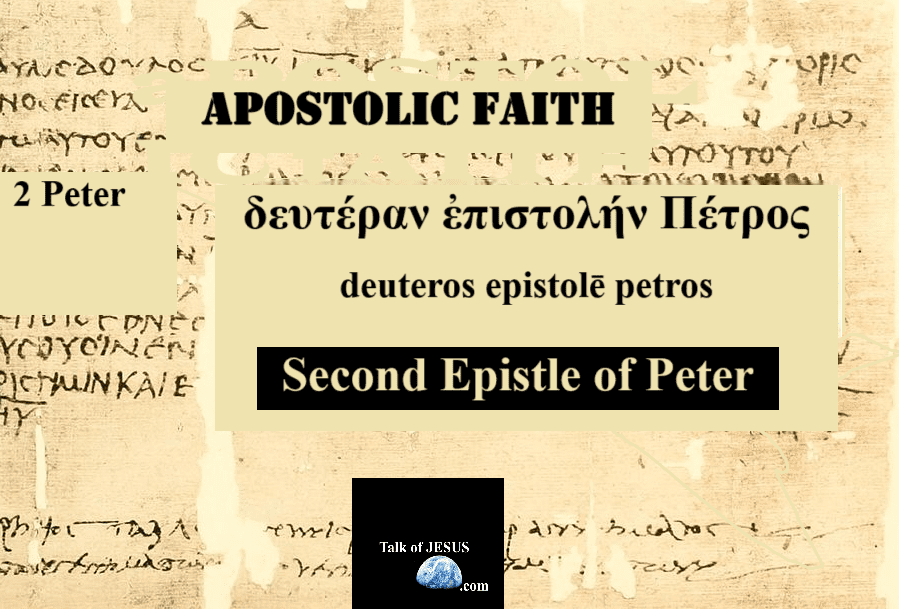

    Simon Peter, a servant and an apostle of Jesus Christ, to them that have obtained like precious faith with us through the righteousness of God and our Saviour Jesus Christ:

    2 Peter 1:1 KJV


    Paul also refers to himself as an Apostle, greeting his disciples (followers) in his first epistle and this final letter.

    Paul, an apostle of Jesus Christ by the will of God, according to the promise of life which is in Christ Jesus,

    To Timothy, my dearly beloved son:

    2 Timothy 1:1-2a KJV

    So who are apostles?
    Acts Apostolos - Acts 1 of the Apostles begins a 28 chapter account of the chronicles of Christ's Apostles - a history of Christ's Church

    Apostolos – a delegate, messenger, one sent forth with orders

    • specifically applied to the twelve apostles of Christ
    • in a broader sense applied to other eminent Christian teachers
    • – of Barnabas of Timothy and Silvanus

    Apostles are ‘sent out’ by Christ.

    As in the case of the Twelve and the Apostle Paul, the Lord himself instructed them Personally — that is, the Person of Jesus sent these Apostles out into the world personally.

    Other apostles continued to be ‘sent out into all the world’ by the Holy Spirit after Jesus’ ascension, as Luke records for us of the day of Pentecost in ACTS 1.


    As we learned from Acts of the Apostles that after the AD 49 Council in Jerusalem, Peter, Paul, John and all others were sent out ‘first to the Jews,’ but also into gentile areas of the Roman Empire (mostly Hellenist or Greek provinces) to include ALL as follows of Christ as part of each local church.

    Jesus is Lord

    Note that Jesus Christ refers to the Father as Lord (Kyrios in their common Greek language of the Roman Empire) with an authority and meaning no different than the original Hebrew scripture (Yahweh).

    “Teacher, which is the great commandment in the Law?”

    And He said to him,

    “‘YOU SHALL LOVE THE LORD YOUR GOD WITH ALL YOUR HEART, AND WITH ALL YOUR SOUL, AND WITH ALL YOUR MIND.’

    Matthew 22:36-37 LSB


    Saul, a Jew of Jews, sent out by a Master crucified and risen!

    About five years after the Jews of Jerusalem had crucified Jesus, a young disciple of Gamaliel witnessed the stoning of a follower of The Way.

    They went on stoning Stephen as he was calling out and saying, “Lord Jesus, receive my spirit!” Then falling on his knees, he cried out with a loud voice, “Lord, do not hold this sin against them!” And having said this, he fell asleep.

    Acts of the Apostles 7:59-60 LSB

    Stephen, even in his dying breath, called JESUS, “Lord” – twice.

    And this young disciple of the rabbi Gamaliel had witnessed it personally.

    Saul of Tarsus would become an apostle of the Sanhedrin specifically sent out to continue persecuting Christians.

    But then, as we know, Christ appeared to Saul and instructed this new and unwilling (at first) Apostle to go to the Gentiles.

    Paul frequently writes that He is a slave (doulos) of JESUS or God(or of the gospel). The Lord Jesus himself points to the service required of this most personal relationship.

    Many translations prefer servant to slave, but it is the same Greek word: doulos. 

    The disciple is not above his master, nor the servant above his lord.

    Gospel of Matthew 10:24 KJV

    The Apostle Paul describes himself in another pastoral epistle written about the same time as his two letters to Timothy:

    Paul, a servant G1401 of God, and an apostle of Jesus Christ, according to the faith of God’s elect, and the acknowledging of the truth which is after godliness;

    Epistle of Paul to Titus 1:1

    Timothy – Paul enlists a disciple of The Way
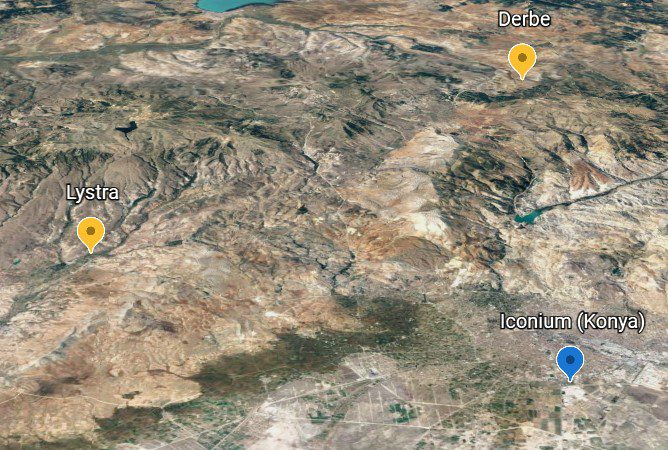
    Lystra, Derbe and Iconium in the Taurus mountains and general Roman region of Galatia to where Paul sends the first of his epistles.

    Now Paul also arrived at Derbe and at Lystra.

    And behold, a disciple was there, named Timothy,

    the son of a Jewish woman who was a believer,

    but his father was a Greek,

    Acts of the Apostles 16:1

    During Paul’s second missionary journey, which had begun inland through the mountains northwest of Tarsus in rural Galatia. While visiting churches established by Barnabas and him on a first missionary journey, the Apostle meets a young Timothy — a Greek, because of his father, but brought up as a Christ-follower by his mother(a Jew, as Paul had been) and Timothy’s grandmother.

    A brief introduction of Timothy (Τιμόθεος – Timotheos)

    Timothy's early journeys are found in Acts of the Apostles. 

    ~AD 49

    Timothy joined Paul and Silas on mission, staying behind at Berea for a time with Silas. Paul, later commands the two by the Spirit to join him in Athens from where the trio proceed to Macedonia.

    Paul then ‘sent into Macedonia two of them that ministered unto him, Timotheus and Erastus; but he himself stayed in Asia for a season.

    Acts 19:22 KJV

    We observe how personal all of the mentoring relations of the Apostle remain to Paul as Luke records those with the Apostle when once again the Jews laid wait to capture and kill him.

    Paul was accompanied by Sopater son of Pyrrhus from Berea,

    Aristarchus and Secundus from Thessalonica,

    Gaius from Derbe, Timothy, and Tychicus

    and Trophimus from the province of Asia.

    Acts of the Apostles 20:4 Berean Standard Bible

    We will mention more of Timothy's crucial later pastoral roles later in this epistle.  

    Timothy wrote other epistles with Paul :

    It is important for us to note that these Pastoral Epistles make known the Spirit-directed teaching of the Apostle Paul we must study, rather than focus on any pastors or saints to whom Paul writes, such as Timothy.

    • ~AD 50-51
    • ~AD 55-56 the Apostle Paul writes:
      • 1 Corinthians with Sosthenes and
      • 2 Corinthians with Timothy
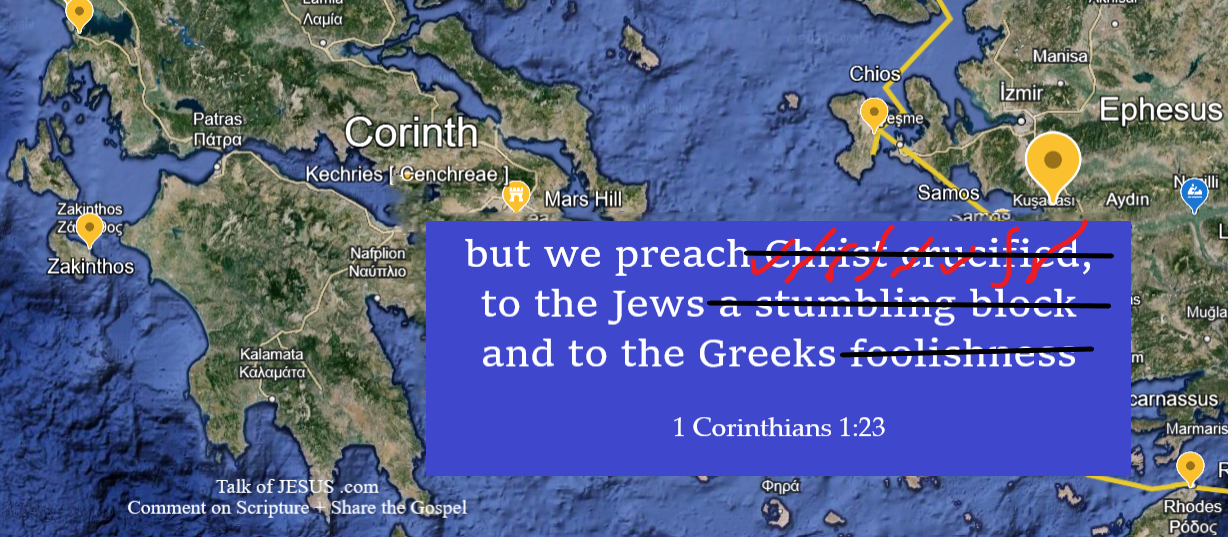
    preaching to them that perish - Paul writes to the Corinthians to consider his different way of preaching
    The Apostle Paul writes to the Corinthians with Sosthenes and a second time with Timothy
    *graphic from a 2024 TalkofJESUS SERIES Post: Rebuke of ministers that perish without the Cross
    • ~AD 60-62 The Apostle Paul writes to:
      • the Ephesians
      • the Philippians
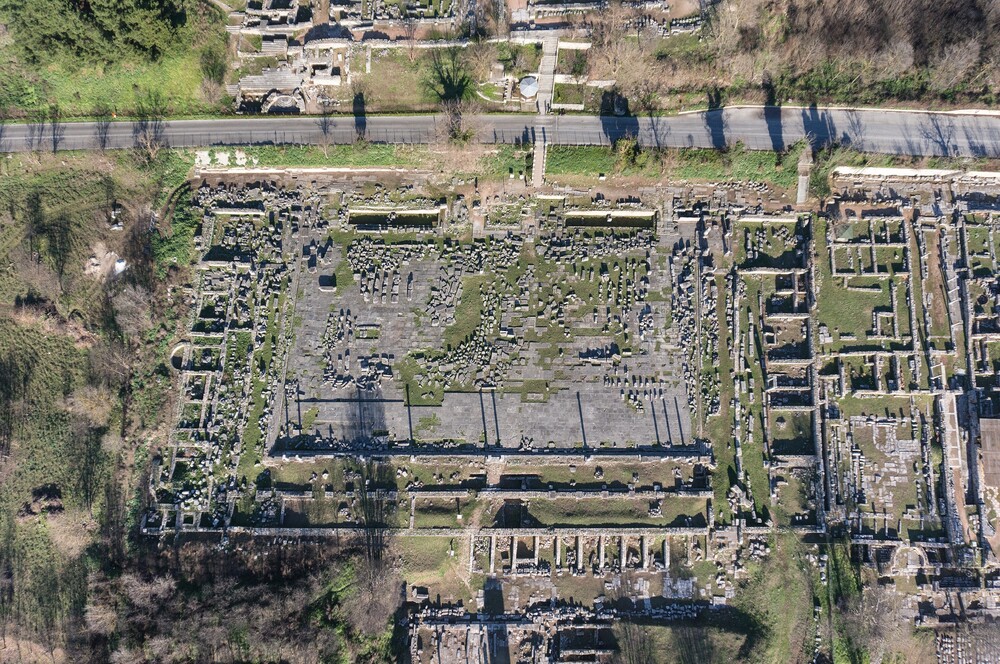
    Archaeological Site of Philippi: General view of the forum with adjacent agora marketplace

    Paul and Timothy, servants of Christ Jesus,

    To all God’s holy people in Christ Jesus at Philippi, together with the overseers and deacons:

    Philippians 1:1 NIV

    • the Colossians, with Timothy
    • and a personal plea along with Timothy to Philemon, concerning Onesimus.

    NEXT: 2 Timothy 1:

    timotheos agapētos teknon

    To Timothy, my beloved son


    Comment on Scripture – Share the Gospel

  • The Apostles Creed 3- Christ Conceived by the Holy Spirit

    The Apostles Creed 3- Christ Conceived by the Holy Spirit

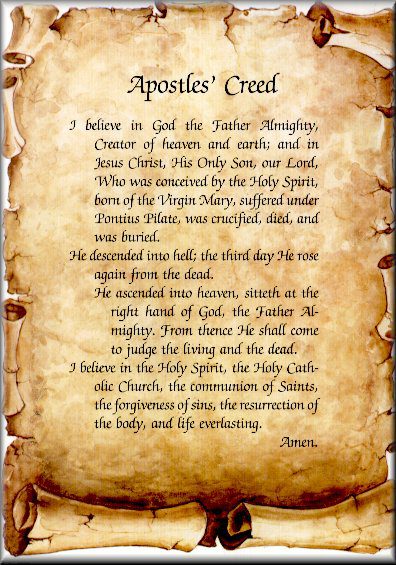
    The Apostles’ Creed is foundational to our Apostolic Christian faith (even though Jesus’ Twelve Apostles did NOT write it).


    Creeds and Credo

    How do we know if our fellow worshipers also believe what we do?

    Although creeds were originally individual (credo from the Latin, I believe), they shortly became statements of doctrine in which groups set forth their essential beliefs.

    Zondervan Pictorial Encyclopedia of the Bible, Tenney, v.1,p.1025

    Talk of JESUS .com Go into all the world and preach the Gospel Mark 16:15
    Talk of JESUS .com
    • YOU witness publicly in worship of the LORD GOD that WE believe in this.
    • So, DO YOU?

    Structure of Christian CREEDS

    We believe in…

    Here’s a brief outline of the fundamental objects of our faith found in The Creed:

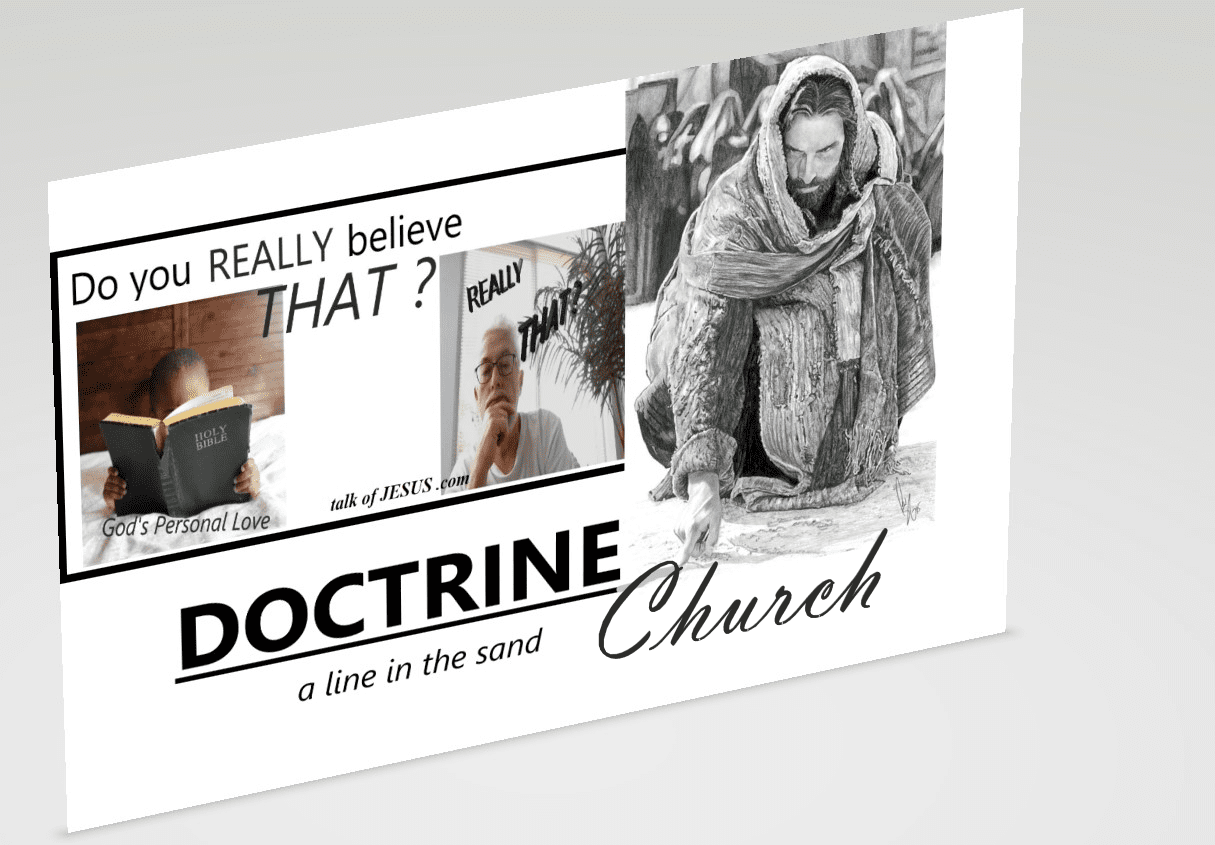
    Followers of Christ must always expect an attack against Scripture. Church doctrine is a line in the sand. - How will a leader or council of leaders choose what the Church will teach?
    I BELIEVE or WE BELIEVE IN:
    1. God
    2. Jesus Christ
    3. the Holy Spirit
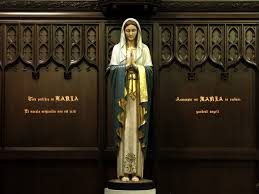
      • and the Virgin Mary

    The Apostles’ Creed and other affirmations of faith were adopted corporately by the Church to refute permeating heresies plaguing believers since the time of the Apostles.

    Roger@TalkofJesus.com


    The Apostles Creed

    I believe in

    God the Holy Spirit


    What do we believe about the Holy Spirit?

    Q36 of the New City Catechism

    Kid’s Answer:

    That he is God, coeternal with the Father and the Son.

    Of course any simple or complex answer falls short of describing the Eternal God. A reminder about God and Trinity:

    As Scripture states:

    GOD IS ONE IN ESSENCE,

    and as the Gospel reveals,

    THREE IN PERSON.

    More on Trinity from R.C. Sproul


    The Nature of Spirit – (Holy and familiar)

    Define God. 
    It's the question unanswerable that could lead us far beyond a limited glimpse of the Holy Spirit.

    But note Scriptures and definitions which attempt to show the unseen. (God, of course, is unseen and so is spirit.)

    Picture, if you will, the ether of a non-existant creation described in Genesis 1.

    rûaḥ ĕlōhîm – the Spirit of God – וְרוּחַ אֱלֹהִים

    • wind, breath, mind, spirit

    7. Spirit of God, the third person of the triune God, the Holy Spirit, coequal, coeternal with the Father and the Son..

    G. never referred to as a depersonalised force.

    Source: BlueLetterBible.org Lexicon :: Strong’s H7307 – rûaḥ


    Yet no man explains the Holy Spirit (or the Father) better than JESUS, to whom the Father IS personal.

    Jesus answered [the Pharisee Nicodemus],

    “Truly, truly, I say to you, unless one is born of water and the Spirit he cannot enter into the kingdom of God. That which has been born of the flesh is flesh, and that which has been born of the Spirit is spirit.

    Gospel of John 3:5-6 LSB

    πνεῦμα – pneuma – Spirit is spirit

    Much more to study in the link above from Strong's G4151 

    Now the esteemed Pharisee Nicodemus would know both the Hebrew and Greek application of spirit. Yet here the Son of God instructs Nicodemus about the Holy Spirit.

    The Lord Jesus continues by describing spirit in general, referring to ‘wind‘,’ as does Moses in his Genesis 1 description of creation:

    “The wind G4151 blows where it wishes and you hear its sound, but do not know where it comes from and where it is going; so is everyone who has been born of the Spirit G4151.”

    Gospel of John 3:8 LSB ref. Strong’s G4151 pneuma

    Most Bibles capitalize "Spirit" to mean the Holy Spirit and use "spirit" [small 's'] for the spirit of man, an angel, etc. 

    A Singular Role of the Spirit

    Think for a moment about the incarnation of the Son of Man.

    Can the LORD God not create whoever and whatever He wants in whatever manner God has desired?

    God has created spirit beings – angels – in which some do not believe.

    The Lord God has also created spirit beings who have (like adam) also sinned against God.

    (Scripture confirms such demons and devils wielding some influence over man. So does Jesus also speak of such unseen spirits of evil.

    And yet, just like the Person of the Holy Spirit some of you do NOT believe, neither do you believe in evil angels and demons exist.

    Jesus Christ, Who was Conceived by the Holy Spirit

    So what heresy is the Apostles’ Creed addressing here?

    Some deny that Almighty GodFather of all creation and all generations of adam — is capable of conceiving the Son of God as a second adam in the womb of a daughter of adam.

    Do you believe the account of Luke’s Gospel?

    But Mary said to the angel, “How will this be, since I am a virgin?” The angel answered and said to her,

    Born of the virgin Mary

    virgin mary

    The Christ is born of a virgin, as prophesied — a humblest of births in a place also prophesied — providentially raised as a son of man.

    From the King James Version:

    And the angel answered and said unto her, The Holy Ghost shall come upon thee, and the power of the Highest shall overshadow thee: therefore also that holy thing which shall be born of thee shall be called the Son of God.

    And, behold, thy cousin Elisabeth, she hath also conceived a son in her old age: and this is the sixth month with her, who was called barren.

    For with God nothing shall be impossible.

    Mary believed the angel. 
    Do YOU believe that?

    Beginning of The Apostles’ Creed

    And Mary said,

    Behold the handmaid of the Lord; be it unto me according to thy word.

    And the angel departed from her.

    Gospel of Luke 1:38 KJV


    Next: a Savior who Suffered


    Comment on Scripture – Share the Gospel


  • How did He Know? His Presence is near – Psalm 139

    How did He Know? His Presence is near – Psalm 139

    For the chief musician: A Psalm of David

    Psalm 139:

    Psalm 139-1-6 NKJV


    An AWE-Inspired introduction to THE LORD

    Selah..
    You with heart and mind and free will to consider the Lord your God..

    Bow down looking into the depths of the nature of the LORD — how personal that an Almighty God of all things would look upon my fragile frame and existence with compassion and understanding.

    You can practlcally pray these words penned to be sung upward to the heavens as praise to the glory of the LORD —  the Almighty, Omniscient and Ever-present God .

    An author’s note on PSALM 139

    Psalm 139 begins with some of the best consideration of the nature of God and theology found in Scripture. I recommend all of it to your further study of many other topics and Divine guidance we cannot fathom.

    Attributes of God

    Of course our brief look at the attributes of God, like our glance at Psalm 139, must remain limited to a few most notable.

    Our focus today in Psalm 139 is basic to our understanding of Who God IS in this Psalm and throuighout all the Bible.

    References to various Psalms and other Scripture are just a sampling.

    O LORD, You have searched me and known me.

    Psalm 139:1

    We plea to OR praise God (: יְהֹוָה ) as a person speaking to a Person.

    Yet who can fully know the LORD?

    What we can know about God are defined as COMMUNICABLE attributes.

    • God’s communicable attributes include Holiness, Love, Justice, Mercy, Truthfulness and more.
    These attributes, while distinct, are perfectly unified in the being of God. - BibleHub.com 

    Our obvious observation — and that of the Psalmist David —  is that the GOD who searches all knows (yāḏaʿ – יָדַע) me

    (of course, since the Creator knows all things).

    This atribute of God is referred to as God’s Omniscience, one of two attributes of God we will address today from Psalm 139.


    The Bible provides a comprehensive picture of God's attributes, which can be categorized into communicable (listed above) and incommunicable attributes (listed below) - Source:BibleHub.com 
    • Aseity: God’s self-existence and independence from His creation. (Psalm 90:)
    • Immutability: “I the LORD do not change..
    • Eternity: God’s existence beyond time. (Psalm 102)
    • Omnipresence: God’s presence in all places at all times. He is not confined by spatial limitations.
      • Psalm 139:7
    • Omniscience: God’s complete and perfect knowledge. He knows all things, past, present, and future, including the thoughts and intentions of the heart.
      • Psalm 139:1-6 ,
      • also Psalm 147
      • Souce BibleHub
    Selah.. 
    Yes, consider these inherent characteristics of God as you read Psalm 139.

    a God of Personal Character

    You have sinned – crossed the line of what God wants you to do.

    OR

    You have done a good thing that you would hope God (or anyone) would take note.


    AND when we read that GOD IS ONE, the LORD doesn’t seem very personable at all.

    God is One in Being

    But, in speaking of the TRINITY we know from Scripture that the Lord God IS personable — VERY personable in THREE PERSONS we can relate to —  the Father, the Son our Lord Jesus Christ and the Person of the Holy Spirit (or Holy Ghost).

    AND GOD communitates to us personally and relationally through EACH of these three.

    Again, much more than we can cover today, but pray to the Lord for an opening of your eyes and heart and understanding as you reread this glorious Psalm. 

    The Omniscience of an ALL-KNOWING GOD

    David’s words acknowledge with humble awe,that the LORD knows everything about him.

    You know when I sit

    and when I rise;

    you perceive my thoughts from afar.

    Psalm 139:2 NIV

    SCAREY?

    It could be (if you consider that the LORD is also all-powerful).

    How many times have you thought,

    “If you knew what I was thinking..?”

    YET God knows your mind – not only what YOU have done, but what you WILL do in every situation and relationship.

    You search out my path and my lying down
    and are acquainted with all my ways.

    Psalm 139:3 ESV

    I find this actually comforting (when we become ‘lost sheep’ caught in the many snares of a mere mortal in this world ).

    For there is not a word on my tongue,
    But behold, O LORD, You know it altogether.

    v.4

    Oh the times I have not ‘held my tongue – times my mouth spewed forth evil before my brain engaged in judicious restraint.

    You have encircled me;

    you have placed your hand on me.

    Psalm 130:5 CSB

    David cites the hand of blessing that the LORD places upon those whose own hearts would pursue Him – the ALL-KNOWING Creator of us all.

    And in it David looks beyond the tree of knowledge to the God even Higher than the highest knowledge attainable by man.

    Such knowledge is too wonderful for me;

    It is too high, I cannot attain to it.

    Psalm 139:6 LSB

    WHAT can any of us say about the knowledge (Omniscience) of the Almighty, all-powerful (Omnipotent) God?


    The Omnipresence of an Omniscient God

    Jesus reminded Nichodemus, a most-highly educated Biblical scholar:

    “God is spirit, and those who worship him must worship in spirit and truth.”

    Gospel of John 4:24 ESV

    The Son of God communicates directly that the Holy Spirit of God is an essential Person of God we should worship.

    David, a man after God’s own heart, already has experienced this and speaks of God’s omnipresent omniscience here — not unlike the Spirit [wind, breath, mind, spirit – רוּחַ]hovering over the waters before Creation.

    Where can I go from Your Spirit?
    Or where can I flee from Your presence?

    Psalm 139:7

    He pursues you in perfect justice. He captivates you in His perfect love.

    If I ascend into heaven, You are there;
    If I make my bed in hell, behold, You are there.

    If I take the wings of the morning,
    And dwell in the uttermost parts of the sea,
    Even there Your hand shall lead me,
    And Your right hand shall hold me.

    How far removed from my daily existance, YET the guiding hand leads me and your hand of blessing embraces me.

    David’s song praises God’s presence and omniscience and personal love.

    If I say, “Surely the darkness shall fall on me,”
    Even the night shall be light about me;
    Indeed, the darkness shall not hide from You,
    But the night shines as the day;
    The darkness and the light are both alike to You.

    Again, no more than God’s creation IN THE BEGINNING can hide.

    And now this song praising the Creator echos the nature of Adam and every God-created being such as ourselves before we even received the spirit of life.

    For You formed my inward parts;
    You covered me in my mother’s womb.

    I will praise You, for I am fearfully and wonderfully made;

    Psalm 139:13-14a NKJV

    You have heard it — or spoken it of the conceived life in the womb of it mother before this forming person breathes the spirit of life.

    Yet this is just the beginning of David’s praise for all Creation.

    Marvelous are Your works,
    And that my soul knows very well.
    My frame was not hidden from You,
    When I was made in secret,
    And skillfully wrought in the lowest parts of the earth.

    Dust from dust, as it were. Even that of our father’s and mother’s DNA, so to speak.

    Your eyes saw my substance, being yet unformed.
    And in Your book they all were written,
    The days fashioned for me,
    When as yet there were none of them.

    Even as King David before the LORD was more than these worshipers could see, so too is the LORD much more than any son or daughter of adam can perceive.

    This now is David’s heart for the LORD.

    Lord, I will do what I know You want.


    Do you love what GOD loves?

    Will you hate what GOD hates?

    Shall we tolerate the sin that God hates, anymore than we must forgive what God will redeem through Christ?


    How precious also are Your thoughts to me, O God!
    How great is the sum of them!

    Psalm 139:17 NKJV

    If I should count them, 
    they would be more in number than the sand;
    When I awake,
    I am still with You.

    Oh, that You would slay the wicked, O God!
    Depart from me, therefore, you bloodthirsty men.

    Do any of you recall the caution of the Son of Man to those who causually claimed to follow Him?

    “Not every one who says to me, ‘Lord, Lord,’ shall enter the kingdom of heaven, but he who does the will of my Father who is in heaven.

    On that day many will say to me, ‘Lord, Lord, did we not prophesy in your name, and cast out demons in your name, and do many mighty works in your name?’

    And then will I declare to them, ‘I never knew you; depart from me, you evildoers.’

    Gospel of Matthew 7:21-23 RSV

    This admonition of the Son of God also appears in the Gospel of Luke along with the caution:

    “Why do you call me ‘Lord, Lord,’ and not do what I tell you?

    Luke 6:46 RSV

    David sought to obey God’s will.


    Depart from me, therefore, you bloodthirsty men.

    For they speak against You wickedly;
    Your enemies take Your name in vain.

    Do I not hate them, O LORD, who hate You?
    And do I not loathe those who rise up against You?

    I hate them with perfect hatred;
    I count them my enemies.

    Psalm 139:19b-123 NKJV

    David’s Prayer that God would test his heart

    Do you pray personally to God before you impulsively act on His behalf?

    (Here David does, but I frequently fail in this.)

    • Does your own spirit of indecision fail to consult with the Spirit of perfect understanding?
    • Do you (as the workers of iniquity Jesus rebuked) claim your own will as that of the Father of all mankind?

    Hear David’s plea — not of a king, nor expected from a leader of worship — hear this appeal of a man after God’s own heart:

    Search me, God, and know my heart;

    test me and know my anxious thoughts.

    See if there is any offensive way in me,

    and lead me in the way everlasting.

    Psalm 139:23-24 NIV


    Does the Lord — the All-powerful, All-knowing, Always-present God know you?

    Does your heart long for His AWESOME Holiness, Love, Justice, Mercy, Truthfulness and desire that YOU would walk with Him into eternal life?


    Selah.

    Consider your words of worship and obey the perfect will of the Lord.. even in your stumbling of these last days.

    “You have searched me, LORD, and you know me.

    Psalm 139