Tag: truth

  • The Tongue is a Fire! – Religion

    The Tongue is a Fire! – Religion

    The Fire of the Tongue, the Rhetoric of Politics and Religion

    In our previous look at public controversy in the media we began with the clash of politics, mentioning the trial of Socrates in 399 B.C. Today we begin coverage of the clashes of religion and the church with everyday culture.

    For, “THE ONE WHO DESIRES LIFE, TO LOVE AND SEE GOOD DAYS,
    MUST KEEP HIS TONGUE FROM EVIL AND HIS LIPS FROM SPEAKING DECEIT.

    First Letter of Peter to the Church 3:10 NASB

    Without digging a hole into some serious divisions of the church in our brief look at this opening quote of the Apostle Peter to the church, let me just remind us:

    Political parties and the church are all gatherings of disagreeable people more or less united in one thing.

    Roger Harned – talkofJesus.com

    Can you think of an application for followers of Christ in current election rhetoric for the (U.S.) election year to come?

    The church (saints or people) of this day and the past are all like you, like me and just like every candidate of every party in every country on earth. We are ALL SINNERS.

    Therefore, regardless of our politics of the moment or religion of the past, we all speak and do evil.

    The Tongue of the ‘Christian’

    But I say to you that everyone who is angry with his brother shall be guilty before the court; and whoever says to his brother, ‘You good-for-nothing,’ shall be guilty before the supreme court; and whoever says, ‘You fool,’ shall be guilty enough to go into the fiery hell.

    Caution of Christ – Matthew 5:22 NASB

    Jesus Christ asks the crowds to examine our own hearts. So before we get to the controversy of Christ, let’s work back from Peter’s last point in this one verse [1 Peter 3:10] instructing “Christians.”

    Peter asks or suggests to followers of Jesus:

    1. If you desire LIFE, what is life?
    2. Do you desire LOVE, what kind of love?
    3. So you want to SEE GOOD DAYS, what path do you seek?
    4. Do you KEEP YOUR TONGUE FROM EVIL?
    5. Would others find you guilty of SPEAKING DECEIT because you have fooled yourself?

    Do you speak foolishness in angry answers to others – your loved ones, those you work or worship with, a politician inciting opposition?

    How can you judge their speech when you do not even judge your own?

    The root meaning of deceit here is to decoy. In other words, deceive another by your words. Of course no politician would do that!

    But Jesus speaks to those who want to speak truth. When we do not, like the politicians and leaders of cultural religion we also become hypocrites, as are our accusers.

    Hypocrites

    Their audience is US.

    ὑποκριτής, ὑποκριτου, ὁ (ὑποκρίνομαι, which see);

    1. one who answers, an interpreter (Plato, Lucian).
    2. an actor, stage-player (Aristophanes, Xenophon, Plato, Aelian, Herodian).
    3. in Biblical Greek, a dissembler, pretender, hypocrite:

    Followers of Christ must look in the mirror first.

    If you catch yourself speaking deceit you had best shut your mouth and seal your lips. (Nevermind the hypocrisy of your opponent, just find the beam in your own eye and fire of your own tongue.)

    The tongue of Evil

    The tongue of evil could be our own!

    Paul writes to church of the Romans:

    as it is written,
    “THERE IS NONE RIGHTEOUS, NOT EVEN ONE;

    Romans 3:13

    He continues in speaking of Jews and Hellenistic culturists (Greeks):

    THERE IS NONE WHO DOES GOOD,
    THERE IS NOT EVEN ONE.

    “THEIR THROAT IS AN OPEN GRAVE,
    WITH THEIR TONGUES THEY KEEP DECEIVING,”
    “THE POISON OF ASPS IS UNDER THEIR LIPS”;

    “WHOSE MOUTH IS FULL OF CURSING AND BITTERNESS”…

    “THERE IS NO FEAR OF GOD BEFORE THEIR EYES.”

    Could this be a political treatise against Christians, Jews, Muslims, and ANY claiming God without love on their lips even in this day?

    Like Peter, Paul also shows why politics and religion mix in a murky cloud of hypocrisy.

    How do you seek GOOD DAYS?

    What is the platform of your faith? Your religion? Traditions? Good deeds?

    Your works of goodness certainly can not sway the politics of a fallen world or misled nation.

    Do you seek an honest path to righteousness? It would be a religion of works and false morality, a religion of philanthropic leading in your own ideals.

    … and I’m NOT going to take it anymore!

    Do any recall our ‘must elect my candidate’ arguments of religion for the 2016 election?

    How will you, being evil, do good for anyone?

    My fellow Christians, is your witness for the Gospel of Christ?

    Or is your shout to the crowds that you’re mad as hell as if Christ would be swayed by the fire of your tongue?

    Perhaps your opponents think that you feign madness before the media.

    What good is your shouting into the whirlwind? For the fire of your words fails to witness the compassion of our Lord Christ Jesus.

    Mere religion and righteousness never equate.

    Love of words or love of the Word?

    Here’s a question for so-called ‘christians’ embroiled in the politics of the day: Do you have a love of words or love of the Word?

    Surely the politician loves the stage of the world. Certainly the media twists words meant to incite supporters into indictments of political opponents.

    Satan works no differently than the internet in spreading false accusation of the believer; for Christ is the only Word of love who can save the sinner.

    The Apostle John instructs the church:

    Do not love G25 the world nor the things in the world. If anyone loves G25 the world, the love of the Father is not in him.

    1 John 2:15 NASB – Strong’s G25 ἀγαπάω agapaō

    Life – ζωή – zōē

    Life’s meaning described by Peter is:

    1. life
      1. the state of one who is possessed of vitality or is animate
      2. every living soul
    2. life
      1. of the absolute fullness of life, both essential and ethical, which belongs to God, and through him both to the hypostatic “logos” and to Christ in whom the “logos” put on human nature
      2. life real and genuine, a life active and vigorous, devoted to God, blessed, in the portion even in this world of those who put their trust in Christ, but after the resurrection to be consummated by new accessions (among them a more perfect body), and to last for ever.

    Peter points not only forward to Christ, but by scripture back to David, a man after God’s own heart.

    Religion questions God.

    May I add that the politics of the world deny God’s saving grace. By our knowledge of good and evil we lost the fruit of the tree of life in Eden. Mankind spoiled God’s paradise by disobedient sin.

    Psalm 34: A Psalm of David

    when he feigned madness before Abimelech, who drove him away and he departed.

    David looks back at these dark days and praises the LORD.

    I will bless the LORD at all times;
    His praise shall continually be in my mouth.

    Psalm 34:1

    9 O fear the LORD, you His saints;
    For to those who fear Him there is no want.

    13 Keep your tongue from evil
    And your lips from speaking deceit.

    14 Depart from evil and do good;
    Seek peace and pursue it.

    From advice for the saints of the Lord, David proceeds to the justice and redemption of the faithful.

    21 Evil shall slay the wicked,
    And those who hate the righteous will be condemned.

    22 The LORD redeems the soul of His servants,
    And none of those who take refuge in Him will be condemned.

    The Fire of the Tongue, the Politics of Jesus

    Now it was Caiaphas who advised the Jews that it was expedient that one man should die for the people.

    John 18:14 NKJV

    Jesus against religion

    John 2:

    14 In the temple courts he found people selling cattle, sheep and doves, and others sitting at tables exchanging money. 15 So he made a whip out of cords, and drove all from the temple courts, both sheep and cattle; he scattered the coins of the money changers and overturned their tables. 16 To those who sold doves he said, “Get these out of here! Stop turning my Father’s house into a market!”

    John 8:

    42 Jesus said to them, “If God were your Father, you would love me, for I have come here from God. I have not come on my own; God sent me. 43 Why is my language not clear to you? Because you are unable to hear what I say. 44 You belong to your father, the devil, and you want to carry out your father’s desires. He was a murderer from the beginning, not holding to the truth, for there is no truth in him. When he lies, he speaks his native language, for he is a liar and the father of lies. 45 Yet because I tell the truth, you do not believe me!

    54 Jesus replied, “If I glorify myself, my glory means nothing. My Father, whom you claim as your God, is the one who glorifies me. 55 Though you do not know him, I know him.

    58 “Very truly I tell you,” Jesus answered, “before Abraham was born, I am!” 59 At this, they picked up stones to stone him, but Jesus hid himself, slipping away from the temple grounds.

    a Word of witness to followers of false religion

    Jesus answered him,

    “I have spoken openly to the world; I always taught in synagogues and in the temple, where all the Jews come together; and I spoke nothing in secret.

    John 18:20 NASB

    Jesus continues:

    “Why do you question Me? Question those who have heard what I spoke to them; they know what I said.”

    Truth has witnesses; yet how do unrighteous leaders of religion react?

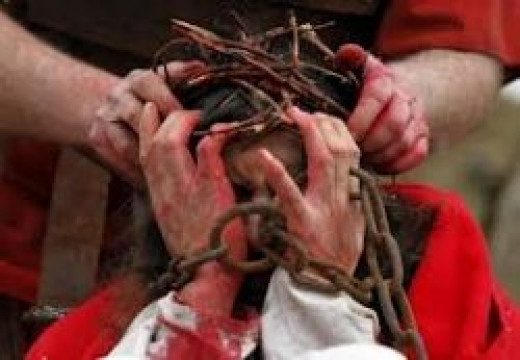
    When He had said this, one of the officers standing nearby struck Jesus, saying, “Is that the way You answer the high priest?”

    Jesus answered him, “If I have spoken wrongly, testify of the wrong; but if rightly, why do you strike Me?”

    So Annas sent Him bound to Caiaphas the high priest.

    Political reaction to Righteousness

    Pilate said to Him, “What is truth?” And when he had said this, he went out again to the Jews and said to them, “I find no guilt in Him.

    Pilate said to them, “Shall I crucify your King?”

    The chief priests answered, “We have no king but Caesar.”

    John 18:38; 19:15b NASB

    Righteous reaction to the Political

    Mark 12:

    Is it lawful to pay a poll-tax to Caesar, or not? 15 Shall we pay or shall we not pay?”

    coin head of Antiochus IV Epiphanes

    But He, knowing their hypocrisy, said to them,

    “Why are you testing Me? Bring Me a denarius to look at.”

    17 And Jesus said to them, “Render to Caesar the things that are Caesar’s, and to God the things that are God’s.” 

    Is Politics your Religion OR Religion your Politics?

    Psalm 2:

    The Messiah’s Triumph and Kingdom

    Why do the nations rage,
    And the people plot a vain thing?
    2 The kings of the earth set themselves,
    And the rulers take counsel together,
    Against the Lord and against His Anointed saying,
    3 “Let us break Their bonds in pieces
    And cast away Their cords from us.”

    Christ Jesus, the Messiah of the Lord God, warned of our anger against God.

    אֲסַפְּרָ֗ה אֶֽ֫ל חֹ֥ק יְֽהוָ֗ה אָמַ֘ר אֵלַ֥י בְּנִ֥י אַ֑תָּה אֲ֝נִ֗י הַיּ֥וֹם יְלִדְתִּֽיךָ׃

    שְׁאַ֤ל מִמֶּ֗נִּי וְאֶתְּנָ֣ה ג֭וֹיִם נַחֲלָתֶ֑ךָ וַ֝אֲחֻזָּתְךָ֗ אַפְסֵי־אָֽרֶץ׃

    10 Now therefore, be wise, O kings;
    Be instructed, you judges of the earth.
    11 Serve the Lord with fear,
    And rejoice with trembling.
    12 Kiss the Son, lest He be angry,
    And you perish in the way,
    When His wrath is kindled but a little.
    Blessed are all those who put their trust in Him.

    To be continued...
    

  • Disaster From Disobedience, A Savior From Before Eden – 8

    A Savior From Before Eden

    I introduced this series about a savior, Christ Jesus, who had confirmed to the religious authorities: “Before Abraham was, I AM!” Our evidence in Disaster From Disobedience, A Savior From Before Eden – points back toward Jesus, our personal savior, who was here before the first adam. 

    We then examined Adam’s relationship with God both before and after original sin. Disobedience and consequence of sin follows. Brief glances at scripture will confirm man’s disobedience to the Lord God. Just from part 1 of our series scriptures about disobedience include: Exodus, Isaiah, Jeremiah, Daniel and the Gospels of Luke and John.

    Scripture – Reading, Study & Application

    We have spent nearly a month [June 2018] just scratching the surface of man’s disobedience to God. Although I have touched on topics preceding the narrative of Genesis, we have much more to consider.

    Our most recent look at Noah brings us only to Genesis 9, on page 15 of 1804 in my HCSBI could easily envision a ‘Disaster from Disobedience – 30,’ but this is neither a novel nor exhaustive commentary. Today our brief attention spans require both an end to this series and connection to the next. 

    I trust the Lord will lead you deeper into scripture, revealing personal application of good and evil. I encourage you to study books of the New and Old Testaments in depth. To remain obedient to the Lord, we must apply the truth of scripture to our daily lives. Pray for the guidance of the Holy Spirit.

    These serial scriptural posts designed to incite specific study contain frequent links to Bible verses and study. Take a look as you read.

    Before Israel, Before Abraham and After Noah

    Moses’ five books do not and cannot explain everything. Yet in addition to creation, good and evil, sin, law and some subsequent history, parts of the Pentateuch  provide God-given foundation to scripture’s purposeful truth. I would point you to a handful of concepts not to be missed in these scriptures.

    Noah demonstrates one principle on dry land related to knowing good and evil, after the Lord’s cleansing and recreation of mankind. Although related to worship by Abel and Cain, this principle of good remains more important than any historical detail of the flood.

    The rainbow becomes symbol of the Lord’s agreement. Sacrifice by Noah to the Lord is man’s continuing evidence of faithfulness, gratitude and obedience. Worship of the Lord always requires sacrifice. And right relationship with the Lord becomes a most-personal committed relationship.

    The principle of this solemn agreement is known as covenant.

    Covenant, consequential promise to inviolable truth.

    We cannot study it in any detail here, but covenant always connects a sacrifice to an action with a sealed approval. 

    There is no good without God and no disobedience without disbelief.

    Therefore, inviolable truth always relates both to the Lord and our relationship to others of mankind.

    Truth has no foundation without God and human life no purpose without relationship to both our loving Creator and our fellow man.

    Israel, Abraham, Joseph and other Jews

    One concept important to our understanding of the Lord and promise involves the who, what, where and why of God’s chosen. It is a promised land, you  are a chosen people. Again, concepts too important to slight, yet this series’ focus is on broken promises, followed by inclusion of others in the Lord’s redemptive plan.

    (You can learn much more about God’s redemptive plan by study of adoption;  an inclusive personal demonstration of God’s love we will not explore here.)


    Moses explains nations and outlines their genealogies. Israel had been redeemed by the Lord from Egypt, where Joseph became powerful in the land. Understand that Joseph’s father Jacob holds promise of the Lord’s inheritance for his twelve sons. 

    Genesis 28:

    Isaac summoned Jacob, blessed him, and commanded him: “Don’t take a wife from the Canaanite women… 

    3 May God Almighty bless you and make you fruitful and multiply you so that you become an assembly of peoples. 4 May God give you and your offspring the blessing of Abraham so that you may possess the land where you live as a foreigner, the land God gave to Abraham.”

    Doesn’t this blessing sound somewhat familiar, like the Lord’s command to Adam and also to Noah?

    ‘Be fruitful and multiply…

    But Jacob is a liar and a deceiver. For he has purchased the blessing of the firstborn, Esau, who had no regard for the Lord. Now Jacob fears the fate of Abel, murdered at the hands of his brother.

    Although the Lord will drive his descendants into Egypt from the promised land, Jacob will receive an inheritance. 

    10 Jacob left Beer-sheba and went toward Haran. 11 He reached a certain place and spent the night there because the sun had set. He took one of the stones from the place, put it there at his head, and lay down in that place…

    “I am Yahweh, the God of your father Abraham and the God of Isaac. I will give you and your offspring the land that you are now sleeping on. 14 Your offspring will be like the dust of the earth, and you will spread out toward the west, the east, the north, and the south. All the peoples on earth will be blessed through you and your offspring. 15 Look, I am with you and will watch over you wherever you go. I will bring you back to this land, for I will not leave you until I have done what I have promised you.”

    There it is: God’s promise, as Jacob flees this ‘promised land,‘ an oft-repeated scenario in Israel’s history.

    Does it seem a familiar story, a middle-east refugee fleeing danger in one land and living as an alien in another?

    Israel’s Serial Soap Opera

    So Jacob’s story gains in complexity (once again, not examined here) and the drama continues. He has four wives (not recommended) and twelve sons. (Daughters receive no inheritance and seldom receive mentions in these genealogies).

    Many years pass and a married Jacob with children hears of and fears Esau’s approach. Once again Jacob hears from the Lord. In fact, he wrestles with the Lord (a most personal encounter).

    Genesis 32:

    Here is first mention of “Israel,” because the LORD makes Israel Jacob’s new name.

    27 “What is your name?” the man asked.

    “Jacob,” he replied.

    32:28 וַיֹּאמֶר לֹא יַעֲקֹב יֵאָמֵר עֹוד שִׁמְךָ כִּי אִם־יִשְׂרָאֵל כִּֽי־שָׂרִיתָ עִם־אֱלֹהִים וְעִם־אֲנָשִׁים וַתּוּכָֽל׃

    28 “Your name will no longer be Jacob,” He said. “It will be Israel because you have struggled with God and with men and have prevailed.”

    29 Then Jacob asked Him, “Please tell me Your name.”

    But He answered, “Why do you ask My name?” And He blessed him there.

    Before Israel, God Prevails

    Jesus the Messiah proclaimed, “before Abraham was, I AM!” His reference means more than genealogy, place, Law, leadership or religion, per se. 

    Israel’s father was Isaac,  יִצְחָק Yitschaq (laughter), given by the Lord when a childless old couple doubted any possibility of fulfillment of a promise in their old age.  In fact, controversy yet remains about the first born of Abraham and Hagar, the Egyptian. 

    The continuing drama of Genesis 17 could warrant much more study; but let us concede the meaning of Israel’s name. God prevails. Yes, God prevails even when life drives us in a direction away from God’s promises.


    The Lord’s covenant though Abraham is confirmed:

    18 So Abraham said to God, “If only Ishmael were acceptable to You!”

    19 But God said, “No. Your wife Sarah will bear you a son, and you will name him Isaac. I will confirm My covenant with him as an everlasting covenant for his future offspring.

    Before Abraham, many descendants of Noah’s sons, Shem, Ham, and Japheth chose between good and evil as they populated God’s creation. And we will see in our next series a continuing theme of disobedience to God by Israel’s descendants as well.

    Why would the Lord choose Israel as a people led by Him? Remember Jacob’s new name means, God prevails.

    Joseph and Israel’s Eleven Other Sons

    We have not yet spoken of the Law of Moses and its defining choices of good and evil. The sojourn of Israel into Egypt and back is yet another story and illustration that God prevails. 

    If you have never noticed a connection between Genesis and Exodus, you may want to focus on Joseph. We tend to see Israel (Jacob) and then Moses and later David as most important to Israel’s history. Yet we often overlook the role and connection of Israel’s preeminent son, Joseph.

    A continuing theme of man since Adam has been disobedience, a theme which we will continue. Moses will give us God’s Law and Joseph will demonstrate God’s goodness. 


    May the Lord walk with you in the wilderness of your heart.

    To be continued in our next series, God willing…


  • That you may have Certainty – 2

    That you may have Certainty – 2

    That you may have Certainty in these Uncertain Times

    In our introduction to this post-resurrection day series, I suggested that we live in uncertain time. I also inquired into the nature of the news we digest. And I might ask you today if this week’s news brings any more certainty?

    Our series will examine the continuity of Christianity as followers of The Way became known as Christians in the first century A.D. While primarily exploring the recorded history by the Gospel writer, Luke; we will also examine other transitional times for God’s faithful.

    Allow me to  point out to new readers that the purpose of talkofJesus.com is to spread the gospel. I insert links to my own scriptural and historical research in order that you may examine the truth of Christ Jesus.

    These uncertain times will remain and in these last days the faithful cry out to the Lord for certainty.

    Certainty Defined

    We began our series with an excerpt from Dr. Luke’s traditional Greek prologue stating his purpose:

    to write an orderly account for you,

    .. that you may have certainty concerning the things you have been taught. – Excerpt Luke 1:1-4

    Let’s dive into Luke’s meaning. In fact, Luke does not use the word ‘certainty,’ but a Greek word: ἀσφάλεια [asphaleia]. Translators of the English Standard and other versions take it directly from the Greek definition. Other translations refer to this certainty as ‘the exact truth.’

    1:4 ἵνα ἐπιγνῷς περὶ ὧν κατηχήθης λόγων τὴν ἀσφάλειαν

    STRONGS NT 803: ἀσφάλεια
    • a. firmness, stability: ἐν πάσῃ ἀσφάλεια most securely, Acts 5:23. tropically, certainty, undoubted truth: λόγων (see λόγος, I. 7), Luke 1:4 (τοῦ λόγου, the certainty of a proof, Xenophon, mem. 4, 6, 15).
    • b. security from enemies and dangers, safety: 1 Thessalonians 5:3 (opposed to κίνδυνος, Xenophon, mem. 3, 12, 7).

    Interestingly enough, Luke uses the same word in describing the certainty of the security of a prison in Acts  5:23

    “We found the prison securely locked and the guards standing at the doors, but when we opened them we found no one inside.”

    Secure certainty we would like to have in the Truth. Christ assures us that He IS “the way, the truth and the life.”

    The appropriateness of examining the truth of the resurrection of Jesus Christ seems pressing in uncertain times like these. Yet so that you may know the other use of this Greek root used by Luke let’s examine another witness of this truth by Paul.

    The Day of the Lord

    The Day of the Lord will come suddenly and the uncertainty of these last days will be replaced by certainty of the judgment. The resurrection of Christ Jesus is our certainty of eternal life.

    The church endured suffering at the hands of those rejecting the truth of the Gospel. Rome was world power of the day. Christian witness in the mid first century AD takes place just a generation after Christ’s crucifixion and resurrection. Witnesses still lived and preached the Good News of Christ as they had personally encountered the risen Lord.

    Paul’s assurance to the church at Thessaloniki answered their doubts and guided their way. 

    1 Thessalonians 4

    14 For since we believe that Jesus died and rose again, even so, through Jesus, God will bring with him those who have fallen asleep. 15 For this we declare to you by a word from the Lord, that we who are alive, who are left until the coming of the Lord, will not precede those who have fallen asleep. 16 For the Lord himself will descend from heaven with a cry of command, with the voice of an archangel, and with the sound of the trumpet of God. And the dead in Christ will rise first. 17 Then we who are alive, who are left, will be caught up together with them in the clouds to meet the Lord in the air, and so we will always be with the Lord. 18 Therefore encourage one another with these words.


    These first century Christians lived in expectation that Christ could return at any time.

    ‘We.. will be caught up together with them in the clouds to meet the Lord in the air…’

    An astounding statement!

    Of course, the Lord did not return… yet. These first century Christians all died.. some as martyrs. They are those who have fallen asleep who will come with the Lord. 

    And if these times of Rome’s fall was not the end, how much nearer to the omega of these last days must we be? How much more expectant we should be.

    Here the Spirit speaks to the church though the Apostle Paul:

    1 Thessalonians 5

    2 For you yourselves are fully aware that the day of the Lord will come like a thief in the night. 3 While people are saying, “There is peace and security,” then sudden destruction will come upon them as labor pains come upon a pregnant woman, and they will not escape.


    There it is, certainty given falsely by this world and its leaders. They say, “There is peace and security…” Of course, though they cannot hide all of their violence and evil, there is no peace. We certainly have no security in their uncertain actions.

    Christ Jesus IS the root of our certainty.

    Trace back to the root of the root word of certainty and you will find Christ here:

    He IS the Alpha and the Omega, the beginning and the end.

    In the third installment of our look at certainty we will examine the Hebrew root word and uncertain times after the death of Moses.


    To be continued…

    God willing and if the Lord does not return first