Tag: zechariah

  • That you may have Certainty – 6 –  Gentiles

    That you may have Certainty – 6 – Gentiles

    “I, the LORD, have called You in righteousness,
    And will hold Your hand;
    I will keep You and give You as a covenant to the people,
    As a light to the Gentiles…

    Behold, the former things have come to pass,
    And new things I declare;
    Before they spring forth I tell you of them.”

    Isaiah 42:6,9 NKJV

    What is a Gentile?

    The NLT Study Bible’s introduction to the Gospel of Luke summarizes the perspective of Gentiles to the Jewish mind in this way:

    The ultimate outsiders were Gentiles, and Luke emphasizes that God’s salvation extends even to them.”

    Jewish daily practices had been refined into an exclusionary culture of separation from Gentiles who observed worship from a distance. Have you ever entered a worship service and felt like an outsider? I have.

    We'll address a first century meaning in our next post, but first Isaiah's context from seven centuries before Christ.

    What makes Gentiles different from Jews?

    גּוֹי – gowy from the Hebrew – nation or people, usually of non-Hebrew people

    Although used generically as description of people from any nation, Gentile may be used as an insult to a foreigner. (Of course, no one today would do that, would we?)

    Hear Isaiah’s tone with this word (גּוֹי) here translated, ‘nations.’

    Ah, sinful nation, a people laden with iniquity, offspring of evildoers, children who deal corruptly! They have forsaken the LORD, they have despised the Holy One of Israel, they are utterly estranged. Isaiah 1:4

    Which one of the Nations does Isaiah address, which people to which the LORD is foreign to their lives?

    Isaiah speaks specifically to Judah and Jerusalem!

    Faithfulness to the LORD is what is supposed to separate Jews from Gentiles. The Prophet of God warns that because of their sin (iniquity), these Jews are no different than other nations.

    Does any of this have a contemporary ring?

    Like ‘sin,’  ‘iniquity’ is accusation too intolerant for ears of leaders unwilling to obey the Lord God.

    Iniquity – עָוֹן – `avon – perversity, depravity, guilt or punishment of iniquity

    Hear, O heavens, and give ear, O earth;
    for the LORD has spoken:
    “Children have I reared and brought up,
    but they have rebelled against me. – Isaiah 1:2

    By the time of Uzziah, Jotham, Ahaz, and Hezekiah, kings of Judah, Isaiah’s rebuke from the LORD fell on deaf ears of a broken Israel. But God’s warnings had been constant for Israel, then neglected by generations even back to Moses.

    Deuteronomy 8:

    “The whole commandment that I command you today you shall be careful to do, that you may live and multiply, and go in and possess the land that the Lord swore to give to your fathers…

    3 And he humbled you and let you hunger and fed you with manna… that he might make you know that man does not live by bread alone, but man lives by every word that comes from the mouth of the Lord… 19 And if you forget the Lord…

    20 Like the nations that the Lord makes to perish before you, so shall you perish, because you would not obey the voice of the Lord your God.

    Nations, Gentiles (the same word): make yourself like them by turning from the Lord and you shall perish. As Isaiah concluded more than six centuries later: they are utterly estranged.

    Why does a Jewish Messiah matter to the Nations (Gentiles)?

    Zechariah 2:
    [circa 5th Century Before Christ]

    10 Sing and rejoice, O daughter of Zion, for behold, I come and I will dwell in your midst, declares the Lord.

    Were these the songs of Palm Sunday, praise from Jews and the Gentiles?

    11 And many nations shall join themselves to the Lord in that day, and shall be my people. And I will dwell in your midst, and you shall know that the Lord of hosts has sent me to you.

    The Messiah, Jesus, Emmanuel, God With Us; here entering Zion (Jerusalem) and joining Himself also to the Gentiles. How will He do that? How will the Nations know that Jesus is sent also to them?

    12 And the Lord will inherit Judah as his portion in the holy land, and will again choose Jerusalem.”

    Here gathered the Jews for a Passover festival in a Zion ruled by Gentiles. Romans, Greeks, people of the Nations all present for an event of witness. Yet the witness would be of a New Covenant of Blood on a Cross. Their witness would be of a resurrection and a new hope. The Gentiles were now joined to God in the Blood of the Messiah!

    13 Be silent, all flesh, before the Lord, for he has roused himself from his holy dwelling.


    To be continued…

    That you may have Certainty – 7 – An outsider’s view from a Gentile

  • That you may have Certainty – 5 – A King of the Jews

    That you may have Certainty – 5 – A King of the Jews

    King of the Jews

    Herodian coin from Judea with palm branch (right) and wreath (left), 34 AD.

    And Pilate asked him, “Are you the King of the Jews?” And he answered him, “You have said so.” – Luke 23:3

    They had remembered  hearing the indictment of this gentile governor 

    while hiding their faces from his Roman judgment seat. Although complicit in Jesus’ prosecution, an illegitimate half-jew Herodian sat powerless while Roman troops ruled the streets of Jerusalem.

    While Jesus was not the kind of Messiah King they had expected, He did acknowledge the title bestowed by Jews accusing Jesus of treason against Judah and Rome.

    Most amazingly, Jesus has now appeared to these disciples after His resurrection! He continues to appear to hundreds of disciples; here and there, even in the locked rooms of Jerusalem.

    Herod’s rule as tetrarch of Galilee and Peraea, holds no authority over Judea, ruled by Marcus Pontius Pilatus, Roman prefect (governor) under the emperor Tiberius.
    Captive Israel, now named Judea, Samaria, Galilee and Perea had no king, only legions of Rome. Most  people lamented for the days of their strong kings, David and Solomon. Occasionally some rebelled against Rome, led by misguided ambitious young lions in hope of glory.

    Judge or King?

    From the day Israel crossed the Jordan its people encountered many kings of surrounding kingdoms. The Hebrew people had followed the Lord, but judges would become unable to rule this stiff-necked and proud people.

    1 Samuel 7:

    15 Samuel judged Israel all the days of his life. 16 And he went on a circuit year by year to Bethel, Gilgal, and Mizpah. And he judged Israel in all these places. 17 Then he would return to Ramah, for his home was there, and there also he judged Israel. And he built there an altar to the Lord.

    1 Samuel 8:

    “… Now appoint for us a king to judge us like all the nations.”

    More than a thousand years before Pilate judged Judea, here marks the beginning of kings of the Jews.  Samuel was no more inclined to accept a king of the Jews than the Roman governor Pilate.

    6 But the thing displeased Samuel when they said, “Give us a king to judge us.” And Samuel prayed to the Lord. 7 And the Lord said to Samuel,

    “Obey the voice of the people in all that they say to you, for they have not rejected you, but they have rejected me from being king over them.

    8 According to all the deeds that they have done, from the day I brought them up out of Egypt even to this day, forsaking me and serving other gods, so they are also doing to you. 9 Now then, obey their voice; only you shall solemnly warn them and show them the ways of the king who shall reign over them.”

    A King to rule over Israel

    A risen Christ Jesus must have reminded disciples of the Lord’s anointing of their kings. Its truth had not been as their traditions recalled, but rather a concession to the desires of their forefathers.

    1 Samuel 9:

    … “Behold, there is a man of God in this city, and he is a man who is held in honor; all that he says comes true. So now let us go there. Perhaps he can tell us the way we should go.” …

    5 Now the day before Saul came, the Lord had revealed to Samuel: 16 “Tomorrow about this time I will send to you a man from the land of Benjamin, and you shall anoint him to be prince over my people Israel. He shall save my people from the hand of the Philistines. For I have seen my people, because their cry has come to me.” 17 When Samuel saw Saul, the Lord told him, “Here is the man of whom I spoke to you! He it is who shall restrain my people.”

    A Humble King and Triumphant Return

    What was it worshipers near Jerusalem had sung while laying palm branches before Jesus?

    “As for me, I have set my King
    on Zion, my holy hill.” 

    I will tell of the decree:
    The LORD said to me, “You are my Son;
    today I have begotten you.

    Ask of me, and I will make the nations your heritage,
    and the ends of the earth your possession.

    You shall break them with a rod of iron
    and dash them in pieces like a potter’s vessel.”

    Psalm 2:6-9


    It had been a week of anointing for the King of the Jews.

    The Cross had not been the anticipated breaking of Israel’s oppressors, but the Lord’s embracing forgiveness for mankind.

    And now with a resurrection begins the ascent to His Kingdom of righteousness and everlasting reign. Jesus certainly must have repeated stories of the kings and predictions of the Prophets. For the Gospels retell those very scriptures.

    His disciples hear their beloved friend, the risen Messiah, tell why He had to be crucified on a cross and sacrificed for our sins.


    Zechariah 9:9

    Rejoice greatly, O daughter of Zion!
    Shout aloud, O daughter of Jerusalem!
    Behold, your king is coming to you;
    righteous and having salvation is he,
    humble and mounted on a donkey,
    on a colt, the foal of a donkey.


    Come, Lord Jesus. 


    To be continued…


  • for it was not the season for figs – 2

    for it was not the season for figs – 2

    … and I will remove the iniquity of this land in a single day.

    In that day, declares the LORD of hosts, every one of you will invite his neighbor to come under his vine and under his fig tree.” – Zechariah 3:9b-10 [circa 519 B.C.]

    Looking Back to the Prophets

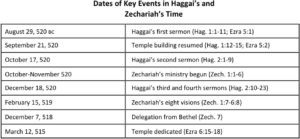
    From Moses to the late Prophets at the time of Zechariah and Haggai, the LORD spoke to the faithful of Jacob. (Call them: Israel, Judah, Judea, Galilee, even Samaria at the time of Jesus.) 

    They were divided after David, captured after Solomon, conquered by foreign lands and driven into distant empires. Even after rebuilding Jerusalem and the Temple, Israel would never be the same.

    Prophets spoke judgment of evil nations, cities and leaders.

    Prophesy during the times of the first dispersion accomplished the Lord’s purpose. Jerusalem and the Temple were rebuilt, then rebuilt again by Herod and Rome. Between the time of these two Temples, no word from above – generations of silence. 


    Surely those hearing of the miracles of the great Prophet approaching Jerusalem for the Passover festival had high expectations of this greatest Prophet, Jesus.

    He is the Messiah of God!

    The crowds cover the road with palms and shout:

    “Son of David,”  

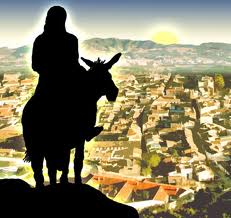
    as the King of the Jews (Jesus) rode victoriously up to the gates of Jerusalem.

    ‘Hosanna!’ ‘Blessed be the Lord.’ ‘Savior!’


    And what had the prophet Zechariah written?

    “and I will remove the iniquity of this land in a single day..

    .. In that day, declares the LORD of hosts, every one of you will invite his neighbor to come under his vine and under his fig tree.”


    The Sacrifice of the Lamb of God accomplished the removal of sin; yes, in a single day: Good Friday.

    What did Jerusalem expect?

    The Judeans, Galileans, Samaritans, even Jews on faithful pilgrimage to the Passover festival from other lands followed Jesus with different high expectations from nearly forgotten writings of  Zechariah and others.

    Zechariah 9:

    The oracle of the word of the Lord is against the land of Hadrach (Syria) and Damascus is its resting place.

    [Of course, Rome would control all of these Mediterranean lands 500 years later, not just Judah, Galilee and Samaria.]

    The Coming King of Zion

    Rejoice greatly, O daughter of Zion!
        Shout aloud, O daughter of Jerusalem!
    Behold, your king is coming to you;
        righteous and having salvation is he,
    humble and mounted on a donkey,
        on a colt, the foal of a donkey.
    10 I will cut off the chariot from Ephraim
        and the war horse from Jerusalem;
    and the battle bow shall be cut off,
        and he shall speak peace to the nations;
    his rule shall be from sea to sea,
        and from the River A Powerful Professed King

    The crowds, some who had followed Jesus for three years, knew the Son of Man riding victoriously into Jerusalem on a donkey had all power to defeat Rome in a day!


    But it was not the Lord’s will to save Jerusalem in a day, but sinners.

    “I have not come to call the righteous but sinners to repentance.”

    Luke 5:32

    For it was not the season for figs and those who will not repent remain cursed and will wither to be burned.


    To be continued…