The not-so-great HEROD’s – client-kings of the Jews
“BUT WAIT,” you may be thinking; “we were following ACTS of the APOSTLES and Paul.”
Note the timeline above with its anti-Christian timeline bias utilizing BCE (Before the Common Era) rather than B.C. (Before Christ).
What IF history had recorded the politics of the JEWS and ROMANS in place of the truth of Christ?
We would have read nothing of Herod’s killing of the innocents (trying to prevent the birth of the Messiah JESUS).
- OR of Jewish and Roman injustice of the Cross of Jesus – KING OF THE JEWS!
- OR any account of the leading Pharisee Saul of Tarsus proclaiming Christ risen to all the world as far as Rome.
NO — Luke’s detailed account of the Apostles would have been buried in the politics of A.D. 1st century Caesars and certain Kings preordained by the Lord God to fail in their temporal empires and kingdoms — Herod’s and Caesar’s opposed to JESUS, the very Son of God redeeming a chosen remnant of sinners — sinners from every nation of the world and sinners from every time since the beginning of mortals and the end of our timeline in eternity.
Acts from Herod the Great to Herod Agrippa II
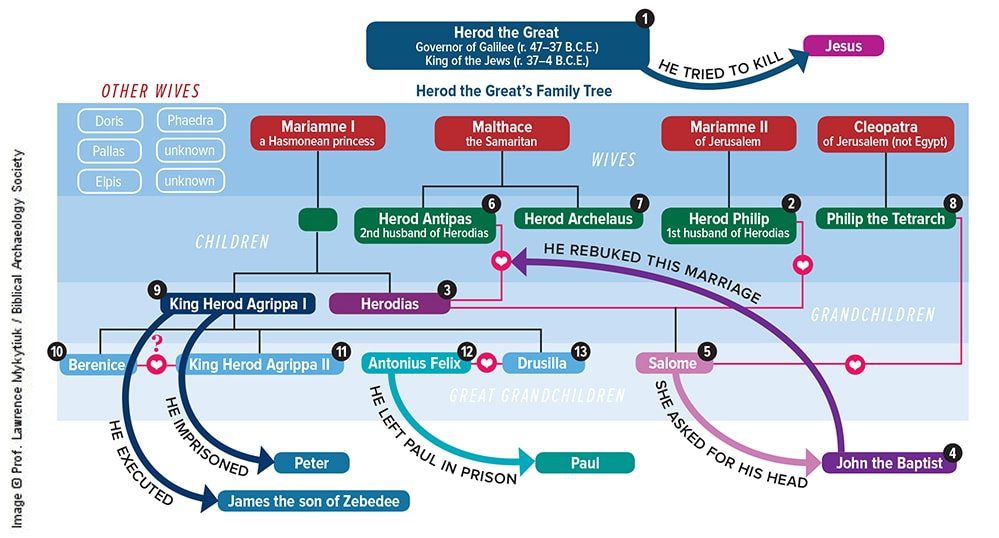
In order to understand Roman administration of captive kingdoms or Roman states of the Herod’s, as well as something of the fall of Jerusalem which will soon take place, let’s take a look at the WHO’S-WHO of this client dynasty as we proceed in the Acts of the Apostles.
the politics of King Agrippa and Festus
A PLEASING PUBLIC POLITICAL MEETING
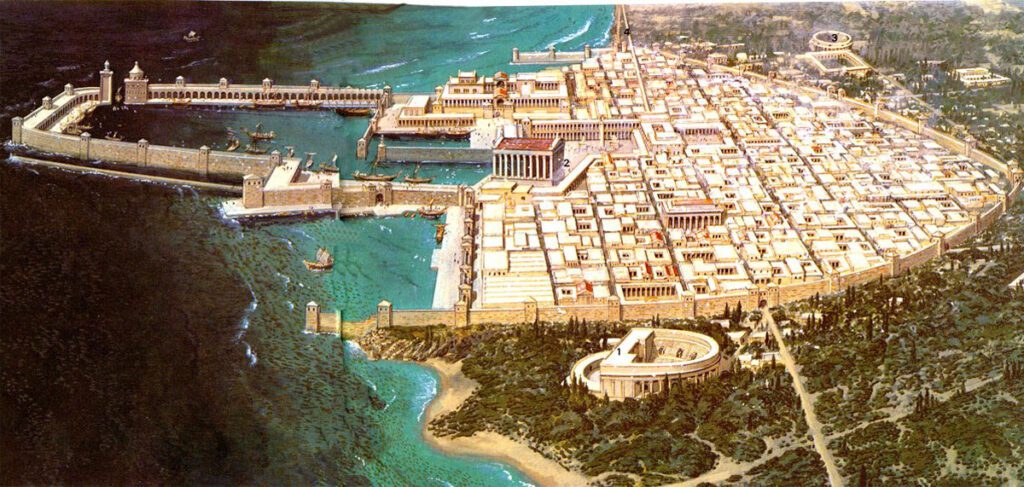
Now several days later, Agrippa [II] the king and Bernice [his sister] arrived at Caesarea and paid their respects to Festus [the new governor].
Acts of the Apostles 25:13 AMP
While they were spending many days there [in the Roman capital of Caesarea] , Festus laid Paul’s case before the king…
Make no mistake about it — Rome is in control, but in order to rule effectively Roman governors use local political powerhouses to govern public opinion.
Political Protocol of the Pax Romana
Luke refers to our main player in Paul’s case as, “King Agrippa,” but to Rome, Julius Marcus (AKA Herod Agrippa II) is simply one of several useful foreign kings.
.
He brings with him his sister, oldest daughter of Herod Agrippa I as they formally and publically meet Governor Porcius Festus in Caesarea.
Luke continues with the political problem of Paul left to the new Prefect Festus:
saying (to Agrippa) [NKJV],
“There is a certain man left a prisoner by Felix, about whom the chief priests and the elders of the Jews informed me, when I was in Jerusalem, asking for a judgment against him.
Note that this new Roman Prefect has already been in Jerusalem without meeting with King Agrippa.
To them I answered,
‘It is not the custom of the Romans to deliver any man to destruction [ἀπώλεια] before the accused meets the accusers face to face, and has opportunity to answer for himself concerning the charge against him.’
Certainly this newly appointed Governor of Judea is familiar with the problem of the JUDGMENT of JESUS the King of the JEWS by a previous Governor Pontius Pilate.
Therefore when they had come together, without any delay, the next day I sat on the judgment seat and commanded the man to be brought in.
The Roman Governor has already judged the Roman citizen Paulos (in Jerusalem) before this political appeal of King Herod Agrippa II.
The Governor continues his account of Paul’s recent trial over which he presided:
“When the accusers stood up, they brought no accusation against him of such things as I supposed, but had some questions against him about their own religion and about a certain Jesus, who had died, whom Paul affirmed to be alive.
Now full-well knowing the controversies centered on the Christ of the Jews, Governor Porcius Festus addresses Julius Marcus Agrippa II as a politically impartial third party with interest in the case of the Governor's prisoner.
And because I was uncertain of such questions, I asked whether he was willing to go to Jerusalem and there be judged concerning these matters. But when Paul appealed to be reserved for the decision of Augustus [the title of the Roman emperors], I commanded him to be kept till I could send him to Caesar.”
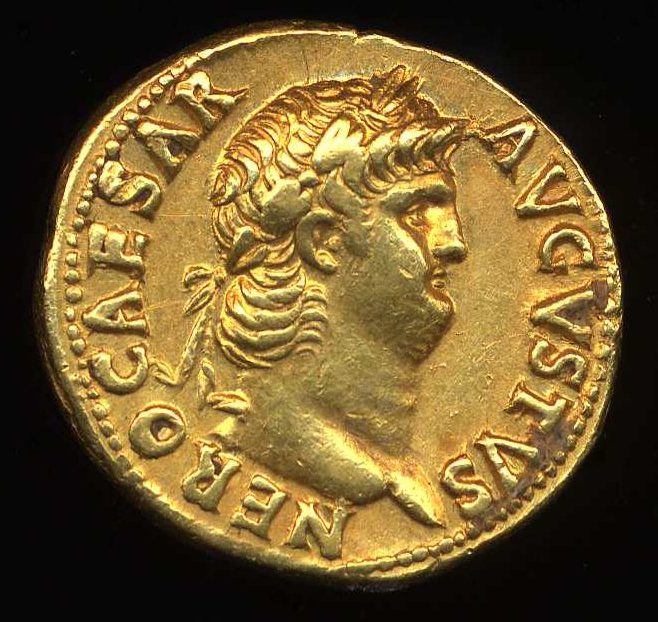
Nero Claudius Caesar Augustus Germanicus, no friend of followers of The Way, had appointed Portus Festus as Governor of Judea.
Herod Agrippa’s play for power
Then Agrippa said to Festus,
“I also would like to hear the man myself.”
“Tomorrow, you shall hear him.”
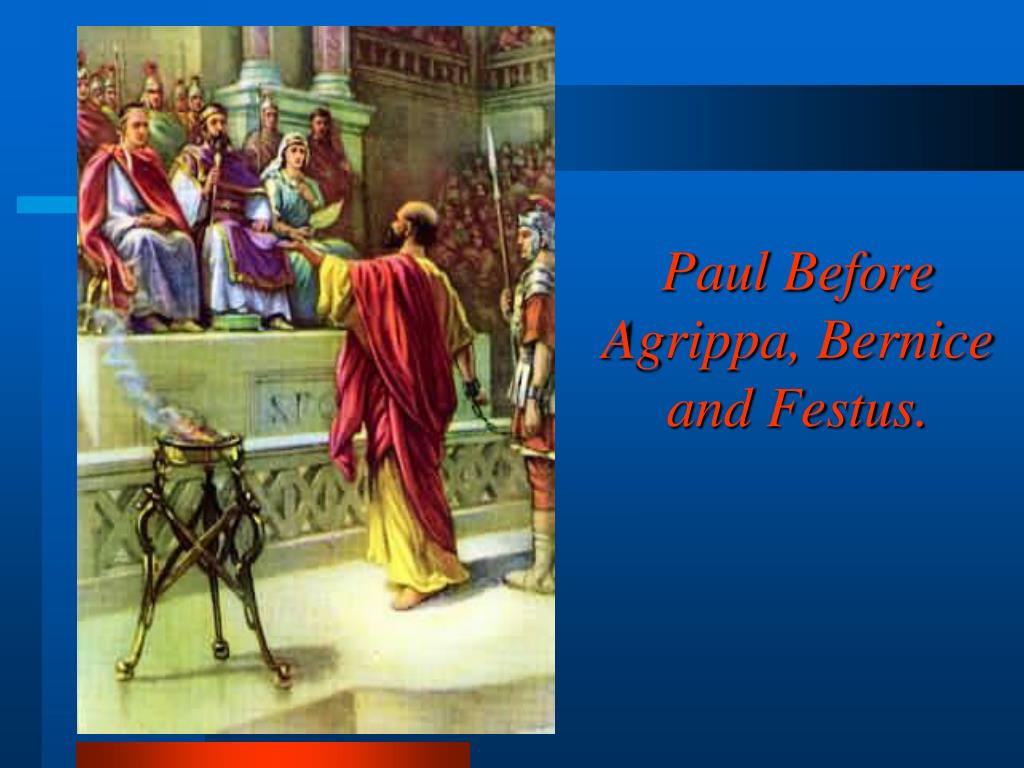
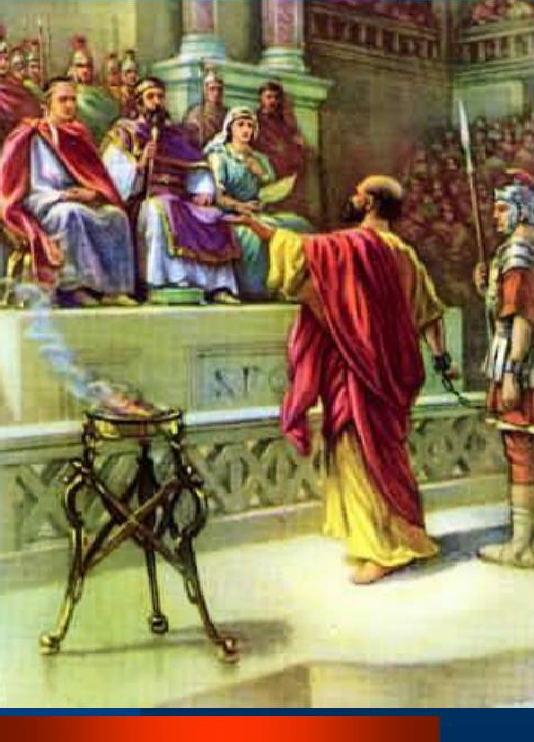
So the next day, when Agrippa and Bernice had come with great pomp, and had entered the auditorium with the commanders and the prominent men of the city [Caesarea], at Festus’ command Paul was brought in.
REMEMBER:
ROME's Governor is in charge. The Prefect of Judea repeats what he has already told King Herod Agrippa II.
And Festus said:
“King Agrippa and all the men who are here present with us,
you see this man about whom the whole assembly of the Jews petitioned me, both at Jerusalem and here, crying out that he was not fit to live any longer.
But when I found that he had committed nothing deserving of death, and that he himself had appealed to Augustus, I decided to send him.
The Governor is confirming Paul's legal disposition as well as his own fair hand in his decision of the Court.
“I have nothing certain to write to my lord concerning him.
Festus, wanting to present some facts to his lord Caesar in Rome, invites these Jewish leaders and accusers of Paul to give him the facts.

The Governor would not have had to send any facts to Nero, but out of Festus' astute political savvy he has an audience of all who could object to his decision.
Therefore I have brought him out before you, and especially before you, King Agrippa, so that after the examination has taken place I may have something to write. For it seems to me unreasonable to send a prisoner and not to specify the charges against him.”
Brilliant! Let the local king provide their case to Caesar (who could only blame Felix or the Jews AND NOT him).
Then Agrippa said to Paul, “You are permitted to speak for yourself.”
So Paul stretched out his hand and answered for himself:
Acts of the Apostles 26:1 NKJV
Once again, the Governor sets the tone of his meeting of all who had accused Paul.
Festus begins by allowing the defense of this Roman citizen already found innocent to proceed BEFORE hearing ANY Jewish charges.
Furthermore, Governor Festus invites Paul to speak directly to him and to Herod Agrippa II (client king of the Jews) FIRST.
“I think myself happy, King Agrippa, that I am to make my defense before you this day concerning all the things whereof I am accused by the Yehudim…
Acts of the Apostles 26:2 – Hebrew Names Version
The ACTS of the Apostle Paul (in court again) — To be continued…
Talk of JESUS . com
Comment on Scripture – Share the Gospel

Leave a Reply