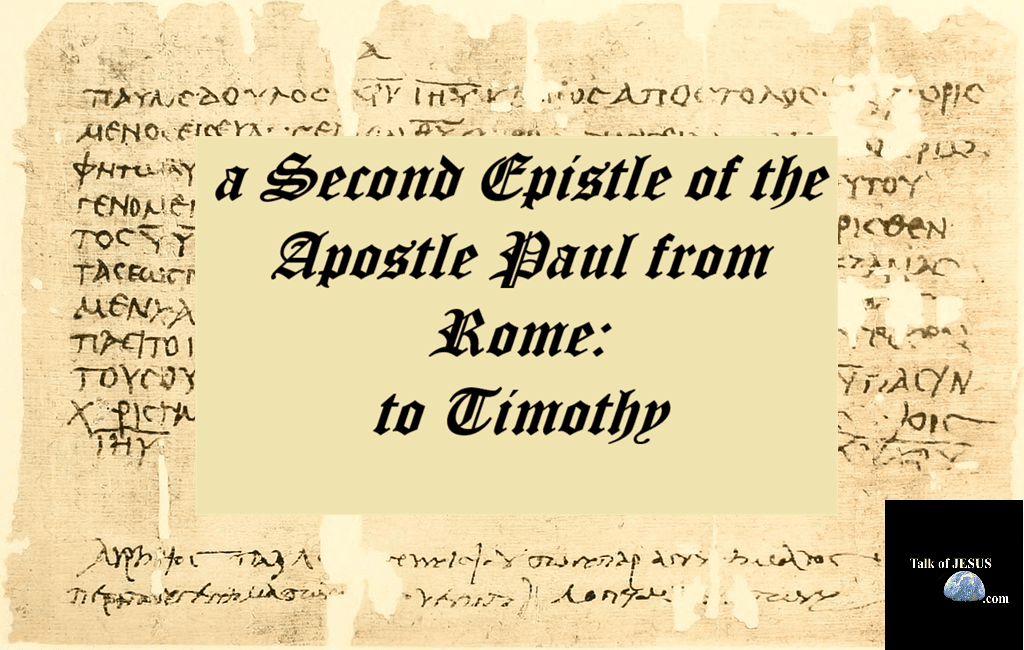
Category: Epistles – Is his letter to our church?

Epistle of Paul to the Romans 1 - the Apostles sends a church letter to Rome and the local saints of area churches
Epistle of Paul to the Romans

Epistles ἐπιστολή or Letters

I charge you by the Lord that this epistle be read to all the holy brethren.

Paul’s First Letter to the Thessalonians 

Don’t  miss our recent FEATURED SERIES

JUNE 2024 – 2025 —

1 CORINTHIANS 

———————————————————-

Letters – Is he writing to me?
The short answer: YES.

In their epistles or 1st century church letters the Apostles and other men sent out by Jesus build up the saints [small – ‘s’] or members of local first century churches.

A Disciple or other witness of JESUS would write it. Messengers then delivered these church letters to many isolated worshipers.

Followers of Jesus Christ receive these letters as a major encouragement to their personal faith. Then leaders read them to worshipers of their church.

Although the Epistles 0r Letters to the Church were originally written to churches of the first century,

Romans through Jude will seem like letters to your 21st century church.

  • What do Peter, Paul, John and others tell us we must do?
  • Is he talking about an issue in your 21st c. church as well?
  • How does the writer’s advice, warning, or encouragement to the 1st c. believers apply to you as well
  • Is the writer of this letter talking about something you need to address in your 21st century ‘christian’ life?

Contemporary Application of the Letters (Epistles)

Most New Testament writers take on specific issues confronting faithful followers of Jesus Christ. These same issues continue to confront believers until the Lord’s coming again in these last days.

Certainly Christ our Lord will come again to those God has chosen for eternal life.

Believers currently suffer more than most of you who know Christ in your local church can imagine.

In other lands Christians continue to suffer by the hand of the ungodly.
Go into all the world

A 21st century Common Era church can see and hear nearly any atrocity of man or artificial imagination of sinful man’s mind, yet ‘christians‘ dare not speak of any absolute truth of the Lord God or talk of JESUS CHRIST.

Will YOU comment on Scripture and share the Gospel?

I invite you to read the inspired word of Scripture written in these LETTERS TO THE CHURCH.

YES, He IS writing to YOU.

Beloved brother or sister in Christ Jesus,

Will you read this ‘CHURCH LETTER’ and talk of JESUS through your comment, sharing and email to me about this ‘Letter to you?”

Roger@talkofJesus.com

  • 2 Peter – Introduction to a Second Apostolic Letter

    2 Peter – Introduction to a Second Apostolic Letter

    APOSTOLIC FAITH 2 Peter 2 Timothy from Paul 2 John & 3 John

    We begin our SERIES from the Epistles of three Apostles with Simon Peter.

    Peter – a Foundation of Apostolic Faith

    Our best impressions of Simon Peter from the Gospels and the early ACTS of the Apostles cannot fully convey the heart of this ROCK whom JESUS had claimed for building His Church..

    We tend to recall moments from back in the AD 30’s with Peter in Jerusalem.. Yet even then the Apostle was sent to surrounding towns with the Gospel.

    33 Years – Journeys from Capernaum to Rome

    1st c ad boat slips at Capernaum

    C


    Jesus had appeared to Peter and others as they fished near the shore of the Sea of Galilee. The Lord instructed Simon Peter and the Apostles to go into all the world with the Gospel — Good News that they had all seen and touched, and had heard and obeyed the Lord – the risen Christ JESUS.

    Now it is Simon Peter who will build not one church in Jerusalem, Capernaum or even Rome, but a living Church throughout the world (of Rome) — connected by the love of Christ and the Holy Spirit into a fellowship of saints sanctified and separated to the faith of eternal life in the Lord Jesus Christ.

    Peter’s gospel is an apostolic gospel; Simon Peter’s faith is a Christian faith

    So now after Jesus’ ascension, the Apostle will sojourn between Capernaum, Jerusalem and other Jewish communities of Galilee, eventually meeting Jewish believers from every corner of the world who will come to faith in Jesus Christ.

    Simon Peter, sought out as a criminal by leading Jews opposing their own Messiah, would eventually be brought to Rome. Christ’s leading Apostle would also eventually be crucified there, but not until an appointed time after many years proclaiming the Gospel.

    Like Paul and other Apostles, Peter wrote epistles and instructions for many years to those he had encouraged in the churches throughout Asia.


    Second Epistle of Peter - Map of Roman Empire ~AD 67
    2 Peter

    The World into which the Apostles Preached

    • ~ AD 30’s – AD 60’s

    We cannot fully appreciate the magnitude of Jesus’ great commission with only the Gospel accounts or even all Scripture of the Old Testament.

    This is due a historic extended silence of God during a post-exilic gap which includes the powerful reign of Alexander the Great (of Macedonia) prior to the dominance of Rome.


    a ROMAN world

    The Messiah of Israel was given into a Roman world, not a Judaic land.

    This Jewish fisherman, Simon Peter of Capernaum on the Sea of Tiberius (so renamed by Rome), though not a Roman, lived a daily existence dependent on Rome, This same dependence had also Romanized the half-Jewish Herod’s, adopted into an all-inclusive culture of the Caesar’s.

    Without stepping into the Jewish controversies into which Jesus sometimes ventured about the state of Abrahamic or Mosaic of Semitic faith, let’s just say that Simon Peter’s faith, both before meeting the Messiah and after Jesus’ resurrection until now, is not specifically tied to either the Jewish sects returned from Medo-Persia or those Jews left in a devastated Israel and Judah.

    Simon Peter sought to preach the Gospel to his fellow Jews, many who were local proselytes. Rome frequently rejected Jews, often sent on their way at any sign of controversy in distant provinces.

    The Apostle writes to churches in lands once dominated by Alexander. And thousands of Jews had remigrated into a European world from an ancient Asia, once dominated by the Babylonians, Medes and Persians. [See your Old Testament.]

    Greek culture prevails long after the return of the Jews into a Herodian re-built Roman Jerusalem.

    The Twelve Apostles (and I include Matthias) led by Simon Peter were all Jews. And the scattered Jews throughout a world now dominated by Rome wanted to hear from these Apostolic witnesses of the risen Son of David, the Messiah Jesus.

    a Second Epistle of Simon Peter

    In case you missed the definition of Epistle, you may read it HERE from our introduction. 

    Simon Peter, a servant and apostle of Jesus Christ,

    To those who through the righteousness of our God and Savior Jesus Christ have received a faith as precious as ours:

    2 Peter 1:1 NIV

    Who is Peter writing to?

    We’ll get back to that in the context of this second letter, but let’s take a quick glance at his first epistle for an introductory clue.

    παρεπίδημος Aliens of the Diaspora

    Peter, an apostle of Jesus Christ,

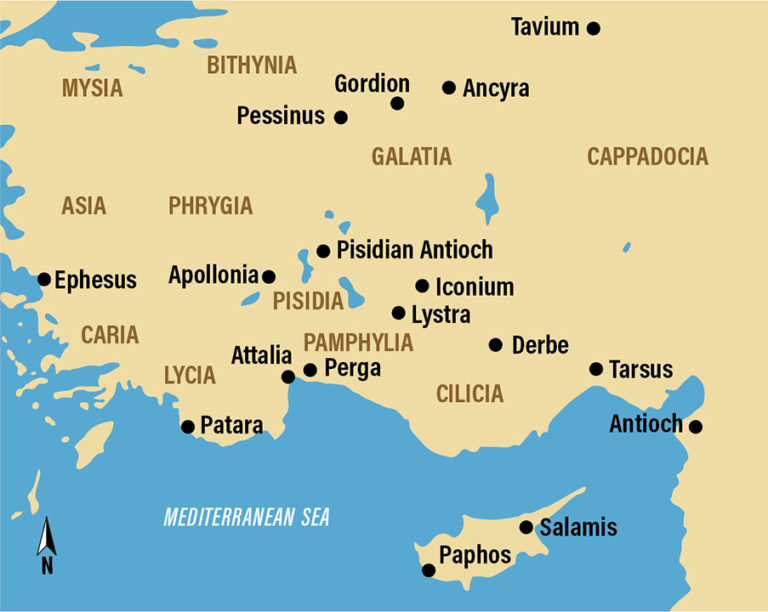
    To those who are elect exiles of the Dispersion in Pontus, Galatia, Cappadocia, Asia, and Bithynia, according to the foreknowledge of God the Father, in the sanctification of the Spirit, for obedience to Jesus Christ and for sprinkling with his blood:

    Anatolian Peninsula - Turkiye
    Anatolian peninsula

    1 Peter 1:1-2a ESV

    We can suppose that both epistles of Peter were sent to all of these churches on the Anatolian peninsula — all Roman provinces throughout modern-day Turkie.

    Second Epistle of Peter - Map of Roman Empire ~AD 67
    some scholars date the Second Epistle of Peter in AD 64

    These Jewish Christians, members of the Diaspora, are addressed here as pilgrims or sojourners… Jews expelled.. and living in a pagan environment.

    1&2 Peter An Expositional Commentary, R.C. Sproul

    signing of the Mayflower compact

    Simon Peter: To the pilgrims

    Peter, an apostle of Jesus Christ,
    To the pilgrims of the Dispersion..

    1 Peter 1:1a New King James Version

    "But WAIT.." as the old late-night TV ad suggested.. 

    You probably have the WRONG PICTURE of PILGRIMS with an implanted prejudice of clashing cultures.

    The Pilgrim's Progress of John Bunyan - Allegory and classic English allegory of Christian, his burden
    παρεπίδημος – parepidēmos

    properly, “one who comes from a foreign country into a city or land to reside there by the side of the natives; hence, stranger; sojourning in a strange place, a foreigner

    Sojourn in this land, and I will be with thee,

    Genesis 26:3a KJV – Oath of the LORD to Isaac, son of Abraham in Garar, a location south of Gaza – Source BLB

    Alien, migrant, immigrant, foreigner — all have subtle prejudicial meaning.

    These Christians to whom the Apostle’s write are rejected by former friends, neighbors and in workplaces. This sect of Jews following the way of the Messiah [or Christos] were also deported along with their families from their homes and Hellenist hometowns.

    Therefore Christ-followers must sojourn to distant towns throughout the world of Roman citizens and pagans, those who rejected Jews anyway for the intolerance of their ONE GOD.


    Why do they want to hear from Simon Peter?

    Place yourself into any of the varied cities or towns in the Roman provinces addressed by the Apostle in ~ AD 64.

    RC. Sproul in his PREFACE to 1-2 Peter offers one of the best descriptions of the heart of the saints receiving Simon Peter’s letter in the context of their situation:

    Imagine what it would be like to receive a letter from someone who was a personal friend of Jesus during his earthly ministry?


    Referring specifically to Peter, James and John, eyewitnesses to the glory of the transfigured Christ, Dr. Sproul continues:

    ibid. R.C, Sproul


    Why does Peter write a SECOND Epistle to them?

    Remembering our AD 1st century cultural setting of the Church, as we discovered in Paul’s missionary journeys, the people living here are Hellenists.

    map of kingdoms conquered by Alexander the Great
    The Parthenon in Athens a place to honor and worship all the gods

    Hellenists worshiped the tree of knowledge — towering temples of their gods — where philosophers plucked the forbidden fruit of wisdom.

    Roger@TalkofJesus.com

    Therefore, brethren, be even more diligent to make your call and election sure, for if you do these things you will never stumble

    2 Peter 1:10 NKJV

    Again, quoting R.C. SPROUL from: BE ALL THE MORE DILIGENT TO MAKE YOUR CALLING AND ELECTION SURE, concerning the recipiants of 1 Peter (likely the same churches): 

    The gnostics took a variety of religions and philosophies and thought to blend them to produce a new religion or philosophy… They targeted the early Christian community.. The only way the Gnostics could seduce Christians to believe their heresy was to undermine the authority of the Apostles.

    ibid. p.6

    Therefore,

    Simon Peter, doulos and Apostle of Jesus Christ

    2 Peter 1:1


    writes an epistle

    (Remember the one definition emphasizing its impact as a letter of written command?) —

    to encourage Elders ‘ (and those saints willingly obedient to their teaching [doctrine] and authority)

    in the (precise and correct) KNOWLEDGE of God [epignōsis theos] and of Jesus our Lord..


    NEXT .. 2 PETER 1:

    His precious and magnificent promises

    Partakers of the Divine Nature


  • The Clarity and Connections of Apostolic Faith

    The Clarity and Connections of Apostolic Faith

    How do WE respond after hearing a letter from an Apostle of Jesus Christ written to our Church?

    We are about to take a look at the faith of three Apostles through Epistles they sent to many churches.

    But more than that:

    The Gospel of Jesus Christ proclaims connections — relationships that matter.

    We receive the same love evident through these connections to God and the Apostles, who continue to mean much to 21st century Christians who believe with Apostolic faith.


    Apostolic Unity in the Gospels

    When someone asks us about our faith, their questions may boil down to a single foundational question:

    “Faith in what?”

    or perhaps, “faith in whom?”

    Let’s begin with what the Lord says about these connections. Jesus actually presents His clarifying question to the Apostles.

    And out of all the possibilities of their answers, one stands out in every Gospel.


    Peter’s answer to Jesus

    • Gospel of Luke

    9: And calling the twelve together, He gave them power and authority over all the demons and to heal diseases. And He sent them out to preach the kingdom of God and to heal the sick…

    And departing, they were going from village to village, proclaiming the gospel and healing everywhere.


    Peter Confesses Jesus Is the Christ

    (Mat 16:13–20Mar 8:27–30 )

    .. and He questioned them, saying, “Who do the crowds say that I am?”

    .. And He said to them, “But who do you say that I am?”

    Luke 9:18b,20a BSB

    Jesus Christ Lord God with cross

    “The Christ of God.”


    • Gospel of Matthew

    And Simon Peter answered and said,

    “You are the Christ, the Son of the living God.”

    Mat 16:16 LSB

    • Gospel of Mark

    And He continued asking them, “But who do you say that I am?”

    Peter answered and said to Him, “You are the Christ.”

    Mark 8:29 LSB


    Peter provided an answer communited to him by the Holy Spirit of God. And the Apostle John through the same Spirit says the same more fully and in mysterious revealed detail.

    Gospel of John

    Nearly all of us are familiar with John’s introduction of Jesus in his Gospel:

    IN THE BEGINNING was the Word [logos]

    (We will come to discover that John refers to JESUS as the Word in the flesh.)

    and the Word

    was with God [Theos]

    [but now, in John 1:1, the Apostle clearly states:]

    And the Word was God.

    1:1 ἐν ἀρχῇ ἦν ὁ λόγος καὶ ὁ λόγος ἦν πρὸς τὸν θεόν καὶ θεὸς ἦν ὁ λόγος

    John 1:1 LSB – English translation from Greek New Testament


    The Gospels all record that the twelve Apostles witness God’s power personally MANY TIMES in JESUS.

    “I and the Father are [in essence] one,” John records later in his Gospel [John 10:30].

    The Apostle’s Gospel of connection to the Living God revealingly becomes even stronger and more forward-facing after Jesus’ resurrection.

    We see this first in Peter and John, but with an additional absolute faith in Christ later proclaimed to all the world by the Apostle Paul.


    John 20 – Apostolic Authority from God

    ἐμφυσάω

    emphysáō – John 20:22, where Jesus, after the manner of the Hebrew prophets, expresses by the symbolic act of breathing upon the apostles the communication of the Holy Spirit to them

    He breathed on them and *said to them,

    “Receive the Holy Spirit.

    Gospel of John 20:22b LSB

    Christ’s communication from the One GodFather, Son and now the Holy Spirit given — to His Apostles sent into all the world with Gospel Good News!


    What is Apostolic Faith?

    πίστις – faith, assurance,believe, belief,them that believe, fidelity occurs 244 times in 228 verses in the TR Greek.

    conviction of the truth of anything, belief; in the NT of a conviction or belief respecting man’s relationship to God and divine things, generally with the included idea of trust and holy fervour born of faith and joined with it

    • the conviction that God exists and is the creator and ruler of all things, the provider and bestower of eternal salvation through Christ
    • a strong and welcome conviction or belief that Jesus is the Messiah, through whom we obtain eternal salvation in the kingdom of God
    • the religious beliefs of Christians
    • belief with the predominate idea of trust (or confidence) whether in God or in Christ, springing from faith in the same
    • fidelity, faithfulness
    • the character of one who can be relied on

    Source: Lexicon :: Strong’s G4102 – pistis – faith

    This is Apostolic faith,

    which finds its roots in the eternal truth that GOD IS — the Person of JESUS IS God — and Christ chose Apostles to continue God’s work of redemption of sinners by proclaiming the Gospel to all mankind.


    Who are Apostles?

    Acts Petros - Acts 0f Peter - Jesus' Rock and Apostle of the 1st c. church. What happened to the Apostle Peter? Acts 1-15
    ACTS on Mission

    Tens of Thousands of men, women and children witnessed the Son of God, JESUS, born as a man to a virgin.

    Many followed JESUS as DISCIPLES, listening to His teachings and commands. Sometimes Jesus taught thousands. At other times hundreds would follow their Master (Lord) as a Rabbi sent from God. Jesus would teach a houseful of guests or sometimes just one chosen by Him even without witness of the Twelve.

    More than five hundred witnessed Jesus AFTER the Lord’s crucifixion and resurrection from the grave (even as several had seen Him raise Lazarus and others).

    .. He called His disciples to Him and chose twelve of them, whom He also named as apostles:

    Luke 6:13, also Matthew 10 & Mark 3

    Disciples followed their itinerant Rabbi from mountainside to village to city over three years, hearing the Messiah Jesus teach true faith. Yet even one of the Twelve had been chosen before time to betray the Lamb of God, our Savior redeeming our sins on a Cross in Jerusalem.

    The APOSTLE’S sent out by Jesus were all chosen as witnesses to the Son of Man — an itinerant Teacher who was not of this world, but IS before all time — with God and was God.

    Three Apostles nearer to Jesus

    And He allowed no one to accompany Him, except Peter and James and John the brother of James.

    And six days later, Jesus took with Him Peter and James and John, and brought them up on a high mountain alone by themselves. And He was transfigured before them;

    Gospel of Mark 5:37, 9:2, additional references

    James, the older brother of John, became the first Apostle martyred for his faith in Jesus just fourteen years into the establishing of the Church. Another would later replace him, as Matthias would replace Judas Iscariot.

    It would be James the half-brother of Jesus who would later lead the church in Jerusalem, writing epistles to followers of The Way and conferring with the Apostles including Peter and John. 

    We witness these three Apostles nearest to Jesus on several occasions, both before and after the Lord’s resurrection.

    Many witness the boldness of Simeon Peter and John in the Temple after Jesus is risen. It’s just once instance where Apostles proclaim the Gospel of Jesus Christ in the face of imprisonment, persecution and even death.


    Σίμων Πέτρος – Simon Peter

    So Jesus said to the twelve, “Do you also want to go?”

    Simon Peter answered Him, “Lord, to whom shall we go? You have words of eternal life. And we have believed and have come to know that You are the Holy One of God.”

    Gospel of John 6:68-69 LSB

    “Blessed are you, Simon Bar-Jonah, because flesh and blood did not reveal this to you, but My Father who is in heaven.

    And I also say to you that you are Peter,
    and upon this rock
    I will build My church; and the gates of Hades will not overpower it.

    Gospel of Matthew 16:17b-18 LSB

    what happened to Peter
    a Fisher of Men

    Ἰωάννην Βοανηργές – John son of thunder

    Jesus called these two brothers and close friends of His inner-circle of Apostles, “sons of thunder,” and more than once James and John had caused a commotion among his disciples.

    And they [James and John] said to Him, “Grant that we may sit, one on Your right and one on Your left, in Your glory.”

    .. And hearing this, the ten began to feel indignant with James and John.

    Gospel of Mark 10:37,41 LSB

    And nearer the time of their journey to Jerusalem for Jesus’ crucifixion:

    And when His disciples James and John saw this, they said, “Lord, do You want us to command fire to come down from heaven and consume them?”

    But He turned and rebuked them..

    Luke 9:54-55a LSB

    THEN on a hideous hill outside Jerusalem, as Peter and the other Apostles hid distanced from the iniquitous crucifixion of Christ, the youngest of these dared a nearby witness of this most ironic Sacrifice of all time — the Son of God, their friend, hanging and pierced on a cursed Cross.

    When Jesus then saw His mother, and the disciple whom He loved standing nearby, He said to His mother,

    “Woman, behold, your son!”

    Then He said to the disciple,

    “Behold, your mother!”

    From that hour the disciple took her into his home.

    Gospel of John 19:26-27 LSB + Witness of the Disciple Jesus loved – youngest of the Twelve


    The Lord Jesus entrusted His own mother Mary to the beloved Disciple John, who so often would cling to Him and His every word.

    Christ would also restore Peter as the Rock upon which He would build His church.

    Jesus standing on shore as fishing boat approaches at dawn
    “Children, have you any fish?”

    Jesus’ love and connection to these two Apostles cannot be disputed.


    Σαῦλος – Saûlos – Ῥωμαῖος Ταρσέα

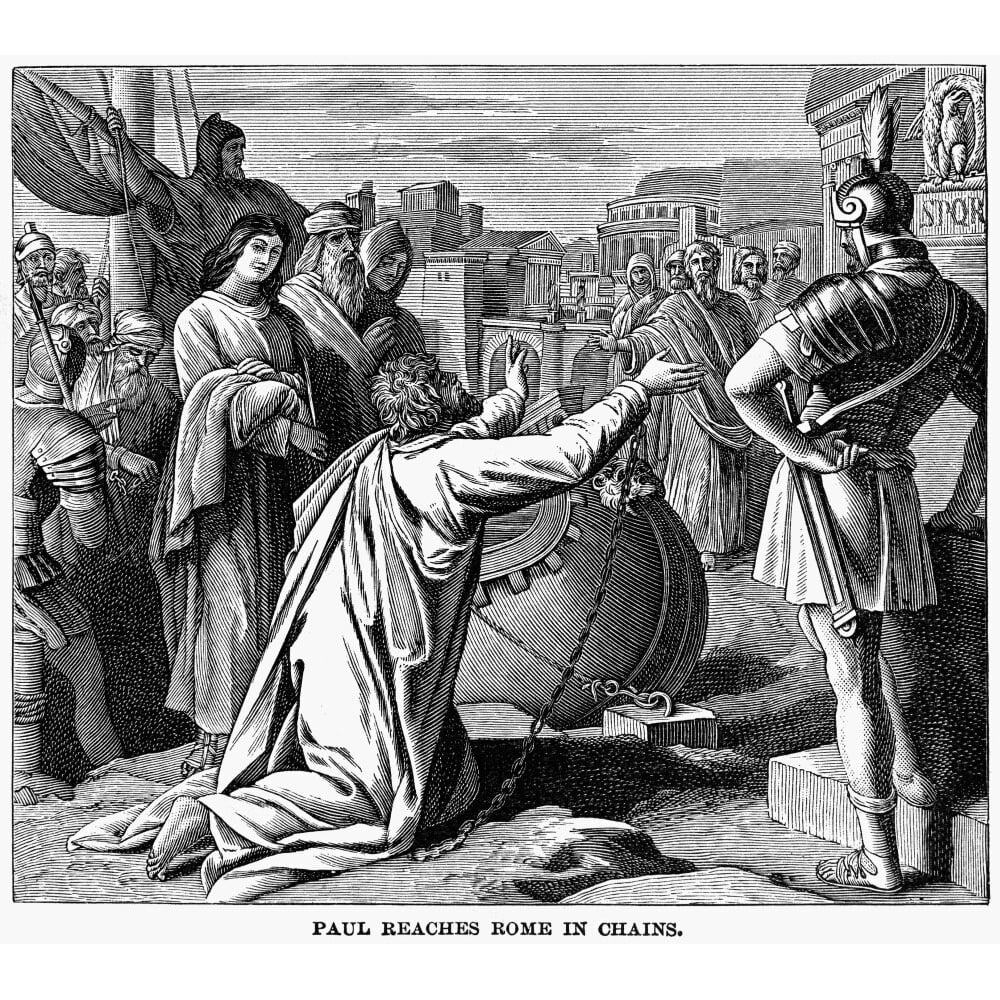
    After His resurrection the Lord will also embrace an arch-enemy who had not only denied a connection of the Son to God the Father, but even worse had persecuted and killed followers of The Way.

    - Saul, Roman Citizen of Tarsus and Leading Jew of the Pharisees 

    And when Saul had come to Jerusalem, he tried to join the disciples; but they were all afraid of him, and did not believe that he was a disciple.

    Acts of the Apostles 9:26 NKJV

    Παῦλος – Paulos – ἀπόστολος ἐθνῶν

    apostolos ethnos  
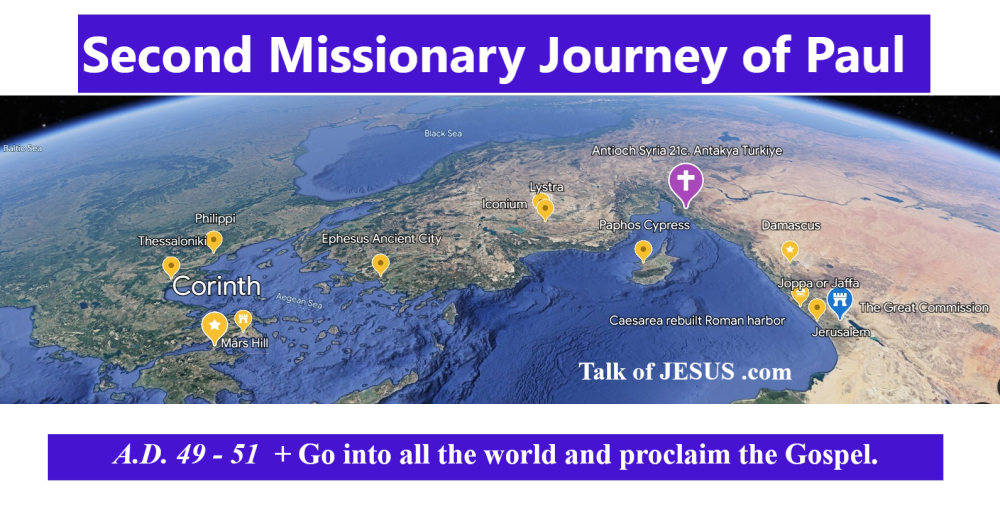
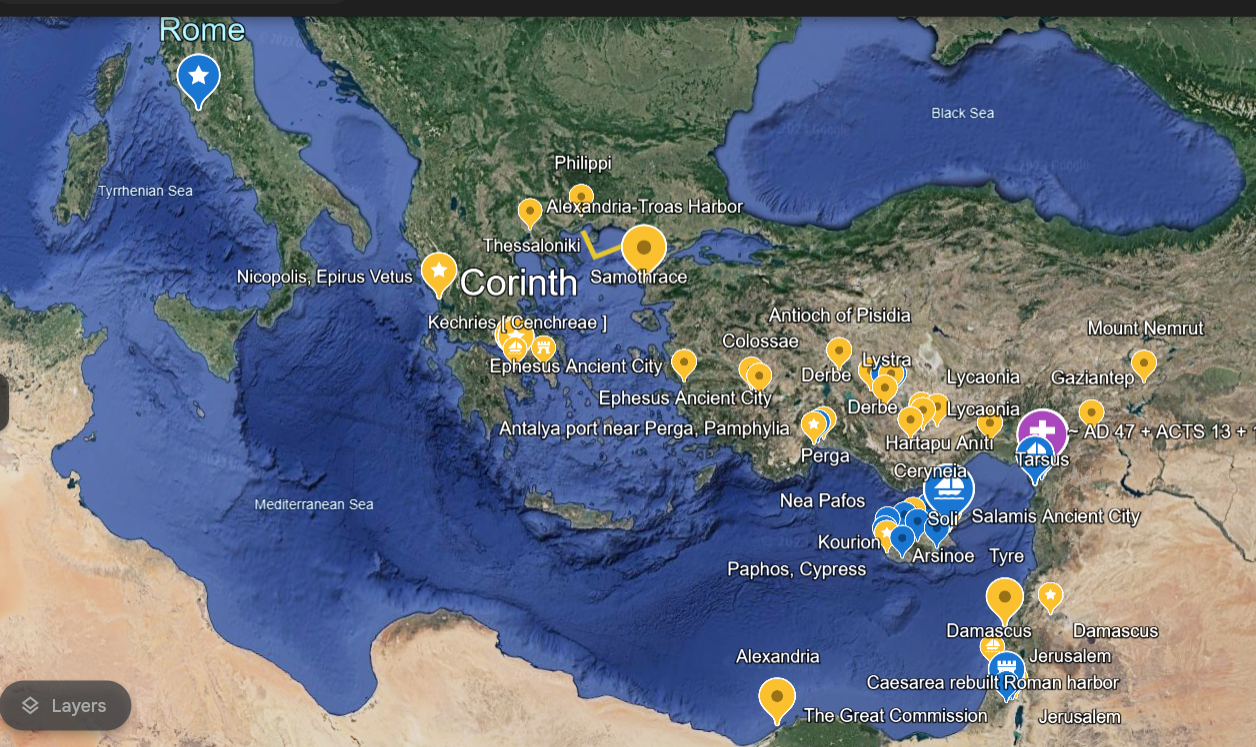
    Acts of the Apostles Missions trips of Paul, Barnabas, Silas and several others
    ACTS on Mission

    But I say unto you, Love your enemies,

    bless them that curse you,

    do good to them that hate you,

    and pray for them which despitefully use you,

    and persecute you..

    Gospel of Matthew 5:44 KJV – from Jesus’ sermon on the mount

    the acts of Saul begin as witness of the stoning of Stephen in Jerusalem .. and a young man Saul of Tarsus held the cloaks of the men who stoned him

    .. and the witnesses laid down their clothes at a young man’s feet, whose name was Saul. And they stoned Stephen…

    ‘Lord, lay not this sin to their charge.’

    And when he had said this, he fell asleep.

    Acts of the Apostles 7:58-60 excerpt KJV


    APOSTOLIC FAITH 2 Peter 2 Timothy from Paul 2 John & 3 John

    Next: Introduction to the letters of Peter

    Talk of JESUS . com

    Comment on Scripture – Share the Gospel

  • Letters to the saints of the First Century Church

    Letters to the saints of the First Century Church

    An Introduction to the Epistles

    TalkofJESUS.com would like to introduce you to an overview of some of the letters of the New Testament.

    • We have recently finished a SERIES from 1 Corinthians and will soon study three more epistles.

    What’s an Epistle?

    Here's a general sense of it from Scripture: 

    So when they were dismissed, they came to Antioch: and when they had gathered the multitude together, they delivered the epistle:

    Acts of the Apostles 15:20 KJV

    [Soldiers] Who, when they came to Caesarea, and delivered the epistle [from the chief captain of the centurions] to the governor, presented Paul also before him.

    Acts 23:26 KJV

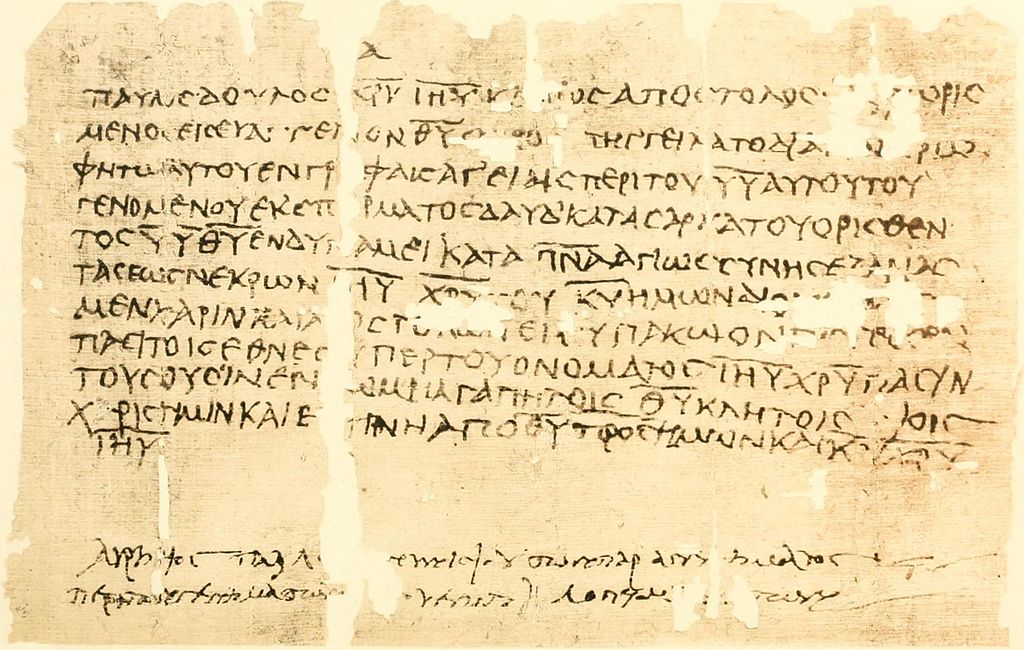
    ἐπιστολή

    epistolḗ, ep-is-tol-ay’; from G1989; a written message:—”epistle,” letter.

    • to send one a message, command
    • to write a letter
    • to enjoin by letter, to write instructions

    BlueLetterBible.org


    Historical Context in the Early Church

    During the first century AD, written communication held a central role in connecting communities separated by great distances. It was common for Christian leaders to address the fledgling groups of believers through written correspondence, ensuring consistent teaching and doctrinal guidance. These epistles were often circulated among multiple churches (see Colossians 4:16) and copied for preservation and further dissemination.

    The Greco-Roman practice of public reading of letters provided an effective way to convey instructions and encourage unity. Such letters were seen as authoritative instructions from established leaders, which enabled early Christians to remain steadfast in their beliefs and practices.

    BibleHub.com

    The New Testament generally indexes Epistles by the place of its recipients, i.e. Philippians, but occasionally by the name of the letter writer, i.e. James.

    Older translations like the King James Version use Epistle or Letter from the same Greek word most translations simply title, ‘Letter.’

    How do WE respond after hearing a letter from an Apostle of Jesus Christ to our Church?

    photo of earth from the moon
    Comment on Scripture + Share the Gospel

    PAUL and Twelve Apostles had been sent into all the world by the risen Lord Jesus Christ to preach the Gospel.

    ~ A.D. 30Beginning with the Twelve Disciples responding to the command of the risen Lord Jesus:

    But you will receive power when the Holy Spirit has come upon you, and you will be my witnesses in Jerusalem and in all Judea and Samaria, and to the end of the earth.”

    Acts of the Apostles 1:8 ESV

    A diaspora of the Gospel (Good News) of the risen Christ began with more than five-hundred witnesses of Jesus after the crucifixion of Israel’s Messiah.

    See: 1 Corinthians 15:6 [context 1 Cor 15:3-8]

    It began, as Jesus commanded, in Jerusalem — Simon Peter and John as Christ’s first vocal witnesses in the Temple — the Gospel then spreading throughout Judea and Galilee, and with Philip in Samaria, Gaza and Caesarea.

    Followers of The Way of Jesus Christ establish many churches in person and later write to church leaders (elders) to build up the saints of these churches during difficult times of several decades of the first century.

    And God wrought special miracles by the hands of Paul: Acts 19:11 ASV graphic map of Third Missionary Journey of Paul

    Acts of the Apostles (including some letter writing)

    Acts is an account of FIRST-HAND WITNESS written for saints of every era — AS SCRIPTURE AND TRUTH of the GOSPEL of our LORD and Savior JESUS CHRIST.

    When did the Apostles write their LETTERS?

    ALL dates approximate
    • AD 49 – James (half-brother of Jesus) writes a letter sent to several churches
    • Paul writes a letter to the near-by churches in Galatia (during his first missionary journey)
    • AD 50 – During his second missionary journey, Paul writes a letter to the church in Thessalonica (which he had established), then later a second letter.
    • AD 55 – Paul writes a letter to the Corinthians (where the Apostle had established this church during his previous mission) and then will write a second letter to these saints a year later.

    A contemporary analogy

    Need a context to our Common Era? 

    Taking that the Lord Jesus Christ had been crucified, buried and rose from the grave before ascending into heaven some 25 years ago, WE would be witnessing this HISTORY as if it had occured in about 2000 CE.

    (And much has happened with the church since then..)

    First Corinthians Featured Series

    TALK OF JESUS .COM LINKS to each Chapter of Paul's First Epistle to the Corinthians

    What did Paul write in Second Corinthians?

    a year later...
    Although we will not include 2 Corinthians in our current series of Second (or 3rd) Epistles, TAKE A LOOK at the focus of Paul's Second Letter to the Corinthians written in ~ A.D. 56. 

    Key Themes [partial] Endurance through difficulty and Christlike behavior are made possible by the grace of God and are modeled by Paul himself.

    The Spirit transforms believers into the image of God, which is seen in Christ.

    Christ, as Savior, is also the universal Judge.

    ESV Global Study Bible
    INTRODUCTION TO
    2 CORINTHIANS

    We refuse to practice cunning or to tamper with God’s word - Paul's 2nd letter to the Corinthians 4:2 and photo of Bible

    Theme: Strength in Christ

    But He said to me,
    “My grace is sufficient for you, for My power is perfected in weakness.”
    Therefore I will boast all the more gladly in my weaknesses,
    so that the power of Christ may rest on me.

    2 Corinthians 12:9

    BibleHub .com 2 Corinthians

    MORE of the TIMELINE of the Apostolic Epistles

    First Century YEARS of continuous Letters (Epistles) to the Church

    • AD 57 Paul writes to the Romans
    • AD 60-62 While in Rome, writes three Epistles to the churches
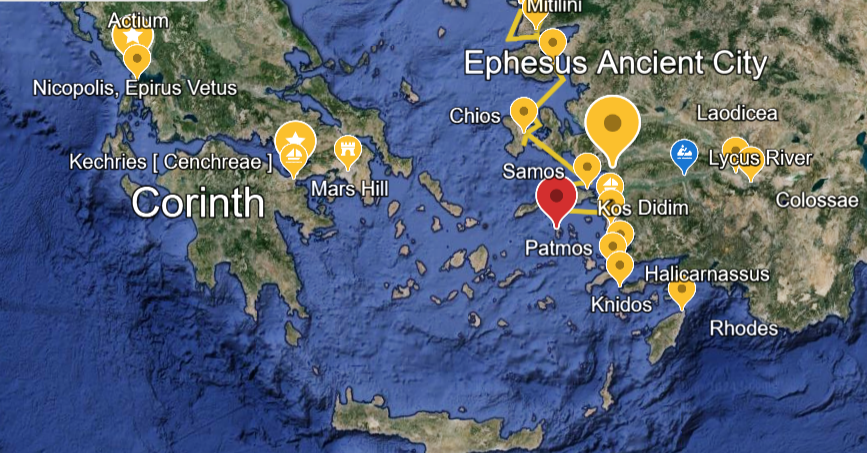
      • in Ephesus in Asia,
      • Philippi in Macedonia and
      • Colossae near Laodecia east of Ephesus
      • and a personal plea to Philemon, leader of a house church in or near Colossae concerning his fellow escaped slave Onesimus.
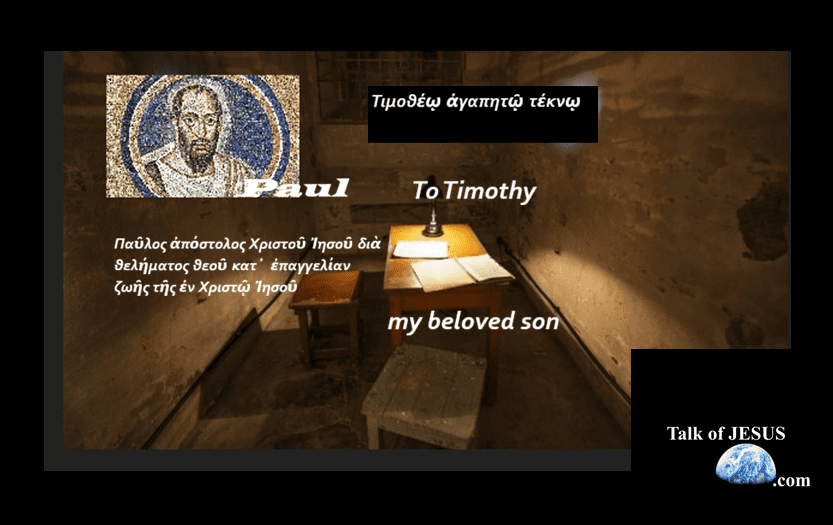
    • AD 62-64 After his release from prison in Rome, Paul writes his First pastoral epistle to Timothy, the Apostle’s protege and successor as pastor to the church in Ephesus.
    • AD 62-64 The Apostle Paul writes a pastoral Epistle to Titus, between his first and second Roman imprisonments, from either Corinth or Nicopolis.
    • AD 64 The Apostle Peter writes his First Epistle to ‘the strangers [or pilgrims] scattered throughout Pontus, Galatia, Cappadocia, Asia, and Bithynia, from Rome at the time Nero burns it, referring to it as ‘Babylon.’
    • AD 66 – Christians flee Jerusalem rather than join a Jewish revolt against Rome.
      • Some historians estimate the dates of these Epistles and martyrdoms of Peter & Paul earlier around A.D. 64
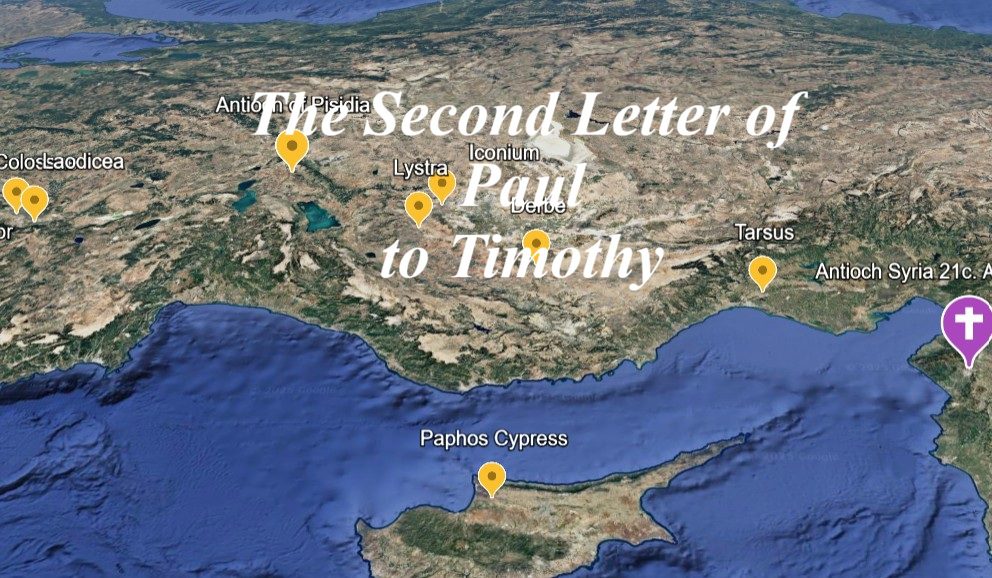
    • AD 66-67 SECOND PASTORAL LETTER OF PAUL TO TIMOTHY
      • (SOON: part of our NEXT Featured SERIES)
    • AD 67-68 SECOND EPISTLE OF PETER
      • (SOON: part of our NEXT Featured SERIES)
    • AD 60’s Epistle to the Hebrews

    AD 70 Rome destroys Jerusalem

    terrors of death of Jerusalem's defenders and destruction temple by Rome in A.D. 70
    Burning of Jerusalem AD70
    Do you need a contemporary compasspoint again? 

    It's now been 40 years since AD 30, our pivotal point in HISTORY.
    Think back now forty contempory years to AD 1985. How has YOUR church changed?
    • AD 70’s Epistle of Jude (the younger half-brother of Jesus.)
    • AD 85-95 The Apostle John writes his Gospel and THREE EPISTLES
      • (2 John & 3 John included in our NEXT Featured SERIES)

    map of the seven churches of revelation
    John to the seven churches that are in Asia: Grace to you and peace from Him who is, and who was, and who is to come, and from the seven spirits who are before His throne,

    Epistles for a Common Era church

    Once again – a paradigm shift ahead to 2025 of the Common Era.


    Our pivotal HISTORY of ACTS of the Apostles and the Gospel began back in the AD 30’s

    and the Apostle John writes to the churches in the AD 90’s.

    Sixty-some years ago — in the years of our Lord the 1960’s.

    Once again, I will ask YOU, my fellow saints of the Lord Jesus Christ:

    How do WE respond after hearing a letter from an Apostle of Jesus Christ to our Church?

    Even in these last days of the Common Era let us proclaim the Gospel of Jesus Christ to a world with a remnant of souls yet to be saved from the wrath to come.


    Comment on Scripture – Share the Gospel