Category: 4 Gospels + Good News of the NEW Testament

What are the Gospels?

FOUR Gospels:

GOOD NEWS! (That’s what Gospel means.)

Matthew, Mark, Luke & John begin the New Testament proclaiming the Good News of Israel’s long-awaited Messiah and talk of JESUS Christ.

The four Gospels are first hand witness + proclaiming GOOD NEWS

  • by two Jewish Apostles of the Messiah JESUS, Matthew & John
  • Two gentile (non-Jewish) followers of THE WAY of Jesus Christ, Mark & Luke, who proclaim the GOSPEL recorded from witness of Peter, Paul and other Apostles and disciples of JESUS in the first century.

READ the Good News of the Messiah and Savior Jesus from accounts of His twelve Apostles & others witnessing the resurrection of the Lord Jesus from the four Gospels of the New Testament: Matthew, Mark, Luke and John.

SHARE the Gospel

  • with your Christian friends and those who do not yet believe in JESUS CHRIST.
  • Comment on a Talk of JESUS post and SHARE in your social media world.
  • Relationship with a Roman

    Relationship with a Roman


    capernaum map

    Luke 7:1 After he had finished all his sayings in the hearing of the people, he entered Capernaum.

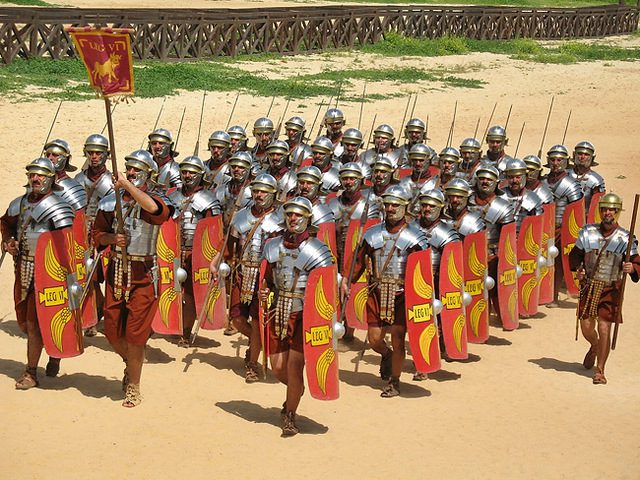
    Jesus has just taught the crowds who were amazed at His teaching (probably under the watchful Roman eyes of their area squad of the Legion).

    Jesus taught His own people with such sayings as:

    • Love your enemies, do good to those who hate you.
    • Be merciful, even as your Father is merciful.
    • The good person out of the good treasure of his heart produces good.
    • “Why do you call me ‘Lord, Lord,’ and not do what I tell you?

    The multitudes followed Jesus from place to place (under watchful Roman eyes, along with ears to hear the true motives of this Jewish teacher who taught in the synagogues of the towns and on the distant hillsides) … waiting to see what their promised Messiah would do. (The Roman authorities and Jewish authorities wanted to know that as well.)

    Jesus has told the crowds, “For no good tree bears bad fruit, nor again does a bad tree bear good fruit, 44 for each tree is known by its own fruit.”

    What is the fruit of Jesus’ ministry? For most of the crowds just watch. Many bear no good fruit.

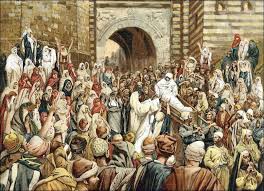
    balage_capernaumJesus returns to his new home, followed by the crowds of onlookers.

    2 Now a centurion had a servant who was sick and at the point of death, who was highly valued by him. 3 When the centurion heard about Jesus, he sent to him elders of the Jews, asking him to come and heal his servant.

    This Roman soldier had a servant, possibly a captured slave from their many battles of the Roman campaign and rule of the region (perhaps even a zealous Jew). We know that the culture of the City of Rome required many slaves (25% of the population). This person (slave or servant) was valuable to the Roman Centurion (a General in charge of many men, in addition to his own servants).

    Propriety and protocol require communication at the proper levels of leadership to approach a common Jew like Jesus; therefore the centurion sends another servant to communicate with the servant of a Jewish elder about dealing with this common Rabbi of the hillsides about possibly helping him in a personal matter of his gentile (Roman) household.

    The Elders themselves (highly esteemed and with the authority of Jewish leadership of their fellow Jews like Jesus) come to the Rabbi Jesus and ask Him a favor. No faithful Jew would refuse such a request directly from an Elder.

    land-bridge-600_24 And when they came to Jesus, they pleaded with him earnestly, saying, “He (this gentile, Roman centurion) is worthy to have you do this for him, 5 for he loves our nation, and he is the one who built us our synagogue.”

    So the Jews then begin a short journey toward the Roman encampment nearby, but not in Capernaum.

    6 And Jesus went with them. When he was not far from the house, the centurion sent friends, saying to him, “Lord, do not trouble yourself, for I am not worthy to have you come under my roof. 7 Therefore I did not presume to come to you. But say the word, and let my servant be healed.

     Fruit of His teaching! AND from a Roman gentile.

    8 For I too am a man set under authority, with soldiers under me: and I say to one, ‘Go,’ and he goes; and to another, ‘Come,’ and he comes; and to my servant, ‘Do this,’ and he does it.”

    And Jesus had just asked on the hillsides:

    “Why do you call me ‘Lord, Lord,’ and not do what I tell you?”

    Beloved believer, you who this day claim Christ by calling yourself a christian; do you hear now Jesus’ teaching to faithful followers of God?

    It is a further lesson for the ears of skeptical Jews and their local Elders:

     9 When Jesus heard these things, he marveled at him, and turning to the crowd that followed him, said, “I tell you, not even in Israel have I found such faith.” 

    And later report would come back to Capernaum from the gentile Roman camp of this miracle that did not even require the touch or near presence of Jesus:

    10 And when those who had been sent returned to the house, they found the servant well.

     Adoption and mercy for gentiles like most of us. Jesus IS Lord of all.

    We cry out to Christ, “Lord, Lord.”

    Do you have the faith of this centurion?

    Is He your Lord?


  • A Light of Revelation to the Gentiles

    A Light of Revelation to the Gentiles

    Birth of John the Baptist Foretold

    Luke 1:5 In the days of Herod, king of Judea, there was a priest named Zechariah, of the division of Abijah. And he had a wife from the daughters of Aaron, and her name was Elizabeth. 6 And they were both righteous before God, walking blamelessly in all the commandments and statutes of the Lord…

    The Birth of John the Baptist

    57 Now the time came for Elizabeth to give birth, and she bore a son. 58 And her neighbors and relatives heard that the Lord had shown great mercy to her, and they rejoiced with her. 59 And on the eighth day they came to circumcise the child. And they would have called him Zechariah after his father, 60 but his mother answered, “No; he shall be called John.”

    (a few months later in Jerusalem, which is near to Bethlehem)

    Jesus Presented at the Temple

    22 And when the time came for their purification according to the Law of Moses, they brought him up to Jerusalem to present him to the Lord…

    25 Now there was a man in Jerusalem, whose name was Simeon, and this man was righteous and devout, waiting for the consolation of Israel, and the Holy Spirit was upon him. 26 And it had been revealed to him by the Holy Spirit that he would not see death before he had seen the Lord’s Christ. 27 And he came in the Spirit into the temple, and when the parents brought in the child Jesus, to do for him according to the custom of the Law, 28 he took him up in his arms and blessed God and said,

    29 “Lord, now you are letting your servant depart in peace,
    according to your word;
    30 for my eyes have seen your salvation
    31     that you have prepared in the presence of all peoples,
    32 a light for revelation to the Gentiles,
    and for glory to your people Israel.”

    33 And his father and his mother marveled at what was said about him. 34 And Simeon blessed them and said to Mary his mother, “Behold, this child is appointed for the fall and rising of many in Israel, and for a sign that is opposed 35 (and a sword will pierce through your own soul also), so that thoughts from many hearts may be revealed.”

    (Jesus was eight days old; then Joseph fled from the wrath of Herod to Egypt.)

    We have picked up the story of Jesus’ early ministry 30 years later.

    He is filled by the Holy Spirit, baptized by John, faced Satan for 40 days in the wilderness and returned to Nazareth and the surrounding towns to preach repentance.

    Jesus has been rejected by his own brothers and neighbors of Nazareth. The people of Nazareth try to stone Him!

    Jesus moves to Capernaum. He teaches and performs miracles on the Galilean hillsides. All the time, of course, Galilee is under the administration and watchful eye of Rome. A Roman army could occupy any town at any time if they perceived a threat from its people or a charismatic leader with thousands of followers listening to his teaching. Of course, watchful Roman ears would have the intelligence to hear what such a Galilean would be saying to his followers. Rome and the gentile solders certainly knew Jesus prior to His triumphal entry into Jerusalem which would occur just three short years from now.

    Christ Jesus is not only a teacher and friend of the Jews. Jesus IS a light and salvation to the gentile Romans.

    The Prophesy of Luke 1:

    30 …for my eyes have seen your salvation
    31     that you have prepared in the presence of all peoples,
    32 a light for revelation to the Gentiles,
    and for glory to your people Israel.”

    (Next we continue Jesus’ journey and witness to Capernaum and Nain in Galilee.)

  • Judea of Herod

    Judea of Herod

    (Just a bit more Roman history before we continue in Luke 7)

    Prior to Roman Rule:

    • Judah in path of invading armies crossing eastern Mediterranean shores
    – Judah controlled by Syrians, Greeks, Romans, others over the years
    • Syrians took over in 198 B.C., introduced Greek culture to Jews
    – Jews allowed to keep religion, but some adopted Greek culture, gods
    • In 175 B.C., Syrians insisted Jews worship Greek gods; Jews refused
    – Jewish religion was outlawed; some fled to hills, prepared to fight
    Rebels Fight Syria
    • Jewish priest and five sons led fight to drive out Syrians
    – son Judah Maccabeus led revolt with his force, the Maccabees
    • Tiny Jewish force faced larger, better equipped Syrian army
    – rebels knew countryside and defeated Syrians in many battles
    Maccabees regained Jerusalem by 164 B.C.

    Rome Conquers Judea
    • Romans conquered Judah (Judea) in 63 B.C.
    • Roman rulers kept strict control over Judea
    • Jewish kings, religious leaders appointed by Rome

    Leader(s) of the Maccabees Timeline
    167 BC: Mattathias, the Hasmonean
    166 – 161 BC: Judas Maccabaeus, the Hammer of the LORD
    161 – 143 BC: Jonathan Apphus, the Wary
    143 – 135 BC: Simon Thassi, the Zealous Guide

    Although the Maccabees, and later their descendants, the Hasmoneans, managed to keep Israel free from foreign oppression for almost 150 years, this abruptly ended with King Herod who was not a Hasmonean at all.

    The Hasmonean dynasty, which leaped onto the stage of history with such dramatic heroism, disappeared from that same stage with cruel suddenness. The despot Herod, whose régime was forced upon the unwilling Jewish populace by his Romans overlords, was fully aware that the aura of Hasmonean charisma would constitute a continual threat to his power, and hence he undertook to ruthlessly murder all the remaining descendants of that family, including his beloved wife Mariamne, granddaughter of the Hasmonean ruler Hyrcanus II. Herod executed her on trumped-up charges of disloyalty, as he did afterwards to the two sons she had borne him, Alexander and Aristobulus. – Wikipedia

    Herod builds another Temple in Jerusalem and many buildings throughout Judea with the support of Rome.

    Herod the First of Judaea, known to history as Herod the Great

    • Alexander died in 76 B.C. and Salome ruled alone until her death in 67 B.C. Upon the death of the queen a civil war broke out between her two sons. Herod’s father Antipater II sided with Hyrcanus…
    • Rome had intervened in Syria and ousted their King and posted Legions in Syria.
    • Caesar and Pompey were also in a Roman civil war for power. Herod’s father had supported Caesar and was made Procurator of Judea.
    • Herod loyally supported Antony against Octavian until 31 B.C.  Octavian defeated Antony, but had no one to replace Herod and gave him some of Antony’s territories given by Antony of Rome to Cleopatra of Egypt.
    • Near the time of Herod’s death (just prior to the birth of Jesus) Herod feared a coup from his own sons as more civil unrest broke out in his Kingdom of Judea (given to his family as political compromise by Rome).

    HEROD’S PERSECUTIONS

    Herod’s persecutions were infamous and they even extended to his own family.

    Herod, knowing that his Jewish credentials were suspect, had married Miriam—the granddaughter of Hyrcanus and therefore a Hasmonean princess—largely to gain legitimacy among the Jewish people. But he also loved her madly. As Josephus relates:

    Of the five children which Herod had by Miriam, two of them were daughters and three were sons. The youngest of these sons was educated in Rome and died there but the two eldest he treated as those of royal blood on account of the nobility of their mother and because they were not born until he was king. But what was stronger than all this was his love he bore for Miriam which inflamed him every day to a great degree.

    The problem was that Miriam hated him as much as he loved her, largely because of what he had done to her brother, Aristobulus.

    Herod had made Aristobulus High Priest at the age of 17, and watched with trepidation as the young man became hugely popular. This was not surprising as Aristobulus was a Hasmonean with a legitimate right to be High Priest – a genuine Jew and a genuine cohen.

    But this threatened Herod too much and he had him drowned.

    • Luke does not retell the story of Joseph and Mary fleeing from Bethlehem to Egypt before returning to Nazareth after Herod’s death. We do, however get a flavor of the controversy of the Herod’s vs. the Jews in the story of John the Baptist.

    Although we have looked past the calls of John the Baptist to the people and the King for repentance to the call of Jesus to the multitudes for repentance, Luke also reports more of John’s relationship with Jesus in chapter 7.

    To be continued in Luke 7.