Tag: Christ

  • Your Communions in Church and in Christ

    Your Communions in Church and in Christ

    Communions, gatherings, worship services, church services — call them whatever you like. But the Apostle Paul provides some pointed correction for the church as we continue in 1 Corinthians 11.

    Communion – Sharing in the Lord’s Supper

    What’s the Apostle Paul saying to the Church?

    It’s an Exhortation

    Pretty strait-forward

    Paul addresses these communions (as the idolatrous feasts of Corinth he has already addressed) presenting a clear choice for godly saints of the Church at Corinth.

    v.17 In the following instructions I have no praise to offer, because your gatherings do more harm than good. – BSB


    for the Church

    Would you like to hear Paul's introduction in another way? 

    1 Corinthians 11:18

    • For first of all, when you come together as a church, I hear that there are divisions among you, and in part I believe it. – NKJV
    • In the first place, I hear that when you come together as a church, there are divisions among you, and to some extent I believe it. – NIV
    • For first of all, when you come together in the assembly, I hear that divisions exist among you, and I partly believe it. – HNV

    This is simply Paul’s FIRST POINT following the Apostle’s exhortation about sanctified living AND following his FIRST POINT about ROLES in Christian Worship within this section of his Epistle ordering Christ’s instructions for worship.

    The Apostle Paul specifically points to times when we assemble [or come together] συνέρχομαι – synerchomai as a CHURCH ἐκκλησίᾳ – ekklēsia.

    Many of you know this Greek word for church. 

    LOOK at its definition
    (nothing specifically yet about communion here. But read on.)

    The Apostle then continues in his outline for Christian gatherings.

    Sharing in the Lord’s Supper ( 11:17⁠–⁠34 )

    church supper

    An exhortation for social and festive meals in the church community

    Now then, when you come together, it is not the Lord’s Supper you eat.

    21 For as you eat, each of you goes ahead without sharing his meal. While one remains hungry, another gets drunk.

    22 Don’t you have your own homes in which to eat and drink? Or do you despise the church of God and humiliate those who have nothing?

    What can I say to you? Shall I praise you for this?

    No, I will not!


    The Apostle’s transition into this section had been:

    Be ye followers of me, even as I also am of Christ.1 Cor 11:1 KJV


    Paul's focus:

    Our communions other than Holy Communion

    For there must be also heresies among you,

    that they which are approved may be made manifest among you.

    1 Corinthians 11:19 KJV

    * In the first major schism of the Church in the A.D. 11th century the Roman Church divided from the Orthodox Church. See the Timeline in the link above.

    Common Era christians dare not mention such things as HERESY, lest we offend some unbeliever in our gathering or sharing in breaking bread with us at an occasional community evangelism feast. 

    We prefer a gentler approach of translations of αἵρεσις - hairesis like: factions or divisions or differences.

    11:20 συνερχομένων οὖν ὑμῶν ἐπὶ τὸ αὐτὸ οὐκ ἔστιν κυριακὸν δεῖπνον φαγεῖν

    When ye come together therefore into one place, this is not to eat the Lord’s supper.

    First Epistle of Paul to the Corinthians 11:20 KJV

    Does the Apostle then instruct the Church NOT to share in Holy Communion?

    NO, certainly not.

    Only not to participate in such a community meal alongside unbelievers (EVEN ‘at church’ ), including those who are not in Christ in this Holy Sacrifice of Communion as worship.


    The Lord’s Supper

    You may want to READ some of the Gospel including these Holy Scriptures, but I urge you for now to remain focused on the Apostle’s INSTRUCTION specifically to saints of the Church at Corinth (in ~ A.D. 55).

    Gospel cross-references to the Lord’s Supper

    King James Version


    a HOLY Communion in Christ celebrated by the Body of Christ

    Holy Communion the Bread and Cup of salvation in Christ  for the body of Christ the Church

    For I have received of the Lord that which also I delivered unto you..

    1 Corinthians 11:23a KJV

    Paul here reiterates from the Gospel accounts that which the Apostle had already instructed in person.


    .. That the Lord Jesus the same night in which he was betrayed took bread:

    And when he had given thanks, he brake it, and said, Take, eat:

    this is my body, which is broken for you:

    this do in remembrance of me.

    After the same manner also he took the cup,

    when he had supped, saying,

    This cup is the new testament in my blood:

    this do ye, as oft as ye drink it,

    in remembrance of me.

    First Epistle of Paul to the Corinthians 11:23-25 King James Version

    An Apostolic Application

    Once again, Paul has already WRITTEN:

    • NOT to eat Food Sacrificed to Idols AND taught lessons of the Jews’ exodus from Egypt concerning their idolatry.

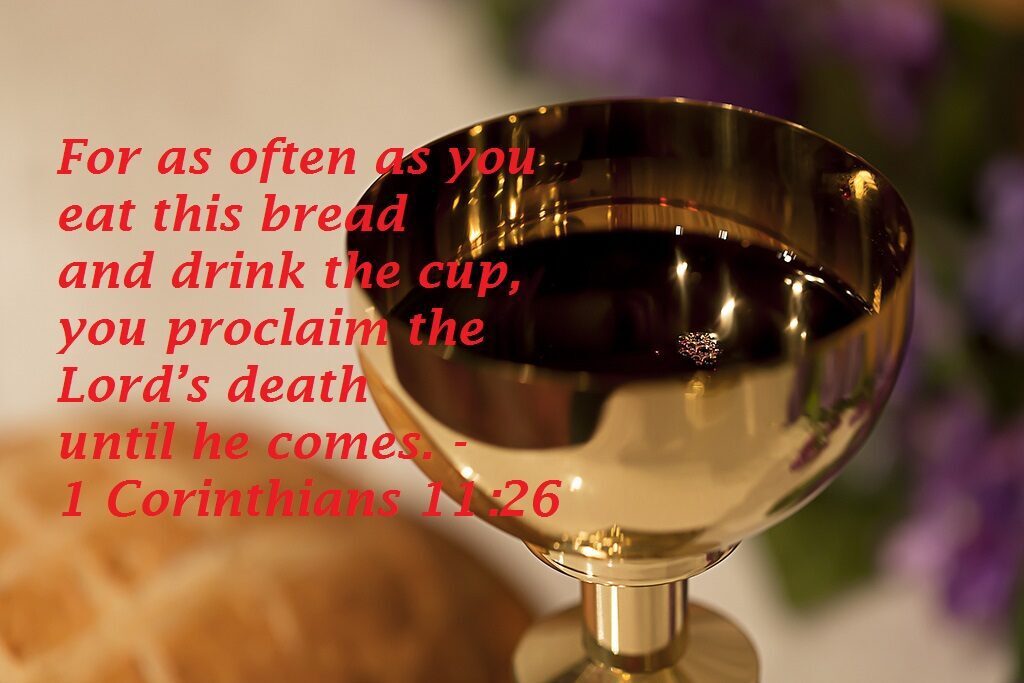
    For as often as you eat this bread and drink the cup, you proclaim the Lord’s death until he comes.

    1 Corinthians 11:26 ESV

    The Apostle had reminded the saints of Corinth earlier in his letter of both his authority and humility in Christ confirming:

    • I have applied these things to myself [THEREFORE] learn from us not to go beyond what is written.
    • Paul’s instruction consequently will require the saints of Corinth:

    Let a person examine himself, then, and so eat of the bread and drink of the cup.

    1 Corinthians 11:28 ESV


    27 Therefore, whoever eats the bread or drinks the cup of the Lord in an unworthy manner will be guilty of sinning against the body and blood of the Lord. – BSB

    Commentary – Study Bible [below]

    • The term “unworthy manner” suggests a lack of reverence or self-examination
    • The “bread” and “cup” symbolize the body and blood of Christ, and partaking in them requires a heart of humility and repentance.
    • To be “guilty of sinning” implies a serious offense, akin to profaning something holy.

    For he that eateth and drinketh unworthily, eateth and drinketh damnation to himself, not discerning the Lord’s body.

    First Epistle of Paul to the Corinthians 11:29 King James Version

    If we would judge ourselves
    The Apostle offers a few additional reasons to examine ourselves before these communions with the world and the Holy Communion of the saints of our local church. 
    • That is why many among you are weak and sick,
    • and a number of you have fallen asleep.
    • Now if we judged ourselves properly, we would not come under judgment.
    • But when we are judged by the Lord, we are being disciplined so that we will not be condemned with the world.

    In conclusion, Paul reiterates about their divisions over their communions.

    ἐκδέχομαι – ekdechomai 

    33 Wherefore, my brethren, when ye come together to eat,

    tarry one for another.

    translates the King James

    1. to receive, accept
    2. to look for, expect, wait for, await: ἀλλήλους ἐκδέχεσθε wait for one another, namely, until each shall have received his food, 1 Corinthians 11:33, cf.

    PAUL closes this section of his letter about divisions stating that he has more to say about other issues later in person.

    “.. And when I come, I will give instructions about the remaining matters.


    Judge for yourself

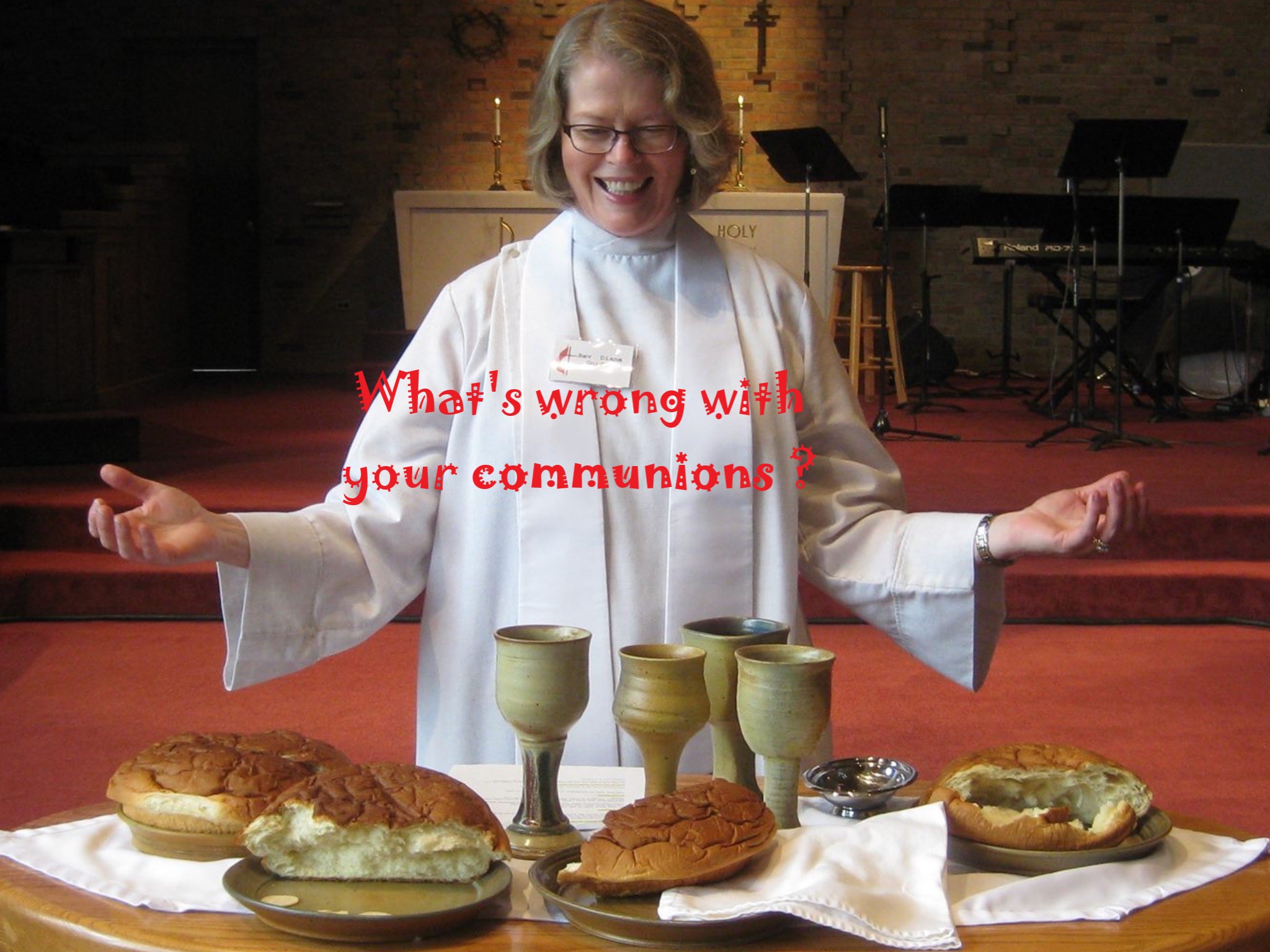
    English translation: pictures Table Man Wine Mug Food Food Religion Text added to photo What's wrong with you Communions?

    Comment on Scripture – Share the Gospel

  • Sanctification – saints washed in Christ’s Holiness

    Sanctification occurs only 5-10 times in the New Testament, while “sanctify” occurs 70 times in 65 verses in the KJV throughout the Bible.

    Doesn’t sanctification require someone or something to be ‘sanctified?’

    What is sanctification?

    How is it different since Christ Jesus?


    Sanctification in the Old Testament

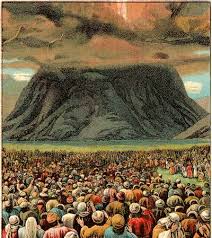
    congregation of the Hebrews at Mount Horeb

    Moses on Sinai

    Exodus 19 NKJV excerpt

    And Moses went up to God, and the LORD called to him from the mountain..

    ‘Now therefore, if you will indeed obey My voice and keep My covenant,

    … ‘And you shall be to Me a kingdom of priests and a holy nation.’

    Exodus 19:3-6 except NKJV

    So Moses went down from the mountain to the people and sanctified the people, and they washed their clothes.

    קָדַשׁ qâdash,

    to be (causatively, make, pronounce or observe as) clean (ceremonially or morally):—appoint, bid, consecrate, dedicate, defile, hallow, (be, keep) holy(-er, place), keep, prepare, proclaim, purify, sanctify(-ied one, self),

    https://davidfowlerpreacher.com/2014/06/08/pictures-of-the-holy-spirit/
    Exodus 21:5-7

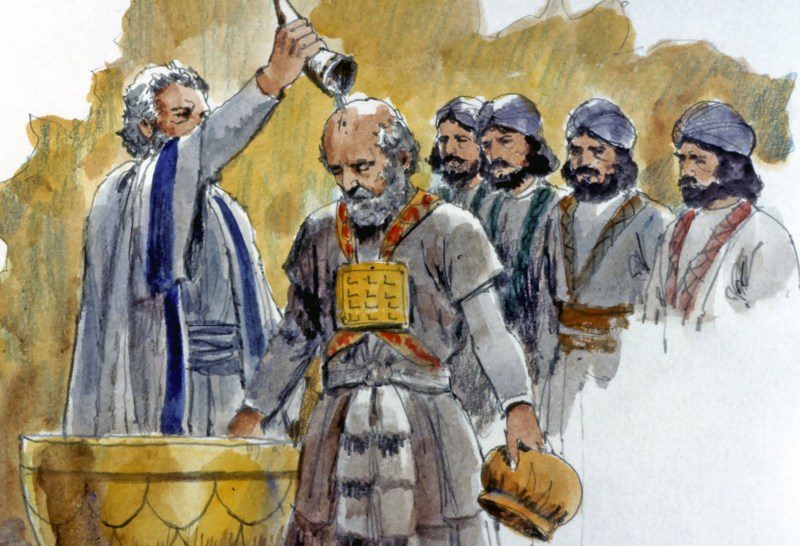
    “Also let the priests who come near to Yahweh set H6942 themselves apart H6942 as H6942 holy H6942, lest Yahweh break out against them.”

    And Moses said to Yahweh, “The people cannot come up to Mount Sinai, for You [testified to] warned us, saying, ‘Set bounds about the mountain, and set H6942 it apart H6942 as H6942 holy H6942.’”

    Exodus 19:22-23 LSB – noting H6942 meaning Sanctify or Hallow

    שְׁמֹות (Exodus) 19 :: Masoretic Text

    19:23 וַיֹּאמֶר מֹשֶׁה אֶל־יְהוָה לֹא־יוּכַל הָעָם לַעֲלֹת אֶל־הַר סִינָי כִּי־אַתָּה הַעֵדֹתָה בָּנוּ לֵאמֹר הַגְבֵּל אֶת־הָהָר וְקִדַּשְׁתּוֹ׃

    Does this washing for holiness before God bring any sanctifying fear over you before facing the LORD your Maker?


    An Old Testament Word

    You may recognize the same word in a couple of important places in the Bible.

    Then God blessed the seventh day and sanctified H6942 it, because on it He rested from all His work which God had created in making it.

    Genesis 2:3 LSB

    זָכוֹר אֶת־יוֹם הַשַּׁבָּת לְקַדְּשׁוֹ׃

    “Remember the sabbath day, to keep H6942 it holy H6942.

    Exodus 20:8 WLC, LSB

    Pray then like this:
    Our Father who art in heaven, Hallowed be thy name.

    Matthew 6:9 RSV

    Sanctification then prepares unholy sinners to face the Most Holy.


    Sanctification in the New Testament

    verb - From ἅγιος (G40) adjective (most holy thing, a saint) 
    - From hagos adjective (an awful thing) [cf ἁγνός (G53) adjective, properly, clean, i.e. (figuratively) innocent, modest, perfect:—chaste, clean, pure.
    • to render or acknowledge, or to be venerable or hallow
    • to separate from profane things and dedicate to God
    • to purify
      • to cleanse externally
      • to purify by expiation: free from the guilt of sin
      • to purify internally by renewing of the soul

    The Apostle Paul, in referring to a long list of sins of the Corinthians writes:

    And such were some of you; but you were washed,

    but you were sanctified G37,

    but you were justified in the name of the Lord Jesus Christ and in the Spirit of our God.

    1 Corinthians 6:11 LSB


    a most holy thing, a saint ?


    Are YOU a HOLY Saint of JESUS Christ, therefore sanctified to Him in your mortal AND eternal life?


    Sanctified saints

    “For their sake I sanctify Myself, that they themselves also may be sanctified in truth.

    Gospel of John 17:20 LSB


    In bringing many sons to glory, it was fitting for God, for whom and through whom all things exist, to make the author of their salvation perfect through suffering.

    For both the One who sanctifies and those who are sanctified are of the same family. So Jesus is not ashamed to call them brothers.

    Hebrews 2:10-11 BSB


    Sanctify them by the truth; your word is truth.

    John 17:17 CSB – Jesus’ prayer for disciples


    Sanctification of children learning to walk in Christ

    To the saints in Galatia:

    Formerly, when you did not know God, you were enslaved to those that by nature are not gods.

    But now that you have come to know God, or rather to be known by God, how can you turn back again to the weak and worthless elementary principles of the world, whose slaves you want to be once more?

    Paul’s letter (epistle) to the Galatians 4:8-9 ESV


    To the saint sitting with you in church:

    In conclusion, the best way to examine some of the jargon of Scripture like anointed, consecrated, sanctified, justified and holiness is in prayerful time in the Bible itself.

    How better to explain sanctification (or any ‘Christian’ jargon) to a new child of the faith with whom you worship than with Biblical text?


    READ any of the links provided in the Scriptures above. 

    OR For more on the topic of Sanctification you may search it here on TalkofJESUS.com OR simply read the earlier post below with my closing thought.

    Sanctification – a refining of our holiness in Christ

    For this is the will of God, your sanctification.. For God did not call us to impurity,

    but in sanctification. 

    Consequently, he who sets this aside is not setting aside man

    but the God who gives His Holy Spirit to you.

    1 Thessalonians 4:3a, (3b-6 short list of our impurity) 7-8 LSB

    ~A.D. 51 – Paul writes to encourage the Thessalonian Church

    A look back from 2025 CE to an earlier look at Sanctification

    Comment on Scripture – Share the Gospel

  • Christian Roles in Christian Worship – 1 Corinthians 11

    Christian Roles in Christian Worship – 1 Corinthians 11

    You are to imitate me, just as I imitate Christ.

    1 Corinthians 11:1 Berean Standard Bible

    Now there’s a tall order seemingly impossible for any worshiper: Imitate an Apostle. But the humble Apostle Paul addresses the different roles of men and women in prayer and worship of the church.

    Roles of men and women

    Maintaining the Traditions

    Now I commend you for remembering me in everything and for maintaining the traditions, just as I passed them on to you.

    • 1 Corinthians 11:2 BSB

    Paul compliments the Corinthian church for remembering him in everything, including his teaching as an Apostle of Christ, from going back to when he ministered personally to the Corinthian church.

    The apostle specifically addresses what he expects of the Corinthian believers.

    Yet centuries later we may wonder:

    To what ‘traditions‘ is Paul referring? Jewish traditions? Local Hellenist Corinthian traditions?

    So let's take a more formal from the King James in order to clarify who Paul addresses in the Corinthian church.

    Now I praise you, brethren, that ye remember me in all things, and keep the ordinances, as I delivered them to you.

    1 Corinthians 11:2 KJV

    In his Apostolic authority of these ordinances, Paul first and primarily addresses the men of the Corinthian church — a cultural consideration expected by both Jew and Hellenist gentile believers.

    An Illustration of Leadership

    Paul employs a common metaphor we won’t want to miss.

    κεφαλή – kephalē – head

    picture of head and brain with kephalē in Greek which means head In 1 Corinthians 11 the Apostle Paul uses a metaphor of the head as a picture of authority in the church and of Christ as its head.

    metaph. anything supreme, chief, prominent

    1. of persons, master lord: of a husband in relation to his wife
    2. of Christ: the Lord of the husband and of the Church
    3. of things: the corner stone
    Paul uses this metaphor of the head ten times in his first letter to the Corinthian church. 

    So IF you tend to shun authority, you may question what the Apostle humbly orders by way of this ordinance of relationship and roles.

    Every man who prays or prophesies with his head covered dishonors his head.

    1 Corinthians 11:4

    The idea here is that man was made in the glory of God and it would be dishonoring to God for him to cover his head while he prayed or prophesied. Now that is interesting coming from Paul considering that in Orthodox Jewry today, they all wear their little hats whenever they come into any sacred place of prayer.

    Chuck Smith commentary on 1 Cor 11:4

    So where where is the Apostle headed? 

    Paul naturally points to the creation of mankind by God.

    "Neither was the man created for the woman; but the woman for the man." 1 Cor 11:9 KJV

    But every woman who prays or prophesies with her head uncovered dishonors her head, for that is one and the same as if her head were shaved.

    1 Cor 11:5 NKJV

    Paul does not tell the men of Corinth that women should neither pray nor prophesy publically, only that she should have her head covered out of respect to the authority over her. 

    Thinking it through

    What is Paul’s reasoning?

    He uses hyperbole with irony here (pointed in the KJV):
    • For if the woman be not covered,
      • let her also be shorn:
    • but if it be a shame for a woman to be shorn or shaven,
      • let her be covered.

    Again the Apostle emphasises:

    • For the man is not of the woman; but the woman of the man.
    • Neither was the man created for the woman; but the woman for the man.
      • For this cause ought the woman to have power on her head because of the angels.
    You may not accept this on either, but the Apostle has already made mention in this letter to the Corinthians of such authority. 

    Apostles at the end of the procession

    .. like prisoners appointed for death.”

    Picture the ranks of all authority: Kings and captive prisoners of other kings.

    AND above all, God the Father, with Cherubim and Seraphim, ARCH-ANGELS and countless ranks of Angels — all spirits as gods serving the LORD with power to the glory of the Almighty — servants and messengers of God interacting with mortal men of dust and souls quickened in His Image with His Holy Spirit.

    We have become a spectacle [theatron] to the whole world [kosmos],

    to angels [angelos] as well as to men

    [anthrōpos {both men and women}].

    1 Corinthians 4:9b BSB

    – Paul’s reference to Apostles viewed by the world and angels


    Wearing your Symbols of AUTHORITY with humility and respect

    head-covering, the emblem of “power on her head”; the sign of her being under man’s power, and exercising delegated authority under him.

    Paul had before his mind the root-connection between the Hebrew terms for “veil” (radid), and “subjection” (radad).

    BENGEL explains, “As the angels are in relation to God, so the woman is in relation to man. God’s face is uncovered; angels in His presence are veiled ( Isa 6:2 )

    Jamieson, Fausset & Brown :: Commentary on 1 Corinthians 11:10

    In the Lord, however, woman is not independent of man, nor is man independent of woman. For just as woman came from man, so also man is born of woman. But everything comes from God.

    A head uncovered

    13 Judge for yourselves: Is it proper for a woman to pray to God with her head uncovered?

    Now the Apostle addresses the opposing sign of a head uncovered. 

    14 Doesn’t nature itself teach you that if a man has long hair, it is a disgrace to him, 15 but that if a woman has long hair, it is her glory? For long hair is given to her as a covering.

    Again, a helpful overview of this Greek word for uncovered or unveiled [11:5 & 11:13].

    ἀκατακάλυπτος – akatakalyptos

    “uncovered” (a, negative, katakalupto, “to cover”), is used in 1Cr 11:5, 13, RV, “unveiled,” with reference to the injunction forbidding women to be “unveiled” in a church gathering. .. and in the phrase “because of the angels,” intimating their witness of, and interest in, that which betokens the headship of Christ. Vine’s Expository Dictionary of New Testament Words

    The Apostle has not yet reached his final point on the matter, but for our purposes consider it now: 

    For God is not the author of confusion, but of peace, as in all churches of the saints. Let your women keep silence in the churches..

    1 Corinthians 14:33-34a KJV

    .. the things that I write unto you are the commandments of the Lord. 1 Cor 14:37b

    we have no other practice

    The Apostle Paul concludes this section definitively as a segue into Holy Communion in this way:

    If anyone is inclined to dispute this, we have no other practice, nor do the churches of God.

    1 Corinthians 11:16 BSB


    NEXT: Holy Communion and Worship