Tag: Christ

  • Christ – Light to the People and Ethnos

    Christ – Light to the People and Ethnos

    The people walking in darkness have seen a great light;
    on those living in the land of the shadow of death,
    a light has dawned.

    Isaiah 9:2 BSB

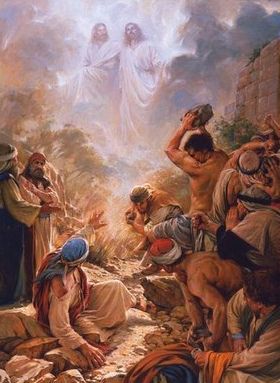
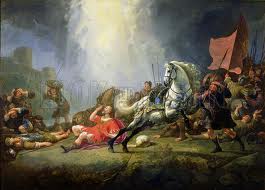
    Paul Convicted by the Light of Christ

    I had thought to skip past this story of Paul's too-familiar retelling of the Apostle's conversion by Christ (since Luke has already repeated it with frequency in Acts). 

    But just as Paul now witnesses with intensensity to a new audience, so shall I point to the Light of Christ JESUS that changed his life.

    Who are you, Lord?

    ănî yᵊhôšûaʿ

    egō eimi iēsous


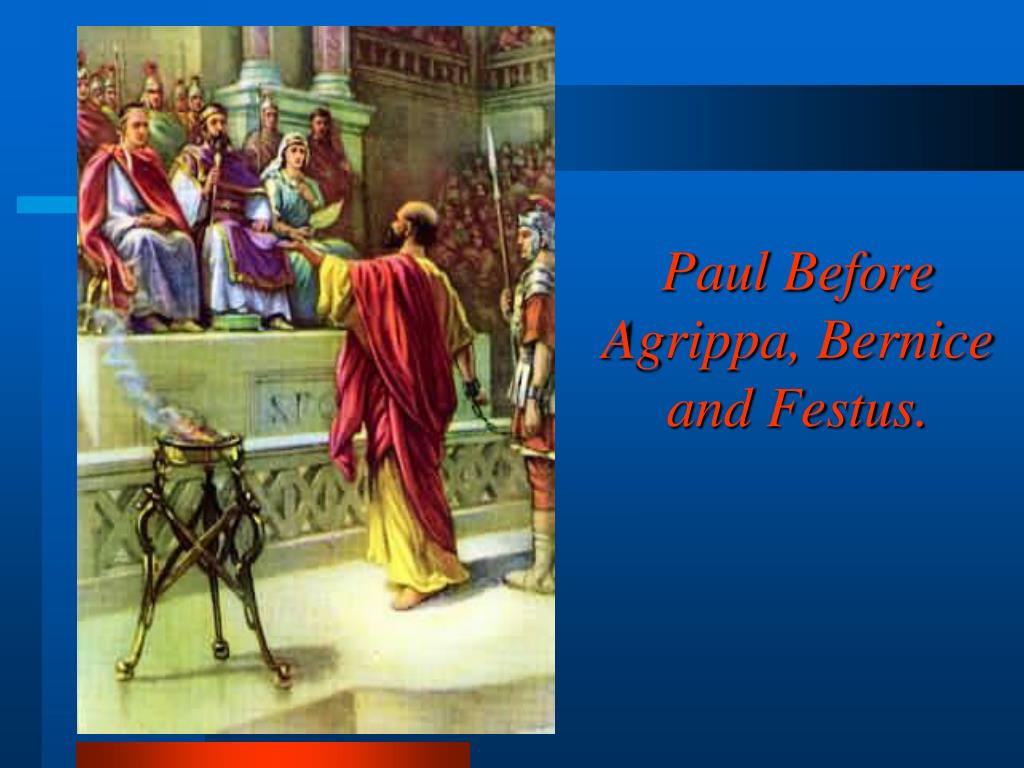
    In Acts 25 Paul is brought before the Governor Festus with Herod Agrippa II and his Herodian sister Bernice with great pomp (even though the Apostle has already appealed to Caesar

    Acts of the Apostles 26:

    Wherefore, O King Agrippa, I was not disobedient to the heavenly vision, but declared first to those at Damascus, then at Jerusalem and throughout all the country of Judea, and also to the Gentiles, that they should repent and turn to God and perform deeds worthy of their repentance.

    Acts of the Apostles 26:19-20 RSV


    The Apostle witnesses the Gospel in his own defence before Agrippa the King and his Herodian sister, as well as the Roman Governor Porcius Festus for a second time.

    šā’ûl apangellō [kept declaring]

    the heavenly vision,

    • to those at Damascus,
    • then at Jerusalem
    • and throughout Judea,
    • and also to the Gentiles

    For this reason the Jews seized me in the temple and tried to kill me.

    To this day I have had the help that comes from God,

    and so I stand here testifying both to small and great,

    saying nothing but what the prophets and Moses said would come to pass:

    Acts 26:22 RSV

    Paul then quotes Scripture - the Old Testment Scriptures

    that the Christ must suffer

    And I will pour upon the house of David, and upon the inhabitants of Jerusalem, the spirit of grace and of supplications: and they shall look upon me whom they have pierced, and they shall mourn for him, as one mourneth for his only son, and shall be in bitterness for him, as one that is in bitterness for his firstborn.

    Zechariah 12:10 KJV

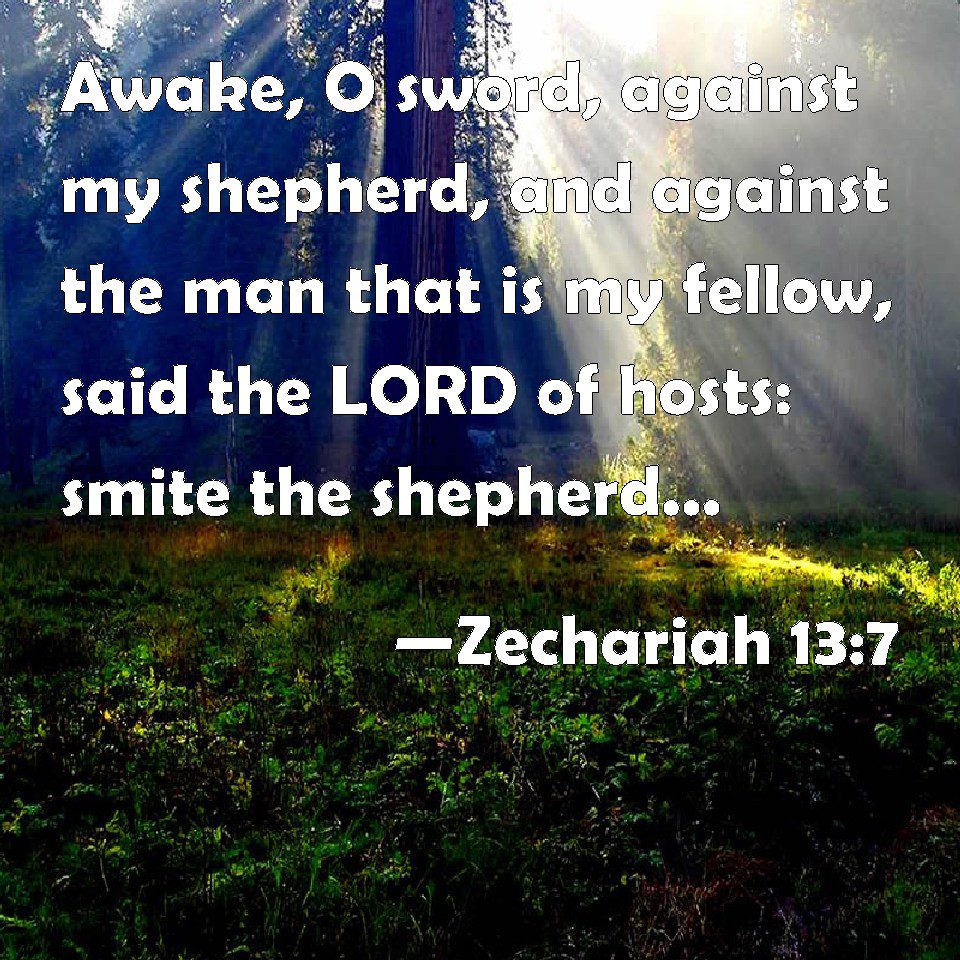
    Zechariah 1:7 Awake O sword against my shepherd

    the first to rise from the dead,

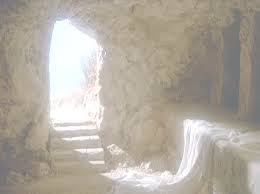
    Easter or Resurrection Sunday is the day the tomb of Jesus is found empty and when the risen Messiah appears risen after His crucifixion on a Corss

    my flesh also shall rest in hope.

    For thou wilt not leave my soul in hell;

    neither wilt thou suffer thine Holy One to see corruption.

    Psalm 16:9b-10 KJV

    Light to the People (of God – the Jews)

    The Greeks have no Messiah — nor the Romans — nor did the Persians, the Babylonians or the Egyptians.

    ONLY the JEWS. — Only the Jews are the PEOPLE of YHWH — the chosen PEOPLE of God.

    When Paul points to the ‘people,’ the Apostle means the Jewish people, like Agrippa, Bernice and many other Herodian guests and officials hearing his argument.

    The Christian Standard Version makes this point clearly:

    “that the Messiah [christos] would suffer, and that, as the first to rise from the dead,

    he would proclaim light to our people

    and to the Gentiles [ethnos].”

    Acts 26:23

    JESUS is the MESSIAH or Christ of the JEWS!

    Yet the Apostle to the ethnos, Saul (from the Hebrew) or Paul makes clear what the risen CHRIST has done ALSO for the gentiles.

    and to the Gentiles.”

    To THIS the Gentile Governor reacts!

    Now remember that in addition to what the Governor knows from his predecessor Felix, Festus had already heard Paul's witness at length. 

    Now as he thus made his defense, Festus said with a loud voice,

    “Paul, you are beside yourself! Much learning is driving you mad!”

    “I am not mad, most noble Festus, but speak the words of truth and reason.

    Now Paul's appeal is to Herod Agrippa, Bernice and the Jews in his hearing.

    For the king, before whom I also speak freely, knows these things;

    for I am convinced that none of these things escapes his attention, since this thing was not done in a corner.

    Acts 24:26

    The Jewish King responds

    The Apostle defending the appearance of the risen Messiah of the Jews most certainly turns his own focus to the Herodian king claiming leadership of God’s chosen people.

    “King Agrippa,

    do you believe the prophets?

    I know that you do believe.”

    Again, certainly Paul turns to Herod Agrippa II while the entire room also looks to the Jewish king for his answer. 
    The NIV perhaps catches the tone of Agrippa's meaning more clearly than the NKJV

    Then Agrippa said to Paul, “Do you think that in such a short time you can persuade me to be a Christian?”

    Acts 26:28 NIV

    Herod Agrippa is on the spot. Some of the Jews hearing Paul may be convinced that Jesus appeared to the Apostle. But most of Agrippa’s subjects will not have ears to hear even the Prophets.

    The Light of Christ

    Why has Luke recorded this third trial of Paul in Caesarea reiterating the Apostle’s same witness of the risen Christ Jesus?

    This is Paul’s last appeal to the Jews.

    The Apostle witnesses not only his own conversion and the evidence of the risen Messiah Jesus, but supports his new Gospel with the evidence of Scripture.

    the Prophesy of Isaiah [NKJV]

    Prophet to Judah 740-681 BC   

    Woe to those who call evil good, and good evil;
    Who put darkness for light, and light for darkness;

    Isaiah 5:20a

    The people who walked in darkness
    Have seen a great light;
    Those who dwelt in the land of the shadow of death,
    Upon them a light has shined.

    Isaiah 9:2

    “I, the LORD, have called You in righteousness,
    And will hold Your hand;
    I will keep You and give You as a covenant to the people,
    As a light to the Gentiles,

    Isaiah 42:6

    Indeed He says,
    ‘It is too small a thing that You should be My Servant

    To raise up the tribes of Jacob,
    And to restore the preserved ones of Israel;

    I will also give You as a light to the Gentiles,

    That You should be My salvation to the ends of the earth.’ ”

    Isaiah 49:6

    very bright light with color
    A light shines in the darkness

    And Paul said,
    “I would to God that not only you, but also all who hear me today, might become both almost and altogether such as I am, except for these chains.”

    Acts of the Apostles 26:29 NKJV

    Agrippa’s hearing of Paul adjourned.

    When he had said these things, the king stood up,

    as well as the governor and Bernice and those who sat with them;

    and when they had gone aside, they talked among themselves saying,

    “This man is doing nothing deserving of death or chains.”

    Then Agrippa said to Festus,

    “This man might have been set free if he had not appealed to Caesar.”

    judge gavel
    Luke records: 

    And when it was decided that we should sail to Italy, they delivered Paul and some other prisoners to one named Julius, a centurion of the Augustan Regiment.

    Acts of the Apostles 27:1


    talk of jesus dot com

  • ACTS of the Herods 25

    ACTS of the Herods 25

    The not-so-great HEROD’s – client-kings of the Jews

    “BUT WAIT,” you may be thinking; “we were following ACTS of the APOSTLES and Paul.”

    Note the timeline above with its anti-Christian timeline bias utilizing BCE (Before the Common Era) rather than B.C. (Before Christ). 

    What IF history had recorded the politics of the JEWS and ROMANS in place of the truth of Christ?

    We would have read nothing of Herod’s killing of the innocents (trying to prevent the birth of the Messiah JESUS).

    • OR of Jewish and Roman injustice of the Cross of Jesus – KING OF THE JEWS!
    • OR any account of the leading Pharisee Saul of Tarsus proclaiming Christ risen to all the world as far as Rome.

    NO —  Luke’s detailed account of the Apostles would have been buried in the politics of A.D. 1st century Caesars and certain Kings preordained by the Lord God to fail in their temporal empires and kingdoms —  Herod’s and Caesar’s opposed to JESUS, the very Son of God redeeming a chosen remnant of sinners — sinners from every nation of the world and sinners from every time since the beginning of mortals and the end of our timeline in eternity.

    Acts from Herod the Great to Herod Agrippa II

    family tree of the Herod's from Herod the Great

    In order to understand Roman administration of captive kingdoms or Roman states of the Herod’s, as well as something of the fall of Jerusalem which will soon take place, let’s take a look at the WHO’S-WHO of this client dynasty as we proceed in the Acts of the Apostles.

    the politics of King Agrippa and Festus

    A PLEASING PUBLIC POLITICAL MEETING 

    Now several days later, Agrippa [II] the king and Bernice [his sister] arrived at Caesarea and paid their respects to Festus [the new governor].

    Acts of the Apostles 25:13 AMP

    While they were spending many days there [in the Roman capital of Caesarea] , Festus laid Paul’s case before the king…

    Make no mistake about it — Rome is in control, but in order to rule effectively Roman governors use local political powerhouses to govern public opinion.

    Political Protocol of the Pax Romana

    Luke refers to our main player in Paul’s case as, “King Agrippa,” but to Rome, Julius Marcus (AKA Herod Agrippa II) is simply one of several useful foreign kings.

    .

    Caesarea! a model of Roman incursion into all the world of the Mediterranean - a key port for Romans, a city where Cornelius, Philip, Peter, Paul and others brought the gospel

    He brings with him his sister, oldest daughter of Herod Agrippa I as they formally and publically meet Governor Porcius Festus in Caesarea.


    Luke continues with the political problem of Paul left to the new Prefect Festus:

    saying (to Agrippa) [NKJV],

    “There is a certain man left a prisoner by Felix, about whom the chief priests and the elders of the Jews informed me, when I was in Jerusalem, asking for a judgment against him.

    Note that this new Roman Prefect has already been in Jerusalem without meeting with King Agrippa. 

    To them I answered,

    ‘It is not the custom of the Romans to deliver any man to destruction [ἀπώλεια] before the accused meets the accusers face to face, and has opportunity to answer for himself concerning the charge against him.’

    Certainly this newly appointed Governor of Judea is familiar with the problem of the JUDGMENT of JESUS the King of the JEWS by a previous Governor Pontius Pilate.

    Therefore when they had come together, without any delay, the next day I sat on the judgment seat and commanded the man to be brought in.

    The Roman Governor has already judged the Roman citizen Paulos (in Jerusalem) before this political appeal of King Herod Agrippa II. 

    The Governor continues his account of Paul’s recent trial over which he presided:

    “When the accusers stood up, they brought no accusation against him of such things as I supposed, but had some questions against him about their own religion and about a certain Jesus, who had died, whom Paul affirmed to be alive.

    Now full-well knowing the controversies centered on the Christ of the Jews, Governor Porcius Festus addresses Julius Marcus Agrippa II as a politically impartial third party with interest in the case of the Governor's prisoner. 

    And because I was uncertain of such questions, I asked whether he was willing to go to Jerusalem and there be judged concerning these matters. But when Paul appealed to be reserved for the decision of Augustus [the title of the Roman emperors], I commanded him to be kept till I could send him to Caesar.”

    Roman Coin with profile of Nero Caesar Augustus

    Nero Claudius Caesar Augustus Germanicus, no friend of followers of The Way, had appointed Portus Festus as Governor of Judea.

    Herod Agrippa’s play for power

    Then Agrippa said to Festus,

    “I also would like to hear the man myself.”

    “Tomorrow, you shall hear him.”


    So the next day, when Agrippa and Bernice had come with great pomp, and had entered the auditorium with the commanders and the prominent men of the city [Caesarea], at Festus’ command Paul was brought in.

    And Paul said, “I would to God that not only you, but also all who hear me today, might become both almost and altogether such as I am, except for these chains.” - Paul addressing Festus, Herod Agrippa II and Bernice - Acts 26:29
    REMEMBER: 
    ROME's Governor is in charge. The Prefect of Judea repeats what he has already told King Herod Agrippa II.

    And Festus said:

    “King Agrippa and all the men who are here present with us,

    you see this man about whom the whole assembly of the Jews petitioned me, both at Jerusalem and here, crying out that he was not fit to live any longer.

    But when I found that he had committed nothing deserving of death, and that he himself had appealed to Augustus, I decided to send him.

    The Governor is confirming Paul's legal disposition as well as his own fair hand in his decision of the Court.

    “I have nothing certain to write to my lord concerning him.

    Festus, wanting to present some facts to his lord Caesar in Rome, invites these Jewish leaders and accusers of Paul to give him the facts. 

    The Governor would not have had to send any facts to Nero, but out of Festus' astute political savvy he has an audience of all who could object to his decision.

    Therefore I have brought him out before you, and especially before you, King Agrippa, so that after the examination has taken place I may have something to write. For it seems to me unreasonable to send a prisoner and not to specify the charges against him.”


    Brilliant! Let the local king provide their case to Caesar (who could only blame Felix or the Jews AND NOT him).

    Then Agrippa said to Paul, “You are permitted to speak for yourself.”

    So Paul stretched out his hand and answered for himself:

    Acts of the Apostles 26:1 NKJV

    Once again, the Governor sets the tone of his meeting of all who had accused Paul.

    Festus begins by allowing the defense of this Roman citizen already found innocent to proceed BEFORE hearing ANY Jewish charges.

    Furthermore, Governor Festus invites Paul to speak directly to him and to Herod Agrippa II (client king of the Jews) FIRST.

    “I think myself happy, King Agrippa, that I am to make my defense before you this day concerning all the things whereof I am accused by the Yehudim…

    Acts of the Apostles 26:2 – Hebrew Names Version


    The ACTS of the Apostle Paul (in court again) — To be continued…

    Talk of JESUS . com

    Comment on Scripture – Share the Gospel

  • The Heavens are Telling the Glory of God

    The Heavens are Telling the Glory of God

    The Glory of Godwritten in the Creation on the Heavens and on the earth.

    earth rotating - visible glory of God! of the heavens and the sun rising with stars in the distant darkness
    For the Glory of God sunset glow over earth

    What is the chief end of man?

    A. Man’s chief end is to glorify God, and to enjoy him for ever.

    1 Cor. 10:31; Rom. 11:36; Ps. 73:25-28.

    In our previous PSALM we focused on how a man or woman might best start our day.

    Day break scene flock of geese over lake by field of grain - Psalm 118:24 This is the day which the LORD has made; let us rejoice and be glad in it.

    And our focus turned from SELF toward the LORD — to rejoice — to experience God’s gladness in His creation and in us.

    You might say, by extension, a daily disposition toward JOY becomes our worship in serving the LORD.

    Perhaps you know Beethoven's ODE TO JOY from the finale of the composer's Nineth Symphony. 

    Did you know that text of Ode to Joy is taken from Psalms 104 and 145:10?

    Today’s theme: the GLORY of God

    Perhaps you know our PSALM from a scripturally-focused hymnal (of old).

    The CREATION

    Psalm 19

    The heavens, O God, Thy glory tell
    Composer: Ludwig van Beethoven
    Published in 14 hymnals

    The Heavens are telling – Beethoven


    Many of you will know another glorious large composition of praise from an oratorio of Haydn near the end of the 18th century

    The Heavens are Telling the Glory of God,
    (from “The Creation”)

    — The Heavens Are Telling.

    Hayden: Chorus:

    The heavens are telling the glory of God,
    The wonders of his work displays the firmament;

    Today that is coming speaks it the day,
    The night that is gone to following night.

    In every land [In all the land] resounds the word,
    never unperceived, ever understood.

    Music by Josef Haydn
    Lyrics translated by Robert Shaw, based on Psalm 19.


    What is the GLORY of God?

    “You said, ‘Behold, the LORD our God has shown us His glory and His greatness,

    and we have heard His voice from the midst of the fire;

    we have seen today that God speaks with man, yet he lives.

    Deuteronomy 5:25 NASB

    By contrast we might ask, ‘What is the glory of man?’

    By the weight of your wrath against man’s sin, the glory of his form is wasted away; truly every man is but a breath. (Selah.)

    Psalm 39:11 BBE


    The glory of the heavens?

    The LORD is high above all nations,

    and his glory above the heavens.

    Psalm 113:4

    OR of the firmament?

    OR

    What is the glory of the earth, you might ask?

    But in fact, you cannot find any glory in 'the earth' separate from the glory of the LORD its Creator. 

    • Psalms sing of GLORY in one form or another over 400 times!

    – kāḇôḏ כָּבוֹד

    Who is this King of glory?

    The LORD of hosts, he is the King of glory.

    Selah.

    Psalm 24:10

    (You likely know some contemporary Christian songs expressing these words.)

    Just what does it mean to GLORIFY God?

    You who fear Yahweh, praise Him;

    All you seed of Jacob, glorify Him,

    And stand in awe of Him, all you seed of Israel.

    Psalm 22:23 LSB

    “The beasts of the field will glorify Me,

    The jackals and the ostriches,

    Because I have given waters in the wilderness

    And rivers in the wasteland,

    To give drink to My chosen people.

    Isaiah 43:20

    Psalm 19:

    Let’s take a closer look at this Psalm of David.

    The heavens are sounding the glory of God;

    the arch of the sky makes clear the work of his hands.

    Day after day it sends out its word,

    and night after night it gives knowledge.

    Psalm 19:1-2 BBE (Bible in Basic English)

    Do you see God’s glory?

    Look up! o man of dust! you creature beneath the night sky — with eyes to see above,

    but not so near to the Lord’s glory.

    You cannot deny His glory— ALMIGHTY Hands that formed —  HIS fire which will refine your flesh into burned away dross scorched in the daytime sun.


    There are no words or language;

    their voice makes no sound.

    Their line has gone out through all the earth,

    and their words to the end of the world.

    Arise, shine, for your light has come

    Who is like a newly married man coming from his bride-tent,

    and is glad like a strong runner starting on his way.

    sunrise over earth from space

    Psalm 19:3-6 BBE


    David — the king and Psalmist — proclaims a GLORY of the LORD words cannot convey with pictures that only hint of God’s evident greatness.

    Now David proceeds to

    the benefits of GOD’s law:

    The law of the LORD is perfect,

    We do NOT like the LAW — we resist it— we rebel against it — for the laws and precepts of every mortal man are imperfect. 

    AND, by contrast,

    the Law of the Lord— like Almighty GOD — is perfect and good and breathes life into fallen flesh and our impure soul.

    The law of the LORD is perfect,

    reviving the soul;

    the testimony of the LORD is sure,

    making wise the simple;

    the precepts of the LORD are right,

    rejoicing the heart;

    the commandment of the LORD is pure,

    enlightening the eyes;

    the fear of the LORD is clean,

    enduring for ever;

    the ordinances of the LORD are true,

    and righteous altogether.

    Psalm 19:7-9 RSV


    FEAR in the Face of HIS GLORY

    the fear of the LORD is clean,

    enduring for ever;

    the ordinances of the LORD are true,

    and righteous altogether.

    Psalm 19:9 RSV

    fear (of Yᵊhōvâ) -yir’â -יִרְאָה
    • fear, terror
    • awesome or terrifying thing (object causing fear)
    • fear (of God), respect, reverence, piety
    • revered

    Psalm 2 connects this fear of the LORD not only with trembling, but with rejoicing or reiterating our joy.

    Serve the LORD with reverential awe

    and rejoice with trembling.

    Psalm 2:11 CSB

    David's Psalm becomes practically proverbial in teaching why WE must not only FEAR the LORD, 
    but also OBEY his LAW
    and instructions (or ordinances).

    They [God’s ordinances] are more desirable than gold —

    than an abundance of pure gold;

    and sweeter than honey dripping from a honeycomb.

    In addition, your servant is warned by them,

    and in keeping them there is an abundant reward.

    Psalm 19:10-11 CSB

    Note that the king (David) humbly proclaims himself — though sovereign over men — as a SERVANT of the LORD. 

    MORE fatherly advice:

    But who can discern their own errors?

    Forgive [lit. ‘acquit me – a legal determination] my hidden faults.

    Keep your servant also from willful sins;

    may they not rule over me.

    Then I will be blameless,

    innocent [lit. acquitted] of great transgression.

    Psalm 19:12-13 NIV


    Redeemed for our transgressions

    How can a mere man stand before the glory of the Lord our God?

    David intercedes in his Psalm on behalf of his loyal subjects. (For his mercy endures forever. – Psalm 136)

    transgression (84x), trespass (5x), sin (3x), rebellion (1x). – pešaʿ -פֶּשַׁע

    AND you have heard it before — from the later prophesy of Isaiah long after the fall of King David’s chosen nation.

    But He was pierced through for our transgressions,
    He was crushed for our iniquities;
    The chastening for our peace fell upon Him,
    And by His wounds we are healed.

    Isaiah 53:5 LSB – of the suffering servant

    Even Christ JESUS — Son of David; Son of Man — the very Son of the Father — born in the flesh and crucified for the redemption of those chosen to eternal life — will return in his GLORY!!!

    David’s familiar benediction:
    a plea of my own heart frequently heard from the pulpit by the flock of Christ as an invitation to receive Scripture into your own heart: 

    Let the words of my mouth and the meditation of my heart
    be acceptable in your sight,
    O LORD, my rock and my redeemer.

    Psalm 19:14 ESV


    Secure Links to sources
    The heavens are telling the glory of God; and the firmament proclaims his handiwork. Psalm 19:1 view of earth and sunrise from space