Tag: Christ

  • and new things I now declare – 2

    and new things I now declare -Advent 1

    A background to prophesy

    God’s chosen people defeated and the LORD’s city of Jerusalem faces destruction. The kingdom of glory won by the LORD for David and the Temple of King Solomon destroyed centuries prior, Isaiah cries out to the people 700 years before Christ, repent! “The earth lies defiled under its inhabitants; for they have transgressed the laws, violated the statutes, broken the everlasting covenant.” – Isaiah 24:5 

    Yet Isaiah offers hope for his people and on an appointed day in the future the Lord God will save them.

    Isaiah 25

    8 He will swallow up death forever;
    and the Lord God will wipe away tears from all faces,
    and the reproach of his people he will take away from all the earth,
    for the Lord has spoken.

    9 It will be said on that day,
    “Behold, this is our God; we have waited for him, that he might save us.
    This is the Lord; we have waited for him;
    let us be glad and rejoice in his salvation.”


    John the Baptist answers his critics, “I am a voice in the wilderness proclaiming the way of the Lord as predicted by the Prophet Isaiah.” John openly confesses he is not the promised Messiah.

    What else did Isaiah have to say generations before John preached by the Jordan about the Messiah, Savior of Israel? In fact, Isaiah describes the Messiah as a righteous king.

    A King Will Reign in Righteousness

    [ctt title=”Isaiah uses the Hebrew צֶדֶק (tsedeq) meaning righteousness 25 times & צָדַק (tsadaq), \’to be righteous\’ 7 times.” tweet=”Who IS righteous redemption for our sins? Only the One Messiah, Jesus.” coverup=”907aE”]

    Isaiah 32

    Behold, a king will reign in righteousness,
    and princes will rule in justice.

    3 Then the eyes of those who see will not be closed,
    and the ears of those who hear will give attention…

    5 The fool will no more be called noble,
    nor the scoundrel said to be honorable.


    A Righteous Savior

    Which King of Israel or leader of any country was ever righteous? Is it not power we seek in a king to save us from our enemies?

    Isaiah and John the Baptist wanted a king with power to rule in justice, a man to defeat their oppressors and followers of the Lord sought a man to place on the throne of their own self-righteousness. The word of Isaiah about a righteous savior may remain hidden to eyes too busy to read scripture.  Warnings to have ears to hear the Lord ring familiar to our 21st century ears filled with the distractions of our everyday sins.  Do we not choose between fools and scoundrels to lead the future of our nations? Yet none have ears to hear such prophesy.

    Fear Not

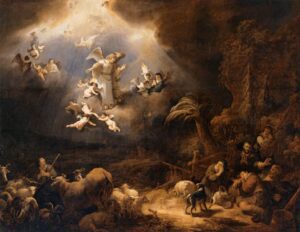
    You know the greeting of the angels to man: “fear not;” for fear would be our most immediate reaction to Almighty God. The Lord comforts his beaten-down and dispersed people and He speaks a declaration of His own righteousness through Isaiah:

    Isaiah 44:

    2 Thus says the Lord who made you,
    who formed you from the womb and will help you:
    Fear not, O Jacob my servant…

    Yes, of course the Lord made us from the womb, and the Lord promises to help. Yet to whom is this promise? ‘Jacob, my servant,’ the people Israel, specifically; yet even moreso the Lord’s word is to those of Jacob who have repented and are now willing to become servants to the Lord.

    Thus says the Lord, the King of Israel
        and his Redeemer, the Lord of hosts:
    “I am the first and I am the last;
        besides me there is no god.
    Who is like me? Let him proclaim it.
        Let him declare and set it before me,
    since I appointed an ancient people.
        Let them declare what is to come, and what will happen.
    Fear not, nor be afraid;
        have I not told you from of old and declared it?
        And you are my witnesses!
    Is there a God besides me?
        There is no Rock; I know not any.”


    and new things I now declare -Advent 2 – 2016 – To be continued..

  • and new things I now declare – 1

    What’s new?

    Certainly not Christmas, for we now trivialize a pivotal time in human history with never-ending ‘holiday’ things. “Where are our new toys,” ‘holiday season’ commercials lead us to ask?

    Most years I share a series celebrating the Advent of the joyous season of Christmas. This year’s four-part Advent series will focus on the prophecy of Isaiah, a book written about 700 years before Christ.

    Oh, by the way, you do know that B.C. is our delineation of time meaning, “Before Christ?” Go ahead and time stamp this series properly: In the year of our Lord, 2016. 

    Travel through time with us between first century Palestine, under the rule of a powerful Roman Empire and the same area of the middle east threatened years prior by a powerful Assyrian Empire and an emerging Babylonian empire. (Nothing new under the sun.)

    Historical resource: Assyria, 1365-609 BC

    About the Author

    Isaiah the Prophet

    Isaiah was a man who was from the Southern Kingdom of Judah. The Prophet of the Lord, Isaiah, was alive during a time when the Northern Kingdom of Israel was destroyed by the Assyrians. He was a mouthpiece of God and spoke during the reign of several kings of Judah: Uzziah, Jotham, Ahaz, and Hezekiah (around 765-695 B.C.). He continually wore a coarse linen or hairy overcoat of a dark color, which was typically worn by mourners.

    Source: Bible History Online

    Think back from Roman occupied Judea 700 years before Christ. For you and I, it would be like recalling the A.D. 1300’s, before European ‘civilization’ discovered and colonized this ‘new world.’ Isaiah lived long before Christ Jesus. In most generations between Isaiah and John, the voice of God’s Prophets kept a still and dark silence.

    Some scholars suggest that the later chapters of Isaiah 40-66, the point of our focus here, may have been written by disciples of Isaiah even into the sixth or fifth century B.C. Even so, would you like to accurately predict a major event in the Year of our Lord, 2500? We marvel at Isaiah’s descriptions of, among other things, the Messiah of Israel to come.

    Source: The Center for Bible Studies

    A Voice in the Wilderness

    Time: First Century A.D

    Place: desolate shores of the Jordan river valley.

    People: the Essenes, a group of conservative Jews living beyond the liberal power brokers of a less-than-pure King Herod, power-broker between Rome’s legions and various rulers of the Temple of every religious persuasion and varying belief.

    Scene: Representatives of Herod’s Temple come to confront John, asking about his authority to preach to crowds of disciples coming to be baptized.


    John 1:

    19 And this is the testimony of John, when the Jews sent priests and Levites from Jerusalem to ask him,

    “Who are you?”

    20 He confessed, and did not deny, but confessed,

    “I am not the Christ.”

    21 And they asked him, “What then? Are you Elijah?”

    He said, “I am not.”

    “Are you the Prophet?”

    And he answered, “No.”


    Powerful religious leaders travel from Jerusalem to interrogate a new rabbi gaining disciples, an odd sort of man living on the wild plants and animals of the desolate places away from the cities of man. Even away from the capital of all religion this becomes a sort of discussion to determine where this John, popular among the people, stands politically with the constantly bickering powerbrokers of the Temple.

    Perhaps this chart from the Jewish Virtual Library will help clarify the scene. (It may be helpful for you to understand that King Herod was a Hasmonean ally of Rome.)

    Disputes Among the Three Parties

    Sadducees
    Pharisees
    Essenes
    Social Class Priests, aristocrats Common people [Unknown]
    Authority Priests “Disciples of the Wise” “Teacher of Righteousness”
    Practices Emphasis on priestly obligations Application of priestly laws to non-priests “Inspired Exegesis”
    Calendar Luni-solar Luni-solar Solar
    Attitude Toward:
        Hellenism
    For Selective Against
        Hasmoneans
    Opposed usurpation of priesthood by non-Zadokites Opposed usurpation of monarchy Personally opposed to Jonathan
        Free will
    Yes Mostly No
        Afterlife
    None Resurrection Spiritual Survival
        Bible
    Literalist Sophisticated scholarly interpretations “Inspired Exegesis”
        Oral Torah
    No such thing Equal to Written Torah “Inspired Exegesis”

    Continuing in the interrogation of John the Baptist as recorded in John 1:

    22 So they said to him, “Who are you? We need to give an answer to those who sent us. What do you say about yourself?”

    John 1:23 He said, “I am the voice of one crying out in the wilderness, ‘Make straight the way of the Lord,’ as the prophet Isaiah said.”

    jordan-river-today24 (Now they had been sent from the Pharisees.) 25 They asked him, “Then why are you baptizing, if you are neither the Christ, nor Elijah, nor the Prophet?”

    26 John answered them, “I baptize with water, but among you stands one you do not know, 27 even he who comes after me, the strap of whose sandal I am not worthy to untie.”

    28 These things took place in Bethany across the Jordan, where John was baptizing.

    The old comfortable times have ended

    What is a Prophet like John the Baptist saying by preaching baptism and repentance from a desolate place in the wilderness?

    Actually, John preached a repentance needed now, needed in the first century and needed in the days of the Prophet Isaiah. Listen to the prediction of Isaiah 700 years before John.


     Isaiah 24:

    Behold, the Lord will empty the earth and make it desolate,
    and he will twist its surface and scatter its inhabitants…

    5 The earth lies defiled
    under its inhabitants;
    for they have transgressed the laws,
    violated the statutes,
    broken the everlasting covenant.
    6 Therefore a curse devours the earth,
    and its inhabitants suffer for their guilt;
    therefore the inhabitants of the earth are scorched,
    and few men are left.


    and new things I now declare -Advent 1 – 2016 – To be continued..

  • Do not lose heart over tribulations & sufferings – 2

    Paul’s encouragement for the church at Ephesus

    ‘Faint not at my tribulations or do not ‘lose heart over what I am suffering for you.’  The Apostle Paul writes these words differing some by translation [KJV or ESV].

    διὸ αἰτοῦμαι μὴ ἐκκακεῖν ἐν ταῖς θλίψεσίν μου ὑπὲρ ὑμῶν ἥτιςἐστὶν δόξα ὑμῶν – Ephesians 3:13

    Do you lose heart when you or a loved one suffers? Do you faint at the thought of a loved one experiencing tribulations before their death?

    Most of us have at least one hurting loved one who comes to mind. A leader esteemed by like-minded followers does not want them to give up over any trial he must endure. Understand Paul’s heart is compassion for his followers.

    Tribulations θλῖψις

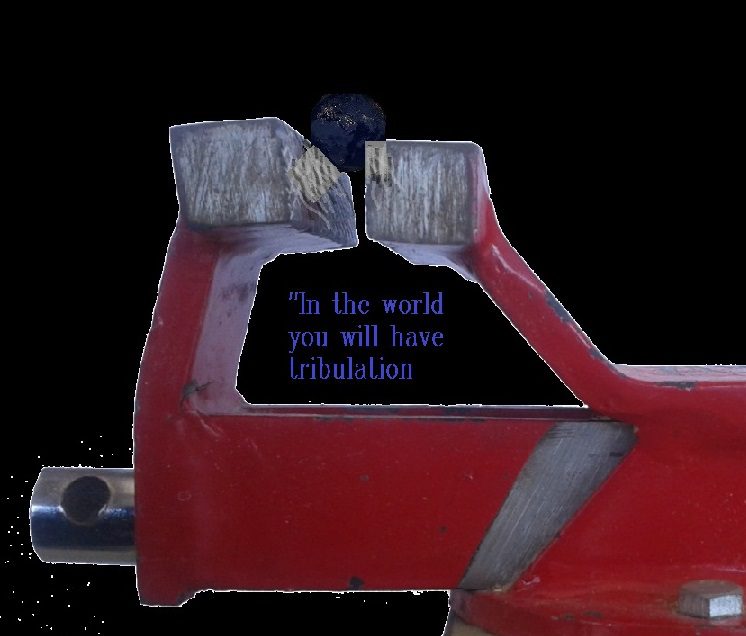
    Paul’s choice of words from the Greek, thlipsis, paints familiar imagery to those who suffer. He chooses a metaphor for oppression, affliction, tribulation, distress, straits; the picture of a pressing, pressing together or pressure. We recognize the tension of relationship when one suffers and another can do nothing about it.

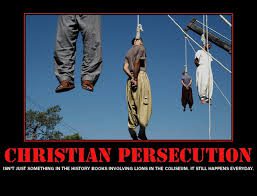
    Paul and the Apostles knew the pressure and persecution, as did the saints of the church. In fact, Jesus had used the same word of prophesy to the Apostles before His crucifixion, resurrection and ascension. Our Lord tells of the signs of the end of the age.

    Prophesy of Christ Jesus

    Matthew 24:

    9 “Then they will deliver you up to tribulation and put you to death, and you will be hated by all nations for my name’s sake. 10 And then many will fall away and betray one another and hate one another. 11 And many false prophets will arise and lead many astray. 12 And because lawlessness will be increased, the love of many will grow cold. 13 But the one who endures to the end will be saved.

    Fellow believer and saint, do you sense this in these last days? What encouragement for the saints of the church of Ephesus at the beginning of these last days!

    Jesus continues with the description a great tribulation:

    21 For then there will be great tribulation, such as has not been from the beginning of the world until now, no, and never will be. 22 And if those days had not been cut short, no human being would be saved. But for the sake of the elect those days will be cut short. 23 Then if anyone says to you, ‘Look, here is the Christ!’ or ‘There he is!’ do not believe it. 24 For false christs and false prophets will arise and perform great signs and wonders, so as to lead astray, if possible, even the elect. 25 See, I have told you beforehand.

    Therefore, do not lose heart.

    Paul, Peter, John, even our Lord Jesus Christ have written what must take place. Returning to Paul’s letter to the church at Ephesus, let’s close with the encouragement of his meaning.

    ‘Wherefore I desire that ye faint not… Ephesians 3:13a KJV

    And what is it to faint from an enormous undertaking of faith? Faint ἐκκακέω  ekkakeō – to be utterly spiritless, to be wearied out, exhausted.

    Does this describe your battle? Paul, the one who has suffered for his witness of Christ calls on the saints of Ephesus to faint not. In Christ we must persevere, winning over the defeat of sin, suffering and death. Our suffering indeed becomes our glory through the Lord. Paul goes on to urge us to prayer.

    Jesus speaks of it as well, adding in the same way that we must faint not and calling us to prayer.

    Tribulations and the Dishonest Judge

    Luke 17:33 Whoever seeks to preserve his life will lose it, but whoever loses his life will keep it.

    [ctt title=”And he told them a parable to the effect that they ought always to pray and not lose heart.” tweet=”And he told them a parable to the effect that they ought always to pray and not lose heart.” coverup=”9eI20″]

    2 He said, “In a certain city there was a judge who neither feared God nor respected man.

    3 And there was a widow in that city who kept coming to him and saying, ‘Give me justice against my adversary.’

    4 For a while he refused, but afterward he said to himself, ‘Though I neither fear God nor respect man, 5 yet because this widow keeps bothering me, I will give her justice, so that she will not beat me down by her continual coming.’”

    6 And the Lord said, “Hear what the unrighteous judge says.

    7 And will not God give justice to his elect, who cry to him day and night? Will he delay long over them?

    8 I tell you, he will give justice to them speedily. Nevertheless, when the Son of Man comes, will he find faith on earth?”

    Our glory in Christ

    When Jesus comes, will he find faith on earth? Will Christ find faith in Ephesus or in your city? Surely the Lord has declared your tribulations and suffering will come to an end.

    The Revelation of Jesus Christ to John 21:3-5a [KJV]

    And I heard a great voice out of heaven saying,

    Behold, the tabernacle of God is with men, and he will dwell with them,

    and they shall be his people, and God himself shall be with them, and be their God.

    And God shall wipe away all tears from their eyes; and there shall be no more death,

    neither sorrow, nor crying, neither shall there be any more pain: for the former things are passed away.

    And he that sat upon the throne said, Behold, I make all things new.


    [ctt title=”Beloved saint, do not lose heart over tribulations and sufferings. For the Lord redeems His own and the glory of the Lord reigns forever.” tweet=”Beloved saint, do not lose heart over tribulations and sufferings. For the Lord redeems His own and the glory of the Lord reigns forever.” coverup=”EbKeq”]

    Amen.