Tag: corinthians

  • A First Letter to the Corinthians Intro

    A First Letter to the Corinthians Intro

    in the year of our Lord ano Domini 55 [A.D. 55]

    & in the context of the culture of Corinth


    Intro

    PREVIOUSLY in this Talk of Jesus series from CHURCH LETTERS - IS HE WRITING TO ME? we have glanced at a few of Paul's LETTERS (Epistles) to the Church written during his just completed missionary journeys. 

    TODAY we continue with a brief look back at more letters already sent to the churches.
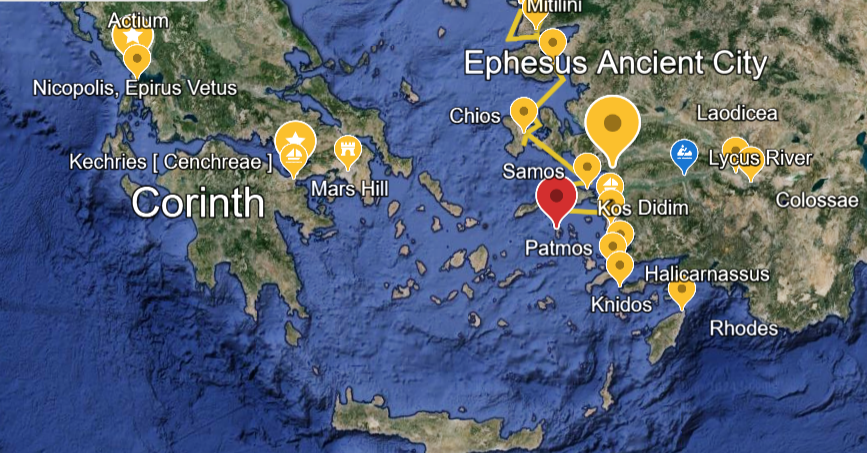
    And God wrought special miracles by the hands of Paul: Acts 19:11 ASV graphic map of Third Missionary Journey of Paul

    WHAT THE CHURCH HAS READ SO FAR:

    Just a reminder that all dates from reliable sources may vary but are used for chronological context only.
    • A.D. 49 – JAMES, the half-brother of Jesus and leader of the church in Jerusalem writes his LETTER
      • James also sends out a letter to the churches concerning gentiles from the Council in Jerusalem.
    • A.D. 49 – Paul writes his letter to the Galatians (actually, several new churches in Galatia)
    • A.D. 50 – 1 THESSALONIANS
    • A.D. 51 – 2 THESSALONIANS

    • during the A.D. 50’s or A.D. 60’s (actual date unknown) – The GOSPEL OF MARK

    1:1 Ἀρχὴ τοῦ εὐαγγελίου Ἰησοῦ Χριστοῦ υἱοῦ τοῦ θεοῦ

    The beginning of the gospel of Jesus Christ, the Son of God – Mark 1:1

    Consider the possibility that parts of the Gospel of John Mark, who had accompanied his uncle Barnabas and the Apostle Paul to Cypress, MAY HAVE been known even in Corinth where Paul has already travelled and whose FIRST LETTER we are about to examine.

    The GREAT COMMISSION of JESUS CHRIST to the CHURCH is recorded in the Gospel of Mark 16:15

    view of earth from moon

    1 Corinthians:

    This epistle was most likely written in the first half of A.D. 55 from Ephesus (16:8, 9, 19) while Paul was on his third missionary journey. The apostle intended to remain on at Ephesus to complete his 3 year stay (Acts 20:31) until Pentecost (May/June) A.D. 55 (16:8). Then he hoped to winter (A.D. 55–56) at Corinth (16:6; Acts 20:2). His departure for Corinth was anticipated even as he wrote (4:19; 11:34; 16:8).

    John MacArthur :: Bible Introductions – 1 Corinthians

    Paulus vocatus apostolus Christi Iesu per voluntatem Dei et Sosthenes frater

    1 Corinthios (1 Corinthians) 1 :: Latin Vulgate (VUL)

    in the context of the culture of Corinth

    CORINTH, ACHAIA is ROMAN; not Macedonian (as in the former Empire of Alexander the Great).

    Neither is the large city of Corinth simply Greek, as in ‘ancient Greece’ with ancient Athens whose glory had long ago been reduced to ruins.

    In 146 BC, the battle of Corinth signified a defining moment in the history of ancient Greece. Situated on the narrow strip of land connecting the Peloponnese to the mainland of Greece, Corinth was a city-state with a significant strategic and economic position.

    source:

    The language of Greek (thanks to the Great Macedonian Alexander) has become the international language of the Roman Empire.

    So in Corinth, Philippi, Ephesus, Antioch and even in Jerusalem the GOOD NEWS and Epistles [Letters] typically were written and read in GREEK.

    Παῦλος κλητὸς ἀπόστολος Ἰησοῦ Χριστοῦ διὰ θελήματος θεοῦ καὶ Σωσθένης ὁ ἀδελφός

    Α΄ Κορινθίους (1 Corinthians) 1 :: Textus Receptus (TR)

    Paulos klētos apostolos Jēsous Christos dia thelēma theos kai Sōsthenēs ho adelphos;

    To the church of God which is at Corinth,

    to those who are sanctified in Christ Jesus, called to be saints,

    with all who in every place call on the name of Jesus Christ our Lord, both theirs and ours:

    1 Corinthians 1:2 NKJV

    Here in CORINTH we immediately read the opening of Paul’s Epistle written in Greek to the CHURCH, beginning with the Apostle’s universal greeting to ALL and specifically to the saints separated to the calling of Christ Jesus our Lord.

    Paul had been there and wrote back to encourage these Christians in Corinth.

    See if this A.D. first century city of CORINTH sounds vaguely familiar to any city of destruction in our 21st century the Common Era.


    Once again, the commentary of John Macarthur on the culture of Corinth.

    Even by the pagan standards of its own culture, Corinth became so morally corrupt that its very name became synonymous with debauchery and moral depravity.

    To “corinthianize” came to represent gross immorality and drunken debauchery. In 6:9, 10, Paul lists some of the specific sins for which the city was noted and which formerly had characterized many believers in the church there.

    Tragically, some of the worst sins were still found among some church members.

    John Macarthur Commentary – the Background and Setting of Corinth

    Here the Apostle writes to a chosen few SAVED from the surrounding sinful culture of CORINTH (and most every other city in their culturally correct Roman Empire) in a CHURCH separated in worship yet living and working with all of those destined to the wrath of God’s punishment.

    These Corinthian Christians were taught and sought to live in complete contrast to sinful lifestyles hopefully left behind. 

    Later in his letter Paul will describe their love [ ἀγάπη ] more fully.

    1 Corinthians 13:4-8a on LOVE of the Christian who follows Jesus Christ

    Although some contemporary Christians include parts of Paul’s list of LOVE in ceremonies of Christian marriage, the love of which Paul writes is not romantic or specifically marital in any way.

    These CORINTHIANS were recognized in the city for their uniquely personal LOVE –

    ἀγάπη – agapē love,

    sometimes translated as CHARITY for each other and for others.


    Their agapē LOVE stood against a CULTURE OF SIN characterized in acorinthianizedcity, fallen nation or evil empire.


    Paul later writes what he knows of their Corinthian challenges warning:

    Or do you not know that the unrighteous will not inherit the kingdom of God?

    Do not be deceived; 

    .. neither the sexually immoral, nor idolaters, nor adulterers, nor effeminate, nor homosexuals, nor thieves, nor the greedy, nor drunkards, nor revilers, nor swindlers, will inherit the kingdom of God.

    And such were some of you…

    1 Corinthians 6:9-11 excerpt LSB

    Starting with Encouragement

    Paul begins his Epistle with an agape-rooted encouragement.

    Grace to you and peace from God our Father and the Lord Jesus Christ.

    Grace, for which Christians should be so well recognized, written χάρις in Greek charis is:

    • that which affords joy, pleasure, delight, sweetness, charm, loveliness: grace of speech
    • good will, loving-kindness, favour
    • of the merciful kindness by which God, exerting his holy influence upon souls, turns them to Christ, keeps, strengthens, increases them in Christian faith, knowledge, affection, and kindles them to the exercise of the Christian virtues
    CAN YOU THINK OF ANY GREETING WHICH ENCOURAGES MORE THAN 'GRACE?'

    I thank my God always concerning you for the grace of God which was given you in Christ Jesus, that in everything you were enriched in Him, in all word and all knowledge,
    even as the witness about Christ was confirmed in you, so that you are not lacking in any gift, eagerly awaiting the revelation of our Lord Jesus Christ, who will also confirm you to the end, beyond reproach in the day of our Lord Jesus Christ.

    Paul practically embraces these Corinthian believers in a personal prayer written for them.

    Could any introduction of LOVE and Grace be more encouraging?

    God is faithful, through whom you were called into fellowship with His Son, Jesus Christ our Lord.

    Paul’s first letter to the Corinthians 1:9 LSB [in context of 1:3-9]
    Theos is faithful, through Whom you were kaleō into koinōnia with His Son Ἰησοῦς Χριστός [iēsous christos] our kyrios.

    *Linked definitions of GREEK words from 1 Corinthians 1:9 from BlueLetterBible.org

    Reintroducing our Lord

    Paul begins his letter to a beloved church in a city caught-up in the sins of SELF and worshipping multiple gods of ME with encouragement in the Lord Jesus Christ.

    In the Apostle Paul’s two Epistles to the Corinthians he uses:

    • iēsous – 45x
    • christos – 111x
    • kyrios – 95x
    • θεόςtheos – an amazing 185x
    - king - only once in his second letter & not referring to Jesus
    - prophet - prophētēs - only once but referring to gifts of the saints
    - priest not at all in writing to the Corinthians

    TO:

    THOSE WHO HAVE BEEN SANCTIFIED ἁγιάζω – hagiazō – Paul uses this four times in this letter.

    Are YOU sanctified?

    ἅγιοςagios – sacred (physically, pure, morally blameless or religious, ceremonially, consecrated):—(most) holy (one, thing), saint.

    That’s what the apostle of Jesus Christ by the will of God asks the church of God which is at Corinth.

    (It's a good question for those claiming Jesus Christ facing a refining and sanctification of our sinful mortal flesh.)

    The Apostle Paul refers to the church as SAINTS, a most holy thing, TWENTY TIMES in his epistles to the Corinthians including his encouragement of the church in this introduction.

    To the church of God in Corinth, to those sanctified in Christ Jesus and called to be his holy people, together with all those everywhere who call on the name of our Lord Jesus Christ—their Lord and ours:

    τῇ ἐκκλησίᾳ τοῦ θεοῦ τῇ οὔσῃ ἐν Κορίνθῳ ἡγιασμένοις ἐν Χριστῷ Ἰησοῦ κλητοῖς ἁγίοις σὺν πᾶσιν τοῖς ἐπικαλουμένοις τὸ ὄνομα τοῦ κυρίου ἡμῶν Ἰησοῦ Χριστοῦ ἐν παντὶ τόπῳ αὐτῶν τε καὶ ἡμῶν·
    1 Corinthians 1:2 NIV, TR –

    The Apostle Paul has many more things to write to the Corinthians (and to you, God-willing).

    To be continued…

    Talk of JESUS . com

    Comment on Scripture – Share the Gospel

  • King of the Jews Savior of Sinners

    “How long will you be limping between two opinions?

    If Yahweh is God, follow Him..”

    But the people did not answer him a word.

    1 Kings 18:21 excerpt – Legacy Standard Bible
    GALI TIBBON/AFP/Getty Images)

    Are YOU of the multitudes? OR one of His disciples?


    QUESTIONS are important to the celebration of the Passover.

    Later we will return to Elijah's QUESTION in this context.

    The Passover Lamb – (Exodus) 12: שְׁמֹות

    “And it will be when your children say to you, ‘What is the meaning of this new slavery to you?’ [Lit What is this service to you?]{some translations use ‘rite‘ or ‘ceremony’} that you shall say,

    ‘It is a Passover sacrifice to Yahweh who passed over the houses of the sons of Israel in Egypt when He smote the Egyptians, but delivered our homes.’”

    And the people bowed low and worshiped.

    Exodus 12:26-27 LSB
    NOW consider this as one of the MULTITUDES and hypocrites living the life in this world or in the time of Jesus' sacrificial days in Jerusalem. 
    
    Do you WORSHIP the Pascal Lamb? 
    (Can you make up your mind about JESUS?)
    Borrowing briefly from a PRIVATE moment of Christ Jesus with the Twelve - a sorrowful scene before the night unfolded toward the Cross.

     “With fervent desire I have desired to eat this Passover with you before I suffer; for I say to you, I will no longer eat of it until it is fulfilled in the kingdom of God.”

    Gospel of Luke 22:15b – New King James Version

    And this day will be a memorial for you..

    12:14  וְהָיָה הַיּוֹם הַזֶּה לָכֶם לְזִכָּרוֹן וְחַגֹּתֶם אֹתוֹ חַג לַיהוָה לְדֹרֹתֵיכֶם חֻקַּת עוֹלָם תְּחָגֻּהוּ׃

    On the first day there shall be a holy convocation, and on the seventh day there shall be a holy convocation for you..

    Exodus 12:16a – NKJV regarding the required Passover Feast
    מִקְרָא from H7121; something called out, i.e. a public meeting (the act, the persons, or the place); also a rehearsal:—assembly, calling, convocation, reading. 

    Exodus 12:21slaughter the Passover lamb.

    וְשַׁחֲטוּ הַפָּסַח׃

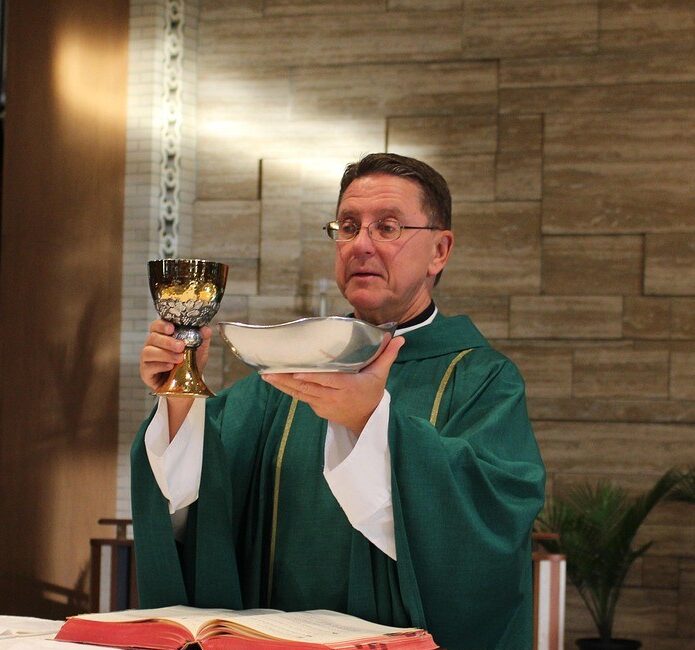
    Every rendering of the LORD’s command sheds additional pathos of God’s only Son sacrificed on the CROSS and commemoration of HOLY COMMUNION for Christ followers.

    Roger@TalkofJesus.com
    • slaughter the Passover animal.
    • kill the Passover lamb.
    • kill the passover. [KJV]
    • slay the Passover lamb.
    • slay the passover.
    • kill it for Passover.
    • kill the Passover animal.
    • celebrate Passover.
    • slaughter the Passover-sacrifice
    (and 'lambs,' by the way, in Hebrew is pronounced, "ṣō'n."
    

    pesaḥ :פֶּסַח

    Lexicon :: Strong's H6453 - pesaḥ
    • sacrifice of passover
    • animal victim of the passover
    • festival of the passover

    a sparing immunity from penalty.. From פָּסַח (H6452)

    Lexicon :: Strong's H6452 - pāsaḥ 


    פָּסַח pâçach, paw-sakh’; a primitive root; to hop, i.e. (figuratively) skip over (or spare); by implication, to hesitate; also (literally) to limp, to dance:—halt, become lame, leap, pass over.


    Communion – a ‘difficult’ memorial

    “For My flesh is food indeed, and My blood is drink indeed..

    Therefore many of His disciples, when they heard this, said, “This is a hard saying; who can understand it?”

    Gospel of John 6:55,60 NKJV

    Limping toward the CROSS! – a ‘difficult’ Judgment

    Returning to ELIJAH'S QUESTION to worshipers of a FALSE god of FALSE prophets:

    “How long will you be limping between two opinions?

    ..  “O Baal, answer us.” But there was no voice and no one answered. And they limped about the altar which they had made.

    1 Kings 18:21b,26b LSB
    'by implication, to hesitate; also (literally) to limp..
    - - - - - - - - - -
    HOW CAN GOD PASSOVER OUR SIN?
    
    HOW CAN THE FLESH AND BLOOD OF THE SON OF GOD BECOME OUR PASSOVER OFFERING?
    

    Progress toward confession of Christ

    An excerpt from THE PILGRIM'S PROGRESS 
    by John Bunyan ~A.D. 1675
    Christ nailed to the Cross

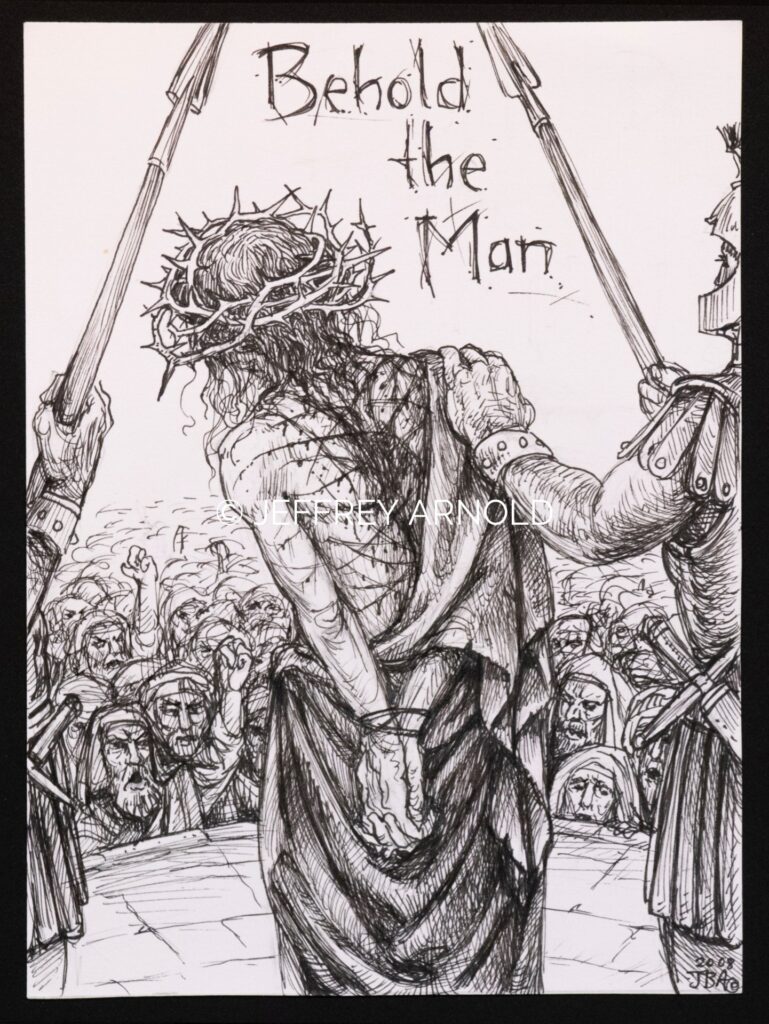
    Now it was the day of Preparation for the Passover; it was about the sixth hour. And he said to the Jews,

    “Behold, your King!”

    Gospel of John 19:14 LSB


    “How long will you be limping between two opinions?

    Therefore purge out the old leaven, that you may be a new lump, since you truly are unleavened. For indeed Christ, our Passover, was sacrificed for us.

    Therefore let us keep the feast, not with old leaven, nor with the leaven of malice and wickedness, but with the unleavened bread of sincerity and truth.

    1 Corinthians 5:7-8 NKJV

    Amen


  • Grace for the Everyday Sinner in 2024 C.E.

    Grace for the Everyday Sinner in 2024 C.E.

    • Should grace be desired for more than simply acknowledgement of our blessings on occasion?
    • Is the Biblical concept of ‘grace’ the same today as God’s GRACE in the New and Old Testaments?

    What is grace?

    We associate it with good things as in praying before eating and receiving mercy for those things we ought not to have done.

    Paul frequently opens his letters to various churches with grace, peace and other gentle words of greeting. The Apostle then encourages believers in a spirit of grace given to all by God.

    Grace to you and peace from God our Father and the Lord Jesus Christ.

    First Letter of Paul *[and Sosthenes]
    to the church at Corinth 1:3 – LSB
    *Sosthenes = "saviour of his nation" - a Jew at Corinth who was seized and beaten in the presence of Gallio
    Acts 18:17
    And they all took hold of Sosthenes the leader of the synagogue, and began beating him in front of the judgment seat. But Gallio was not concerned about any of these things.

    Gospel Grace

    • Grace appears over 100 times in the Bible
    • most frequently used in the New Testament.

    The Greek word used by the Gospel writers and Apostles is χάρις pronounced: khar’-ece.

    grace

    • that which affords joy, pleasure, delight, sweetness, charm, loveliness: grace of speech

    A brief look at varied New Testament use of grace, favor and graciousness reveals a much deeper and satisfying application of grace through Christ.

    For of His fullness we have all received, and grace G5485 upon grace G5485.

    Gospel of John 1:16 Legacy Standard Bible

    Old Testament Grace

    God’s grace before its fullness in Christ was proclaimed to the world

    The Hebrew Bible or Old Testament also demonstrates God’s grace in action and in word. In Hebrew:

    ḥēn חֵן

    Translated in English as ‘grace‘ 38x and also as: favour (26x), gracious (2x), pleasant (1x), precious

    But Noah found favor H2580 in the eyes of Yahweh.

    Genesis 6:8

    The favor and blessings of grace extend not only between the Lord God and man but also between the mortal flesh and blood of individual souls blessing one another.


    Perhaps no blessing of grace is any better known than a benediction of parting the LORD spoke to Moses.

    “Speak to Aaron and his sons, saying, Thus you shall bless the people of Israel: you shall say to them,

    יְבָרֶכְךָ יְהוָה וְיִשְׁמְרֶךָ׃ ס

    יָאֵר יְהוָה פָּנָיו אֵלֶיךָ וִיחֻנֶּךָּ׃ ס

    יִשָּׂא יְהוָה פָּנָיו אֵלֶיךָ וְיָשֵׂם לְךָ שָׁלֹום׃ ס

    בְּמִדְבַּר (Numbers) 6 :: Westminster Leningrad Codex (WLC)


    The LORD bless you and keep you;
    the LORD make his face to shine upon you and be gracious to you;
    the LORD lift up his countenance [or face] upon you and give you peace.

    “So shall they put my name upon the people of Israel, and I will bless them.”


    Blessing between the LORD and Israel from Numbers 6:24-26,27

    Gracious people chosen for God’s grace

    And of course most everyone desires at times to receive at least a portion of joy, pleasure, delight, sweetness, charm, loveliness, favour, grace, charm, elegance and acceptance.


    Who receives grace?

    Is God’s grace all-inclusive or exclusive?

    Let’s take a brief look.


    The Example of Noah

    Then Yahweh saw that the evil of man was great on the earth, and that every intent of the thoughts of his heart was only evil continually. And Yahweh regretted that He had made man on the earth, and He was grieved in His heart.

    But Noah found favor in the eyes of Yahweh.

    Then God said to Noah, “The end of all flesh has come before Me; for the earth is filled with violence because of them; and behold, I am about to destroy them with the earth.

    Genesis 6:5-6,8,13

    Abraham’s Grace though Faith

    And Melchizedek king of Salem brought out bread and wine; now he was a priest of God Most High. Then he blessed him and said,

    “Blessed be Abram of God Most High, Possessor of heaven and earth; And blessed be God Most High, Who has delivered your enemies into your hand.”

    Genesis 14:18-20a

    Now it happened that when Abram was ninety-nine years old, Yahweh appeared to Abram and said to him,

    “I am God Almighty;
    Walk before Me and be blameless, so that I may confirm My covenant between Me and you,
    And that I may multiply you exceedingly.”

    Genesis 17:1-2

    Then Abram fell on his face, and God spoke with him…


    Grace and Mercy

    25:17  וְעָשִׂיתָ כַפֹּרֶת זָהָב

    “You shall make a mercy seat of pure gold…


    Grace is related to but NOT equal to mercy.

    Mercy is a transaction granted by a greater one to a lesser recipient.

    Grace is a part in a transaction by which supplication (or plea) may have been made from one to another. At times they are even equals — but often not.

    In fact God or a king or any human authority may grant grace without you even asking.

    תְּחִנָּה

    supplication,

    supplication for favour

    • to man or
    • to God

    “And I will pour out on the house of David and on the inhabitants of Jerusalem the Spirit of grace and of supplication,

    so that they will look on Me whom they have pierced;

    and they will mourn for Him, as one mourns for an only son, and they will weep bitterly over Him like the bitter weeping over a firstborn.

    Zechariah 12:10 LSB

    “In that day a fountain will be opened for the house of David and for the inhabitants of Jerusalem, for sin and for impurity.

    from Zechariah 13:1 –  approximately 480 B.C. 

    MORE about GRACE in every age NEXT TIME when we will ask:
    "WHO NEEDS GRACE?" 
    
    (You've probably guessed the answer already.)

    For from His fullness, we have all received and grace upon grace.

    Gospel of John 1:16 – Berean Literal Bible

    Comment on Scripture – Share the Gospel