Tag: culture

  • A cultural clash at the Agora in Roman Philippi

    A cultural clash at the Agora in Roman Philippi

    a Roman Government of Greek Culture

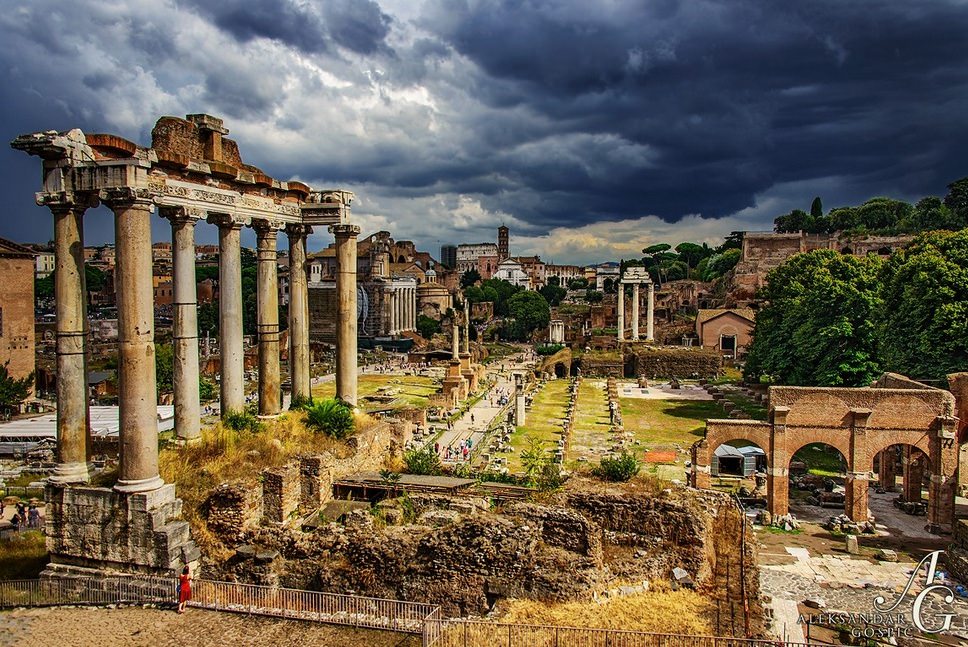
    The Roman-built forum in Philippi with its bustling traditional Greek agora resembled the forum in Rome (cover-photo remains of the Roman forum pillars shows some of the grandeur of these most-public areas of the Empires greatest cities.

    Archaeological Site of Philippi: General view of the forum with adjacent agora marketplace
    Archaeological Site of Philippi: General view of the forum

    Similar-sized pillars in the foreground of the Philippi Forum and agora (to the R) in this aerial view of the archaeological ruins at Philippi gives us a glimpse at the size and importance of this Macedonian City-State namesake of the father of Alexander the Great – a second Rome at the head of the Aegean.


    roman forum
    Roman Forum

    Agora

    Romans call it the public square, others the marketplace — Greeks called it the agora.

    From their own ancient traditions people worshiped there, bought and sold goods, conducted most public aspects of government over the governed and frequently gathered at the agora for general celebrations of social life preceding both religious and private parties.

    Everybody’s there for business seven days a week. The agora was where the paths of the powerful crossed publically with every-day classes of the city-state and also slaves employed to the gain of all.

    The Hellenist agora suited Rome as a place where Roman citizens could mingle with their colonists in Macedonia or any other defeated foe. Roman government was conducted formally from an adjacent forum and pavement for and gathering of citizens, people or slaves before the Prefect.

    You may not agree with my overview of the agora condensing some 500 years back to ancient Greece up to the era of Rome’s first century dominance of all of Europe, but as always check my sources for more details. More later.


    Philippi was ROME in western Macedonia.

    Antioch - Crossroads of Christianity and map of 1sr c. AD Roman Empire
    .. and the disciples were first called Christians in Antioch. Acts of the Apostles 11:25b NASB

    We began an introduction to Philippi last time which partially answered what Alexander the Great has to do with a second missionary journey of the apostle Paulos and Luke’s account of the ACTS of this 1st c. A.D. Roman citizen in a city of Greece.

    a few additional thoughts that may change your mind about the significance of Philippi
    • Greece is NOT a country
    • City-States of ancient Macedon & Greece were separate from each other
    • Democracy gave way to Empire
    • Philippi was named for Emperor Alexander’s father
    • Alexander died in the same Susa of Persia and Babylon where the Jews had been taken previously
    • Augustus Caesar (mentioned in Luke’s Gospel) is the same Octavian who had defeated Brutus and Cassius in the Battle of Philippi
    • Roman roads connected the land all across Eurasia
    • Philippi as a port between Rome and Alexandria was strategically important SO..

    Rome had rebuilt Philippi as a ROMAN city.

    Think of Philippi as a 1st c. New YORK City to Roman colonies of a ‘new world’ similar to expansion seventeen centuries later when a current Roman conquest to the west Britannia would rule the seas.

    Enter Paul and Silas apostles sent into all the world from a gateway Roman city of Philippi.


    Acts of Paul and Silas

    “These men are servants of the Most High God, who proclaim to you the way of salvation.”

    v. 17b – a slave girl who had a spirit of divination

    “I command you in the name of Jesus Christ to come out of her.”

    v. 18b – Paul, to the spirit in her

    And it came out that very hour.


    We don’t know how many more days have passed in Philippi, but Luke records that the young slave girl no longer has any demonic power to profit her owners. And of course these influential men want justice against any men who have impeded their profit by evil means.

    19 But when her owners saw that their hope of gain was gone, they seized Paul and Silas and dragged them into the marketplace before the rulers.

    More about Philippi’s Forum & Agora

    We need to see the Philippi of A.D. 50 as Roman citizens and Hellenist merchants of this important city would have viewed this scene of commerce interrupted by these out-of-towners.

    forum adjacent to agora of Philippi ruins
    ruins of Forum in Philippi adjacent to agora

    agora, in ancient Greek cities, an open space that served as a meeting ground for various activities of the citizens.

    Agora – source Britannica, The Editors of Encyclopaedia. “agora”. Encyclopedia Britannica, 15 Dec. 2017, https://www.britannica.com/topic/agora. Accessed 13 March 2023.

    • surrounded by public buildings and by temples. Colonnades, sometimes containing shops, or stoae, often enclosed the space, and statues, altars, trees, and fountains adorned it.
    • the agora influenced the development of the Roman forum and was, in turn, influenced by it. The forum, however, was conceived in a more rigid manner than the agora and became a specific, regular, open area surrounded by planned architecture.
    • meetings devoted to ostracism were still held in the agora, where the main tribunal remained.
    • A distinction was maintained between commercial and ceremonial agoras
    • Men accused of murder and other crimes were forbidden to enter it before their trials. Free men went there not only to transact business and to act as jurors but also to talk and idle

    Democracy of the Marketplace

    20 And when they had brought them to the magistrates, they said,

    “These men are Jews, and they are disturbing our city. 21 They advocate customs that are not lawful for us as Romans to accept or practice.” 

    22 The crowd joined in attacking them,

    and the magistrates tore the garments off them and gave orders to beat them with rods.

    23 And when they had inflicted many blows upon them, they threw them into prison, ordering the jailer to keep them safely.

    24 Having received this order, he put them into the inner prison and fastened their feet in the stocks.


    ACTS of Paul and Silas — To Be Continued…

  • Asia – Let’s Not Go There – Acts 16

    Asia – Let’s Not Go There – Acts 16

    The importance of this juncture in Paul’s journey, now with Silas and Timothy, cannot be overemphasized as these apostles are sent out beyond Asia into all the world of Euro-Asia.

    Asia – the BIG picture

    Growing up geographically-challenged (as my 5th grade teacher surely would have confirmed) in a small village far distant from Paul’s missionary journeys I was CLUELESS when I read Luke’s lists of places in Acts.

    Where were these cities? (Or were they states? Perhaps a province of some kind?)

    And ASIA? (That’s confusing.)


    Continents as I remembered (5? or 7?):

    • North America (That’s US.)
    • South America (Go toward Texas & keep going.)
    • Europe (Cross the Atlantic like Europeans did & founded 13 colonies in America)
    • Africa (everything south of the Mediterranean Sea, Egypt and all those jungle places south where Europeans brought slaves to America.)
    • Antarctica (it’s all ice and nobody lives there.. Is it the one on the South Pole or north?)
    • Asia (Russia, from where Europe ends west to the Pacific & India, China, Japan along the Pacific
    • Australia (How can an English island below Asia be called a continent?)
    C -

    Go into all the world GEOGRAPHY (remedial)

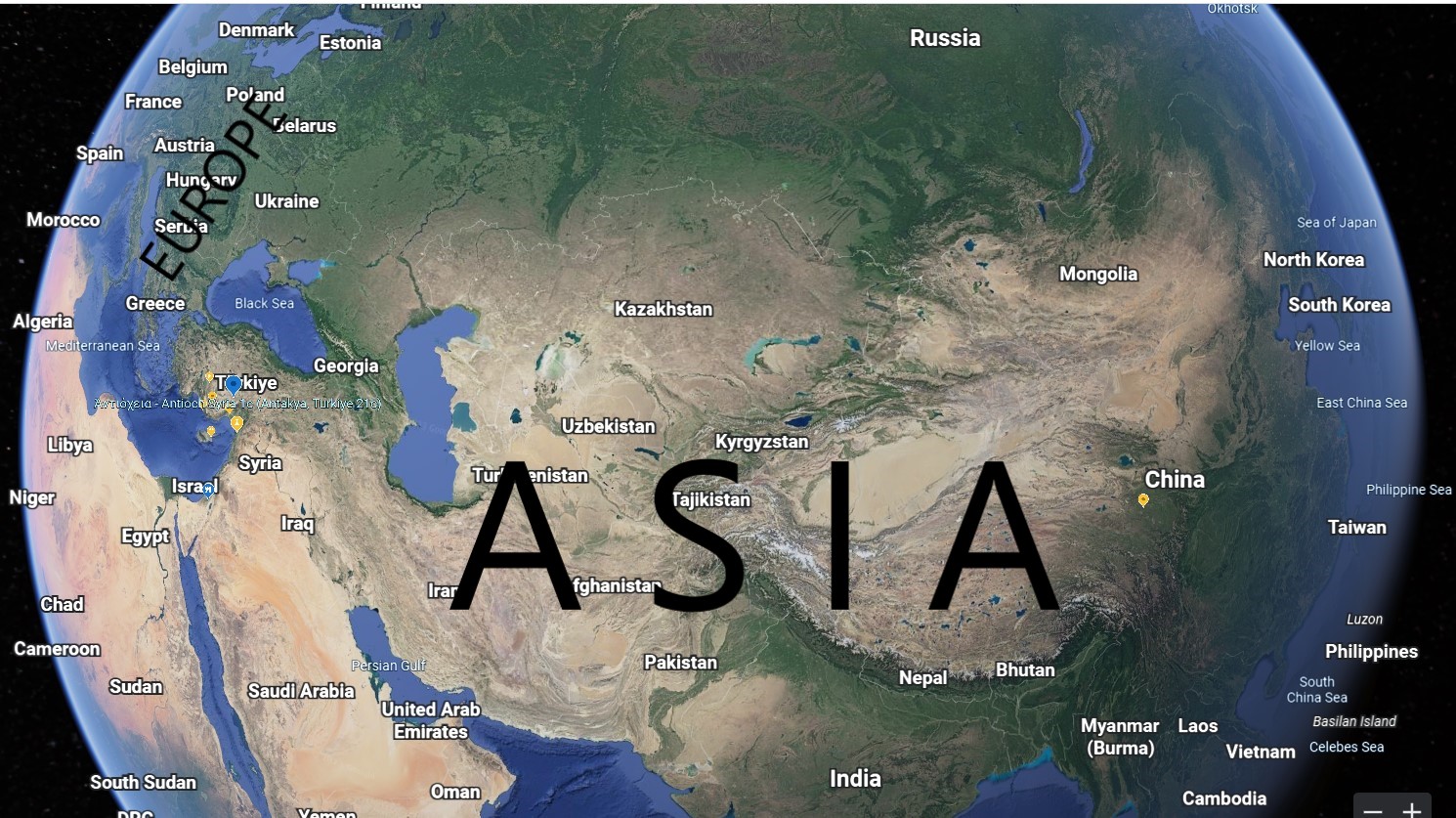
    Asia Europe Africa 21st c. view from Google Earth
    ASIA ~30% of land area of earth, part of Eurasia, ~17 million sq. miles
    Join me as I refresh some of my quite limited knowledge of geography - especially of Asia.

    Asia facts from WorldGeography.com

    • Asia is the largest and most populated continent
    • It shares land borders with Europe, which is not defined and hence share a landmass called Eurasia.
    • Afro-Eurasia is the name given to the landmass between Asia, Europe, and Africa.
    • Asia shares a lot of its extreme points with Europe, especially Russia.

    Cape Dezhnev, 66°4′45″N 169°39′7″W, located on the Chukchi Peninsular, between the Chukchi Sea and the Bering Strait [W. of Alaska] , is the easternmost point of mainland Asia.

    Pamana Island, 11°00′36″S 122°52′37″E, is the southernmost point of Asia, located in the Lesser Sunda Islands, East Nusa Tenggara province of Indonesia.

    The northernmost point on the Asian mainland is Cape Chelyuskin, 77°44′0″N 104°15′0″E. At 1370km from the North Pole, ..located at the Taymyr Peninsula,

    Westernmost Point In Asia
    • Cape Baba, 39°28′47″N 26°03′50″E, located on the Anatolian part of Turkey, is the westernmost part of Asia. Located in Babakale village also known as Father’s Castle in historical Troad. Apostles Luke’s journey around the cape, and Apostle Paul’s journey on land are recorded in the biblical book Acts of the Apostles.
    This image has an empty alt attribute; its file name is Troas-1024x656.jpg
    Troas on Cape Baba in Babakale, Turkey [Turkiye] is the westernmost point in Asia.

    Asia Minor, Roman Remnant of a former Empire

    Zoom in with Roman military eyes toward a vast empire to the east situated on the westernmost shores of Asia, fixing your eyes on adjacent Aegean shores of 21st c. Turkiye.

    This geographical-historical view of the Asia minor region is provided only for its context of culture as it intersects with Paul's missionary journeys 'into all the world' of Eurasia.
    map of 1st century Asia
    Asia Minor

    Follow the southern coastline from nearest to Rome toward the east and riches of former empires.

    Rome’s region of ASIA MINOR

    • conquered via the vast Mediterranean and inland to the Taurus mountains includes [W. to E.]:
    • Pisidia [N. of Perga],
    • Pamphylia [along a coast N. of Cypress],
    • Cilicia [with its port city of Tarsus] and finally
    • Syria (at times including Judea).
    • Further Roman conquests inland to the north included:

    a large Roman province of GALATIA

    • N from Iconium and on its Western edge Antioch Pisidia, all of the central plain to the borders of
    • a more remote Cappadocia in the mountains to the north of Cilicia and Tarsus and Antioch Syria,
    • N to Bithynia and Pontus on the Black Sea and again toward
    • Phrygia along the mountainous borders with Asia Minor toward Mysia and the strategically situated Sea of Marmara between the narrow isthmus connecting the Black and Aegean Seas.

    In Roman times, however, when Paul journeyed there, the country was divided into two parts, one of which was known as Galatian Phrygia, and

    the other as Asian Phrygia, because it was a part of the Roman province of Asia, but the line between them was never sharply drawn.

    Source: BibleAtlas.org
    In ACTS 16 the Holy Spirit forbids Paul from sharing the gospel in Asia Minor on this second missionary journey.
    And they went through the region of Phrygia and Galatia, having been forbidden by the Holy Spirit to speak the word in Asia.
    – ACTS 16:6

    The Empires Before Christ

    Babylon captures Judah and brings its captives to the King of Babylon
    6th century Before Christ
    6th-5th centuries B,C. the Persian Empire (to the East) adds the Babylonian Empire to its captive provinces

    Paul, Silas and Timothy will know these events well from Scripture, but those are no longer the Empires of concern to either the Jews or Rome. In a more recent history of Judea and Eurasia one vast Empire rivals all others.

    356 BC – Macedonia

    Roman bust of Alexander the Great who conquered much of Asia and Europe

    Alexander the Great

    • Tutored by Aristotle
    • trained for battle by his father, Philip II

    Roman bust, 2nd century AD / Creative Commons license

    [Alexander’s] undermanned defeat of the Persian King Darius III at the Battle of Gaugamela is seen as one of the decisive turning points of human history, unseating the Persians as the greatest power in the ancient world and spreading Hellenistic culture across a vast new empire.

    https://www.history.com/news/alexander-the-great-defeat-persian-empire

    332 BC – Tyre: a siege of Hellenism close to home

    The siege of Tyre was orchestrated by Alexander the Great in 332 BC during his campaigns against the Persians.

    source: Wikipedia

    The reign of Alexander the Great was short-lived. After subduing all of the Persian Empire, his army marched east and got as far as India before turning back home to Macedon. But he never made it home.

    At just 32 years old, Alexander died in Persia in the palace of Nebuchadnezzar II in Babylon.

    323 BC – 30BC – a Greek-ish Eurasia

    Click the link below to see a map of the Hellenized 'Greek-ish' world after Alexander the Great where the Apostle Paul now witnesses Christ. READ a detailed lecture on 

    https://brewminate.com/wp-content/uploads/2016/04/Alexander53-768×452.gif


    There were no more city-states. Monarchies prevailed, modeling themselves after Alexander’s empire. He had achieved a divine status in his lifetime, and his successors wanted to as well. They established “ruler cults” in which they were obeyed as kings and worshipped as gods.

    A sense of cosmopolis developed in the Hellenistic Age (“polis” plus “cosmos”). Worldly, experienced, and highly-cultured people used to live in small city-states and not worry about the world beyond, but now they had seen and even ruled this world and began to say they were no longer citizens of Athens, Corinth, and so on, but instead citizens of the cosmic polis (cosmopolis), the world.

    Highly Recommended Source – From a lecture by Dr. Frank Holt, Professor of Ancient History, University of Houston (10.15.2013)

    Paul and the Apostles sent out into all the world live in the crossroads between a culture of Alexander established just a few centuries earlier AND ambitious Roman Caesars reconquering lands and cultures to be absorbed into a new Pax Romana — IF you will surrender your land and its people into one international Empire of their Roman peace.

    Western Eurasia map AD50

    AD 50 – Eurasia

    The year in the middle of Paul’s 2nd Missionary Journey.

    Rome had conquered the Ptolemaic Kingdom of Egypt near Judea some time ago, but the Empire’s military defense of the Eastern front in Syria kept close eye on the Parthian Empire and frequently engaged in battle losing and retaking various land.

    A Greek-ish in culture of the Eurasian world remained reticent of Roman Legions suppressing unwilling rulers in uncooperative localities.


    Politically astute men like a Herod or Saul of Tarsus understood this ever-shifting landscape of living as part of the political leadership and military power of the Roman Empire.

    Paul would have been attuned to recent changes in both Asia and Europe as the Apostle now travels toward a new destination with Silas and Timothy. They seem to be travelling intentionally and slowly (which we might easily miss in these few brief verses of Acts.

    AD 43 – During those years after Paul had witnessed Jesus on the road to Damascus, just four years prior to his first missionary journey here and to Cypress, Rome had invaded Britannia in the West. Legions had also conquered Lycia on the SW coast near Asia Minor where previously they had sailed to and from Perga.

    Lycia Source: Wikipedia

    AD 46 – Just a year prior to Paul’s first missionary journey

    After the death of the Thracian king Rhoemetalces III in 46 AD and an unsuccessful anti-Roman revolt, the kingdom was annexed as the Roman province of Thracia. The new province encompassed .. the north-eastern portion of the province of Macedonia as well as the islands of Thasos, Samothrace and Imbros in the Aegean Sea.

    Source: Wikipedia

    Acts of the Apostles 16:

    Previously:

    As they went on their way through the cities, they delivered to them for observance the decisions that had been reached by the apostles and elders who were in Jerusalem. So the churches were strengthened in the faith, and they increased in numbers daily.


    6 And they went through the region of Phrygia and Galatia, having been forbidden by the Holy Spirit to speak the word in Asia.


    These apostles sent out from Antioch Syria have traveled about half-way on this 2800 mile [4500 km] journey into a Greek-ish Roman-ruled world. Their remaining journey in Euro-Asia will include many more important cities where they will preach the Gospel of Jesus Christ in the upcoming year.


    And when they had come up to Mysia, they attempted to go into Bithynia, but the Spirit of Jesus did not allow them. So, passing by Mysia, they went down to Troas.

    Acts 16: route of the apostles Paul, Silas & Timothy headed toward Troas beyond Asia Minor. source: graceofourlord.com
    Paul’s 2nd Missionary Journey – first half through Asia

    To be continued…

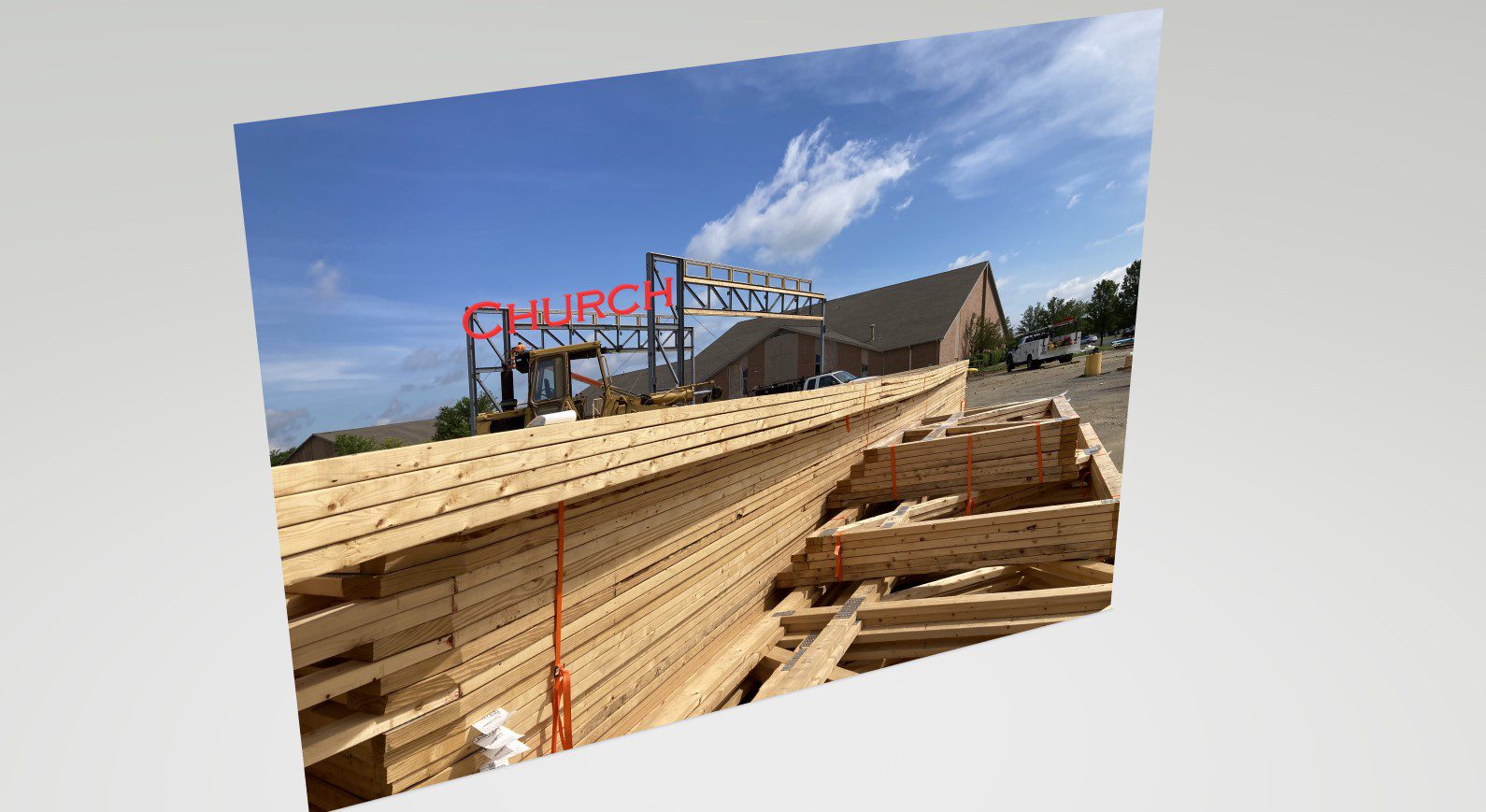
  • Church: Religion? Philosophic Discourse? or Cultural Calling?

    Church: Religion? Philosophic Discourse? or Cultural Calling?

    The instant you say, ‘church,’ you dip your toe into waters of reactions which you know not how hot or cold, how shallow or deep, how stagnant or storm-tossed the hearer of your faith.

    Do you dare even ask?

    • Are YOU a CHRISTIAN?
    • Where did you worship last Sunday?
    • Do you belong to OUR church?
    • What are you currently studying from the Bible?
    • Would you talk of JESUS with me?
    • May I SHARE the Good News of my Biblical Christian faith?

    Just imagine the wide range of reactions of any other soul to ANY of these questions of the faithful evangelical Christian daring to share the Gospel of their Biblical Christian church.

    An even more troubling question:

    Does a Christian dare engage OTHER ‘christians‘ in a conversation about Christ (the Namesake of our Christian faith) addressing ALL of these questions and more about our Biblical Christian faith?

    Have YOU, in fact, tested these troublesome waters?

    IF SO, perhaps you too have received a baptism of hot opposition or a cold withdrawal of the flesh from the waters of faith.

    That would be evangelism = a RED FLAG of RELIGION to which a world (inclusively with some calling themselves a ‘church,’) will often react with ears that do not hear, as well as the rhetoric of rebellion against the Lord God and anarchy against salvation of the sinful soul.


    • Perhaps evangelism nets too few caught in the rising waters of a cultural flood of this world reacting to the ‘church,’ by denying Christ Jesus.
    • Maybe a pure Biblical Christian faith offends some tiptoeing into the mire of murky waters of philosophic denial.

    The [*] wicked fool says in his heart, “There is no God.”

    They act corruptly, they commit abominable deeds;

    There is no one who does good.

    Psalm 14 :: Legacy Standard Bible (LSB) * wicked – one who rejects wisdom in rebellion against God
    (Although some these wicked fools have crept into pulpits of places which call themselves, 'church.')

    ANY constant questioning of authoritative adherence to the Word of God, the Holy Bible of our Christian faith, should sound an alarm to the faithful:

    Beware of the tempter in sheep’s clothing.

    Who else would deconstruct the Biblical Christian foundation of the Church, only to reconstruct our faith by compromises of the only Truth, replacing authoritative Scripture with several shifting pebbles of heretical half-truths ‘reasoned’ by the wicked at war with Christ?

    So I ask you .. I ask us:

    Who are these 21st century Christians?

    What are YOUR answers to my earlier questions I dare to ask my fellow evangelical Christian believers and worshipers of Jesus Christ? (ADD your Comment on Scripture to this Saturday Post of TalkofJESUS.com) 
    Our church in Christ Jesus has no place for the unrepentant wicked fool; for our Gospel is for those who believe.
    

    I began this Saturday Post series as a deeper discussion of DOCTRINE (or teaching) of the Church. The alarm of the watchman on the wall rang in my ears while hearing about a subtle teaching, an undercurrent of doctrine seeping into the evangelical christian church.

    Evangelical RECONSTRUCTION was something I naively had never heard of; YET now I will raise the trumpet of warning to sound the alarm:

    Medieval church bell tower during sundown in valley

    Something’s wrong with our church!

    (Who wouldn't agree?)
     YES it is.

    So why not RECALL it?

    (Send it ‘back to the manufacturer? Can’t do that. So how can WE evolve the church into a 21st c. style faith?)

    Tear it down to the ground demolishing doctrine by doctrine.

    Then WE can RECONSTRUCT that which WE have deconstructed to fix the church how WE want.

    But WE had better do it subtly (so as not to offend anybody) and stealthily (without account of a foundational Biblical Christian teaching).

    A 21st c. RECALL of the CHURCH is just what WE need for OUR Evangelical Reconstruction of the Church into a socially acceptable gathering which will attract any follower from religions of every culture of our world.

    NOT!

    To borrow from the Apostle Paul refuting premises of clear untruths:

    By no means!

    Perfect Teaching (for God’s imperfect ‘church’)

    https://talkofjesus.com/talk-jesus-com/what-is-doctrine/
    διδασκαλία – didaskalia – doctrine (19x), teaching (1x), learning (1x). – source: BlueLetterBible.org

    Doctrine, whether by preaching or teaching or proclaiming the Gospel of Jesus Christ, is foundational to faith and therefore never to be torn down by any mortal sinner. Scripture affirms God’s truth and the trustworthy teaching of the Lord Jesus Christ for those who believe.

    .. so that we are no longer to be children, tossed here and there by waves and carried about by every wind of doctrine, by the trickery of men, by craftiness in deceitful scheming, ..

    Letter of the Apostle Paul to the Church in Ephesus 4:14 Legacy Standard Bible

    This same Apostle (to the Gentiles) confesses in his first letter to the pastor, Timothy 1:15

    .. that Christ Jesus came into the world to save sinners; of whom I am chief.

    And the Apostle Peter fell down at Jesus’ knees, saying,

    “Go away from me Lord, for I am a sinful man!”

    the Good News of Luke 5:8 Legacy Standard Bible

    Some call Peter and Paul, Saints (and they are); yet all of God’s faithful are saints to the Lord.

    Psalm 34:9 (WLC 34:10) יְראוּ אֶת־יְהוָה קְדֹשָׁיו כִּי־ אֵין מַחְסוֹר לִירֵאָֽיו׃

    Yodh
    Oh, fear Yahweh, you His saints;
    For there is no want to those who fear Him.
    Do YOU FEAR THE LORD GOD, oh you sinner?
    
    The MARQEE denominational name of your 'church' matters NOT, my fellow sinner. 
    Seek the salvation of the Lord, my dear fellow saint, His redemption of your soul to eternal life witnessed in the Gospel of the Christ JESUS.

    Perfect Preaching (Teaching)

    Is based on & does not manipulate Scripture.

    THE LORD GOD IS! (God IS God and mankind is not.)

    God spoke to and through men whom the Lord God chose and commanded to write HIS words.

    “God is not a man, that He should lie,

    Nor a son of man, that He should repent;

    Has He said, and will He not do it?

    Or has He spoken, and will He not establish it?

    Numbers 23:19 LSB
    Do you really believe that? Can you affirm that ONLY Scripture Sola Scriptura is the inspired word of the Lord God?
    ONLY Scripture – Sola Scriptura

    All Scripture is God-breathed and profitable for teaching, for reproof, for correction, for training in righteousness,

    2 Timothy 3:16 LSB

    NOT ‘some,’ NOT ‘select scripture’ ..

    AND separate from the truth that some church pastors will never reprove or correct those wayward weak sheep of their own flock,

    ALL of the WRITTEN WORD OF SCRIPTURE IS GOD INSPIRED!

    Mortal SINNERS DO NOT get to reconstruct what GOD has said.

    (But false teachers of every era subtly seek to lead Christ’s lost sheep into the abyss of disbelief.)

    Inerrant TRUTH: Our reasoned Biblical Faith

    Pilate said to Him, “What is truth?”

    The Apostle John’s Good News for you is:

    .. that he is telling the truth, so that you also may believe.

    Evangelical RE-construction of the Church

    Source material for the following is transcribed (written as accurately as possible) from the A.D. 2022 podcast 'Just Thinking,' previously recommended and linked on TalkofJESUS.com and used with permission of its author. - RH

    In deconstruction everything is a SOCIAL construction, including the church.

    Darrell Harrison
    By the way, this Saturday Post series, Church – Who are these 21st c. Christians? - is directed toward faithful evangelical Christians who fear God and believe Scripture as a warning and caution for infidelity to Christ we increasingly hear from the pulpits of our RE-engineered 21st c. 'churches.' - RH
    
    I will add brief comment to Harrison's outline below for your consideration and intentional thinking about the teaching of your church. Why not add your own thoughts in the Comments at the bottom of this post. 
    
    God-willing, we will continue the course of identifying the faithful of our 21st century 'Church' next Saturday.
    
    © Darrell B. Harrison and Just Thinking Ministries

    Evangelical Deconstructionism

    Most of the points quoted may be found in the Just Thinking Podcast near 1:32.

    FIVE-POINT PROGRESSION of Evangelical Deconstructionism

    1. EMBRACE and posit [plant or assume] the idea [philosophy] that the CHURCH is a SOCIALLY constructed system, NOT a divinely ordained idea [institution] that originated in the mind of God.
    2. ASSUME that this socially constructed system is designed to be exclusive of certain intersectional identities, traditions and behaviors.
    3. IDENTIFY subjective [reasoned in the mind] points or cracks in that socially constructed system that have failed [as reasoned by the philosopher] AND need to be fixed [or reconstructed].
    4. APPLY a hermeneutic [interpretive explanation] of SUSPICION to that SOCIALIALLY-CONSTRUCTED system so that ANYONE [who even remotely] connected to that system is deemed UNTRUSTWORTHY.. deemed an enemy.
    5. RECONSTRUCT this SOCIAL SYSTEM [church, etc.] into the IMAGE and likeness of the CULTURE with socially acceptable.. [everythingology].

    Have you heard the alarm?

    “Therefore watch out, so that the thing spoken of in the Prophets may not come upon you:

    Acts of the Apostles 13:40 LSB [in context 13:23-41]

    Beware of the false prophets, who come to you in sheep’s clothing, but inwardly are ravenous wolves.

    Gospel of Matthew 7:15 LSB – a warning of Jesus

    “Now why do you call Me, ‘Lord, Lord,’ and do not do what I say?

    Gospel of Luke 6:46 LSB – CHALLANGE of the Lord Jesus Christ to followers


    What must we do?

    Does YOUR local church have a new cultural calling to evangelism?

    Please comment below on what you observe of Evangelical Deconstructionism?

    Comment on Scripture – Share the Gospel