Tag: history

  • a Brief Apologetic for Doctrine

    a Brief Apologetic for Doctrine

    an apologia or apologetic

    Doctrine (of the Common Era) Defined

    A doctrine is a set of principles or beliefs, especially religious ones.

    Collins COBUILD Advanced Learner’s Dictionary

    Quite simply EVERYONE has doctrines WE believe, beliefs and opinions WE teach unyieldingly or perhaps underpinning our speech subtly.

    Due to its everyday influence on our lives I have reviewed and retaught DOCTRINE here with some regularity.


    1. something taught; teachings
    2. something taught as the principles or creed of a religion, political party, etc.; tenet or tenets; belief; dogma
    3. a rule, theory, or principle of law
    4. US
      an official statement of a nation’s policy, esp. toward other nations
      the Monroe Doctrine
    1. a creed or body of teachings of a religious, political, or philosophical group presented for acceptance or belief; dogma
    2. a principle or body of principles that is taught or advocated
    Read the fine print below for a more succinct examination of doctrine. - RH

    doctrine refers to a theory based on carefully worked out principles and taught or advocated by its adherents [scientific or social doctrines]; dogma refers to a belief or doctrine that is handed down by authority as true and indisputable, and often connotes arbitrariness, arrogance, etc. [religious dogma]; tenet emphasizes the maintenance or defense, rather than the teaching, of a theory or principle [the tenets of a political party]; precept refers to an injunction or dogma intended as a rule of action or conduct [to teach by example rather than by precept]

    Webster’s New World College Dictionary, 4th Edition. Copyright © 2010 by Houghton Mifflin Harcourt. All rights reserved.
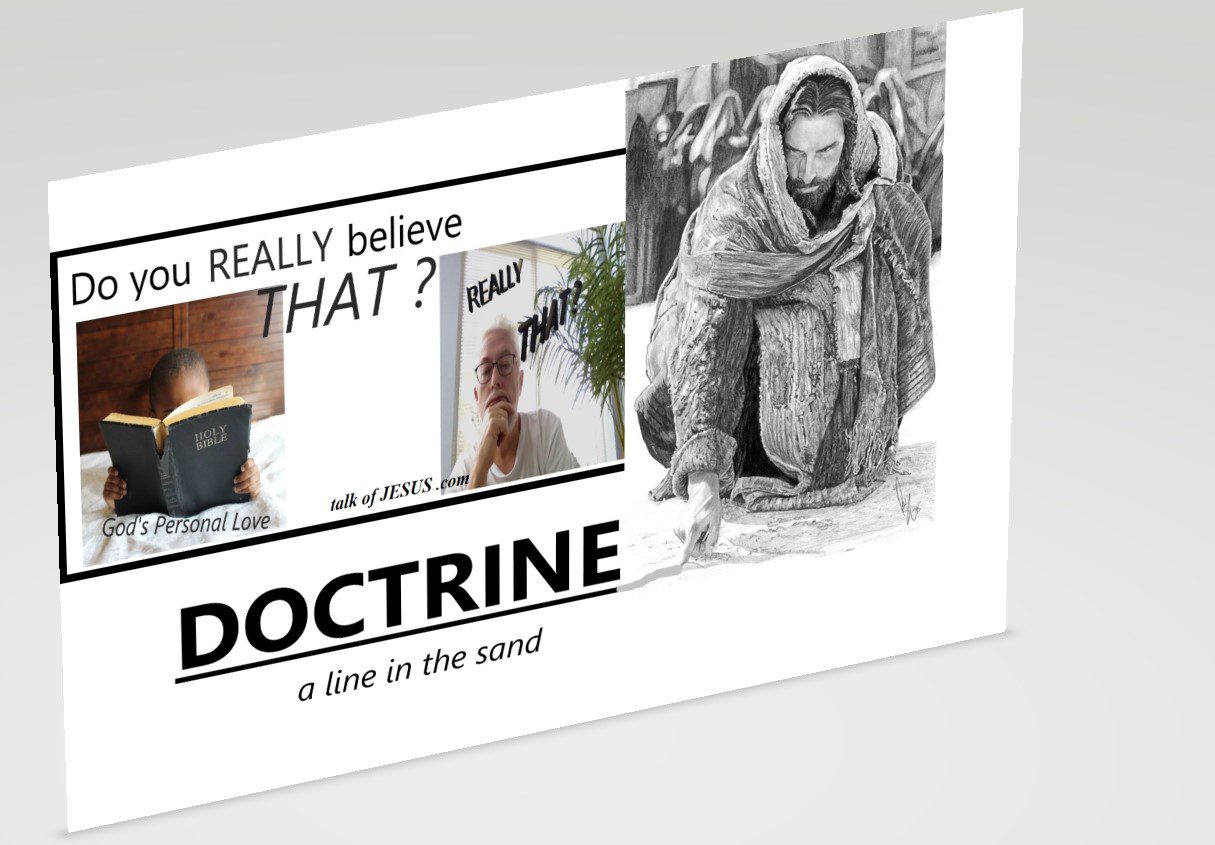
    Do you really believe that? doctrine - a line in the sand [picture of Jesus kneeling down to draw a line with his finger
    DOCTRINE – What do you believe? Can you affirm it to others?

    Doctrine + TalkofJESUS.com

    HERE are several links where you should find teachings to Comment on Scripture OR respond to a doctrine with YOUR opinion.

    First, a summary PAGE which includes links to several earlier pages & posts on Doctrine.


    I asked, “Is the Church still ‘christian’‘ & other thought-provoking categorical questions about ‘the church in a 2022 SERIES [linked here].

    Recall of a church? WHY do that? SO WHAT IF WE preach what WE want? Pictured Medieval church bell tower during sundown in valley
    Evangelical Reconstruction

    SEARCH TalkofJESUS.com by topic for ‘Doctrine

    Do you really believe christianity-lite? Doctrine for a christ-less Common Era christianity-lite typically erases the lines where Scripture and doctrine holding to what is written.
    topical ‘christianity’

    We have explored contemporary issues of doctrine as well.


    Why to atheists try so hard to deny the resurrection of Jesus Christ?

    apologia not actually an ‘apology’

    It seems in the Common Era of NO ABSOLUTES and arguments of ANTI-this’ and ANTI-that’s I had best DEFINE what I mean to apologize to BOTH

    + disagreeing ‘christians

    • and semi-committed A-theists – [mortals AGAINST god AND unequivocally opposed to JESUS Christ].

    WHY this SERIES?

    I could share many reasons in this Common Era of 2024 WHY I am revisiting ‘doctrine’ but #1:

    For the time will come when they will not endure sound doctrine, but wanting to have their ears tickled, they will accumulate for themselves teachers in accordance to their own desires, and will turn away their ears from the truth and will turn aside to myths.

    2 Timothy 4:3-4 Legacy Standard Bible

    Apologetic for a Common Era approach to Biblical Doctrine

    From Before Christ to Before the Common Era

    In common Greek, apologia refers to the speech that an accused person delivered in court, rejecting the charges filed against him or her. The apologists of the second century chose this term because they wanted to show that the charges filed against Christians were unjustified and that the truths of their faith could be described and defended. An apologia was dedicated to the Roman emperor, who certainly never read it. [Max L. Stackhouse, “Apologia,” 1988]

    https://www.etymonline.com/word/apologia

    The A.D. Second Century CHRISTIAN apologist to whom the article refers is Justin Martyr.

    In addition to arguing against the persecution of individuals solely for being Christian, Justin also provides the Emperor with a defense of the philosophy of Christianity and a detailed explanation of contemporary Christian practices and rituals.

    The First Apology is dated to between AD 155–157

    The theologian Robert Grant has claimed that this Apology was made in response to the Martyrdom of Polycarp ~ in the year of our Lord 155.

    source & Christian History Polycarp
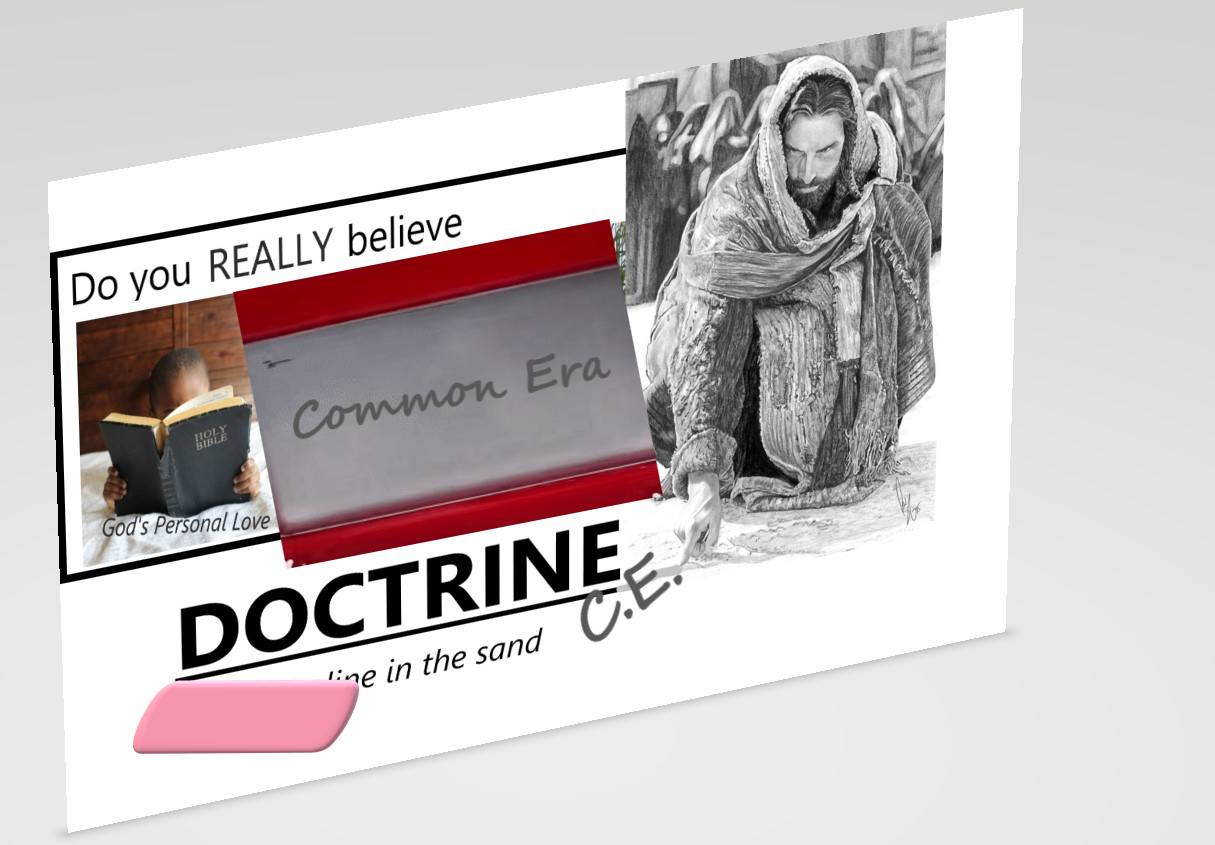
    Do you REALLY believe? Is DOCTRINE of the Bible a line in the sand for you? OR has DOCTRINE of the COMMON ERA become a blurred line in the sand of 21st century CE?
    2024 of the COMMON ERA DOCTRINE

    YOUR ‘What?‘ Questions of the Common Era

    From an earlier post.

    WHEN did the Common Era Begin?

    Was there an unexpected BIG BANG that exploded TRUTH into truths?

    Have centuries of history defined by the word of Almighty GOD fallen into a bottomless black hole of godless futility?

    Does a blurred timeline of History not continue to point toward Christ Jesus born into this common world of sin?

    Roger@TalkofJesus.com
    updated 2024 of the Common Era

    Comment on Scripture – Share the Gospel


    Talk of JESUS . com

    NEXT: DOCTRINES of the Common Era: 

    God
    Scripture
    JESUS CHRIST
    --------------------
    FOLLOWED BY more 2024 C.E. examinations of KEY Doctrines

  • The Connection of Christ’s Missions

    The Connection of Christ’s Missions

    a timeline of ACTS of the Apostles

    Twenty-first century followers of the Lord Jesus Christ and believers less immersed in Scripture tend to oversimplify the journeys and any connection of apostles of the first century church.

    Our helpful, but partial view tends to look something like this:
    Acts Petros - Acts 0f Peter - Jesus' Rock and Apostle of the 1st c. church. What happened to the Apostle Peter? Acts 1-15
    • A.D. 30Peter and the Twelve APOSTLES witness Jesus’ resurrection mostly in Jerusalem
      • In fact, the Twelve all traveled (Peter, certainly back and forth to his wife and family Capernaum) and even as far as Rome where more than 30 years later Peter would be executed by Nero.
    Acts of the Apostles Missions trips of Paul, Barnabas, Silas and several others
    ACTS on Mission
    • A.D. 47-57 – Paul becomes Christ’s connection to the Gentiles and journeys throughout Europe on three time, taking some others with him.
      • Most 21st c. believers realize that Saul had personally met the risen Christ near Damascus while persecuting followers of the Way of Jesus Christ just 10 years earlier.
      • AND we don’t typically count a crucial connection of the Apostle’s final journey to Rome as a “fourth missionary journey” (~A.D. 60) where he too would be executed in about A.D. 66 or 67 just prior to Rome destroying Jerusalem in A.D. 70.

    a Connection of Apostles

    JESUS CHRIST is the One connection of Paul’s three missionary journeys we dare not overlook.

    Notice that ALL of the apostles sent out on the three missionary journeys of Paul were also sent by the Holy Spirit AND the Church to the Jews, Greeks and Roman citizens.

    Luke’s account of the history of the Church carefully and frequently notes their connection to each other and especially to the Holy Spirit — who IS One with the Father and our risen Lord JESUS the Son of man, as well as their resurrected friend and Savior.

    From the very beginning of ‘Paul’s’ first mission to Cypress with Barnabas and John Mark we continually see more and more connections of individual apostles to new followers in these church plants.

    See a partial list of these connections to beloved believers of new churches and a more detailed 20 year timeline of Acts in this earlier post.
    Silas and Timothy arrived from Macedonia, Paul..’

    ACTS of more Apostles

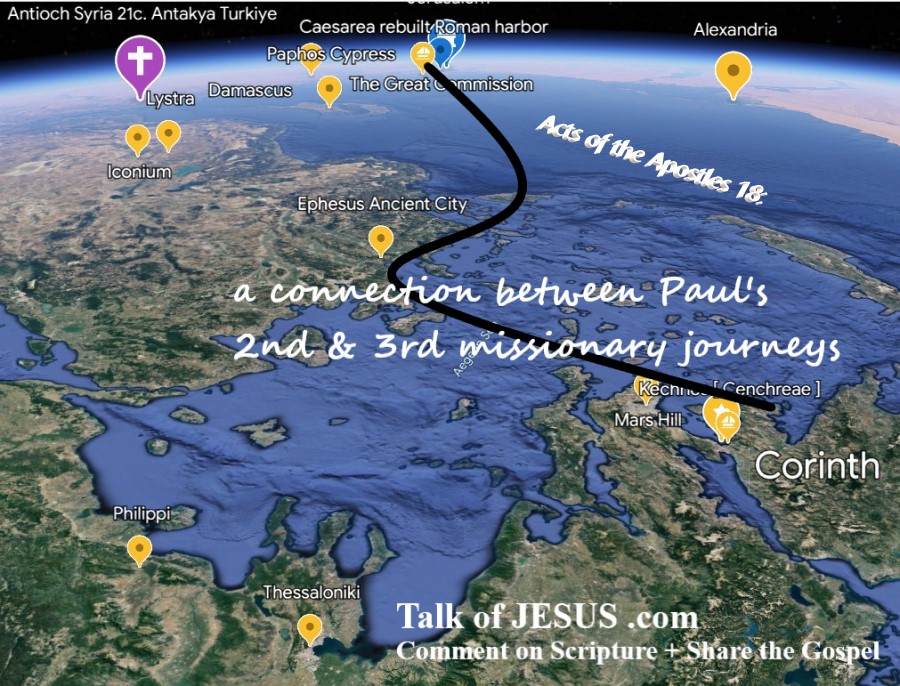
    Acts 18:

    18 And Paul, having stayed-on considerable days longer, having said-good-bye to the brothers, was sailing-off to Syria— and Priscilla and Aquila with him— having sheared his head in Cenchrea, for he had a vow. And they came to Ephesus. And those ones he left-behind there. And he himself, having entered into the synagogue, reasoned with the Jews.

    Acts of the Apostles 18:18-19 Disciples’ Literal New Testament
    The Disciples’ Literal New Testament adds two more descriptive headings to our current journey with Paul from the Apostle's second missionary journey to begin his third mission.
    • In Ephesus, Paul Prepares Them For a Future Visit And Then Returns Home To Antioch
      • (Here we see the connections of place with Antioch the church which sent out the Apostles and Ephesus which is about to become a most influential church in Asia Minor both culturally and geographically closer to Rome.)
    • Paul Embarks On a Third Journey. Priscilla And Aquila Update Apollos
      • (In these connections of apostles I include: Priscilla, Aquila and Apollos, introduced to us in Luke’s account as we continue on Paul’s THIRD mission into all the world with other apostles).

    And having done some time there, he went forth, going successively through the Galatian region and Phrygia, strengthening all the disciples.

    Acts of the Apostles 18:23 Disciples’ Literal New Testament

    As Paul returns to churches planted in the central inland areas during two previous missionary journeys Luke’s account of other apostles to the gentiles now moves to the coastal city of Ephesus where Apollos – a new believer now proclaims the Gospel alongside Priscilla and Aquila.


    Before Luke momentarily moves his account of the acts of apostles from Paul to Apollos, let’s look at one more personal connection of Paul and others to those the apostles of Jesus Christ meet throughout the world of the Roman Empire.

    a Connection of Letters

    Epistle of Paul to the Romans 1 - the Apostles sends a church letter to Rome and the local saints of area churches
    Epistle of Paul to the Romans

    Connections to Letters from James

    James is leader of the Jerusalem Church in the traditional place where the Lord God has led and shepherded His elect.

    Luke has already shown readers of ACTS some important meetings between Peter, Paul and others which included at least one (and probably more) letters from James, the half-brother of Jesus and Pastor of the Jerusalem church, with encouragement for other followers of the Way of Christ Jesus.

    A.D. 49 – the COUNCIL of JERUSALEM (which includes Peter & Paul) sends letters to Churches clarifying application of Mosaic LAW to Greeks and Romans as well as these Messianic Jews.

    A.D. 52 – By now as PAUL and other APOSTLES depart on this next missionary journey, these ‘fathers‘ of the Church have sent additional epistles (letters) to encourage the Church beyond their personal and present reach.

    VISIT our Talk of JESUS .com CATEGORY with posts from any of these NEW TESTEMENT LETTERS

    Contemporary Application of the Letters (Epistles)
    Most New Testament writers take on specific issues confronting faithful followers of Jesus Christ. These same issues continue to confront believers until the Lord’s coming again in these last days.

    Talk of JESUS .com – Church Letters- Is he writing to me?

    Connections already made by letter:

    A.D. 49 – from our A.D. 2019 series from the Epistle of James

    A.D. 49 – from Paul, an apostle.. and all the brothers who are with me

    I marvel that you are turning away so soon from Him who called you in the grace of Christ, to a different gospel

    Epistle from Paul, an apostle.. To the churches of Galatia 1:6 NKJV
    Here we join Paul in A.D. 52 as the apostle NOW immediately heads to Galatia in person to confirm the Gospel of Christ JESUS to the faithful of these NEW churches.

    A.D. 50 – Paul, Silvanus, and Timothy, To the church of the Thessalonians in God the Father and the Lord Jesus Christ:

    ‘.. you became an example to all the believers in Macedonia and in Achaia. – 1 Thessalonians 1:7b

    A.D. 51 – also from Paul, Silas and Timothy to the Thessalonians:

    Therefore we ourselves boast about you in the churches of God for your steadfastness and faith in all your persecutions and in the afflictions that you are enduring.

    The Judgment at Christ’s Coming
    This is evidence of the righteous judgment of God, that you may be considered worthy of the kingdom of God, for which you are also suffering—

    2 Thessalonians 1:4-5 ESV

    The close connection of all of these men sent out (apostles) continues to nurture these churches even as they head out on a third missionary journey with Paul.

    AND later (A.D. 55) as they travel toward Ephesus these apostles will again touch the beloved brothers of the church in Corinth from where they have just departed.


    ACTS of the apostles TO BE CONTINUED on Paul’s THIRD MISSIONARY JOURNEY…

    Talk of JESUS . com

    Comment on Scripture – Share the Gospel

  • Asia – Let’s Not Go There – Acts 16

    Asia – Let’s Not Go There – Acts 16

    The importance of this juncture in Paul’s journey, now with Silas and Timothy, cannot be overemphasized as these apostles are sent out beyond Asia into all the world of Euro-Asia.

    Asia – the BIG picture

    Growing up geographically-challenged (as my 5th grade teacher surely would have confirmed) in a small village far distant from Paul’s missionary journeys I was CLUELESS when I read Luke’s lists of places in Acts.

    Where were these cities? (Or were they states? Perhaps a province of some kind?)

    And ASIA? (That’s confusing.)


    Continents as I remembered (5? or 7?):

    • North America (That’s US.)
    • South America (Go toward Texas & keep going.)
    • Europe (Cross the Atlantic like Europeans did & founded 13 colonies in America)
    • Africa (everything south of the Mediterranean Sea, Egypt and all those jungle places south where Europeans brought slaves to America.)
    • Antarctica (it’s all ice and nobody lives there.. Is it the one on the South Pole or north?)
    • Asia (Russia, from where Europe ends west to the Pacific & India, China, Japan along the Pacific
    • Australia (How can an English island below Asia be called a continent?)
    C -

    Go into all the world GEOGRAPHY (remedial)

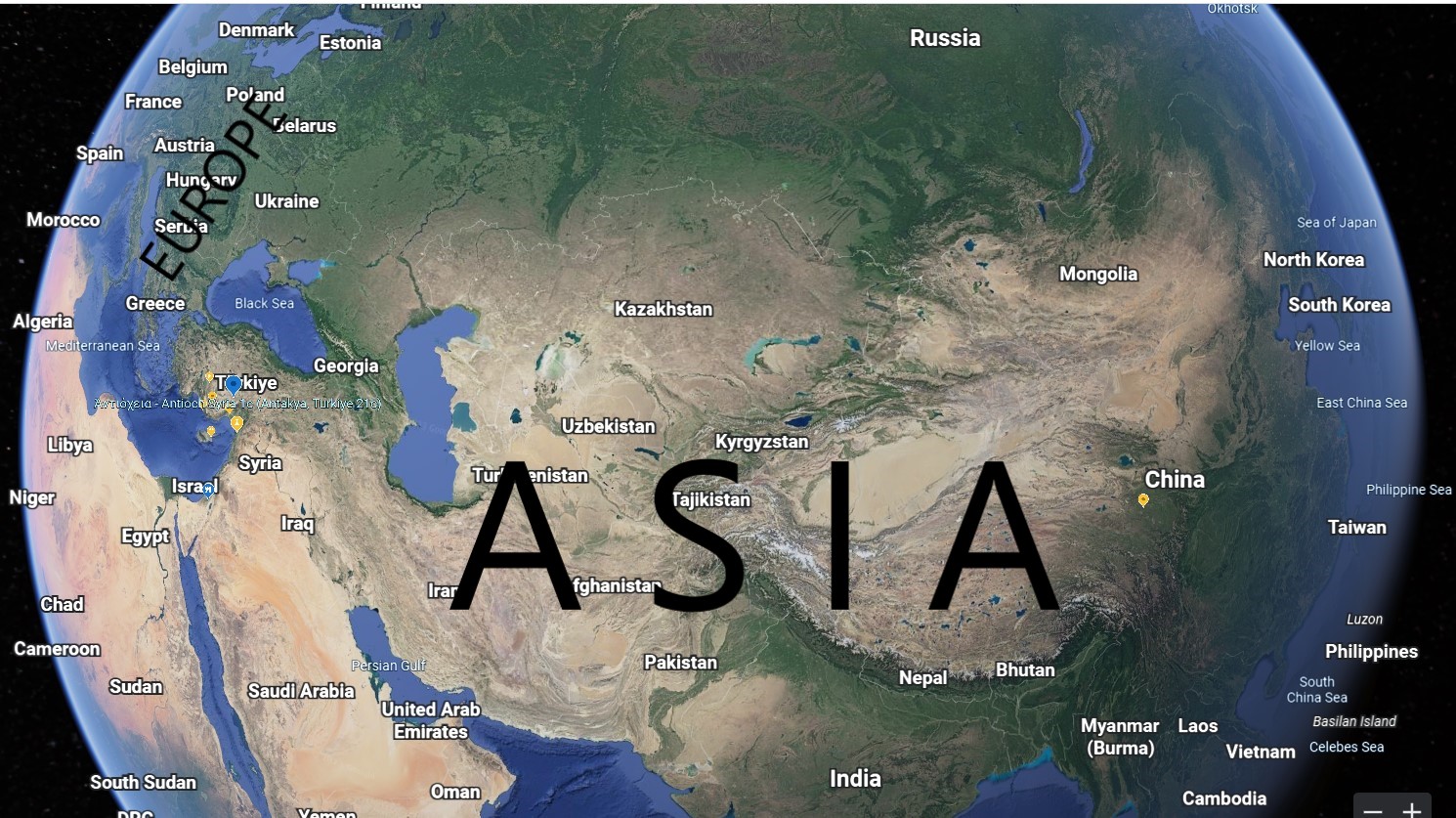
    Asia Europe Africa 21st c. view from Google Earth
    ASIA ~30% of land area of earth, part of Eurasia, ~17 million sq. miles
    Join me as I refresh some of my quite limited knowledge of geography - especially of Asia.

    Asia facts from WorldGeography.com

    • Asia is the largest and most populated continent
    • It shares land borders with Europe, which is not defined and hence share a landmass called Eurasia.
    • Afro-Eurasia is the name given to the landmass between Asia, Europe, and Africa.
    • Asia shares a lot of its extreme points with Europe, especially Russia.

    Cape Dezhnev, 66°4′45″N 169°39′7″W, located on the Chukchi Peninsular, between the Chukchi Sea and the Bering Strait [W. of Alaska] , is the easternmost point of mainland Asia.

    Pamana Island, 11°00′36″S 122°52′37″E, is the southernmost point of Asia, located in the Lesser Sunda Islands, East Nusa Tenggara province of Indonesia.

    The northernmost point on the Asian mainland is Cape Chelyuskin, 77°44′0″N 104°15′0″E. At 1370km from the North Pole, ..located at the Taymyr Peninsula,

    Westernmost Point In Asia
    • Cape Baba, 39°28′47″N 26°03′50″E, located on the Anatolian part of Turkey, is the westernmost part of Asia. Located in Babakale village also known as Father’s Castle in historical Troad. Apostles Luke’s journey around the cape, and Apostle Paul’s journey on land are recorded in the biblical book Acts of the Apostles.
    This image has an empty alt attribute; its file name is Troas-1024x656.jpg
    Troas on Cape Baba in Babakale, Turkey [Turkiye] is the westernmost point in Asia.

    Asia Minor, Roman Remnant of a former Empire

    Zoom in with Roman military eyes toward a vast empire to the east situated on the westernmost shores of Asia, fixing your eyes on adjacent Aegean shores of 21st c. Turkiye.

    This geographical-historical view of the Asia minor region is provided only for its context of culture as it intersects with Paul's missionary journeys 'into all the world' of Eurasia.
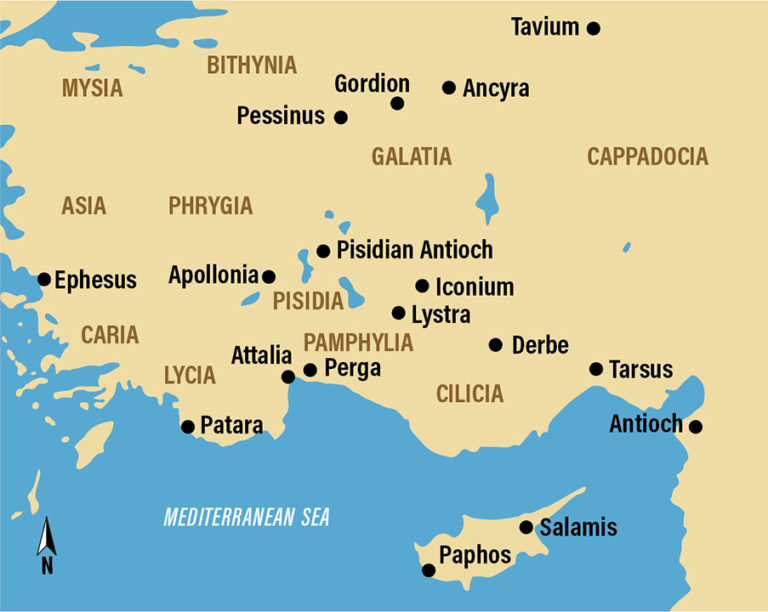
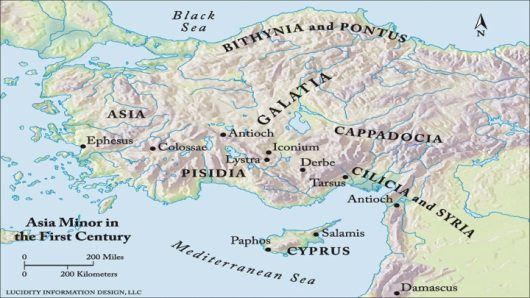
    map of 1st century Asia
    Asia Minor

    Follow the southern coastline from nearest to Rome toward the east and riches of former empires.

    Rome’s region of ASIA MINOR

    • conquered via the vast Mediterranean and inland to the Taurus mountains includes [W. to E.]:
    • Pisidia [N. of Perga],
    • Pamphylia [along a coast N. of Cypress],
    • Cilicia [with its port city of Tarsus] and finally
    • Syria (at times including Judea).
    • Further Roman conquests inland to the north included:

    a large Roman province of GALATIA

    • N from Iconium and on its Western edge Antioch Pisidia, all of the central plain to the borders of
    • a more remote Cappadocia in the mountains to the north of Cilicia and Tarsus and Antioch Syria,
    • N to Bithynia and Pontus on the Black Sea and again toward
    • Phrygia along the mountainous borders with Asia Minor toward Mysia and the strategically situated Sea of Marmara between the narrow isthmus connecting the Black and Aegean Seas.

    In Roman times, however, when Paul journeyed there, the country was divided into two parts, one of which was known as Galatian Phrygia, and

    the other as Asian Phrygia, because it was a part of the Roman province of Asia, but the line between them was never sharply drawn.

    Source: BibleAtlas.org
    In ACTS 16 the Holy Spirit forbids Paul from sharing the gospel in Asia Minor on this second missionary journey.
    And they went through the region of Phrygia and Galatia, having been forbidden by the Holy Spirit to speak the word in Asia.
    – ACTS 16:6

    The Empires Before Christ

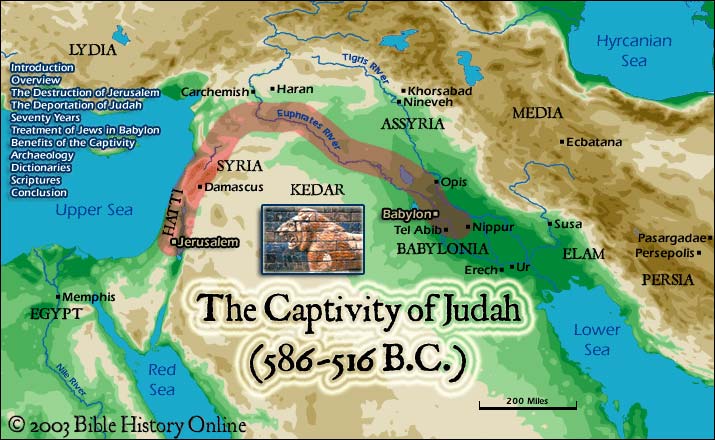
    Babylon captures Judah and brings its captives to the King of Babylon
    6th century Before Christ
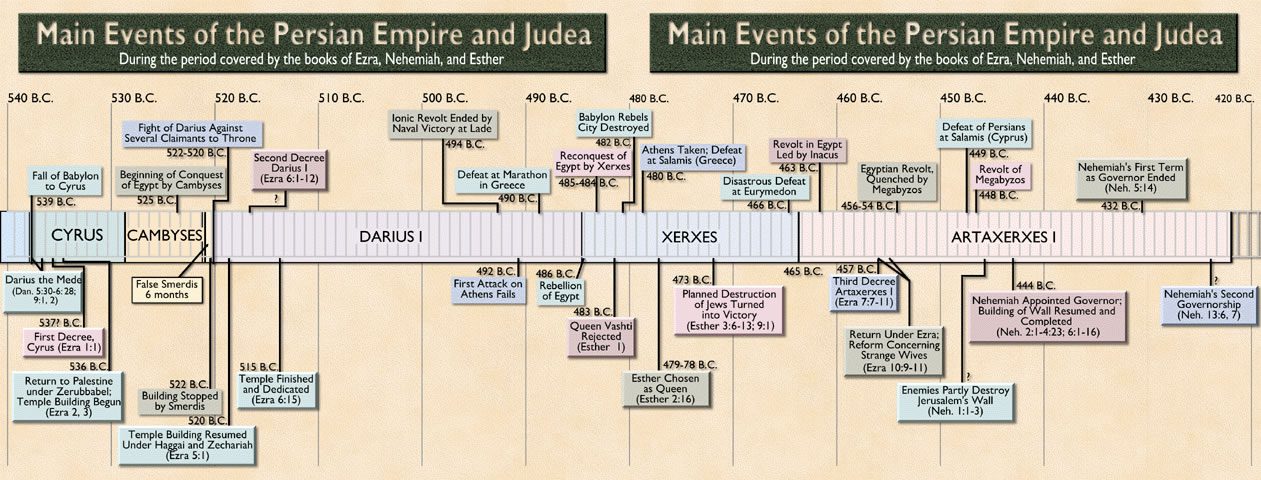
    6th-5th centuries B,C. the Persian Empire (to the East) adds the Babylonian Empire to its captive provinces

    Paul, Silas and Timothy will know these events well from Scripture, but those are no longer the Empires of concern to either the Jews or Rome. In a more recent history of Judea and Eurasia one vast Empire rivals all others.

    356 BC – Macedonia

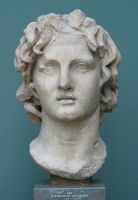
    Roman bust of Alexander the Great who conquered much of Asia and Europe

    Alexander the Great

    • Tutored by Aristotle
    • trained for battle by his father, Philip II

    Roman bust, 2nd century AD / Creative Commons license

    [Alexander’s] undermanned defeat of the Persian King Darius III at the Battle of Gaugamela is seen as one of the decisive turning points of human history, unseating the Persians as the greatest power in the ancient world and spreading Hellenistic culture across a vast new empire.

    https://www.history.com/news/alexander-the-great-defeat-persian-empire

    332 BC – Tyre: a siege of Hellenism close to home

    The siege of Tyre was orchestrated by Alexander the Great in 332 BC during his campaigns against the Persians.

    source: Wikipedia

    The reign of Alexander the Great was short-lived. After subduing all of the Persian Empire, his army marched east and got as far as India before turning back home to Macedon. But he never made it home.

    At just 32 years old, Alexander died in Persia in the palace of Nebuchadnezzar II in Babylon.

    323 BC – 30BC – a Greek-ish Eurasia

    Click the link below to see a map of the Hellenized 'Greek-ish' world after Alexander the Great where the Apostle Paul now witnesses Christ. READ a detailed lecture on 

    https://brewminate.com/wp-content/uploads/2016/04/Alexander53-768×452.gif


    There were no more city-states. Monarchies prevailed, modeling themselves after Alexander’s empire. He had achieved a divine status in his lifetime, and his successors wanted to as well. They established “ruler cults” in which they were obeyed as kings and worshipped as gods.

    A sense of cosmopolis developed in the Hellenistic Age (“polis” plus “cosmos”). Worldly, experienced, and highly-cultured people used to live in small city-states and not worry about the world beyond, but now they had seen and even ruled this world and began to say they were no longer citizens of Athens, Corinth, and so on, but instead citizens of the cosmic polis (cosmopolis), the world.

    Highly Recommended Source – From a lecture by Dr. Frank Holt, Professor of Ancient History, University of Houston (10.15.2013)

    Paul and the Apostles sent out into all the world live in the crossroads between a culture of Alexander established just a few centuries earlier AND ambitious Roman Caesars reconquering lands and cultures to be absorbed into a new Pax Romana — IF you will surrender your land and its people into one international Empire of their Roman peace.

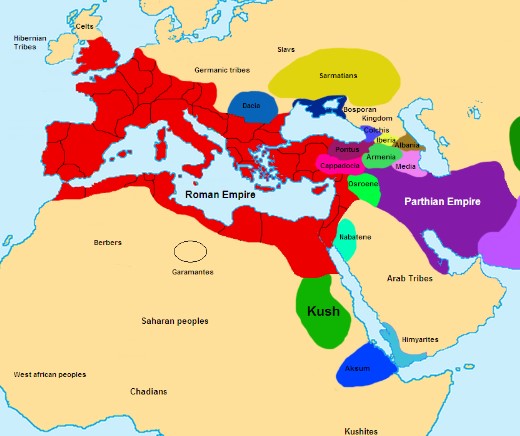
    Western Eurasia map AD50

    AD 50 – Eurasia

    The year in the middle of Paul’s 2nd Missionary Journey.

    Rome had conquered the Ptolemaic Kingdom of Egypt near Judea some time ago, but the Empire’s military defense of the Eastern front in Syria kept close eye on the Parthian Empire and frequently engaged in battle losing and retaking various land.

    A Greek-ish in culture of the Eurasian world remained reticent of Roman Legions suppressing unwilling rulers in uncooperative localities.


    Politically astute men like a Herod or Saul of Tarsus understood this ever-shifting landscape of living as part of the political leadership and military power of the Roman Empire.

    Paul would have been attuned to recent changes in both Asia and Europe as the Apostle now travels toward a new destination with Silas and Timothy. They seem to be travelling intentionally and slowly (which we might easily miss in these few brief verses of Acts.

    AD 43 – During those years after Paul had witnessed Jesus on the road to Damascus, just four years prior to his first missionary journey here and to Cypress, Rome had invaded Britannia in the West. Legions had also conquered Lycia on the SW coast near Asia Minor where previously they had sailed to and from Perga.

    Lycia Source: Wikipedia

    AD 46 – Just a year prior to Paul’s first missionary journey

    After the death of the Thracian king Rhoemetalces III in 46 AD and an unsuccessful anti-Roman revolt, the kingdom was annexed as the Roman province of Thracia. The new province encompassed .. the north-eastern portion of the province of Macedonia as well as the islands of Thasos, Samothrace and Imbros in the Aegean Sea.

    Source: Wikipedia

    Acts of the Apostles 16:

    Previously:

    As they went on their way through the cities, they delivered to them for observance the decisions that had been reached by the apostles and elders who were in Jerusalem. So the churches were strengthened in the faith, and they increased in numbers daily.


    6 And they went through the region of Phrygia and Galatia, having been forbidden by the Holy Spirit to speak the word in Asia.


    These apostles sent out from Antioch Syria have traveled about half-way on this 2800 mile [4500 km] journey into a Greek-ish Roman-ruled world. Their remaining journey in Euro-Asia will include many more important cities where they will preach the Gospel of Jesus Christ in the upcoming year.


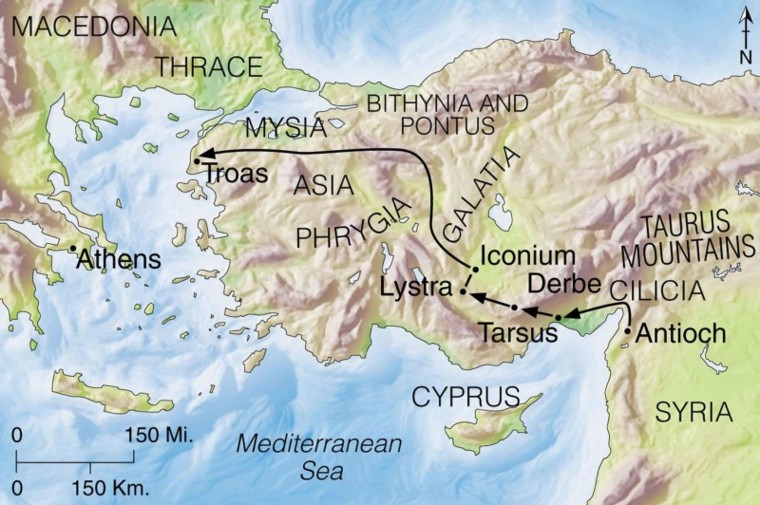
    And when they had come up to Mysia, they attempted to go into Bithynia, but the Spirit of Jesus did not allow them. So, passing by Mysia, they went down to Troas.

    Acts 16: route of the apostles Paul, Silas & Timothy headed toward Troas beyond Asia Minor. source: graceofourlord.com
    Paul’s 2nd Missionary Journey – first half through Asia

    To be continued…