The following Scriptural Rerun, although not a part of our current Apostolic Faith SERIES, will provide additional context for our look at the Gospel of John written about five years before the Elder's Epistles.
READ any post linked below from our 2020 SERIES from the Gospel of John
Scriptural exposition in the context of A.D. 85-90,
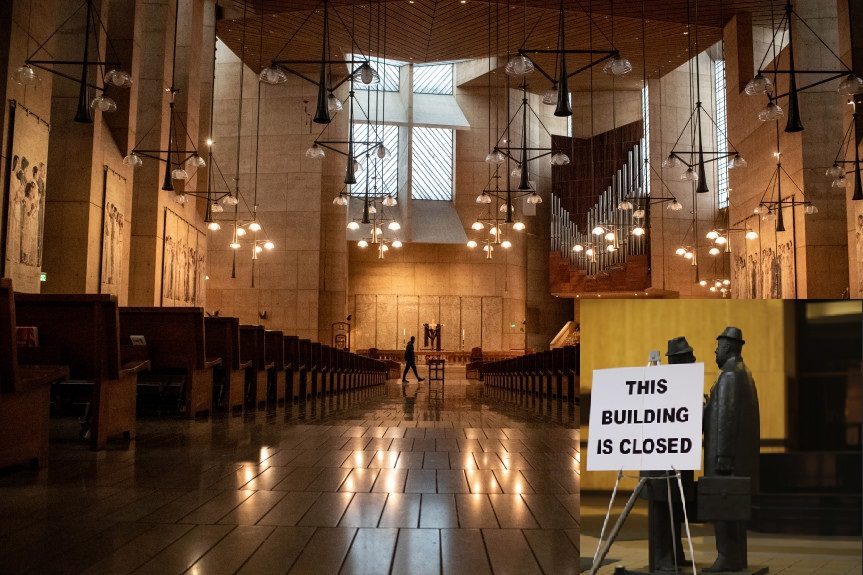
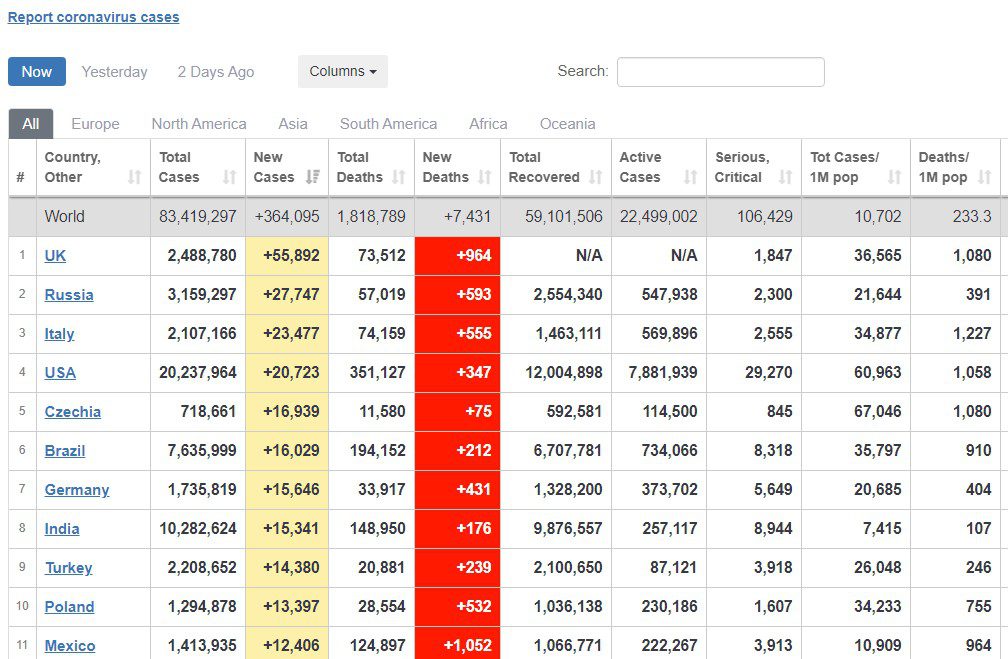
19 March AD2020 Churches ordered closed..while during recent months:
some sought to stream the stage of worship
some sent seeker-friendly scripture into our homes
some church communities disintegrated while others diminished & distanced (like our 2020 remote office meetings complete with slides).
To review the Gospel of John, simply click on any link in the outline below& it will open in a new window.
Roger – author of A.D. 2020 series on the Gospel ‘Good NEWS’ of John
I hope you were blessed by the secure links to reliable sites for further study of Scripture, as well as insight into the 1st century church of John’s Gospel (written ~A.D.- 90).
IN THE BEGINNING was the Word, and the Word was with God, and the Word was God. He was in the beginning with God.
ALL THINGS came into being through Him, and apart from Him not even one thing came into being that has come into being. In Him was life, and the life was the Light of
MANKIND.
And the Light shines in the darkness, and the darkness did not grasp it.
14 And the Word became flesh, and dwelt among us; and we saw His glory, glory as of the only Son from the Father, full of grace and truth.
The Book of the Prologue
John’s Prologue [1:1-18], from which the Apostle next proceeds to the testimony of John the Baptist and the Messiah’s calling of the Twelve, states many important theological themes & along with his Epilogue [21:1-25 {linked below}] provides additional depth of purpose of John’s Gospel.
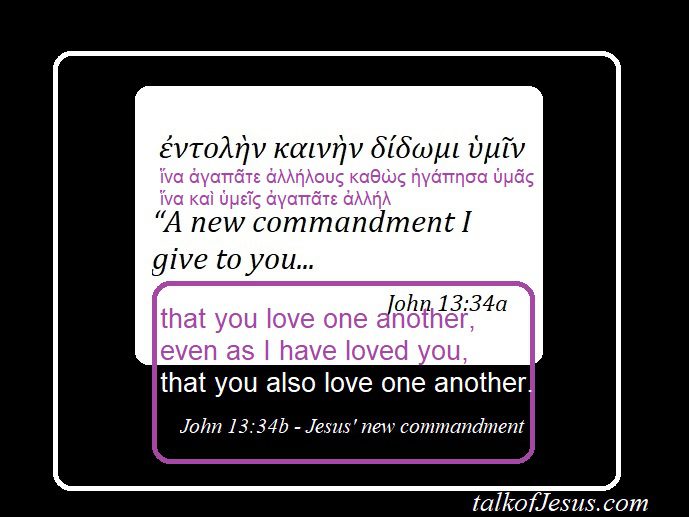
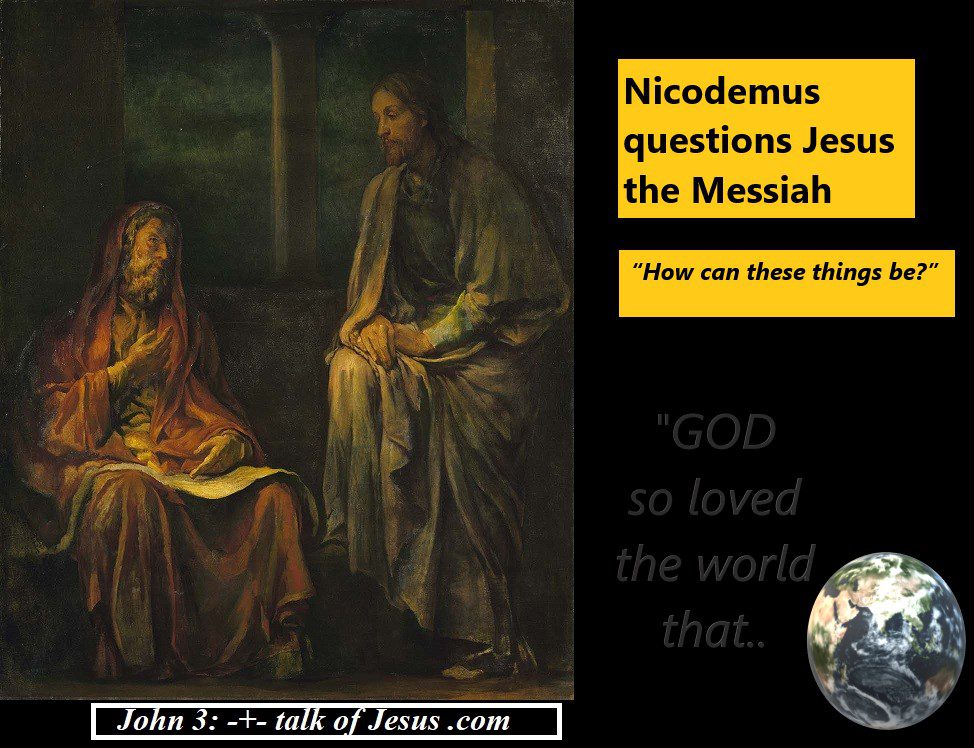
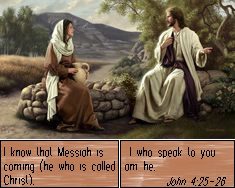
‘My Father’s House – John 2“You must be born again.I am the Messiah – John 4Before Abraham was, I AM John 11“..and he who hates his life in this world will keep it to life eternal.also love one another-John 13Jesus prays – John 17Jesus answered him – John 19:11 Jesus said:
Gospel of John
“Behold! The Lamb of God who takes away the sin of the world! – John 1:29b
As Jesus passed by, He saw a man who had been blind from birth. – John 9:1
Are you greater than our father Abraham who died? And the prophets died. Who do you claim to be?” – John 8:53
“But you do not believe because you are not of My sheep.
My sheep hear My voice, and I know them, and they follow Me;
and I give eternal life to them, and they will never perish; and no one will snatch them out of My hand. – John 10:26-28
Jesus said to her, “Your brother will rise from the dead.”
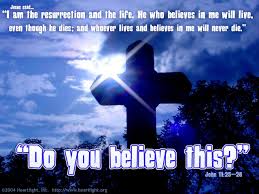
.. “I am the resurrection and the life; the one who believes in Me will live, even if he dies, and everyone who lives and believes in Me will never die.
Hear all the unrelenting bad news of yesterday or today or any future year in the Common Era of these last days.
For followers of Jesus, His death diminished life’s hope in eternal life;
that is, until the GOOD NEWS of the Lord’s resurrection reached the eyes and ears and touch of His dearly beloved friends.
John and the Disciples witnessed the Lord Jesus in His Risen Flesh several times after His resurrection, as had hundreds of other disciples also seen their risen Christ!
but these are written that you may believe that Jesus is the Christ, the Son of God, and that believing you may have life in His name.
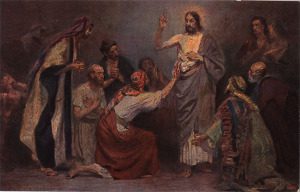
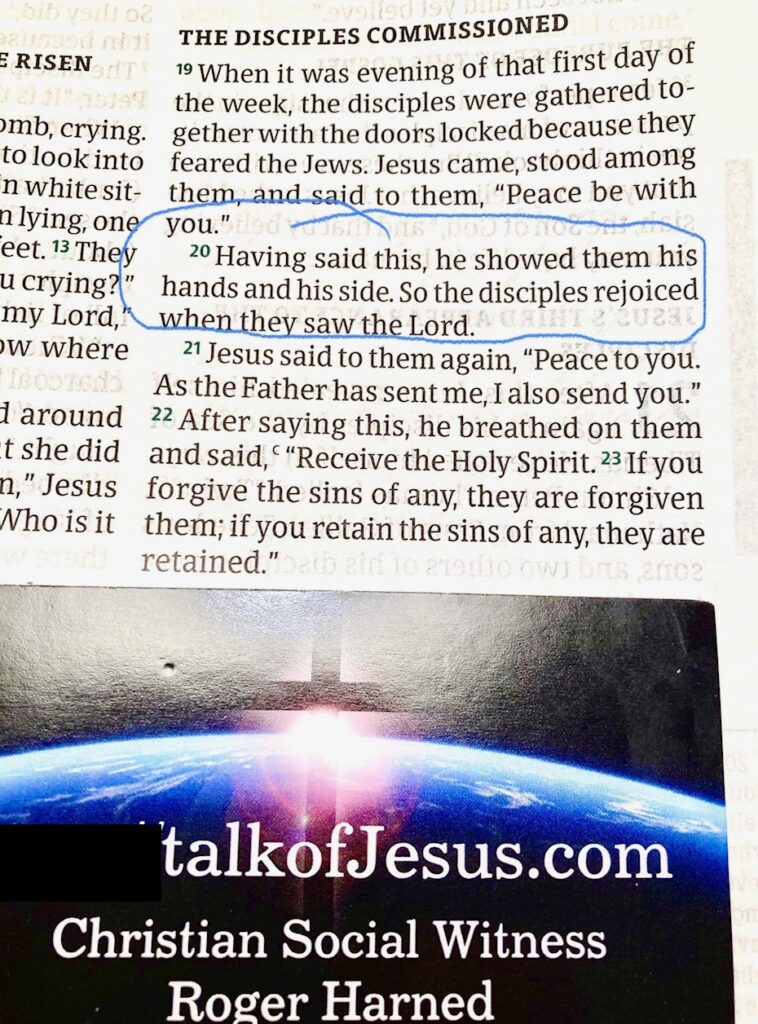
And when He had said this, He showed them both His hands and His side. The disciples then rejoiced when they saw the Lord.
John 20:20
Their sorrow had turned into joy and so must ours; for in Christ Jesus his disciples of every generation have eternal life through His sacrifice for our sins. This is our Gospel, John’s Good News to those who would believe.
John’s Epilogue
John 20:30 Jesus performed many other signs in the presence of his disciples that are not written in this book.
But these are written so that you may believe that Jesus is the Messiah, the Son of God, and that by believing you may have life in his name.
John 20:21 CSB
Go in Peace and Believe
I pray that the Lord has blessed you through the Gospel of John in A.D. 2020 and now I might add, the Good NEWS of John by God’s grace continuing these last days in 2023 of the Common Era ..
May our Lord Jesus Christ
draw you into His grace,
giving you new hope of Eternal Life in the remaining years of our Common Era of 2023 and beyond if it is God's will,in the Name of the Father and the Son Christ JESUS, Who IS and Was and will judge all things when the Lord returns, and the Holy Spirit who sustains saved sinners in these last days.
AMEN.
From familiar Scripture as a young man near Jesus,
or an old man on Patmos;
or do you see a faithful man following Jesus on an extraordinary journey lasting many years?
INTRODUCTION to JOHN’s Apostolic Faith
late A.D. 20’s at the Jordan river near Bethany
John was there again with two of his disciples. When he saw Jesus walking by, he said, “Look, the Lamb of God!” And when the two disciples heard him say this, they followed Jesus.
Jesus turned and saw them following.
“What do you want?”
“Rabbi”
“where are You staying?”
“Come and see,”
So they went and saw where He was staying, and spent that day with Him.
Gospel of John 1:35-39 excerpt, BSB
James and his young brother John were not sleeping when the Messiah of Israel came to their Rabbi, John the Baptist.
In fact, these two sons of Zebedee had sought the savior of Israel, and then found and followed John the Baptist (who many Jews believed could be the one).
Then they would join the Master of whom John spoke, and follow Him when the Lord sought His own disciples from their own little fishing village far removed from Jerusalem.
Introduction to Jesus’ Disciple John
John is a familiar and beloved Disciple of Jesus, well-known to Christians and unbelievers alike through the Gospels, as well as numerous illustrations and paintings often commissioned by the Roman or OrthodoxChurch many centuries later.
~ in the year of our Lord 30
He and others likely didn't have a visible halo over their heads. And art such as DaVinci's, 'The Last Supper,' — with young John clinging to Jesus, which illustrates John's actual devotion — shows a long table and chairs never used in upper rooms of the A.D. first century.
A.D. 30’s – A.D. 50’s
Perhaps Christians will recall that prior to His crucifixion, JESUS sent the Twelve out to some cities to proclaim the Gospel.
And some may recall that the APOSTLE John was with Peter when both Apostles had been sent to preach in the Temple after Pentecost (~A.D. 30), were witnessed to work miracles.
“How is it that each of us can hear them in our own native language?
Followers of Jesus Christ in these last days will generally picture the Apostle Jesus loved as he began his faithful path of life in the early years of John’s life (when he was only in his twenties).
Even in Acts of the Apostles, our early focus turns from Peter (and John, somewhat) primarily to Paul.
Although John’s Gospel details key witness of the Lord Jesus Christ prior to the Lord’s death, resurrection and ascension, the Apostle wrote his Gospel for the Church many years later, around the year of our Lord (A.D.) 85 – fifty some years after Pentecost.
~ A.D. 50 – ~ A.D. 100
The Apostle John wrote his final letters near the end of the A.D. First Century!
Written between a mid-first century Council in Jerusalem and his own natural death near the end of the A.D. First Century, the Epistles of John reveal a familiar festering of indignancy between Jerusalem’s Jews and occupying Roman legions.
Christians were caught in a new light leading them to dangerous intersections of worldly clashes affecting the lives of Jews, Romans, Greeks and every saint seeking Christ.
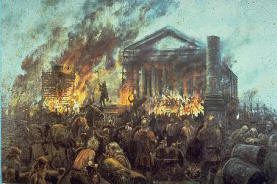
Pictured: A.D. 70 burning of the Temple in Jerusalem by the occupying Roman army.
Writing to the Jews, the saints and the Romans
The saints of the Church witnessed Apostolic faith in a Roman governed world with diminished Jewish influence throughout Syria, Asia, and Europe (including Rome) — and even in Rome’ s local Herodian tetrarchies which included Galilee and Judea, with the city of Jerusalem.
The Apostle John wrote to saints who came to Christ from all of these varied backgrounds — saints and their Elders new to the Gospel, in need of sound teaching and vulnerable to temptations of false teaching.
Introduction to John’s Epistles
In order to further understand a turbulent historic setting for this SERIES on the final LETTERS of JOHN, we will first take a brief look at the first century Church and also look ahead to John’s other well-quoted book, Revelation.
FINALLY — with God’s help and that of theologians more studied than me —I hope to tie it all together by studying the two briefest letters in the New Testament: the Epistles of Second John and Third John.
COMMMENT with your QUESTIONS and observations about the THREE Letters of John at anytime.
Your input may be important to our understanding of John's letters.
NEXT: Reintroducing John, the man, disciple, Apostle and Elder
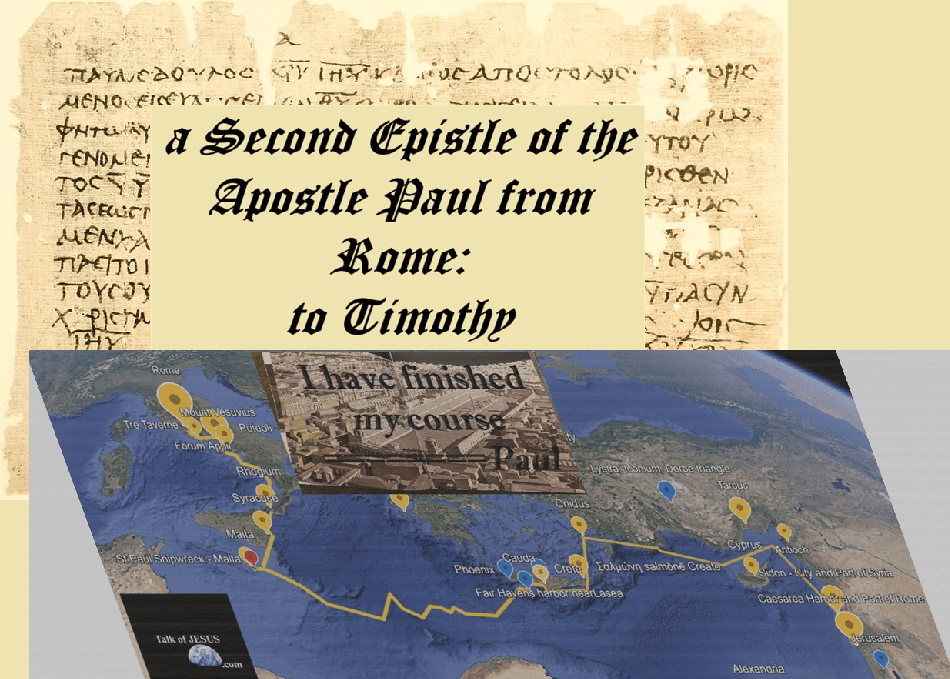
The Apostle now closes his final letter to Timothy noting that his course redirected by Christ on a road to Damascus so many years before — his marathon race of missions into all the world — indeed even the end of the Apostle’s mortal life is at hand.
in the N. T. σπένδεσθαι, to be offered as a libation, is figuratively used of one whose blood is poured out in a violent death for the cause of God
Paul, with Timothy about five years earlier, had written to the church in Philippi:
Do all things without grumbling or disputing, so that you will be blameless and innocent, children of God without blemish in the midst of a crooked and perverse generation, among whom you shine as lights in the world, holding fast the word of life, so that in the day of Christ I will have reason to boast because I did not run in vain nor labor in vain.
But even if I am being poured G4689 out G4689 as G4689 a G4689 drink G4689 offering G4689 upon the sacrifice and service of your faith, I rejoice and share my joy with you all.
And you also, rejoice in the same way and share your joy with me.
Epistle of Paul and Timothy, slaves of Christ Jesus,
To all the saints in Christ Jesus who are in Philippi 2:14-18 LSB
The Apostle had then sent Timothy and Epaphroditus to the church at Philippi.
For I am already being poured out as a drink offering, and the time of my departure has come.
2 Timothy 4:6 – Greek NT, LSB:
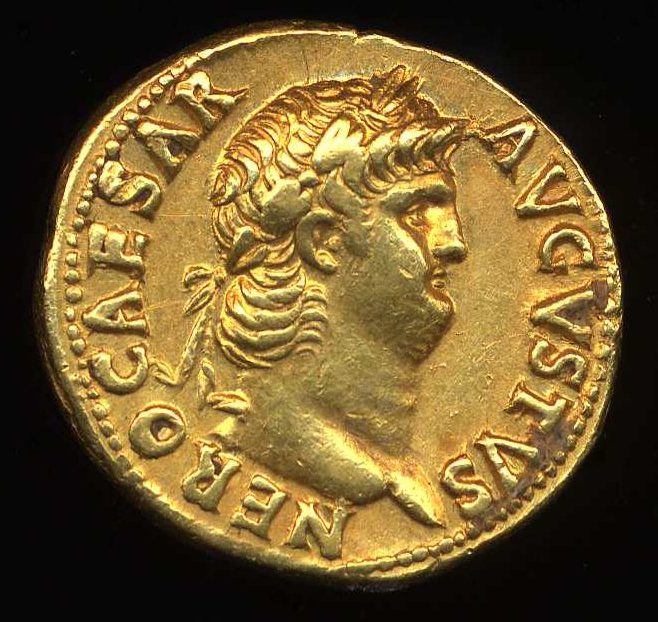
Although Paul was formerly housed in Rome for some time as a citizen having appealed to Caesar, the Apostle is now imprisoned with many others awaiting the whim of a merciless new Caesar Nero.
I have fought the good fight, I have finished the race, I have kept the faith.
Second Epistle of the Apostle Paul to Timothy 4:7 NKJV
to struggle, literally (to compete for a prize), figuratively (to contend with an adversary), or genitive case (to endeavor to accomplish something):—fight, labor fervently, strive.
That would be the Apostle Paul alright. Every saint of the church recognized his example which the Apostle expected them to follow, as they would Christ, who said:
“Strive G75 to enter through the narrow door, for many, I tell you, will seek to enter and will not be able.
Gospel of Luke (the physician who traveled with Paul who had written his Gospel while accompanying the Apostle) 13:24 LSB
Paul had written to the saints in Corinth [~A.D. 55] some ten years ago:
Now everyone who competes G75 in G75 the G75 games G75 exercises self-control in all things. They then do it to receive a corruptible crown, but we an incorruptible.
Therefore I run in such a way, as not without aim; I box in such a way, as not beating the air; but I discipline my body and make it my slave, so that, after I have preached to others, I myself will not be disqualified.
1 Corinthians 9:25-27 LSB
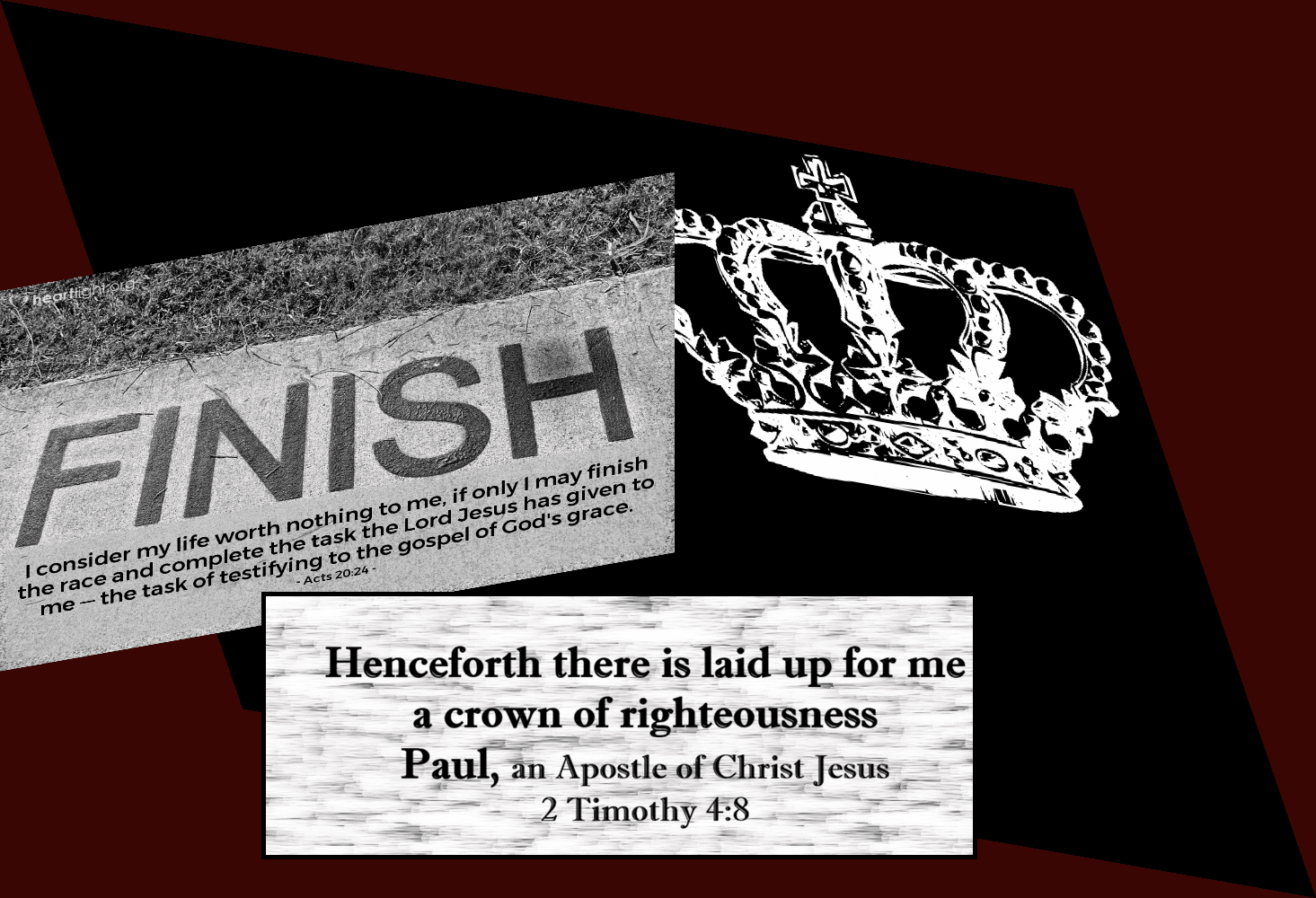
I have finished the course
However, I consider my life worth nothing to me; my only aim is to finish the race and complete the task the Lord Jesus has given me—the task of testifying to the good news of God’s grace.
Acts of the Apostles 20:24 NIV – Paul’s Farewell to the Ephesian Elders
Paul, since his conversion by Christ on the road to Damascus is, if nothing else, consistent in his persistence for the Gospel, even though the Apostle’s mortal life seems always in peril.
I have fought a good fight, I have finished my course..
to do just as commanded, and generally involving the notion of time, to perform the last act which completes a process, to accomplish, fulfill
Luke recounts what Jesus had told the Twelve prior to His crucifixion:
“I came to bring fire on the earth, and how I wish it were already set ablaze! But I have a baptism to undergo, and how it consumes me until it is finished [or accomplished – teleō]!
Do you think that I came here to bring peace on the earth?
No, I tell you, but rather division.
Gospel of Luke 12:49-51 CSB
And in his second account Paul’s physician reports of Christ’s crucifixion, where the Lord Himself spoke, “It is finished,”
When they had carried out [teleō] all that had been written about him, they took him down from the tree and put him in a tomb. But God raised him from the dead, and he appeared for many days to those who came up with him from Galilee to Jerusalem, who are now his witnesses to the people.
Acts of the Apostles 13:29-31 CSB – from Paul’s Sermon in Antioch of Pisidia
I have kept the faith
What does that mean to you?
Do you have the Apostolic faith of Paul.. or Timothy?
Who can say, “I have kept my heart pure,
I am clean from my sin”?
Proverbs 20:9 LSB
“If you keep My commandments, you will abide in My love;
just as I have kept My Father’s commandments and abide in His love [agapē].
These things I have spoken to you so that My joy may be in you,
and that your joy may be G4137 complete G4137.
John 15:10 -11 LSB – JESUS
And PAUL personally addressed Timothy earlier in this second letter:
… I unceasingly remember you in my prayers night and day, longing to see you, having remembered your tears, so that I may be filled [plēroō ] with joy, receiving remembrance of the unhypocritical faith within you.
Second Epistle of Paul to Timothy 1:3b-5a LSB
At last the champion’s wreath
Paul finishes his final epistle:
Finally, there is laid up for me the crown of righteousness, which the Lord, the righteous Judge, will give to me on that Day,
and not to me only but also to all who have loved His appearing.
2 Timothy 4:8 NKJV
NEXT: Paul’s last personal pleas
Comment on Scripture – Share the Gospel
Cookie Consent
We use cookies to improve your experience on our site. By using our site, you consent to cookies.
Used to monitor number of Google Analytics server requests
10 minutes
__utmb
Used to distinguish new sessions and visits. This cookie is set when the GA.js javascript library is loaded and there is no existing __utmb cookie. The cookie is updated every time data is sent to the Google Analytics server.
30 minutes after last activity
__utmc
Used only with old Urchin versions of Google Analytics and not with GA.js. Was used to distinguish between new sessions and visits at the end of a session.
End of session (browser)
__utmz
Contains information about the traffic source or campaign that directed user to the website. The cookie is set when the GA.js javascript is loaded and updated when data is sent to the Google Anaytics server
6 months after last activity
__utmv
Contains custom information set by the web developer via the _setCustomVar method in Google Analytics. This cookie is updated every time new data is sent to the Google Analytics server.
2 years after last activity
__utmx
Used to determine whether a user is included in an A / B or Multivariate test.
18 months
_ga
ID used to identify users
2 years
_gali
Used by Google Analytics to determine which links on a page are being clicked
30 seconds
_ga_
ID used to identify users
2 years
_gid
ID used to identify users for 24 hours after last activity
24 hours
_gat
Used to monitor number of Google Analytics server requests when using Google Tag Manager
1 minute
_gac_
Contains information related to marketing campaigns of the user. These are shared with Google AdWords / Google Ads when the Google Ads and Google Analytics accounts are linked together.


![“He who loves his [fn]life loses it, and he who hates his [fn]life in this world will keep it to life eternal.](https://talkofjesus.com/wp-content/uploads/2015/03/triumphal-entry.jpg)