
Luke 7
English Standard Version (ESV)
Messengers from John the Baptist
18 The disciples of John reported all these things to him. And John, 19 calling two of his disciples to him, sent them to the Lord, saying, “Are you the one who is to come, or shall we look for another?”
“Are you the one…?”
It seems like an odd question for John the Baptizer to send to Jesus, upon whom he has witnessed the Holy Spirit descend.
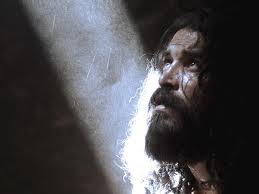 Let’s put it into the context of John’s imprisonment by Herod for a moment (and erase from our 21st c. prejudices all images from movies, children’s Bible story books, stained glass windows and emotion-filled preaching seeking new Christians for baptism). What was John thinking?
First (and presently, in this context of Luke 7), John has already baptized Jesus and like everyone else is waiting for His Kingdom to come. John is under threat of his own life from the ‘vipers’ of the Temple, Pharisees teaching each jot and tittle of the Law properly in the synagogues, and (or course) King Herod II.
Recall also that some of John’s own disciples are now disciples of Jesus. At the peril of the threats of the King, officials of the Temple, officials of the synagogues, Roman army, Temple guards, palace guards and possibly others; John sends a message to Jesus.
John must have thought, ‘You have been out there teaching for a while. My time is very short, I am certain. Please let me know (before they kill me) what I must die for. What are you going to do? Are you the One?’
The Priesthood of Herod’s Temple is illegitimate; therefore the Nazirites have separated themselves to worship God legitimately, even in the wilderness, if they must. This is the place of worship for John and his disciples. It is the place of worship for other Nazarites until the Temple of God is restored. John’s vow as a Nazarite is not unfamiliar to those who know well the Law of Moses from Numbers 6. John is separated and consecrated to God.
No picture of John the Baptizer can do him justice, but look to scripture and you will discover the depth of commitment to the purity of worship to God of these men (in the tradition of Samson).

John is not a powerful man, as was Samson; but a man with the power of the word of God spoken with fire. John wears camel-hair clothes (not linen or anything even comfortable like the clothes of ordinary Galileans) and subsists on the food of locusts and the honey of the bees of the wilderness.
Unlike Samson, John would likely appear skinny, yet also quite wild by the coarseness of his weather-exposed skin and the long uncut hair of a Nazirite.
Numbers 13: And the people of Israel again did what was evil in the sight of the Lord, so the Lord gave them into the hand of the Philistines for forty years.
2 There was a certain man… Manoah. And his wife was barren and had no children. 3 And the angel of the Lord appeared to the woman and said to her, “Behold, you are barren and have not borne children, but you shall conceive and bear a son.4 Therefore be careful and drink no wine or strong drink, and eat nothing unclean, 5 for behold, you shall conceive and bear a son. No razor shall come upon his head, for the child shall be a Nazirite to God from the womb, and he shall begin to save Israel from the hand of the Philistines.”
24 And the woman bore a son and called his name Samson. And the young man grew, and the Lord blessed him. 25 And the Spirit of the Lord began to stir him in Mahaneh-dan, between Zorah and Eshtaol.
John, who has come to God’s people when they had ‘done what was evil in the sight of the Lord (even by placing Priests not from God in God’s Temple), warns of the coming Messiah and now sends to Jesus, knowing how Samson’s death had also glorified the Lord. John asks Jesus the question heavy on his heart. You might even call it a final request from an imprisoned and condemned man.
[Continuing from the eyewitness of Luke 7:]
20 And when the men had come to him, they said, “John the Baptist has sent us to you, saying, ‘Are you the one who is to come, or shall we look for another?’”
What do true messengers witness and what do true witnesses report?
Truth.
John is not doubting. John’s heart longs to witness truth.
Dr. Luke’s Gospel records the truth of witnesses to Jesus this time:
21 In that hour he healed many people of diseases and plagues and evil spirits, and on many who were blind he bestowed sight.
22 And he answered them, “Go and tell John what you have seen and heard: the blind receive their sight, the lame walk, lepers are cleansed, and the deaf hear, the dead are raised up, the poor have good news preached to them. 23 And blessed is the one who is not offended by me.”
Jesus’ answer to John’s message asking for proof of witness is not only what Jesus replies, but also the fruit of Jesus’ work. The messengers of John have seen this miracles with their own eyes.
See v.21 once more with your own eyes (this time from the KJV.) And in that same hour he cured many of their infirmities and plagues, and of evil spirits; and unto many that were blind he gave sight.
24 When John’s messengers had gone, Jesus began to speak to the crowds concerning John: “What did you go out into the wilderness to see?”
Picture this wild-looking Prophet, John the Baptizer, Nazirite of the wilderness in camel-hair with a loud and stirring gospel of urgency for your souls: “Repent! And be baptized.”
(Jesus answers for the multitudes:) “… A reed shaken by the wind? 25 What then did you go out to see? A man dressed in soft clothing?”
Again, Jesus answers for the multitudes, some who follow Him now who once followed John:
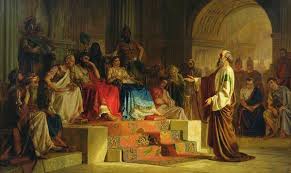
“… Behold, those who are dressed in splendid clothing and live in luxury are in kings’ courts. 26 What then did you go out to see? A prophet? Yes, I tell you, and more than a prophet. 27 This is he of whom it is written,
“‘Behold, I send my messenger before your face,
who will prepare your way before you.’
28 I tell you, among those born of women none is greater than John. Yet the one who is least in the kingdom of God is greater than he.”
29 (When all the people heard this, and the tax collectors too, they declared God just, having been baptized with the baptism of John,
30 but the Pharisees and the lawyers rejected the purpose of God for themselves, not having been baptized by him.)
…To be continued
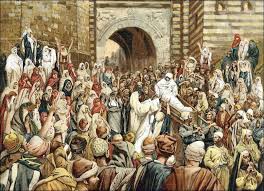
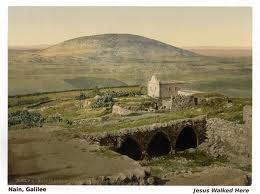
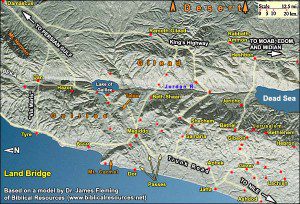
 Luke 7:11 Soon afterward he went to a town called Nain, and his disciples and a great crowd went with him.
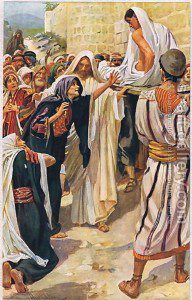 And he said, “Young man, I say to you,arise.” 15 And the dead man sat up and began to speak, and Jesus gave him to his mother.
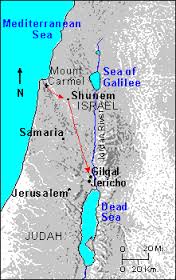 8 One day Elisha went on to Shunem, where a wealthy woman lived, who urged him to eat some food. So whenever he passed that way, he would turn in there to eat food.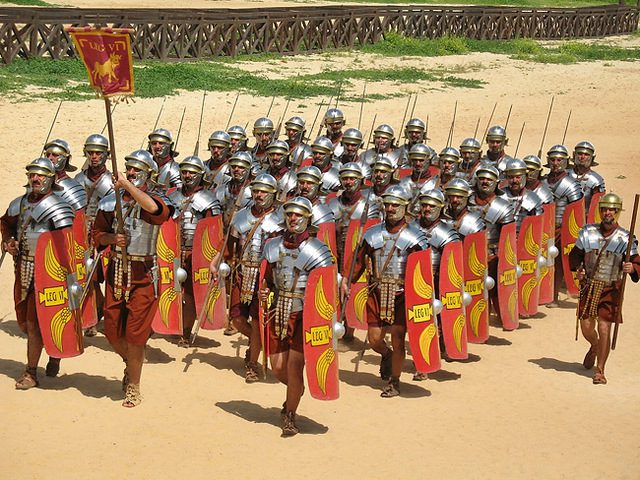
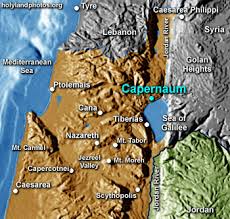
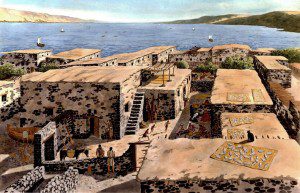 Jesus returns to his new home, followed by the crowds of onlookers.
 4 And when they came to Jesus, they pleaded with him earnestly, saying, “He (this gentile, Roman centurion) is worthy to have you do this for him, 5 for he loves our nation, and he is the one who built us our synagogue.”