How did Twelve Apostles minister to multitudes of disciples of a growing Church?
- Who would lead change after hearing their murmurings,
- (And THAT, knowing that some came to Christ from one TRADITION,
- while others came to the Lord from diverse ethnic standards of community, family and worship of God.)
- How can WE help relieve so many PERSONAL problems for hundreds of families belonging to our growing church?
- WHEN will we ever have time to minister to our church family?
- What must we do for each and every saint of our Lord Christ Jesus?
ACTS of the Apostles and the Jerusalem CHURCH 6:1-7
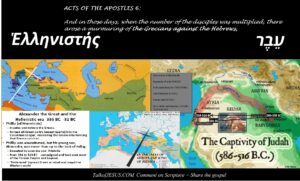
Now in these days when the disciples were increasing in number, a complaint by the Hellenists arose against the Hebrews because their widows were being neglected in the daily distribution.
ACTS of the Apostles 6:1 ESV
Leading through diverse difficulties of a growing Church
‘.. but we have always done it THIS way?’
(This isn't going to be so easy, is it?)

Luke reveals the cultural challenge of the church familiar to him, however most of us (in this 21st century) will not understand the root of the problem:

Mixing gentiles with Jews. Even bringing the traditional challenge of some Jews joining in fellowship with other Jews divides political alliances in the Sanhedrin of Jerusalem.

Therefore I will begin by including a background for our scene in first century Jerusalem, as well as outcomes of church ministry which have occurred over two millennia. - RH
First let’s clarify some ‘church‘ terms we derive from the Greek language of the New Testament.
Who are Apostles? (and who are Disciples?)
- HOW MANY APOSTLES?
- TWELVE (our standard answer)
- WHO ARE THE APOSTLES?
- No need here to recite them by name, but remembering:
- ALL Apostles at this point in ACTS are leaders of the Church in Jerusalem.
- Matthias has now replaced Judas.
- Saul of Tarsus will soon encounter the risen Christ Jesus and join in ministry as Paul, the Apostle to the Gentiles.
ἀπόστολος – full definition linked here
Disciples (disciples)
Strictly speaking, disciples are the ones taught; that is, anyone who follows the teachings or traditions of any teacher or rabbi.
The disciple G3101 is not above his master [didaskalos],
nor the servant [doulos] above his lord [kyrios].
Instruction of Jesus Christ – Matthew 10:24
לִמּוּד
54:13 וְכָל־בָּנַיִךְ לִמּוּדֵי יְהוָה וְרַב שְׁלוֹם בָּנָֽיִךְ׃
And all thy children shall be taught H3928 of the LORD; and great shall be the peace of thy children.
prophesy of the Messiah by Yeshaiya (Isaiah) 54:13
μαθητής mathētḗs, math-ay-tes’; from G3129; a learner, i.e. pupil:—disciple.
- The Twelve were disciples of Jesus who followed their Teacher full-time for three years.
- You’ve probably noticed that most translations of the Bible capitalize ‘disciple’ to avoid confusion when referring to the Twelve Disciples [Apostles].
- Many others of the multitudes also became disciples and followed Jesus Christ in the early days before his crucifixion and resurrection.
Now, in our scene in Jerusalem after the Lord’s resurrection, the Church in Jerusalem has many disciples – disciples of the Holy Spirit (who of course first receive the Holy Spirit, as we have just read from Luke’s account).
Yet from Jesus’ instruction from the Gospel of the Apostle Matthew, note another distinction of this relationship between rabbi and pupil: that of master (or lord) and servant.
These also apply in Luke’s account describing the model by which the Apostles lead the early Church.
Our NEW Pastors 🙂
(Some call them: ‘ministers‘)
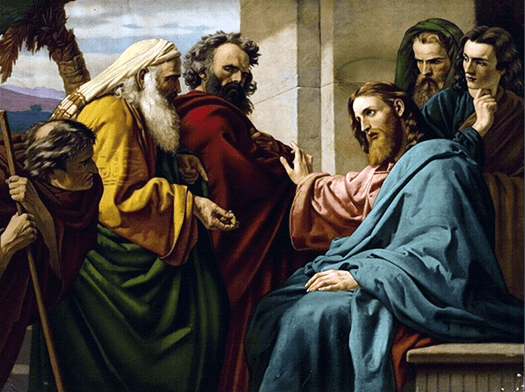
- FIRST: Jesus was the Rabbi. And Jesus was the Master.
- THEN: The APOSTLES became the Rabbis. And the Apostles were then masters of their sheep (students; flocks, servants, community, school, fold, gathering, or whatever you may choose to call this multitude of the Church).
Woe be unto the pastors that destroy and scatter the sheep of my pasture! saith the LORD.
Israel is a scattered sheep; the lions have driven him away: first the king of Assyria hath devoured him; and last this Nebuchadrezzar king of Babylon hath broken his bones.
Jeremiah 23:1, 50,17 KJV
But it shall not be so among you: but whosoever will be great among you, let him be your minister; G1249
Gospel of Matthew 20:26 KJV – Teaching of Jesus to His disciples
The Twelve, led by two of Jesus’ inner circle of Apostles, Simon Peter and John, now lead the New Testament Church as rabbis to a multitude of disciples.
Lambs of the Apostles’ fold
The Apostle John, who Luke records as standing at Peter’s side on the day of Pentecost, opens our eyes to the resurrected Jesus, where the Lord calls on Peter to restore the foundation of his calling:
“Tend My lambs.” .. “Shepherd My sheep.” .. “Tend My sheep.
The risen Master’s loving command to Simon Peter to minister to His church – Gospel of John 21:15,16,17
These new disciples of the Twelve include NOT ONLY men from traditional Judaism, but also men, women and children accepted into fellowship, tender young lambs of Jesus who could NEVER before have been full members of their community of faith in the Lord God.
“And I have other sheep that are not of this fold; I must bring them also, and they will listen to My voice; and they will become one flock, with one shepherd. For this reason the Father loves Me, because I lay down My life so that I may take it back.
Jesus teaching the Jews that He will Shepherd the gentiles, as scripture has said. – Gospel of John 10:16-17 NASB20
- And what happens when ANY two groups of differing cultural traditions choose to follow one leader?
- Dissension and murmuring by some unwilling to abide by rules and traditions imposed by others.
Who is the master ministering to these NEW lambs?

“They too will listen to my voice, and there shall be one flock and one shepherd.
“Go; behold, I am sending you out like lambs in the midst of wolves.
Instruction of the Master Jesus to seventy-two [72] disciples + Gospel of Luke 10:3 NASB20
Master – διδάσκαλος – didaskalos
The KJV translates Strong’s G1320 in the following manner: Master (Jesus) (40x), teacher (10x), master (7x), doctor (1x).
a teacher (from didasko, “to teach”), cp. didaskalia, “teaching, doctrine, instruction,” is translated “doctors,” with reference to the teachers of the Jewish religion, Luk 2:46. Cp. paideutes, “a teacher.”
Vine’s Expository Dictionary of New Testament Words 1 Strong’s Number: g1320 Greek: didaskalos – via BlueLetterBible.org
See MASTER, TEACHER.
The rabbis of Jerusalem quarreled with each other as they had also challenged the legitimacy that Jesus’ MANY disciples should call the Lord, ‘Master.’ Now that Peter, John and the Apostles have remained in Jerusalem as Jesus commanded, MANY disciples remained faithful to the church gathered under the leadership of the Apostles.
Note from earlier, after Peter preached in the Temple,
“Now when they saw the boldness of Peter and John and realized that they were uneducated and ordinary men, they were amazed and recognized them as companions of Jesus.
Acts records the reactions of other rabbis
These Apostolic Masters of the Church community now face division and opposition just as Jesus had encountered in Jerusalem prior to His execution and resurrection from the dead.
Lord
We will never understand our role as a servant of the Church until we know the sacrificial love of its servant-Master.
Roger@TalkofJESUS.com
"lord" occurs 7,790 times in 6,587 verses in the NASB20. Page 1 / 132
Here too I urge caution and prayerful understanding of terms frequently used and misused by the church. i.e. Lord, Master, servant, slave (even God and ‘love,’ translated from several different Greek and Hebrew words in Scripture).
- LORD – Yᵊhōvâ – יְהֹוָה
- i.e. So Noah acted in accordance with everything that the LORD H3068 had commanded him.
- From הָיָה (H1961)
- i.e. Genesis 27:29 הָוָה
May peoples serve you,
And nations bow down to you;
Be master of your brothers,
And may your mother’s sons bow down to you.
Cursed be those who curse you,
And blessed be those who bless you.”
And God said to Moses, “I AM H1961 WHO I AM H1961”; and He said, “This is what you shall say to the sons of Israel: ‘I AM H1961 has sent me to you.’”
Exodus 3:14 NASB20
אָמַרְתְּ לַֽיהוָה אֲדֹנָי אָתָּה טוֹבָתִי בַּל־עָלֶֽיךָ׃
I said to the LORD [Yᵊhōvâ}, “You are my Lord [;ăḏōnāy];
I have nothing good besides You.” – Tehillim (Psalms) 16:2
For this is what the Lord GOD, the Holy One of Israel, has said:
“In repentance and rest you will be saved,
In quietness and trust is your strength.”
But you were not willing,
Isaiah 30:15
κυρίῳ kyrios – Lord
"lord" occurs 106 times in 100 verses in the book of 'Act' in the NASB20.
And increasingly believers in the Lord G2962, large numbers of men and women, were being added to their number,
Acts of the Apostles 5:14 NASB20
ἐκκλησία – ekklēsia – ‘Church‘
Luke has only used the term ‘church’ once at this point in Acts of the Apostles to describe these ‘large numbers of men and women.’ He opens his second account describing the miraculous growth of the church:
- And now HOW has Luke just introduced the Church by name?
- The Church (that is, the early church) lives as a community of love in fear of God, yet joyful of Christ’s anointing Spirit given to His disciples of the Church who will ‘follow Jesus, as their Master.’
- The saints of the Apostolic community serve the Living God and obey the Apostles as their lords and masters.
The disciple G3101 is not above his master [didaskalos],
nor the servant [doulos] above his lord [kyrios].
Instruction of Jesus Christ – Matthew 10:24
the servant [doulos]
Now that we have defined some of these ‘Christian‘ terms so foundational to understanding Luke’s account of the Acts of the Apostles; NEXT, God-willing, we will examine the role the these servants of the Church.
ACTS of the Church 6:
To be continued...