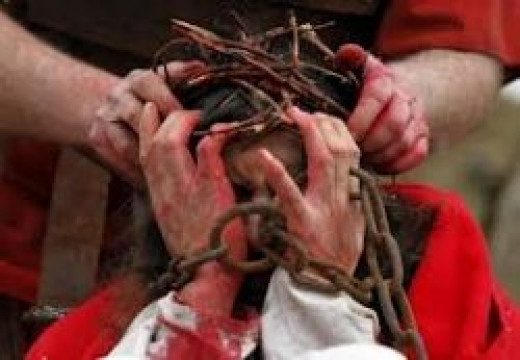
This NEW approach for talkofJesus.com posts replicates an interactive technique used for centuries: introduce the story and characters, then interrupt the storyline briefly to provoke thought about the story. The author’s design is for you to respond to the storyteller.
As author of most posts here I ask you:
Do you talk of Jesus?
After you read Scripture, do you comment or respond to the writer with a question?
Page TWO:
Thanks to Paul Harvey for this engaging media concept of communication developed for radio in the 20th century.
Story telling goes back beyond the ancient oral traditions of the Bible. Scripture; however much like contemporary BREAKING NEWS, it often reveals only page one of a continuing story.
Sometimes as Christians we need to turn the page from a first century impact of Christ Jesus as revealed in Scripture — to questions we should ask if we could talk of Jesus Christ in this 21st century. We need to think about the story of the Lord and project our conversation into contemporary application.
The BIBLE still applies to a contemporary church of struggling saints of these last days.
Then led they Jesus from Caiaphas unto the hall of judgment: and it was early; and they themselves went not into the judgment hall, lest they should be defiled; but that they might eat the passover.
John 18:28 KJV
the Praetorium – in the Palace of Power
Herod’s Palace – Salome presents head of John the Baptist to Herod
I don’t know about you, but the rapid-fire events of the conviction of the Messiah Jesus in so brief a time in the early hours of the day confuses me concerning the places these trials took place.
If you have a comment of clarification please add it to this post.
IF, unlike those present at the Lord’s first century trials you do not understand who is in charge, the venues of Jesus’ trials can get a little confusing.
You may ask, ‘What does this banquet hall of Herod..’ (where King Herod had been presented the head of John the Baptist) ‘.. have to do with the Messiah Jesus on this morning following the betrayal of Judas?’
The Praetorium is a semi-public place where Jesus has been sent — this place is on the grounds of the palace of King Herod.
Let’s look back briefly at the history of the keys players in this developing drama which convicts the Messiah Jesus at night.
King Herod
Briefly, the history of the Herod’s gets complicated at times, but remember here that we are not talking about Herod the Great who navigated the complex politics of Rome with great agility.
After Herod’s death, Augustus Caesar ratified the wishes of his client king, Herod, to divide this eastern territory of Rome into three parts.
Herod Archelaus was appointed Ethnarch (a governor & not king) of Idumaea, Judea (including Jerusalem) and Samaria.
Herod Antipas (simply, Antipas to the Romans & his subjects, but described as ‘Herod‘ in the Gospels) became Tetrarch of Galilee (including Nazareth and Capernaum) and Perea.
Philip I, son of Herod the Great and Cleopatra of Jerusalem, became Tetrarch of the northern part of Herod’s kingdom (area in modern Lebanon & Syria).
‘Governor Herod‘
You've never heard Herod called that, have you?
This is no longer the Jerusalem of Herod the Great! Jews are now considered merely as an ethnic people and Judeans an ‘ethnic group’ similar to nearby client Roman states. They are now governed as a regional people rather than as a small kingdom allied to Rome for mutual military advantage.
Herod Archelaus – EthnarchHerod Antipas – Tetrarch (Herod) Philip II – Tetrarch
Ethnarch (technically) is a Roman rank just a little higher than Tetrarch. (Kind of like Arch-Bishop is to Bishop in the church.)
Judean Governors (like Herod) sometimes appear politically and practically to be more Roman than like traditional sons of David.
IF these Herod’s were officially governors of their respective Roman regions, i.e. Judea, Galilee, Ituria, etc., — who then governed the governors?
Who governs these Jews?
John now addresses the question of who’s in charge in Jerusalem, who’s in charge of Judea, which Tetrarch governor of which ethnic region has authority in what was once the Kingdom of Israel.
As Jesus is dragged from place to place for trial the quiestions mount:
Is He a Judean? A Galilean? A Jew with authority in Jerusalem? A would-be King? Who IS this Man?
Other Gospel writers have hinted earlier how this delicate duality of rule in first century Jerusalem provided opportunity of great hypocrisy among the rulers of the Jews and their religious political parties, i.e. Sadducees, Pharisees, etc..
The scribes and the chief priests tried to lay hands on Him…
So they watched Him, and sent spies who pretended to be righteous, in order that they might catch Him in some statement, so that they could deliver Him to the rule and the authority of the governor.
Luke 20:19a,20 NASB
“Is it lawful for us to pay taxes to Caesar, or not?”
But He detected their trickery and said to them,
“Show Me a denarius. Whose likeness and inscription does it have?”
28 Then they led Jesus from Caiaphas into the Praetorium, and it was early; and they themselves did not enter into the Praetorium so that they would not be defiled, but might eat the Passover.
29 Therefore Pilate went out to them and said,
“What accusation do you bring against this Man?”
the Praetorium – palace of the Governor
WAIT! Even knowing something of the political intrigue and complexity of the Herod’s, I’m still confused.
Again, please comment if you can help or have a question.
Note that the King James Version {at beginning of this post} states:
‘Then led they Jesus from Caiaphas unto the hall of judgment…’
I get that a hall of judgment could be a large room in the palace.
Note now in the NASB translation,
‘.. into the [a]Praetorium..’
AND by definition:
πραιτώριον = Praetorium [note a]
‘John 18:28 i.e. governor’s official residence’
Why is Pilate there?
Why does Pilate emerge from the Governor’s palace to greet the religious police who have taken the Messiah Jesus into custody?
The CSB clearly calls it 'the governor’s headquarters.'
Wasn’t Pilate’s headquarters outside Jerusalem’s walls with the Roman Legion he commanded?
NO!
When Rome moved into a captured land they ‘civilized’ its remaining residents to become supporting (taxed) residents (not citizens) under Roman rule. As long as they paid their taxes and did not rebel against Roman authority these local Jews could do what they want with their own ethnic people.
What accusation?
Roman custom is such that some public judgments are made from the court of the Governor in charge. Pilate asks the local Jewish leaders who have led a prisoner to him the reasonable question of a Governor and Judge:
John 18:29 – question of Pilate to the Jews who brought Jesus before him
These Jewish leaders of Jerusalem have brought a prisoner to Pilate in the earliest hours of the morning. Pilatos, the sixth Roman procurator of Judah and Samaria, addresses them in the universal language of the vast Empire, Greek — not his native Latin, the religious Hebrew tongue of these Jews or a local Aramaic language.
Their prisoner bound for trial appears to be Jesus, who had led thousands of followers to Jerusalem’s gates just a few days ago. Pilate would already know that the Man has not caused any trouble, except one minor incident within the courts of the Jews own Temple.
The Governor has plenty to be concerned about for the upcoming day in monitoring the massive multitudes here for the Jewish holiday Pesach.
Imagine the thoughts of Pilatos:
You’ve brought a prisoner to the governor in these early hours of this busy day?
What does your warrant accuse that I should imprison the Man now?
I have more important things to do than trifle with such matters of your religious concern.
So Pilate, the governor, went out to them and asked,
Jesus brought bound to Caiaphas for trial at night
The Malignant Leaven of Religious Politics
The religious rulers of the Temple discussed ad nauseam different approaches to God-justified righteousness for preservation of their personal political influence in Judaea, imperial procuratorial province of Rome.
We have slowed down our examination of the Gospel of John like politicians seeking convicting evidence against an opponent. Let’s dig for the dirt sought by Jerusalem’s powerful religious rulers who now will bring Israel’s Messiah to ‘justice‘ in the middle of the night.
We could easily focus on the caustic political potions bubbling in the dark corridors of power in this incendiary election year. I may even offer opinion of parallels to Jesus’ trial later as application to the darkness of these days to come.
Pontius Pilate
Joseph Caiaphas, High Priest
But for now, our focus continues on the political players who tried and convicted the Son of Man in a first century Jerusalem where leaders of government and religion lay together as strange bedfellows.
As we detailed in previous posts:
In a few hours of just one night
Jesus' betrayal has thus far progressed like this:
(follow links below for previous events)
3 So Judas took a company of soldiers and some officials from the chief priests and the Pharisees and came there with lanterns, torches, and weapons.
No one is more deserving of blame than the betrayer who claims Christ, but then betrays his Lord for money or unmerited influence. Judas is a mere pawn of the powerful.
Judas had led them into Gethsemane under the cover of night. The Roman soldiers from the local cohort of Jerusalem accompanied servants of the Temple, police who were led by Malchus.
Peter cuts off his ear! But that’s the end of the violence as Jesus heals the officer’s ear and the Temple police bound Him without resistance for trial.
12 So the Roman cohort and the commander and the officers of the Jews, arrested Jesus and bound Him…
Annas
Now we begin to meet the religious officials behind this dark plot to eliminate their opposition away from the hopeful multitudes who had welcomed their Messiah Jesus into Jerusalem just four days ago.
13 First they led him to Annas, since he was the father-in-law of Caiaphas, who was high priest that year.
Why to the father-in-law Annas, we wonder?
Perhaps a prearranged plan of deniability of involvement, a faux-impartiality of the High Court judge?
Who is this political player among the religious elite of Jerusalem?
Annas, an Elder among Elders, has some history of influence in Jerusalem. John and the Apostles may not have known the Temple’s political scene, but certainly every important official of the Temple must have known and respected Annas.
ἌνναςÁnnas – a high priest of the Jews, elevated to the pontificate by Quirinius the governor of Syria circa A. D. 6 or 7; but afterwards, A. D. 15, deposed by Valerius Gratus, the procurator of Judæa, who put in his place, first Ismael, son of Phabi, and shortly after Eleazar, son of Annas. From the latter, the office passed to Simon; from Simon circa A. D. 18 to Caiaphas (Josephus, Antiquities 18, 2, 1f); but Annas, even after he had been put out of office, continued to have great influence:
STRONGS NT 452: Ἄννας – courtesy BlueLetterBible.org
The Messiah Jesus is first bound up in Gethsemane and led to Annas, who then orders (perhaps by previous arrangement) the entourage holding Jesus to Caiaphas and then across town to Pilate.
.. although Annas had been deposed by the Roman procurator, the Jews may still have regarded him as legally the high priest.