A poem of death’s despair.
From cries of pain
Surrounded by suffering
Entombed in death
Men and women
Hung their heads
In death’s despair.
+
His pain I now know
His suffering I deserve
From this dark place of justice
My sorrow must pierce.
Roger Harned - TalkofJESUS.com
“ELOI, ELOI, LAMA SABACHTHANI?”
22:1 אֵלִי אֵלִי לָמָה עֲזַבְתָּנִי רָחֹוק מִֽישׁוּעָתִי דִּבְרֵי שַׁאֲגָתִֽי׃
“Eli, Eli, lama” are Hebrew words in the Hebrew Bible (Ps. 22:2)
David said “lama azavthani” (why have you forsaken me?) and
Jesus said “lama sabachthani” (why have you sacrificed me?).
-source [2016 site not secure]: http://messiah-study.net/sabachthani.htm
Jesus from the Cross
So the soldiers came and broke the legs of the first man and of the other one who had been crucified with him. When they came to Jesus, they did not break his legs since they saw that he was already dead. But one of the soldiers pierced his side with a spear, and at once blood and water came out.
John 19:32-34 CSB
Zechariah 12:10 וְשָׁפַכְתִּי עַל־בֵּית דָּוִיד וְעַל יֹושֵׁב יְרוּשָׁלִַם רוּחַ חֵן וְתַחֲנוּנִים וְהִבִּיטוּ אֵלַי אֵת אֲשֶׁר־דָּקָרוּ וְסָפְדוּ עָלָיו כְּמִסְפֵּד עַל־הַיָּחִיד וְהָמֵר עָלָיו כְּהָמֵר עַֽל־הַבְּכֹֽור׃
DEATH! surrounding a Cross
Is your own heart pierced by the cry of death — the death of a loved one, that of your own inevitable failing flesh?
Would your soul cry out even from the grave that the death of God’s own Son should have been your own?
What those imprisoned in the dark dungeons of death must have thought as Jesus cried out as Sacrifice of Blood and Flesh from the Cross!
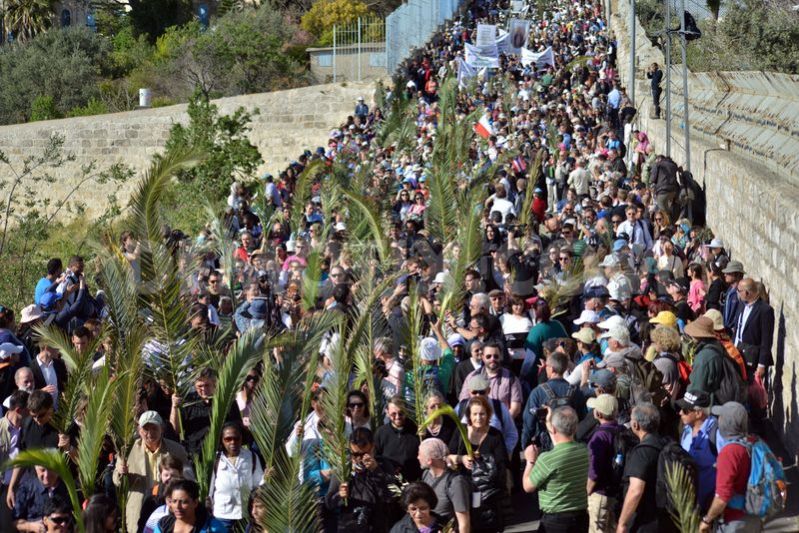
Who is the Son of Man entering the Jerusalem of the Jews?
In the year of our Lord, 2020, of these last days of a new covenant, I have been sharing the Good News of John.
We cannot cover all of the nuances of reactions to the Messiah entering Jerusalem for the Passover some two thousand years ago, but look back to some of the thoughts of those encountering Jesus between Palm Sunday and Easter Sunday which the church celebrates with great joy.
The context of their first century perspective also includes witnesses of many signs of the Messiah including healing the sick, giving sight to the blind, miraculously feeding crowds of followers and raising the dead who include recently Lazarus of Bethany.
The Apostle Philip & the crowds
John 12:
9 Then a large crowd of the Jews learned he was there. They came not only because of Jesus but also to see Lazarus, the one he had raised from the dead.
10 But the chief priests had decided to kill Lazarus also, because he was the reason many of the Jews were deserting them and believing in Jesus.
The Apostle Philip, of course, travels with Jesus when the Messiah returns to Bethany. Crowds follow them into Jerusalem and friends of the Apostle hear about Jesus the Rabbi of their friend Philip.
21 So they came to Philip, who was from Bethsaida in Galilee, and requested of him, “Sir, we want to see Jesus.” Philip went and told Andrew; then Andrew and Philip went and told Jesus.
23 And Jesus answered them, saying,
“The hour has come for the Son of Man to be glorified…
Jesus has much more to say and then this witness before them:
“…and what shall I say, ‘Father, save Me from this hour’? But for this purpose I came to this hour. Father, glorify Your name.”
John 12:27b-28a NASB
Then a voice came out of heaven:
“I have both glorified it, and will glorify it again.”
29 So the crowd of people who stood by and heard it were saying that it had thundered; others were saying, “An angel has spoken to Him.” Jesus answered and said, “This voice has not come for My sake, but for your sakes.
Philip witnesses this truly awesome scene after Jesus had said,
“Truly, truly, I say to you, unless a grain of wheat falls into the earth and dies, it remains alone; but if it dies, it bears much fruit…
John 12:24 NASB
Thomas: ‘Lord, we know not..’
Don’t you have to love a guy who just has to ask the questions you want to ask the Lord?
Peter was one of these sometimes clueless Disciples who asked Jesus the obvious. We have heard much preaching on Peter, this anointed Apostle of the early church, about his denials and restorations in this Holy Week.
Like Peter, a man of bold faith, Thomas, a man of bold questions often gets a bad wrap for questions and doubt exactly like ours.
Observe the Lord’s Supper from this perspective of Thomas.
The Lord got up from supper, and laid aside His garments; and taking a towel, He girded Himself, after which Jesus washes his feet along with the other eleven.
[Later] He became troubled in spirit, and testified and said,
“Truly, truly, I say to you, that one of you will betray Me.”
22 The disciples began looking at one another…
33 Little children, I am with you a little while longer. You will seek Me; and as I said to the Jews, now I also say to you, ‘Where I am going, you cannot come…’
36 Simon Peter said to Him,
“Lord, where are You going?”
Jesus answered,
“Where I go, you cannot follow Me now; but you will follow later.”
37 Peter said to Him,
“Lord, why can I not follow You right now?
[Thomas must have also have wondered what Peter so typically blurts out.
Why? We all wonder.]
John 14:
Perhaps Thomas’ perspective was something like this:
‘Jesus was troubled in spirit then Judas left {on an errand for the festival, I guess.’}
2 In my Father’s house are many rooms; if not, I would have told you. I am going away to prepare a place for you.
John 14:2 CSB – Jesus comforting Disciples about death and resurrection
… And you know where I am going, and you know the way
5 Thomas said to Him,
“Lord, we do not know where You are going, how do we know the way?”
Be honest, fellow saint:
Don’t you have days of doubting the resurrection as well?
Yet though you may quote the assurance which follows of Jesus to Thomas, your faith frequently falters .
Jesus said to him, “I am the way, and the truth, and the life; no one comes to the Father but through Me.
John 14:6 NASB
Again, fellow believer, consider the gravity of Jesus’ exclusive claim.
For the Lord draws a line in the dust we often omit, when witnessing to win others to Christ through our own blurred vision of this life.
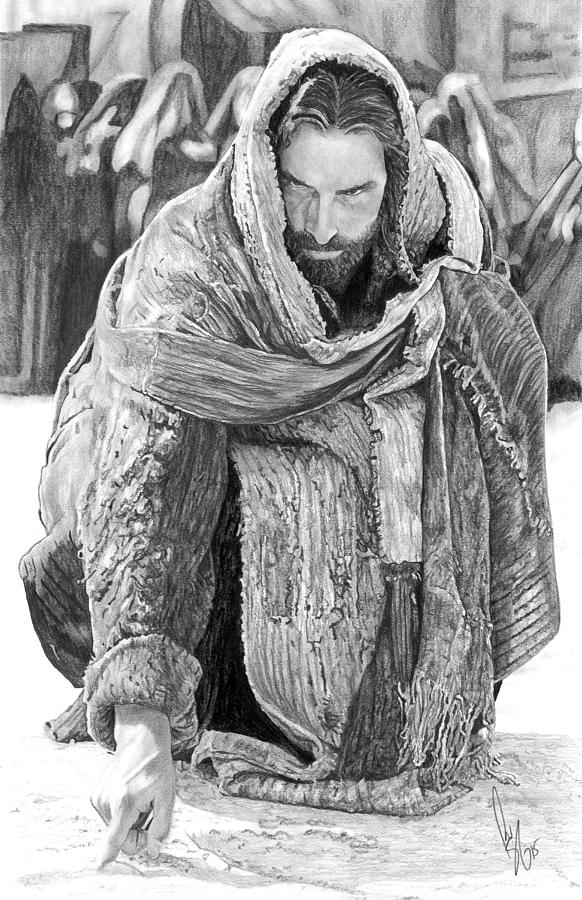
“I am the way, and the truth, and the life;
no one comes to the Father
but through Me. –
John 14:6
Jesus’ exclusive ____line____ in the dust between death and eternal life
7 If you had known Me, you would have known My Father also; from now on you know Him, and have seen Him.”
8 Philip said to Him,
“Lord, show us the Father, and it is enough for us.”
9 Jesus said to him, “Have I been so long with you, and yet you have not come to know Me, Philip?
Let’s pause a moment there, fellow saint of Christ:
Has Jesus been so part of your routine that you have failed to know your Lord?
Jesus continues instructing Thomas:
He who has seen Me has seen the Father; how can you say,
‘Show us the Father’?
Do you not believe that I am in the Father, and the Father is in Me?
John 14:10a NASB
The words that I say to you I do not speak on My own initiative, but the Father abiding in Me does His works. Believe Me that I am in the Father and the Father is in Me; otherwise believe because of the works themselves.
12 Truly, truly, I say to you, he who believes in Me, the works that I do, he will do also; and greater works than these he will do; because I go to the Father. Whatever you ask in My name, that will I do, so that the Father may be glorified in the Son. If you ask Me anything in My name, I will do it.
15 “If you love Me, you will keep My commandments.
Between Gethsemane & Doubt
We know that Thomas and the Disciples fail to keep alert in the late hours after Jesus shares the New Covenant Cup of communion and broken bread symbolizing and making memorial of what is about to happen to His broken Body and shed Blood of Sacrifice for our sins.
Jesus prays, is betrayed by Judas as the eleven stand near, then bound and taken away to appear in secret before those who will judge their Messiah. They will then sentence their Redeemer to death on a Cross — ALL in fulfillment of Scripture.
We may self-righteously go on about Peter denying Jesus as he also attempts to run away from death for a time.
In fact, all of us may only escape death — for a time.
CHRIST DIED!
The Apostle John relates more details of these events worth your perspective on DEATH from the darkness of these days.
DEATH then Resurrection
From the depth of isolation and despair
of darkness and fear
of the judgment of your dust
in the grave —
beyond the — line — of hope
found only in Jesus
we peer dimly from the depths
of our soul seeking the Light
of the Resurrection —
the Way of Truth
to eternal life
born anew
in a raised body and soul
to the glory of the LORD
our Father, Son and Holy Spirit!
John 20:
Perspectives of these first witnesses of Jesus’ resurrection
Mary of Magdala (a small village on the shore of the Sea of Galilee) discovers Jesus’ tomb EMPTY!
“They have taken away the Lord out of the tomb, and we do not know where they have laid Him.”
Mary tells Peter and John
They all return to the tomb with the sealed stone rolled away.
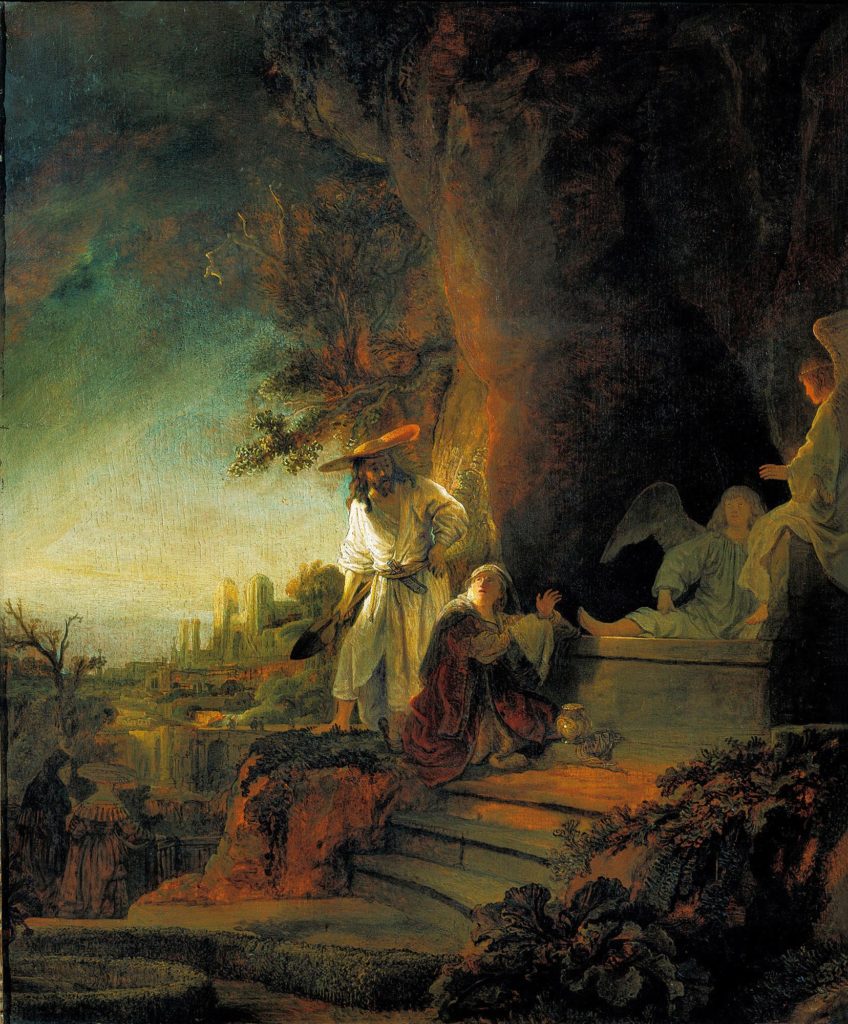
“Woman, why are you weeping? Whom are you seeking?”
“Sir, if you have carried Him away, tell me where you have laid Him, and I will take Him away.”
16 Jesus said to her, “Mary!”
She turned and said to Him, “Rabboni!” [My great teacher, master.]
Touch me not; for I am not yet ascended to my Father: but go to my brethren, and say unto them, I ascend unto my Father, and your Father; and to my God, and your God.
Later Appearance to the Disciples
When it was evening of that first day of the week, the disciples were gathered together with the doors locked because they feared the Jews.
Jesus came and stood in their midst and said to them,
“Peace to you.“
20 Having said this, he showed them his hands and his side. So the disciples rejoiced when they saw the Lord.
21 Jesus said to them again,
“Peace be with you. As the Father has sent me, I also send you.”
22 After saying this, he breathed on them and said, “Receive the Holy Spirit…
Did you miss the RESURRECTION OF JESUS?
Don’t some of the most important things in life often happen when you least expect?
Returning later to the scene of the Disciples (but not all of them) in the locked room), Thomas returns.
He missed it! (and perhaps was somewhat sceptical when he heard the witness of his fellow Disciples).
“We’ve seen the Lord!”
“Unless I see in His hands the imprint of the nails, and put my finger into the place of the nails, and put my hand into His side, I will not believe.”
Eight more days pass
What disappointment. To have followed Jesus the Messiah as He walked the earth for three years of His ministry prior to His fulfillment of Scripture. AND you missed HIS return!
His disciples were again inside, and Thomas with them. Jesus came, the doors having been shut, and stood in their midst…
“Peace to you.“
And the Lord, turning to Thomas,
“Reach here with your finger, and see My hands; and reach here your hand and put it into My side; and do not be unbelieving, but believing.”
“My Lord and my God!”
And yet again…
John tells us:
30 And many other signs truly did Jesus in the presence of his disciples, which are not written in this book…
John 21:
After this, Jesus revealed himself again to his disciples by the Sea of Tiberias…
12 Jesus said to them,
“Come and have breakfast.”
None of the disciples ventured to question Him, “Who are You?” knowing that it was the Lord.
Jesus came and took the bread and gave it to them, and the fish likewise.
14 This is now the third time that Jesus was manifested to the disciples, after He was raised from the dead.
CHRIST IS RISEN!
— a traditional opening to a sunrise service on Resurrection Sunday or other Easter Sunday worship.
And the joyous response of the congregation of worshipers:
HE IS RISEN INDEED!
ALLELUIA – ἁλληλουϊά
praise ye the Lord, Hallelujah!
יָהּ הָלַל
Yet without DEATH! resurrection remains irrelevant
— that is, until the inevitable inescapable day.
CHRIST WILL COME AGAIN!
You will die — your body returning to dust…
And your soul — the spirit that is you in this ever-so-brief mortal life…
What will the judgment and resurrection be like for your fallen flesh and soul forgotten?
Jesus reveals even more to John long after the deaths of all the other Apostles.
apokalypsis Iēsous Christos
8 “I am the Alpha and the Omega,” says the Lord God, “who is and who was and who is to come, the Almighty.”
17 When I saw Him, I fell at His feet like a dead man.
And He placed His right hand on me, saying,
“Do not be afraid;
I am the first and the last, and the living One;
and I was dead, and behold,
I am alive forevermore,
and I have the keys of death and of Hades.
Revelation 21:
3 And I heard a loud voice from the throne, saying,
“Behold, the tabernacle of God is among men, and He will dwell among them, and they shall be His people, and God Himself will be among them, and He will wipe away every tear from their eyes; and there will no longer be any death; there will no longer be any mourning, or crying, or pain; the first things have passed away.”
אָמֵן אָמֵן
amen, amen.
Even so, Come Lord Jesus.
AMEN.