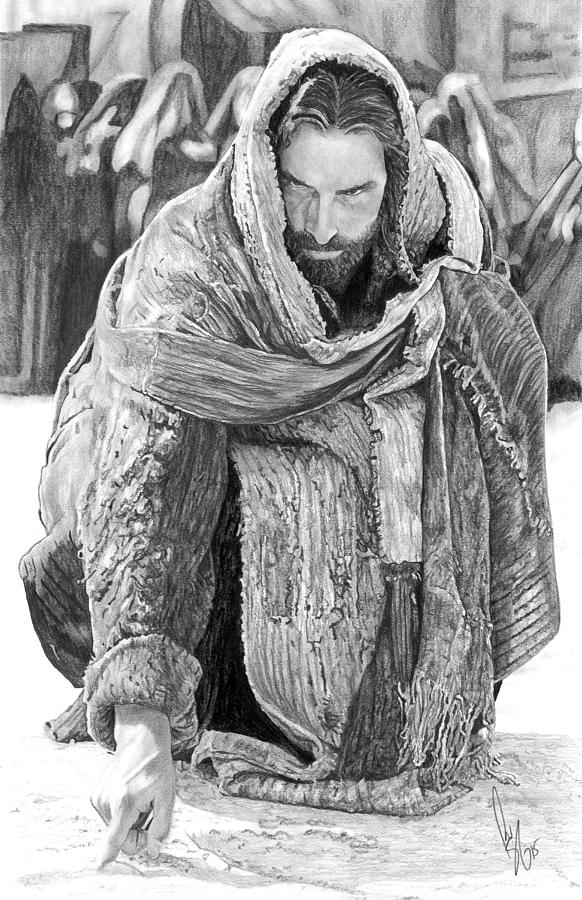
“.. And as Moses lifted up the serpent in the wilderness, so must the Son of Man be lifted up, that whoever believes in him may have eternal life.
Looking back to when Jesus was lifted up
The following is a fictional first-hand account of John and his Gospel witness of three A.D. first century men so familiar to Christians that we may have missed the impact of the events of Holy Week on the New Testimony of their saved lives.
~ A.D. 85 – the Gospel of APOSTLE JOHN
You’ve just read from the beginning of my Gospel just published. By now everyone I mentioned in this introduction to the Lord Jesus Christ is long gone along with many more followers of the Way and Apostles.
As you know I was the youngest of the twelve. It’s been fifty years now since His resurrection. And those who were not murdered for our faith after Jerusalem’s destruction [in A.D. 70] just fifteen years ago have been buried in Christ. Yet we know that these live with Him in eternal life.
These include my brother James — and Jesus’ brothers. And in Rome, Simon Peter, my early mentor and close friend, — and our beloved Apostle Paul.
But today I want to tell you about two men — important men, in fact even more important than Paul at that time — older men of great honor and faithful leaders of the Pharisees in the Sanhedrin. Trouble was that if they would have followed Jesus openly back when they tried to speak up in their official capacities,
Caiaphas (who controlled all of the political outcomes and income in Jerusalem at that time) would have had them banned from the Temple for life. And even though their age dictated that these Elders should prepare their graves for the near future, Caiaphas probably would have had them stoned to death.
A.D. 30 – Joseph of Arimathea
After these things Joseph of Arimathea, who was a disciple of Jesus, but secretly for fear of the Jews, asked Pilate that he might take away the body of Jesus, and Pilate gave him permission.
So he came and took away his body.
Nicodemus
Nicodemus also, who earlier had come to Jesus by night, came bringing a mixture of myrrh and aloes, about seventy-five pounds in weight.
John 19:39 ESV
Although you know this Gospel well from the day of Jesus' crucifixion and burial, from an earlier time we will witness what these secretive disciples of Jesus from the Sanhedrin encountered when they came to Him privately.
Recall that Jesus had just raised Lazarus from the grave and called him out while the Jews were weeping for him. The witness of Lazarus had been the buzz of all Jerusalem when their Christ rode into town just five days earlier.
Throughout these previous three years of Jesus’ teaching and miracles many of the Jews of every class had believed in Him — and even some Samarians, Romans and Syrians.
Nicodemus (a few months earlier)
Gospel of John 7 excerpts
Now the Jews’ Feast of Booths was at hand..
,, But after his brothers had gone up to the feast, then he also went up, not publicly but in private.,
,, Yet for fear of the Jews no one spoke openly of him.,
About the middle of the feast Jesus went up into the temple and began teaching.
Do you suppose that Joseph or Nicodemus would have missed this important feast? Of course not! These members of the Sanhedrin would have been expected to be in the Temple courts.
Some of the people of Jerusalem therefore said, “Is not this the man whom they seek to kill? And here he is, speaking openly, and they say nothing to him!
Can it be that the authorities really know that this is the Christ?
Some of them wanted to arrest him, but no one laid hands on him. The officers then came to the chief priests and Pharisees, who said to them, “Why did you not bring him?” The officers answered, “No one ever spoke like this man!”
The Pharisees answered them, “Have you also been deceived? Have any of the authorities or the Pharisees believed in him?
A rhetorical question, no doubt, attempting to show consensus of the learned Rabbis of the Sanhedrin. But, an unexpected internal dissention:
“Does our law judge a man without first giving him a hearing and learning what he does?”
John 7:51 – Question of Nicodemus to the ruling council
Their mocking response is not unexpected.
“Are you from Galilee too? Search and see that no prophet arises from Galilee.”
Gospel of John 3:
Please focus on the real men present and not present in this all-too-familiar Gospel. These are:
- Νικόδημος – Nicodemus
- Jesus
- θεός – theos – God
- πνεῦμα – pneuma – the Spirit
- υἱός ἄνθρωπος – huios anthrōpos – Son of Man
- Moses
- πᾶς – pas – whoever, everyone or all
- ἄνθρωπος – anthrōpos – men
- [a human being, whether male or female]
- likely, Joseph of Arimathea and other officials to whom Nicodemus returns with his secret report of the Gospel.
- The Apostle John possibly or other Disciples present with Jesus.
Let’s recall that John records this in his Gospel more than 50 years after Jesus’ crucifixion.
Jesus’ witness to Nicodemus and others would have been months or even a year or two prior to Christ’s crucifixion also in Jerusalem..
~ in the year of our Lord 28 or A.D. 29
“Rabbi, we know that you are a teacher come from God, for no one can do these signs that you do unless God is with him.”
Gospel of John 3: 2b ESV
Nicodemus, an esteemed Pharisee, is the man who calls Jesus, 'Rabbi' or 'teacher.'

Pharisee is Of Hebrew origin cf פָּרַשׁ (H6567), A sect that seems to have started after the Jewish exile.
Rabbi, also of Hebrew origin, is a proper way to address certain Masters:
- my great one, my honourable sir
- Rabbi, a title used by the Jews to address their teachers (and also honour them when not addressing them)
“Truly, truly [amēn, amēn ], I say to you, unless one is born again he cannot see the kingdom of God.”
Gospel of John 3 ESV
Jesus response clearly addresses the Kingdom of God (since this leading Pharisee has confessed that He is from God), for Jesus had in the past referred to these as 'blind guides.'

But Nicodemus becomes clearly confused by Jesus' illustration.  So his response is literal (with no clear picture of God's Kingdom).
“How can a man be born when he is old?
Can he enter a second time into his mother’s womb and be born?”
John 3:4 – Nicodemus (who is old) asking Jesus how to be ‘born again.’
“Truly, truly [amēn, amēn ], I say to you, unless one is born of water and the Spirit, he cannot enter the kingdom of God.
That which is born of the flesh is flesh, and that which is born of the Spirit is spirit.
Do not marvel that I said to you, ‘You must be born again.’ The wind blows where it wishes, and you hear its sound, but you do not know where it comes from or where it goes. So it is with everyone who is born of the Spirit.”
Born again – lifted up from the womb
Did Nicodemus and Joseph of Arimathea now see what Jesus had meant, connecting the Resurrection with a man born again?
Let’s look at Jesus’ 3-part response in more detail:
- ‘unless one is born of water [hydōr] and the Spirit pneuma {implying the Holy Spirit of God}]’
- (two pre-requisites to enter God’s Kingdom)
- Born of: flesh [sarx] is [eimi] flesh and born of Spirit is spirit [pneuma eimi pneuma]
- The Master teaching what is born of what [v.6]
- Now, seeing his reaction, Jesus will expound on this teaching for understanding of His esteemed student.
7 “Do not be amazed that I told you [singular in Gk.] that you [plural in Gk.] must be born again. – CSV
Other translations of v.8 may also help your understanding.
the Spirit [pneuma also translated as ‘wind’] where he willeth doth blow – YLT (Note the person and his will, not simply a chance of a natural wind. )
his voice [phone Gk.] thou dost hear – YLT
you do not know where it comes from and where it is going.
SO [οὕτω(ς) eimi] is
[pas ho gennaō] everyone who is born
[ek ho pneuma] of the Spirit]
How can a man be born in the Spirit?
How can these things be?
“Are you the teacher of Israel and yet you do not understand these things?
Our Lord and Master once more responds with compassion and an example from Scripture.
Truly, truly, I say to you, we speak of what we know, and bear witness to what we have seen,
but you[plural in the Gk, of the ruling Jews and not specifically Nicodemus] do not receive [accept, in some translations] our testimony.
Do you accept our witness [martyria]?
So this becomes the closing question of Jesus to Nicodemus.
If I have told you earthly things and you do not believe, how can you believe if I tell you heavenly things?
No one has ascended into heaven except he who descended from heaven, the Son of Man.
Gospel of John 3:12 and 13 ESV
Who IS Jesus? The Son of Man, the Christ?
Nicodemus had met the Son of Man face to Face back then. And now the next thing Jesus said of Himself made more sense to Joseph, him and other believers familiar with the Books of Moses.
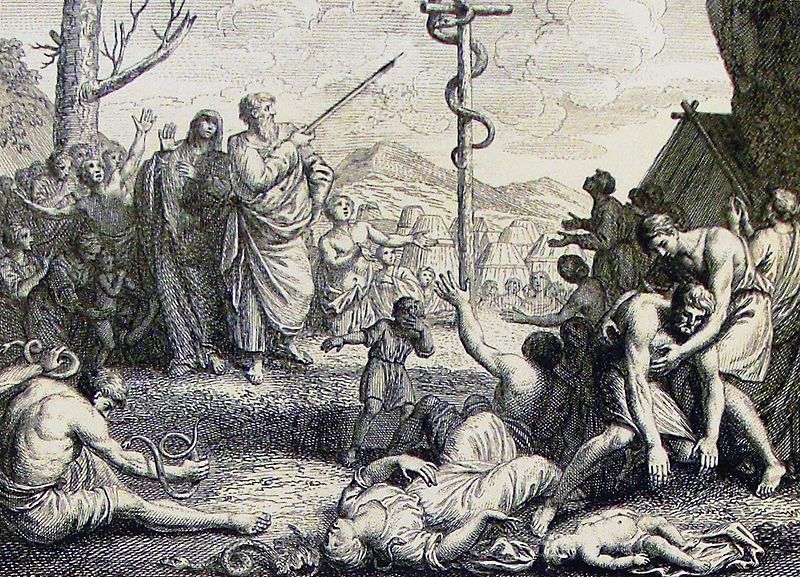
And the people spoke against God and against Moses, – Numbers 21
Then the LORD sent fiery serpents among the people, and they bit the people, so that many people of Israel died.
And the people came to Moses and said, “We have sinned, [repentance] for we have spoken against the LORD and against you. Pray to the LORD, that he take away the serpents from us.”
So Moses prayed for the people.
[And Jesus has interceded for all who repent and ask Him to intercede before God the Father. — Washed of sin — baptized – changed permanently by the Spirit]
And the LORD said to Moses, “Make a fiery serpent and set it on a pole, and everyone who is bitten, when he sees it, shall live.”
The Son of Man lifted up!
“even so must the Son of man be lifted up..
What must Nicodemus have thought?
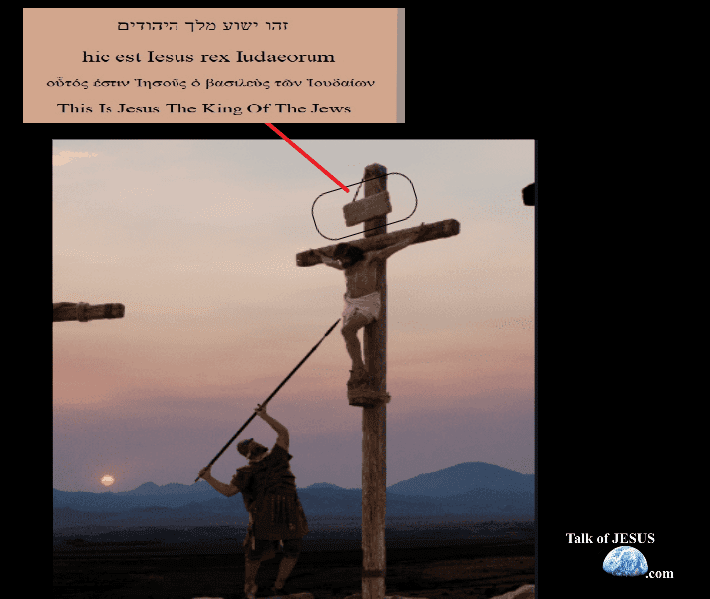
And what must those faithful Jews have wondered — even those so bold as Joseph of Arimathea after Christ’s crucifixion – to see the Son of Man LIFTED UP on a ROMAN CROSS?
“.And as Moses lifted up the serpent in the wilderness,
so must the Son of Man be lifted up,
that whoever believes in him may have eternal life.
Yet can the grave hold the Son of Man?
Nicodemus also, who earlier had come to Jesus by night, came bringing a mixture of myrrh and aloes, about seventy-five pounds in weight.
So they took the body of Jesus and bound it in linen cloths with the spices, as is the burial custom of the Jews. Now in the place where he was crucified there was a garden, and in the garden a new tomb in which no one had yet been laid. So because of the Jewish day of Preparation, since the tomb was close at hand, they laid Jesus there.
Picking up in John’s fictional re-telling of Jesus’ burial and also in his Gospel:

~ A.D. 85. John’s reflection on Jesus’ resurrection
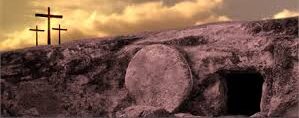
On the third day of Jesus’ burial Mary of Magdala returned to the tomb just before dawn.
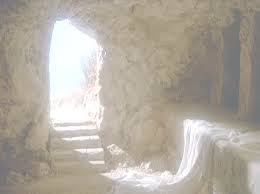
The stone had been rolled away, its seal broken and no Roman guards present anywhere!
She ran back to get Simon. I ran with them back to the garden tomb where I stooped to look in the cave and saw the linen cloths lying there. Then I turned to Peter as he went inside.
When I followed him I also saw the face cloth, which had been on Jesus’ head by itself, folded up in a place away from the stacked linen cloths,
Then I was certain that the Lord was no longer there.
fictional paraphrase from John 20
Mary remained behind as Simon and I ran back into town.
Then in the tomb she saw two angels in white, sitting where the body of Jesus had lain.
(Neither Simon nor I had seen them, but Mary shared this angelic conversation with us later.)
She then turned around and saw a man standing outside the tomb. He asked the same question of her as the two angels,
“Woman, why are you weeping?” Then the man inquired, ’tis zēteō,’ that is, “Whom are you seeking?”
Then she addressed him, kyrios (which generally means, Lord) — “Sir, if you have carried him away, tell me where you have laid him, and I will take him away.”
But then, she reported the man’s reply she heard in a familiar voice:
“Μαρία” (Maria or Mary)
“Rabbouni (Rabbi) , she answered Jesus in Hebrew.
Jesus said to her, “Do not cling to me, for I have not yet ascended to the Father” and sent her to us with some additional instructions.
fictional paraphrase of John 20:15-18
Peter and I somehow missed Him too, but our Lord was there in the flesh — alive and breathing!
Later that evening
We were still afraid that the Jews would come after us too, especially Peter. We had locked the doors of our upper room in Jerusalem.
שָׁלוֹם שָׁלוֹם לְךָ
“Peace, Peace to you.”
It was the Lord Jesus greeting us as He stood suddenly with us in this locked room!
Then He showed them his hands and his side — a gash through each hand, open yet without blood — and a long upward rip into His right ribs, again without blood. Our risen Lord, who the Romans and Jews had lifted up nailed to a Cross — our friend and Master whom we had laid in a tomb — RAISED UP and in our very presence — in Person!
And then Jesus said again,
“Peace be with you. As the Father has sent me, even so I am sending you.”
Then the Lord breathed on the ten of us and said,
“Receive the Holy Spirit.
(I cannot explain the sudden warm breath which lit on my head and infused my flesh.) Then He continued,
“If you forgive the sins of any, they are forgiven them; if you withhold forgiveness from any, it is withheld.”
Monday, a week later
Jesus appeared to us again, except this time Thomas had returned. Once again the doors were locked.
שָׁלוֹם לְךָ
“Peace be with you.”
““Put your finger here, and see my hands,” He said to Thomas. And after Thomas obeyed our Master Jesus also said, “Put out your hand, and place it in my side.
Do not disbelieve, but believe.”
(We were all amazed — still — and meek before Him as if God the Father was in our midst in the Son of Man who had suffered this injustice — for us — and for those of you who now believe.)
Later we would return to Galilee as the Lord commanded, home once –l but now just one more place where our risen Rabbi Jesus, the Christ of God would again teach us why He had been lifted up for our sake from the words of Scripture we had heard for years and yet did not fully understand because He had not yet anointed us with the Holy Spirit.
Christ IS Risen!
He taught us for fifty days more that we may proclaim the Gospel to those who believe.
Do you believe?
Jesus was lifted up on a cross in order that your sins may be forgiven
AND
that you might be born again — in water and in Spirit.

Celebrate His Resurrection +++ Have a blessed Easter.