Tag: Jesus

  • Beyond Nazareth

    Beyond Nazareth

    Taking the long view – Beyond Nineveh and Nazareth

    Our long journey began in Beyond Nineveh with a look at Jonah, a reluctant Prophet who preached repentance to the largest city on earth. {Read about the beginning of our journey in the link above.} From Jonah’s home in the Galilean hills, Jerusalem would have seemed like a modern day New York City [Population 8.4 Million] compared to nearby towns of Nazareth and Capernaum.

    Just like Jerusalem compared to Nineveh, New York City pales by comparison to a distant city like Karachi Pakistan [Population 27.5 Million souls]. A familiar New York City is smaller even than two cities in ChinaShanghai [24.3 Million] and Beijing [21.5 Million].

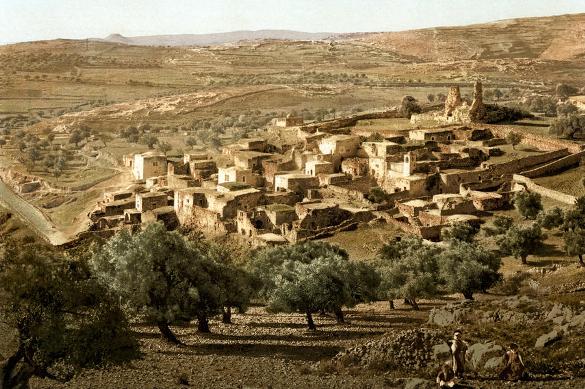
    Jonah of Gath-hepher, a town of Lower Galilee, about 5 miles from Nazareth

    The Lord sends Jonah to seek repentance from a distant unfamiliar city. Instead, Jonah sailed toward modern-day Spain rather than journey east toward modern-day Mosul Iraq. In fact, these foreigners repented!

    Isaiah Preaches Repentance and More

    Prior to the fall of Jerusalem many prophets foretold destruction by several conquering empires. One additional perspective of these turbulent times comes from the prophesies of Isaiah.  Yet a distant look Beyond Nazareth reveals hope of a Redeemer and Messiah. How distant? More than seven centuries.

    Isaiah 52:7

    How beautiful upon the mountains
    are the feet of him who brings good news,
    who publishes peace, who brings good news of happiness,
    who publishes salvation,
    who says to Zion, “Your God reigns.”

    A Long Time from Nineveh to Nazareth

    We see jews made refugees not long after Jonah won non-believers in Nineveh to the Lord. Jerusalem captured, spared then rebuilt; conquered again and again (just as before). In first century Galilee powerful Rome to the west subdues all the Mediterranean. Israel (long defeated) doubts a prophet of note could reside in Nazareth [see John 1:46]. But a Prophet, yes more than a Prophet, would be called by others: Jesus of Nazareth. All would ask, is he the Messiah?

    Isaiah Prophesies a Far-distant Hope

    Behold, my servant shall act wisely;
    he shall be high and lifted up,
    and shall be exalted.

    As many were astonished at you—
    his appearance was so marred, beyond human semblance,
    and his form beyond that of the children of mankind—

    so shall he sprinkle many nations;
    kings shall shut their mouths because of him;
    for that which has not been told them they see,
    and that which they have not heard they understand.

    Isaiah 52:13-15

    A son of man, suffering servant of the LORD; Jesus of Nazareth became best remembered for His Holy and Perfect Sacrifice of love on the cross. The distant time was eight hundred years before Christ and Isaiah spoke accurately of the pivotal event in the history of mankind.

    Isaiah 53: Description of the Messiah

    Now, twenty-one centuries after Jesus of Nazareth, scripture speaks to us – to the believer and to the sceptic in distant lands:

    Who has believed what he has heard from us?
    And to whom has the arm of the Lord been revealed?

    Prior to the fall of Jerusalem, before the rebuilding centuries later, centuries before Jesus of Nazareth the Prophet Isaiah describes our loving Lord.

    For he grew up before him like a young plant,
    and like a root out of dry ground;
    he had no form or majesty that we should look at him,
    and no beauty that we should desire him.


    He was despised and rejected by men,
    a man of sorrows and acquainted with grief;
    and as one from whom men hide their faces
    he was despised, and we esteemed him not.

    Does the world esteem God? Is the Lord not saddened by our grievous sin?

    Surely he has borne our griefs
    and carried our sorrows;
    yet we esteemed him stricken,
    smitten by God, and afflicted.

    But he was pierced for our transgressions;
    he was crushed for our iniquities;
    upon him was the chastisement that brought us peace,
    and with his wounds we are healed.

    To be continued…

  • Beyond Nineveh

    Beyond Nineveh

    Taking the long view – Beyond Nineveh and Nazareth

    “Do you think that I like to see wicked people die? says the Sovereign LORD. Of course not! I want them to turn from their wicked ways and live. Ezekiel 18:23 NLT

    You may remember the story of the Prophet Jonah, a ‘follower’ of God who turned a different direction when the LORD sent him to save foreigners. A later Prophet from Nazareth would refer to Jonah, by comparison:

    “The men of Nineveh will rise up at the judgment with this generation and condemn it, for they repented at the preaching of Jonah, and behold, something greater than Jonah is here. – Matthew 12:41 & Luke 11:32

    What do we know beyond this reference of Jesus of Nazareth about Jonah?

    Jonah of Gath-hepher, a town of Lower Galilee, about 5 miles from Nazareth

    We do know this: religious leaders remain unrepentant because of their own sins, just like Jonah booking a ship away from the city where the LORD wanted him to preach.

    Wickedness and unrepentance remain as issues today. Jonah spoke it of the Ninevites and Jesus spoke to it in all of us. We, too are not sent to the righteous, but to sinners. Like Jonah and like Jesus we do not preach or prophesy only to the chosen, but to the nations.

    Assyria at the time of Jonah

    Nineveh

    Jonah 3:

    Now Nineveh was an exceedingly great city, three days’ journey in breadth. 4 Jonah began to go into the city, going a day’s journey. And he called out, “Yet forty days, and Nineveh shall be overthrown!” 5 And the people of Nineveh believed God.


    760-750 B.C. Hosea & Jonah Prophets in Israel

    These were tumultuous times in the 8th c. B.C. A mere 200 years after Israel had separated from Judah, by the end of Jonah’s century Israel would disappear from the map. Assyria was expanding from east of the Tigris and Euphrates beyond the borders of Judah, even further than the Nile. Prior to it’s own fall in about 625 B.C., Nineveh, Assyria’s capital was known as ‘the mistress of the East; but for her great luxury and wickedness, the prophet Jonah was sent, more than eight hundred years before Christ, to warn the Ninevites of her speedy destruction.’ source

    It was the largest city in the world for some fifty years [thus, the 3-day journey to travel through Nineveh] until the year 612 BC when, after a bitter period of civil war in Assyria, it was sacked by a coalition of its former subject peoples, the Babylonians, Medes, Chaldeans, Persians, Scythians and Cimmerians. Its ruins are across the river from the modern-day major city of Mosul, in the Ninawa Governorate of Iraq. source

    Jonah and Israel certainly believed that the Lord had no desire to save sinners in a far away city in a land of unbelievers.

    The compassion of the Lord reaches well beyond borders, His power beyond the horizon and beneath the depths of the sea.

    Yet time would tell a story of Israel destroyed, Jerusalem destroyed. The centuries from the falls of nations reveals the unseen power of the Lord to turn sinners to repentance and save the helpless from the powers of evils and the perils of sin and death.

    To be continued…


  • The Curse of Disease and Death – 3

    The Curse of Disease and Death – 3

    Moses & Joseph, Two Paths to the Palace

    Joseph suffered prior to his blessing more like Job than Moses. He had no choice in his suffering, except his choice of response. Isn’t that how our suffering most impacts others, by our godly response? Blessed be the Lord!

    In part two of this series about our attitude toward disease and death we examined Moses’ story from Exodus. Unlike Job, Moses chose to leave the riches of the palace of Pharaoh where he was raised. Moses could have followed a royal path which may have made him Pharaoh. He chose instead to identify himself with his people and his God.

    You may be familiar with how Moses came to live with the daughter of Pharaoh to be raised as her son.

    Exodus 1:

    15 Then the king of Egypt said to the Hebrew midwives, one of whom was named Shiphrah and the other Puah, 16 “When you serve as midwife to the Hebrew women and see them on the birthstool, if it is a son, you shall kill him…

    22 Then Pharaoh commanded all his people, “Every son that is born to the Hebrews you shall cast into the Nile, but you shall let every daughter live.”


    Moses’ birth story begins in Exodus 2 with a baby protected in an ark of wicker retrieved from the bullrushes by none other than Pharaoh’s own daughter. As stated previously. Moses was raised in a palace only to leave at age forty then return again at age eighty to challenge Pharaoh on behalf of the Lord. Moses would live out the remainder of his 120 years in the wilderness.

    A careful reading of Exodus 2 will reveal that the Hebrews were persecuted by the Egyptians because they were afraid of them, for they had been blessed by the Lord. A look back into Genesis will reveal a much different path to Pharaoh’s palace by a man the Lord used to bless the Hebrew nation in Egypt, Joseph.

    Jacob (Israel) From Canaan to Egypt

    Genesis 37:

    Jacob lived in the land of his father’s sojournings, in the land of Canaan…

    .. Joseph, being seventeen years old, was pasturing the flock with his brothers..

    So Joseph went after his brothers and found them at Dothan.

    18 They saw him from afar, and before he came near to them they conspired against him to kill him. 19 They said to one another, “Here comes this dreamer. 20 Come now, let us kill him and throw him into one of the pits…

    26 Then Judah said to his brothers, “What profit is it if we kill our brother and conceal his blood? 27 Come, let us sell him to the Ishmaelites, and let not our hand be upon him, for he is our brother, our own flesh.” And his brothers listened to him. 28 Then Midianite traders passed by. And they drew Joseph up and lifted him out of the pit, and sold him to the Ishmaelites for twenty shekels of silver. They took Joseph to Egypt.

    Joseph Sold

    The whole story contains many more exciting details for the reader (or listener). Most of us first heard of Joseph during our childhood instruction in the Bible. As for Joseph, the hopelessness of the situation would seem to be insurmountable, that is, except that the Lord redeems Joseph for His own purpose.

    Death had seemed certain more than once. Even in survival as a slave, Joseph would suffer injustice yet be redeemed by the Lord.

    Genesis 39:1 Now Joseph had been brought down to Egypt, and Potiphar, an officer of Pharaoh, the captain of the guard, an Egyptian, had bought him from the Ishmaelites who had brought him down there…

    20 And Joseph’s master took him and put him into the prison, the place where the king’s prisoners were confined, and he was there in prison.

    Genesis 41:

    After two whole years, Pharaoh dreamed.. seven other cows, ugly and thin.. seven ears of grain.. he sent and called for all the magicians of Egypt and all its wise men. Pharaoh told them his dreams, but there was none who could interpret them to Pharaoh.


    An official who remembered Joseph’s interpretation of a dream now tells Pharaoh of Joseph. The Lord showed Joseph the meaning of Pharaoh’s dream. (You don’t think you could have guessed from visions of cows eating other cows and random pictures of grain, do you?)

    The Lord brings famine to both Canaan, home of Jacob and Joseph’s brothers. Jacob’s son Joseph prepares Egypt for the same seven years of severe famine ahead and manages stored resources for the people to whom he was sold.


    a 2017 famine FYI

    Mandari fishermen on Nile River in South Sudan

    I mentioned in Part 2 the importance of the 4160 mile long (6670 km) Nile River basin to life in Egypt. (The Jordan river valley was also important to Canaan and the small countries bordering the Jordan to a lesser extent.) Both crops and herds of animals must have both the water and the grain which grows in these fertile areas. Yet when drought comes and the rivers dry up many suffer. Many die, both animals and people die due to lack of water and too little food.

    Did you know:

    UN: World facing greatest humanitarian crisis since 1945

    [ctt title=”Millions suffering in famine and war. Many will die in 2017. Why does the world ignore it?” tweet=”https://ctt.ec/dNle1+” coverup=”dNle1″]

    Humanitarian groups fear this could be just the beginning: a lack of water – blamed partially on the El Nino weather phenomenon – has killed off livestock and crops, leaving 6.2 million people in urgent need of help.

    The greater causes of suffering relate to war, civil war, greed, oil, extremism, religious differences which cause one sect (of several) to oppose other sects to the death (so to speak) and in fact starve them out.

    Is genocide of African terror so different in 21st c. S. Sudan, Yemen, Somalia and so many other shoreline divided rich and poor so different from ancient Pharaohs ordering deaths of opponents?

    [ctt title=”http://www.bbc.com/news/world-africa-39238808” tweet=”Genocide by starvation and war. The terrors of extreme local and religious hatreds.” coverup=”1UNA2″]

    The Lord Prevails

    Returning to Joseph’s story, let us recall how we do not know or understand the ways of the Lord. Not until the end of the story of Job do we learn that the Lord brings Job double blessing. Job didn’t know why he suddenly suffered. We knew from the beginning that satan was behind Job’s suffering.

    Pharaoh caused the great suffering of the Hebrew people in Moses’ time. The Lord brought suffering to Egypt. Pharaoh opposed the Lord; not as a man, but as if a man or a leader could be a god to his own people suffering though plagues and death.

    A Nero, Hitler or Muhammed murdering innocents is no less opposed to the Lord! Even kings of Israel and kings of Judah “did what was evil in the sight of the Lord.

    Yet Joseph, a slave in Egypt promoted to the palace, becomes a type of redeemer for the people of the lands he loved. Yes, the lands Joseph loved – both Goshen, a state of Egypt where the Lord would multiply the Hebrew people, and a promised land along the Jordan from which he unwillingly emigrated.

    Forgiveness and Redemption

    Joseph’s story reveals first a reunion of forgiveness with his brothers who sold him into captivity.

    But Joseph said to them, “Do not fear, for am I in the place of God? As for you, you meant evil against me, but God meant it for good, to bring it about that many people should be kept alive, as they are today. – Genesis 50:19-20

    Joseph’s reply to his brothers from his own position and power:  “Do not fear, for am I in the place of God?”[ctt title=” A redeemer does not judge his enemies, but leaves judgment to the Lord.” tweet=”Neither Moses nor Joseph redeemed Israel, but the LORD.” coverup=”367rc”]

    The curse of sin: War, Disease, Famine, Suffering & Death

    From Adam to this very day: many hurt, many suffer, many will die.

    Who is your Redeemer, dear brother, beloved sister – who will redeem you from the enemy of your sin?

    Christ Jesus, He IS! For our Lord shed His Blood of Sacrifice for us while we were yet sinners, enemies of the Lord.

    Like Israel, a man with twelve sons and like a people enslaved by injustice, the Lord has passed over a sinful flesh condemned to die in our sin.

    Christ Jesus IS risen to eternal life and as our Redeemer and Judge the Lord pours over us the Blood of His own righteous and immeasurable outpouring of His own love for our eternal soul.

    Joseph’s brothers eventually bowed down before their brother, humble before the Lord.

    Won’t you bow down before Christ Jesus, loving Lord and Savior of the Hebrews and of the Nations?