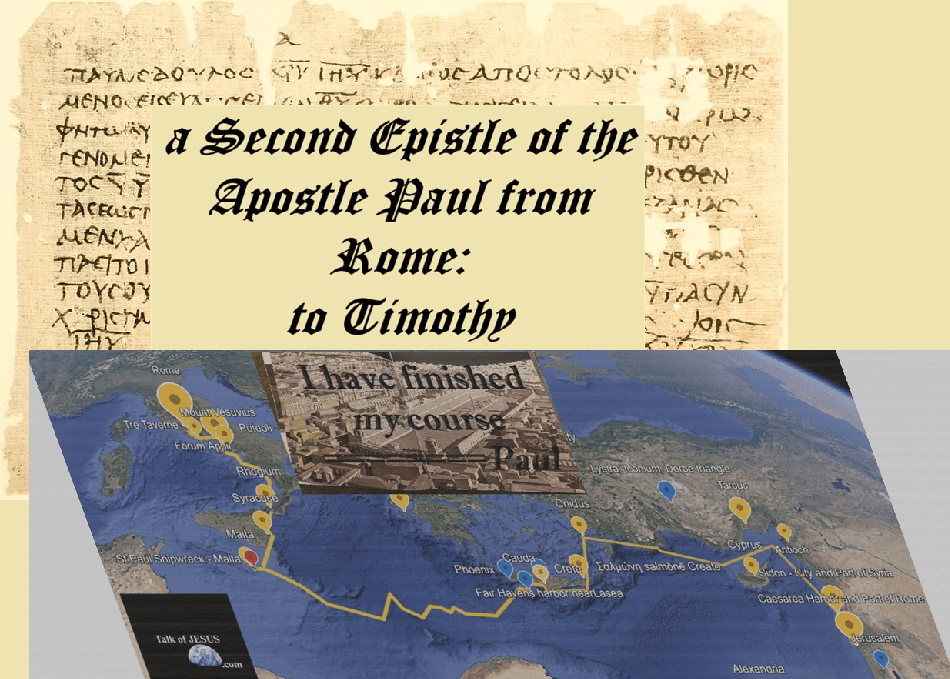
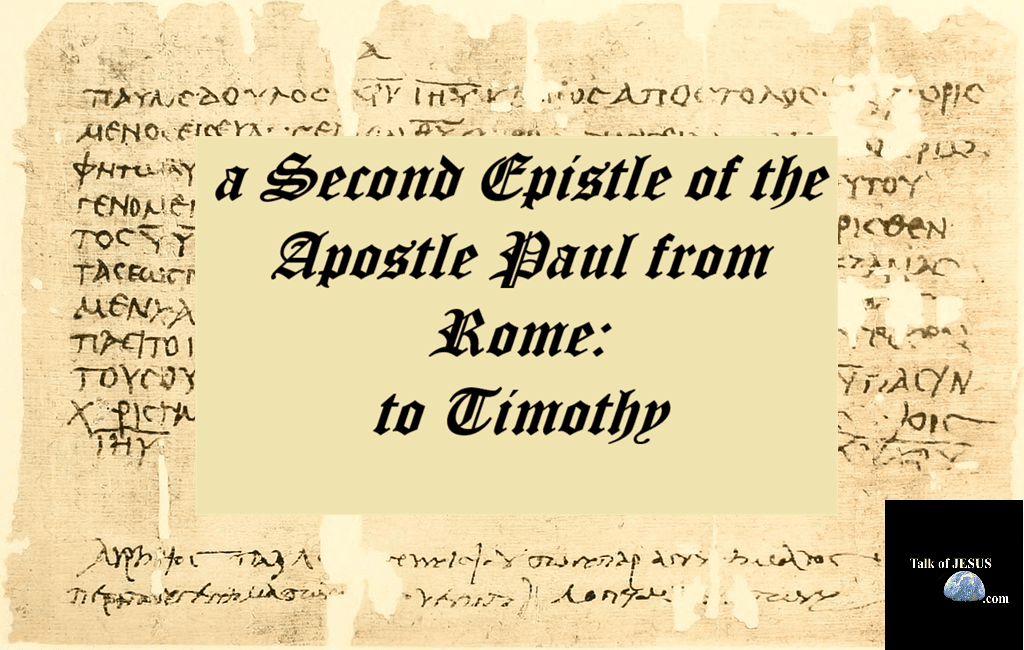
The Apostle now closes his final letter to Timothy noting that his course redirected by Christ on a road to Damascus so many years before — his marathon race of missions into all the world — indeed even the end of the Apostle’s mortal life is at hand.
in the N. T. σπένδεσθαι, to be offered as a libation, is figuratively used of one whose blood is poured out in a violent death for the cause of God
Paul, with Timothy about five years earlier, had written to the church in Philippi:
Do all things without grumbling or disputing, so that you will be blameless and innocent, children of God without blemish in the midst of a crooked and perverse generation, among whom you shine as lights in the world, holding fast the word of life, so that in the day of Christ I will have reason to boast because I did not run in vain nor labor in vain.
But even if I am being poured G4689 out G4689 as G4689 a G4689 drink G4689 offering G4689 upon the sacrifice and service of your faith, I rejoice and share my joy with you all.
And you also, rejoice in the same way and share your joy with me.
Epistle of Paul and Timothy, slaves of Christ Jesus,
To all the saints in Christ Jesus who are in Philippi 2:14-18 LSB
The Apostle had then sent Timothy and Epaphroditus to the church at Philippi.
For I am already being poured out as a drink offering, and the time of my departure has come.
2 Timothy 4:6 – Greek NT, LSB:
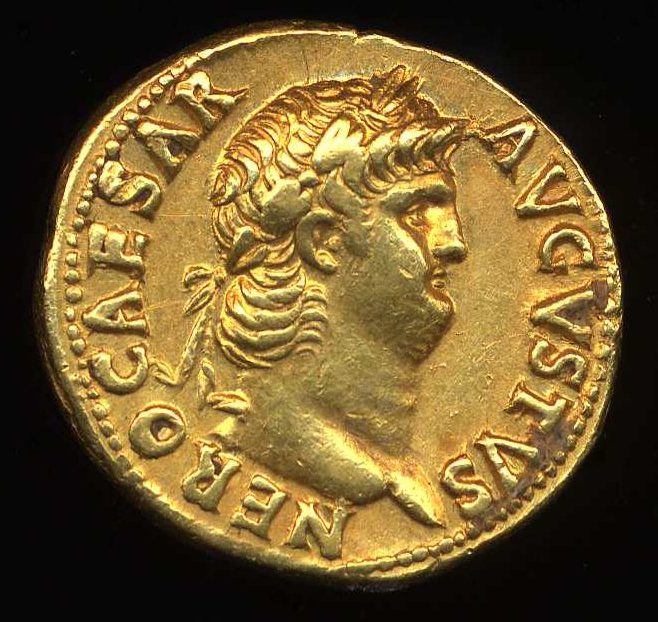
Although Paul was formerly housed in Rome for some time as a citizen having appealed to Caesar, the Apostle is now imprisoned with many others awaiting the whim of a merciless new Caesar Nero.
I have fought the good fight, I have finished the race, I have kept the faith.
Second Epistle of the Apostle Paul to Timothy 4:7 NKJV
to struggle, literally (to compete for a prize), figuratively (to contend with an adversary), or genitive case (to endeavor to accomplish something):—fight, labor fervently, strive.
That would be the Apostle Paul alright. Every saint of the church recognized his example which the Apostle expected them to follow, as they would Christ, who said:
“Strive G75 to enter through the narrow door, for many, I tell you, will seek to enter and will not be able.
Gospel of Luke (the physician who traveled with Paul who had written his Gospel while accompanying the Apostle) 13:24 LSB
Paul had written to the saints in Corinth [~A.D. 55] some ten years ago:
Now everyone who competes G75 in G75 the G75 games G75 exercises self-control in all things. They then do it to receive a corruptible crown, but we an incorruptible.
Therefore I run in such a way, as not without aim; I box in such a way, as not beating the air; but I discipline my body and make it my slave, so that, after I have preached to others, I myself will not be disqualified.
1 Corinthians 9:25-27 LSB
I have finished the course
However, I consider my life worth nothing to me; my only aim is to finish the race and complete the task the Lord Jesus has given me—the task of testifying to the good news of God’s grace.
Acts of the Apostles 20:24 NIV – Paul’s Farewell to the Ephesian Elders
Paul, since his conversion by Christ on the road to Damascus is, if nothing else, consistent in his persistence for the Gospel, even though the Apostle’s mortal life seems always in peril.
I have fought a good fight, I have finished my course..
to do just as commanded, and generally involving the notion of time, to perform the last act which completes a process, to accomplish, fulfill
Luke recounts what Jesus had told the Twelve prior to His crucifixion:
“I came to bring fire on the earth, and how I wish it were already set ablaze! But I have a baptism to undergo, and how it consumes me until it is finished [or accomplished – teleō]!
Do you think that I came here to bring peace on the earth?
No, I tell you, but rather division.
Gospel of Luke 12:49-51 CSB
And in his second account Paul’s physician reports of Christ’s crucifixion, where the Lord Himself spoke, “It is finished,”
When they had carried out [teleō] all that had been written about him, they took him down from the tree and put him in a tomb. But God raised him from the dead, and he appeared for many days to those who came up with him from Galilee to Jerusalem, who are now his witnesses to the people.
Acts of the Apostles 13:29-31 CSB – from Paul’s Sermon in Antioch of Pisidia
I have kept the faith
What does that mean to you?
Do you have the Apostolic faith of Paul.. or Timothy?
Who can say, “I have kept my heart pure,
I am clean from my sin”?
Proverbs 20:9 LSB
“If you keep My commandments, you will abide in My love;
just as I have kept My Father’s commandments and abide in His love [agapē].
These things I have spoken to you so that My joy may be in you,
and that your joy may be G4137 complete G4137.
John 15:10 -11 LSB – JESUS
And PAUL personally addressed Timothy earlier in this second letter:
… I unceasingly remember you in my prayers night and day, longing to see you, having remembered your tears, so that I may be filled [plēroō ] with joy, receiving remembrance of the unhypocritical faith within you.
Second Epistle of Paul to Timothy 1:3b-5a LSB
At last the champion’s wreath
Paul finishes his final epistle:
Finally, there is laid up for me the crown of righteousness, which the Lord, the righteous Judge, will give to me on that Day,
and not to me only but also to all who have loved His appearing.
But you must continue in the things which you have learned and been assured of, knowing from whom you have learned them, and that from childhood you have known the Holy Scriptures,
which are able to make you wise for salvation through faith which is in Christ Jesus.
Second Letter of Paul to Timothy 3:14-15 NKJV
The Apostle Paul will now show his successors, including at the time of his impending execution Timothy in Ephesus, how they must refute false teaching by focusing on Scripture.
Today's look at 2 Timothy within our SERIES of Apostolic Faith is primarily TOPICAL with focus on SCRIPTURE and its related terms. - RH
Scripture is…
Many of us tend toward an easy answer of quoting scripture as a single and particular verse within a chapter, within a book, within a category of books, i.e. the Torah. Yet this epistle of Paul and books of the Prophets often point to additional books for origin, application and/or context.
the Scripturesare books
Paul reminds Timothy: “.. you have known the Holy Scriptures..”, translated from the Greek: τὰ [ho] ἱερὰ [hieros] γράμματα [gramma] οἶδας [you have known].
No doubt you recognize the Greek word for Scripture – gramma, as grammar.
γράμμα grámma, gram’-mah; from G1125; a writing, i.e. a letter, note, epistle, book, etc.; plural; learning:—bill, learning, letter, scripture, writing, written.
Writings
Yet let’s not miss that the Apostle Paul points Timothy to the ‘scriptures‘ [plural] and more importantly with specific reference that those writings that are “holy.”
Biblia
The earliest Christian use of ta biblia (the books) in this sense is said to be 2 Clement 2:14 (c. a.d. 150): “The books and the apostles declare that the church . . . has existed from the beginning.” (Compare Dan. 9:2, “I, Daniel, understood from the Scriptures,” where the reference is to the corpus of Old Testament prophetic writings.) Greek biblion (of which biblia is the plural) is a diminutive of biblos, which in practice denotes any kind of written document, but originally one written on papyrus.
A term synonymous with“the Bible” is“the writings” or “the Scriptures” (Greek hai graphai, ta grammata), frequently used in the New Testament to denote the Old Testament documents in whole or in part. For example, Matthew 21:42 says, “Have you never read in the Scriptures?” (en tais graphais). The parallel passage, Mark 12:10, has the singular, referring to the particular text quoted,“Haven’t you read this Scripture?” (ten graphen tauten).
“Write this as a memorial in a book and recite it in the ears of Joshua..
Exodus 17:14a – Masoretic Text, Revised Standard Version
Strong’s H3789 – kāṯaḇ (for write) is the same Hebrew word used in the giving of the Commandments.
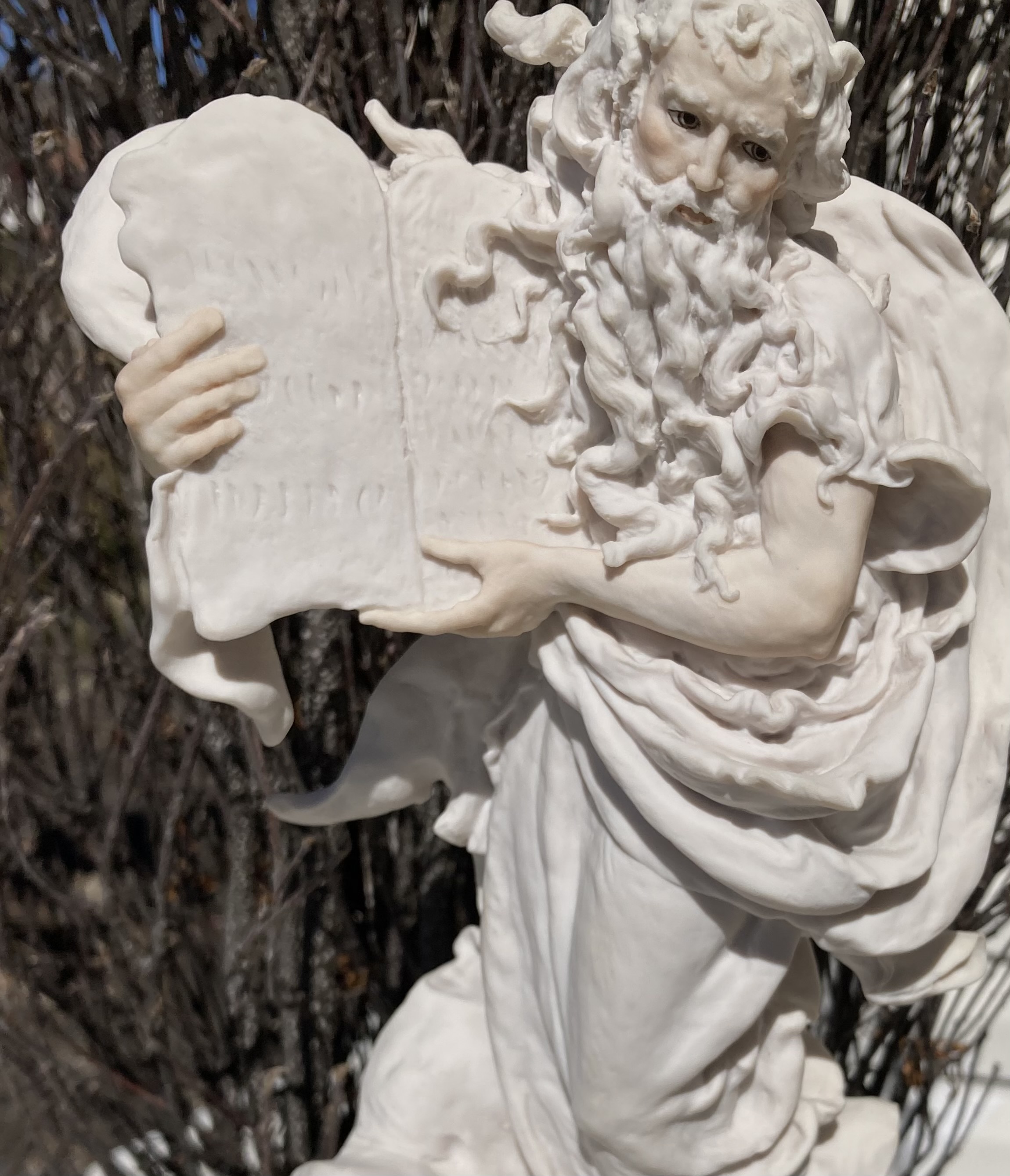
And he gave unto Moses, when he had made an end of communing with him upon mount Sinai, two tables of testimony, tables of stone, written H3789 with the finger of God.
Exodus 31:18 KJV
“Write this as a memorial in a book,” the LORD instructs Moses to give to his successor Joshua.
New testament
Some pastors and teachers wander from the Truth of Scripture by dismissing Old Testament Law and especially the Prophets from the hearing and remembrance of their church.
“I have come in My Father’s name, and you do not receive Me; if another comes in his own name, him you will receive.
.. there is one who accuses you—Moses, in whom you trust.
“For if you believed Moses, you would believe Me; for he wrote about Me.
“But if you do not believe his writings, how will you believe My words?”
New Testament Gospel of John 5:43, 45b-47 NKJV
The Lord Jesus Christ, however, connects His own testimony to that of the Hebrew Bible:
“.. he (Moses) wrote [γράφω – graphō] about Me, ” states the Lord Jesus. And the Christ or Messiah of Israel adds:
“But if you do not believe his (Moses’) writings [γράμμα – gramma], how will you believe My words [ῥῆμα – rhēma]?”
This, in addition to being a frequent warning of Christ, became an Apostolic word of warning written in several epistles to A.D. first century pastors.
a word from The Apostle Peter
Simon Peter answered him, “Lord, to whom shall we go? You have the words [rhēma] of eternal life
Gospel of John 6:68 – Jesus’ Apostles remain faithful as the Lord’s crucifixion approaches
And this is the wordG4487 which was proclaimed to you as good news.
1 Peter 1:25
I am stirring up your sincere mind by way of reminder, that you should remember the words spoken beforehand by the holy prophets and the commandment of the Lord and Savior spoken by your apostles..
Paul in his second pastoral epistle to Timothy also provides a remembrance of Scripture for generations to follow.
Second Timothy 3:15 (RSV)
speaks of “the sacred writings”
(ta hiera grammata), and the next verse says,
“All Scripture is God-breathed”
(pasa graphe theopneustos).
In 2 Peter 3:16 “all” the letters of Paul are included along with “the other Scriptures” (tas loipas graphas),
by which the Old Testament writings and probably also the Gospels are meant.
ibid.
It is written…
Is the phrase familiar?
as it is written in the book of the law of Moses – Joshua 8:31
Keep the passover unto the LORD your God, as it is written in the book of this covenant. – 2 Kings 23:21
Then said I, Lo, I come: in the volume of the book [sēp̄er] it is written [kāṯaḇ] of me.. – Psalm 40:7
Jesus therefore answered and said to them, “Do not murmur among yourselves. No one can come to Me unless the Father who sent Me draws him; and I will raise him up at the last day.
“It is written in the prophets, ‘And they shall all be taught by God.’[Jesus, quoting Isaiah 54:13]
Therefore everyone who has heard and learned from the Father comes to Me.
Gospel of John 6:43-45 NKJV
Then I said, “Behold, I come;
In the scroll of the book it is written H3789 of me.
“Every scripture inspired of God,” the ASV translates.
“Every scripture is inspired by God,” reads the New English Translation.
“Every scripture is divinely inspired,” in the Darby translation.
“every Writing is God-breathed,” states Young’s Literal Translation.
Pivotal Proof, IF you believe
How do false teachers oppose God and Christ?
First, in order to turn faithful saints of the church against God false teachers must attack Scripture. They do this with the subtlety of Satan with a simple turn of a word. For when all is said and done, false teachers insist that God is wrong and that they know why.
In a section headed, SCRIPTURE PROVIDES INSTRUCTION FOR SANCTIFICATION (which of course false teachers want no part of), John MacArthur writes:
Some scholars suggest that All Scripture is inspired should be translated,
“All Scripture inspired by God is..,”
which would leave open the possibility that someScripture is not inspired by Him. But that rendering would make the Bible worthless as a reliable guide to divine truth, because we would then have no way to determine which part of it is inspired by God and which is not.
Men would be left to their own finite and sinful devices and understanding ot discover what part of the Bible may be true and which may not, what part is God’s Word and what part is human conjecture.
THE MACARTHUR NEW TESTAMENT COMMENTARY – 2 TIMOTHY, P.142
MacArthur definitively adds:
Many men who wrote Scripture, such as Moses and Paul, were highly trained in human knowledge and wisdom, but that learning was not the source of divine truth they recorded. David was a highly gifted poet, .. but it was not the source of the divine truths in those psalms.
ibid. p.143
Does 2 Tim 3:16 prove the inspiration of all Scriptureor just some?
excerpt from: A POPULAR HANDBOOK ON BIBLE DIFFICULTIES
PROBLEM:
Some think that the word “all” should be replaced by “every.” Plus, one believe that.. “is” should be placed after.. not before.
SOLUTION:
[edited excerpt] .. those that translate this verse with “is” after “God” make it sound like there are some scriptures not inspired of God. “all” should be translated, “every” if the definite article is missing. However, whenever the word “Scripture” (graphē) is used in the NT, it always refers to authoritative and inspired writings— never the opposite…
Paul’s context here refers to “the Holy Scriptures” (1:15) Timothy’s Jewish mother and grandmother had taught him (2 Tim 1:5), and this could be none other than the whole Jewish OT.
WHEN CRITICS ASK, Norman Geisler & Thomas Howe, pp 505-506
πᾶσα γραφὴ θεόπνευστος καὶ — ALL SCRIPTURE given by inspiration of God, and…
4 Profitable Imperatives
The Apostle Paul then continues to instruct Timothy and readers of his pastoral epistle in HOW TO APPLY the TRUTH of GOD-BREATHEDSCRIPTURE.
By 'profitable,' Paul means helpful or advantageous
Once again, let’s just list Paul’s MUST DO list from various translations noting also the interralationship of these actions of applying Scripture.
et utilis ad docendum ad arguendum ad corrigendum ad erudiendum in iustitia’
from the Latin Vulgate
WE resist many of these Scriptural imperatives; but the Apostle Paul assures Christ-followers that GOD breathed-out the Commandments WRITTEN in the BIBLE.
Let's simplify Paul's four-point list in 2 Timothy 3:16
DOCTRINE – didaskalia
REPROOF – elegchos
CORRECTION – epanorthōsis
INSTRUCTION IN RIGHTEOUSNESS – paideia endikaiosynē
Doctrine, learning, teaching or Instruction
The Scriptures serve as a comprehensive guide for teaching and imparting knowledge about God, His will, and His ways. … The Bible provides moral and spiritual guidance, helping believers understand the nature of God and the principles of His kingdom.
a proof, that by which a thing is proved or tested
conviction
Now faith is the substance of things hoped for, the evidence G1650 of things not seen.
Hebrews 11:1
correction, improvement of life or character,
restoration to an upright or right state – a derivative of the base of G3717; to straighten up:—lift (set) up, make straight.
And behold, there was a woman who had a spirit of infirmity eighteen years, and was bent over and could in no way raise herself up…
And He [Jesus] laid His hands on her, and immediately she was made straight, and glorified God.
Gospel of Luke 13:11,13 NKJV
ἐπανόρθωσις – a straightening up again, i.e. (figuratively) rectification (reformation):—correction.
Paul assures Timothy that Scripture can rectify that false teaching which has made your spirit and life crooked with sin.
Instruction in righteousness –
the whole training and education of children
(which relates to the cultivation of mind and morals, and employs for this purpose now commands and admonitions, now reproof and punishment)
It also includes the training and care of the body
παιδεία paideía, pahee-di’-ah; from G3811; tutorage, i.e. education or training; by implication, disciplinary correction:—chastening, chastisement, instruction, nurture.
Paul, an apostle of Jesus Christ by the will of God,
to the saints which are at Ephesus, and to the faithful in Christ Jesus:
6:4 And you, fathers, do not provoke your children to wrath,
Paul’s protégé and young pastor to the saints at Ephesus, will not overlook his apostolic example as the type of righteousness required in the instruction of Scripture.
That the man of God may be perfect
thoroughly furnished unto all good works.
2 Timothy 3:17 KJV
One last word here about ALL SCRIPTURE, before the Apostle pushes on to PREACH THE WORD.
ἵνα ἄρτιος ᾖ – that perfect may be
Perfection (used in the King James Version) refers to perfection in Christ.
Be ye therefore perfect, even as your Father which is in heaven is perfect.
Gospel of Matthew 5:48 KJV – Jesus teaching the crowds in the Beautitudes
Other translations use ‘complete.’
Wake up, and strengthen what remains and is about to die, for I have not found your works complete in the sight of my God.
Revelation of Jesus Christ to John: 3:2 ESV – To the Church in Sardis
Still other translations point the preacher of God to Scripture as essential to be: fit, adequate, capable, or proficient.
ὁ τοῦ θεοῦ ἄνθρωπος – of God the man
The Apostle is addressing the man of God, a technical phrases used only of Timothy in the New Testament. In the Old Testament it is frequently used as a title for one who proclaimed the Word of God. In this context, man of God refers most directly to Timothy and, by extension, to all preachers.
John MacArthur New Testament Commentary – 2 Timothy, p.162
(and in the Greek, followed by ‘thoroughly furnished.’
And Paul’s practical preparation for the man of God gives good reason:
The Apostle prescribes SCRIPTURE as a preacher’s tools, useful for building good works among the saints of their church.
ἐξηρτισμένος – thoroughly furnished
throughly [KJV prior to 16th c. archaic]furnished
unto all good works.
ἐξαρτίζω exartízō, means: to furnish perfectly; to finish, accomplish, (as it were, to render the days complete).
One instance of this concept takes place when John the Baptist objected to Jesus that Christ should be baptizing him.
And Jesus answering said unto him, Suffer it to be sonow:G737 for thus it becometh us to fulfil all righteousness. Then he suffered him.
Matthew 3:15 KJV
Scripture Written – the Word Spoken
In the beginning God created the heaven and the earth. And the earth was without form, and void; and darkness was upon the face of the deep. And the Spirit of God moved upon the face of the waters.
And God said…
Moses and Aaron among his priests, and Samuel among them that call upon his name; they called upon the LORD, and he answered them.
Genesis 1:1-3a, Psalm 99:6 KJV
In the beginning was the Word, and the Word was with God, and the Word was God. The same was in the beginning with God.
Gospel of John 1:1-2 KJV
And the Word was made flesh, and dwelt among us, (and we beheld his glory, the glory as of the only begotten of the Father,) full of grace and truth.
My sheep hear my voice, and I know them, and they follow me: And I give unto them eternal life; and they shall never perish, neither shall any man pluck them out of my hand.
Gospel of John 1:8, 10:27 KJV – Spoken by JESUS Christ
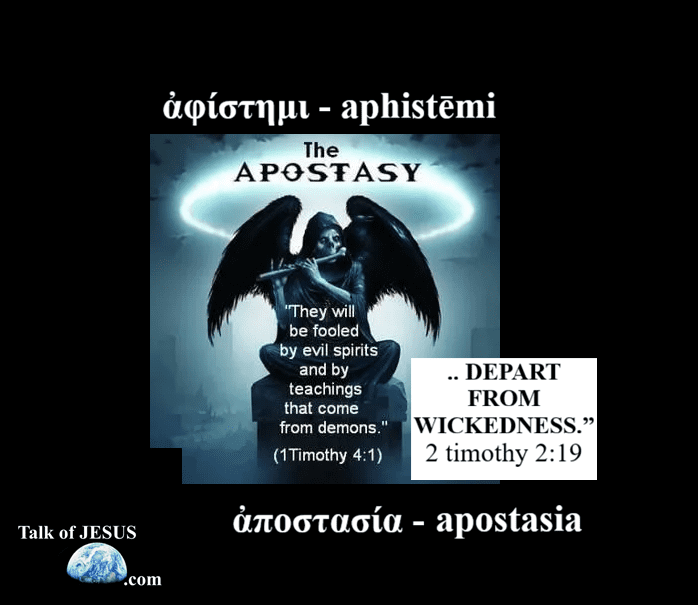
The word apostasy is rarely found in the Eng. Bible.. But the reality expressed by the word is found frequently. Israel’s history was one of continual apostasy as the people deliberately turned away form the God who had redeemed them out of Egypt, and followed false gods and sinful ways… In the NT apostasy occurs when men turn aside from following Jesus and deny Him after having previously confessed Him as Lord.
The Zondervan Pictorial Encyclopedia of the Bible, p.216
Why is the Apostle Paul so concerned for some small misleading by men within the church?
How do some teachers oppose the true worship of our Lord and Savior Jesus Christ?
Who are they?
But Mark This:
But mark this: There will be terrible times in the last days.
perhaps from G5465 through the idea of reducing the strength; difficult, i.e. dangerous, or (by implication) furious:—fierce, perilous.
The Apostle Paul continues in his second epistle to pastors, beginning a central section we label, 2 TIMOTHY 3, with a reminder of danger announced in the NIV, “But mark this: ..”
Paul’s WARNING from his previous epistle
But the Spirit explicitly says that in later times some will [aphistēmi] fall away from the faith, paying attention to deceitful spirits and doctrines of demons, by the hypocrisy of liars, who have been seared in their own conscience, ..
1 Timothy 4:1-2 LSB
The great enemy of God is not Nation or Ruler who turns upon God’s people from without, but the strong-speaking leader weakening the Lord’s elect from within.
The Apostle has already cautioned in his second epistle to beware of men like Jannes and Jambres who betrayed Moses. Now Paul reminds Timothy and others of his personal example to them from the time he first witnessed to them.
You, however, know all about my teaching,
my way of life,
my purpose, faith, patience, love, endurance, persecutions, sufferings—
Second pastoral Epistle of Paul to Timothy 3:10-11a NIV
And Paul then outlines some life-threatening events many of them witnessed which proved his faith through several persecutions and many injuries suffered:
—what kinds of things happened to me in Antioch, Iconium and Lystra, the persecutions I endured.
The last days — eschatos hēmera, difficult times — chalepos kairos...
kai toutous apotrepō – from such turn away.
Avoid such people!
YES, they may be prominent members, even Elders, leaders, priests or pastors in Christ’s church where you worship.
They will maintain the outward appearance of religion but will have repudiated its power. So avoid people like these.
2 Timothy 3:5 New English Translation
Knowing What You Know
The Apostle compares his own life to a different life promised by false teachers.
(For these are only the beginning of the last days before Christ’s return).
But as for you, continue in what you have learned and have become convinced of, because you know those from whom you learned it, and how from infancy you have known the Holy Scriptures, which are able to make you wise for salvation through faith in Christ Jesus.
2 Timothy 3:14-15 NIV
So how does a pastor like Timothy, or Elder, or simply a humble saint know who to believe?
Questions for a Common Era christian church
Have any priestly men of your parrish repented of the calf replaced by idols of a woman worshiped?

Did episkopois above bishops elevate hagios long passed as ancient intercessors worshiped?

Do spotlights illuminate your idols on stage for a multitude little different than what Moses witnessed on descent from Sinai?

Does your vaulting cathedral show wooden pillars of pastoral vision as the calf gathering those led by Jannes and Jambres into the worship of a new King?

Has worldly refreshment replaced Scripture in the house of the Lord?

Is the Christ of true Scripture rejected in place of some other calf-like JESUS proclaimed king without taking up a Cross?
But they won’t get away with this for long.
Someday everyone will recognize what fools they are, just as with Jannes and Jambres.
2 Timothy 3:9 NLT
Recognizing Apostasy from Scripture
As mentioned earlier we will not find the word “apostasy” frequently in the Bible, but Scripture reveals apostate acts of turning against God and Christ throughout.
Follow the meaning and connection of some of these related root words from both the Greek and Hebrew of the Bible:
Let no one in any way deceive you, for it has not come unless the [apostasia] apostasy comes first, and the man of lawlessness is revealed, the son of destruction, who opposes and exalts himself above every so-called god or object of worship, so that he takes his seat in the sanctuary of God, exhibiting himself as being God.
Second Epistle of Paul to the Thessalonians 2:2-3 LSB – regarding letters from false teachers
ἀποστασία apostasía, ap-os-tas-ee'-ah; feminine of the same as G647; defection from truth
And they said, “Moses permitted a man TO WRITE A CERTIFICATE OF DIVORCE G647 [apostasion] AND [apolyō] SEND her AWAY.”
But Jesus said to them, “Because of your hardness of heart he wrote for you this commandment. But from the beginning of creation, God MADE THEM MALE AND FEMALE…”
Gospel of Mark 10:4-6 LSB
ἀποστάσιον apostásion, ap-os-tas'-ee-on; neuter of a (presumed) adjective from a derivative of G868; properly, something separative, i.e. (specially) divorce:—(writing of) divorcement.
“And those on the rock are those who, when they hear, receive the word with joy, and these have no root; they believe for a while, and in time of temptation fallG868awayG868.
Gospel of Luke 8:13 LSB — Strong’s G868 – aphistēmi – to remove, i.e. (actively) instigate to revolt; usually (reflexively) to desist, desert, etc.:—depart, draw (fall) away, refrain, withdraw self.
LXX – Septuagint – O.T. translations from the Greek
Old Testament
The Septuagint, often abbreviated as LXX, is the ancient Greek translation of the Hebrew Scriptures, traditionally said to have been translated by seventy or seventy-two Jewish scholars in the 3rd century BC.
The translation of the Hebrew Scriptures into Greek was necessitated by the dispersion of the Jewish people throughout the Hellenistic world, particularly in Egypt, where many Jews had lost their Hebrew language skills.
The Septuagint holds particular significance in early Christianity, as it was the version of the Old Testament most frequently quoted by the New Testament authors.
The use of the Septuagint by the early Church Fathers further solidified its role in Christian theology and exegesis.
Strong’s Number G868 matches the Greek ἀφίστημι (aphistēmi), which occurs 150 times in 138 verses in the LXX Greek.
Keep thee far from a false matter; and the innocent and righteous slay thou not: for I will not justify the wicked.
Exodus 23:7 KJV
For they will turn away thy son from following me, that they may serve other gods: so will the anger of the LORD be kindled against you, and destroy thee suddenly.
Deuteronomy 7:4 KJV
And he did that which was evil in the sight of the LORD: he departed not from the sins of Jeroboam the son of Nebat, who made Israel to sin.
2 Kings 15: (4X)
Depart from me, all ye workers of iniquity; for the LORD hath heard the voice of my weeping.
Psalm 6;8
 Hear, ye that are far off, what I have done;
and, ye that are near, acknowledge my might.
 The sinners in Zion are afraid;
fearfulness hath surprised the hypocrites.
 Who among us shall dwell with the devouring fire?
who among us shall dwell with everlasting burnings?

- Isaiah 33:14-15 KJV
more Apostasy from the Hebrew Bible [O.T.]
Various Hebrew words could be translated into English as ‘apostasy.’
If you read more books of the Prophets, such as Isaiah {above}, you will see their turning against God repeatedly.
Your evil will chastise you, and your apostasy will reprove you. Know and see that it is evil and bitter for you to forsake the LORD your God; the fear of me is not in you, declares the Lord GOD of hosts.
The entire book of Hosea essentially outlines the faithlessness of God’s ‘chosen people.’
Historical Context [8th century B.C.]: Hosea’s prophetic career spanned the reigns of several kings of Israel, including Jeroboam II, and possibly extended into the early years of the Assyrian conquest. This period was marked by political instability, social injustice, and rampant idolatry. The Northern Kingdom was prosperous but spiritually bankrupt, having turned away from Yahweh to worship Baal and other Canaanite deities.
source: BibleHub.com
.. And the LORD said to Hosea, Go, take unto thee a wife of whoredoms and children of whoredoms: for the land hath committed great whoredom, departing from the LORD.
Hosea 1:2a KJV
Though thou, Israel, play the harlot, yet let not Judah offend; and come not ye unto Gilgal, neither go ye up to Bethaven, nor swear, The LORD liveth.
Hosea 4:15
For they have sown the wind, and they shall reap the whirlwind:
it hath no stalk: the bud shall yield no meal: if so be it yield, the strangers shall swallow it up.
Israel is swallowed up: now shall they be among the Gentiles as a vessel wherein is no pleasure.
Hosea 8:7-8
When Israel was a child, then I loved him, and called my son out of Egypt…
And my people are bent to backsliding [mᵊšûḇâ – מְשׁוּבָה ] from me:
though they called them to the most High, none at all would exalt him.
Hosea 11:1,7 KJV
Return, O Israel, to the LORD your God, for you have stumbled because of your iniquity.
I will heal their apostasy [mᵊšûḇâ]; I will love them freely, for my anger has turned from them.
Hosea 14:1,4 KJV
live a godly life in Christ Jesus
But evil people and impostors will flourish. They will deceive others and will themselves be deceived.
But you must remain faithful to the things you have been taught. You know they are true, for you know you can trust those who taught you.
Used to monitor number of Google Analytics server requests
10 minutes
__utmb
Used to distinguish new sessions and visits. This cookie is set when the GA.js javascript library is loaded and there is no existing __utmb cookie. The cookie is updated every time data is sent to the Google Analytics server.
30 minutes after last activity
__utmc
Used only with old Urchin versions of Google Analytics and not with GA.js. Was used to distinguish between new sessions and visits at the end of a session.
End of session (browser)
__utmz
Contains information about the traffic source or campaign that directed user to the website. The cookie is set when the GA.js javascript is loaded and updated when data is sent to the Google Anaytics server
6 months after last activity
__utmv
Contains custom information set by the web developer via the _setCustomVar method in Google Analytics. This cookie is updated every time new data is sent to the Google Analytics server.
2 years after last activity
__utmx
Used to determine whether a user is included in an A / B or Multivariate test.
18 months
_ga
ID used to identify users
2 years
_gali
Used by Google Analytics to determine which links on a page are being clicked
30 seconds
_ga_
ID used to identify users
2 years
_gid
ID used to identify users for 24 hours after last activity
24 hours
_gat
Used to monitor number of Google Analytics server requests when using Google Tag Manager
1 minute
_gac_
Contains information related to marketing campaigns of the user. These are shared with Google AdWords / Google Ads when the Google Ads and Google Analytics accounts are linked together.