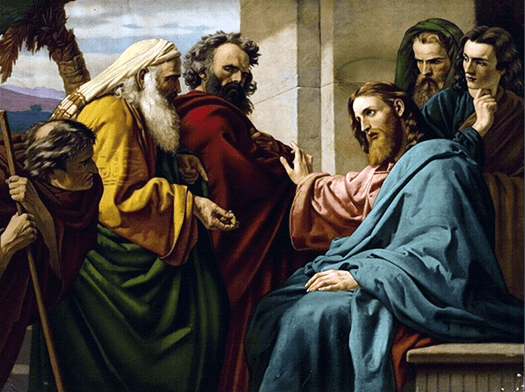
Tag: John

  • For you will always have the poor

    For you will always have the poor

    Why mention the poor?

    Once again, Jesus makes what appears to be an offhand remark about the poor. Jesus often criticized the leaders of Temple and Pharisees for their treatment of the poor; doesn’t this remark catch you off guard?

    It would be easy enough to lose the context of Jesus’ apparent ambivalence toward the poor in the rush of events surrounding Passover week. Jesus’ final entry into Jerusalem has many seemingly more important things going on than what to us would first appear to be a slip of the tongue (sort of like cursing the fig tree).  Yet like in our previous series you may find some subtleties worthy of note that impact more than just the poor.

    The Gospel Quotes:

    Prior to examining Jesus’ point of the comment, which we will do later in this series, let’s begin quotes from the view points of three different gospel writers.

    Mark 14:7

    For you always have the poor with you, and whenever you want, you can do good for them.

    Matthew 26:7

    For you always have the poor with you, but you will not always have me.

    John 12:8

    For the poor you always have with you, but you do not always have me.”

    The 5 W’s

    Now to discover the context we must examine all three stories asking:

    Who, what, where, when and why?

    You will find some variation in the three Gospel stories and some similarities. We begin today with Mark’s gospel.


    Mark 14:

    It was now two days before the Passover and the Feast of Unleavened Bread. And the chief priests and the scribes were seeking how to arrest him by stealth and kill him, 2 for they said, “Not during the feast, lest there be an uproar from the people.”


    We have the ‘when:’ two days before the Passover, which in this particular year with the Passover on a Thursday, was Tuesday.


    3 And while he was at Bethany in the house of Simon the leper, as he was reclining at table, a woman came with an alabaster flask of ointment of pure nard, very costly, and she broke the flask and poured it over his head.

    4 There were some who said to themselves indignantly, “Why was the ointment wasted like that? 5 For this ointment could have been sold for more than three hundred denarii and given to the poor.” And they scolded her. 6 But Jesus said, “Leave her alone. Why do you trouble her? She has done a beautiful thing to me. 7 For you always have the poor with you, and whenever you want, you can do good for them. But you will not always have me. 8 She has done what she could; she has anointed my body beforehand for burial. 9 And truly, I say to you, wherever the gospel is proclaimed in the whole world, what she has done will be told in memory of her.”


    Where? In the house of Simon the Leper, in Bethany, near Jerusalem.

    Bethany is today el ‘Azareyeh (“the place of Lazarus”- the L being displaced to form the article).

    Who is present? Jesus, of course; Simon, host of the meal (who Jesus had likely healed from leprosy; ‘some,’ likely the Twelve and others; and an unidentified woman who enters Simon’s home.

    What happens? She pours out some very expensive oil on Jesus, an act of great humility and worship.

    (More about her and her gracious act later.)


    To be continued…


  • for it was not the season for figs – 5

    for it was not the season for figs – 5

    The Lord vs. Kings

    We began this series examining an incident of the Lord Jesus cursing a fig tree. 
    
    It seemed so unlike the Son of Man who would a few days later sacrifice His own blood as perfect Passover sacrifice for the sins of man.
    

    In the Beginning:

    It is in Eden where we first hear of the leaves of the fig tree made to cover sin.

    Genesis 3:7 Then the eyes of both were opened, and they knew that they were naked. And they sewed fig leaves together and made themselves loincloths.

    Recall that in the beginning, after the Lord created the heavens and the earth, He walked with man {adam} and the woman {Eve} He had created. He walked with them personally.

    The Lord then gave the Law to Moses and appeared to Moses and the Elders of Israel personally

    THEY FEARED His awesome Presence!

    The Law was then administered by judges, not Kings.

    Later the Lord would relent and grant a king to Israel in Saul.

    Yet prior to Saul’s anointing we hear a parable preached against the people who wanted to replace their seventy judges with a king.


    In the previous episode we briefly looked at the story of the hero Gideon, after which this story is told.

    Judges 9:

    Parable of the Trees
    The Olive Tree
    the olive tree is the national tree of Israel

    8 The trees once went out to anoint a king over them,

    and they said to the olive tree, ‘Reign over us.’

    9 But the olive tree said to them,

    ‘Shall I leave my abundance, by which gods and men are honored, and go hold sway over the trees?’

    Olive oil was used for lamps, grain offerings and anointing Kings of Israel.


    The Fig Tree

    10 And the trees said to the fig tree, ‘You come and reign over us.’

    11 But the fig tree said to them, ‘Shall I leave my sweetness and my good fruit and go hold sway over the trees?’

    The fig tree was a common metaphor for Israel as a nation. It often symbolized the health of the nation both spiritually and physically.


    The Grape Vine

    12 And the trees said to the vine, ‘You come and reign over us.’

    13 But the vine said to them, ‘Shall I leave my wine that cheers God and men and go hold sway over the trees?’

    “This cup is the new covenant in my blood. Do this, as often as you drink it, in remembrance of me.”

    1 Corinthians 11:25
     Brambles [Thornbush]

    14 Then all the trees said to the bramble, ‘You come and reign over us.’

    15 And the bramble said to the trees, ‘If in good faith you are anointing me king over you, then come and take refuge in my shade, 

    of course, a bramble bush cannot offer shade

    … but if not, let fire come out of the bramble and devour the cedars of Lebanon.’


    For the LORD your God is a consuming fire, a jealous God. – Deuteronomy 4:24

    And you have asked for a King?


    Christ Crowned with Thorns

    So Pilate entered his headquarters again and called Jesus and said to him,

    “Are you the King of the Jews?”

    John 18:33


    To be continued…

  • for it was not the season for figs – 4

    for it was not the season for figs – 4

    Perceiving then that they were about to come and take him by force to make him king, Jesus withdrew again to the mountain by himself.

    John 6:15

    יַמּא דטבריא; גִּנֵּיסַר
    Lake Tiberias – Rome’s name for Kinneret [Sea of Galilee]

    Conspiracy to force Jesus to be King

    Returning to Galilee, held by Rome..

    Jesus faced crowds with different motivations than the Lord God on occasions other than His triumphal entry into Jerusalem.

    The Prophet Jeremiah had warned:

    The heart is deceitful above all things, and desperately wicked:

    who can know it?

    – Jeremiah 17:9 KJV

    Jesus knew the motivations of the crowds.

    John 6: ESV

    After this Jesus went away to the other side of the Sea of Galilee, which is the Sea of Tiberias. And a large crowd was following him, because they saw the signs that he was doing on the sick…

    9 “There is a boy here who has five barley loaves and two fish, but what are they for so many?” 10 Jesus said, “Have the people sit down.” Now there was much grass in the place. So the men sat down, about five thousand in number…

    14 When the people saw the sign that he had done, they said, “This is indeed the Prophet who is to come into the world!”

    15 Perceiving then that they were about to come and take him by force to make him king, Jesus withdrew again to the mountain by himself.


    The Messiah who cursed the fig tree knew the hearts of men who would be led by a King rather than follow the Lord God.


    Returning to a time after the Judges, let us recall briefly the appointment of Israel’s first King. The Elders of Israel have conspired against the Lord.

    1 Samuel 8:

    4 Then all the elders of Israel gathered together and came to Samuel at Ramah 5 and said to him, “… Now appoint for us a king to judge us like all the nations.”

    7 And the Lord said to Samuel, “Obey the voice of the people in all that they say to you, for they have not rejected you, but they have rejected me from being king over them.


    Jesus knew the hearts of the crowds, of the leaders of Israel, parties of religious officials of the Temple. Their hearts deceived them and their wickedness chose any course other than obeying the Lord.


    Rule Over Us

    Returning now to Judges and Gideon, mighty man of God after the Lord’s great victory:

    JUDGES 8:

    22 Then the men of Israel said to Gideon,

    “Rule over us, you and your son and your grandson also, for you have saved us from the hand of Midian.” Gideon said to them, “I will not rule over you, and my son will not rule over you; the Lord will rule over you.” 

    … 33 As soon as Gideon died, the people of Israel turned again and whored after the Baals and made Baal-berith their god. 34 And the people of Israel did not remember the Lord their God, who had delivered them from the hand of all their enemies on every side, 35 and they did not show steadfast love to the family of Jerubbaal (that is, Gideon) in return for all the good that he had done to Israel.


    King Saul of Israel before David;

    kings who did evil in the sight of the Lord warned by the Prophets;

    King Herod, puppet kings to Rome motivated by men —

    Kings, Presidents, Premiers, Prime Ministers, Princes —

    Prophets (who are as false as gods carved from stone)all men of the people!

    Jesus would be like none of them.

    Jesus could only be the One King obedient to the LORD God.

    But that was not what the crowds desired.

    It never was and never will be.


    To Be Continued…