Tag: Luke

  • Son of Man – a Prophetic Path to Gethsemane

    Son of Man – a Prophetic Path to Gethsemane

    Where have we heard the scriptural depiction, ‘son of man’ most in the Bible?

    And to whom do we point by calling some mortal the “son of man?”

    Hold your answers for a moment until we look into who said that in the Bible and who was called that by whom. 

    Prophets Before Christ

    Recall that true Prophets of God speak for the LORD God.

    In part 1 we glanced at an important prophesy of Moses and then we followed Elijah observing some of the Prophet’s miracles.


    Also in part-1:

    We also glanced quickly at historical context of the Jews from Canaan to Babylon and A.D. 1st c. Jerusalem.

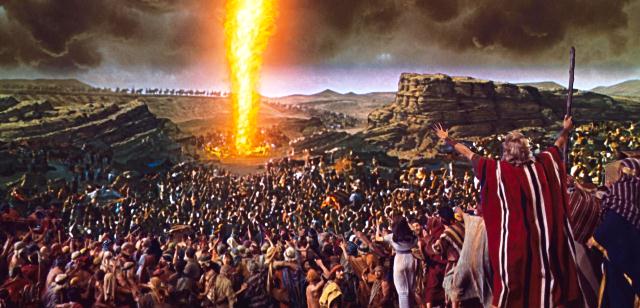
    pillar of fire in the midst of Moses and the Hebrews

    ~1450 B.C

    The Prophet Moses

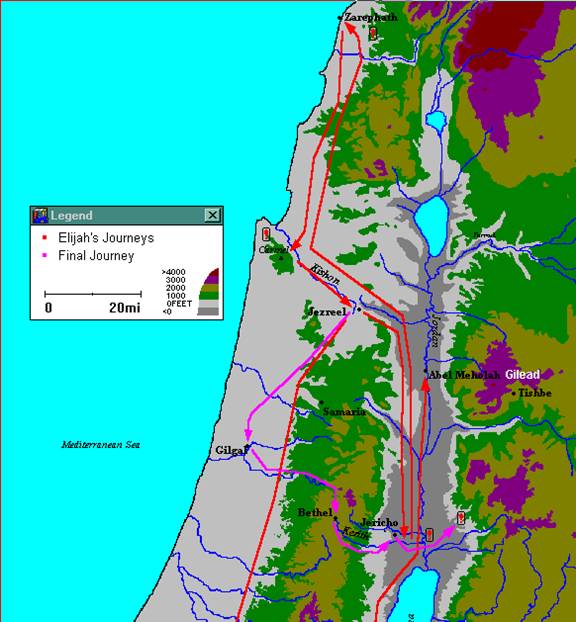
    ~870 B.C. – 849 B.C.

    The Prophet Elijah

    Elijah map of the Prophet's journeys

    Later, as prophesied:

    • defeat of ISRAEL the Northern Kingdom
      • 722 B.C.
    Ezekiel at the River Kebar

    ~620 B.C. – 570 B.C

    • eventual fall of JUDAH the Southern Kingdom…
      • 586 B.C.

    Introduction to the Son of Man

    You’ll read in just ten times in the books of Moses:

    לֹא אִישׁ אֵל וִיכַזֵּב וּבֶן־אָדָם וְיִתְנֶחָם הַהוּא אָמַר וְלֹא יַעֲשֶׂה וְדִבֶּר וְלֹא יְקִימֶנָּה׃

    Numbers 23:19 Masoretic Text

    In Hebrew, literally, ben adam” or ‘son of adam.’

    It is illustration of created man made in the image of the LORD.

    You will find it frequently in the New Testament as well, most frequently with the Lord Jesus referring to Himself.

    In the common Greek of the A.D. first century Roman empire, “huios anthrōpos” or ‘son of humans.’

    It is here we see the significance of God born to a virgin woman (Mary) as a Son of Man.

    One in substance with the Father and Holy Spirit — yet the Lord Jesus IS a real human Person.


    First Century A.D.

    “But when the Son of Man comes in His glory, and all the angels with Him, then He will sit on His glorious throne.

    Gospel of Matthew 25:31 LSB


    The Prophet Ezekiel

    We return not to Jerusalem, but to Babylon where Nebuchadnezzar, powerful arm of the LORD’s judgment against Judah resides.

    10,000 Hebrew captives led to Babylon

    Ezekiel dates his prophecies from 597 B.C. ..also 573/72,..in 571/70 B.C. (29:17)

    Commentary of John MacArthur

    .. while I was among the exiles by the Chebar Canal, the heavens were opened and I saw visions of God.

    Ezekiel 1:1 b (CSB)


    I looked, and there was a whirlwind coming from the north, a huge cloud with fire flashing back and forth and brilliant light all around it. In the center of the fire, there was a gleam like amber. 5 The likeness of four living creatures came from it, and this was their appearance: They looked something like a human —

    Ezekiel 1:4-5 (CSB)

    You must picture the same scene of GLORY as the Prophet sees -- NO illustration can do it justice -- Ezekiel sees something sons of Adam just do not see! 

    A voice came from above the expanse over their heads;

    — Ezekiel 1:25 (CSB)

    This was the appearance of the likeness of the Lord’s glory.

    When I saw it, I fell facedown and heard a voice speaking.

    — Ezekiel 1:28 (CSB)

    Son of Man

    He said to me,

    “Son of man, stand up on your feet and I will speak with you.”

    As he spoke to me, the Spirit entered me and set me on my feet,

    and I listened to the one who was speaking to me.

    — Ezekiel 2:1-2 (CSB)


    The SON OF MAN — in this instance, Ezekiel — has seen the GLORY OF THE LORD and spoken of it to sinful humans chosen to follow Him.

    Ezekiel bows down — and obeys the word of the Lord.


    The Spirit takes Ezekiel to Jerusalem’s Temple

    Then the glory of the Lord moved away from the threshold of the temple and stopped above the cherubim.

    Ezekiel 10:18 (CSB)

    The Spirit then lifted me up and brought me to the eastern gate of the Lord’s house.. I saw [25] leaders of the people.

    The Lord said to me,

    “Son of man, these are the men who plot evil and give wicked advice in this city. They are saying, ‘Isn’t the time near to build houses? The city is the pot, and we are the meat.’

    Therefore, prophesy against them. Prophesy, son of man! ”

    — Ezekiel 11:1-4 (CSB)

    A New Shepherd of the Lord’s Chosen

    The word of the Lord came to me:

    “Son of man, prophesy against the shepherds of Israel. Prophesy, and say to them,

    ‘This is what the Lord God says to the shepherds:

    Woe to the shepherds of Israel, who have been feeding themselves! Shouldn’t the shepherds feed their flock?

    You eat the fat, wear the wool, and butcher the fattened animals, but you do not tend the flock.

    You have not strengthened the weak, healed the sick, bandaged the injured, brought back the strays, or sought the lost.

    — Ezekiel 34:1-4 (CSB)

    Does ANY of this sound familiar -- you 21 century shepherds of the Gospel -- have you tended your flock? 

    Dry Bones “rising from the dead”

     “Prophesy concerning these bones

    I will cause breath to enter you, and you will live. I will put tendons on you, make flesh grow on you, and cover you with skin. I will put breath in you so that you come to life.

    Then you will know that I am the Lord.”

    — Ezekiel 37:5-6 (CSB)

    Yet some of you do not believe the Prophets or in the resurrection of the dead to the Judgment or Heaven. 

    ‘This is what the Lord God says:

    I am going to open your graves and bring you up from them, my people, and lead you into the land of Israel. You will know that I am the Lord, my people, when I open your graves and bring you up from them.

    I will put my Spirit in you, and you will live, and I will settle you in your own land. Then you will know that I am the Lord. I have spoken, and I will do it.

    This is the declaration of the Lord.’ ” —

    Ezekiel 37:12-14 (CSB)


    In Visions of God – a New Temple

    It is not our purpose today to point out similarities of a new temple and city to the Levitical outline of Moses or the Temple of David which had witnessed the glory of the LORD descending into the Holy of Holies. Nor can we visit such visions of Daniel and the Apostle John.

    Sufficeth to say the Lord God will send a new Temple to Jerusalem and personalize a saved world in new worship.


    προφήτης – prophētēs

    1. in Greek writings, an interpreter of oracles or of other hidden things
    2. one who, moved by the Spirit of God and hence his organ or spokesman, solemnly declares to men what he has received by inspiration, especially concerning future events, and in particular such as relate to the cause and kingdom of God and to human salvation

    source: Strong’s G4396 – prophētēs – BlueLetterBible.org

    The dead man sat up and began to speak, and Jesus gave him to his mother. Then fear came over everyone, and they glorified God, saying,

    “A great prophet has risen among us,” and “God has visited his people.”

    Gospel of Luke 7:16 CSB


    ~ in the year of our Lord 30 

    The Son of Man

    “But so that you may know that the Son of Man has authority on earth to forgive sins” ​— ​then he told the paralytic, “Get up, take your stretcher, and go home.”

    Gospel of Matthew 9:6 CSB

    “Who do people say that the Son of Man is? ”

    They replied,

    “Some say John the Baptist; others, Elijah; still others, Jeremiah or one of the prophets.”

    “But you,” he asked them, “who do you say that I am? ”

    Simon Peter answered,

    “You are the Messiah [*Χριστός christos], the Son of the living God.”

    Matthew 16:13-16 CSB


    “You know that the Passover takes place after two days, and the Son of Man will be handed over to be crucified.”

    Matthew 28:2 CSB

  • Spiritualities – ‘I would not have you ignorant’

    Spiritualities – ‘I would not have you ignorant’

    Spiritualities – πνευματικός

    Spiritual:

    always connotes the ideas of invisibility and of power. ..it is in fact an after-Pentecost word.

    the activities Godward of regenerate men are ‘spiritual sacrifices,’ 1Pe 2:5; their appointed activities in the churches are also called ‘spiritual gifts,’ lit., ‘spiritualities,’ 1Cr 12:1; 14:1;

    Vine’s Expository Dictionary of New Testament Words Adjective Strong’s Number: g4152 Greek: pneumatikos

    Now concerning spiritual gifts, brethren, I would not have you ignorant.

    First Epistle of the Apostle Paul to the Corinthians 12:1 King James Version

    I want to begin HERE by proceeding with the Apostle’s letter to the church in Corinth because SPIRITUAL GIFTS seem not only mysterious, but frequently misused in preaching and therefore confusing to Christians growing in our faith.

    So in addition to working our way through 1 Corinthians 12 we will also examine and hopefully clarify the context of these spiritualities of which the Apostle writes throughout his epistle.


    The Corinthian connection of Spiritualities

    Now concerning spiritual gifts, brothers, I do not want you to be ignorant.

    You know that when you were pagans, to mute idols you were led, as being carried away.

    Therefore I make known to you that no one speaking in the Spirit of God says, “Jesus is accursed,”

    and no one is able to say, “Jesus is Lord,” if not in the Holy Spirit.


    Ignorant?

    21st century Common Era christians don't use such offensive self-evaluation of ANYONE in our church, do we? Yet the Apostle Paul did in asking church members to examine themselves.

    ἀγνοέω – agnoeō – verb

    • to be ignorant, not to know
    • not to understand, unknown
    • to err or sin through mistake, to be wrong
    We may eventually acknowledge what we formerly did not know or did not understand. But how we avoid confession of current err and continuing sin.

    Yet the Apostle consistently corrects the Corinthian church in these things pointing to Christ in a Spiritual sense:

    For I do not want you to be unaware, brothers, that our fathers were all under the cloud and all passed through the sea; and all were baptized into Moses in the cloud and in the sea; and all ate the same spiritual food; and all drank the same spiritual drink, for they were drinking from a spiritual rock which followed them, and the rock was Christ.

    1 Corinthians 10:1-4 :: Legacy Standard Bible (LSB)

    In 1 Corinthians 10 Paul outlines the SIN and ERR of IDOLATRY

    Soon the Apostle warns the Corinthians that God may not recognize some worshippers gathering for their communions:

    But if anyone remains G50 ignorant G50 about this, he is ignored G50 by God.

    1 Corinthians 14:38 LSB

    Spiritual Gifts

    Let’s clear this up FIRST through basic and ROOT definitions of this important adjective.

    REMINDER that an adjective describes a person (you, me, a fellow saint).

    pneumatikos

    relating to the human spirit, or rational soul, as the part of man which is akin to God and serves as his instrument or organ

    • opposed to ἡ ψυχή: hence, τό πνευματικόν, that which possesses the nature of the rational soul, opposed to τό ψυχικόν,

    The spiritual did not come first, but the natural, and after that the spiritual.

    1 Corinthians 15:46

    • The Apostle Paul uses pneumatikos 15 times in his first letter to the Corinthians.

    Root Word (Etymology)
    From πνεῦμα (G4151)

    pneuma – spirit

    neuter noun From πνέω (G4154)

    The KJV translates Strong’s G4151 in the following manner: Spirit (111x), Holy Ghost (89x), Spirit (of God) (13x), [more]

    “See My hands and My feet, that it is I Myself; touch Me and see, for a spirit G4151 does not have flesh and bones as you see that I have.”

    Gospel of Luke 24:39 LSB

    What? know ye not that your body is the temple of the Holy Ghost G4151 which is in you, which ye have of God, and ye are not your own?

    1 Corinthians 6:19 KJV

    Paul uses the Greek πνεῦμα (pneuma) 41 times in 33 verses in 1 Corinthians, pointing to the spirit in the body and also referring to the Holy Ghost.

    Now there are diversities G1243

    1 Cor 12:4a KJV

    And there are differences G1243

    1 Cor 12:5a KJV

    And there are diversities G1243

    1 Cor 6a KJV

    What distinctions?

    1. gifts
    2. administrations
    3. operations

    1 Cor 12: 4b,5b,6b KJV

    OR perhaps less formally:
    • spiritual gifts
    • ministries or service
    • effects or workings

    And the Paul’s connection of these three outlined?

    1. but the same Spirit [G4151] pneuma
    2. but the same Lord. [G2962] kyrios
      • Root Word (Etymology)
      • masculine noun
      • From kuros (supremacy)
    3. but the same God [G2316] theos is working all things in everyone.

    No matter which English translation or version of Paul’s first epistle to the Corinthians you prefer note the frequency of applying this

    Higher Authority over the Church.:

    πνευματικός

    pneumatikos – pnyoo-mat-ik-os’

    • relating to the human spirit, or rational soul, as part of the man which is akin to God and serves as his instrument or organ
    • belonging to a spirit, or a being higher than man but inferior to God
    • belonging to the Divine Spirit
      • of God the Holy Spirit
      • one who is filled with and governed by the Spirit of God
    • pertaining to the wind or breath; windy, exposed to the wind, blowing

    πνεῦμα – pneuma – Spirit

    occurs 40 times in 32 verses in ‘1Co’ in the MGNT Greek.

    1 Corinthians 12:7- 11 BSB

    Now to each is given the manifestation of the Spirit, for the common profiting.

    For truly, to one is given a word of wisdom by the Spirit, and to another a word of knowledge according to the same Spirit, and to a different one faith by the same Spirit, and to another gifts of healing by the one Spirit, and to another working of miracles, and to another prophecy, and to another distinguishing of spirits, and to a different one various kinds of tongues, and to another interpretation of tongues.

    Now one and the same the Spirit works all these things, apportioning individually to each as He wills.

    1 Corinthians 12:11 BSB Spirit,
    Πνεῦμα (Pneuma)
    Noun – Nominative Neuter Singular
    Strong’s 4151: Wind, breath, spirit.

    spiritualities (or spiritual gifts)

    The Apostle assures that these spiritualities (or spiritual gifts) are just that: GIFTS of the Holy Spirit of God.

    Therefore the Lord chooses which saint may receive what gift,


    θεός – theos – God

    occurs 106 times in 86 verses in ‘1Co’ in the TR Greek.

    And where in the Apostle's first letter to the Corinthians did Paul first point to the Highest Authority of God?

    Paulcalled to be an apostle of Jesus  Christ through the will of God, G2316 …

    1 Corinthians 1:1a

    From his call by Jesus Christ after the Lord's resurrection and consequent authority 'through the will of God' the Apostle Paul will proceed to instruct Christ's body (the Church, as he will illustrate) in the humility and nature of the gifts of their spiritualities. 

    And God G2316 hath set some in the church, first apostles, secondarily prophets, thirdly teachers, after that miracles, then gifts of healings, helps, governments, diversities of tongues.

    1 Corinthians 12:28 KJV

    MORE on that NEXT time... 

    κύριος – kyrios – Lord, lord and master

    From kuros (supremacy)

    occurs 69 times in 59 verses in ‘1Co’ in the TR Greek.

    he to whom a person or thing belongs, about which he has power of deciding; master, lord

    Lexicon :: Strong’s G2962 – kyrios

    And when does Paul first mention the Lord and at the same time extend the line of His authority and mission to Corinth?  

    To the church of God in Corinth,

    to those sanctified in Christ Jesus and called to be holy,

    together with all those everywhere who call on the name of our Lord Jesus Christ, their Lord and ours:

    Salutation of the Apostle Paul’s first epistle to the Corinthians 1:2 BSB

    Throughout his letter Paul reveals the unseen unfolding mysteries of Christ through the Spirit of the Triune God.

    The Corinthian saints are no more like the communities in which they live who have spiritualities of their own.

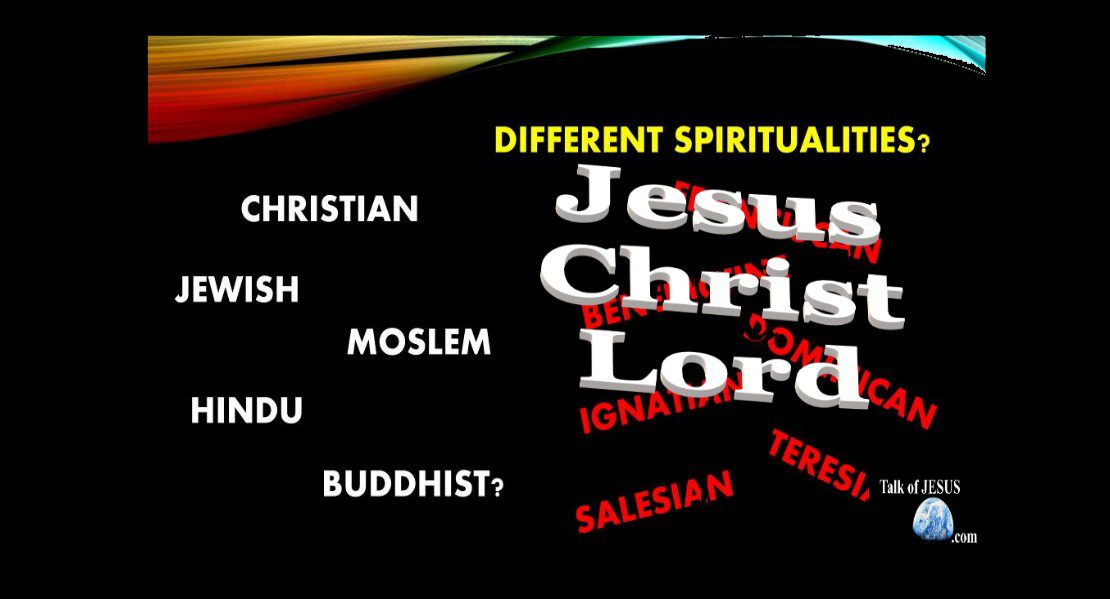
    different spiritualities ?

    Were the communities and spiritualities of Corinth so different from our own 21st century C.E. gatherings and communions which include all with great diversity, yet with considerable ignorance of the Spirit?

    And there are differences of administrations, but the same Lord.

    1 Corinthians 12:5 KJV


    NEXT: Members in Christ's body 

    Talk of JESUS . com

    Comment on Scripture – Share the Gospel

  • All you need is Love Love Love

    All you need is Love Love Love

    Or should I say, Love, love, love, love perhaps four times?

    (As just a bit earlier than the Beatles another Englishman, Clive Staples, pointed out 4 loves — each at least somewhat different from the others?)

    Christians throw around the LOVE jargon rather vaguely and with much overlap (as does the world).

    For God so loved the world, that he gave his only begotten Son, that whosoever believeth in him should not perish, but have everlasting life. JOHN 3:16 green man
    For God so loved the world.. John 3:16
    • The word, “Love” occurs over 500 times in the Bible
    • translated more than 200 times from New Testament Greek into the English Standard Version

    Let’s have some Biblical intercourse about the real definitions of the Biblical loves to which C.S. Lewis referred.

    The Four Loves

    C.S. Lewis, born just a couple of years before my grandfathers, capitalized on this in his popular RADIO program and published a book called THE FOUR LOVES in A..D. 1960 (when I was only ten and John Lennon was just twenty).


    To outline Lewis’ approach briefly:

    The Four Loves was Lewis’ look at some of the different loves described in Greek thought: familial or affectionate love (storge); friendship (philia); romantic love (eros); and spiritual love (agape) in the light of Christian commentary on ordinate loves.

    Source: C.S. Lewis.org

    Although in A.D. 1960 Lewis began elsewhere, today let’s start with the world’s contemporary favorite:

    Eros – ἔρως

    Eros is the Greek term for romantic or passionate love. While the word itself is not used in the New Testament, the concept is present in the biblical understanding of marriage and the intimate relationship between husband and wife. Eros is seen as a gift from God, intended to be expressed within the covenant of marriage.

    The Song of Solomon [O.T.] is often cited as a biblical celebration of eros, highlighting the beauty and intensity of romantic love.

    Source: Biblehub.com

    Affection (storge)

    Affection covers an array of loves. Like animals, the care of mother to babe is a picture of affection. It relies on the expected and the familiar. Lewis describes it as humble.

    It’s the familiarity of, “the people with whom you are thrown together in the family, the college, the mess, the ship, the religious house,” says Lewis.

    Source: Biblehub.com

    My long search for affection in the Bible

    I do not mean affection literally (in English), but a Greek word for affection, STORGE.

    God blessed me with an additional embrace of His Personal and mysterious, complex love for us through searching aimlessly for love in the Bible. Only after researching further in other commentaries did I connect this word of affection with the Lord’s additional loves we experience so personally.

    God’s affection in the Person of His only Son JESUS was there all along and I had missed it.

    Roger@TalkofJesus.com

    ..says Lewis. The affection for the people always around us, in the normal day-to-day of life, is the majority of the love we experience, even if we don’t label it.

    ‘Be devoted to one another in love. Honor one another above yourselves.’
    had jumped out to me in the NIV

    But in addition to our affection meaning devoted, when Paul writes to the Romans, the word the Apostle uses here for love obviously applies to brotherly love – philadelphia.

    I also liked his mention to ‘honor‘ each other above your SELF.

    Seems familiar to JESUS’ second summary point from the Commandments. LOVE actually appears in BOTH of these commandments cited by our Lord:

    Jesus said to him,

    “‘You shall love the Lord your God with all your heart, with all your soul, and with all your mind.’ This is the first and great commandment.
    And the second is like it:
    You shall love your neighbor as yourself.’
    On these two commandments hang all the Law and the Prophets.”

    Matthew 22:37-40 NKJV

    What is the greatest love?

    ἀγαπάω – agapaō

    *Thou shalt love kyrios thy theos.

    pillar of fire in the midst of Moses and the Hebrews

    Do we not hold FEAR rather than embrace the LORD our theos as a pillar of fire?

    But what about the Lord Jesus’ second commandment (which we often claim as our ‘GOLDEN RULE?’

    And the second is like unto it, Thou shalt love thy neighbour as thyself.

    Gospel of Matthew 22:39 KJV

    ἀγαπάω – agapaō

    *Thou shalt love thy plēsion [neighbour]…

    The Lord seems to mention others as at least equal to our need for self-love, if not more honor as Paul suggests in writing to the Church in Rome. 

    This LOVE is the SAME Love, that is: agapaō !

    Storge – Other Loves plus Devotion

    Although the specific term storge is not used in the New Testament, the concept is evident in passages that emphasize family relationships and responsibilities. Romans 12:10 


    φιλόστοργος – philostorgos – adjective

    a Greek conjunction PHILO plus STORGOS - Do you see both LOVES?

    And look at its definition:

    1. the mutual love of parents and children and wives and husbands
    2. loving affection, prone to love, loving tenderly
      • chiefly of the reciprocal tenderness of parents and children
    Which brings us to a third love C.S. Lewis highlights:

    Philia (φιλία)

    Friendship is the love dismissed.

    “To the Ancients, Friendship seemed the happiest and most fully human of all loves,”

    says Lewis,

    “the crown of life and the school of virtue.

    And at this writing in ~ A.D. 1958 or 1960 Lewis laments of such philos friendships: 

    The modern world, in comparison, ignores it.” Why?

    Perhaps we know it’s the most time consuming, the least celebrated, the one we could live without.

    Can we?

    Even in 2025 Common Era time-crunching christian church gatherings pressed to entertain all sinners in these last days?


    Discovering Phila-Delphia

    philadelphosStrong’s G5361

    a Christian loving Christians

    YES, it’s a great adjective describing the relational fruit of Biblical Christians.

    From φίλος (G5384) and ἀδελφός (G80)

    φίλος – Strong’s G5384philos

    Adjective

    Here's HALF of the Phila Delphia ANSWER. Read on and I'll get to the other HALF later. 

    †φίλος phílos, fee’-los; properly, dear, i.e. a friend; actively, fond, i.e. friendly (still as a noun, an associate, neighbor, etc.):—friend.

    “Greater love has no one than this, that one lay down his life for his friends  G5384.

    “You are My friends  G5384 if you do what I command you.

    Jesus Christ, from the Good News of John 15:13-14 LSB

    JESUS, the Son of Man and Son of God EMBRACES His disciples as close friends.

    And you may have guessed it: 
    The relational word the beloved Apostle John uses here for LOVE is agapē.

    φιλέω – Strong’s G5368 – phileō

    a verb with similar meaning that we won’t want to miss

    1. to love
      • to approve of
      • to like
      • sanction
      • to treat affectionately or kindly, to welcome, befriend
    2. to show signs of love
      • to kiss
    3. to be fond of doing
      • be wont [an accustomed familiarity], use to do

    Perhaps the most convicting encounter with JESUS using this word phileō for LOVE occurs in His most personal encounter with the Apostle Peter after our Lord’s resurrection.

    Here’s an excerpt:

    “Simon, son of John, do you love Me more than these?”

    He said to Him, “Yes, Lord; You know that I love G5368 You.”

    “Simon, son of John, do you love Me?”

    He said to Him, “Yes, Lord; You know that I love G5368 You.”

    He said to him the third time, “Simon, son of John, do you love G5368 Me?”


    Now returning to our compound Greek word for Philadelphia we must consider one additional connection of LOVE:

    • philadelphosStrong’s G5361
      • From φίλος (G5384) and ἀδελφός (G80)

    ἀδελφός – Strong’s G80 – adelphos

    masculine noun — From ἄλφα (G1) (as a connective particle) and delphus (the womb)

    1. a brother, whether born of the same two parents or only of the same father or mother
    2. having the same national ancestor, belonging to the same people, or countryman
    3. any fellow or man
    4. a fellow believer, united to another by the bond of affection
    5. an associate in employment or office
    6. brethren in Christ
      • his brothers by blood
      • all men
      • apostles
      • Christians, as those who are exalted to the same heavenly place

    ἄλφαStrong’s G1 – alpha

    You've probably already guessed it and why this Greek word was designated as 'G1' in the Strong's concordance. 

    indeclinable noun – Of Hebrew origin


    “I am the Alpha G1 and the Omega,” says the Lord God, “who is and who was and who is to come, the Almighty.”

    The Revelation of Jesus Christ to John 1:8

    “I am the Alpha G1 and the Omega, THE FIRST AND THE LAST, the beginning and the end.”

    The Revelation of Jesus Christ to John 22:13 LSB


    Talk of JESUS . com

    Comment on Scripture – Share the Gospel