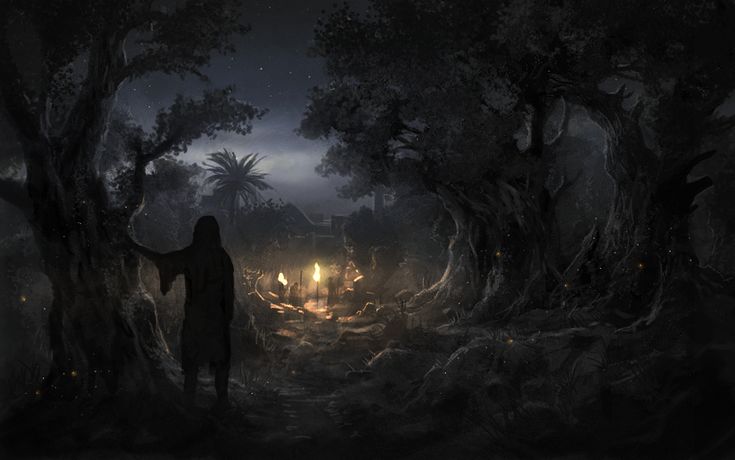
ALL took place in 1st century Jerusalem in the brief span of one week!
Continuing Jesus’ trials..
Jesus said, “My kingdom is not of this world. If it were, my servants would fight to prevent my arrest by the Jewish leaders. But now my kingdom is from another place.”
“You are a king, then!” said Pilate.
Jesus answered, “You say that I am a king. In fact, the reason I was born and came into the world is to testify to the truth. Everyone on the side of truth listens to me.”
“What is truth?” retorted Pilate. With this he went out again to the Jews gathered there…
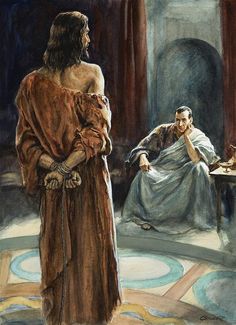
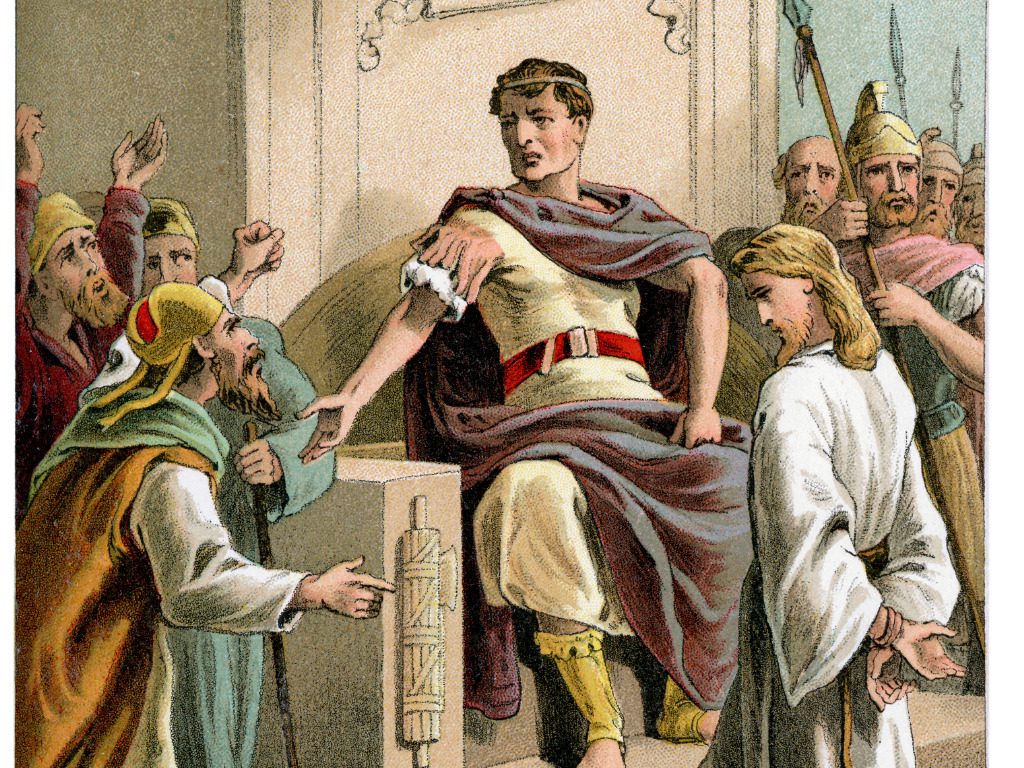
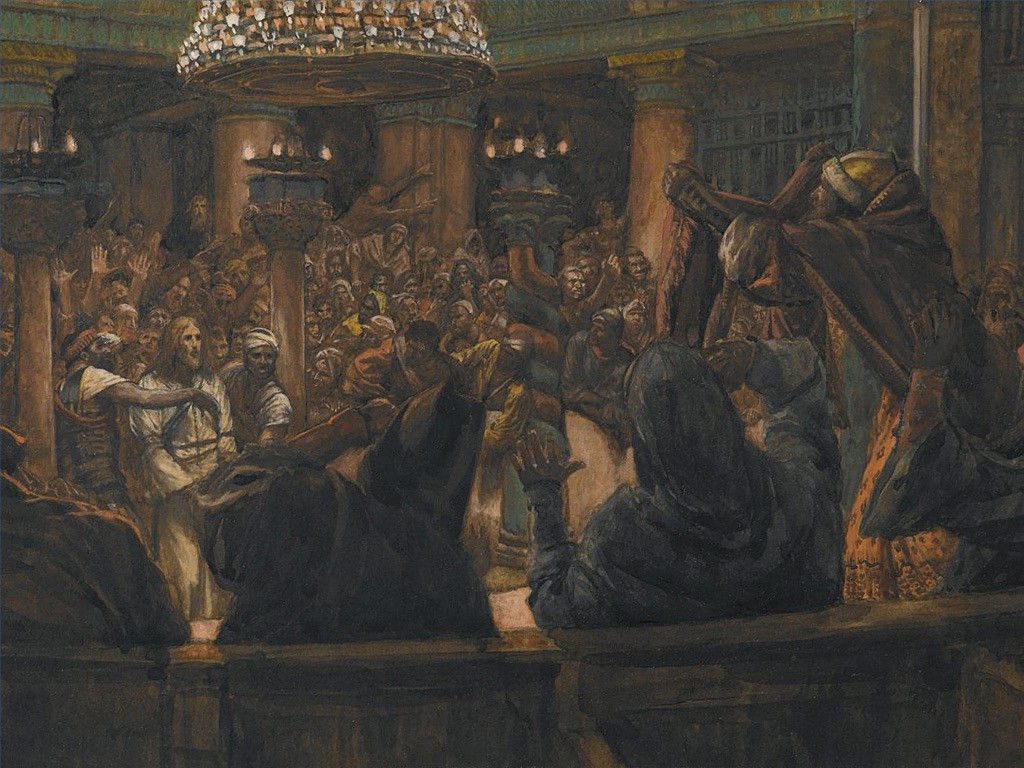
Jesus has already been found guilty and tried by the Jewish leaders Annas and Caiaphas during the wakening hours of this day. Then they brought the Messiah to the governor Pilate, who has just questioned their prisoner in his own judge’s quarters (which the Jews would not enter).
In effect, the Roman Governor of all the province of Judea acting as High Court Judge of Jerusalem tells them, ‘Case dismissed.’
Now, after private questioning of Jesus about their accusation, Pilate once again finds Jesus, Not Guilty!
But now begins the politics of playing the crowds.
Justice by Public Opinion – a Poll of the people
Once again, some time passes as the Jerusalem crowds gather for the preparation for the Passover feast. The buzz of the multitudes outside must have reminded Pilate of the great accolades for Jesus as He had approached Jerusalem just five days before.
As Governor of Judea, Pilate also had to placate officials of the Sanhedrin who Jesus offended in the Temple courts on Monday.
What’s a politically correct way to please the crowds who followed Jesus AND the Jewish leaders who help Pilate maintain the peace of Jerusalem?
The Judge of Judea will show mercy to this innocent man.
So the Prefect likely sent guards to the prison to bring a second previously condemned man to the governor near to Pilate’s position above the crowds. Now the Jews will see the truth of an innocent Man compared to an insurrectionist murderer like this prisoner Barabbas.
“I find no grounds for charging him. 39 You have a custom that I release one prisoner to you at the Passover. So, do you want me to release to you the king of the Jews?”
IF you didn’t already know the ending of this Good Friday, you might jump up and applaud Pilate’s political correctness.
Everybody wins when the governor shows mercy. This powerful Roman governor of Judea seems to judge truth with great fairness.
BUT, as you know, crowds may be easily swayed from doing what is right.
40 They shouted back, “Not this man, but Barabbas!”
Now Barabbas was a revolutionary.
CSB
John 19:1 Then Pilate took Jesus and had him flogged.
To be continued...
Page TWO - Please click Page 2 below for the questions.
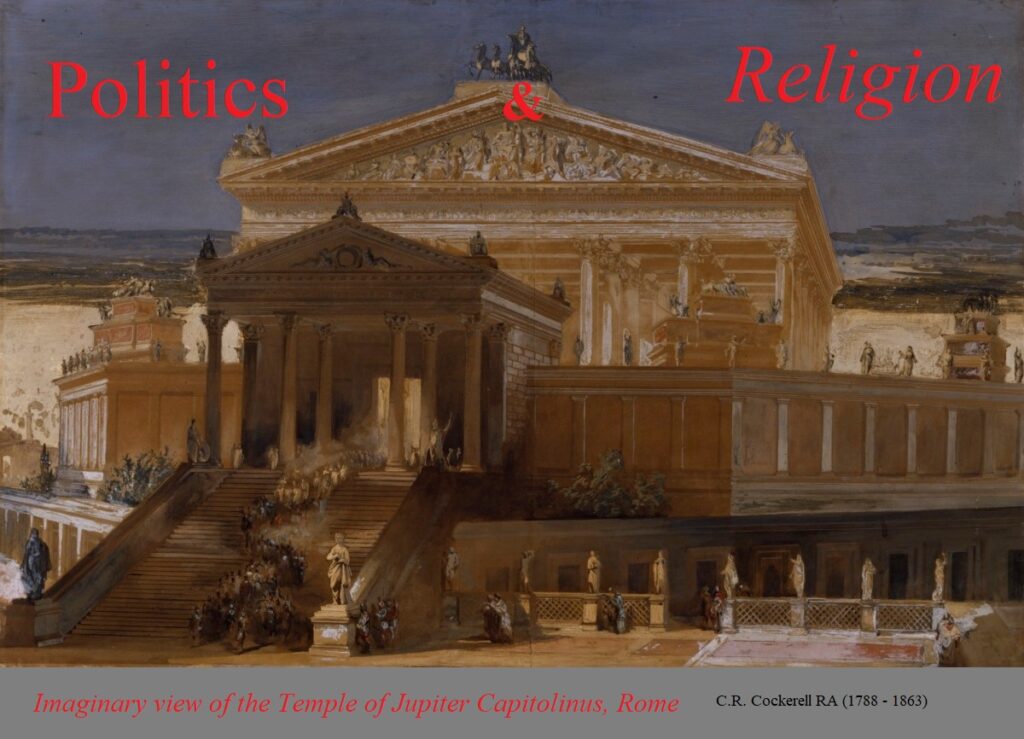
A lengthy consideration of the history of Rome may seem to have little to do with 1st c. Jerusalem and the trial of Jesus Christ. In fact, Rome’s lessons of politics and religion not only add context to this pivotal event in history, but to our own struggle between empires and the rule of God.
As you breeze through it or dig into some of Rome’s culture through additional secure links, think about the dance of power between political and religious leaders.
We have thus far examined the impact of politics in religion and actions by officials of the Temple against Jesus.
Now we will briefly leave Jerusalem for Rome and examine the culture Rome’s religions and impact on a Roman Governor like Pontius Pilate in this small and distant part of Roman Syria.
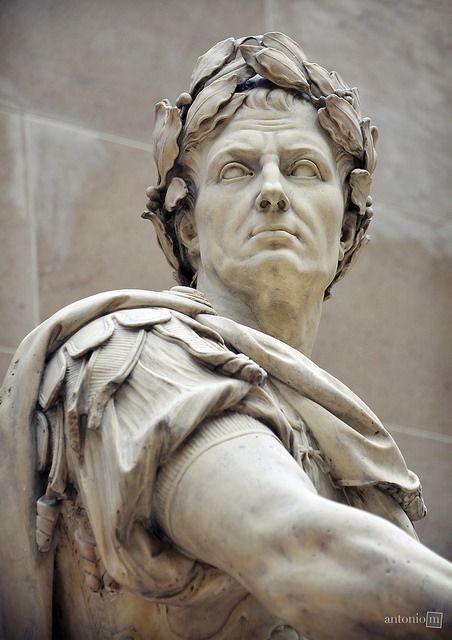
Gaius Julius Caesar
Roman general and statesman
b. 100 BC – until his assassination 15 March 44 BC
less than a century before the Roman crucifixion of Jesus Christ
The Julii Caesares traced their lineage back to the goddess Venus
Britannica.com
The Republic of Rome
..the late Roman Republic was surely the sole superpower of the western world..
Disclaimer: I am a theologian, not a historian and therefore make no claim to accuracy of the extensive knowledge of several researchers linked separately here for your additional understanding of the history of Rome and its culture as it affected the Empire of the 1st century AD.

continued quote below from Realm of History
[Rome] ..Then came the ascendancy of the great Julius Caesar, one of the greatest generals of his time, who was responsible for bringing Gaul (present-day France) into the Roman dominion by 50 BC. These signs of progress were matched by the conquering of eastern Anatolia and Armenia proper (in the preceding decade), thus bringing the Romans to the very edge of the Caspian Sea.
But then came the chaotic times, with the assassination of Caesar, the subsequent Triumvirate troubles, and civil wars, and ultimately the eclipse of the Roman Republic – thus making way for the rise of the Roman Empire in 27 BC, under the helm of Augustus.
Culture of the Republic
Remember that this diminishing concept of the Republic had begun centuries before in a city-state on Italia then ends abruptly with the assassination of Julius Caesar.

Source below: National Geographic
The Roman Republic was founded in 509 B.C.
after the last Etruscan king that ruled Rome was overthrown.
Rome’s next government served as a representative democracy
in the form of a republic.
Rome’s wealthiest families .. held power
only they could hold political or religious offices.
lower classes later gained power within the government.
At the heart of the Roman Republic was the Senate.
The Senate lasted as a sole governing body for the republic for only a brief time until 494 B.C.
.. in the 1st century B.C. the famous Roman orator Marcus Cicero uncovered a plot by a Roman senator .. to overthrow the Roman government.
Ultimately, factions emerged (loyal to either the patrician or plebeian classes or to a specific military general), hostilities erupted, and a series of civil wars plagued the republic.
During these civil wars, a prominent general and statesmen named Julius Caesar began gaining significant power. He commanded the loyalty of the soldiers in his army and enjoyed access to substantial wealth after conquering the province of Gaul.
The Senate, fearful of Caesar’s power, demanded he give up command of his army and return to Rome as a citizen.
Caesar refused, instead marching his army south directly into Rome.
As a result, another civil war erupted between Caesar and his chief political rival, Pompey.
a group of senators conspired and assassinated him.
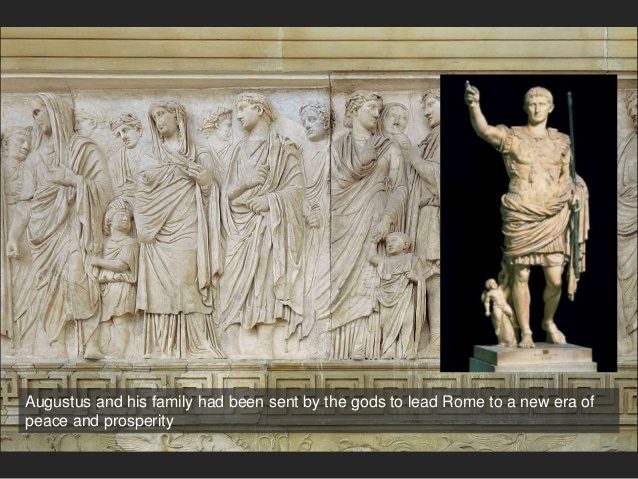
Augustus Caesar – Rome’s First Emperor
In response to Caesar’s death, his nephew and heir Augustus defeated the conspirators. He then established himself as the first Roman emperor.
The Roman Empire dramatically shifted power away from representative democracy to centralized imperial authority, with the emperor holding the most power. Unlike Julius, Augustus Caesar (i.e. Octavian) used political prowess to appoint officials to government.
Now in those days a decree went out from Caesar Augustus, that a census be taken of all the inhabited earth. This was the first census taken while Quirinius [Publius Sulpicius Quirinus] was governor of Syria.
Rome’s political bickering between the classes ends abruptly on the ides of March, 44 B.C. with the assignation of Julius Caesar, effectively dissolving Rome’s flailing republic with its Senate and representatives of lower free classes of citizens.
Julius Caesar’s recognition as a god of the Roman state in ..42 BC enhanced Octavian’s prestige as son of a god.
Had I been living at the time of Christ's trial this would have taken place about the time of my own birth, i.e. seven decades ago
Octavian also launched elaborate religious and patriotic publicity, centring on the classical god of order, Apollo..
In addition, Octavian had started to prefix his name with the designation “Imperator,” to suggest that he was the commander par excellence.. gradually concentrating on the plain, emotive name “Caesar Son of a God.”
… his name Caesar, acquired through adoption in Julius’s will, was supplemented by “Augustus,” an appellation with an antique religious ring… – Britannica
Might makes right and establishes its peace by the power of war.
Caesar Augustus, by his military might and political prowess, introduced a peace of Rome forcing a better world of prosperity and restoring ‘the religion of the Republic.’
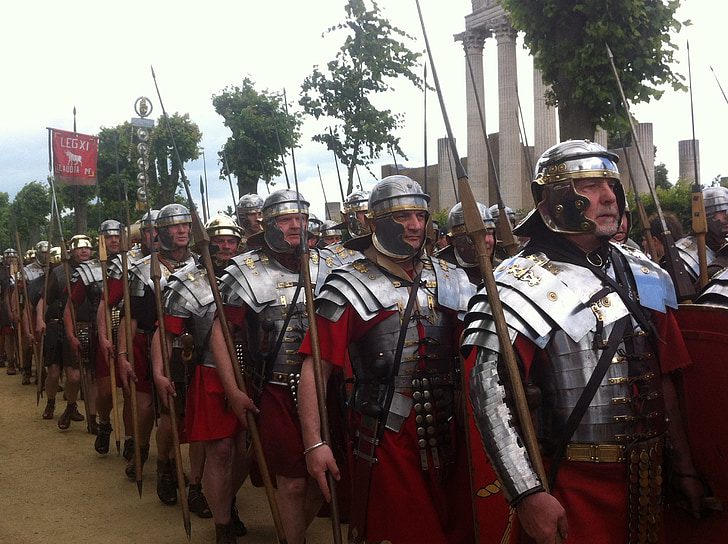
‘The strength of Rome lay in the iron discipline of its troops rather than fortified positions.
Pilate was likely born to a middle-class family in southern Italy with some influence in Rome.
He probably served in the Roman army before promotion.
Pilate would have had a military command before becoming prefect of Judaea in 26 A.D.
‘Prefect‘ was a title for a temporary appointment of the leader of a city-state, later used for a more permanent regional govenor.
The post of governor of Judaea was of relatively low prestige.
Technically the Prefect of Judea served under a governor of the Roman province of Syria, however Tiberius had not bothered to appoint one to replace Syria’s former governor.
Where does Pilate fit in to the religions of Rome?
Roman soldiers would have regularly paraded though the public streets of Rome during festivals (some religious, some civic), when returning victorious from war (which was with some frequency) and after ceremoniously worshiping in public and marching from Rome for their next military campaign.
Pilate no doubt would have been a participant in these public shows of the military many times in his early career. As a participant and possibly a leader of such public processions in Rome, Pilate would fully understand the implications of this man Jesus riding into Jerusalem just a few days prior to the cheers and adulations of the crowds.
Was Jesus entering Jerusalem a religious processional?
To Pilate it seemed more like a victorious popular leader praised by the multitudes of Jerusalem (like when conquering generals return to Rome.
No doubt the Sanhedrin sees this Jesus as a religious threat to them, but what is that to Rome?
Meaningless. The vanity of these Jews thinking that they still had anything to do with governing Judea.
Roman religion was practical and contractual, based on the principle of do ut des, “I give that you might give”. Religion depended on knowledge and the correct practice of prayer, ritual, and sacrifice, not on faith or dogma..
This religion of the Roman Prefect Pontius Pilate is, of course, quite different from the worship of the Jews of Judea.Although some aspects or Roman and Jewish religion were similar.
For ordinary Romans, religion was a part of daily life. Each home had a household shrine at which prayers and libations to the family’s domestic deities were offered. Neighborhood shrines and sacred places such as springs and groves dotted the city. The Roman calendar was structured around religious observances.
.. when Rome struggled to establish itself as a dominant power, many new temples were built by magistrates in fulfillment of a vow to a deity for assuring their military success.
Pilate and other Roman soldiers would have been part of festivals and honors paid to such victories at these shrines or temples in Rome.
Roman theology acknowledged that di immortales (immortal gods) ruled all realms of the heavens and earth. There were gods of the upper heavens, gods of the underworld and a myriad of lesser deities between. Some evidently favoured Rome because Rome honoured them, but none were intrinsically, irredeemably foreign or alien.
Public religious ceremonies of the official Roman religion took place outdoors, and not within the temple building.
Wikipedia
Religion and the military
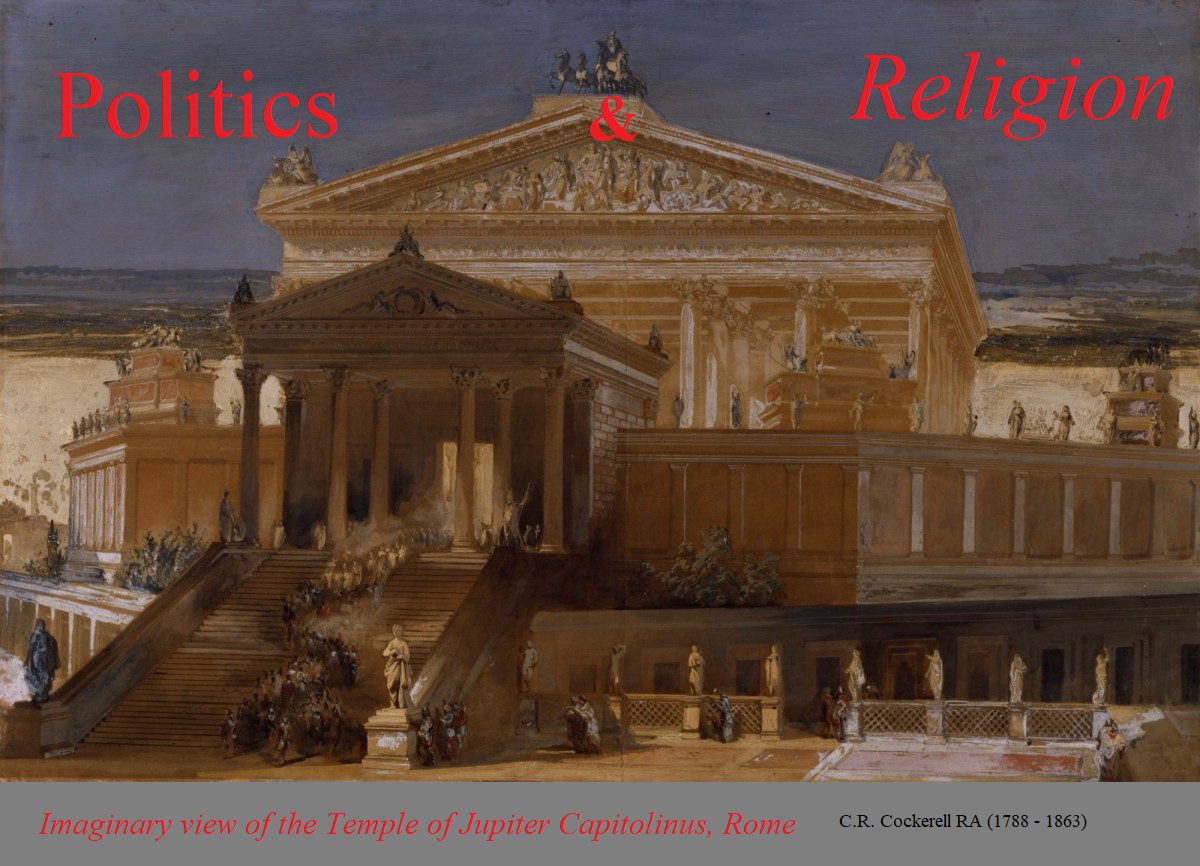
Military success was the touchstone of a special relationship with the gods, and to Jupiter Capitolinus in particular; triumphal generals were dressed as Jupiter, and laid their victor’s laurels at his feet.
Roman commanders offered vows to be fulfilled after success in battle or siege; and further vows to expiate their failures…
Roman camps followed a standard pattern for defense and religious ritual; in effect they were Rome in miniature.
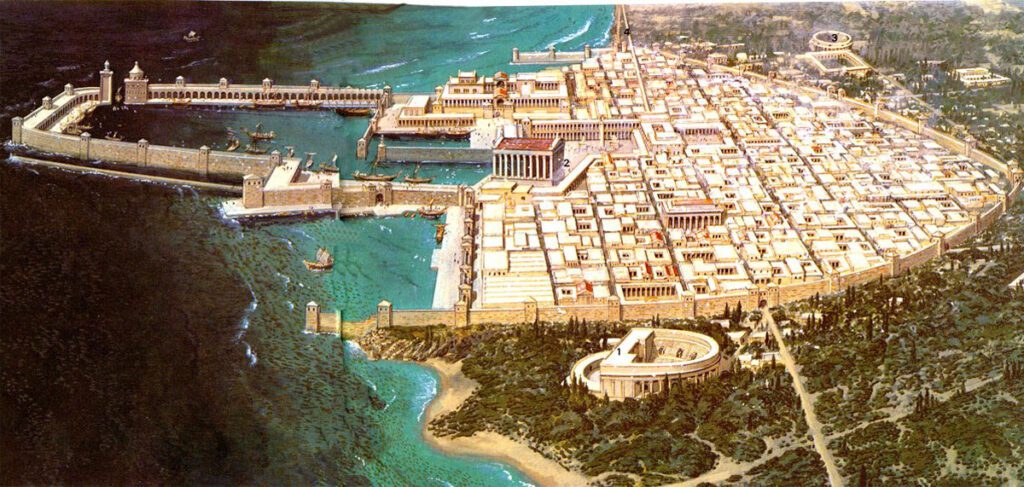
Caesarea, Roman capitol of Judea built with cooperation of Herod the Great, was home to the Prefect of Judea Pontius Pilate, his family and loyal troops for ten years.
Each camp had its own religious personnel; standard bearers, priestly officers and their assistants, including a haruspex, and housekeepers of shrines and images. A senior magistrate-commander (sometimes even a consul) headed it, his chain of subordinates ran it and a ferocious system of training and discipline ensured that every citizen-soldier knew his duty.
Judea (and other provinces) after Augustus
Under the rule of Augustus, there existed a deliberate campaign to reinstate previously held belief systems amongst the Roman population. These once held ideals had been eroded and met with cynicism by this time.
The imperial order emphasized commemoration of great men and events which led to the concept and practice of divine kingship.
Emperors postceding Augustus subsequently held the office of Chief Priest (pontifex maximus) combining both political and religious supremacy under one title.
Jews and Judaism were tolerated in Rome by diplomatic treaty with Judaea’s Hellenised elite. Diaspora Jews had much in common with the overwhelmingly Hellenic or Hellenised communities that surrounded them.
By the Augustan era, the city of Rome was home to several thousand Jews.
Wikipedia
Again, even prior to his later appointment as Prefect of Judea, Pilate would have been familiar with the Jews.
We will return to Pilate's problem of the 'king of the Jews' as Prefect of Judea.

To be continued...
Page TWO - Please click Page 2 below for the questions.
Jesus brought bound to Caiaphas for trial at night
The Malignant Leaven of Religious Politics
The religious rulers of the Temple discussed ad nauseam different approaches to God-justified righteousness for preservation of their personal political influence in Judaea, imperial procuratorial province of Rome.
We have slowed down our examination of the Gospel of John like politicians seeking convicting evidence against an opponent. Let’s dig for the dirt sought by Jerusalem’s powerful religious rulers who now will bring Israel’s Messiah to ‘justice‘ in the middle of the night.
We could easily focus on the caustic political potions bubbling in the dark corridors of power in this incendiary election year. I may even offer opinion of parallels to Jesus’ trial later as application to the darkness of these days to come.
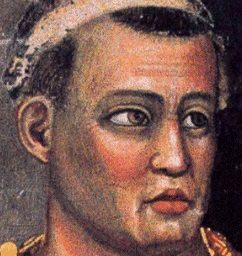
Pontius Pilate
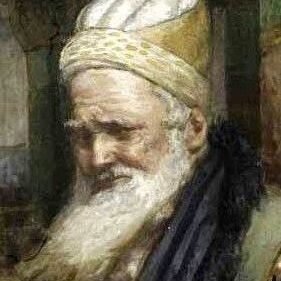
Joseph Caiaphas, High Priest
But for now, our focus continues on the political players who tried and convicted the Son of Man in a first century Jerusalem where leaders of government and religion lay together as strange bedfellows.
As we detailed in previous posts:

In a few hours of just one night
Jesus' betrayal has thus far progressed like this:

(follow links below for previous events)
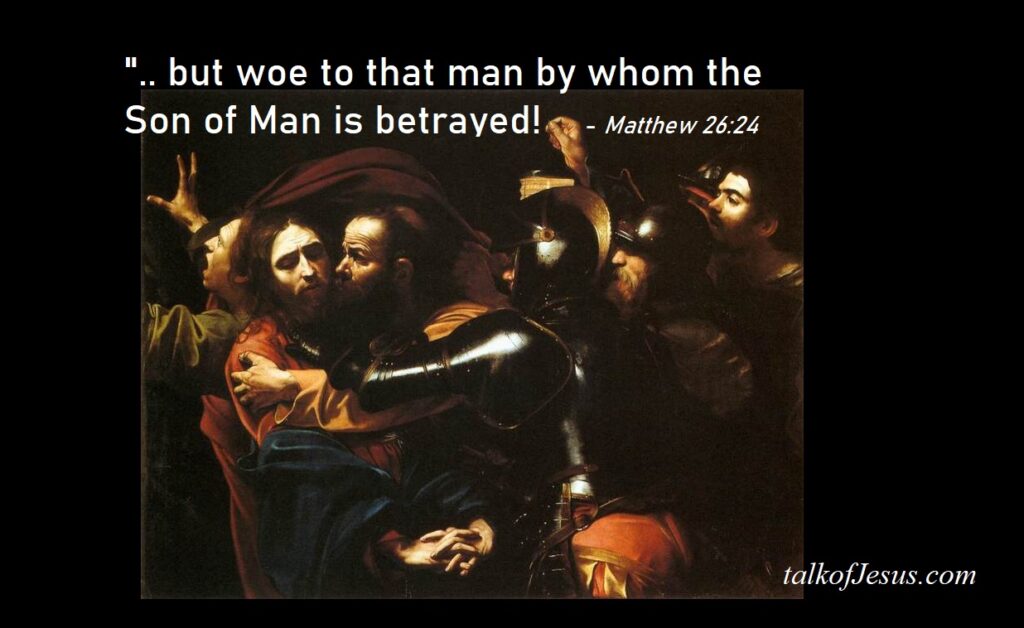
3 So Judas took a company of soldiers and some officials from the chief priests and the Pharisees and came there with lanterns, torches, and weapons.
No one is more deserving of blame than the betrayer who claims Christ, but then betrays his Lord for money or unmerited influence. Judas is a mere pawn of the powerful.
Judas had led them into Gethsemane under the cover of night. The Roman soldiers from the local cohort of Jerusalem accompanied servants of the Temple, police who were led by Malchus.
Peter cuts off his ear! But that’s the end of the violence as Jesus heals the officer’s ear and the Temple police bound Him without resistance for trial.
12 So the Roman cohort and the commander and the officers of the Jews, arrested Jesus and bound Him…
Annas
Now we begin to meet the religious officials behind this dark plot to eliminate their opposition away from the hopeful multitudes who had welcomed their Messiah Jesus into Jerusalem just four days ago.
13 First they led him to Annas, since he was the father-in-law of Caiaphas, who was high priest that year.
Why to the father-in-law Annas, we wonder?
Perhaps a prearranged plan of deniability of involvement, a faux-impartiality of the High Court judge?
Who is this political player among the religious elite of Jerusalem?
Annas, an Elder among Elders, has some history of influence in Jerusalem. John and the Apostles may not have known the Temple’s political scene, but certainly every important official of the Temple must have known and respected Annas.
ἌνναςÁnnas – a high priest of the Jews, elevated to the pontificate by Quirinius the governor of Syria circa A. D. 6 or 7; but afterwards, A. D. 15, deposed by Valerius Gratus, the procurator of Judæa, who put in his place, first Ismael, son of Phabi, and shortly after Eleazar, son of Annas. From the latter, the office passed to Simon; from Simon circa A. D. 18 to Caiaphas (Josephus, Antiquities 18, 2, 1f); but Annas, even after he had been put out of office, continued to have great influence:
STRONGS NT 452: Ἄννας – courtesy BlueLetterBible.org
The Messiah Jesus is first bound up in Gethsemane and led to Annas, who then orders (perhaps by previous arrangement) the entourage holding Jesus to Caiaphas and then across town to Pilate.
.. although Annas had been deposed by the Roman procurator, the Jews may still have regarded him as legally the high priest.
Used to monitor number of Google Analytics server requests
10 minutes
__utmb
Used to distinguish new sessions and visits. This cookie is set when the GA.js javascript library is loaded and there is no existing __utmb cookie. The cookie is updated every time data is sent to the Google Analytics server.
30 minutes after last activity
__utmc
Used only with old Urchin versions of Google Analytics and not with GA.js. Was used to distinguish between new sessions and visits at the end of a session.
End of session (browser)
__utmz
Contains information about the traffic source or campaign that directed user to the website. The cookie is set when the GA.js javascript is loaded and updated when data is sent to the Google Anaytics server
6 months after last activity
__utmv
Contains custom information set by the web developer via the _setCustomVar method in Google Analytics. This cookie is updated every time new data is sent to the Google Analytics server.
2 years after last activity
__utmx
Used to determine whether a user is included in an A / B or Multivariate test.
18 months
_ga
ID used to identify users
2 years
_gali
Used by Google Analytics to determine which links on a page are being clicked
30 seconds
_ga_
ID used to identify users
2 years
_gid
ID used to identify users for 24 hours after last activity
24 hours
_gat
Used to monitor number of Google Analytics server requests when using Google Tag Manager
1 minute
_gac_
Contains information related to marketing campaigns of the user. These are shared with Google AdWords / Google Ads when the Google Ads and Google Analytics accounts are linked together.