20:26 A week later his disciples were indoors again, and Thomas was with them. Even though the doors were locked, Jesus came and stood among them and said, “Peace be with you.”
Reminder to 21st. Century Readers of John’s Gospel:
As I mentioned before, Christians to whom John writes understand events which have taken place after Jesus’ ascension, yet before John’s death.
(We will add some of these following the next event of John’s Good News.)
Jesus was crucified around the year AD 30
John writes his Gospel to the churches after AD 85 [~AD 90-100]
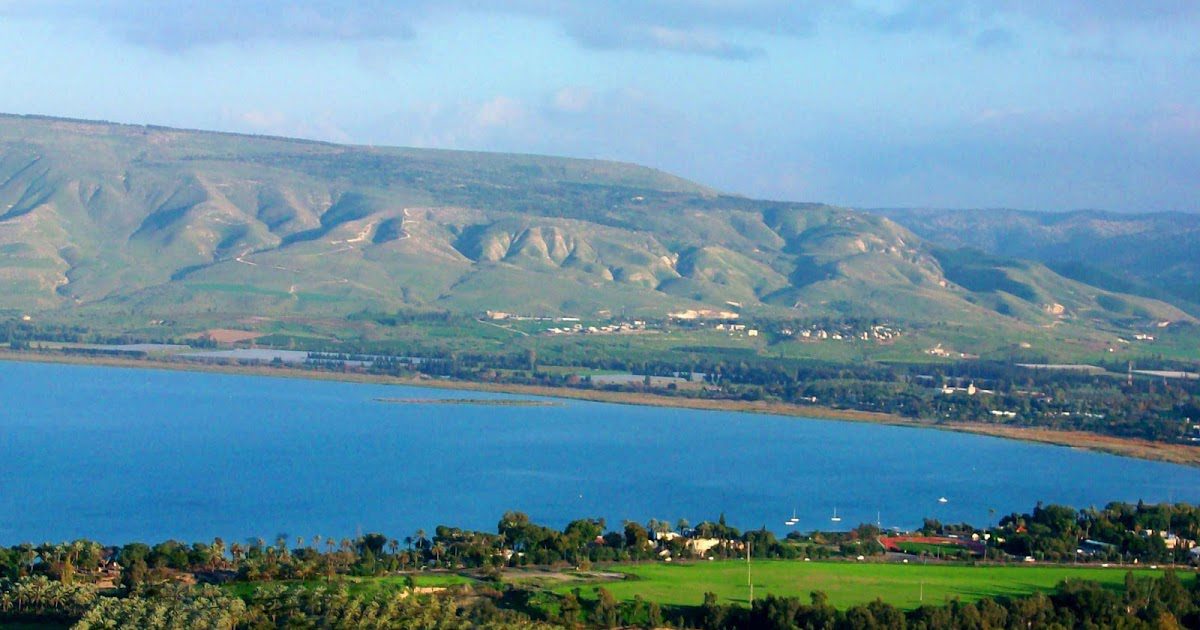
After these things Jesus revealed Himself again to the disciples at the Sea of Tiberias, and He revealed Himself in this way:
Simon Peter said to them, “I am going fishing.”
They said to him, “We are also coming with you.” They went out and got into the boat; and that night they caught nothing.
Fishing in Galilee
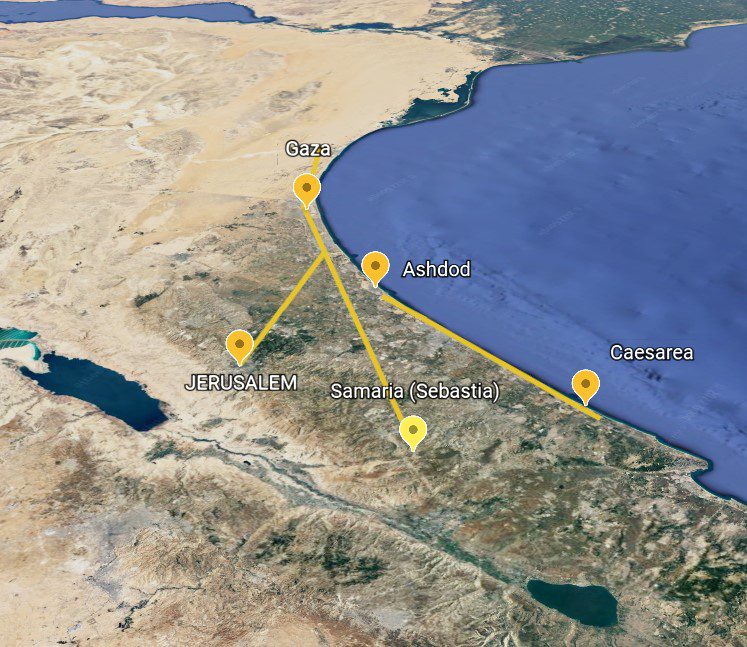
Of course these Galilean Disciples of Jesus would travel from Jerusalem north to their homes along the Sea of Tiberias (Galilee). John recalls which Apostles were present.
Simon Peter
Thomas called Didymus (He will not miss seeing Jesus this time.)
Nathanael of Cana
James, John’s older brother
John, author of this Gospel
Two others of Jesus’ disciples
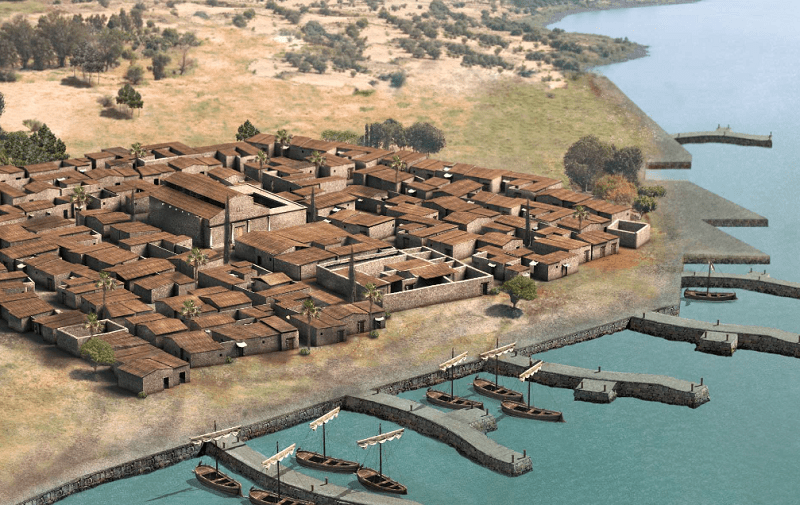
They would have launched their two or three fishing boats from docks by Capernaum and proceeded out to sea at night, returning to port near daybreak and seeing a man on shore as they approached.
4 But when the morning was now come, Jesus stood on the shore: but the disciples knew not that it was Jesus.
He called out to them, “Children, do you have any fish?” They answered him, “No.”
Our 21st century ears do not hear the Master’s call to His beloved servants in this way. In fact, 1st century men and women tended to be more willing to hear a fellow Jew (especially their Rabbi) or even a Roman responsible for their local Galilean town of Capernaum as humble servants.
παιδίον – pi-de’-on
Child – From dimin. of παῖς (G3816) can mean not only a child, boy or girl but a slave, an attendant, servant, and specifically a king’s attendant, one who ministers to the King.
προσφάγιον – pros-fä’-ge-on
From the King James Version: “Children, have ye any meat?”
But once again our overfed 21st century bodies don’t quite understand what Jesus asks if they have anything eaten with bread and spoken of fish boiled or broiled.
These children of the Shepherd Christ Jesus return from a night of work, fishing — and they have caught no fish. In effect their Lord and Master, Provider of all things to His servants asks these dear ‘children’ in His care, “Are you hungry?”
John in recalling the incident adds, ‘yet the disciples did not know that it was Jesus.’
Obeying His command
Yes, these seven men probably were hungry after an unsuccessful night of fishing. Yet hearing His command from the shore they obeyed Jesus.
6 He said to them, “Throw in your net to starboard and you will catch some.”
So they threw in their net, and there were so many fish in it that they couldn’t haul it aboard.
It was then, John tells us, that he recognized Jesus.
“It is the Lord!”
So when Simon Peter heard that it was the Lord, he put on his outer garment (for he was stripped for work), and threw himself into the sea. Since they were not far from land (about a hundred yards away), the other disciples came in the [smaller] boat, dragging the net full of fish.
Once again in a third appearance to seven disciples, Jesus demonstrates that He IS both God and a risen ‘Son of Man.’
John tells his experience as his small boat pulling nets full of fish comes near to the beach along the shore.
9 When they stepped ashore, they saw a fire of burning coals with a fish on it, and some bread.
10 Yeshua said to them, “Bring some of the fish you have just caught.”
(Peter and the men have now been pulling the full nets ashore…)
12 Yeshua said to them, “Come and have breakfast.”
None of the talmidim (disciples of a Rabbi) dared to ask him, “Who are you?” They knew it was the Lord.
Pause.. to ‘fast forward’
We’ll now leave Jesus and the seven Disciples sharing bread and fish with the Lord and (in 21st c. parlance) fast forward to events known to many readers of John’s Good News, but possibly not known to most Christians in the 21st c. digital age.
(Yes, it’s a ‘pop quiz’ – 5 questions.) How do you think you’ll do?
Page TWO - Please click Page 2 below for the questions.
Pilate interrogates Jesus by beginning privately with a loaded question.
As Governor AND presiding judge (in chambers), the Prefect questions the defendant already declared guilty by the Jews, local leaders who have no authority in this Roman court of Judea.
Pilate’s questions (to which he must have had prepared standard answers to usual responses) went to motive.
“What is your authority here?”
“Are you a threat to true authority, which as Governor I represent?”
The Gospels do not record these words, but the timing and context of Jesus’ trial suggests to the Governor that he recognizes a political hot potato in dealing with this popular Rabbi during the religious festival of the Jews in Jerusalem.
As the Jewish officials brought Jesus to the exterior of the Praetorium Pilate came out to them.
.. and they themselves did not enter into the Praetorium so that they would not be defiled, but might eat the Passover.
29 Therefore Pilate went out to them and said, “What accusation do you bring against this Man?”
They answered and said to him, “If this Man were not an evildoer, we would not have delivered Him to you.”
31 So Pilate said to them, “Take Him yourselves, and judge Him according to your law.”
The Jews said to him, “We are not permitted to put anyone to death..”
Sentenced to death by accusation
We already know of the deceptive stealth of the Temple officials, ceasing Jesus at night then bringing the Messiah of Israel to trial before them.
The Jews really had no authority in Judea and regardless of their predetermined verdict of guilt and sentence of death, Pilate dismisses their case. But now the politics come into play.
These religious emissaries want to execute the man opposed to their religious positions of power, the Man who had ridden victorious into town on a donkey just a few days before, Jesus of Nazareth (a town not even in Pilate’s Judea).
Although we seldom consider the passage of time within a single verse or two of scripture,consider this possibility in the scene about to take place:
Certainly the Jews with their prisoner Jesus on the outside and Pilate with his advisors inside the Praetorium must ponder what to do next.
Since Pilate is in charge of Jerusalem and responsible to Rome for any potential trouble, he makes the first move in trying to keep peace between the politics and religion of Jerusalem.
Questions with political consequences
33 Therefore Pilate entered again into the Praetorium, and summoned Jesus and said to Him…
Although the trial of Jesus takes place like all Roman trials in the public square, Pilate begins his questioning of this prisoner of the Jews in private.
“Are You the King of the Jews?”
Are you the King?
Questions with political consequences are best asked first in private. Leaders must know the politically correct answer before asking it in public.
Remember Jesus’ accusers were not present because they would not defile themselves by their self-righteous rule of separation from this gentile Governor responsible for every civic event in Jerusalem. The Jews needed to maintain their white-washed public image before their followers.
Pilate summoned Jesus to him.
As a result of his summons the Jews had to release Jesus into the governor’s custody.
βασιλεύς
What is the root meaning of Pilate’s question to Jesus?
βασιλεύς basileús, bas-il-yooce’; probably from G939 (through the notion of a foundation of power); a sovereign (abstractly, relatively, or figuratively):—king.
leader of the people, prince, commander, lord of the land, king
What are you, Jesus?
(It’s a fair question — to which the Governor would have had a standard reply.
Imagine some of these pre-prepared political answers of Pilate.)
We have no kings here. You are not a king of Egypt or even Herod who was once king in Jerusalem. Kings do not matter here.
Our king resides in Rome and I am his governor. What I say comes from our king: Tiberius Caesar.
Are you a king? It does not matter. Tiberius Caesar is king.
Rather than being led into a conversation about who He is not, Jesus asks the Governor a question.
34 Jesus answered,
“Are you saying this on your own initiative, or did others tell you about Me?”
Is this really your question
or did someone tell you that I am a King?
The Governor immediately reminds the accused that in fact he, Pilate, is Roman (and Rome governs Jerusalem).
Pilate answered, “I am not a Jew, am I?
Your own nation and the chief priests delivered You to me;
what have You done?”
John 18:38 NASB
Pilate’s response confirms indictment by the chief priests, but the judge’s question, ‘What have you done?” is opportunity for the defendant to appeal His ill-gotten verdict.
Israel’s Messiah Jesus answers the Governor’s original question about His Authority.
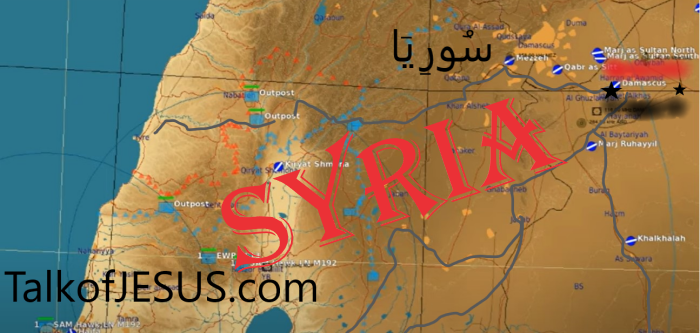
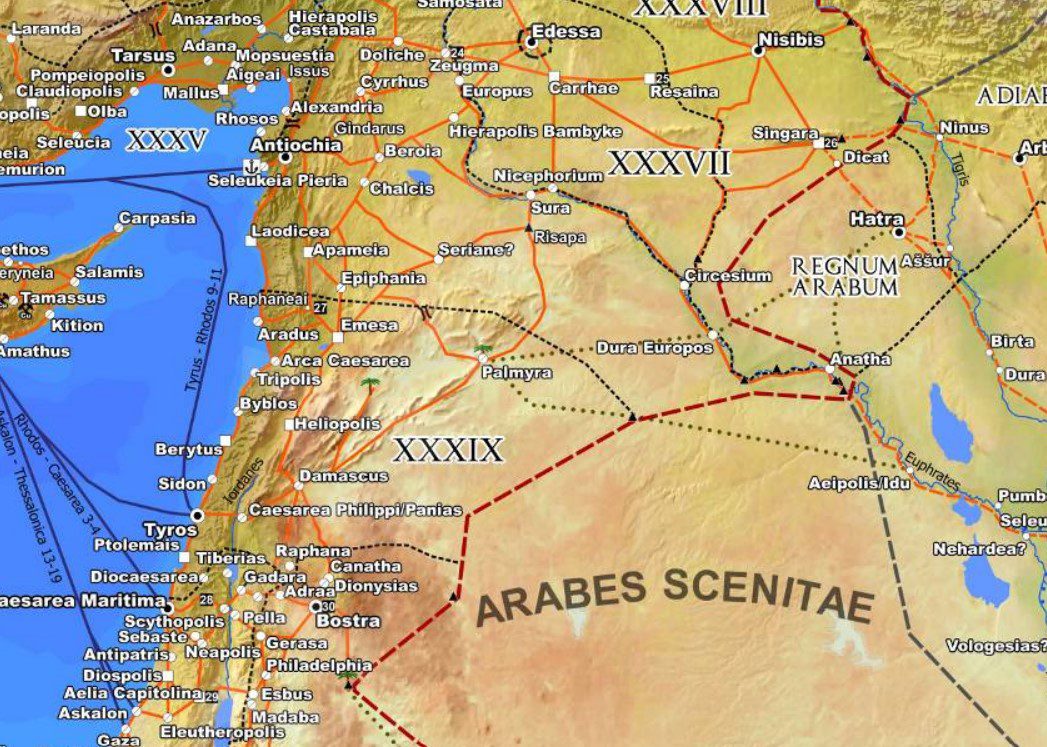
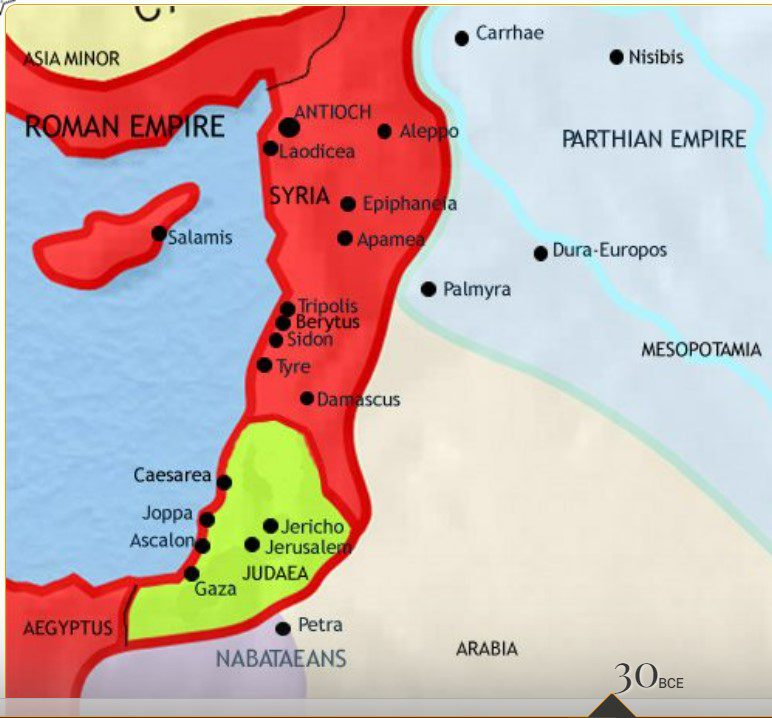
The Accused makes no claim to Jerusalem or to Judea or any Syrian territory governed by Pilate.
Rather Jesus claims an authority of the gods (in Pilate’s understanding). In this case:
‘royal power, kingship, dominion, rule, not to be confused with an actual kingdom but rather the right or authority to rule over a kingdom.’ – source: blueletterbible.org
Jesus continues His assurance to Pilate that He is no threat to Rome as other kings and threatening rebels fight to gain influence in places like Jerusalem.
“… If My kingdom were of this world, then My servants would be fighting so that I would not be handed over to the Jews;
but as it is, My kingdom is not of this realm.”
What Realm?
“..but as it is, My kingdom is not of this realm.” – John 18:36c NASB
“..but now is my kingdom not from hence.” – John 18:36c KJV
“..But as it is, my kingdom is not from here.” – John 18:36c CSB
A King must have a country, a realm to rule here and now. Jesus Christ makes no such claim.
The Lord Jesus when brought before Pilate confirms, ‘my kingdom is not from here.”
Luke records an incident from earlier in Jesus ministry describing it with the same Greek word.
Just at that time some Pharisees approached, saying to Him, “Go away, leave here, G1782 for Herod wants to kill You.” – Luke 13:31
Herod, of course, is a pawn not only of Jerusalem’s Jewish politics but also of Rome. Jesus continued at that time to prophesy the events of these three days:
And He [Jesus] said to them [Pharisees who secretly followed Jesus],
“Go and tell that fox [Herod],
‘Behold, I cast out demons and perform cures today and tomorrow, and the third day I reach My goal.’
“Nevertheless I must journey on today and tomorrow and the next day; for it cannot be that a prophet would perish outside of Jerusalem.
37 Therefore Pilate said to Him, “So You are a king?”
(You are a king, but from where {if not here}?)
.. but it is better to write οὐκοῦν, so that Pilate, arguing from the words of Christ, asks, not without irony, art thou not a king then? or in any case, thou art a king, art thou not? cf. Winer’s Grammar, 512 (477).
and since a speaker often introduces in this way his own opinion, the particle is used affirmatively, therefore, then, the force of the negative disappearing. Hence, the saying of Pilate οὐκοῦν βασιλεύς εἰ σύ must be taken affirmatively: – Source: Strong’s
To this end was I born
Jesus answered, Thou sayest that I am a king. To this end was I born, and for this cause came I into the world, that I should bear witness unto the truth. Every one that is of the truth heareth my voice.
In answer to Pilate’s restatement of his own question, “Art thou a king then?” Jesus clearly states His purpose to which He was born as Son of Man and Son of David, the Christ of Hebrew Scripture.
John began his Gospel (Good News) of Jesus Christ stating this same purpose. It really has nothing to do with anything kinglike, as the Jews expected of their Messiah that He would be like King David or King Solomon.
In the beginning was the Word, and the Word was with God, and the Word was God.
And the Word became flesh, and dwelt among us, and we saw His glory, glory as of the only begotten from the Father, full of grace and truth.
John 1:1,14 NASB
Jesus proclaims privately to Pontius Pilate:
“I was born for this, and I have come into the world for this: to testify to the truth… CSB
Pilate is about to ask Jesus the question a Judge must ask himself honestly before concluding a trial, but first Christ continues with purpose for all:
“… Everyone who is of the truth listens to my voice.”
the words of Jesus Christ to Pontius Pilate – John 18:37c CSB
Do you with ears to hear listen to the voice of Christ Jesus?
To be continued...
Page TWO - Please click Page 2 below for the questions.
A lengthy consideration of the history of Rome may seem to have little to do with 1st c. Jerusalem and the trial of Jesus Christ. In fact, Rome’s lessons of politics and religion not only add context to this pivotal event in history, but to our own struggle between empires and the rule of God.
As you breeze through it or dig into some of Rome’s culture through additional secure links, think about the dance of power between political and religious leaders.
We have thus far examined the impact of politics in religion and actions by officials of the Temple against Jesus.
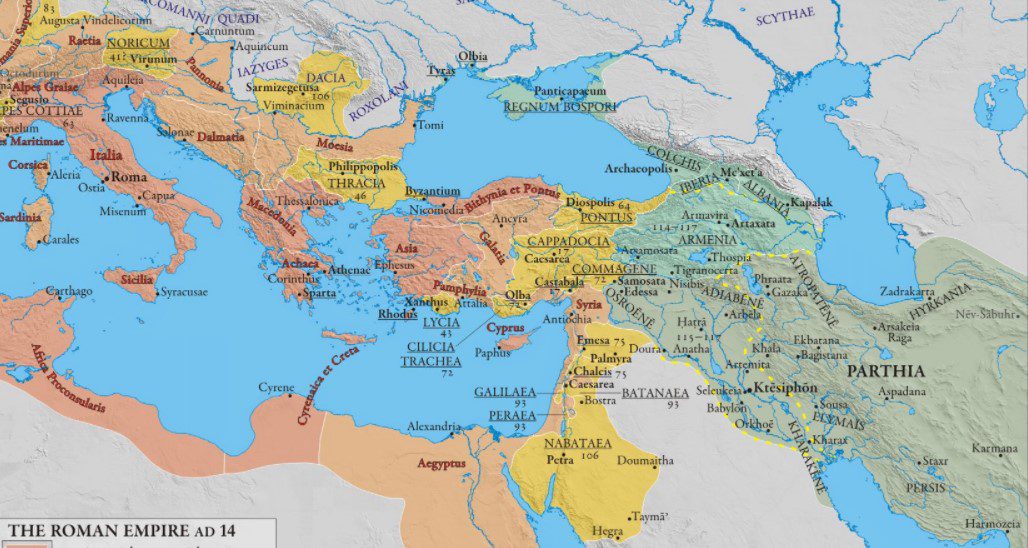
Now we will briefly leave Jerusalem for Rome and examine the culture Rome’s religions and impact on a Roman Governor like Pontius Pilate in this small and distant part of Roman Syria.
Gaius Julius Caesar
Roman general and statesman
b. 100 BC – until his assassination 15 March 44 BC
less than a century before the Roman crucifixion of Jesus Christ
The Julii Caesares traced their lineage back to the goddess Venus
Britannica.com
The Republic of Rome
..the late Roman Republic was surely the sole superpower of the western world..
Disclaimer: I am a theologian, not a historian and therefore make no claim to accuracy of the extensive knowledge of several researchers linked separately here for your additional understanding of the history of Rome and its culture as it affected the Empire of the 1st century AD.
continued quote below from Realm of History
[Rome] ..Then came the ascendancy of the great Julius Caesar, one of the greatest generals of his time, who was responsible for bringing Gaul (present-day France) into the Roman dominion by 50 BC. These signs of progress were matched by the conquering of eastern Anatolia and Armenia proper (in the preceding decade), thus bringing the Romans to the very edge of the Caspian Sea.
But then came the chaotic times, with the assassination of Caesar, the subsequent Triumvirate troubles, and civil wars, and ultimately the eclipse of the Roman Republic – thus making way for the rise of the Roman Empire in 27 BC, under the helm of Augustus.
Culture of the Republic
Remember that this diminishing concept of the Republic had begun centuries before in a city-state on Italia then ends abruptly with the assassination of Julius Caesar.
Source below: National Geographic
The Roman Republic was founded in 509 B.C.
after the last Etruscan king that ruled Rome was overthrown.
Rome’s next government served as a representative democracy
in the form of a republic.
Rome’s wealthiest families .. held power
only they could hold political or religious offices.
lower classes later gained power within the government.
At the heart of the Roman Republic was the Senate.
The Senate lasted as a sole governing body for the republic for only a brief time until 494 B.C.
.. in the 1st century B.C. the famous Roman orator Marcus Cicero uncovered a plot by a Roman senator .. to overthrow the Roman government.
Ultimately, factions emerged (loyal to either the patrician or plebeian classes or to a specific military general), hostilities erupted, and a series of civil wars plagued the republic.
During these civil wars, a prominent general and statesmen named Julius Caesar began gaining significant power. He commanded the loyalty of the soldiers in his army and enjoyed access to substantial wealth after conquering the province of Gaul.
The Senate, fearful of Caesar’s power, demanded he give up command of his army and return to Rome as a citizen.
Caesar refused, instead marching his army south directly into Rome.
As a result, another civil war erupted between Caesar and his chief political rival, Pompey.
a group of senators conspired and assassinated him.
Augustus Caesar – Rome’s First Emperor
In response to Caesar’s death, his nephew and heir Augustus defeated the conspirators. He then established himself as the first Roman emperor.
The Roman Empire dramatically shifted power away from representative democracy to centralized imperial authority, with the emperor holding the most power. Unlike Julius, Augustus Caesar (i.e. Octavian) used political prowess to appoint officials to government.
Now in those days a decree went out from Caesar Augustus, that a census be taken of all the inhabited earth. This was the first census taken while Quirinius [Publius Sulpicius Quirinus] was governor of Syria.
Rome’s political bickering between the classes ends abruptly on the ides of March, 44 B.C. with the assignation of Julius Caesar, effectively dissolving Rome’s flailing republic with its Senate and representatives of lower free classes of citizens.
Julius Caesar’s recognition as a god of the Roman state in ..42 BC enhanced Octavian’s prestige as son of a god.
Had I been living at the time of Christ's trial this would have taken place about the time of my own birth, i.e. seven decades ago
Octavian also launched elaborate religious and patriotic publicity, centring on the classical god of order, Apollo..
In addition, Octavian had started to prefix his name with the designation “Imperator,” to suggest that he was the commander par excellence.. gradually concentrating on the plain, emotive name “Caesar Son of a God.”
… his name Caesar, acquired through adoption in Julius’s will, was supplemented by “Augustus,” an appellation with an antique religious ring… – Britannica
Might makes right and establishes its peace by the power of war.
Caesar Augustus, by his military might and political prowess, introduced a peace of Rome forcing a better world of prosperity and restoring ‘the religion of the Republic.’
‘The strength of Rome lay in the iron discipline of its troops rather than fortified positions.
Pilate was likely born to a middle-class family in southern Italy with some influence in Rome.
He probably served in the Roman army before promotion.
Pilate would have had a military command before becoming prefect of Judaea in 26 A.D.
‘Prefect‘ was a title for a temporary appointment of the leader of a city-state, later used for a more permanent regional govenor.
The post of governor of Judaea was of relatively low prestige.
Technically the Prefect of Judea served under a governor of the Roman province of Syria, however Tiberius had not bothered to appoint one to replace Syria’s former governor.
Where does Pilate fit in to the religions of Rome?
Roman soldiers would have regularly paraded though the public streets of Rome during festivals (some religious, some civic), when returning victorious from war (which was with some frequency) and after ceremoniously worshiping in public and marching from Rome for their next military campaign.
Pilate no doubt would have been a participant in these public shows of the military many times in his early career. As a participant and possibly a leader of such public processions in Rome, Pilate would fully understand the implications of this man Jesus riding into Jerusalem just a few days prior to the cheers and adulations of the crowds.
Was Jesus entering Jerusalem a religious processional?
To Pilate it seemed more like a victorious popular leader praised by the multitudes of Jerusalem (like when conquering generals return to Rome.
No doubt the Sanhedrin sees this Jesus as a religious threat to them, but what is that to Rome?
Meaningless. The vanity of these Jews thinking that they still had anything to do with governing Judea.
Roman religion was practical and contractual, based on the principle of do ut des, “I give that you might give”. Religion depended on knowledge and the correct practice of prayer, ritual, and sacrifice, not on faith or dogma..
This religion of the Roman Prefect Pontius Pilate is, of course, quite different from the worship of the Jews of Judea.Although some aspects or Roman and Jewish religion were similar.
For ordinary Romans, religion was a part of daily life. Each home had a household shrine at which prayers and libations to the family’s domestic deities were offered. Neighborhood shrines and sacred places such as springs and groves dotted the city. The Roman calendar was structured around religious observances.
.. when Rome struggled to establish itself as a dominant power, many new temples were built by magistrates in fulfillment of a vow to a deity for assuring their military success.
Pilate and other Roman soldiers would have been part of festivals and honors paid to such victories at these shrines or temples in Rome.
Roman theology acknowledged that di immortales (immortal gods) ruled all realms of the heavens and earth. There were gods of the upper heavens, gods of the underworld and a myriad of lesser deities between. Some evidently favoured Rome because Rome honoured them, but none were intrinsically, irredeemably foreign or alien.
Public religious ceremonies of the official Roman religion took place outdoors, and not within the temple building.
Wikipedia
Religion and the military
Military success was the touchstone of a special relationship with the gods, and to Jupiter Capitolinus in particular; triumphal generals were dressed as Jupiter, and laid their victor’s laurels at his feet.
Roman commanders offered vows to be fulfilled after success in battle or siege; and further vows to expiate their failures…
Roman camps followed a standard pattern for defense and religious ritual; in effect they were Rome in miniature.
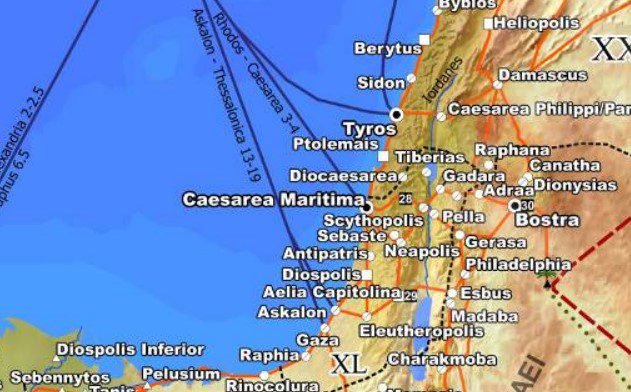
Caesarea, Roman capitol of Judea built with cooperation of Herod the Great, was home to the Prefect of Judea Pontius Pilate, his family and loyal troops for ten years.
Each camp had its own religious personnel; standard bearers, priestly officers and their assistants, including a haruspex, and housekeepers of shrines and images. A senior magistrate-commander (sometimes even a consul) headed it, his chain of subordinates ran it and a ferocious system of training and discipline ensured that every citizen-soldier knew his duty.
Judea (and other provinces) after Augustus
Under the rule of Augustus, there existed a deliberate campaign to reinstate previously held belief systems amongst the Roman population. These once held ideals had been eroded and met with cynicism by this time.
The imperial order emphasized commemoration of great men and events which led to the concept and practice of divine kingship.
Emperors postceding Augustus subsequently held the office of Chief Priest (pontifex maximus) combining both political and religious supremacy under one title.
Jews and Judaism were tolerated in Rome by diplomatic treaty with Judaea’s Hellenised elite. Diaspora Jews had much in common with the overwhelmingly Hellenic or Hellenised communities that surrounded them.
By the Augustan era, the city of Rome was home to several thousand Jews.
Wikipedia
Again, even prior to his later appointment as Prefect of Judea, Pilate would have been familiar with the Jews.
We will return to Pilate's problem of the 'king of the Jews' as Prefect of Judea.
To be continued...
Page TWO - Please click Page 2 below for the questions.
Used to monitor number of Google Analytics server requests
10 minutes
__utmb
Used to distinguish new sessions and visits. This cookie is set when the GA.js javascript library is loaded and there is no existing __utmb cookie. The cookie is updated every time data is sent to the Google Analytics server.
30 minutes after last activity
__utmc
Used only with old Urchin versions of Google Analytics and not with GA.js. Was used to distinguish between new sessions and visits at the end of a session.
End of session (browser)
__utmz
Contains information about the traffic source or campaign that directed user to the website. The cookie is set when the GA.js javascript is loaded and updated when data is sent to the Google Anaytics server
6 months after last activity
__utmv
Contains custom information set by the web developer via the _setCustomVar method in Google Analytics. This cookie is updated every time new data is sent to the Google Analytics server.
2 years after last activity
__utmx
Used to determine whether a user is included in an A / B or Multivariate test.
18 months
_ga
ID used to identify users
2 years
_gali
Used by Google Analytics to determine which links on a page are being clicked
30 seconds
_ga_
ID used to identify users
2 years
_gid
ID used to identify users for 24 hours after last activity
24 hours
_gat
Used to monitor number of Google Analytics server requests when using Google Tag Manager
1 minute
_gac_
Contains information related to marketing campaigns of the user. These are shared with Google AdWords / Google Ads when the Google Ads and Google Analytics accounts are linked together.
90 days
__utma
ID used to identify users and sessions
2 years after last activity
Marketing cookies are used to follow visitors to websites. The intention is to show ads that are relevant and engaging to the individual user.