Tag: saints

  • 2 Timothy 2 – Strong Teachers Charge them before God

    2 Timothy 2 – Strong Teachers Charge them before God

    More than thirty years earlier the Apostle Peter preaching on Pentecost had charged all Israel to accept JESUS as both God and Christ:

    “This Jesus God raised up, and of that we all are witnesses…

    And with many other words he bore witness and continued to exhort them, saying,

    “Save yourselves from this crooked generation.”

    Acts of the Apostles 2:32,40 ESV – Peter preaching on Pentecost ~AD 30

    You, therefore, my son, be strong in the grace that is in Christ Jesus.

    What you have heard from me in the presence of many witnesses,

    commit to faithful men who will be able to teach others also.

    Second Letter of Paul to Timothy 2:1-2 Christian Standard Bible


    The Elected Saints (among the Gentiles)

    By the grace of God, Paul — that is, Saul of Tarsus — was commissioned by Christ on a road to Damascus to fulfill his election as the Apostle to the Gentiles.

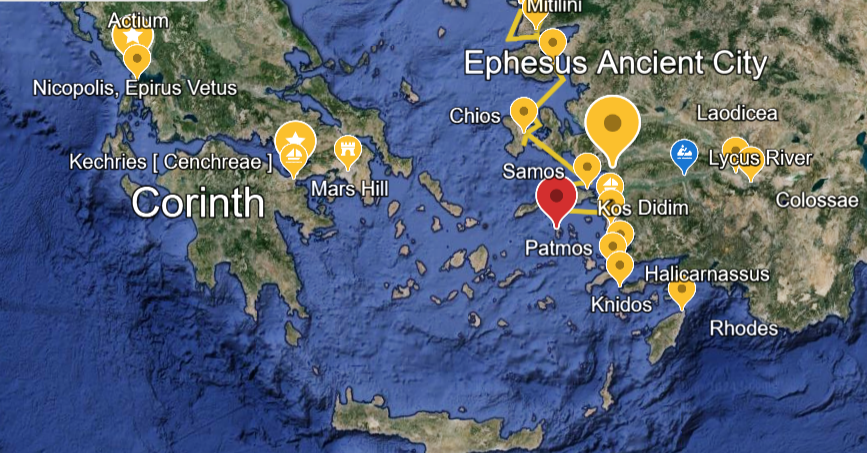
    It had been some thirty years ago and Timothy, who had first met Paul in Lystra and followed the Apostle is now a pastor to the church at Ephesus.


    Be Strong in the Lord

    Paul points to Christ, writing:

    Share in suffering as a good soldier of Christ Jesus.

    2 Timothy 2:3 CSB

    The Apostle had enlisted Timothy in the service of Christ back in Lystra.

    No one serving as a soldier gets entangled in the concerns of civilian life; he seeks to please the commanding officer.

    2 Tim 2:4 CSB

    In his humility and citing other witnesses Paul has pointed to Christ whom he serves as well. Certainly a soldier of Jesus Christ, risen from death, will be strong in the word given directly to the Apostle who enlisted his service.

    Also, if anyone competes as an athlete, he is not crowned unless he competes according to the rules.

    2 Tim 2:5

    If ever there was a zealous follower of the rules it would be Paul, that is, Saul. And the Apostle had even insisted on circumcising Timothy (though not other gentiles) to fulfill the Lord’s purposes among the Jews.

    Remember that Timothy’s absent biological father was Greek, but his grandmother had been a faithful Jew and his mother a Christ-follower.

    Why does the Apostle use these two illustrations and the work of the farmer which follows?

    Paul has written to the saints in Corinth:

    To the Jews..  I became as one under the law–though not being myself under the law–that I might win those under the law.

    To those outside the law (that is, Gentiles) I became as one outside the law.. but under the law of Christ–that I might win those outside the law. I have become all things to all men, that I might by all means save some.

    1 Corinthians 9 excerpt CSB

    The Apostle with whom Timothy also traveled to Corinth also writes words likely recalled now in Ephesus:

    I do all these things because of the gospel, so that I can be a participant in it.

    Do you not know that all the runners in a stadium compete, but only one receives the prize?

    So run to win. Each competitor must exercise self-control in everything. They do it to receive a perishable crown, but we an imperishable one.

    1 Corinthians 9:24-25 NET

    Paul will return to this before the close of this final pastoral epistle.

    The Gospel for the Elect

    Remember that Jesus Christ,

    of the seed of David,

    was raised from the dead according to my gospel, for which I suffer trouble as an evildoer, even to the point of chains;
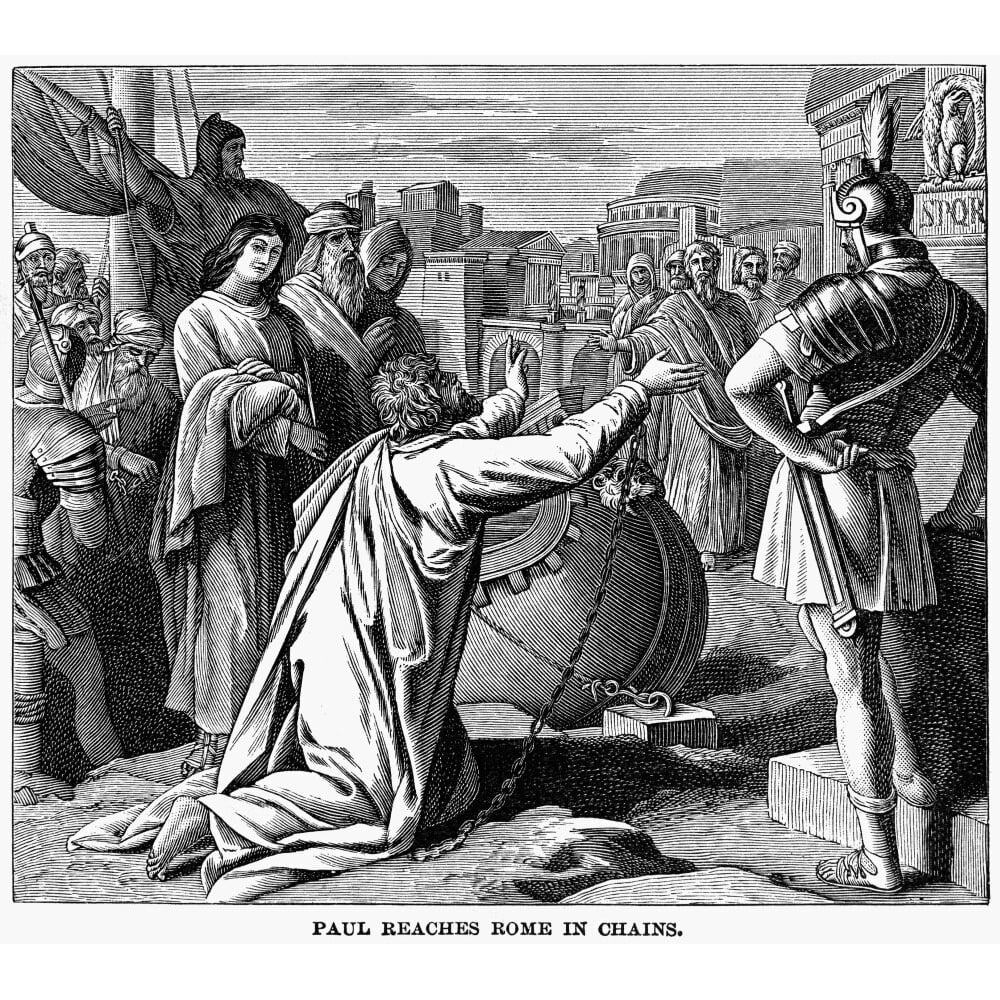
    Paul reaches Rome in chains

    but the word of God is not chained.

    Second Epistle of Paul to Timothy 2:8-9 NKJV


    As the Apostle nears the finish line of his race into the gentile world of the Roman Empire, Paul’s encouragement of Timothy as pastor of the elect Ephesian saints builds up a key church in a city of a quarter-million people, the third largest in the Empire.

    Clement of Alexandria, second largest city in the Empire, would be an important convert in the second century of our Lord Jesus Christ and of course Rome remained the Empire’s largest metropolitan area.

    For the Sake of Salvation of the Elect

    WHY do all these early Christian saints endure persecution, martyrdom and rejection by the vast majority of those in the cities in which they preach?

    Therefore I endure all things for the sake of the elect, that they also may obtain the salvation which is in Christ Jesus with eternal glory.

    The Apostle Paul writes in 2 Timothy 2:10 NKJV
    Rome was on top of the world when in AD 66 the Apostle Paul wrote to Timothy

    Among the millions of souls surrounding the Apostles and martyred saints in Rome, Ephesus, Corinth and throughout the Empire, Paul encourages pastors in what Christ Himself has promised in the salvation of the elect — believing Jew or pagan Gentile.

    The saying is trustworthy, for:

    If we have died with him, we will also live with him;

    Yet a little while and the world will see me no more, but you will see me. Because I live, you also will live. – Gospel of John 14:19

    if we endure, we will also reign with him;

    So Jesus said to them, “Assuredly I say to you, that in the regeneration, when the Son of Man sits on the throne of His glory, you who have followed Me will also sit on twelve thrones, judging the twelve tribes of Israel. – Gospel of Matthew 19:28 NKJV

    if we deny him, he also will deny us;

    but whoever denies me before men, I also will deny before my Father who is in heaven. – Matthew 10:33

    if we are faithless, he remains faithful— for he cannot deny himself.

    Heaven and earth will pass away, but my words will not pass away. But concerning that day and hour no one knows, not even the angels of heaven… – Matthew 24:35-36a

    Second Epistle of Paul to Timothy 2:12-14 ESV – quoting the Gospels and other Scripture


    Choose this day who you will follow

    24:15 וְאִם רַע בְּעֵינֵיכֶם לַעֲבֹד אֶת־יְהוָה בַּחֲרוּ לָכֶם הַיּוֹם אֶת־מִי תַעֲבֹדוּן אִם אֶת־אֱלֹהִים אֲשֶׁר־עָבְדוּ אֲבוֹתֵיכֶם אֲשֶׁר מֵעֵבֶר הַנָּהָר וְאִם אֶת־אֱלֹהֵי הָאֱמֹרִי אֲשֶׁר אַתֶּם יֹשְׁבִים בְּאַרְצָם וְאָנֹכִי וּבֵיתִי נַעֲבֹד אֶת־יְהוָה׃ פ


    You may recognize my Heading from Joshua's challenge to the Elect to remember the LORD of their Salvation. 

    (Remember that this successor[יְהוֹשׁוּעַ] of Moses has a name [yᵊhôšûaʿ] meaning: "Jehovah is salvation" — iēsous, the Greek name for Jesus having the same Hebrew root.)

    Then Joshua gathered all the tribes of Israel to Shechem and called for the elders of Israel, for their heads, for their judges, and for their officers; and they presented themselves before God.

    .. “Thus says the LORD God of Israel: ..

    “Now therefore, fear the LORD, serve Him in sincerity and in truth, and put away the gods which your fathers served…

    “And if it seems evil to you to serve the LORD, choose for yourselves this day whom you will serve, …

    But as for me and my house, we will serve the LORD.”

    Joshua 24 excerpt NKJV

    PAUL now encourages young Timothy — the Apostle builds up pastors and saints to follow until the Day of Jesus Christ.

    Remind them of these things, solemnly charging them in the presence of God..

    Second Letter of Paul to Timothy 2:14a LSB

    Many commentators cite the importance and difficulty of these key verses in 2 Timothy 2:10-13. We will close this section with these observations for your consideration (IF you are among the remnant elect saints of this Common Era):

    God must be sovereign in our salvation precisely because we are neither willing nor able to choose salvation for ourselves.

    John MacArthur – THE DOCTRINES OF GRACE

    Why did the world hate Christ?

    .. Earlier in John’s gospel, Jesus explained,

    “The world … hates Me because I testify of it, that its deeds are evil” (7:7)

    Fallen man does not want to be confronted with the true nature of his heart, he doesn’t want to face his inherent wickedness.

    He has to find a way to tolerate and excuse himself from the guild he naturally faces each day.

    So he falls back on his most dominant sin, pride, and imagines a version of himself that can escape condemnation. He spins a web of delusions, convincing himself that he is truly good and noble—anything to distract from the fact that his deeds are evil.

    ibid. pp 7-8

    It was true in Ephesus and Rome in the first century AD; it is true in this twenty-first century of the Common Era in Rome and in every other city.

    Salvation in God alone

    “It’s a well established reality that the doctrine of election is disturbing to many people,” observes MacArthur.

    He continues, “Numerous ministry leaders, pastors, and major authors harbor animosity toward the doctrine of election.”

    ibid. pp 55,56

    Note a later idolatry and heresies which crept quickly into the churches with false teaching seeking to include men as only interpreters of Scripture and intercessors for active sin through memories of saints gone before.

    MacArthur cites numerous Scriptures besides those here [2 Timothy 2:10]

    ibid. 68-

    Before we return to a brief MacArthur outline from this section from his commentary on 2 Timothy, note his QUOTE of Martin Luther introducing this section on:

    DIVINE ELECTION:

    NO MAN CAN BE THOROUGHLY HUMBLED UNTIL HE KNOWS THAT HIS SALVATION IS UTTERLY BEYOND HIS OWN POWERS, DEVICES, ENDEAVORS, WILL, AND WORKS, AND DEPENDS ENTIRELY ON THE CHOICE, WILL, AND WORK OF ANOTHER, NAMELY, OF GOD ALONE.

    MARTIN LUTHER


    2 Timothy – NEXT in our outline

    An overview Outline of 2 Timothy [Kress Biblical Resources] follows Paul’s brief prologue (2 Tim 1:1-2) with an extended section we have just completed:

    Persevere in the ministry and be unashamed to suffer for the gospel (1:3-2:13)

    The following extended section we will follow next pivots on 2:14.

    Proclaim the truth and be unashamed to confront error (2:14-4-8)


    John MacArthur in his NEW TESTAMENT COMMENTARY OF 2 TIMOTHY outlines this section of Paul’s second letter to Timothy:

    • The Elements of a Strong Spiritual Life [2 Tim 2:1-7]
    • Motives for a Sacrificial Ministry [2 Tim 2:8-13]
    • The Danger of False Teaching [2 Tim 2:14-19]
    • and completing 2 Tim 2 – An Honorable Vessel

    Remember

    Paul’s pivotal imperatives of this section of the Apostle’s second pastoral epistle.

    • BE STRONG – v.1
    • CONSIDER – v.7
    • REMIND – v. 14 (our pivotal hinge today)
    • AVOID, ABSTAIN, FLEE, PURSUE, REFUSE
      • ALL next in Paul’s commands to Timothy.

    MACARTHUR NT COMMENTARY 2 TIMOTHY, p. 55


    Looking for some more Apostolic controvery?

    NEXT – We’ll address these warnings against false doctrine.
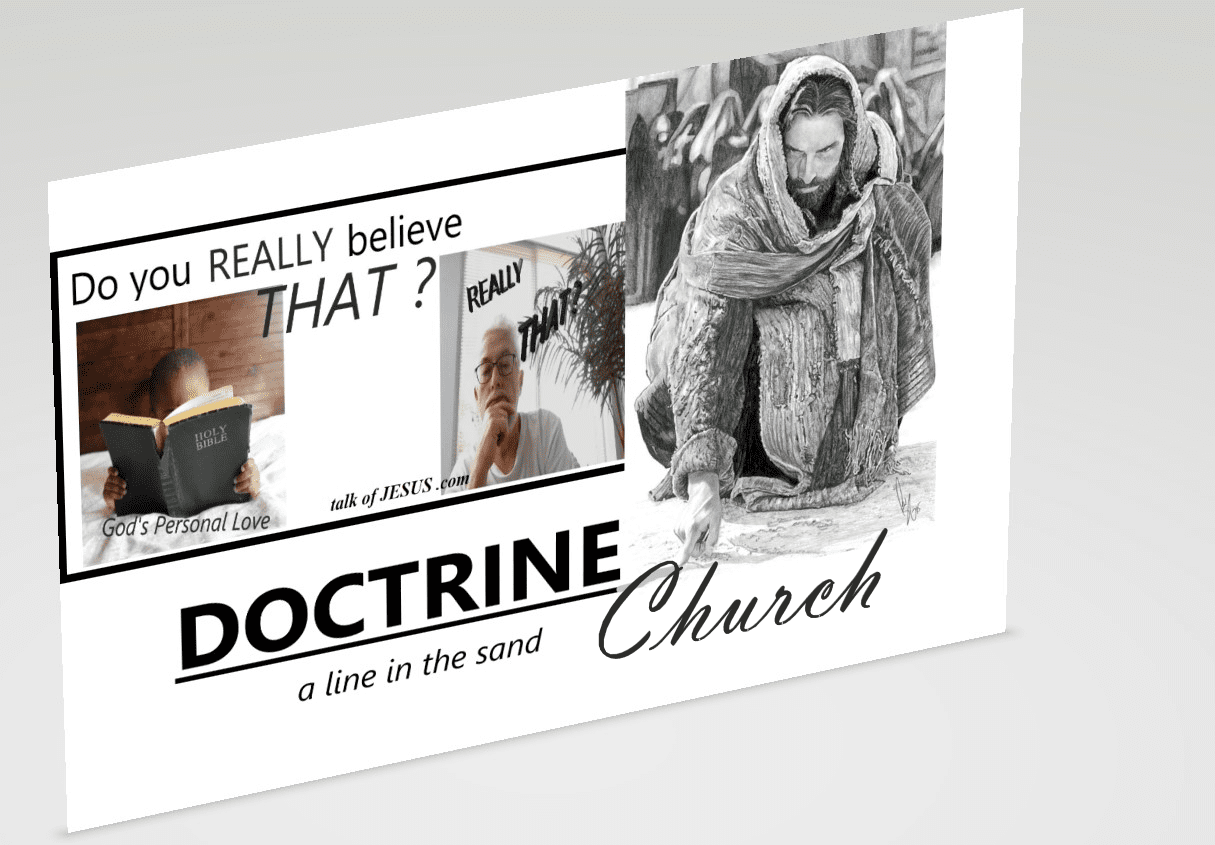
    Followers of Christ must always expect an attack against Scripture. Church doctrine is a line in the sand. - How will a leader or council of leaders choose what the Church will teach?

    Talk of JESUS . com

    Comment on Scripture – Share the Gospel
  • Sanctification – saints washed in Christ’s Holiness

    Sanctification occurs only 5-10 times in the New Testament, while “sanctify” occurs 70 times in 65 verses in the KJV throughout the Bible.

    Doesn’t sanctification require someone or something to be ‘sanctified?’

    What is sanctification?

    How is it different since Christ Jesus?


    Sanctification in the Old Testament

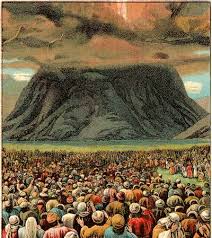
    congregation of the Hebrews at Mount Horeb

    Moses on Sinai

    Exodus 19 NKJV excerpt

    And Moses went up to God, and the LORD called to him from the mountain..

    ‘Now therefore, if you will indeed obey My voice and keep My covenant,

    … ‘And you shall be to Me a kingdom of priests and a holy nation.’

    Exodus 19:3-6 except NKJV

    So Moses went down from the mountain to the people and sanctified the people, and they washed their clothes.

    קָדַשׁ qâdash,

    to be (causatively, make, pronounce or observe as) clean (ceremonially or morally):—appoint, bid, consecrate, dedicate, defile, hallow, (be, keep) holy(-er, place), keep, prepare, proclaim, purify, sanctify(-ied one, self),

    https://davidfowlerpreacher.com/2014/06/08/pictures-of-the-holy-spirit/
    Exodus 21:5-7

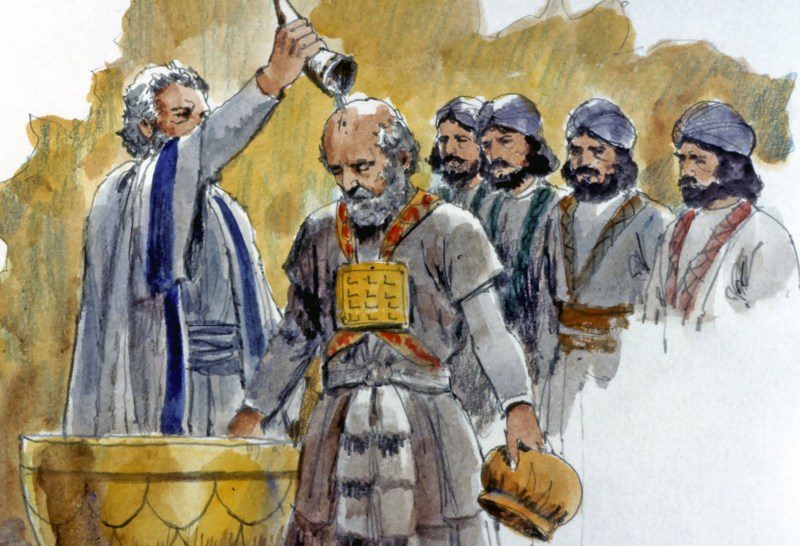
    “Also let the priests who come near to Yahweh set H6942 themselves apart H6942 as H6942 holy H6942, lest Yahweh break out against them.”

    And Moses said to Yahweh, “The people cannot come up to Mount Sinai, for You [testified to] warned us, saying, ‘Set bounds about the mountain, and set H6942 it apart H6942 as H6942 holy H6942.’”

    Exodus 19:22-23 LSB – noting H6942 meaning Sanctify or Hallow

    שְׁמֹות (Exodus) 19 :: Masoretic Text

    19:23 וַיֹּאמֶר מֹשֶׁה אֶל־יְהוָה לֹא־יוּכַל הָעָם לַעֲלֹת אֶל־הַר סִינָי כִּי־אַתָּה הַעֵדֹתָה בָּנוּ לֵאמֹר הַגְבֵּל אֶת־הָהָר וְקִדַּשְׁתּוֹ׃

    Does this washing for holiness before God bring any sanctifying fear over you before facing the LORD your Maker?


    An Old Testament Word

    You may recognize the same word in a couple of important places in the Bible.

    Then God blessed the seventh day and sanctified H6942 it, because on it He rested from all His work which God had created in making it.

    Genesis 2:3 LSB

    זָכוֹר אֶת־יוֹם הַשַּׁבָּת לְקַדְּשׁוֹ׃

    “Remember the sabbath day, to keep H6942 it holy H6942.

    Exodus 20:8 WLC, LSB

    Pray then like this:
    Our Father who art in heaven, Hallowed be thy name.

    Matthew 6:9 RSV

    Sanctification then prepares unholy sinners to face the Most Holy.


    Sanctification in the New Testament

    verb - From ἅγιος (G40) adjective (most holy thing, a saint) 
    - From hagos adjective (an awful thing) [cf ἁγνός (G53) adjective, properly, clean, i.e. (figuratively) innocent, modest, perfect:—chaste, clean, pure.
    • to render or acknowledge, or to be venerable or hallow
    • to separate from profane things and dedicate to God
    • to purify
      • to cleanse externally
      • to purify by expiation: free from the guilt of sin
      • to purify internally by renewing of the soul

    The Apostle Paul, in referring to a long list of sins of the Corinthians writes:

    And such were some of you; but you were washed,

    but you were sanctified G37,

    but you were justified in the name of the Lord Jesus Christ and in the Spirit of our God.

    1 Corinthians 6:11 LSB


    a most holy thing, a saint ?


    Are YOU a HOLY Saint of JESUS Christ, therefore sanctified to Him in your mortal AND eternal life?


    Sanctified saints

    “For their sake I sanctify Myself, that they themselves also may be sanctified in truth.

    Gospel of John 17:20 LSB


    In bringing many sons to glory, it was fitting for God, for whom and through whom all things exist, to make the author of their salvation perfect through suffering.

    For both the One who sanctifies and those who are sanctified are of the same family. So Jesus is not ashamed to call them brothers.

    Hebrews 2:10-11 BSB


    Sanctify them by the truth; your word is truth.

    John 17:17 CSB – Jesus’ prayer for disciples


    Sanctification of children learning to walk in Christ

    To the saints in Galatia:

    Formerly, when you did not know God, you were enslaved to those that by nature are not gods.

    But now that you have come to know God, or rather to be known by God, how can you turn back again to the weak and worthless elementary principles of the world, whose slaves you want to be once more?

    Paul’s letter (epistle) to the Galatians 4:8-9 ESV


    To the saint sitting with you in church:

    In conclusion, the best way to examine some of the jargon of Scripture like anointed, consecrated, sanctified, justified and holiness is in prayerful time in the Bible itself.

    How better to explain sanctification (or any ‘Christian’ jargon) to a new child of the faith with whom you worship than with Biblical text?


    READ any of the links provided in the Scriptures above. 

    OR For more on the topic of Sanctification you may search it here on TalkofJESUS.com OR simply read the earlier post below with my closing thought.

    Sanctification – a refining of our holiness in Christ

    For this is the will of God, your sanctification.. For God did not call us to impurity,

    but in sanctification. 

    Consequently, he who sets this aside is not setting aside man

    but the God who gives His Holy Spirit to you.

    1 Thessalonians 4:3a, (3b-6 short list of our impurity) 7-8 LSB

    ~A.D. 51 – Paul writes to encourage the Thessalonian Church

    A look back from 2025 CE to an earlier look at Sanctification

    Comment on Scripture – Share the Gospel

  • A First Letter to the Corinthians Intro

    A First Letter to the Corinthians Intro

    in the year of our Lord ano Domini 55 [A.D. 55]

    & in the context of the culture of Corinth


    Intro

    PREVIOUSLY in this Talk of Jesus series from CHURCH LETTERS - IS HE WRITING TO ME? we have glanced at a few of Paul's LETTERS (Epistles) to the Church written during his just completed missionary journeys. 

    TODAY we continue with a brief look back at more letters already sent to the churches.
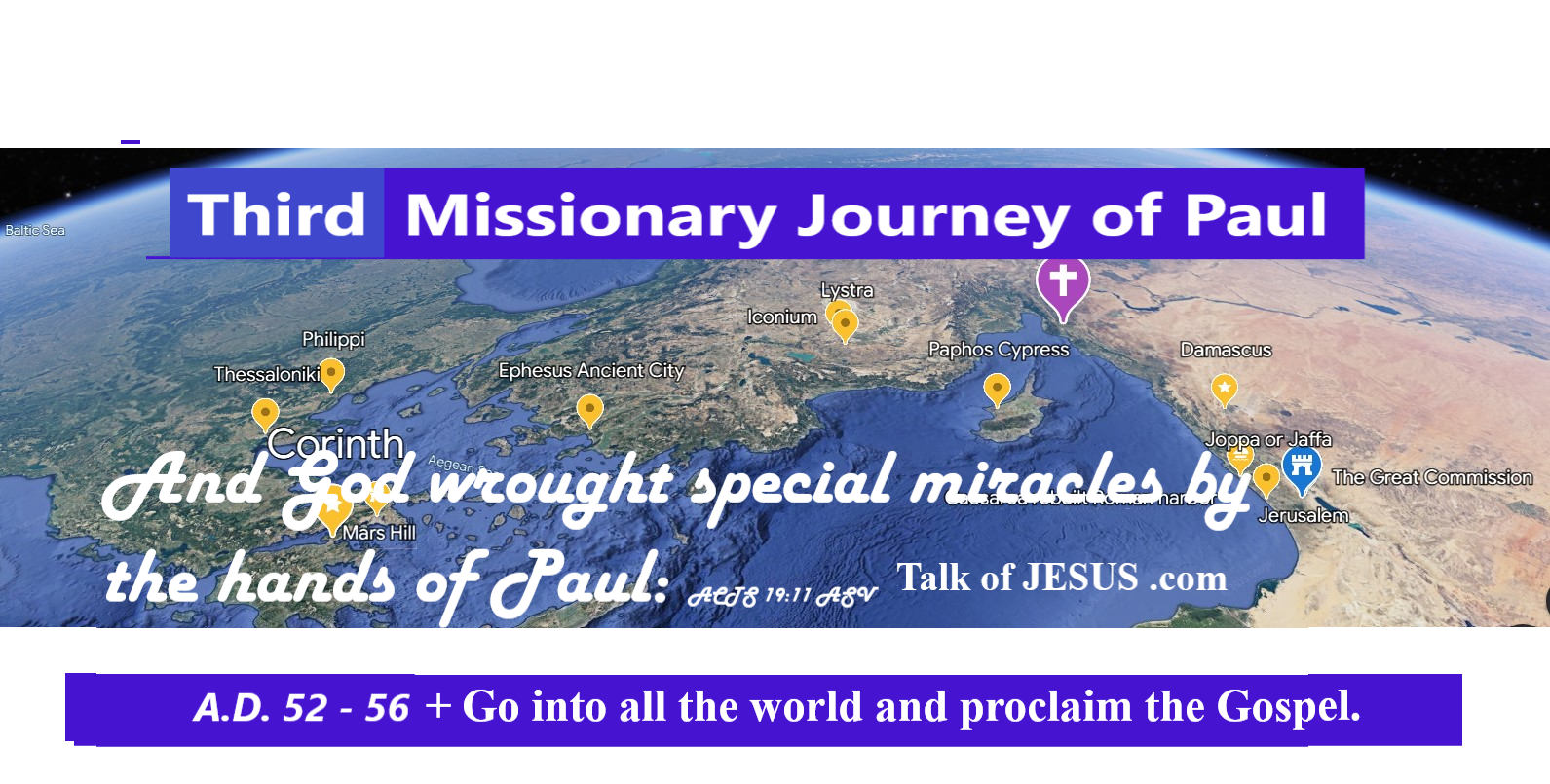
    And God wrought special miracles by the hands of Paul: Acts 19:11 ASV graphic map of Third Missionary Journey of Paul

    WHAT THE CHURCH HAS READ SO FAR:

    Just a reminder that all dates from reliable sources may vary but are used for chronological context only.
    • A.D. 49 – JAMES, the half-brother of Jesus and leader of the church in Jerusalem writes his LETTER
      • James also sends out a letter to the churches concerning gentiles from the Council in Jerusalem.
    • A.D. 49 – Paul writes his letter to the Galatians (actually, several new churches in Galatia)
    • A.D. 50 – 1 THESSALONIANS
    • A.D. 51 – 2 THESSALONIANS

    • during the A.D. 50’s or A.D. 60’s (actual date unknown) – The GOSPEL OF MARK

    1:1 Ἀρχὴ τοῦ εὐαγγελίου Ἰησοῦ Χριστοῦ υἱοῦ τοῦ θεοῦ

    The beginning of the gospel of Jesus Christ, the Son of God – Mark 1:1

    Consider the possibility that parts of the Gospel of John Mark, who had accompanied his uncle Barnabas and the Apostle Paul to Cypress, MAY HAVE been known even in Corinth where Paul has already travelled and whose FIRST LETTER we are about to examine.

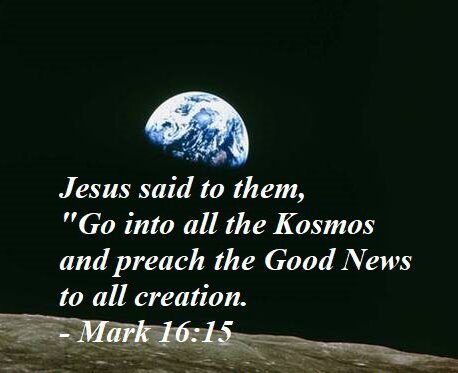
    The GREAT COMMISSION of JESUS CHRIST to the CHURCH is recorded in the Gospel of Mark 16:15

    view of earth from moon

    1 Corinthians:

    This epistle was most likely written in the first half of A.D. 55 from Ephesus (16:8, 9, 19) while Paul was on his third missionary journey. The apostle intended to remain on at Ephesus to complete his 3 year stay (Acts 20:31) until Pentecost (May/June) A.D. 55 (16:8). Then he hoped to winter (A.D. 55–56) at Corinth (16:6; Acts 20:2). His departure for Corinth was anticipated even as he wrote (4:19; 11:34; 16:8).

    John MacArthur :: Bible Introductions – 1 Corinthians

    Paulus vocatus apostolus Christi Iesu per voluntatem Dei et Sosthenes frater

    1 Corinthios (1 Corinthians) 1 :: Latin Vulgate (VUL)

    in the context of the culture of Corinth

    CORINTH, ACHAIA is ROMAN; not Macedonian (as in the former Empire of Alexander the Great).

    Neither is the large city of Corinth simply Greek, as in ‘ancient Greece’ with ancient Athens whose glory had long ago been reduced to ruins.

    In 146 BC, the battle of Corinth signified a defining moment in the history of ancient Greece. Situated on the narrow strip of land connecting the Peloponnese to the mainland of Greece, Corinth was a city-state with a significant strategic and economic position.

    source:

    The language of Greek (thanks to the Great Macedonian Alexander) has become the international language of the Roman Empire.

    So in Corinth, Philippi, Ephesus, Antioch and even in Jerusalem the GOOD NEWS and Epistles [Letters] typically were written and read in GREEK.

    Παῦλος κλητὸς ἀπόστολος Ἰησοῦ Χριστοῦ διὰ θελήματος θεοῦ καὶ Σωσθένης ὁ ἀδελφός

    Α΄ Κορινθίους (1 Corinthians) 1 :: Textus Receptus (TR)

    Paulos klētos apostolos Jēsous Christos dia thelēma theos kai Sōsthenēs ho adelphos;

    To the church of God which is at Corinth,

    to those who are sanctified in Christ Jesus, called to be saints,

    with all who in every place call on the name of Jesus Christ our Lord, both theirs and ours:

    1 Corinthians 1:2 NKJV

    Here in CORINTH we immediately read the opening of Paul’s Epistle written in Greek to the CHURCH, beginning with the Apostle’s universal greeting to ALL and specifically to the saints separated to the calling of Christ Jesus our Lord.

    Paul had been there and wrote back to encourage these Christians in Corinth.

    See if this A.D. first century city of CORINTH sounds vaguely familiar to any city of destruction in our 21st century the Common Era.


    Once again, the commentary of John Macarthur on the culture of Corinth.

    Even by the pagan standards of its own culture, Corinth became so morally corrupt that its very name became synonymous with debauchery and moral depravity.

    To “corinthianize” came to represent gross immorality and drunken debauchery. In 6:9, 10, Paul lists some of the specific sins for which the city was noted and which formerly had characterized many believers in the church there.

    Tragically, some of the worst sins were still found among some church members.

    John Macarthur Commentary – the Background and Setting of Corinth

    Here the Apostle writes to a chosen few SAVED from the surrounding sinful culture of CORINTH (and most every other city in their culturally correct Roman Empire) in a CHURCH separated in worship yet living and working with all of those destined to the wrath of God’s punishment.

    These Corinthian Christians were taught and sought to live in complete contrast to sinful lifestyles hopefully left behind. 

    Later in his letter Paul will describe their love [ ἀγάπη ] more fully.

    1 Corinthians 13:4-8a on LOVE of the Christian who follows Jesus Christ

    Although some contemporary Christians include parts of Paul’s list of LOVE in ceremonies of Christian marriage, the love of which Paul writes is not romantic or specifically marital in any way.

    These CORINTHIANS were recognized in the city for their uniquely personal LOVE –

    ἀγάπη – agapē love,

    sometimes translated as CHARITY for each other and for others.


    Their agapē LOVE stood against a CULTURE OF SIN characterized in acorinthianizedcity, fallen nation or evil empire.


    Paul later writes what he knows of their Corinthian challenges warning:

    Or do you not know that the unrighteous will not inherit the kingdom of God?

    Do not be deceived; 

    .. neither the sexually immoral, nor idolaters, nor adulterers, nor effeminate, nor homosexuals, nor thieves, nor the greedy, nor drunkards, nor revilers, nor swindlers, will inherit the kingdom of God.

    And such were some of you…

    1 Corinthians 6:9-11 excerpt LSB

    Starting with Encouragement

    Paul begins his Epistle with an agape-rooted encouragement.

    Grace to you and peace from God our Father and the Lord Jesus Christ.

    Grace, for which Christians should be so well recognized, written χάρις in Greek charis is:

    • that which affords joy, pleasure, delight, sweetness, charm, loveliness: grace of speech
    • good will, loving-kindness, favour
    • of the merciful kindness by which God, exerting his holy influence upon souls, turns them to Christ, keeps, strengthens, increases them in Christian faith, knowledge, affection, and kindles them to the exercise of the Christian virtues
    CAN YOU THINK OF ANY GREETING WHICH ENCOURAGES MORE THAN 'GRACE?'

    I thank my God always concerning you for the grace of God which was given you in Christ Jesus, that in everything you were enriched in Him, in all word and all knowledge,
    even as the witness about Christ was confirmed in you, so that you are not lacking in any gift, eagerly awaiting the revelation of our Lord Jesus Christ, who will also confirm you to the end, beyond reproach in the day of our Lord Jesus Christ.

    Paul practically embraces these Corinthian believers in a personal prayer written for them.

    Could any introduction of LOVE and Grace be more encouraging?

    God is faithful, through whom you were called into fellowship with His Son, Jesus Christ our Lord.

    Paul’s first letter to the Corinthians 1:9 LSB [in context of 1:3-9]
    Theos is faithful, through Whom you were kaleō into koinōnia with His Son Ἰησοῦς Χριστός [iēsous christos] our kyrios.

    *Linked definitions of GREEK words from 1 Corinthians 1:9 from BlueLetterBible.org

    Reintroducing our Lord

    Paul begins his letter to a beloved church in a city caught-up in the sins of SELF and worshipping multiple gods of ME with encouragement in the Lord Jesus Christ.

    In the Apostle Paul’s two Epistles to the Corinthians he uses:

    • iēsous – 45x
    • christos – 111x
    • kyrios – 95x
    • θεόςtheos – an amazing 185x
    - king - only once in his second letter & not referring to Jesus
    - prophet - prophētēs - only once but referring to gifts of the saints
    - priest not at all in writing to the Corinthians

    TO:

    THOSE WHO HAVE BEEN SANCTIFIED ἁγιάζω – hagiazō – Paul uses this four times in this letter.

    Are YOU sanctified?

    ἅγιοςagios – sacred (physically, pure, morally blameless or religious, ceremonially, consecrated):—(most) holy (one, thing), saint.

    That’s what the apostle of Jesus Christ by the will of God asks the church of God which is at Corinth.

    (It's a good question for those claiming Jesus Christ facing a refining and sanctification of our sinful mortal flesh.)

    The Apostle Paul refers to the church as SAINTS, a most holy thing, TWENTY TIMES in his epistles to the Corinthians including his encouragement of the church in this introduction.

    To the church of God in Corinth, to those sanctified in Christ Jesus and called to be his holy people, together with all those everywhere who call on the name of our Lord Jesus Christ—their Lord and ours:

    τῇ ἐκκλησίᾳ τοῦ θεοῦ τῇ οὔσῃ ἐν Κορίνθῳ ἡγιασμένοις ἐν Χριστῷ Ἰησοῦ κλητοῖς ἁγίοις σὺν πᾶσιν τοῖς ἐπικαλουμένοις τὸ ὄνομα τοῦ κυρίου ἡμῶν Ἰησοῦ Χριστοῦ ἐν παντὶ τόπῳ αὐτῶν τε καὶ ἡμῶν·
    1 Corinthians 1:2 NIV, TR –

    The Apostle Paul has many more things to write to the Corinthians (and to you, God-willing).

    To be continued…

    Talk of JESUS . com

    Comment on Scripture – Share the Gospel